

Education
National Assembly proposes 235 new tertiary institutions
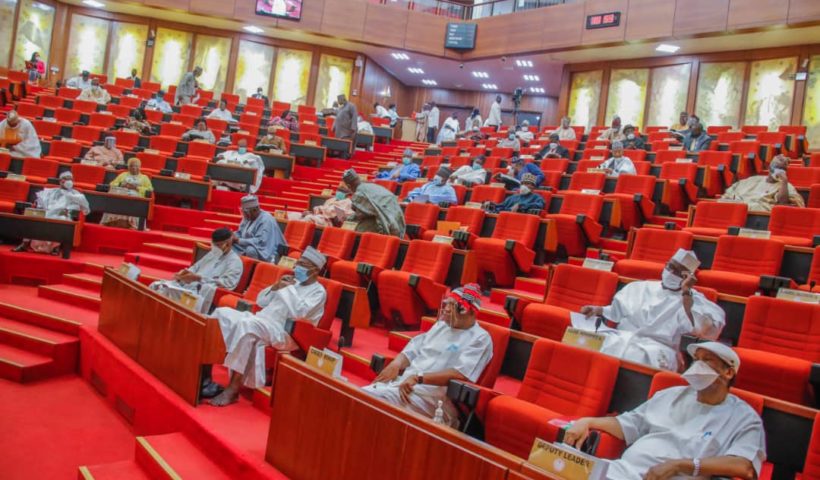
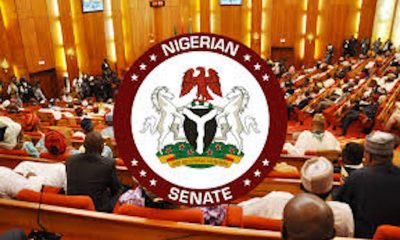
The National Assembly is considering bills seeking for the establishment of 235 new federal universities, polytechnics, colleges of education and specialised institutions despite poor funding of the existing federal tertiary institutions.
The bills are currently at different stages of legislative activities at the National Assembly.
Checks by Daily Trust show that the Federal Government currently has 119 universities, polytechnics, colleges of education and monotechnics.
Various labour unions in the tertiary institutions and the federal government often haggle over salaries and other school running costs, hence frequent strikes by staff of the institutions.
In 2020, a strike by the Academic Staff Union of Universities (ASUU) over a payroll system and condition of the universities lasted nine months.
Not long after ASUU ended its strike, another union, the Joint Action Committee (JAC) of non-teaching staff unions of universities, which comprises Senior Staff Association of Nigerian Universities (SSANU) and Non-Academic Staff Union of Universities (NASU), declared a nationwide industrial action over salaries.
Despite the funding anomalies, there are over 200 bills seeking to establish tertiary institutions in different states of the federation before the National Assembly.
The analysis of such bills under the 9th National Assembly shows that out of the 235 bills for the establishment of the institutions, 111 are being considered in the senate and 124 in the House of Representatives.
Out of the 111 bills in the senate, 40 are for the establishment of universities; eight for polytechnics; while 35 and 28 are for colleges of education and specialised institutes respectively.
A further breakdown of the 40 proposed universities indicate that all but one are specialised institutions. Of the specialised universities, technology tops the list with 10, closely followed by agriculture with eight. Education has six, medical and health sciences have four and maritime two.
There are also bills seeking the establishment of one university each for sports, environment, history and archaeology, entrepreneurship, food technology, steel, creative arts, film and broadcasting, as well as aerospace and aeronautics.
The senate is also considering bills to establish 21 colleges of education; five colleges of agriculture and four colleges of forestry. Health science/midwifery has three bills and one each for crop science, maritime studies and naval architecture.
For the proposed institutes, Information and Communication Technology (ICT) tops the list with seven; followed by fisheries and aquaculture, and mines and geological studies, which have two each.
Other specialised institutes being proposed are those of business, administration, stockbrokers, facility management, mediation, security, border studies, building and road research, metallurgy, cancer research, development, directors, power engineers, environment, bitumen and local government and public administration; one each.








Education
UK Student Visa: 63 Countries Exempt From Proof of Funds, Nigeria Excluded

UK Student Visa: 63 Countries Exempt From Proof of Funds, Nigeria Excluded
The United Kingdom has exempted citizens of 63 countries and territories from providing financial evidence upfront when applying for a Student visa, under its differential evidence requirement.
The policy means eligible applicants generally do not need to submit documents showing that they have sufficient funds to support themselves during their studies when they make their initial visa applications.
However, the exemption does not remove the underlying financial requirement. The UK government can still ask applicants from the exempt countries to provide evidence of their finances before deciding their applications.
For students who are required to provide financial evidence, the current UK Student visa rules require applicants to demonstrate that they have enough money to cover their living expenses while studying in Britain.
Students studying in London are required to show £1,529 per month for up to nine months, while those studying outside London must generally demonstrate £1,171 per month for up to nine months.
Applicants may also be required to show that they have enough money to pay their course fees for one academic year, subject to the amount stated on their Confirmation of Acceptance for Studies (CAS).
The required maintenance funds generally must have been held for 28 consecutive days, with the end of that period falling within 31 days of the visa application.
The countries covered by the differential evidence arrangement include Australia, Austria, Bahrain, Barbados, Belgium, Botswana, Brazil, Brunei, Bulgaria, Cambodia, Canada, Chile, China, Croatia, Cyprus, Czechia, Denmark, Dominican Republic, Estonia, Finland, France, Germany, Greece, Hungary, Iceland, Indonesia, Ireland, Italy, Japan, Kazakhstan, Kuwait, Latvia, Liechtenstein, Lithuania, Luxembourg, Malaysia, Malta, Mauritius, Mexico, Netherlands, New Zealand, Norway, Oman, Peru, Poland, Portugal, Qatar, Romania, Serbia, Singapore, Slovakia, South Korea, Spain, Sweden, Switzerland, Thailand, Tunisia, United Arab Emirates and the United States.
The relevant UK immigration guidance also contains provisions covering certain applicants holding passports from Hong Kong SAR, Macau SAR and Taiwan, as well as British National (Overseas) passport holders.
READ ALSO:
- Lagos Intensifies Surveillance as Adulterated Palm Oil Raises Food Safety Concerns
- Saudi Arabia Rejects Nigeria’s Request for More 2027 Hajj Slots
- MURIC Warns FG: Any Move Against Atiku Now Lacks Tact
Among African countries, Botswana, Mauritius and Tunisia are included on the list.
Nigeria is not included, meaning Nigerian citizens applying for a UK Student visa should continue to prepare to meet the applicable financial evidence requirements.
The same applies to applicants from several other major African countries, including Ghana, Kenya and South Africa, which are also not among the countries listed under the differential evidence arrangement.
The exemption is therefore not a blanket waiver of financial requirements for international students.
Instead, it changes the documentary evidence requirement at the point of application for nationals of the specified countries.
Applicants covered by the arrangement must still satisfy other UK Student visa requirements, including securing admission to an approved education provider and obtaining a valid Confirmation of Acceptance for Studies.
They must also satisfy the other eligibility and immigration conditions applicable to their circumstances.
For applicants who do need to provide financial evidence, acceptable funds can generally include money held by the applicant, qualifying funds held by a parent or partner, an eligible student loan or official financial sponsorship.
The UK rules exclude certain assets from being used as qualifying financial evidence, including overdrafts, cryptocurrencies, stocks and shares and pensions.
There are also circumstances in which an applicant who is not covered by the 63-country differential evidence list may not have to provide financial evidence.
For example, applicants who have been living in the UK with valid permission for at least 12 months immediately before the date of their Student visa application are generally exempt from demonstrating the financial requirement.
The distinction between the financial requirement and the requirement to submit financial evidence is therefore important.
A student from one of the 63 countries is generally not required to attach proof of funds to the initial application, but UK Visas and Immigration can still request evidence.
If such a request is made, the applicant must be able to demonstrate that they meet the relevant financial requirement.
For Nigerian students, the situation remains unchanged by the latest differential evidence list.
A Nigerian applicant planning to study in Britain should therefore ensure that the required funds are available and satisfy the relevant rules before submitting a UK Student visa application.
Students should also ensure that their financial documents meet the prescribed holding-period requirements and correspond with the information contained in their visa application and CAS.
The development is particularly relevant to international students considering the UK as a destination for higher education, as financial evidence is one of the key requirements that applicants may have to satisfy before receiving a Student visa.
The UK government advises prospective students to check the latest immigration guidance before applying because Student visa requirements and financial thresholds can be updated.
For Nigerians seeking to study in Britain, the key point is that the 63-country differential evidence arrangement does not currently include Nigeria.
Nigerian applicants should therefore continue to prepare the appropriate proof of funds and meet all other requirements applicable to the UK Student visa route.
UK Student Visa: 63 Countries Exempt From Proof of Funds, Nigeria Excluded
Education
JAMB Sacks Staff Over Candidate Extortion, Warns Against Abuse of Office
JAMB Sacks Staff Over Candidate Extortion, Warns Against Abuse of Office
The Joint Admissions and Matriculation Board (JAMB) has terminated the appointment of a staff member found culpable of extorting candidates, reinforcing the examination body’s warning that employees who abuse their positions will face disciplinary action.
The development was disclosed in JAMB’s latest bulletin as the board continues its efforts to strengthen accountability and protect candidates from fraud, extortion and other forms of exploitation within the UTME and admission process.
JAMB did not disclose the identity of the affected staff member or the specific amount allegedly collected from candidates. However, the board’s decision to terminate the appointment underscores its stated position that misconduct by its own personnel will not be tolerated.
The action comes amid the board’s broader campaign against fraudulent practices targeting UTME candidates, including attempts by individuals and organised groups to exploit candidates and their parents by promising examination assistance, admission-related services or other benefits.
JAMB has repeatedly warned candidates and parents against paying individuals who claim they can manipulate examination results, secure admission through unofficial channels or provide services outside the board’s approved procedures.
The board maintains a cashless registration system aimed partly at reducing opportunities for unnecessary financial dealings between candidates and officials. Its official guidance also states that candidates should use JAMB-approved Computer-Based Test (CBT) centres for registration and other designated services.
READ ALSO:
- Jetour T1 Storms Abuja as Automaker Accelerates Nigeria Expansion
- Kidnapped Female Police Officer Found Dead in Ebonyi as Suspect Leads Police to Remains
- CNN, MS NOW, Politico Sue Trump Over White House Access Ban
JAMB has previously acknowledged concerns about extortion involving officials and operators. In 2024, the board said it had received reports of candidates being allegedly extorted in connection with regularisation and other services and directed investigations into the complaints.
The board had also considered reducing physical interaction between candidates and officials, particularly because many UTME candidates are underage, as part of efforts to reduce opportunities for exploitation and improve monitoring.
The latest dismissal is also coming as JAMB continues to confront wider forms of examination malpractice and fraud.
Earlier in 2026, the board disclosed that it had uncovered syndicates using artificial intelligence and other methods to impersonate JAMB officials and defraud candidates preparing for the UTME. Investigations in that case reportedly linked more than 100 candidates to the scheme, with dozens confirmed to have made payments to the fraudsters.
JAMB has also taken disciplinary and other enforcement measures against personnel and centres implicated in activities considered capable of compromising the integrity of its examination system.
The board’s position is that the fight against examination malpractice must include both external fraudsters and individuals working within the system who exploit their official positions.
For candidates, JAMB advises that payments and transactions relating to its services should be made through approved channels and that sensitive information such as passwords, profile details and e-PINs should not be disclosed to unauthorised persons.
Candidates who encounter problems or suspect misconduct can also use JAMB’s Central Online Support System (COSS) to submit complaints and track their cases.
The latest action therefore sends a clear administrative signal that JAMB staff misconduct can attract serious consequences, particularly where officials are found to have exploited candidates entrusted to their care.
JAMB said its personnel are expected to maintain professionalism and integrity in dealing with candidates, while the board will continue to take appropriate action against those found to have violated its rules.
The development is expected to further focus attention on safeguards around the JAMB registration process, candidate support services and other interactions between applicants and officials as the board continues efforts to protect the integrity of Nigeria’s tertiary admission system.
JAMB Sacks Staff Over Candidate Extortion, Warns Against Abuse of Office
Education
JAMB Allows Candidates to Change Lost SIM, Email Addresses

JAMB Allows Candidates to Change Lost SIM, Email Addresses
The Joint Admissions and Matriculation Board (JAMB) has reviewed its policy on changing registered phone numbers and email addresses, allowing candidates who have genuinely lost access to their SIM cards or email accounts to update their details through a controlled verification process.
The new arrangement took effect on Monday, September 21, 2026, providing a new option for candidates who can no longer use the phone numbers linked to their JAMB profiles, or who have lost access to the email accounts registered during previous examinations.
JAMB said the policy change followed the introduction of stronger identity authentication and biometric verification measures, which it said would help prevent impersonation, fraud and unauthorised alterations to candidates’ records.
The Board had previously restricted SIM swaps and email changes because of security vulnerabilities associated with changing the contact details attached to candidates’ profiles.
Under the revised policy, however, candidates with genuine cases can now request changes through designated JAMB facilities, subject to identity verification and other requirements.
The service covers candidates who need to change their GSM number, their email address, or both.
JAMB said candidates must provide the new phone number and/or email address they intend to register, as well as a duly executed court affidavit, which must be scanned and ready for upload.
The Board also stressed that the facility should be used strictly for genuine cases and that candidates should patronise only designated JAMB CBT centres or other officially approved locations.
The process for changing a registered SIM or email address is as follows:
1. Log into the JAMB e-Facility
Candidates should first log into their JAMB e-Facility profile using their existing credentials. The Board said candidates can use their available registered information, including their registration number or profile code, to begin the process.
2. Select the SIM Swap/eMail Change payment option
After logging in, candidates should select “SIM Swap/eMail Change Payment” from the available menu and proceed with the prescribed payment.
READ ALSO:
- How Nigerians Can Get Federal High Court Affidavit Online Without Visiting Court
- Plateau Violence: Several Killed as Fresh Attacks Trigger Mass Exodus
- Lagos Mechanic Lured With Mercedes Repair Job, Hacked to Death in Bush
3. Visit a designated JAMB CBT centre
After payment, the candidate is required to proceed to a designated JAMB CBT (PTC/PRC) Centre. JAMB said State Offices may also provide the service where applicable.
4. Access the SIM Swap/eMail Change Quicklink
At the designated centre, the candidate will access the SIM Swap/eMail Change Quicklink provided for the service.
5. Enter the profile details
The candidate will enter the Profile Code or existing GSM number and select “Fetch Details” to retrieve the relevant profile information.
6. Complete biometric verification
The candidate must undergo biometric verification before the request can proceed. This measure is intended to establish that the person requesting the change is the genuine owner of the JAMB profile.
7. Select the required change
The candidate will then select the service required — GSM number only, email address only, or both GSM number and email address.
8. Enter the new contact details
The candidate will provide the new GSM number and/or email address to be linked to the JAMB profile.
9. Upload the court affidavit
The candidate must upload the scanned court affidavit required by JAMB as part of the verification process.
10. Submit the update
After checking the information provided, the request can be submitted by clicking “Update”. A confirmation message will be displayed once the change has been successfully processed.
JAMB said the enhanced verification system is intended to ensure that the relaxation of the previous restriction does not expose candidates’ records to unauthorised changes.
The Board has also cautioned candidates against using unofficial agents or unauthorised outlets to change their registered details, warning that the process must be completed through approved JAMB channels.
The new policy is particularly significant for candidates who registered for the Unified Tertiary Matriculation Examination (UTME) in previous years but subsequently lost their registered SIM cards or became unable to recover the email accounts linked to their profiles.
Without access to those contact details, some candidates may face difficulties with subsequent JAMB registration and other examination-related services.
JAMB’s revised arrangement now provides a formal route for such candidates to restore access to their current contact details while maintaining identity checks.
The Board, however, emphasised that the facility is subject to strict authentication and should not be treated as a general opportunity to make repeated changes to candidate profiles.
Candidates who use the service are therefore advised to ensure that their new phone numbers and email addresses are active, accessible and entered correctly before submitting their requests.
JAMB has also previously introduced a Profiled Email service as an alternative communication channel for candidates affected by lost SIM cards. The official JAMB website says the service allows important notifications and transactions to be delivered to a candidate’s profiled email and the messages section of the candidate’s account. (Joint Admissions and Matriculation Board)
The latest policy means candidates with genuine cases involving lost SIM cards or inaccessible email accounts now have a dedicated procedure for updating their records, rather than being left without a formal route to change the affected contact details.
The Board said the policy is aimed at balancing candidate data security with access to essential JAMB services, while ensuring that genuine candidates are not unnecessarily disadvantaged by circumstances beyond their control.
JAMB Allows Candidates to Change Lost SIM, Email Addresses
-

 International2 days ago
18 Suspects Transferred to US Over 2021 Killing of Haitian President Moïse
-

 Auto3 days ago
Abuja Demand Rises as Jetour Brings X70 Plus Experience to FCT
-

 metro3 days ago
Irreconcilable Developments: Wedding Cancelled 24 Hours Before Ceremony
-

 Sports3 days ago
Enough Is Enough: Muslim Supporters Demand Change of New Man United Owners
-
 Politics3 days ago
2027: NDC Predicts Wider Obi Victory Over Tinubu in Lagos
-

 News2 days ago
NiMet Predicts Thunderstorms, Rain Across Nigeria Till Wednesday
-

 Politics2 days ago
‘Join the Hunt’ — Soludo Urges Igbos to Strategically Align Ahead of 2027
-

 Sports2 days ago
Messi Fires Stunning 75th Career Free-Kick to Reach 930 Goals in Inter Miami Draw