

International
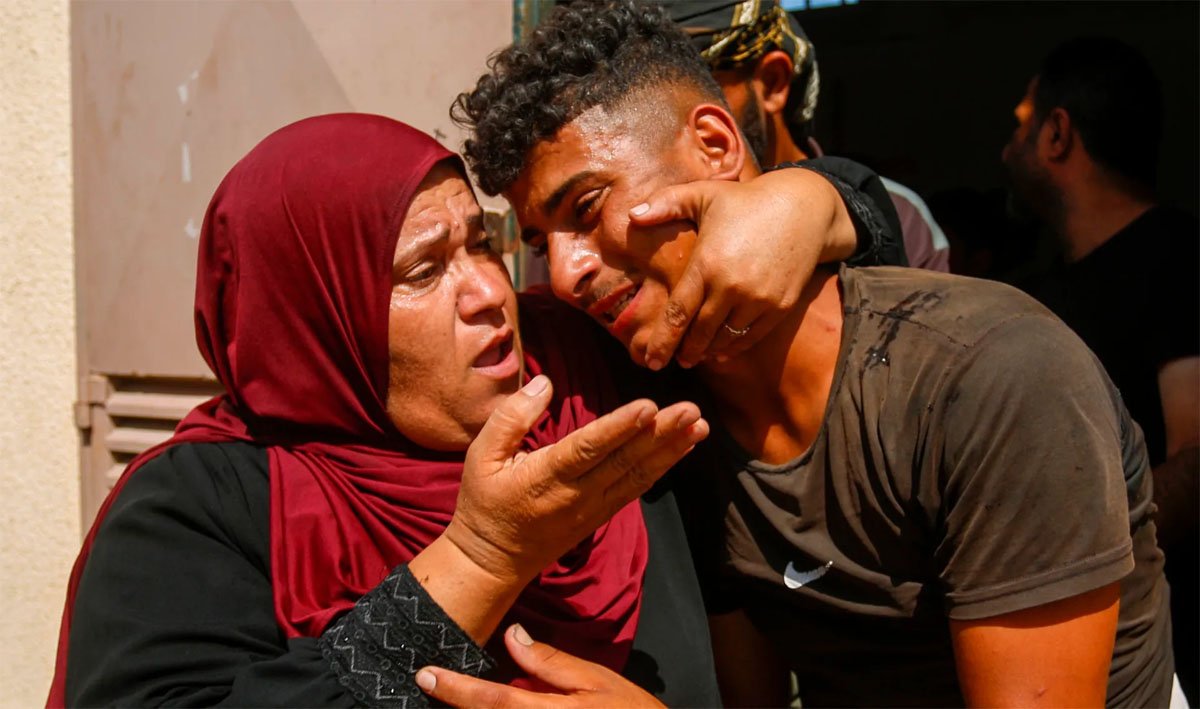
Again, Israeli bombing kills dozens in Gaza
Again, Israeli bombing kills dozens in Gaza
Israeli bombardment of Gaza killed dozens of people as it intensified its attacks on the besieged territory amid a worsening humanitarian crisis.
The Gaza health ministry said the bodies of 30 people killed in Israeli raids arrived at al-Ahli Arab Hospital in Gaza City on Friday in what it described as a “difficult and brutal day”.
At least 25 people were also killed and 50 others wounded in Israeli attacks on tents for displaced Palestinians in al-Mawasi, near Rafah, in the south of the coastal enclave, it said.
In a separate incident, the Palestinian Civil Defence agency said crews transported a number of people killed and injured in Israeli shelling of al-Shakoush area, northwest of Rafah.
Israeli forces bombed the garage of the Gaza City municipality as well as a five-storey building in the city, Al Jazeera Arabic correspondent Ismail al-Ghoul reported.
The health ministry said earlier Israel’s military killed at least 35 Palestinians over the previous 24 hours, bringing the death toll from the invasion to 37,431 since October 2023.
Meanwhile, the humanitarian situation continued to deteriorate as a result of the Israeli blockade on the territory, which has brought Gaza to the verge of famine.
The medical relief group Doctors Without Borders, known by its French initials, MSF, said on Friday that it may have to suspend its operations in Gaza because of dwindling healthcare supplies.
“MSF is facing critical shortages of essential medicines and equipment as it has been unable to bring any medical supplies into Gaza since the end of April,” the group said in a statement.
It explicitly blamed Israel for the situation, including its seizure and closure of the Rafah crossing last month. The gateway between Gaza and Egypt served as a major artery for the entry of humanitarian assistance and aid workers.
READ ALSO:
- Court orders Anambra cleric to pay bank manager N10m for human rights abuse
- Super Eagles: Marc Brys emerges as top candidate to replace Finidi George
- Amnesty International demands justice for Bauchi man killed for blasphemy
“The closure of the Rafah crossing following Israel’s offensive in the south of Gaza in early May, coupled with the endless red tape imposed by Israeli authorities, has led to a dramatically slow flow of humanitarian aid through the crossing that is open, Kerem Shalom [Karem Abu Salem] entry point,” MSF said.
“This has led to massive queues of trucks and perilous delays in the delivery of humanitarian assistance across Gaza.”
‘Intentional attack on civilians’
Israeli attacks have killed more than 270 humanitarian workers in Gaza since the start of the war in October, making the delivery of aid that does reach Gaza increasingly difficult.
Israel launched its assault on Rafah early in May despite international warnings, displacing hundreds of thousands of Palestinians – many of whom already fled other parts of Gaza.
But the United States, which sternly cautioned Israel against invading the southernmost Gaza city, has insisted the Israeli assault is not a “major” offensive.
Friday’s deadly attacks come two days after a United Nations-backed commission concluded Israel’s “deliberate” use of heavy weapons in Gaza constitutes an “intentional and direct attack on the civilian population”.
Israel’s bombardment has levelled entire neighbourhoods across Gaza, but Israeli Prime Minister Benjamin Netanyahu has rejected accusations of targeting civilians.
“In terms of trying to avoid civilian casualties … the Israeli army has gone to lengths that no other army in history has gone to,” he told US publication Punchbowl News on Friday.
The interview was criticised by several international journalists for its “softball” questions.
Palestinian armed groups remain active in Gaza, and Israel has only managed to rescue a handful of captives taken by Hamas during the October 7 attack, which killed more than 1,100 Israelis.
Early on Friday, the Israeli military announced the killing of two of its soldiers, and the armed wings of Hamas and Palestinian Islamic Jihad claimed several attacks against Israeli forces later in the day.
Netanyahu said Israel is seeking the “sustained demilitarisation” of Gaza, which would be followed by establishing a civil administration “with the cooperation of an inter-Arab sponsorship and assistance by Arab countries”.
“And then the third thing would be obviously some kind of deradicalization process that would begin in the schools and the mosques to teach these people a different future than the one of annihilating Israel and killing every Jew on the planet,” he told Punchbowl News.
“And the fourth, it would be reconstruction, which would be largely taken, I think, by the international community.”
Again, Israeli bombing kills dozens in Gaza
SOURCE: AL JAZEERA






International
$100 Crude Returns: Escalating US-Iran War Strains Global Maritime Chokepoints

World oil markets entered dangerous territory on Wednesday as Brent crude breached the symbolic $100 per barrel barrier amid mounting fears of sustained supply shocks in the Middle East. With the clash between the United States and Iran now stretching into its seventh month, commercial energy traders are growing increasingly convinced that diplomatic efforts have stalled and that physical barrels could become harder to move out of the Gulf.
Brent crude serves as the premier global benchmark because it sets the pricing baseline for roughly two-thirds of the world’s internationally traded oil contracts. Sourced from the North Sea, its light, sweet quality and direct access to deepwater marine terminals make it easy to refine and ship anywhere in the world. When Brent moves, it immediately resets the price tag for physical cargoes and national crude streams from West Africa to the Middle East, making its climb past $100 a direct trigger for broader global price shifts.
The immediate catalyst for the rally came from fresh exchanges in the Persian Gulf and surrounding transit hubs. Iran announced a retaliatory strike on a U.S. facility in Jordan following American operations against Iranian naval assets in the Strait of Hormuz. Adding to the market alarm, Iranian authorities declared commercial oil tankers near Kuwait and Bahrain to be potential targets, effectively freezing merchant shipping confidence across the waterway.
Alternative export pathways offer little immediate relief. Saudi efforts to bypass the blocked Strait of Hormuz by redirecting crude toward the Red Sea have collided with renewed military strikes by Houthi forces targeting energy installations around the Bab al-Mandab strait. With both primary and fallback shipping lanes compromised, the flow of crude faces its most severe maritime disruption in years.
Beyond the energy trade, triple-digit crude threatens to undo recent progress against global inflation. Central banks worldwide are facing renewed pressure to keep borrowing costs elevated to prevent higher transport and production bills from embedding into retail prices. The prospect of persistent inflation and high interest rates pulled down major equity indices in the United States and Europe, overshadowing selective gains in Asian tech sectors.
International
Truly Depraved Rapist Jailed for 17 Years After Violent Attack on Woman

A 24-year-old Nigerian national, Gift Oladele, dragged a young woman into woodland and violently raped her has been jailed for 17 years after a judge described his actions as “truly depraved”.
Gift Oladele carried out the attack in Wrexham, North Wales, in September last year after approaching the victim, who was 19 at the time, as she walked home from a night out.
Oladele was convicted of rape and sexual assault at Mold Crown Court in March. He was sentenced on Thursday.
How the Attack Happened
The court heard that Oladele approached the woman and her friends outside a takeaway in Wrexham city centre. He initially appeared friendly and flirtatious before offering to walk home with her.
According to prosecutor James Coutts, Oladele accompanied the woman until they reached an isolated area, where he grabbed her by the mouth and forced her into the woods.
He then carried out a violent rape.
“She described being terrified,” Coutts told the court. “She did what she thought she needed to do to get through the attack.”
Oladele threatened to find and harm the victim if she reported the rape. He also threatened to take photographs of her and post them online.
Despite the threats, the woman returned home and immediately told her parents, who contacted the police.
Oladele was arrested the following day at his cousin’s home in Wrexham. Officers said he had attempted to hide a mobile phone, which contained searches relating to sexual attacks.
The court heard that Oladele had a “fascination in forced sexual abuse and rape” and that he appeared to be acting out a fantasy shown in the videos he had searched for.
Victim Describes Lasting Trauma
In a victim impact statement, the woman told the court that she continued to wake up from nightmares in which Oladele had tracked her down.
“I’m petrified,” she said.
She also described taking medication to prevent HIV infection after the assault and suffering long-term emotional and psychological effects.
“I feel ashamed, and somehow damaged, since what he did to me,” she said.
“The emotional impact has been very significant.
“I can’t go anywhere on my own anymore.
“I feel unsafe.”
Judge Simon Mills praised the woman for her courage during and after the attack.
“You showed exceptional courage during the incident and afterwards,” he told her.
Previous Conviction and Deportation Appeal
At the time of the Wrexham attack, Oladele was already on bail over another rape allegation in Manchester dating from November 2024.
He had also been jailed in 2022 for a sexually motivated attack.
The court heard that Oladele was later due to be deported to Nigeria but successfully challenged the decision on human rights grounds.
An immigration tribunal judge described the deportation case as “finely balanced”, acknowledging the seriousness of Oladele’s previous offence and the public interest in deporting foreign criminals.
However, the tribunal also considered his ties to the United Kingdom, where he had grown up, and the consequences of relocating to Nigeria.
The Home Office made two attempts to appeal the decision, but both appeals were rejected.
Judge Calls Defendant Dangerous
During sentencing, The Judge described Oladele’s actions as “truly depraved”.
“You subjected her to a terrible violation,” he said.
“You are a dangerous offender.”
The judge said Oladele posed an exceptionally high risk of harm to young women and had shown “absolutely no remorse whatsoever”.
The Home Office described the case as horrific and said Oladele’s imprisonment was the right outcome.
The victim’s account has highlighted not only the brutality of the attack but also the lasting fear and emotional damage that sexual violence can cause long after the offender has been convicted.
International
More Than 1,000 Migrants Rescued Off West Africa in One Week
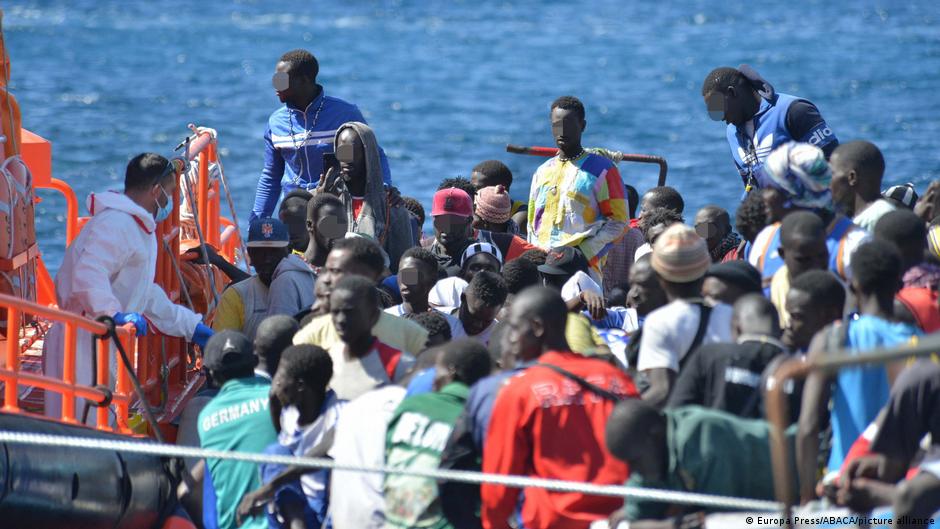
More than 1,000 migrants attempting to reach Spain’s Canary Islands have been rescued from the Atlantic Ocean after seven boats reportedly broke down during the dangerous journey from West Africa.
-

 Auto3 days ago
Kaduna to Lead Govt Patronage of Local Vehicles as Sani Unveils Peugeot 5008
-

 metro2 days ago
El-Rufai Demands ₦10bn from Defence Minister Over Southern Kaduna Killings Allegation
-

 News1 day ago
Lagos Moves to Slash Agency Fees, Curb Rent Hikes With New Tenancy Bill
-

 metro2 days ago
Oyoland Grand Chief Imam Celebrates Dr Sharafudeen Raji for Service to Islam
-

 metro2 days ago
Catholic priest leaves priesthood, weds Kenyan woman after 12 years in Kenya
-

 metro1 day ago
Osun Police Arrest Woman After Vigilante Member Dies During Sexual Encounter in Ile-Ife
-

 metro3 days ago
Socialite Igho ‘Tiny’ Ubiribo Dies After Penis Enlargement Surgery
-

 Politics1 day ago
Why Did Peter Obi Attend Seyi Makinde’s Campaign Launch? Here’s What He Said