

News
FG working against local refineries, operators cry out

FG working against local refineries, operators cry out
Some local refinery operators have lamented that the announcement made by the Nigerian Midstream and Downstream Petroleum Regulatory Authority, stating that the Federal Government would continue to import fuel, shows that the government had taken sides against local refineries.
The operators, under the aegis of the Crude Oil Refiners Association of Nigeria, expressed worry over the recent widely circulated interview of the Chief Executive Officer of NMDPRA, Ahmed Farouk, who was quoted as having described locally produced diesel as ‘inferior’ to imported ones.
It was also reported on Friday that the Federal Government, through the NMDPRA, declared that the importation of refined petroleum products into Nigeria was going to continue alongside the production of commodities by the Dangote Petroleum Refinery to prevent monopoly and ensure energy security.
The government had also warned against being over-dependent on the $20bn refinery located in the Lekki Free Zone in Lagos, stressing that the demand by the refinery that all oil marketers should buy products from the plant does not support competition.
Farouk, who had disclosed this in an interview with journalists in Port Harcourt, the Rivers State capital, was said to have stated that the diesel produced by some local refineries was inferior to the ones imported into Nigeria, a development that perturbed local refiners.
Reacting to the position of the regulator, through their umbrella body, the indigenous crude oil refiners declared that the government had taken sides against local refineries.
The Publicity Secretary of the Crude Oil Refiners Association of Nigeria, Eche Idoko, said, “We are worried that the Chief Executive of NMDPRA would make such categorical statements, suggesting strongly that he is taking sides. So much so that he even ridicules his own agency’s processes when he refers to the petroleum products produced by refineries that his agency closely regulates as inferior, thereby undermining the country’s health and safety procedures. This has huge implications for the oil and gas industry, and energy security in Nigeria.”
READ ALSO:
- 58 trafficked Nigerians rescued in Ghana – NiDCOM
- I took a bullet for democracy, Trump says at Michigan rally
- A’Ibom forex broker arraigned over N2bn scam
The NMDPRA boss had stated that Dangote Refinery had requested the regulator to stop giving import licences to other marketers so as to be the only fuel supplier in Nigeria.
“We cannot rely heavily on one refinery to feed the nation, because Dangote is requesting that we should suspend or stop the importation of all petroleum products, especially AGO, and direct all marketers to the refinery. That is not good for the nation in terms of energy security, and it is not good for the market because of monopoly,” Farouk stressed.
However, local refiners alleged that the views of the NMDPRA boss had shown that the efforts of indigenous refineries were being discredited by many detractors.
“In the last few days, we have had a barrage of misinformation thrown at the indigenous refineries, including Dangote, Aradel, Waltersmith, and our other members, from detractors and elements working against the country’s quest to achieve self-sufficiency in domestic petroleum refining. This is not completely surprising to us as we know the agenda to keep the country perpetually dependent on foreign oil merchants, and the desire to continue to pilfer the wealth of the country by a few greedy individuals is deep.
“It is, however, surprising, and we are indeed dismayed, that a person meant to regulate a sector appears to be taking a position against players in the industry he is supposed to be regulating and is misstating the facts,” Idoko stated.
He argued that about two years ago, the NMDPRA confirmed that the Dangote refinery was over 90 per cent completed, and wondered why the agency’s boss would declare that the plant had not been completed and was operating without a licence.
“From the two reports I shared with you, you can see Farouk contradicting the organisation he oversees in an obvious attempt to discredit the efforts of local refineries in the country. This struggle is not about an individual or a particular company. It is about the country and its survival. It is about the Nigerian citizenry. At this rate, we are truly worried about the ability of NMDPRA to provide a level playing field for all stakeholders going forward,” the indigenous refiners stated.
READ ALSO:
- Fake female police inspector swindles 10 job seekers of millions of naira
- Notorious bandit Bello Turji accuses Defence minister of backing terrorism
- Minimum wage: We’ll shut down state that fails to pay, says labour
The NMDPRA boss had, during the interview, revealed that the Dangote refinery, which had been selling diesel and aviation fuel in Nigeria for months, had not been licensed, stating that the plant was still at the pre-commissioning stage.
Also, the Executive Secretary of the Major Energy Marketers Association of Nigeria, Clement Isong, described the NMDPRA comments as clear and direct. Isong told our correspondent that the sector needs that kind of information from the regulator.
“Clear and direct! We need this open and direct communication from time to time from the regulator to help the public dissect the issues that so seriously concern them,” he stated.
No level-playing field – IPMAN
The National Public Relations Officer of the Independent Petroleum Marketers Association of Nigeria, Ukadike Chinedu, criticised the Nigerian National Petroleum Company Limited, International Oil Companies operating in Nigeria, and NMDPRA for allegedly frustrating indigenous refiners. He said the IOCs and NNPC were not supplying enough crude to the Dangote refinery and modular refineries, adding that the claims against indigenous refiners by NMDPRA were unnecessary.
“Those claims were unnecessary. We all know that these indigenous refiners are truly going through a lot, particularly with respect to accessing crude oil needed to produce refined products. So, they have a right to complain about this, knowing that Nigeria is a crude oil producer that exports this commodity to other refineries in foreign nations. You export the product, while your refineries are being starved. That’s not a good thing,” Ukadike stated.
FG working against local refineries, operators cry out









News
Bill Clinton condemns anti-Muslim prejudice, cites Qur’an’s message of coexistence
Bill Clinton condemns anti-Muslim prejudice, cites Qur’an’s message of coexistence
Former US president recalls daughter Chelsea’s experience reading Islamic holy book, says people should not be denigrated because of their faith
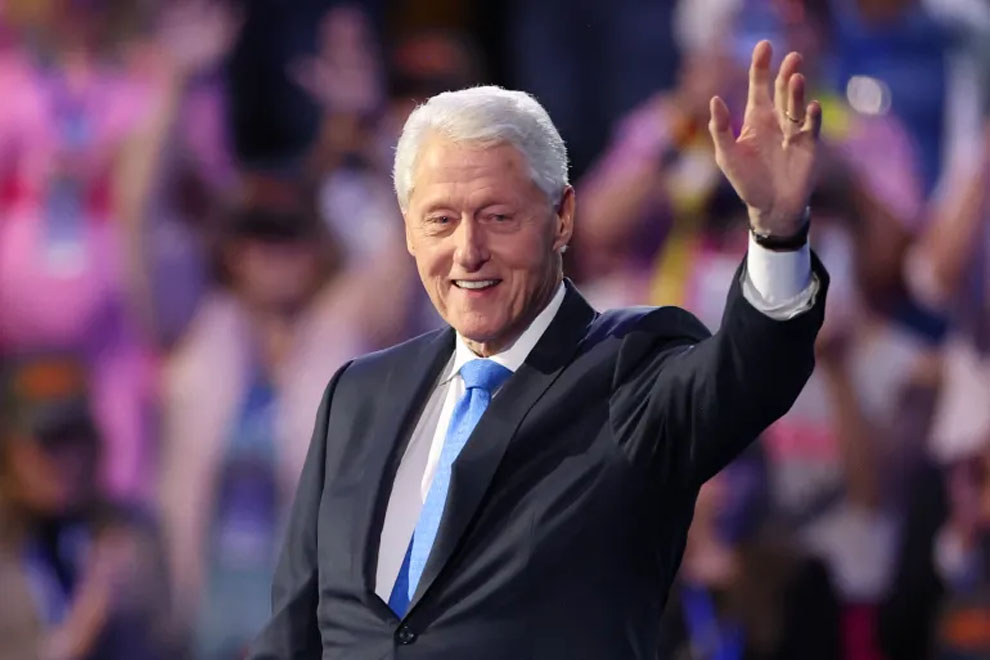
Former United States President Bill Clinton has condemned discrimination against Muslims, declaring that he is tired of people being denigrated simply because of their religious beliefs.
Clinton made the remarks on Tuesday, October 20, 2026, while speaking at an interfaith gathering at Koinonia Worship Center in Florida, where he cited a passage from the Qur’an that encourages mutual understanding among people of different backgrounds.
The former president recalled how his daughter, Chelsea Clinton, introduced him to the message after reading the Qur’an from beginning to end when she was 15 years old.
According to reports of his speech, Clinton used the experience to highlight the importance of religious tolerance, peaceful coexistence and the need to resist prejudice against people because of their faith.
“I’m tired of people denigrating Muslims for being Muslims,” Clinton said.
He argued that religious differences should not become a basis for hostility and that people should not be judged collectively on account of the actions of individuals who share their faith.
“There are bad actors in every faith because we’re all flawed human beings,” he added.
Clinton also expressed weariness with religious wars and cultural conflicts, calling attention to the need for greater understanding across religious and cultural boundaries.
READ ALSO:
- MURIC Applauds Army as Mogadishu Cantonment Mosque Reopens After Week-Long Closure
- Atiku Condemns Attack on Edo Comedian Over Refusal to Support Tinubu
- US Declares Two Nigerians Wanted Over $3.1m Medicare Fraud, Drug Offences
Recounting his daughter’s experience, Clinton said Chelsea had read the Qur’an from beginning to end at the age of 15 and subsequently drew his attention to a passage concerning humanity’s diversity and the relationship between different peoples.
The passage, identified as Qur’an 49:13, is found in Surah Al-Hujurat, which teaches that Allah created humanity from a male and a female and made people into nations and tribes so that they might know one another.
The verse further states that the most honoured in the sight of Allah is the most righteous.
Clinton paraphrased the passage as a message that people were created differently not to despise one another, but to become acquainted with and learn from one another.
His reference to the verse formed a central part of his argument against religious prejudice, emphasising that differences in faith, ethnicity and culture should encourage understanding rather than discrimination.
The Qur’anic passage is widely associated with the Islamic principle of human dignity and the recognition of diversity among peoples.
Clinton’s remarks challenged the tendency to associate the actions of individuals with entire religious communities. By observing that wrongdoing occurs among followers of different faiths, he argued against treating Muslims or members of any other religious group as collectively responsible for the misconduct of particular individuals.
His comments also drew attention to the consequences of religious and cultural divisions, which can deepen mistrust and encourage hostility between communities.
The former president’s position, as reported from the event, was that people should be assessed as individuals rather than denigrated merely because they belong to a particular religion.
The remarks have attracted attention because they place the Qur’an’s message of mutual understanding at the centre of a public discussion about anti-Muslim prejudice in the United States.
Clinton spoke at the Florida gathering against the backdrop of political controversy surrounding comments about Muslim political figures in the United States.
Reports on the event linked his remarks to the debate surrounding Abdul El-Sayed, a Muslim Democratic candidate seeking election to the United States Senate from Michigan, who has faced criticism from political opponents.
President Donald Trump has reportedly used the term “jihadist” in referring to El-Sayed, drawing attention to the use of religiously charged language in American political discourse.
Clinton’s comments, however, focused on the broader issue of denigrating Muslims because of their faith and the need to promote understanding across religious communities.
The event also featured David Jolly, the Democratic candidate for governor of Florida, whose campaign was the political context for Clinton’s appearance.
The gathering brought together religious and political issues, with the former president using the occasion to speak about inclusion, tolerance and the dangers of defining people through religious hostility.
Following the circulation of Clinton’s remarks, some social media posts attributed additional statements to him and his daughter, including claims that Chelsea described the Qur’an as a “miraculous book” and declared that all negative things said about Muslims were lies.
However, those additional statements have not been established by the available reports of Clinton’s speech.
What is supported by the reported remarks is that Clinton recalled Chelsea’s reading of the Qur’an, cited the message of Surah Al-Hujurat 49:13 and condemned the denigration of Muslims because of their religious identity.
The distinction is important because a genuine statement can be accompanied by unverified additions as it spreads across social media.
Clinton’s documented message remains a call for religious tolerance and mutual understanding, rather than evidence that every statement contained in the viral version was made by him or his daughter.
The passage Clinton cited, Qur’an 49:13, states in part that Allah made humanity into nations and tribes so that people may know one another. The verse places human diversity within a moral framework in which righteousness, rather than ethnic or social identity, determines a person’s standing before Allah.
For Muslims, the passage is a reminder that differences among peoples should not automatically become grounds for contempt or discrimination.
Clinton’s decision to invoke the verse in condemning anti-Muslim prejudice has therefore brought renewed attention to its message of recognition and coexistence.
His remarks also underscore the importance of verifying quotations attributed to public figures, particularly when religious issues and politically sensitive debates are involved.
Bill Clinton condemns anti-Muslim prejudice, cites Qur’an’s message of coexistence
Source: Al Jazeera, Siasat and other published reports on Clinton’s October 20, 2026, remarks at Koinonia Worship Center, Florida.
News
41 Days in Bandits’ Den: Five Islamic Clerics Still Held After Tinubu Re-Election Prayer Trip
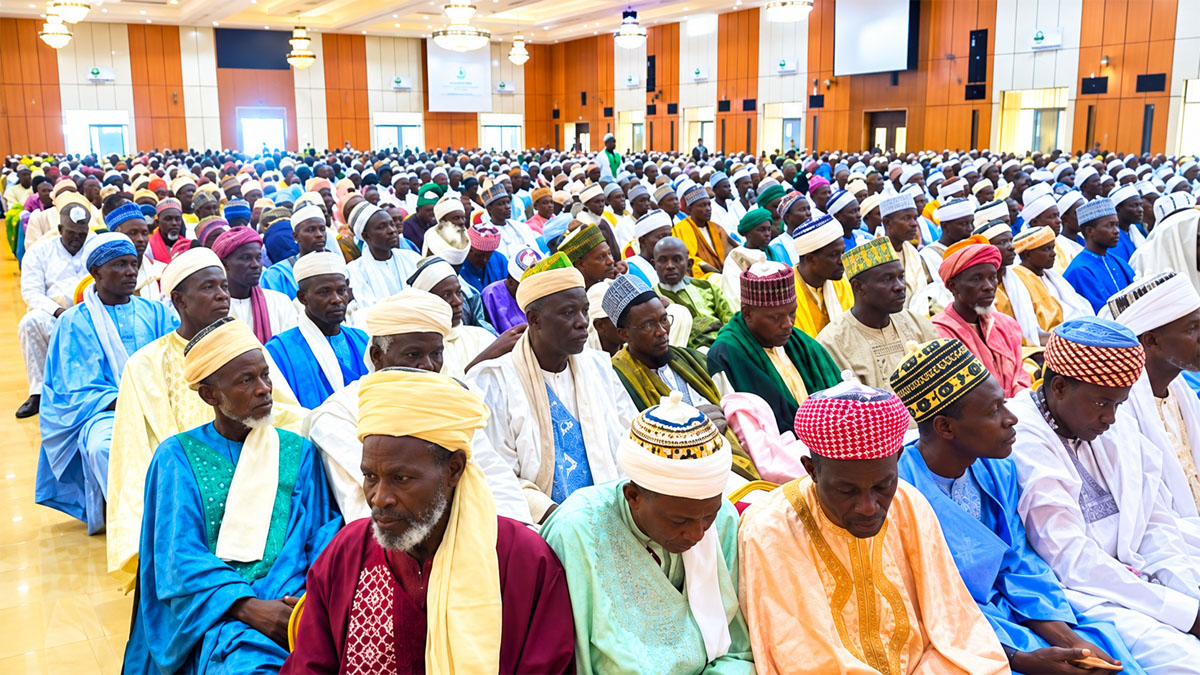
Five Islamic clerics abducted by suspected bandits in Zamfara State have remained in captivity for 41 days, renewing concerns over their safety and the persistent threat of kidnapping in Nigeria’s North-West.
The continued detention of the clerics was disclosed on Friday by conflict reporter Bakatsine, who appealed to Nigerians to continue praying for their safe return.
In an update shared on social media on October 23, 2026, Bakatsine said the Islamic scholars were still in the hands of their abductors and expressed hope that they would reunite with their families.
The clerics were reportedly abducted on September 12, 2026, while travelling towards Talata Mafara Local Government Area for a special prayer gathering organised in connection with President Bola Tinubu’s 2027 re-election bid.
The gathering was associated with Senator Abdul’aziz Abubakar Yari, a former Zamfara State governor and the Director-General of Tinubu’s re-election campaign council.
Reports identified the five clerics as Imam Yahuza, Magawata Abdullahi, Malam Shehu Dakko, Imam Bala Fagon and Na’ibi Tasi’u. They were said to have travelled from communities in Bakura and Talata Mafara local government areas to attend the gathering.
READ ALSO:
- Saudi Executions: Truth Behind Viral Kissing Claim
- MURIC petitions Oyo police over 2019 murder of Muslim cleric in Fiditi
- NEC Targets Cheaper Fares, Food Prices in 90-Day Plan to Ease Nigerians’ Hardship
However, the Nigerian Army clarified shortly after the incident that the clerics were not abducted at Yari’s residence, contrary to some initial reports. According to the military, intelligence indicated that the victims were seized while travelling from the Sububu Forest axis in Bakura towards Talata Mafara.
The Zamfara State Police Command also confirmed the incident, stating that armed men had intercepted the clerics’ vehicle along the Dakko–Damri feeder road in Bakura Local Government Area and that efforts were underway to rescue them.
There were initial reports that six Islamic clerics had been abducted, although the latest reports identifying those still in captivity named five victims.
Reports following the abduction indicated that the kidnappers demanded a ransom of ₦100 million from the victims’ families before the amount was reportedly reduced to ₦30 million during negotiations. However, there has been no confirmed public update on the progress of the negotiations or whether the demand has been met.
As of Friday, October 23, there was no confirmed information that the clerics had been released. Their current whereabouts and condition also remained unclear.
The prolonged captivity has heightened concerns over the security situation in Zamfara State, where armed groups have continued to abduct travellers and residents for ransom.
The incident has also drawn attention to the risks faced by people travelling between rural communities in the state, despite security operations aimed at curbing banditry.
Families of kidnapped victims and residents of affected communities have repeatedly called for stronger security measures and more effective rescue operations to prevent further abductions and secure the release of those still being held.
Bakatsine’s latest appeal has renewed calls for continued public concern over the fate of the five clerics as their families await news of their safe return.
41 Days in Bandits’ Den: Five Islamic Clerics Still Held After Tinubu Re-Election Prayer Trip
News
EFCC Opens Recruitment for Nigerians, Sets Age Limits for Four Job Categories

The Economic and Financial Crimes Commission (EFCC) has opened its 2026 nationwide recruitment exercise, inviting qualified Nigerians to apply for positions across four job categories, with age limits ranging from 18 to 40 years.
The Federal Character Commission (FCC), in a recruitment listing published on October 23, 2026, marked the exercise as ongoing and outlined the qualifications, age requirements and other eligibility conditions for prospective applicants.
The recruitment covers the Detective Superintendent, Detective Inspector, Detective Assistant, and Professionals/Skilled Workers cadres, providing opportunities for university graduates, National Diploma holders, secondary school certificate holders and experienced professionals.
According to the published notice, applications must be submitted online through the designated recruitment portal. The application process is free, and candidates are warned against paying individuals or organisations promising to secure employment for them.
For the Detective Superintendent cadre, applicants must possess a bachelor’s degree or Higher National Diploma (HND) from a recognised institution, alongside a valid National Youth Service Corps (NYSC) discharge or exemption certificate. The position corresponds to Assistant Superintendent of EFCC II on Grade Level 08, and applicants must be between 18 and 30 years old.
The Detective Inspector category is open to candidates with a National Diploma (ND) or National Certificate in Education (NCE) from a recognised institution. The position corresponds to Inspector of EFCC II on Grade Level 06, with an age requirement of 18 to 27 years.
READ ALSO:
- Saudi Executions: Truth Behind Viral Kissing Claim
- MURIC petitions Oyo police over 2019 murder of Muslim cleric in Fiditi
- NEC Targets Cheaper Fares, Food Prices in 90-Day Plan to Ease Nigerians’ Hardship
For the Detective Assistant cadre, applicants must have at least five credit passes in WAEC, NECO, GCE or NABTEB examinations, including English Language and Mathematics. The results must be obtained in no more than two sittings. The position corresponds to Detective Assistant II on Grade Level 04, and applicants must be between 18 and 25 years old.
The fourth category, Professionals and Skilled Workers, covers applicants with relevant academic qualifications, professional credentials or technical expertise. The stipulated age range is 18 to 40 years.
The professional and skilled-worker category covers several fields, including medicine, pharmacy, law, nursing, medical laboratory science, engineering and technology-related disciplines. The commission is also seeking qualified or experienced personnel in human resources management, financial analysis, media and publicity, policy analysis, legal services, research, planning, monitoring and evaluation, librarianship, information and communications technology, driving, and administrative or clerical support.
Applicants in this category are expected to possess qualifications relevant to their chosen positions. An NYSC discharge or exemption certificate is also listed among the requirements, while membership of a relevant professional association is an added advantage. A valid national driver’s licence is similarly listed as an advantage for applicants seeking professional and skilled-worker positions.
Beyond the academic and age requirements, the published recruitment notice states that applicants must be Nigerian citizens, possess basic computer skills and demonstrate good character and integrity. Candidates must also be medically fit and provide evidence of fitness from a government-approved hospital. Applicants with criminal records are ineligible, while the notice states that tattoos on any part of the body are not permitted.
Additional conditions apply to cadet applicants, who must be single at the time of application. Male cadet applicants must be at least 1.67 metres tall, while female applicants must have a minimum height of 1.64 metres. Prospective candidates are advised to review the requirements carefully and ensure they meet the conditions for their preferred category before submitting their applications.
Interested applicants are directed to complete their applications online through the designated EFCC recruitment portal at https://recruitment.efcc.gov.ng. The recruitment listing states that applications are expected to close one week after the commencement of the exercise. Applicants should therefore check the portal for the exact closing date and any additional instructions before applying.
Candidates who are shortlisted will be required to present printed copies of their completed application forms during screening. The commission’s recruitment process is stated to be entirely free of charge. Applicants should not pay recruitment agents, intermediaries or individuals claiming to have connections within the EFCC.
Candidates should also avoid unofficial websites and social media accounts requesting payment or sensitive personal information in exchange for employment opportunities. Qualified Nigerians are encouraged to rely on the designated recruitment portal and official EFCC and Federal Character Commission communication channels for updates on the exercise.
EFCC Opens Recruitment for Nigerians, Sets Age Limits for Four Job Categories
-

 metro3 days ago
Police Arrest Man Over Fake Presidency Number Plate in Abuja
-

 News1 day ago
EFCC Opens Recruitment for Nigerians, Sets Age Limits for Four Job Categories
-

 metro3 days ago
Woman Arrested for Torching Ex-Boyfriend’s Home in Fit of Jealous Rage
-

 International3 days ago
Two Killed, Eight Injured as Attack Hits Saudi Arabia Airport
-

 Opinion3 days ago
Saudi Executions: Truth Behind Viral Kissing Claim
-
 News1 day ago
41 Days in Bandits’ Den: Five Islamic Clerics Still Held After Tinubu Re-Election Prayer Trip
-

 News3 days ago
FG Moves Against Filling Stations Short-Changing Nigerians With False Measurements
-
 Politics3 days ago
‘People Are Hungry’ Is Not a Manifesto, Nya-Etok Tells Atiku, Obi