

International
Ukraine attacks second bridge in Russia’s Kursk, heads for buffer zone
Ukraine attacks second bridge in Russia’s Kursk, heads for buffer zone
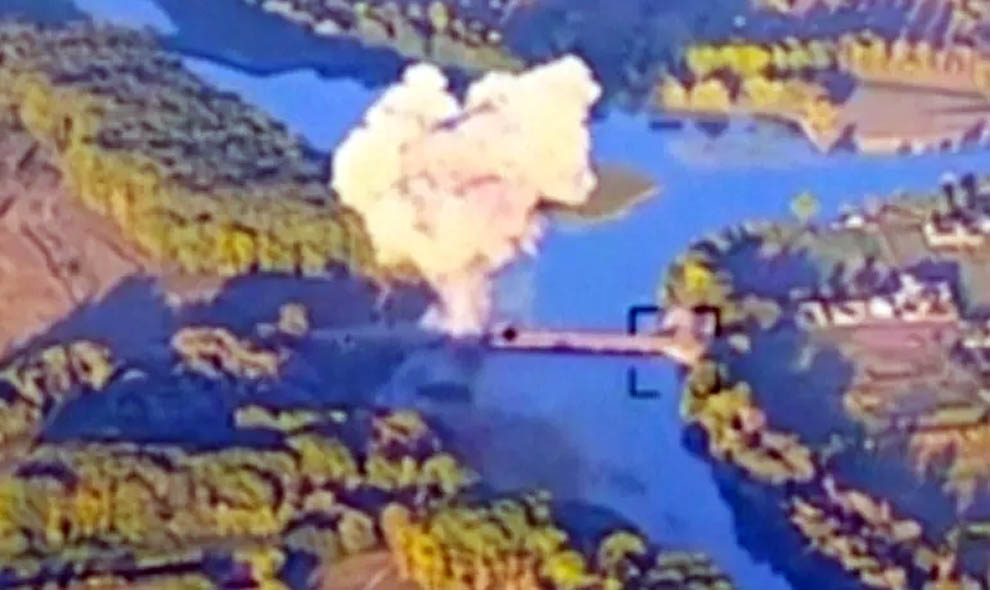
Ukraine says it has destroyed a second bridge across the River Seym which winds through Russia’s Kursk region.
It is the second attack on a bridge in the region in a matter of days and comes as Ukraine presses a cross-border offensive that began on August 6.
On Friday, it said it had struck a bridge in the Russian town of Glushkovo.
“Minus one more bridge,” Ukrainian Air Force Commander Mykola Oleshchuk wrote on Telegram on Sunday, publishing an aerial video of a blast tearing through the bridge near the Russian town of Zvannoye.
He said the attacks were designed to disrupt Russian supply lines.
“The Air Force aviation continues to deprive the enemy of logistical capabilities with precision air strikes,” Oleshchuk said, without giving a date for the attack.
Hours after the attack, Ukrainian President Volodymyr Zelenskyy praised the military’s incursion and stated its aims for the first time.
“Our guys are doing a great job in all areas,” he said in his evening address on Sunday.
“It is now our primary task in defensive operations overall: to destroy as much Russian war potential as possible and conduct maximum counteroffensive actions. This includes creating a buffer zone on the aggressor’s territory -– our operation in the Kursk region.”
Pro-Kremlin military bloggers acknowledged the destruction of the first bridge near Glushkovo, which is about 12km (7.5 miles) north of the Ukrainian border, saying it would disrupt supply lines.
READ ALSO:
- FG moves against fake degrees, asks varsities to submit matriculation lists
- Six family members die after eating local delicacy in Kano
- Ganduje, Uzodinma 2027 joint-ticket campaign posters emerge on social media
Zvannoe is located a further 8km (5 miles) to the northwest.
According to Russia’s Mash news site, the attacks left only one bridge in the area intact, potentially complicating further Moscow’s attempts to replenish its forces and evacuate civilians.
Until now, Kyiv has said little about the goals of the surprise incursion, which began with tanks and other armoured vehicles, the largest attack on Russia since World War II.
Ukraine’s military chief, Oleksandr Syrskii, claimed last week that his forces had advanced across 1,000sq km (390sq miles) of Kursk, although it was not possible to independently verify the extent of its control.
The incursion has helped boost Ukrainian morale as Russia pushes forward in Ukraine’s eastern Donetsk region.
On Sunday, Moscow claimed to have taken the village of Svyrydonivka, about 15km (nine miles) from Pokrovsk, which is a key logistics hub for Ukrainian troops and towns across the eastern front.
Zelenskyy has urged Kyiv’s allies to lift the remaining restrictions on the use of Western weapons on targets deeper inside Russia, including in Kursk, saying his troops could deprive Moscow “of any ability to advance and cause destruction” if granted sufficient long-range capabilities.
Ukraine says bases inside Russia have been used to launch long-range attacks on Ukraine’s cities and energy infrastructure, causing significant damage and casualties.
On Sunday, Moscow targeted the capital Kyiv with ballistic missiles for a third time this month, according to the head of the municipal military administration, Serhiy Popko.
Zelenskyy said Russia had launched more than 40 missiles, 750 guided aerial bombs and 200 attack drones against Ukrainian villages and cities in the past week alone.
Ukraine attacks second bridge in Russia’s Kursk, heads for buffer zone








International
$100 Crude Returns: Escalating US-Iran War Strains Global Maritime Chokepoints

World oil markets entered dangerous territory on Wednesday as Brent crude breached the symbolic $100 per barrel barrier amid mounting fears of sustained supply shocks in the Middle East. With the clash between the United States and Iran now stretching into its seventh month, commercial energy traders are growing increasingly convinced that diplomatic efforts have stalled and that physical barrels could become harder to move out of the Gulf.
Brent crude serves as the premier global benchmark because it sets the pricing baseline for roughly two-thirds of the world’s internationally traded oil contracts. Sourced from the North Sea, its light, sweet quality and direct access to deepwater marine terminals make it easy to refine and ship anywhere in the world. When Brent moves, it immediately resets the price tag for physical cargoes and national crude streams from West Africa to the Middle East, making its climb past $100 a direct trigger for broader global price shifts.
The immediate catalyst for the rally came from fresh exchanges in the Persian Gulf and surrounding transit hubs. Iran announced a retaliatory strike on a U.S. facility in Jordan following American operations against Iranian naval assets in the Strait of Hormuz. Adding to the market alarm, Iranian authorities declared commercial oil tankers near Kuwait and Bahrain to be potential targets, effectively freezing merchant shipping confidence across the waterway.
Alternative export pathways offer little immediate relief. Saudi efforts to bypass the blocked Strait of Hormuz by redirecting crude toward the Red Sea have collided with renewed military strikes by Houthi forces targeting energy installations around the Bab al-Mandab strait. With both primary and fallback shipping lanes compromised, the flow of crude faces its most severe maritime disruption in years.
Beyond the energy trade, triple-digit crude threatens to undo recent progress against global inflation. Central banks worldwide are facing renewed pressure to keep borrowing costs elevated to prevent higher transport and production bills from embedding into retail prices. The prospect of persistent inflation and high interest rates pulled down major equity indices in the United States and Europe, overshadowing selective gains in Asian tech sectors.
International
Truly Depraved Rapist Jailed for 17 Years After Violent Attack on Woman

A 24-year-old Nigerian national, Gift Oladele, dragged a young woman into woodland and violently raped her has been jailed for 17 years after a judge described his actions as “truly depraved”.
Gift Oladele carried out the attack in Wrexham, North Wales, in September last year after approaching the victim, who was 19 at the time, as she walked home from a night out.
Oladele was convicted of rape and sexual assault at Mold Crown Court in March. He was sentenced on Thursday.
How the Attack Happened
The court heard that Oladele approached the woman and her friends outside a takeaway in Wrexham city centre. He initially appeared friendly and flirtatious before offering to walk home with her.
According to prosecutor James Coutts, Oladele accompanied the woman until they reached an isolated area, where he grabbed her by the mouth and forced her into the woods.
He then carried out a violent rape.
“She described being terrified,” Coutts told the court. “She did what she thought she needed to do to get through the attack.”
Oladele threatened to find and harm the victim if she reported the rape. He also threatened to take photographs of her and post them online.
Despite the threats, the woman returned home and immediately told her parents, who contacted the police.
Oladele was arrested the following day at his cousin’s home in Wrexham. Officers said he had attempted to hide a mobile phone, which contained searches relating to sexual attacks.
The court heard that Oladele had a “fascination in forced sexual abuse and rape” and that he appeared to be acting out a fantasy shown in the videos he had searched for.
Victim Describes Lasting Trauma
In a victim impact statement, the woman told the court that she continued to wake up from nightmares in which Oladele had tracked her down.
“I’m petrified,” she said.
She also described taking medication to prevent HIV infection after the assault and suffering long-term emotional and psychological effects.
“I feel ashamed, and somehow damaged, since what he did to me,” she said.
“The emotional impact has been very significant.
“I can’t go anywhere on my own anymore.
“I feel unsafe.”
Judge Simon Mills praised the woman for her courage during and after the attack.
“You showed exceptional courage during the incident and afterwards,” he told her.
Previous Conviction and Deportation Appeal
At the time of the Wrexham attack, Oladele was already on bail over another rape allegation in Manchester dating from November 2024.
He had also been jailed in 2022 for a sexually motivated attack.
The court heard that Oladele was later due to be deported to Nigeria but successfully challenged the decision on human rights grounds.
An immigration tribunal judge described the deportation case as “finely balanced”, acknowledging the seriousness of Oladele’s previous offence and the public interest in deporting foreign criminals.
However, the tribunal also considered his ties to the United Kingdom, where he had grown up, and the consequences of relocating to Nigeria.
The Home Office made two attempts to appeal the decision, but both appeals were rejected.
Judge Calls Defendant Dangerous
During sentencing, The Judge described Oladele’s actions as “truly depraved”.
“You subjected her to a terrible violation,” he said.
“You are a dangerous offender.”
The judge said Oladele posed an exceptionally high risk of harm to young women and had shown “absolutely no remorse whatsoever”.
The Home Office described the case as horrific and said Oladele’s imprisonment was the right outcome.
The victim’s account has highlighted not only the brutality of the attack but also the lasting fear and emotional damage that sexual violence can cause long after the offender has been convicted.
International
More Than 1,000 Migrants Rescued Off West Africa in One Week
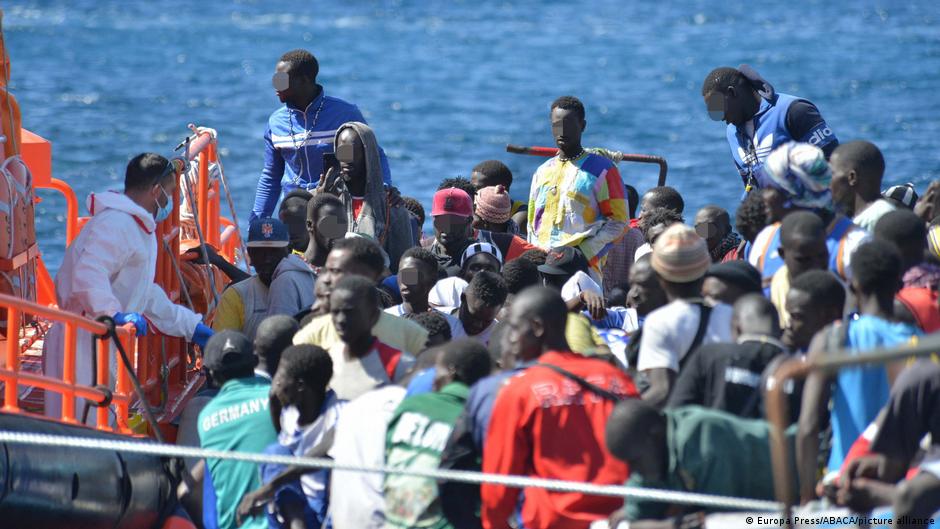
More than 1,000 migrants attempting to reach Spain’s Canary Islands have been rescued from the Atlantic Ocean after seven boats reportedly broke down during the dangerous journey from West Africa.
-

 Auto2 days ago
Kaduna to Lead Govt Patronage of Local Vehicles as Sani Unveils Peugeot 5008
-

 metro1 day ago
El-Rufai Demands ₦10bn from Defence Minister Over Southern Kaduna Killings Allegation
-

 metro1 day ago
Catholic priest leaves priesthood, weds Kenyan woman after 12 years in Kenya
-

 metro2 days ago
Socialite Igho ‘Tiny’ Ubiribo Dies After Penis Enlargement Surgery
-

 Politics3 days ago
Demystifying the Political Monolith: Wike’s ‘See Finish’ Doctrine and Nigeria’s New Political Calculus
-

 Politics1 day ago
Why Did Peter Obi Attend Seyi Makinde’s Campaign Launch? Here’s What He Said
-
 metro1 day ago
No US Case Against Tinubu, Family Enjoy Unimpeded Transit for UNGA — Ambassador Ibrahim
-

 News1 day ago
Lagos Moves to Slash Agency Fees, Curb Rent Hikes With New Tenancy Bill