

Business
Senate summons NICON, AIICO, others over N17.4bn pension remittances
The Senate Public Accounts Committee has summoned the management of the NICON Insurance Plc, AIICO Insurance and other insurance companies over their alleged failure to remit N17.4bn pension fund to the Pension Transitional Arrangement Directorate.
The Senate hinged the summon on the 2016 report of the Auditor-General for the Federation which unraveled the alleged non-remittance of the N17.4bn pension fund to PTAD.
Appearing before the panel on Monday, the Executive Secretary of PTAD, Dr Chioma Ejikeme, informed the lawmakers that PTAD took over the assets and liabilities of the defunct pension offices without a formal handing over.
She said, “On taking over, the directorate wrote all underwriters to make returns and remit whatever amount that was in their custody into a CBN dedicated account.
“Some of the underwriters responded to the request while some did not.
“The bank certificate of balances, accounting statements, three years financial statements and policy files requested by the federal auditor were not handed over to PTAD at the time of consolidation.
“It is worthy to note that we discovered that N17.4bn which comprised cash, securities and properties from the nine insurance underwriters was unremitted as a result of the letter PTAD sent to them.
“These figures represent the claims by the underwriters with regards to their indebtedness.
“In order to ascertain the true position of legacy funds in custody of underwriters, the directorate appointed a consultant in 2018 who carried out forensic audit of nine out the 12 insurance underwriters and produced a final report on the recovery of the legacy funds and assets for PTAD.”



Railway
Oyetola, VP’s aide, Opeifa to drive discussions at 2026 TCAN Transport Summit
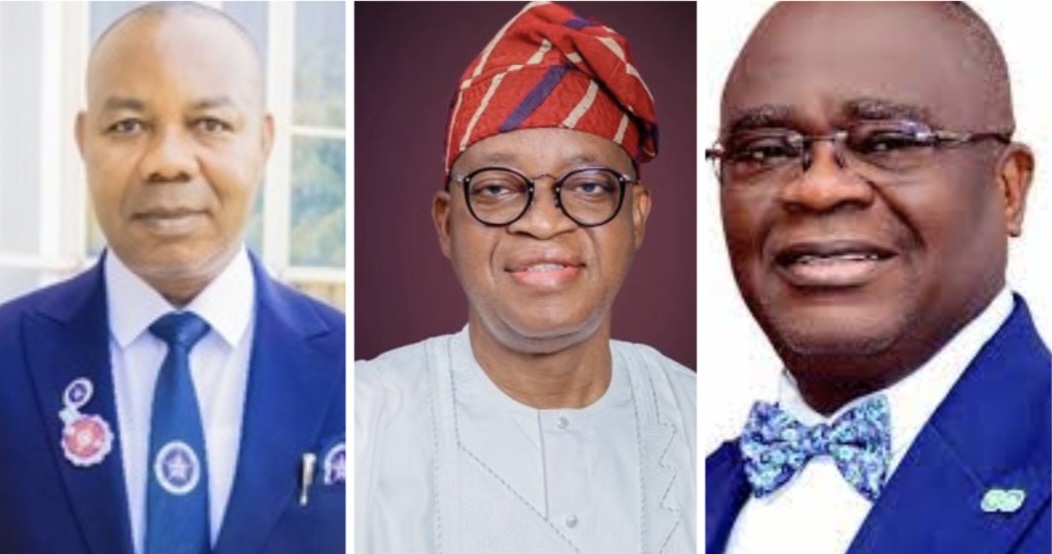
Oyetola, VP’s aide, Opeifa to drive discussions at 2026 TCAN Transport Summit
LAGOS – Nigeria’s drive to build a more efficient and integrated transportation system will take centre stage on September 24 as the Minister of Marine and Blue Economy, Dr Adegboyega Oyetola, the Technical Adviser to the Vice President on Transportation, Logistics and Innovation, Dr Segun Obayendo, and the Managing Director of the Nigerian Railway Corporation (NRC), Dr Kayode Opeifa, have confirmed their participation in the 2026 Transportation Summit organised by the Transportation Correspondents Association of Nigeria (TCAN).
Their participation is expected to provide a major boost to the annual summit, which has evolved into one of the country’s foremost platforms for discussions on transportation policy, infrastructure development, logistics and sustainable mobility.
The summit, themed “Unlocking Nigeria’s Economic Growth Through Transportation Logistics,” will bring together policymakers, regulators, transport operators, industry leaders, development partners, academics and other stakeholders to chart practical pathways for strengthening Nigeria’s logistics ecosystem and accelerating economic growth.
Participants will examine the current state of the nation’s transportation architecture across the road, rail, maritime and aviation sectors, while identifying solutions to the bottlenecks hindering seamless movement of passengers and cargo.
Discussions will also focus on multimodal transport integration, investment opportunities within the logistics and supply chains, digital transformation, infrastructure financing, and public-private partnership initiatives.
READ ALSO:
- Is Nigeria’s Electricity Tariff Going Up? FG Finally Breaks Silence
- ISWAP finance chief surrenders to Nigerian troops with two children in Borno
- Al-Mustapha Fires Back: Ex-DSS Officer’s Account of Abacha’s Death Is a Lie, I Have CCTV Evidence
TCAN Chairman, Mr Tola Adenubi, said the summit would equally review regulatory frameworks needed to improve operational efficiency and enhance Nigeria’s competitiveness in the global logistics industry.
According to him, the confirmation by Oyetola, Obayendo and Opeifa underscores the Federal Government’s commitment to engaging stakeholders in driving reforms that will reposition the nation’s transport sector.
Oyetola is expected to deliver the keynote address, outlining the Federal Government’s agenda for the marine and logistics sector, ongoing reforms, infrastructure investments and policies aimed at improving intermodal connectivity, boosting port efficiency and strengthening the country’s logistics value chain.
Obayendo will provide insights into the transportation and logistics components of President Bola Ahmed Tinubu’s Renewed Hope Agenda, highlighting key reforms and their impact on national economic development.
Opeifa, on his part, will present updates on the railway modernisation programme, operational improvements, rail safety, passenger and freight services, and the expanding role of the Nigerian Railway Corporation in supporting economic growth.
Expressing optimism over the calibre of participants, Adenubi said the summit would offer stakeholders a rare opportunity to engage directly with key government officials shaping Nigeria’s transportation future.
“We are delighted that the Honourable Minister of Marine and Blue Economy, Dr Adegboyega Oyetola, the Technical Adviser to the Vice President on Transportation, Logistics and Innovation, Dr Segun Obayendo, and the Managing Director of the Nigerian Railway Corporation, Dr Kayode Opeifa, have accepted our invitation to participate in the 2026 TCAN Summit.
“Their presence will provide participants with first-hand insights into the Federal Government’s vision for the transport sector while creating opportunities for meaningful engagement between policymakers, industry operators and the media,” he said.
Beyond the keynote sessions, the summit will feature presentations by government agencies and leading players across the transportation and logistics value chain, alongside networking sessions designed to strengthen collaboration across the road, rail, maritime, aviation and multimodal transport sectors.
As part of the event, TCAN will also recognise individuals and organisations that have made significant contributions to the growth of Nigeria’s transport industry through its “Champion of Transport Industry Development” compendium.
The summit is scheduled to hold on September 24, 2026, at Radisson Hotel, Ikeja, Lagos.
Oyetola, VP’s aide, Opeifa to drive discussions at 2026 TCAN Transport Summit
Business
Petrol price hits N1,400 per litre as transport fares rise across Nigeria
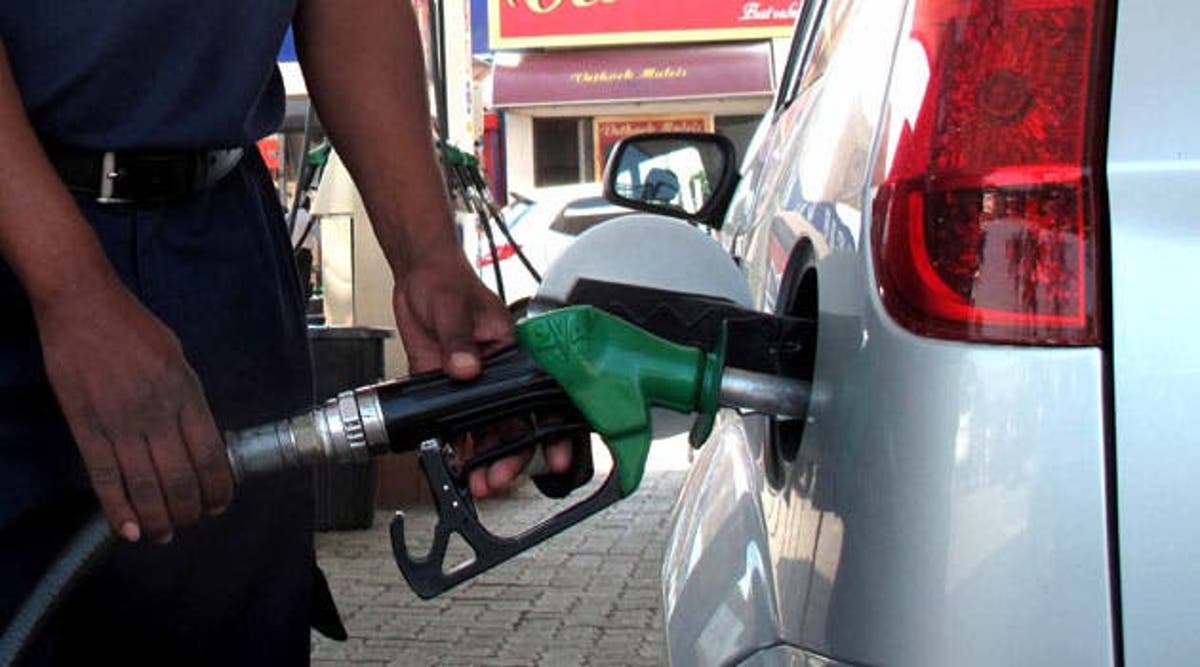
Petrol price hits N1,400 per litre as transport fares rise across Nigeria
Millions of Nigerians are facing renewed economic hardship as the petrol price has risen to as high as N1,400 per litre in several parts of the country, forcing transport operators to increase fares and adding further pressure to the rising cost of living.
The latest increase follows a sharp rise in global crude oil prices, which has driven up the cost of refined petroleum products and triggered fresh adjustments in ex-depot and retail pump prices across Nigeria’s downstream petroleum market.
Industry data obtained from petroleum marketers showed that several depots in Lagos, Warri and Calabar reviewed their ex-depot prices upward after international oil prices surged.
In Lagos, A.A. Rano increased its ex-depot price from N1,275 to N1,279 per litre, while African Terminal, Ascon, Gulf Treasure, Integrated and T.Time adjusted theirs to about N1,275 per litre. However, EMADEB marginally reduced its price from N1,278 to N1,274 per litre.
The development coincided with the resumption of Premium Motor Spirit (PMS) loading by the Dangote Petroleum Refinery, which returned to naira transactions after temporarily suspending gantry loading. At the same time, the refinery increased its ex-depot price from N1,075 to N1,215 per litre, representing a 13.02 per cent increase.
The refinery had suspended truck and coastal loading after introducing a dollar-denominated pricing structure, citing challenges in sourcing sufficient crude oil under the Federal Government’s naira-for-crude initiative. Although naira sales have resumed, the higher ex-depot price has pushed retail prices upward across the country.
Consequently, motorists are now buying petrol at between N1,260 and N1,400 per litre, depending on location and marketer, with independent filling stations recording some of the highest pump prices.
The increase has had an immediate impact on transportation costs.
READ ALSO:
- Dalung gives Mutfwang 72-hour ultimatum to withdraw apology to Igbos over civil war role
- Counterterrorism: Military says air strikes kill 23 suspected ISWAP fighters in Borno
- Osun 2026: Police declare ‘Emir,’ four others wanted over alleged political violence
In the Federal Capital Territory (FCT), commuters said they now spend significantly more on daily transportation, while commercial drivers explained that rising fuel costs have made fare adjustments unavoidable to remain in business.
Some commercial transport operators in Lagos have also raised fares on major routes, although competition among bus operators has limited uniform increases across the city.
In Kwara State, major marketers now sell petrol for between N1,255 and N1,305 per litre, while pump prices have climbed to around N1,350 per litre in Kaduna.
Motorists in Adamawa State are paying between N1,360 and N1,370 per litre, while independent filling stations in Maiduguri now dispense petrol for between N1,370 and N1,390 per litre.
The rising cost of fuel has also affected interstate travel. Operators on the Maiduguri–Kano route have increased transport fares from N20,000 to N25,000, citing higher fuel costs and increased vehicle operating expenses.
However, transport fares have remained relatively stable in parts of Ibadan and Kano, where operators say they are closely monitoring market developments before making further adjustments.
The Chairman of the Independent Petroleum Marketers Association of Nigeria (IPMAN) in Borno State, Mohammed Kuluwu, said frequent fluctuations in petrol prices have created uncertainty in the downstream sector, making many marketers reluctant to load products because of fears of sudden price changes.
Energy law expert Prof. Dayo Ayoade of the University of Lagos attributed the latest increase to the realities of Nigeria’s deregulated petroleum market.
According to him, domestic fuel prices are now largely determined by international crude oil prices, foreign exchange movements and market forces, while the Petroleum Industry Act (PIA) significantly limits direct government intervention in pricing.
He added that challenges affecting the implementation of the Federal Government’s naira-for-crude policy have reduced the volume of crude supplied to local refineries, contributing to higher refining and distribution costs.
Oil and gas analyst Abdullahi Shehu called on the Federal Government to expand crude oil supply to domestic refineries under favourable terms, arguing that stronger local refining capacity could help moderate petrol prices and reduce dependence on imported refined products.
Similarly, economist and energy expert Dr. Marcel Okeke warned that sustained increases in fuel prices could further accelerate inflation, raise production and logistics costs for businesses and worsen the financial burden on households already struggling with rising food prices and other essential expenses.
Economic analysts note that because petrol remains the primary fuel powering transportation, logistics and many small businesses, continued increases in pump prices are likely to translate into higher prices for goods and services nationwide, thereby deepening inflationary pressures.
The latest fuel price adjustment comes at a time when many Nigerians are already contending with high inflation, rising electricity costs and increased household expenses, raising concerns that further increases in transportation costs could negatively affect businesses, workers and consumers if global oil prices remain elevated.
Petrol price hits N1,400 per litre as transport fares rise across Nigeria
Business
Nigerians May Pay More for Fuel as Global Oil Prices Surge Above $100 Per Barrel
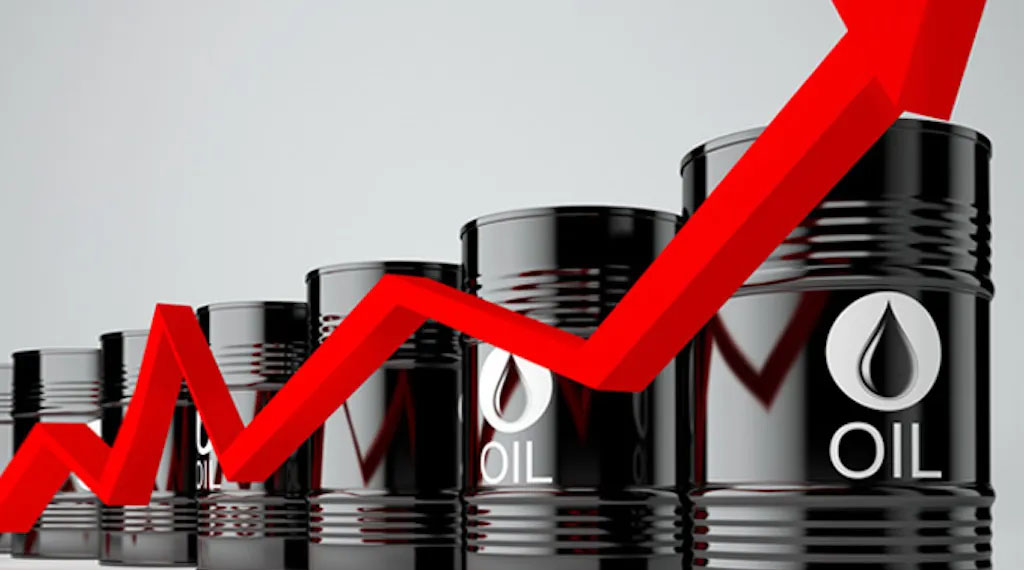
Nigerians May Pay More for Fuel as Global Oil Prices Surge Above $100 Per Barrel
Nigerians face the prospect of higher petrol prices, increased transport fares, and renewed inflationary pressure as global crude oil prices have surged above $100 per barrel for the first time since May amid escalating conflict in the Middle East.
The surge represents about a 6.77 per cent increase on Thursday following several days of gains as the United States stepped up military strikes against Iran. Brent crude, the international benchmark against which Nigeria’s oil is priced, climbed above $100 per barrel on Thursday, July 23, 2026, reaching $100.69 after surging more than seven per cent in a single day. By 4:40 p.m. WAT, Brent crude had risen 7.43 per cent to $101.10 per barrel, while U.S. benchmark West Texas Intermediate (WTI) gained 6.77 per cent to trade at $92.71 per barrel.
The latest price rally has been driven by threats to two of the world’s most strategic shipping routes: the Strait of Hormuz, through which roughly a fifth of the world’s oil supply passes, and the Bab el-Mandeb Strait in the Red Sea. The Iran-aligned Houthi militia in Yemen has opened a new front by targeting vessels carrying Saudi oil in the Bab el-Mandeb Strait after declaring a naval blockade on shipments from Saudi Arabia. The Houthi group claimed to have attacked two Saudi oil tankers, identified as ENCELIA and LAYLA, using ballistic and cruise missiles as well as drones. The attacks have lifted global benchmark prices by about 20 per cent over the past two weeks. Several oil tankers have altered their routes, with at least five changing course in the Red Sea. The disruption has been compounded by other supply constraints. Kazakhstan has reportedly begun cutting oil production after drone attacks disrupted tanker loadings at the Caspian Pipeline Consortium terminal on the Black Sea. Indian state refiners have suspended Iraqi crude loadings because of shipping risks around Hormuz, while Russian fuel exports remain constrained following months of attacks on refinery infrastructure. Strategic petroleum reserves released by several governments since the conflict escalated have reduced emergency stockpiles, commercial inventories have continued to decline, and China has increasingly relied on previously accumulated reserves rather than fresh imports. Goldman Sachs has warned that Brent crude could climb to as high as $120 a barrel by the end of the year if exports through the strategic waterway remain disrupted.
READ ALSO:
- US Imposes 12.5% Tariff on Nigerian Imports Over Forced Labour Claims
- “Don’t Let Me Die”: Veteran Nollywood Actress Ngozi Nwosu Begs for ₦30m Surgery Fund
- Osun election: Àtàọ́ja should stop running joro-jara-joro
- Dollar to Naira Exchange Rate Today: Naira Holds Steady as Fuel Importer Demand Mounts
The surge in crude oil prices has already translated into higher costs at Nigerian pumps. The impact is already beginning to reflect in Nigeria’s downstream market, with prices at filling stations in Lagos and its environs currently ranging between N1,300 and N1,400 per litre, depending on location. In Abuja, pump prices have increased from about N1,155 per litre to approximately N1,350 per litre, adding further pressure on households and businesses already grappling with elevated living costs. Dangote Petroleum Refinery resumed gantry loading of Premium Motor Spirit (PMS) in naira on Thursday after a week-long suspension, while raising its ex-depot petrol price to N1,215 per litre, up from the previous N1,075 per litre, representing a 13.02 per cent increase. The refinery had suspended gantry and coastal loading on July 15 after introducing a dollar-denominated pricing template for refined petroleum products, a move that disrupted fuel supply and forced marketers to source products from private depots. Fresh loading data obtained from petroleum marketers showed an upward movement in ex-depot prices across Lagos, Warri and Calabar. In Lagos, A.A. Rano increased its ex-depot price from N1,275 to N1,279 per litre, while African Terminal, Ascon, Gulf Treasure, Integrated and T.Time hiked their rates to N1,275. The spokesperson of the Independent Petroleum Marketers Association of Nigeria (IPMAN), Chinedu Ukadike, confirmed that loading had resumed across depots, although it remains unclear whether purchases directly from the Dangote Refinery are now being settled in dollars.
The rise in crude oil prices presents a mixed picture for Nigeria. The 2026 Federal Government budget was benchmarked at a crude oil price of $64.85 per barrel**, daily production of 1.84 million barrels, and an exchange rate of N1,400 to the US dollar. At current prices, Nigeria is earning about **$35 more per barrel than projected, potentially generating billions of naira in additional revenue if production and exports remain stable. However, revenue gains may be moderated by lower-than-budgeted output. According to the Nigerian Upstream Petroleum Regulatory Commission (NUPRC), current oil production stands at about 1.7 million barrels per day, including condensate. More importantly, economists caution that the fiscal windfall may be outweighed by the rising cost of living, as Nigerians bear the burden of higher fuel prices under the deregulated downstream petroleum market. The Centre for the Promotion of Private Enterprise (CPPE) has warned that domestic refining alone may not significantly reduce petrol prices, as crude oil feedstock is priced using international benchmarks and denominated in US dollars.
Transport fares have already begun to rise across the country as a result of the fuel price increases. In Abuja, residents have expressed frustration over the latest increase, saying transportation costs now consume a significant portion of their earnings. A civil servant told Daily Trust: “My salary has not changed, but I now spend much more just getting to work and back. It is becoming impossible to survive in Abuja.” Any increase in petrol prices is expected to trigger fresh hikes in transport fares, with knock-on effects on the prices of food, manufactured goods, and other essential commodities across the country. The International Energy Agency (IEA) has warned that refined fuel markets remain tighter than crude supplies, meaning that markets for refined oil products, including diesel and gasoline, are considerably tighter than those for crude. IEA Executive Director Fatih Birol warned that a “full and unconditional reopening of the Strait of Hormuz” would be essential to prevent a further deterioration in global energy security.
Commenting on the development, Managing Director of Petroleumprice.ng, Jeremiah Olatide, said the downstream sector has become increasingly volatile. “With the resumption of loading by Dangote Petroleum Refinery in naira at N1,215 per litre on Wednesday, we expected fuel importers to reduce prices, and some actually did. However, the sudden spike in crude oil prices due to the Middle East crisis has disrupted that trend. We should expect more price instability in the coming weeks,” he told Vanguard. National President of the Oil and Gas Services Providers Association of Nigeria (OGSPAN), Mazi Colman Obasi, noted that while depots and filling stations had yet to implement widespread price increases, the impact could soon be felt across the economy. “The implications will be far-reaching for households, businesses and the wider economy once operators across the value chain adjust their prices,” he warned. Energy experts say the current situation reflects the realities of Nigeria’s deregulated petroleum market under the Petroleum Industry Act (PIA). Professor Dayo Ayoade, an energy law expert at the University of Lagos, explained that local petrol prices are now tied directly to international crude oil prices and exchange rate movements. The exposure of Nigeria’s local PMS markets to the vulnerabilities of an oil shock and increasing prices due to the US-Iran war will be ongoing. So long as the conflict continues, the price will go up, and Nigeria will be unable to protect itself against that higher cost.
Nigerians May Pay More for Fuel as Global Oil Prices Surge Above $100 Per Barrel
-

 metro3 days ago
PFICP scandal: How ₦1.3bn ‘fake agency’ traced to Buhari’s government entered 2026 budget
-

 metro3 days ago
Dalung gives Mutfwang 72-hour ultimatum to withdraw apology to Igbos over civil war role
-

 Politics2 days ago
2027 election: Atiku accuses Obasanjo of reviving false allegations to favour preferred candidate
-

 metro21 hours ago
NDLEA intercepts ₦10bn worth of cocaine, Loud, opioids in Lagos
-

 Sports2 days ago
Anthony Joshua stuns Kristian Prenga with dramatic knockout to revive career
-

 Politics3 days ago
ADC leadership crisis deepens as court dismisses objections by David Mark, Aregbesola
-
 metro2 days ago
Al-Mustapha Fires Back: Ex-DSS Officer’s Account of Abacha’s Death Is a Lie, I Have CCTV Evidence
-

 metro2 days ago
ISWAP finance chief surrenders to Nigerian troops with two children in Borno