

metro
Al-Mustapha Fires Back: Ex-DSS Officer’s Account of Abacha’s Death Is a Lie, I Have CCTV Evidence
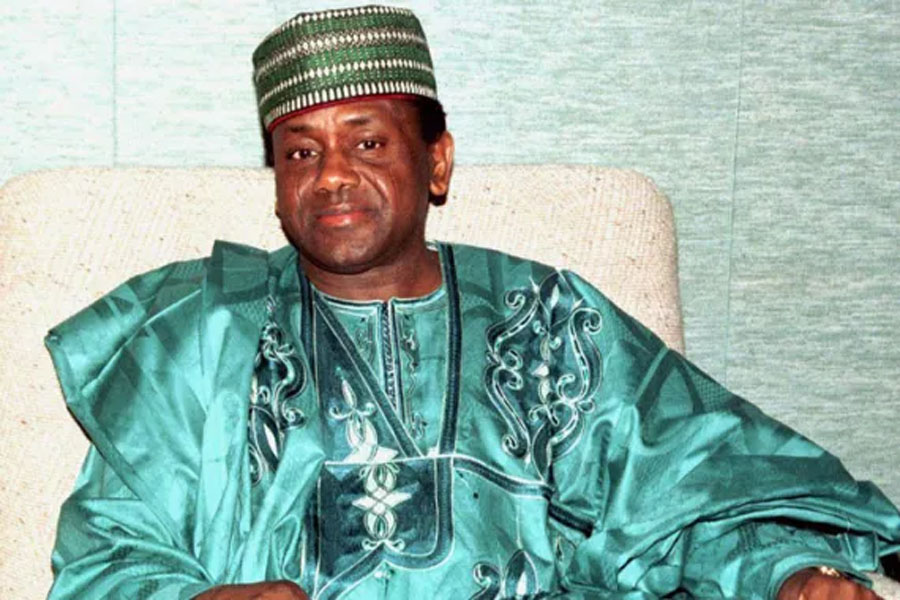
Al-Mustapha Fires Back: Ex-DSS Officer’s Account of Abacha’s Death Is a Lie, I Have CCTV Evidence
Former Chief Security Officer to late Head of State General Sani Abacha, Major Hamza Al-Mustapha (retd.), has vehemently dismissed claims made by a retired Department of State Services operative regarding the circumstances surrounding Abacha’s death, insisting he possesses CCTV footage that contradicts the narrative entirely. Al-Mustapha, who served as Abacha’s Chief Security Officer throughout his administration, described the account by former DSS Assistant Director Dennis Amachree as false and urged Nigerians to disregard it completely. His comments came amid renewed public interest in Amachree’s memoir, The Shadow Warrior, which offers a controversial version of events leading to Abacha’s death on June 8, 1998.
Speaking with journalists on the sidelines of the 3rd General Hassan Usman Katsina Memorial Conference at Arewa House in Kaduna on Saturday, Al-Mustapha alleged that Amachree’s account was fabricated and did not reflect what transpired during the late military ruler’s final moments. Rejecting the claims outright, Al-Mustapha stated that Amachree was asked by others to write those lies, and he emphasized that he has all the CCTV footage of what happened in his custody, so what Amachree said is not true. The retired army major maintained that he possesses video evidence capable of disproving the narrative contained in the publication but did not provide further details about the alleged footage or indicate whether he planned to release it to the public.
The controversy stems from Amachree’s memoir, in which the retired intelligence officer claimed that General Abacha died in the early hours of June 8, 1998, after what he described as a coitus-induced cardiac arrest during an intimate encounter with a woman inside the Presidential Villa Guest House in Abuja. According to the memoir, the incident occurred at approximately 4:05 a.m., and the woman, described as a pharmacist, later fled to Lagos. Amachree claimed she was subsequently tracked and interrogated by the DSS after intelligence reports indicated she had left Abuja shortly after the former Head of State’s death.
READ ALSO:
- Anthony Joshua stuns Kristian Prenga with dramatic knockout to revive career
- INEC Chairman assures Nigerians every vote will count in 2027 general election
- 2027 election: Atiku accuses Obasanjo of reviving false allegations to favour preferred candidate
Al-Mustapha, however, questioned the credibility of Amachree’s account, pointing out that the former DSS official was not even in Abuja at the time of Abacha’s death. He argued that when Abacha died, the DSS director was not in Abuja and was not in the Villa, and he questioned how Amachree could write mere narration and expect the public to believe it. Al-Mustapha further alleged that Amachree was acting on behalf of unnamed interests, asserting that the author of the book is acting out a script and is not acting alone. He added that at the appropriate time, he will respond to these lies, noting that one does not tell one’s enemies their plans.
Al-Mustapha appealed to Nigerians not to accept the claims, arguing that it was unfair to level accusations against someone who was no longer alive to respond. He urged the public to simply ignore the lies, stating that it is bad to say such things about someone who is dead. He also urged those making such claims to remember the transient nature of life, adding that whoever he is should know that the world is not permanent and that everyone will leave the world one day.
General Sani Abacha assumed power following a military coup on November 17, 1993, and remained Nigeria’s Head of State until his sudden death at the Presidential Villa in Abuja on June 8, 1998. At the time, the Federal Government announced that Abacha died after a brief illness. However, the circumstances surrounding his death have remained one of the most controversial and debated episodes in Nigeria’s political history for nearly three decades. Over the years, former military officers, intelligence personnel, diplomats, and political figures have offered varying accounts through books, interviews, and public statements, resulting in conflicting narratives about the late leader’s final hours.
Al-Mustapha remains a prominent and controversial figure in Nigeria’s political history. Following Abacha’s death, he was arrested in 1999 and prosecuted over the attempted murder of publisher Alex Ibru and the killing of Kudirat Abiola, wife of the presumed winner of the June 12, 1993 presidential election, Chief Moshood Abiola. He spent more than a decade in detention before the Court of Appeal discharged and acquitted him in 2013. Since his release, Al-Mustapha has consistently defended the Abacha administration, maintaining that many allegations against the late military government and its officials were politically motivated or unsupported by credible evidence.
As the debate over Abacha’s death continues, Al-Mustapha’s claims of possessing CCTV footage add a new dimension to the long-running controversy, though whether he will make the evidence public remains to be seen.
Al-Mustapha Fires Back: Ex-DSS Officer’s Account of Abacha’s Death Is a Lie, I Have CCTV Evidence









metro
Woman dies after husband allegedly assaults her over cooking, dance class

Woman dies after husband allegedly assaults her over cooking, dance class
A 38-year-old woman, Yamini Krishna Lal Yadav, has died in Nagpur, India, after her husband allegedly assaulted her during an argument over cooking and her decision to attend a dance class.
The woman’s husband, Krishna Lal Yadav, 41, has been arrested and booked in connection with her death after a post-mortem examination reportedly revealed serious internal injuries.
The incident occurred in the Mankapur area of Nagpur, Maharashtra, where the couple lived with their two young children.
According to reports, Krishna returned home from work and asked his wife to prepare food for him and the children. Yamini, however, was reportedly preparing to attend a dance class within their housing society and declined to cook at the time.
The disagreement allegedly escalated into a physical confrontation. Police said the husband was reportedly under the influence of alcohol when he allegedly assaulted Yamini around her neck and abdomen. The incident reportedly occurred in the presence of their children.
After the alleged assault, Yamini complained of severe pain in her neck and abdomen and reportedly asked her husband to get painkillers. He allegedly went to a nearby medical shop but returned after finding it closed.
Her condition later deteriorated, with her abdomen reportedly becoming swollen. She was subsequently taken to a private hospital in the area for treatment but died while receiving medical attention.
READ ALSO:
- NSCIA warns FG against weaponising state institutions in El-Rufai case
- Lagos Records 33,009 Domestic Violence Cases Amid Economic Hardship
- Nigerians Pay N44 Extra Per Litre as Retailers Defy Falling Depot Prices – Full Report
The case initially appeared to be an accidental death, prompting police to send her body for a post-mortem examination.
However, the examination reportedly revealed a fractured neck bone and severe internal injuries, including serious damage to the intestines. Reports also indicated injuries consistent with strangulation and abdominal trauma, prompting investigators to reconsider the circumstances surrounding her death.
Following the post-mortem findings, police questioned Krishna and subsequently arrested him. A murder case was registered against him as investigations continued.
Yamini’s brother reportedly said the family was aware that the couple had experienced disagreements in the past. He said Yamini had occasionally spoken about problems in the marriage but had asked relatives not to intervene because she feared their involvement could worsen the situation.
The family initially believed Yamini had died following a medical emergency and was reportedly shocked when the post-mortem examination revealed evidence of significant physical injuries.
Police are continuing their investigation into the circumstances surrounding the death of the Nagpur woman, while the accused remains in custody over the allegations.
The case has renewed concerns about domestic violence, particularly the need for victims experiencing abuse to have access to timely support and protection.
Woman dies after husband allegedly assaults her over cooking, dance class
metro
NSCIA warns FG against weaponising state institutions in El-Rufai case

NSCIA warns FG against weaponising state institutions in El-Rufai case
The Nigerian Supreme Council for Islamic Affairs breaks its silence on the former governor’s legal ordeal, citing “serious concerns” over possible sectarian agenda in the multiple prosecutions keeping El-Rufai in the spotlight.
ABUJA – The Nigerian Supreme Council for Islamic Affairs (NSCIA) has raised the alarm over what it described as “an extraneous involvement of an underlying religious bias” in the ongoing prosecutions of former Kaduna State Governor, Nasir El-Rufai. The Islamic body, which had deliberately stayed out of the controversy until now, said recent developments had forced it to break its silence on the matter. In a statement signed by its Secretary-General and immediate-past Registrar of JAMB, Prof. Is-haq Oloyede, the NSCIA explained that its earlier restraint was based on its belief that El-Rufai’s prosecution, like those involving other political figures, was a standard judicial process and that the judiciary had the inherent capacity to uphold justice. However, the council said recent developments in the public domain had raised serious concerns that strongly suggested religious considerations might be creeping into a process that should be determined solely by law and evidence.
The NSCIA called on the Federal Government and the Judiciary to ensure that individuals with vested religious interests were strictly prevented from weaponising public institutions or the legal system to pursue what it described as a sectarian agenda against El-Rufai. “Consequently, the Council calls upon the Federal Government of Nigeria and the Judiciary to ensure that individuals with vested religious interests are strictly prevented from weaponizing public institutions or the legal system to execute a sectarian agenda against him,” the statement read. The council stressed that its position was anchored on the Islamic principle of justice and fairness, regardless of political, religious or personal considerations, and clarified that its intervention was not intended to interfere with the judicial process but to emphasise the need for justice to be administered without religious or sectarian considerations. The Islamic body also appealed to the general public to refrain from incendiary comments that could prejudice the fair trial of El-Rufai or exacerbate the security situation in the nation. “Furthermore, the Council appeals to the general public to refrain from incendiary comments that could prejudice the fair trial of Mallam El-Rufai or exacerbate the security situation in our nation,” the statement read.
READ ALSO:
- Lagos Records 33,009 Domestic Violence Cases Amid Economic Hardship
- Nigerians Pay N44 Extra Per Litre as Retailers Defy Falling Depot Prices – Full Report
- NOUN appoints Ramatu Ibrahim acting Bursar after Marafa’s death
The NSCIA‘s intervention comes against the backdrop of a protracted legal battle that has kept El-Rufai in the spotlight since February 2026. The former governor is facing multiple prosecutions by different agencies on charges bordering on alleged abuse of office, money laundering, breach of national security, and wiretapping. The council’s decision to speak out followed comments by the Minister of Defence, General Christopher Musa (retd.), who accused El-Rufai of planning killings in Southern Kaduna while he was governor between 2015 and 2023. Musa had described the situation in Kaduna during El-Rufai’s administration as “toxic”, adding that many residents of Southern Kaduna remained unhappy with the former governor over killings recorded in the area.
El-Rufai, through his family, rejected the allegation and demanded that the minister withdraw the claim, with his eldest son, Mohammed Bello El-Rufai, giving Musa seven days to provide evidence supporting the allegation or publicly retract it. The controversy generated by Musa’s remarks has further widened the debate surrounding El-Rufai’s legal battles, with the NSCIA‘s intervention effectively placing the prosecution within a wider debate over the alleged politicisation and religious manipulation of state institutions. The Middle Belt Forum (MBF) has taken a sharply divergent position, backing the Defence Minister’s allegations and demanding an independent investigation into alleged killings and human rights abuses during El-Rufai’s administration, with possible prosecution before the International Criminal Court (ICC). The NSCIA’s intervention, which did not identify any individual or group it accused of pursuing a religious agenda, serves as a significant development in a case that has become a flashpoint for broader debates about judicial independence, political persecution, and religious neutrality in Nigeria’s legal system.
The council concluded its statement by praying for peace, stability and security in Nigeria. “May Almighty Allah grant peace, stability, and security to Nigeria,” it said.
NSCIA warns FG against weaponising state institutions in El-Rufai case
metro
Bandits abduct Kaduna lawmaker’s brother, kill three KADVS operatives
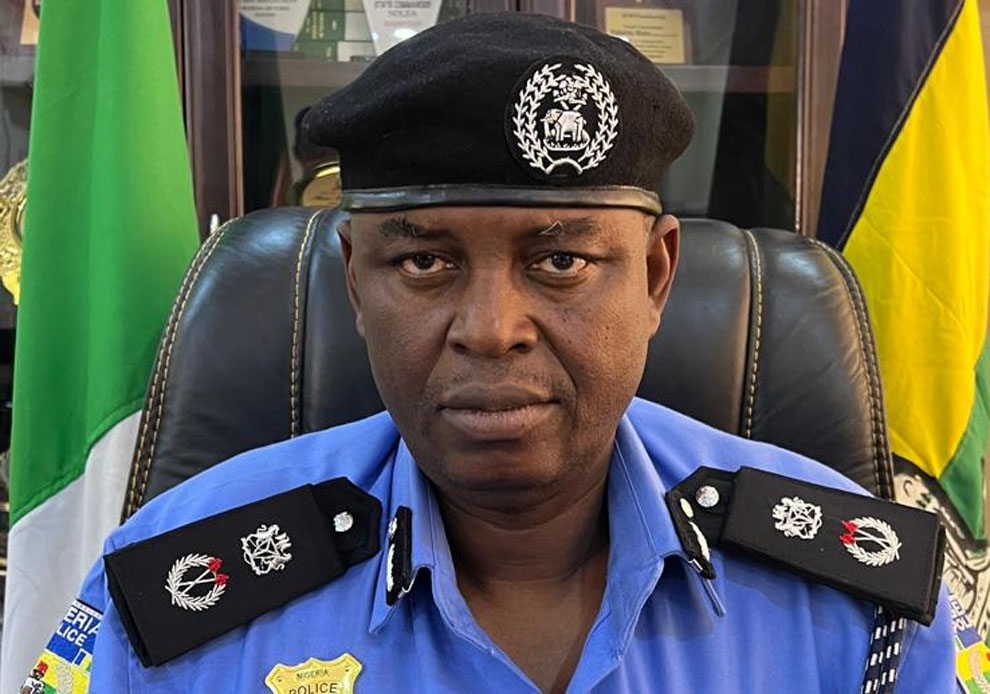
Bandits abduct Kaduna lawmaker’s brother, kill three KADVS operatives
Suspected bandits have abducted the younger brother of a Kaduna State lawmaker and killed three personnel of the Kaduna State Vigilance Service (KADVS) in separate attacks in Kubau Local Government Area of the state.
The incidents, which occurred within hours of each other, have heightened security concerns in Pambegua and surrounding communities, with the attacks taking place along the Zaria-Pambegua axis before the lawmaker’s brother was abducted from his residence.
The KADVS Public Relations Officer, Yunusa Ibrahim, confirmed the incidents in a statement issued on Tuesday.
Ibrahim identified the abducted victim as Sanusi, the younger brother of Shehu Pambegua, who represents Kubau Constituency in the Kaduna State House of Assembly.
According to the KADVS spokesman, the suspected attackers arrived at Sanusi’s residence in a Sharon vehicle at about 10pm on Monday and forcibly took him away.
The abduction came after three KADVS personnel were killed earlier in the day while carrying out a routine security operation in the area.
The deceased personnel were identified as Dallami Dantani, the Second-in-Command of KADVS in Kubau, Abdullahi Hamisu and Zakariyya Musa.
Ibrahim said the incident began when the vigilantes attempted to stop a red Volkswagen Golf Salon during a routine check, but the driver allegedly refused to comply.
READ ALSO:
- Oyoland Grand Chief Imam Celebrates Amubieya’s Decades of Islamic Scholarship
- FG opens six-month teacher certification for BSc, HND, ND holders – How to Apply
- How I Sold My Twins for N300,000, Stole 13 Other Children — Suspect
The KADVS personnel reportedly pursued the vehicle in their patrol van in an effort to identify the occupants and establish why they were travelling through the area.
The occupants allegedly opened fire during the pursuit, killing Dantani.
The attackers reportedly turned back towards the KADVS office after the initial shooting and opened fire on the personnel there, killing Hamisu and Musa before escaping towards Zaria.
The killings occurred hours before Sanusi was reportedly abducted from his residence, creating renewed anxiety among residents and security personnel in the area.
Reacting to the deaths, the Kaduna State Commander of KADVS, CP Ali Audu (rtd.), condoled with the families of the three personnel and described their deaths as a major loss to the service.
Audu praised the deceased personnel for their courage and commitment to duty, assuring their families that their sacrifices would be remembered.
He also pledged the continued support of the service to the bereaved families.
The KADVS commander disclosed that security surveillance had been intensified in Pambegua and neighbouring communities as efforts continued to locate the abducted victim and identify those responsible for the attacks.
He urged KADVS personnel to remain vigilant while carrying out their duties and strengthen collaboration with other security agencies, particularly in communities regarded as vulnerable to bandit attacks and kidnapping.
Audu reaffirmed the service’s commitment to protecting residents and property across Kaduna State.
As of the latest reports, authorities have not announced the arrest of any suspect or the rescue of Sanusi. The circumstances surrounding his abduction remain under investigation as security agencies intensify efforts to locate him and bring those responsible for the attacks to justice.
The latest incidents have further underscored the security challenges facing parts of Kaduna State, where residents have continued to contend with threats linked to banditry, kidnapping and armed attacks.
Bandits abduct Kaduna lawmaker’s brother, kill three KADVS operatives
-
 Education3 days ago
FG Opens N2.5bn Grant Window For 50 Student Innovators Under “Next Moonshot Initiative”
-
 Politics3 days ago
Peter Obi, Others Challenging Tinubu Cannot Transform Nigeria — Datti Baba-Ahmed
-

 Auto2 days ago
Kaduna to Lead Govt Patronage of Local Vehicles as Sani Unveils Peugeot 5008
-
 metro1 day ago
El-Rufai Demands ₦10bn from Defence Minister Over Southern Kaduna Killings Allegation
-

 metro2 days ago
Socialite Igho ‘Tiny’ Ubiribo Dies After Penis Enlargement Surgery
-
 metro1 day ago
Catholic priest leaves priesthood, weds Kenyan woman after 12 years in Kenya
-

 metro2 days ago
Three Women Killed, 10 Injured in Multiple Crash on Lagos-Ibadan Expressway Bridge
-

 metro1 day ago
No US Case Against Tinubu, Family Enjoy Unimpeded Transit for UNGA — Ambassador Ibrahim