

metro
FRSC confirms death ex-Kaduna governor’s son in auto crash
FRSC confirms death ex-Kaduna governor’s son in auto crash
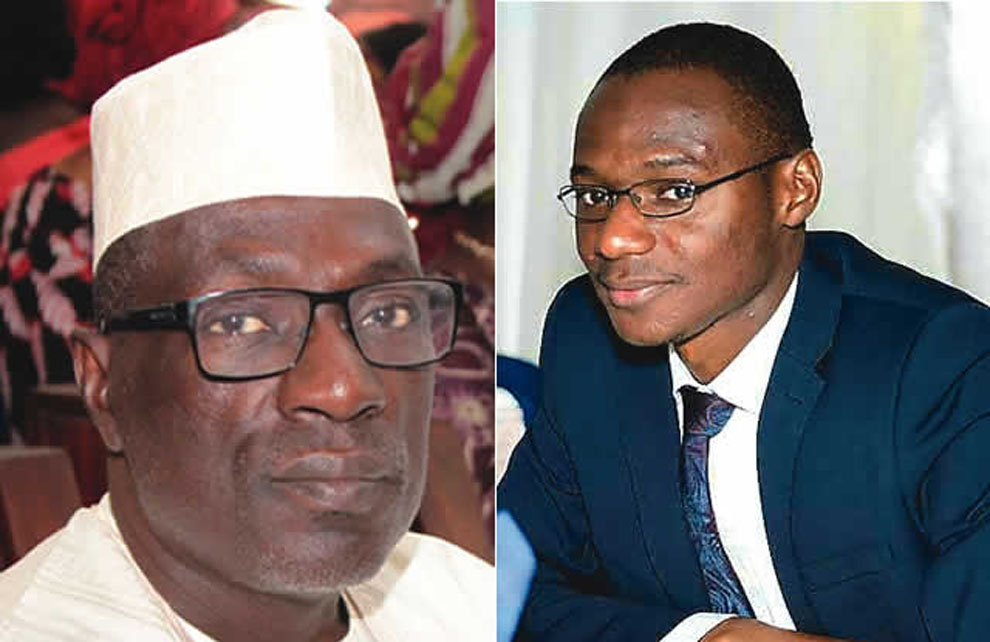
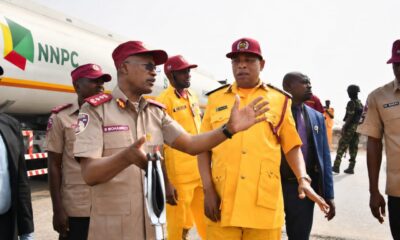
The Federal Road Safety Corps (FRSC) has confirmed the death of Faisal Makarfi, son of former Kaduna State Governor Ahmed Makarfi, following a car accident on the Kaduna-Kano highway.
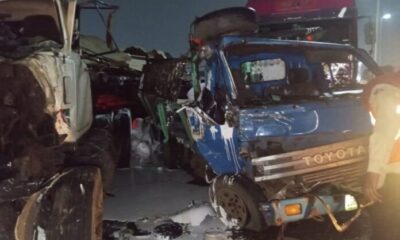
The crash occurred on Saturday at Lambar Zango, along the Zaria-Kaduna road. Kabir Nadabo, the FRSC’s Sector Commander for Kaduna State, told the News Agency of Nigeria on Sunday that the incident involved three men, leaving two others unconscious.
According to Nadabo, the accident happened when the front right tyre of a KIA vehicle travelling from Zaria to Kaduna came off. In an attempt to regain control, the vehicle overturned.
READ ALSO:
- AFCON: Gunmen kill SuperSport crew members, police, says NFF
- Bandits block Gusau-Funtua expressway, kidnap many travellers
- Why Tinubu govt should withdraw Oyedepo’s airstrip licence – Group
“A team from RS1.17 Birnin Yero responded to the scene,” Nadabo said. “The father of one of the victims had already arranged for him to be taken to an undisclosed hospital in Kaduna.”
It was later confirmed that Faisal Makarfi was among those involved in the crash. He was declared dead at the hospital, while the driver and another passenger remain unconscious.
Faisal’s burial was scheduled for 10 a.m. today at Sultan Bello Mosque, Unguwar Sarki, Kaduna.
FRSC confirms death ex-Kaduna governor’s son in auto crash









metro
MURIC Tells Adeleke to ‘Pack Your Dancing Kits’ Ahead of Osun 2026 Election
MURIC Tells Adeleke to ‘Pack Your Dancing Kits’ Ahead of Osun 2026 Election
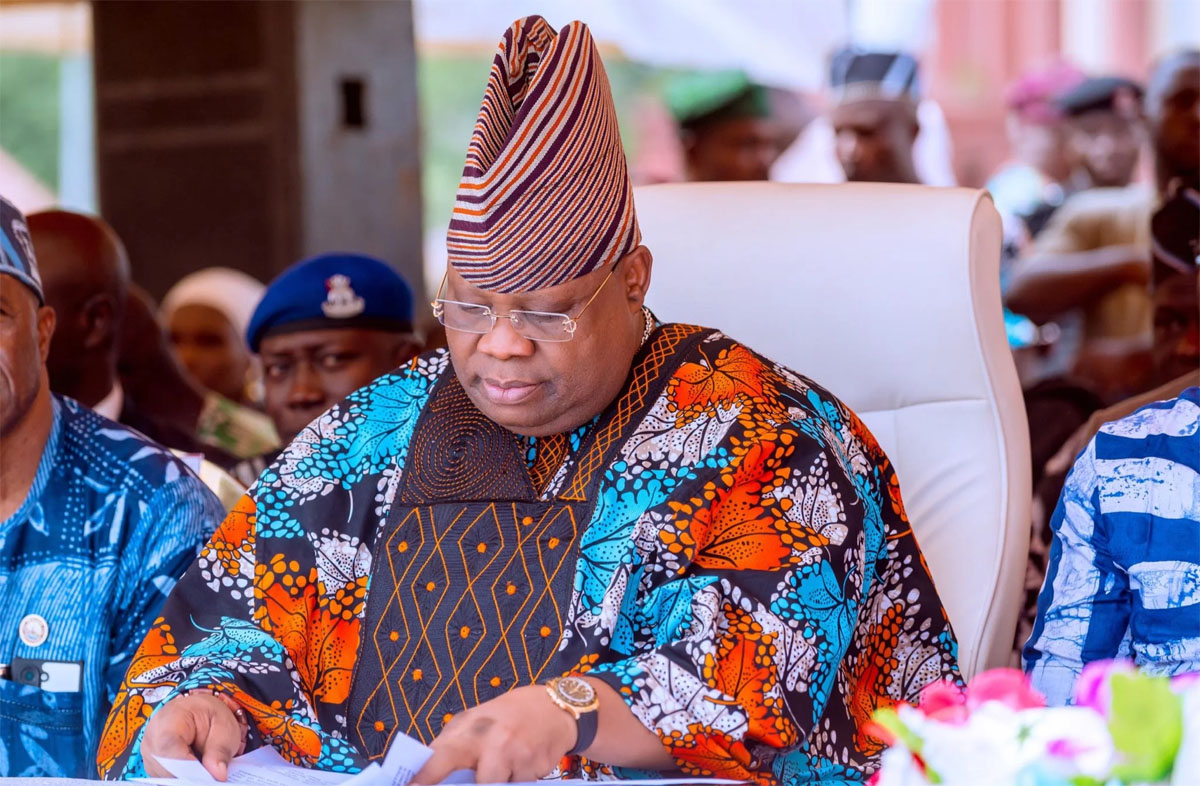
- The Muslim Rights Concern (MURIC) has advised Governor Ademola Adeleke to begin packing his belongings from the Oke-Fia Government House in Osogbo, insisting that he will be defeated in the August 15, 2026 governorship election for allegedly deceiving Muslims in the state.
The Muslim Rights Concern (MURIC) has issued a strong statement advising Governor Ademola Adeleke to start packing his belongings from the Government House, Oke-Fia, Osogbo, ahead of the upcoming Osun State governorship election scheduled for August 15, 2026. In a statement released on Monday, July 27, 2026, by its Executive Director, Professor Ishaq Akintola, the human rights group insisted that Adeleke would be punished at the polls for what it described as deceiving the Muslims of Osun State.
The group declared that Adeleke’s “unrenewable rent has expired” and that “the estate agents are waiting at the gates to usher in the new landlord,” referring to another Nurudeen as the incoming governor. MURIC stated that while it could overlook certain alleged political infractions such as the damaged flyover, alleged “edenisation” of governance, mishandling of local government affairs, and examination malpractice, the governor’s religious conduct was unforgivable.
READ ALSO:
- Gunshots, Teargas Rock Osun Motor Park as Thugs Defy Adeleke’s NURTW Suspension Order
- Kogi Poly Suspends 7 Lecturers Over Sex-For-Marks, Handout Sales Amid Cultism Crisis
- Tinubu appoints Olanrewaju-Smart as Special Adviser on House of Reps matters
The core of MURIC’s grievance centres on what it describes as Adeleke’s deception of Muslims regarding his religious identity. According to the statement, though the governor is a Christian, he pretended to be a Muslim because he is aware that Osun State’s population is predominantly Muslim. MURIC contrasted Adeleke’s approach with that of former Governor Olagunsoye Oyinlola, a Christian who did not pretend to be a Muslim and was transparent about his faith. The group also drew a comparison with President Bola Ahmed Tinubu, who “came out boldly with his Muslim-Muslim ticket at the federal level,” a stance MURIC described as “dignifying,” which it said was missing in Adeleke’s “Christian-Christian government.”
The statement further accused Adeleke of playing on the intelligence of Osun Muslims. “Though a Christian, he pretended to be a Muslim because he is aware that the population of the state is predominantly Muslim. That is very close to obtaining something by false means,” the statement read. MURIC concluded by telling the governor: “Pack your dancing kits from Oke-Fia because another Nurudeen, the Nurudeen with capital ‘N’, will soon move in. He is the new landlord.”
This latest salvo is part of a long-running feud between MURIC and Governor Adeleke. The group has previously accused the governor of marginalising Muslims in political appointments, alleging that Christians received 17 commissioners while Muslims received only seven. MURIC also alleged financial impropriety, including a payroll discrepancy and mismanagement of security votes. The Osun State Government has previously dismissed these allegations, with Commissioner for Information Kolapo Alimi accusing MURIC of spreading misinformation and challenging its director to declare any partisan interest in the opposition All Progressives Congress.
MURIC Tells Adeleke to ‘Pack Your Dancing Kits’ Ahead of Osun 2026 Election
metro
Gunshots, Teargas Rock Osun Motor Park as Thugs Defy Adeleke’s NURTW Suspension Order
Gunshots, Teargas Rock Osun Motor Park as Thugs Defy Adeleke’s NURTW Suspension Order
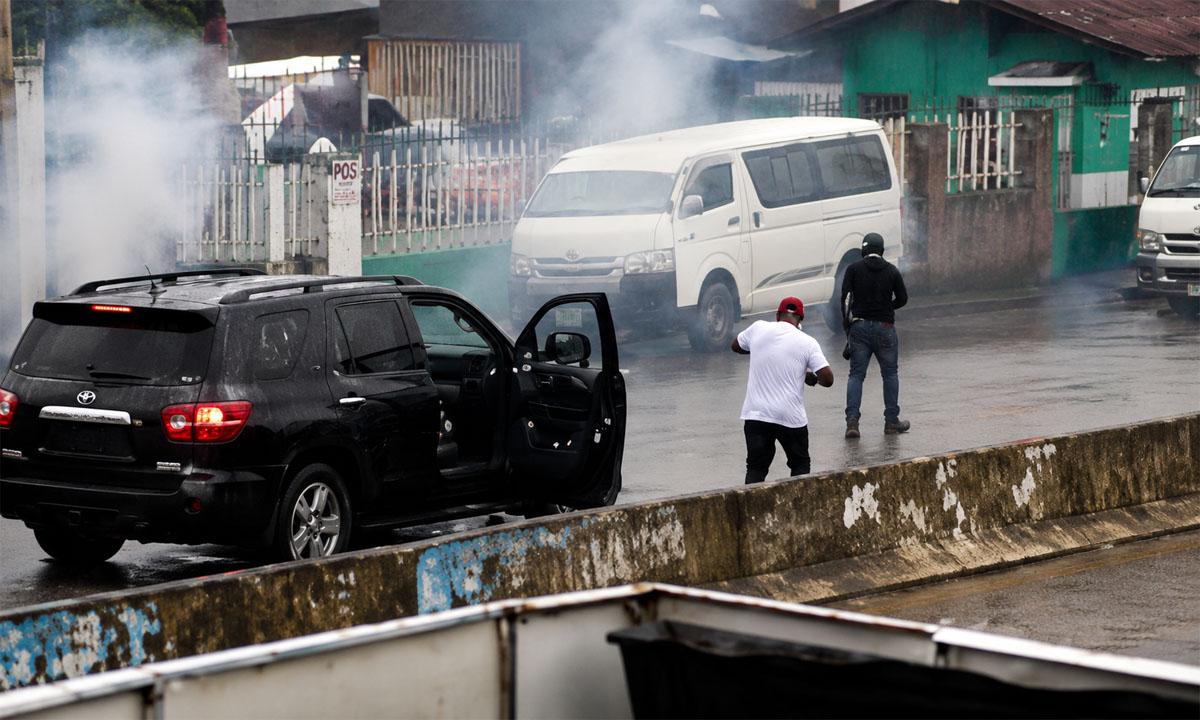
- Gunshots and teargas were reported at the Mayfair Motor Park in Ile-Ife, Osun State, on Sunday as suspected thugs allegedly accompanied by armed police officers defied Governor Ademola Adeleke’s directive suspending all National Union of Road Transport Workers activities across the state, in a violent escalation that has raised serious security concerns less than three weeks before the August 15 governorship election.
Gunshots and teargas rocked the Mayfair Motor Park in Ile-Ife, Osun State, on Sunday as suspected thugs allegedly accompanied by armed police officers defied Governor Ademola Adeleke’s directive suspending all National Union of Road Transport Workers activities across the state. Multiple eyewitness accounts revealed that the suspected thugs, reportedly escorted by armed police personnel, stormed the park firing weapons and deploying teargas, forcing residents, traders, and motorists to flee for safety. A video obtained by SaharaReporters appeared to show police officers discharging firearms and using teargas during the incident at the motor park. Sources expressed deep concern that security personnel were allegedly working against the government’s efforts to restore peace, with one source lamenting that the governor’s order was to ensure normalcy was restored to the parks, yet the police that should be concerned about peace were now escorting thugs to go against the governor’s order, describing it as an unfortunate situation.
The situation escalated dramatically when personnel of the Nigerian Navy stationed in Ile-Ife reportedly intervened, responding to distress calls from Mayfair residents. According to sources, the naval personnel arrested five suspected thugs allegedly found in possession of pump-action guns after they took over the park. A source told SaharaReporters that after shootings to scare away people and harassing motorists, men of the Nigerian Navy at Ile-Ife intervened to stop the police-aided thugs from the invasion of the Mayfair Park and arrested four thugs with pump-action guns. In a stunning escalation, the Osun State Government alleged that police operatives attacked the Navy personnel to secure the release of the arrested suspects. According to an official statement from the Commissioner for Information and Public Enlightenment, Kolapo Alimi, the Osun State Commissioner of Police contacted the Navy commandant demanding the release of the suspects. The commandant reportedly informed the CP that he needed to seek approval from higher authority before handing them over. The CP was said to be enraged and subsequently deployed four lorries of mobile policemen to attack the Navy personnel with teargas, rescuing the hoodlums. However, the police did not succeed in retrieving five pump-action rifles seized by the Navy from the suspects. Describing the incident as a bizarre situation and impunity carried too far, the government called on President Bola Ahmed Tinubu, National Security Adviser Mallam Nuhu Ribadu, and the diplomatic community to intervene. The government also called for a visa ban on any police official aiding political violence in Osun State.
READ ALSO:
- Kogi Poly Suspends 7 Lecturers Over Sex-For-Marks, Handout Sales Amid Cultism Crisis
- Tinubu appoints Olanrewaju-Smart as Special Adviser on House of Reps matters
- Gunmen invade Osun PVC distribution centre, flee with voter cards
The latest violence comes only days after Governor Adeleke ordered the immediate suspension of all NURTW activities in motor parks across Osun State following recurring clashes linked to transport union operations. He also directed security agencies to arrest anyone operating in the name of the union while making it clear that commercial transport services should continue uninterrupted. The governor stated that he was directing the police and other security agencies to stop all activities of the union in all parks across the state, clarifying that he was not saying they should close the parks but that they should not allow anyone to operate in the parks in the name of the union, adding that anyone found contravening this order should be arrested for possible prosecution for disturbance of public peace. The Osun State Government later clarified that the suspension of activities did not amount to dissolving the state’s NURTW leadership, maintaining that Nurudeen Alowonle remained the substantive chairman of the union in the state. The government alleged that a group led by Kazeem Oyewale, popularly known as Asiri Eniba, had wrongly interpreted the suspension as a dissolution and claimed there was a vacuum to justify inaugurating a caretaker committee. The government further directed security agencies to remove Asiri Eniba and his supporters from motor parks across the state, stating he had no legal basis to be there in all ramifications.
The fresh confrontation also followed Saturday’s announcement by the newly inaugurated NURTW chairman, Kazeem Oyewale, that union activities had resumed in motor parks despite the government’s directive. Oyewale said the new executives had been inaugurated in Abuja and appealed to residents not to associate union members with violence, assuring the people of Osun State that there was no longer any violence and that all issues in motor parks had been resolved. Governor Adeleke had earlier condemned repeated shootings around motor parks in Osogbo and accused individuals allegedly accompanied by police officers of disrupting public peace. He said he had reported the matter to the Inspector-General of Police and other security chiefs while demanding the arrest of Asiri Eniba over what he described as open defiance of public security laws. The crisis comes amid heightened political tension ahead of the August 15, 2026, Osun State governorship election, which is considered a crucial test of Nigeria’s democratic institutions ahead of the 2027 general elections. The Independent National Electoral Commission has identified 385 flashpoints and 200 difficult terrains across the state, with concerns over the high risk of kidnapping and banditry in parts of the state. The Imole Campaign Council has called on the Federal Government and INEC to ensure a free, fair, and credible poll, describing the election as a major assessment of the integrity of INEC, the Nigeria Police Force, and other institutions responsible for safeguarding the electoral process. With less than three weeks until the election, stakeholders have called on security agencies and political parties to ensure a peaceful and credible election, warning that violence must not be allowed to triumph over the will of the people.
Gunshots, Teargas Rock Osun Motor Park as Thugs Defy Adeleke’s NURTW Suspension Order
metro
Gunmen invade Osun PVC distribution centre, flee with voter cards
Gunmen invade Osun PVC distribution centre, flee with voter cards
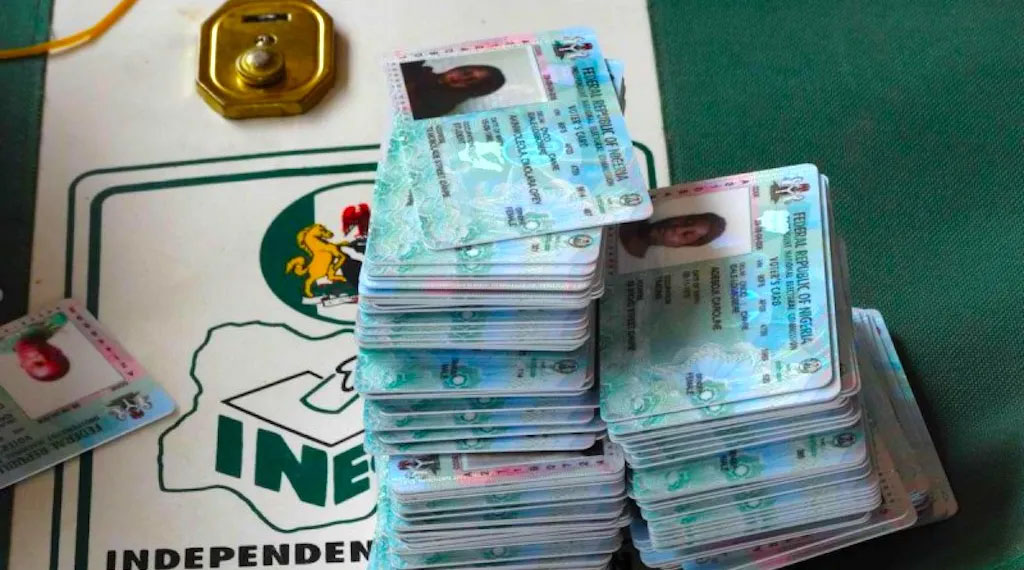
Suspected armed hoodlums on Sunday attacked a Permanent Voter Card (PVC) distribution centre in Okuku, Odo-Otin Local Government Area of Osun State, disrupting the ongoing voter card collection exercise and carting away packs of voter cards in an incident that has heightened security concerns ahead of the August 15, 2026 Osun governorship election.
The attack occurred at Oyinlola DC Primary School, Ward 2, where officials of the Independent National Electoral Commission (INEC) were distributing Permanent Voter Cards (PVCs) to eligible voters as part of preparations for the upcoming election.
Eyewitnesses said between eight and 10 armed men stormed the venue unexpectedly and fired several gunshots into the air, sending electoral officials, prospective voters and residents scrambling for safety before making away with packs of voter cards.
A resident of the community, identified simply as Gbadebo, said the attackers appeared to have entered the premises unnoticed before launching the operation.
According to him, the hoodlums headed straight to the section where INEC officials kept the voter cards after firing into the air, forcing everyone at the venue to flee in different directions.
The Osun State Police Command confirmed the incident, stating that the armed attackers carted away three packs of Permanent Voter Cards before escaping.
READ ALSO:
- NDLEA intercepts ₦10bn worth of cocaine, Loud, opioids in Lagos
- Super Falcons recover stolen cash after hotel theft suspect confesses
- Accord Party, Governor Adeleke Adopt Tinubu as 2027 Presidential Candidate
In a statement issued by the command’s spokesperson, Abiodun Ojelabi, the police said the Commissioner of Police, Ibrahim Gotan, had strongly condemned the attack and ordered an immediate and comprehensive investigation.
The police disclosed that tactical teams, intelligence operatives and other security personnel had been deployed to identify, arrest and prosecute all those involved, as well as recover the stolen voter cards.
The command assured residents that every available resource was being deployed to ensure those responsible were brought to justice and appealed to members of the public to provide credible information that could assist investigators.
Reacting to the incident, Osun State Resident Electoral Commissioner (REC), Oluwatoyin Babalola, described the attack as unfortunate and condemned the disruption of the PVC distribution exercise.
She said INEC had commenced an internal assessment to determine the exact number of voter cards stolen and evaluate the impact of the incident on the ongoing distribution exercise.
The electoral commission, however, assured eligible voters that the attack would not derail preparations for the Osun governorship election, reiterating its commitment to conducting a free, fair, credible and transparent election.
The incident temporarily disrupted PVC collection in the affected community before normalcy was restored with the deployment of additional security personnel.
The attack comes as INEC continues the distribution of Permanent Voter Cards across Osun State ahead of the governorship election, encouraging registered voters to collect their PVCs before the deadline.
Political observers say attacks on electoral facilities and materials pose a serious threat to public confidence in the electoral process and underscore the need for stronger security around election-related activities.
Security experts also noted that while stolen PVCs alone cannot be used to manipulate election outcomes because Nigeria’s Bimodal Voter Accreditation System (BVAS) requires biometric verification before accreditation, such incidents could discourage voter participation and undermine public trust if perpetrators are not swiftly apprehended.
The police reaffirmed their commitment to protecting electoral personnel, facilities and materials throughout the election period and urged political actors, community leaders and residents to support efforts aimed at ensuring a peaceful and violence-free electoral process.
Investigations are ongoing as security agencies intensify efforts to recover the stolen voter cards and dismantle any criminal network behind the attack.
Gunmen invade Osun PVC distribution centre, flee with voter cards
-
 metro2 days ago
PFICP scandal: How ₦1.3bn ‘fake agency’ traced to Buhari’s government entered 2026 budget
-
 Politics3 days ago
Atiku denies Obasanjo’s N5m bribery claim, links accusation to 2027 presidential race
-

 Education3 days ago
Oluwo Urges Youths to Pair Degrees with Skills, Commends Westland University’s Excellence
-

 metro2 days ago
Dalung gives Mutfwang 72-hour ultimatum to withdraw apology to Igbos over civil war role
-
 metro3 days ago
Police Detain 4 Officers Over Viral Ethnic Profiling Video on Lagos–Benin Expressway
-
Politics1 day ago
2027 election: Atiku accuses Obasanjo of reviving false allegations to favour preferred candidate
-

 metro7 hours ago
NDLEA intercepts ₦10bn worth of cocaine, Loud, opioids in Lagos
-
 metro3 days ago
“No Governor Has Such Power” – MC Oluomo Fires Back at Gov Adeleke Over Osun NURTW Ban