

Opinion
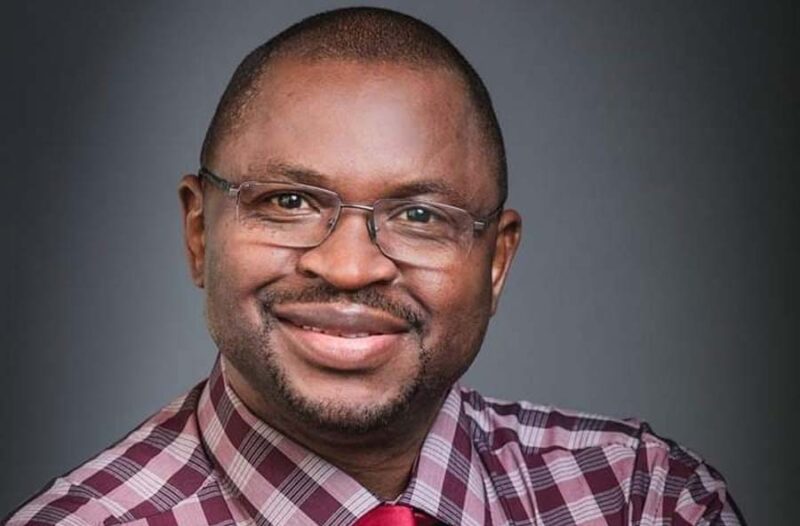
Farooq Kperogi: What Trump’s comeback may mean for Africa
Farooq Kperogi: What Trump’s comeback may mean for Africa
A few weeks ago, I spoke at a symposium in my university here in Georgia on the implications of the U.S. presidential election for the African diaspora. To the bemusement of my audience (who were a mix of Donald Trump and Kamala Harris supporters), I explained the curious phenomenon of African support for Donald Trump, particularly among Nigerian and Kenyan evangelicals.
I described how a surprising number of African Christians (and, in fact, some Muslims) consider Trump “God’s chosen one,” a valiant defender of conservative religious values whom they imagine will take on global LGBTQ rights with righteous vengeance.
The audience was incredulous and struggled to reconcile Trump’s infamous moral transgressions with his appeal to African conservatives. When I explained that these supporters see Trump as a warrior against the “cultural liberalism” they believe threatens their faith, eyebrows raised.
The eyebrows raised even further when I pointed out that there are Muslims who are so disillusioned with the Biden/Harris administration’s support for Israel that they prayed for a Trump win even when Trump is more manifestly hawkish than Biden/Harris and so disdains Muslims that he enacted a “Muslim ban” (which actually included non-Muslims) within the first few months of his first presidency.
But here’s the crux: Donald Trump is no more interested in religious morality than he is in the theological reveries of his African fan base. He is, in truth, a transactional man, a walking paradox of deals and calculations, utterly bereft of the very spiritual or moral foundation his African supporters so naively project onto him.
Trump’s “faith,” such as it is, is at best a performance, an asset to be deployed for strategic gains among America’s own conservative Christians, whom he has calculatedly courted for votes. To imagine Trump as the champion of conservative religious values is to mistake calculation for conviction and propaganda for principle.
His record speaks louder than his rhetoric. In 2015, for example, at a gathering of conservative Christians in Iowa, he openly admitted he never asks God for forgiveness, a theological anathema for any believer.
Later, on the campaign trail, he betrayed his biblical unfamiliarity, when he clumsily referred to “Two Corinthians” rather than the more common “Second Corinthians.” A slip of the tongue, perhaps, but in a subsequent interview, he tried to salvage his Christian credibility but ended up quoting a verse that doesn’t even exist: “Never bend to envy,” he offered, an adage Christians say is found nowhere in the Bible.
READ ALSO:
- Nigerian pastor under fire for congratulating Trump
- Tinubu’s choice of my replacement wrong, says ex-housing minister
- Germany relaxes EU Blue Card rules to attract skilled workers
Even when cornered about his favorite Bible verse, he misfired by citing “an eye for an eye,” a command Jesus explicitly repudiated. These are not the errors of a deeply religious man but the floundering of someone who considers faith a tool, not a calling.
Two Trump biographers sum up his attitude to Christianity and God nicely. Timothy O’Brien, in a 2007 book titled TrumpNation: The Art of Being Donald, wrote: “Donald has never been a spiritually or religiously serious person.”
And in 2001 book titled The Trumps: Three Generations That Built an Empire (which was revised and reissued as The Trumps: Three Generations of Builders and a President), Gwenda Blair wrote: “He’s a transactional guy with humans, and it’s no different with God — it’s all about whatever is to his advantage with regard to his supporters, and referencing God is exactly and only that.”
Yet for all his transparent artifice, Trump has nonetheless cast a beguiling spell on certain parts of Africa and the African diaspora, who see in him a savior of conservative values. They seem unfazed by the fact that his administration’s policies, his rhetoric, and his track record show little regard for Black humanity.
This disdain was palpable during his last tenure, and his recent rallies have done nothing to dispel it. Take, for instance, his unfounded claim during the first and only presidential debate that Black Haitian immigrants in Springfield, Ohio, were eating cats and dogs, a baseless assertion that isn’t just false but revelatory: it reveals a mind committed to degrading Blackness wherever he sees it.
There’s a dark and disheartening history here. Trump’s disdain for Black people isn’t new, nor has it emerged from thin air. His bigotry is old news, woven through an embroidery of disparaging comments, discriminatory practices, and racially motivated policies dating back decades.
In 1973, the Department of Justice sued Trump for refusing to rent apartments to Black families, citing his blatant violation of the Fair Housing Act. He fought the case before reluctantly signing an agreement to stop his racist practices.
His remarks afterward? He railed that the government was forcing him to rent to “welfare recipients,” the vile code by which he aligned poverty with Blackness. The sentiment was clear: in his mind, Black people didn’t belong, and it was his duty to keep them out.
Such is Trump’s enduring perspective, made all the more alarming by his political ascendance. The implications of his return for Africa are both direct and symbolic. During his previous presidency, Trump cut aid programs that many African countries rely on and dismissed African immigrants as a detriment to American society.
His rhetoric went beyond mere words; his policies made a statement, a policy posture that informed his supporters, shaped the broader narrative around Black immigration, and foreshadowed his now-infamous “shithole countries” comment in 2018.
When Trump disparaged Haiti, Nigeria, and other Black-majority nations in favor of immigration from Norway, it wasn’t just a one-off gaffe; it was a worldview rooted in negrophobic disdain.
In truth, Trump has never reckoned with the humanity of Black people. Even before his “shithole countries” remark, he lambasted a Black accountant in 1991, citing “laziness as a trait in Blacks.”
Years later, during his 2016 campaign, he praised Ann Coulter’s venomously xenophobic book, which decried the arrival of Nigerians in the United States as a criminal invasion.
READ ALSO:
- Baltasar Engonga: I dated him for four years, lady says, sues for betrayal
- Biden, Trump set for rare direct encounter at White House this week
- Why I married my husband – Mercy Aigbe
His decision to block the appointment of Ngozi Okonjo-Iweala, a Nigerian-American, to lead the World Trade Organization in 2020, was yet another evidence of his disregard for Black excellence—American citizenship or no.
This is not a man whose opinions have been shaped by reasoned disagreement but by ingrained prejudice and an unwavering belief that Black lives, both within and outside of America, are lesser. Such a man at the helm of one of the world’s most powerful nations isn’t just a potential diplomatic nightmare; it’s a moral catastrophe for those who value the dignity of human life.
For Africa, the implications of a Trump resurgence are manifold. His approach to immigration alone could lead to increased restrictions on Africans seeking opportunity or refuge in the United States.
His contempt for Africans doesn’t only taint those who seek to immigrate but extends to those who remain. His willingness to denigrate entire nations with his vile language reinforces a global view of Africa as “the other,” a place he deemed too backward to deserve respect or dignify.
But Trump’s leadership affects more than just immigration. His previous administration gutted health programs that African nations relied on to tackle AIDS, malaria, and other epidemics. His withdrawal from multilateral agreements and climate initiatives destabilized African countries that disproportionately suffer from the effects of global warming and benefit the least from its economic causes.
Africa is neither immune to nor shielded from Trump’s reign. From economic pressures to ideological disrespect, his contempt manifests as policies that undermine progress and sow the seeds of isolationism.
For Africans, Trump’s victory isn’t just a foreign policy issue; it’s a personal affront. It’s a slap in the face to the millions of Africans who know America as a country that historically symbolized freedom, opportunity, and hope.
Africa’s bond with the United States transcends politics; it is the memory of independence movements supported by the promise of democracy, the aspiration for economic opportunity, and the reverence for cultural exchange. Trump’s worldview, with its utter disregard for Black humanity, threatens to erode this bond, leaving in its wake a continent left to question its ties with the West.
The challenge before Africa is to use this moment as an opportunity for unity and self-determination.
Trump’s contempt is an ugly mirror, a stark reminder that Africa cannot rely on foreign validation. Leaders and citizens alike must demand dignity, both in their interactions with the United States and in their own national narratives.
The message should be clear: Africa is neither a pawn nor a supplicant. It is a continent rich in resources, diversity, and human potential, undeserving of the scorn Trump so freely dispenses.
Trump’s victory may symbolize a return to darkness, but it is also an opportunity to galvanize resilience. Africa need not waste energy on a man who cannot see beyond his prejudice; instead, it should look to the future with resolve.
Africa’s destiny lies not in the hands of a foreign leader, and certainly not in one so blind to its humanity. Let his disdain be a rallying cry, not for despair, but for Africa to rise on its own terms.
Farooq Kperogi: What Trump’s comeback may mean for Africa
Farooq Kperogi is a renowned Nigerian columnist and United States-based Professor of Media Studies.









Opinion
2027: Competence, Not Zoning, Should Decide Nigeria’s Next President — Imasuagbon
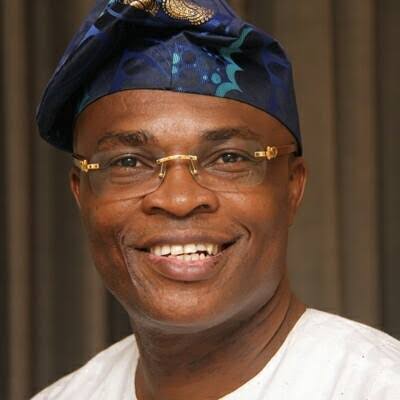
Nigerians should look beyond ethnicity, region and the longstanding debate over rotational presidency when choosing the country’s next leader, according to a chieftain of the African Democratic Congress (ADC), Kenneth Imasuagbon.
The former Edo State governorship aspirant said the priority ahead of the 2027 election should be finding a president with the ability to confront Nigeria’s economic, security and infrastructure challenges.
Speaking to journalists in Benin, Imasuagbon argued that presidential rotation is not a requirement of the Nigerian Constitution and should therefore not outweigh the question of competence.
He said voters should be more concerned about replacing poor schools with better ones, improving healthcare and addressing hardship than debating where the next president comes from.
Imasuagbon specifically appealed to voters in the South to support former Vice President Atiku Abubakar, who is contesting the 2027 presidency on the ADC platform.
According to him, Atiku has demonstrated the experience and determination needed to improve the country, describing the former vice president as someone capable of promoting national unity and fairness.
He also accused the Bola Tinubu administration of worsening economic pressure through policies including the removal of fuel subsidy, while expressing concern about the condition of roads, electricity and other infrastructure.
Imasuagbon argued that the next administration must focus on practical improvements in areas such as power, transportation, employment, security and public services.
The ADC chieftain also dismissed the idea that the ruling All Progressives Congress (APC) would automatically benefit from its incumbency advantage in 2027.
He maintained that the electorate ultimately determines the outcome of an election, arguing that voters could change the political direction of the country if they were determined to do so.
Imasuagbon further criticised what he described as regional and ethnic considerations in the distribution of political appointments and opportunities, insisting that the next president should give Nigerians across different parts of the country a sense of belonging.
His comments come as political parties and their candidates intensify preparations for the 2027 presidential election.
Opinion
Lesson from Dotun Oladipo’s Brave Daughters, by Bamidele Johnson
Lesson from Dotun Oladipo’s Brave Daughters, by Bamidele Johnson
I hope to grow old. I want to see my kids become real adults, find their own feet, make mistakes, recover from them, and perhaps one day complain that their own children are giving them grey hairs. I want that plainly stated before anything else, as everything that follows might read as a man agreeing to an early exit rather than a man simply being honest about the odds.
I want the decades. I want to become the grandfather who repeats the same stories until nobody bothers correcting him anymore. But wanting a thing and being granted are different things. The last year has made that difference harder to ignore than I would like. I have lost many friends recently to keep thinking that optimism is my natural resting state. Some of these men had better blood pressure than mine, better habits, better everything that is supposed to count. It did not save them.
There is no formula I know that reliably separates the men who make it to 70 from those who do not. Anyone who says he knows one is selling something. So, I do not assume that old age is an already booked destination. Even if I once did, which I doubt, the last three years have cured me of such an illusion. As such, I treat it as a hope rather than an expectation, and I have found that a more honest way to live.
It is exactly why I want something placed on record now, while I am still able to place things on record, rather than leave it for people to guess what my wishes were in the fog of a funeral week. If I do not make old bones, my children are not to be asked to read tributes at my funeral. Not one line, however short, however lovingly written.
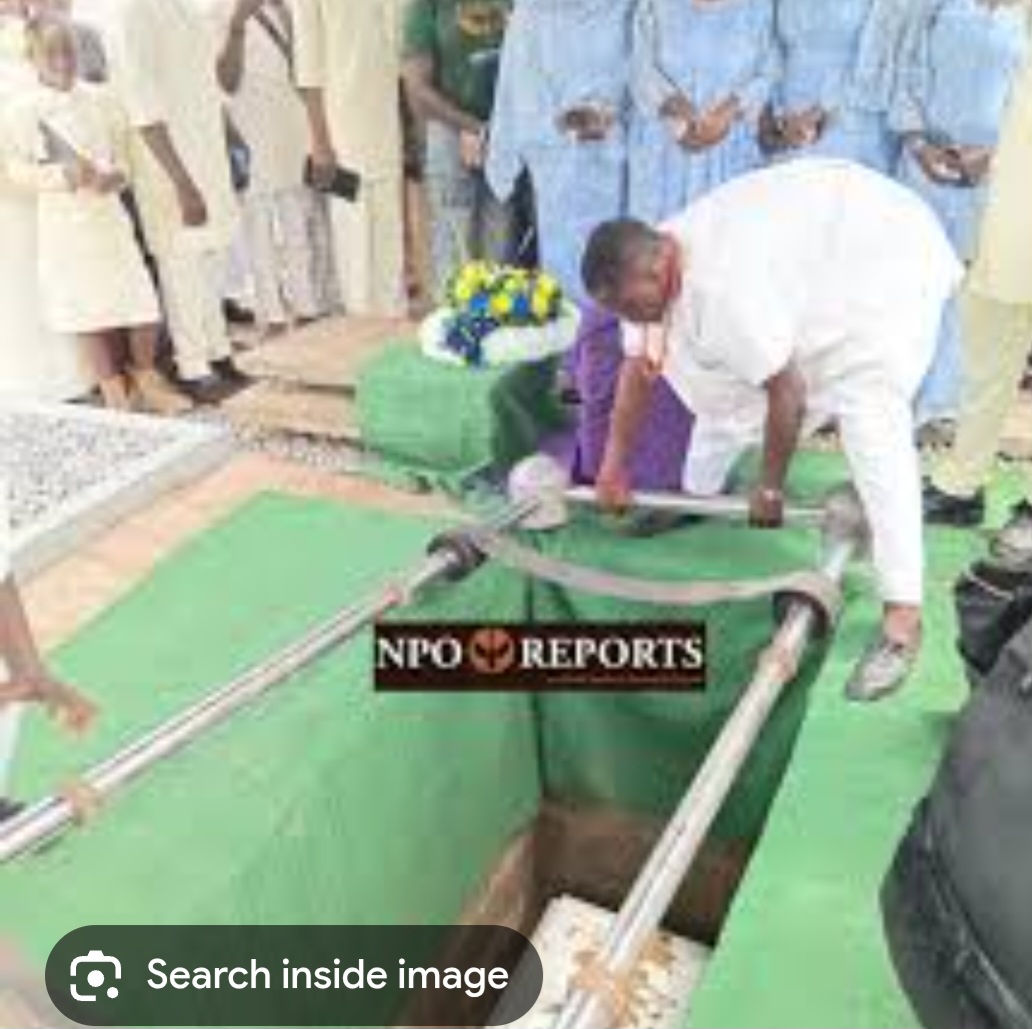
This, for me, was settled today rather than re-opened. At Dotun Oladipo’s funeral service, his three daughters took turns to read their tributes to their dad, and I found myself watching them with awe. There was a kind of strength in them that I do not possess. It is the strength needed to stand in front of a hall brimming with grieving adults and speak about a man they have just lost. Forever. Strength, however, is not the same as ease. I could see plainly what that strength was costing them as they read. Their voices caught. Their composure held and then did not hold and then held again through sheer will.
In front of them, in the pews, men and women considerably older than them came undone in ways the girls themselves were somehow managing to resist. I went mightily close. Some of the sobbing was quiet, the type people try to fold into a handkerchief. Some of it was not quiet at all, the kind that announces itself whether or not you want it.
Those young women honoured their father with a grace that is beyond me. What they did was astonishing. So, what I am attempting is an observation of a custom I have now watched wound people. This was not the first time I had watched this particular ritual extract more than it should from people already running on fumes. I saw an earlier and harder version of it at a friend’s wake back in 2015.
The first son was called forward to read his father’s tribute, and he could not do it. He tried, but the words would not come, and he stood there in front of a crowd of mourners, with his grief simply refusing to organise itself into sentences. The officiating minister, rather than releasing him from the task, urged him to continue. I sat fizzing with sorrow and ire. He could not go on and, eventually, the minister accepted, but not before insisting a while longer than it should have reasonably taken. His younger brother was called up next, presumably on the theory that if one grieving son could not manage it, maybe another one could. He flunked it in the same way. Grief does not distribute itself more conveniently among siblings just because a programme has been printed and needs to be followed.
I have turned that memory over many times since, trying to work out why this part of the rites is treated as mandatory in the first place. I have not found a satisfying answer. Maybe it comes from a belief that a child’s words carry more weight than anyone else’s, which may even be true, but weight is exactly the problem when those carrying it are struggling to hold themselves together with nothing but adrenaline and the fear of dissolving in public.
Maybe it is simply inertia, the reason we still do a hundred things at funerals that nobody can explain the original purpose of. Either way, I have stopped looking for the justification. I no longer think one exists that is good enough to weigh against what I watched happen to that boy in 2015.
So, let this stand as my instruction rather than my preference, the kind of thing I would rather state plainly now than leave for my children to infer later from how uncertain I sound when the subject comes up in passing. If I do not get the old age I am hoping for, my children will not be asked to read a single word over my body. Someone else can speak for me. A friend, a stranger with a steadier voice and a smaller stake in the loss, anyone whose grief will not be quite so total that standing upright becomes almost impossible.
My children, of course, will sit in front and fall apart if that is what the day requires of them, but without the microphone. That, at least, is one small mercy I intend to arrange for them while I am still here to arrange it.
Dotun deserved every bit of the send-off his daughters gave him today, and I suspect he would have been the first to tell them to sit down and let someone else carry the weight for a while. He did not get a say in that, as none of us ever do once we are the ones being spoken of rather than the ones speaking. Rest well, Dotun. You raised three young women whose strength I will not soon forget. That alone says everything worth saying about the man you were.
Opinion
‘Tinubu Will Win Again in 2027’ — Charismatic Bishops’ Secretary
‘Tinubu Will Win Again in 2027’ — Charismatic Bishops’ Secretary
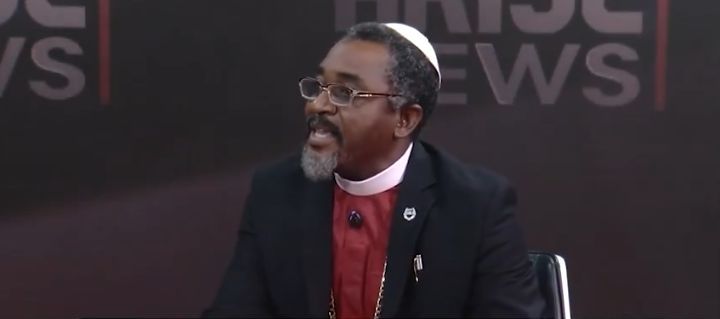
A senior Nigerian cleric, Archbishop Chivir Chianson, has declared that President Bola Tinubu will retain the presidency after the 2027 general election, attributing the prediction to a message he said came from God.
Chianson, who serves as Secretary General of the Charismatic Bishops’ Conference of Nigeria, made the statement while appearing on Arise Television on Saturday.
Rather than basing his prediction on political calculations, the archbishop said his confidence came from what he described as the prophetic role of bishops.
He maintained that the conference had previously spoken about Tinubu’s political future based on what he said was divine revelation and that the President would return for another term.
Chianson also predicted that Tinubu’s performance would improve if he wins the 2027 election.
READ ALSO:
- DSS warns Osun churches, mosques, markets over alleged terrorist attack plot ahead of 2027
- ‘Tinubu Will Win Again in 2027’ — Charismatic Bishops’ Secretary
- Fake miracles, bogus grants: How clerics allegedly fleece Nigerians of millions
Addressing the political opposition, the cleric said the bishops could not be blamed if rival parties failed to unite or organise themselves effectively ahead of the election.
He also sought to clarify the position of the bishops when dealing with government, saying their role in speaking truth to power did not mean they should approach political leaders with hostility or disrespect.
According to him, the Constitution, alongside their religious convictions, should guide how they engage the President and the country.
Chianson said he was sufficiently confident in his prediction to promise that he would return to the Arise TV studio after the 2027 election, when he expects the result to demonstrate that the bishops’ prophecy was correct.
His comments add a religious dimension to the increasingly active political conversation surrounding the 2027 presidential race.
‘Tinubu Will Win Again in 2027’ — Charismatic Bishops’ Secretary
-

 International3 days ago
Islamic Council Condemns Attempted Attack on Holy City of Mecca
-
 News3 days ago
Keep Politics Out of My Office — Ogbomoso Grand Chief Imam Warns Politicians, Bloggers
-

 metro2 days ago
Niger Mosque Abductions: Terrorists Execute 30 of 500 Captive Muslim Worshippers
-

 Business2 days ago
Fuel Prices Climb to ₦1,500 per Litre Across Nigeria, Sparking Calls for Urgent Action
-

 News3 days ago
Blue Line Rail, Hospitals Get Boost as Lagos Approves ₦200bn Bond and Budget Reordering
-
 Entertainment3 days ago
BREAKING: Olu Jacobs Dies at 84, Atiku Mourns Cultural Icon
-

 News2 days ago
OAU Investigates Death of Final-Year Student as Police Begin Probe
-

 News20 hours ago
ECOWAS Biometric Card Expands as Seven Countries Begin Rollout