

metro
Shettima admits killing of civilians in Sokoto airstrikes, tenders apology

Shettima admits killing of civilians in Sokoto airstrikes, tenders apology
Vice President Kashim Shettima has extended his condolences to the government and people of Sokoto State over the killing of about 10 civilians in airstrike targeted at the Lakurawa terrorist group at Gidan Sama and Rumtuwa communities in Silame Local Government Area.
The villagers lost their lives on December 25, 2024, when the military targeted a logistics base of the Lakurawa insurgent group in the Silame area of Sokoto State, leaving others injured.
The Nigerian Air Force spokesperson, Air Vice Marshal Olusola Akinboyewa, had insisted that the airstrike was carried out based on credible intelligence from multiple sources and confirmatory aerial surveillance.
He however said reports of civilian casualties would be thoroughly investigated.
Meanwhile, the Vice President in a statement by Stanley Nkwocha, his spokesman, extended his sympathy to families of those mistakenly hit by the military onslaught on the terrorist group, noting that it was one of those rare sad moments when innocent civilians were caught in crossfire in the ongoing efforts to rid the country of all forms of terror.
He said, “I would like to extend my deep sympathies and condolences to the Government and people of Sokoto State, particularly families of those who lost their lives in the coordinated joint operation by the air and land components of Operation Fansan Yamma to eliminate Lakurawa terrorist groups at Gidan Sama and Rumtuwa communities in Silame Local Government Area.
READ ALSO:
- Tinubu not telling Nigerians the truth, says Sule Lamido
- Odili: Fubara prevented Wike from turning Rivers to private estate
- Putin apologises over Azerbaijan plane crash reportedly shot down
“I must say we are sorry and dismayed at the civilian casualties incurred and the excruciating pain that ensues in these extremely difficult times. I call for understanding, especially when it is considered that our gallant men of the Armed Forces were fighting and paying the supreme price to protect the lives of those caught in the crossfire.
“My thoughts and prayers particularly go out to the relatives of those who perished in the tragic event. May Almighty God ease your pain and grant you the courage and patience to bear the loss.”
Senator Shettima on behalf of the military expressed regret over the incident, just as he solicited more support for the troops, noting that with useful information, the officers would maintain accuracy and precision in fishing out the terrorists from among innocent villagers they are staking their lives to protect.
He said, “On behalf of our gallant officers, I apologise for this great loss. I urge you to continue to give our brave officers the assistance they need in carrying out their operations to ensure a safer country for all of us.
“Let me assure you that the administration of His Excellency, President Bola Ahmed Tinubu, is hell-bent on weeding out what is left of terror elements in the country and will stop at nothing in ensuring a peaceful Nigeria where farmers work freely in their farms and all Nigerians go about their businesses and other activities without fear of attacks from agents of death.”
Meanwhile, Vice President Shettima on Saturday led a delegation from President Bola Ahmed Tinubu on a condolence visit to the government and people of Jigawa State on the passing of the mother and son of the state governor, Alhaji Umar Namadi.
Within 24 hours after the passing of his mother, Hajiya Mariam Namadi, on December 25, the governor lost his eldest son, Abdulwahab Namadi.
Senator Shettima was accompanied on the visit to Hadejia, Jigawa State, by Governor Babagana Zulum of Borno State; Deputy Chief of Staff to the President, Senator Ibrahim Hassan Hadejia; some members of the National Assembly from Jigawa State and top government functionaries.
Speaking during the condolence visit, the VP noted that “death is an inevitable destiny that is hanging on everyone’s neck.”
“We are all from Allah, and at the train station with our baggage waiting for the train. From where? From Allah, to where, to Allah. Our bags and baggage are our deeds in this world,” he added.
Shettima admits killing of civilians in Sokoto airstrikes, tenders apology







metro
Explosion kills ISWAP bombmakers, foreign IED experts in Borno
Explosion kills ISWAP bombmakers, foreign IED experts in Borno
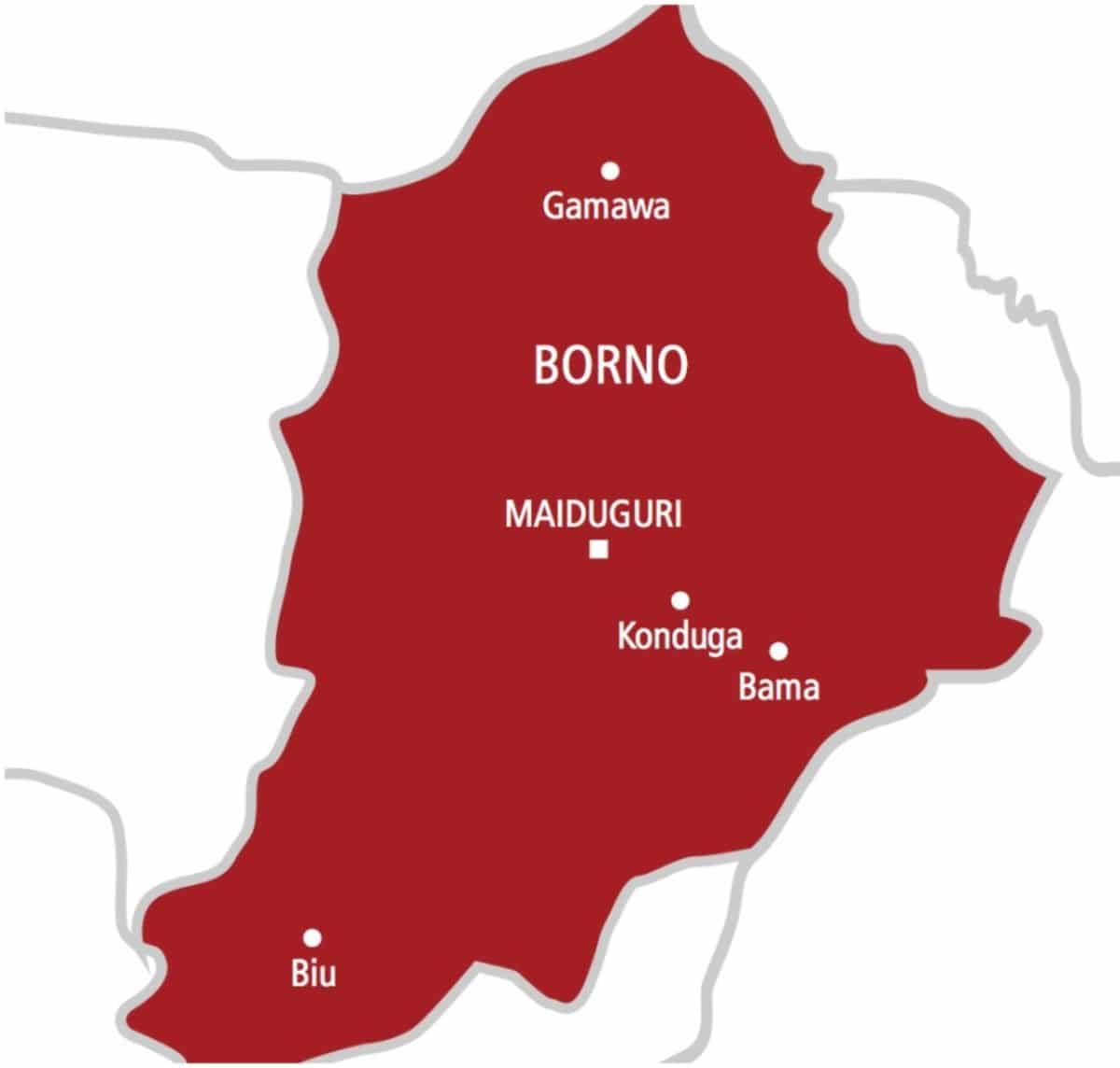
Five suspected members of the Islamic State West Africa Province (ISWAP), including a medical officer and four alleged improvised explosive device (IED) specialists, have reportedly been killed in a premature explosion while assembling explosives in Marte Local Government Area of Borno State.
Security sources said the explosion occurred at Maina Daya village, located between Sabon Tumbu and Jubilaram in the Marte axis, an area within the wider Lake Chad region where ISWAP has maintained a presence.
According to security analyst Zagazola Makama, those killed included an ISWAP medical officer identified as Usman Dan Fulani, two foreign nationals described by the sources as Arab IED technicians, and two suspected bomb-making specialists.
The identities and nationalities of the foreign nationals had not been independently confirmed as of the time of filing this report.
Sources said the suspected ISWAP members were assembling improvised explosive devices when the explosives detonated unexpectedly.
The group was reportedly preparing the devices for possible deployment along strategic military supply routes in Sector 1 of Operation HADIN KAI, raising concerns that the explosives may have been intended for attacks on security forces or vehicles operating in the area.
READ ALSO:
- Alleged Coup Mastermind Suggested Approaching Wike for Funding, Court Documents Show
- High Power Bills Force BUK to Halt Electric Vehicle Charging on Campus
- Adeleke challenges EFCC over freezing of Osun government account
The explosion reportedly destroyed the location where the devices were being assembled and prevented the suspected explosives from being deployed.
Security analysts said the deaths of experienced bombmakers could represent a significant setback to ISWAP’s IED network, particularly in the Marte-Monguno axis, where explosive devices have been used to target military patrols, security convoys and major transport routes.
However, analysts also noted that the long-term impact of the incident would depend on the group’s ability to replace the personnel and restore its technical capacity.
The development comes amid sustained military operations aimed at disrupting terrorist networks, destroying logistics facilities and limiting the movement of insurgents across Borno State and other parts of the North-East.
ISWAP has continued to use roadside bombs and other improvised explosive devices as part of its campaign against military formations, security personnel and civilian targets in the Lake Chad region.
Military sources said troops under Operation HADIN KAI had been directed to take advantage of the development by intensifying patrols, intelligence gathering, cordon-and-search operations and targeted offensives across the Monguno, Marte and Gamboru Ngala areas.
The operations are expected to focus on preventing surviving members of the suspected network from regrouping, relocating their activities or rebuilding their IED-manufacturing capacity.
Security forces are also expected to strengthen surveillance along routes that have previously been targeted with explosive devices.
The Nigerian military has continued to carry out intelligence-led air and ground operations against suspected ISWAP camps, logistics hubs and movement corridors across Borno.
While the latest explosion may temporarily disrupt the group’s operations, security analysts said sustained military pressure, improved intelligence gathering and continued collaboration with local communities would be necessary to prevent ISWAP from rebuilding its explosives network.
As of the time of filing this report, the Nigerian military had not issued an official statement confirming the incident, the identities of those killed or the reported involvement of foreign IED technicians.
Explosion kills ISWAP bombmakers, foreign IED experts in Borno
metro
Alleged Coup Mastermind Suggested Approaching Wike for Funding, Court Documents Show

Alleged Coup Mastermind Suggested Approaching Wike for Funding, Court Documents Show
FCT Minister’s name surfaces in alleged 2025 coup conspiracy testimony, yet records confirm he was never contacted or aware of the plan
The name of Federal Capital Territory (FCT) Minister, Nyesom Wike, has surfaced in court documents linked to the alleged plot to overthrow President Bola Tinubu’s administration. However, investigation records indicate there is no evidence that the minister was contacted or that he had any knowledge of the alleged plan. This distinction is crucial as the trial of six defendants continues before the Federal High Court in Abuja over the alleged 2025 coup conspiracy against the Nigerian government.
The emergence of Wike’s name came from the statement of retired naval captain Erasmus Victor, one of the defendants currently standing trial. Victor admitted that he was aware of discussions surrounding the alleged plan but maintained that he repeatedly advised the alleged mastermind, Army Colonel Mohammed Ma’aji, to abandon the idea. His testimony has become a focal point in the proceedings, though investigators have been careful to distinguish between mere mention and actual complicity.
According to investigation records, Victor said Ma’aji approached him because of their long-standing relationship dating back to their time at the Nigerian Defence Academy (NDA). Victor explained that the two had remained in contact after their military careers crossed paths at the academy, where he once served as commanding officer of the Burma Battalion while Ma’aji worked as his adjutant. This existing trust and familiarity reportedly made Victor a natural confidant for the embattled colonel.
Victor told investigators that Ma’aji became deeply frustrated after he failed to secure a promotion around 2023. He said he reached out to encourage the officer and urged him to focus on retirement instead of allowing the disappointment to consume him. “He was very devastated,” Victor reportedly said. According to Victor, Ma’aji rejected the advice and instead declared that he was prepared to do “anything necessary,” even if it cost him his life. Victor said he interpreted the comment as a sign that the officer intended to pursue an unconstitutional takeover of government and claimed he consistently discouraged him from doing so.
READ ALSO:
- High Power Bills Force BUK to Halt Electric Vehicle Charging on Campus
- Adeleke challenges EFCC over freezing of Osun government account
- Nollywood Actress Temitope Osoba Dies at 40 After Courageous Cancer Battle
The retired naval officer also disclosed that Ma’aji later began searching for wealthy individuals who could allegedly provide financial backing for the operation. Victor said several influential Nigerians were mentioned during their discussions, and among them was the Minister of the Federal Capital Territory, Nyesom Wike. Explaining why his name came up, Victor said he had previously served as chairman of Ogu/Bolo Local Government Area in Rivers State during Wike’s tenure as governor. “I have been a local government chairman for Ogu/Bolo LGA under Nyesom Wike, and I left office in 2021,” he stated. “He suggested I bring Nyesom Wike into the plan in order to seek funds from him.”
Victor insisted that despite the request, he never approached Wike or any other individual for financial assistance. He said he only informed Ma’aji that his efforts to secure sponsors had failed. He further stated, “I was not under compulsion to tell Col Ma’aji I was going to get him sponsors.” This admission is critical because the investigation records reportedly do not suggest that Wike was aware of the alleged plot or took part in any discussion connected to it. The absence of any evidence linking the FCT Minister to the conspiracy has been a recurring theme in official briefings on the matter.
Security agencies launched investigations after the alleged conspiracy was uncovered in September 2025. Prosecutors alleged that the suspects planned to assassinate President Bola Tinubu, Vice President Kashim Shettima, Senate President Godswill Akpabio, Speaker of the House of Representatives Tajudeen Abbas, service chiefs and other senior government officials before taking over power. Investigators further alleged that different roles had been assigned to members of the group, including military operations, logistics, recruitment of financiers, intelligence gathering, propaganda and spiritual consultations. The scale and audacity of the alleged plot have drawn significant public attention, with many Nigerians closely following the court proceedings.
READ ALSO:
- BREAKING: 61.54% Pass Rate as WAEC Releases 2026 WASSCE Results – How to Check Results
- Army Arrests Two Soldiers for Acting as Bouncers at TikToker Peller’s Lavish Lagos Wedding
- Canada Deports 205 Nigerians, 10,607 Illegal Immigrants in June Crackdown
Victor is standing trial alongside serving and retired military officers accused of participating in the alleged conspiracy. In his statement, the retired naval officer said he eventually began to doubt whether Ma’aji genuinely intended to stage a coup. “I suspected it was 419,” Victor reportedly told investigators. He explained that he wondered whether the officer was simply trying to obtain money from wealthy individuals under the guise of planning a takeover, arguing that anyone who voluntarily funded an illegal operation would likely be unwilling to report the matter to security agencies if the money disappeared. This skepticism, he claimed, was part of the reason he never took active steps to support the plan.
The investigation also revealed that Victor admitted communicating with Ma’aji through Zangi, an encrypted messaging application. According to him, the platform was recommended because it offered more secure communication than regular phone calls. He said he only downloaded the application to communicate with Ma’aji and another defendant, Lieutenant Colonel Shamsuddeen Bappah. Investigators alleged that Bappah received ₦5 million on September 27, 2025, from funds linked to the alleged operation, though Victor denied taking part in any financial arrangement. The use of encrypted communication has been a point of interest for investigators, who are working to piece together the full extent of communications among the alleged conspirators.
The retired naval officer also acknowledged discussions about possible appointments if the alleged coup had succeeded. According to his statement, Ma’aji once asked him what position he would like in the proposed administration. Victor claimed he jokingly reminded the colonel that he had earlier promised to make him Chief of Staff to the President, but the officer instead replied that he would appoint him as a minister. Victor insisted the conversation was never serious and should not be interpreted as support for the alleged conspiracy, framing it as casual banter rather than a genuine planning session.
He further disclosed that Ma’aji estimated the operation would require about ₦2 billion to execute. Victor said he warned that such a plan would be difficult to execute because of modern surveillance systems and communication technology, adding that those realities convinced him the operation would fail. This practical assessment, he claimed, was part of his ongoing effort to discourage the colonel from pursuing what he saw as a doomed enterprise. Although he admitted forwarding some revolutionary-themed social media materials to Ma’aji through WhatsApp, Victor maintained that he consistently advised against the alleged plot and denied participating in any effort to overthrow the government. He also admitted he never reported the alleged plan to security agencies despite knowing about it, claiming he attempted to reach the then-Rivers State Sole Administrator but was unable to get through.
The trial is expected to continue as the Federal High Court considers evidence presented by the prosecution and the responses of the defendants. The defendants have pleaded not guilty to all charges, and legal experts anticipate a lengthy judicial process given the gravity of the allegations. As the proceedings unfold, the distinction between names mentioned in testimony and individuals with actual involvement will remain a critical factor in determining the outcome of the case.
Alleged Coup Mastermind Suggested Approaching Wike for Funding, Court Documents Show
metro
Adeleke challenges EFCC over freezing of Osun government account
Adeleke challenges EFCC over freezing of Osun government account
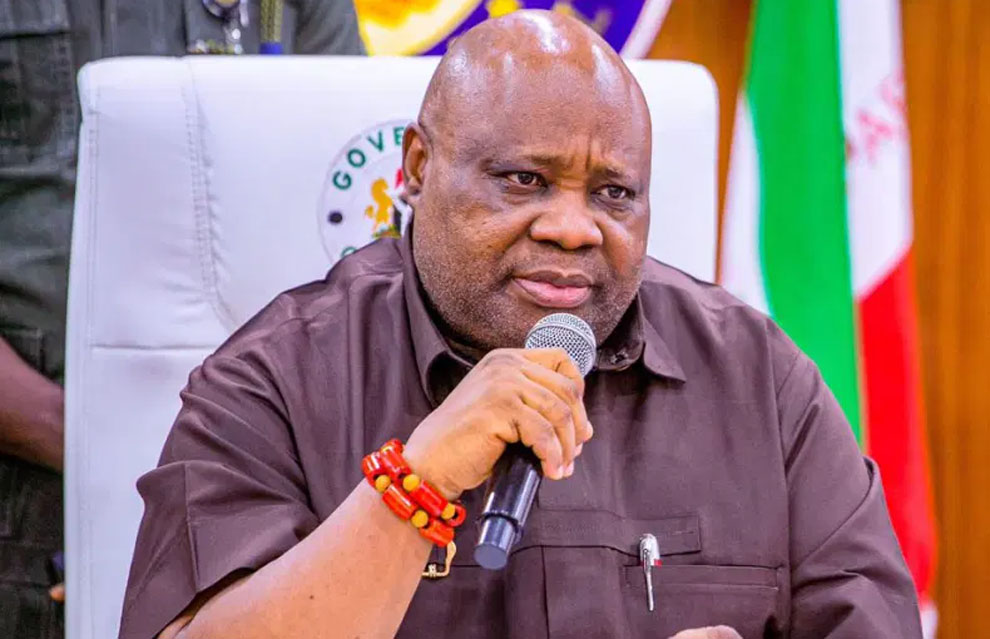
Osun State Governor, Ademola Adeleke, has demanded an explanation from the Chairman of the Economic and Financial Crimes Commission (EFCC), Ola Olukoyede, over the freezing of an account belonging to the Osun State Government.
Adeleke, who spoke with journalists at the Government House in Osogbo on Wednesday, described the action as unlawful and warned that it could disrupt government activities and affect the delivery of essential public services across the state.
The governor said the state government received a letter from its bank indicating that the EFCC had directed the financial institution to place a restriction on the government account.
According to Adeleke, the action was taken without a court order, adding that the state government would challenge the decision through legal means. (TheCable)
“We are supposed to be in a democracy where the rule of law must always prevail,” the governor said.
Adeleke argued that federal agencies must operate within constitutional and legal boundaries, insisting that the rights and powers of state governments should be respected.
He called on Olukoyede to publicly explain the reason for the account restriction and provide evidence to support the action.
“All I ask is for the EFCC chairman to explain to the good people of Osun State and Nigerians in general why he froze the Osun State Government account and show proof to support whatever reason he presents,” Adeleke said.
READ ALSO:
- Nollywood Actress Temitope Osoba Dies at 40 After Courageous Cancer Battle
- BREAKING: 61.54% Pass Rate as WAEC Releases 2026 WASSCE Results – How to Check Results
- Army Arrests Two Soldiers for Acting as Bouncers at TikToker Peller’s Lavish Lagos Wedding
The governor alleged that the development was part of a wider effort to intimidate his administration ahead of the August 15, 2026 Osun governorship election.
He also accused former Osun State governor, Gboyega Oyetola, of being behind what he described as political attacks against his administration. The allegation was not independently established in the reports reviewed.
Adeleke maintained that his government would not accept actions it considered unconstitutional or politically motivated.
He subsequently directed the state Attorney-General and Commissioner for Justice, Oluwole Jimi-Bada, SAN, to institute legal action against the EFCC at the Federal High Court in Osogbo. (Vanguard News)
Jimi-Bada said the state government received a “Post No Debit” communication linked to the EFCC’s directive to the bank where the affected government account is domiciled.
The Attorney-General said the state government was prepared to challenge the restriction, arguing that while the anti-graft agency has the power to investigate financial transactions, it must act within the limits of the law.
He said the restriction could affect the day-to-day operations of the state government but expressed confidence that the matter would be resolved through the courts.
Osun State Commissioner for Finance, Sola Ogungbile, also raised concerns about the possible impact of the account restriction on government operations and the welfare of residents.
Ogungbile denied claims that the Adeleke administration was using state funds to finance its re-election campaign and urged the EFCC to consider the potential consequences of restricting access to government funds.
Earlier, Adeleke had raised the alarm over an alleged plan to freeze additional Osun State Government accounts and the accounts of some senior government officials.
In a statement issued through the Commissioner for Information and Public Enlightenment, Kolapo Alimi, the governor alleged that the planned action was intended to paralyse government activities ahead of the governorship election.
Adeleke maintained that there was no legal basis for freezing the state government’s accounts and insisted that the anti-graft agency must follow due process in carrying out its investigations.
The development has heightened political tension in Osun ahead of the governorship election, with the state government insisting that it will seek judicial intervention while demanding a public explanation from the EFCC.
As of the time of filing this report, the EFCC had not publicly released detailed reasons for the account restriction or responded to the allegations made by the Osun State Government.
Adeleke challenges EFCC over freezing of Osun government account
-
 News3 days ago
Oloyede clears air on JAMB’s ₦36m ‘snake swallowed money’ controversy
-

 News3 days ago
475 Police Officers Recalled After Controversial Retirement, Ordered for Mandatory Induction
-

 metro3 days ago
MURIC Hails Oloyede as ‘Game Changer,’ Says He Proved Muslims Can Excel in Public Office
-

 Sports3 days ago
Nigeria Shines in Commonwealth Games, Tops Africa with 10 Gold Medals
-

 Auto2 days ago
Lanre Shittu Motors Leads Drive to Steer Lagos Students Away from Crime, Donates books to public Schools
-

 Education2 days ago
UNIOSUN ranks third among state universities in latest Webometrics ranking
-
 Auto2 days ago
FRSC Boss: Tinubu’s CNG, EV Drive Creating Jobs, Attracting Investment
-
 metro3 days ago
DSS, Vigilantes Ambush, Kill Notorious Bandit Kingpin Idi Abasu Aiki, Over 60 Fighters in Katsina