

Business
ABC Transport Group records N734m profit in Q2 2025 earnings

ABC Transport Group records N734m profit in Q2 2025 earnings
Leading provider of Road Transport services in Nigeria, ABC Transport Plc, recorded a significant turnaround in the second quarter of 2025, moving from a loss before tax of ₦56m in 2024, to a profit before tax of ₦734m in Q2 2025.
The company disclosed this in a statement, adding that profit after provision for income tax was an impressive N465m against a loss after tax of N191m recorded for the same period in 2024.
Financial performance highlights for 2025 second quarter indicate that, while driving profit, the Group recorded a significant increase in revenue, with a growth rate of 52 percent compared to the same period in 2024, driven by strong performance across all strategic business units.
All strategic business units also contributed to this growth, with notable improvements in profitability.
The group’s revenue growth is attributed to the significant improvement across all operating segments.
While haulage grew by 97 per cent, logistics recorded a growth of 41 per cent. The haulage business provides dedicated services to Lafarge Africa Plc engaged in cement production while ABC Logistics provides cargo, courier, warehousing and other allied services to both blue-chip manufacturing companies and the general public.
Performance was also strong in Travel Operations which recorded a 31 per cent growth over performance in 2024.
City Transit Inn, the Group’s budget hotel in Abuja, saw a 43 percent growth in revenue with a significant growth in room occupancy rate due to recent improvement in facilities and management.
The Manufacturing/Trading arm of the Group operated under Transit Support Services Limited also grew revenue to N1.58bn from N637m in the first six months of 2024.
According to the company, the revenue performance was buoyed by fleet expansion in the haulage, geographic spread in logistics and overall improvement in service level across business segments.
Notwithstanding the extremely challenging operating environment, the Group’s management has expressed commitment to remain resilient in the pursuit of sustainable growth and profitability underpinned by innovation, riding on the back of the recent turnaround in performance.












Business
NCAA Moves Against Airlines Over Rising Flight Delays

NCAA Moves Against Airlines Over Rising Flight Delays
Thousands of Nigerian air passengers faced delays in August as domestic airlines struggled to keep to their scheduled flight times.
Now, the Nigerian Civil Aviation Authority (NCAA) says it is taking regulatory steps that could lead to sanctions against airlines responsible for persistent delays.
The regulator’s August data showed that 4,765 of 7,961 scheduled domestic flights were delayed. In other words, nearly 60 per cent of the flights did not leave as scheduled.
Air Peace and United Nigeria Airlines recorded some of the highest delay rates, with 71 per cent and 76 per cent of their flights respectively affected.
NCAA Warns Airlines
NCAA Director of Public Affairs and Consumer Protection, Michael Achimugu, said that the regulator had already engaged some of the airlines involved.
According to him, the NCAA met with Air Peace, United Nigeria Airlines and Max Air and issued stern warnings over their operations.
The authority is now weighing further regulatory measures as the problem continues to affect passengers.
Achimugu also urged travellers to consider other airlines when repeated delays make a particular carrier unreliable.
“When one airline is continuously misbehaving, buy tickets on another airline and make your flight” he said.
READ ALSO:
- 2027: Sowore Rejects Utomi’s Coalition Talks, Says AAC Won’t Join Opposition Alliance
- Sani Abacha’s Son Emerges Kano PDP Governorship Candidate for 2027
- He Does Not Lose Elections”: Abdulmumin Jibrin Predicts 65% Landslide for Tinubu in 2027
Passenger Rights Put Enforcement Under Spotlight
However, aviation consultant Capt. John Ojikutu believes the recurring problem exposes a wider weakness in the sector.
Ojikutu said Nigeria has regulations intended to protect air travellers, but questioned how consistently those rules are enforced.
“The regulation is there to protect the customer. What is the enforcement?” he said.
He noted that passengers can report violations to the appropriate authorities. But, in his view, regulators must follow up on those complaints with meaningful action.
The aviation expert also recalled experiencing severe delays himself.
He said he once travelled to Abuja and passengers had to board an aircraft three times before another plane was brought in to complete the journey.
The disruption, he said, left him returning to Lagos considerably later than expected.
Are Airlines Planning Their Routes Properly?
Ojikutu also linked the industry’s problems to the way some airlines plan their operations.
He questioned the number of carriers competing on the Lagos-Abuja route, particularly when several airlines operate multiple flights each day.
His argument is that airlines should first establish the level of passenger demand before selecting routes, aircraft sizes and flight frequencies.
According to him, deploying aircraft capable of carrying more than 100 passengers without sufficient demand can put additional financial pressure on an airline.
He therefore advised carriers to consider routes with enough passengers but less competition.
Smaller Aircraft Could Serve Regional Routes
Ojikutu said the industry could also learn from the operational model used by the former Nigerian Airways.
He recalled that the airline used larger aircraft on major routes while smaller planes connected regional destinations to major airports.
He suggested that modern carriers could adopt a similar approach by connecting cities such as Sokoto, Kaduna, Jos and Minna to larger aviation hubs.
Rather than having every airline compete directly on major routes, he said carriers could develop regional networks that feed passengers into bigger airports.
He also called for more airlines to establish bases outside Lagos.
According to him, encouraging operations in other parts of the country could reduce the heavy concentration of airlines in Lagos and create stronger regional connections.
Concern Over Airline Survival
Ojikutu further questioned the short lifespan of many Nigerian airlines.
He attributed part of the problem to weak business planning and argued that airlines should present credible, sustainable plans before receiving regulatory approval to operate.
The latest development therefore puts both airlines and the aviation regulator under scrutiny, as passengers continue to deal with delays despite existing rules designed to protect them.
NCAA Moves Against Airlines Over Rising Flight Delays
Business
Fuel Prices Climb to ₦1,500 per Litre Across Nigeria, Sparking Calls for Urgent Action
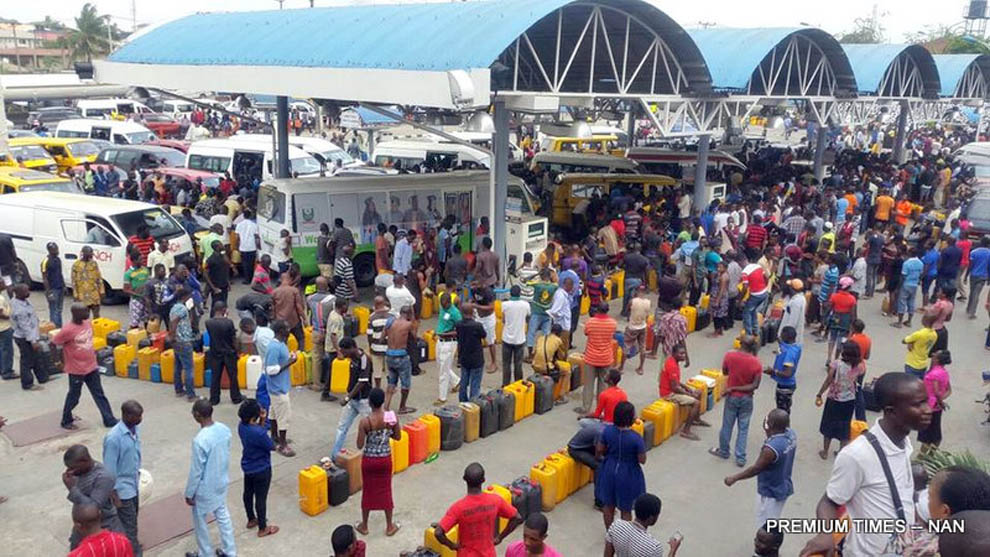
Fuel Prices Climb to ₦1,500 per Litre Across Nigeria, Sparking Calls for Urgent Action
Workers’ unions and fuel sellers appeal to the government to protect families from soaring transportation and food costs.
Fuel stations across Nigeria have raised the price of petrol to as high as ₦1,500 per litre, creating fresh financial strain for working people, small business operators, and families. Across cities such as Kano, Maiduguri, Damaturu, and Sokoto, drivers and commercial riders now pay higher rates at the pump, while stations in central and southern communities also report steady increases.
Because transportation costs directly influence the price of everyday essentials, bus drivers and tricycle operators have raised passenger fares to cover their fuel bills. As a result, parents and commuters face steeper daily travel expenses and rising grocery bills.
READ ALSO:
- Gaza Building Collapse Kills 21, Including Eight Children
- Niger Mosque Abductions: Terrorists Execute 30 of 500 Captive Muslim Worshippers
- OAU Investigates Death of Final-Year Student as Police Begin Probe
To address this pressure, the Nigeria Labour Congress urged federal authorities to step in quickly with practical relief measures. These proposals include providing cost-of-living allowances to workers, ensuring local refineries can purchase crude oil directly in local currency, and using surplus oil earnings to keep pump prices affordable.
At the same time, fuel sellers warned that pump prices could rise even further if international oil markets remain volatile. Retail associations noted that recent wholesale adjustments from local refineries have increased costs for station owners, who must pay more to restock their tanks.
To keep fuel affordable for the general public, union leaders and station operators are encouraging the government to reduce shipping and regulatory fees, helping ensure that reliable energy remains accessible to every community across the country.
Fuel Prices Climb to ₦1,500 per Litre Across Nigeria, Sparking Calls for Urgent Action
Business
Why Petrol Remains Expensive Despite Dangote Refinery’s Local Production

Why Petrol Remains Expensive Despite Dangote Refinery’s Local Production
Nigeria’s emergence as a major local refining hub has reduced the country’s dependence on imported petroleum products, but it has not insulated consumers from rising petrol prices, with the cost of crude oil, international market conditions, refinery economics and downstream distribution continuing to influence pump prices.
The development has renewed debate over why Nigerians are still paying relatively high prices for Premium Motor Spirit (PMS) despite the operation of the Dangote Petroleum Refinery, Africa’s largest refinery.
The refinery recently increased its petrol gantry price to N1,350 per litre, from N1,265, amid higher crude oil prices and rising replacement costs in the downstream market. The increase has subsequently put pressure on marketers and filling stations to adjust their pump prices.
Dangote Group President Aliko Dangote has explained that domestic refining does not automatically mean petrol will be priced independently of the international oil market because crude remains the principal raw material for refining.
The refinery therefore remains exposed to the cost of crude oil, whether the feedstock is sourced locally or imported.
This is particularly important because Nigerian crude is commercially linked to international benchmarks. As a result, producing petrol domestically removes some import-related costs but does not eliminate the underlying value of the crude used to manufacture the product.
Recent developments also show that the availability and cost of Nigerian crude oil remain central to the economics of the Dangote refinery.
The Nigerian Upstream Petroleum Regulatory Commission (NUPRC) reported that 53.7 million barrels of crude oil and condensate were supplied to local refineries between April and June 2026, representing 97.4 per cent performance under the Domestic Crude Supply Obligation (DCSO).
READ ALSO:
- “Clash of Egos”: Ayo Fayose Downplays Public Feud Between Wike and APC Governors
- ASUU Crisis Deepens: Lagos Universities Join UNIBEN, Taraba on Indefinite Strike
- Lagos Power Outage: Ikeja Electric Blames TCN as Businesses, Homes Groan
At the Dangote refinery, producers offered 68.1 million barrels against the facility’s requirement of 63 million barrels during the second quarter. The refinery eventually accepted 52.6 million barrels, equivalent to about 78 per cent of the volumes offered to it.
The figures indicate that the issue is not simply whether crude is available in Nigeria, but also the commercial terms, grades, logistics and timing involved in supplying it to the refinery.
Dangote has previously raised concerns about the cost and competitiveness of some domestic crude supplies. A portion of the refinery’s crude intake has at times been imported, while the company has continued seeking ways to secure sufficient Nigerian crude at competitive prices.
The refinery’s access to domestic crude has, however, improved considerably.
Dangote secured at least 16 million barrels of Nigerian crude for October delivery, equivalent to about 520,000 barrels per day and representing most of the refinery’s 700,000-barrel-per-day capacity.
The October supply includes allocations from the Nigerian National Petroleum Company Limited (NNPCL) as well as additional crude purchased through tenders.
The refinery received an average of about 565,000 barrels per day of Nigerian crude in August, nearly twice its average intake in 2025.
The increased domestic supply could reduce the refinery’s exposure to imported crude, but it does not necessarily mean petrol prices will fall immediately.
The reason is that the cost of crude is only one component of the final price of petrol.
Other factors include refining costs, financing, storage, transportation, depot charges, distribution and retail margins. Exchange-rate movements can also affect costs linked to dollar-denominated purchases and other imported inputs.
The removal of the petrol subsidy has further changed Nigeria’s fuel-pricing structure. Rather than having the government absorb a large portion of the difference between market costs and the regulated pump price, consumers are now more directly exposed to changes in market conditions.
Consequently, movements in global crude prices can affect locally refined petrol just as they affect imported products.
The recent rise in the Dangote refinery’s petrol price demonstrates this relationship. The refinery’s latest adjustment reflected rising crude prices and increased replacement costs faced by refiners, importers and depot operators.
READ ALSO:
- US Court Blocks Trump Visa Rule Limiting Stay of Foreign Students, Journalists
- Sokoto Shuts Mosque After Cleric Stabbing, Names Ulamas Probe Panel
- Iran Rejects US Talks as Trump’s Mixed Signals Deepen Hormuz Standoff
The relationship between global prices and domestic petrol prices has also worked in the opposite direction when crude prices declined.
Earlier in the year, the Dangote refinery reduced its petrol price as international crude prices eased, illustrating how changes in the global market can be transmitted to locally refined products.
The refinery is also increasingly becoming a participant in the international refined-products market rather than solely a supplier to Nigeria.
The facility generated $1.82 billion in net profit during the first half of 2026, on revenue of more than $13 billion, reversing a $476 million loss recorded in 2025.
The refinery has expanded exports of jet fuel, diesel and gasoil, with the company becoming a significant supplier to international markets during disruptions to global fuel supplies.
The development demonstrates the commercial reality of operating a large refinery: refined products can be sold into domestic or international markets depending on market conditions, prices and demand.
For Nigeria, the refinery nevertheless represents a major structural change in the downstream petroleum sector.
The country previously relied heavily on imported refined petrol despite being a major crude oil producer. Increased domestic refining means more crude can be converted into petroleum products within Nigeria, reducing dependence on imported finished products and potentially improving energy security.
The refinery is also expected to expand its capacity further, with plans to increase refining capacity to 1.4 million barrels per day over the next three years.
The larger capacity could increase domestic availability of refined products and strengthen Nigeria’s position as a regional supplier.
However, greater refining capacity by itself does not guarantee permanently cheaper petrol.
For consumers, the crucial issue is how efficiently the entire petroleum value chain operates—from crude production and supply to refining, transportation, storage and retail distribution.
The Domestic Crude Supply Obligation is intended to improve access to Nigerian crude for local refineries. Increased domestic crude production and stronger commercial arrangements between producers and refiners could further improve the reliability of supply.
There are also efforts to address logistics and supply challenges, including proposals for crude-swap arrangements designed to match domestic refiners with local producers and potentially reduce delivery times and logistical complications.
If such measures improve the reliability and competitiveness of domestic crude supply, they could strengthen the economics of local refining.
For now, however, Nigerians remain exposed to a combination of global crude oil prices, domestic crude supply costs, exchange-rate pressures and downstream distribution expenses.
This means that the biggest benefit of the Dangote refinery may not necessarily be an immediate collapse in petrol prices, but a reduction in Nigeria’s dependence on imported refined fuel, greater domestic refining capacity and the potential to retain more value from the petroleum chain within the country.
The immediate challenge remains translating those structural gains into greater petrol price stability and affordability for households, businesses and transport operators.
As Dangote increases its intake of Nigerian crude and moves towards higher utilisation, the cost and reliability of its feedstock will remain critical to the price of petrol in Nigeria.
The latest developments therefore suggest that local refining has changed Nigeria’s fuel supply landscape, but it has not disconnected petrol prices from the international oil market.
Why Petrol Remains Expensive Despite Dangote Refinery’s Local Production
-

 Politics3 days ago
2027: Northern Lecturers Back Tinubu, ASUU Disowns Endorsement
-

 metro3 days ago
Police Arrest Mother Over Alleged Brutal Abuse of 7-Year-Old Girl in Anambra
-

 Sports2 days ago
‘I Was Never the Chosen One’ — Dembele Responds to Mbappe
-

 International1 day ago
Islamic Council Condemns Attempted Attack on Holy City of Mecca
-

 metro2 days ago
Lagos Power Outage: Ikeja Electric Blames TCN as Businesses, Homes Groan
-

 Education2 days ago
JAMB Moves 2027 UTME Time — Here’s What Candidates Need To Know
-

 News1 day ago
Keep Politics Out of My Office — Ogbomoso Grand Chief Imam Warns Politicians, Bloggers
-
 Politics2 days ago
2027: APC Governors Reject Wike’s Rainbow Coalition, Insist on Party Loyalty