
metro
After high charge, Band A customers lament decline in electricity supply

After high charge, Band A customers lament decline in electricity supply
The recent national grid collapse in the past week resulted in widespread power outages across Nigeria, significantly affecting Band A customers who previously enjoyed a minimum of 20 hours of electricity supply.
These electricity subscribers, who pay a premium rate of N206 per kWh for their power usage, are entitled to this level of service as part of their subscription.
According to the Minister of Power, Adebayo Adelabu, Distribution Companies (DisCos) that fail to meet the 20-hour electricity supply threshold for Band A customers are to be subjected to sanctions.
While some have criticized this model as discriminatory and inequitable, the government insists it reflects the principle of “those who pay more should access more light.”
Band A customers, accounting for about 15% of the total electricity subscribers in Nigeria, pay a cost-reflective tariff without any subsidy.
- By estimation, there are about 2 million Band A customers out of the country’s registered 13 million electricity subscribers.
- Despite the restoration of the national grid after last week’s incessant failures, Nairametrics can confirm that most Band A subscribers are yet to resume enjoying 20 hours of electricity supply.
- Instead, they currently receive about 12 to 16 hours daily, as the grid is yet to reach full capacity.
“So far, the grid hasn’t reached its full capacity since its last collapse, so it’s expected users will see a reduction In their electricity supply for now. Once the grid reaches full capacity, then you can expect things to change,” explained Mr. Seyi Ayotunde, an official of Ikeja Electric, in a conversation with Nairametrics.
Customers Express Their Discontent
However, customers, particularly those with underestimated billing, believe they are not receiving the service they paid for.
Many are concerned about paying premium tariffs without experiencing the premium service promised.
READ ALSO:
- Court stops police from arresting 68 Obaseki’s allies
- 26 dead, 59 missing as Israel hits Gaza, Lebanon in deadly strikes
- Court stops NBC from imposing fines on broadcast stations
“We hardly have up to 16 hours of light now. Since the grid collapsed, they don’t bring the light like they used to. Before, we used to have up to 22 to 23 hours of power supply, but that is no longer the case,” lamented Mrs. Joyce Iraboh, a Lagos resident living in Onipanu.
Another customer, Mr. Ope, who resides under a Band A feeder in Ogba, echoed similar sentiments:
“I noticed the decline in electricity supply. We don’t usually have the 20-hour light they promised us. But we are expected to pay a premium as estimated billing.”
Even prepaid meter users are not exempted. While their payment is usage-based, the principle of being on a subsidy-free tariff implies access to the promised electricity supply. The discrepancy between cost and service has left many feeling cheated.
High Cost of Alternative Energy
- One of the federal government’s key arguments for higher tariffs has been the rising cost of alternative energy sources, such as petrol or diesel generators.
- Minister Adelabu previously stated that Band A customers save significantly on generator expenses due to their usual 20 hours of electricity supply.
“With an average Band A customer enjoying 20 hours of electricity supply, it simply means they don’t have to buy a subsidy-free petrol for their generators,” Adelabu said.
- However, with the national grid struggling to recover, many Band A customers now have to rely on generators to meet their energy needs, further increasing their expenses.
“Imagine paying for premium electricity only for you to still have to rely on a generator to do your job. I work from home. So, since we no longer have light like before, I don’t have a choice but to get fuel to work. And fuel is expensive,” said David, a resident of Ojodu, reflecting on the challenges caused by the grid collapse.
Decline in Power Generation
- As of November 17, 2024, the national grid’s off-peak generation stood at 3,563.02 MW, significantly lower than the usual figure of around 4,500 MW or more.
- This decline has resulted in reduced electricity supply to customers, including Band A feeders. Online reactions further highlighted these issues.
An X (formerly Twitter) user with the handle @DelekeLaoye said:
“Please Agboyin-Odutayo feeder has been offline since morning. We’ve barely had 15 minutes of power today. Same thing yesterday. Power has been irregular all week and we’re supposed to be a Band-A feeder.”
Another user, @Aryhoblueblood, expressed his frustration, referring to the stat on the National Grid X page:
“I think it is high time you stop posting these stats cos it’s confusing. Your stats seem to point to the fact that all is well with the national grid but the Discos fail to distribute accordingly. We’ve not had light for 24hrs now and we’re supposedly in Band A. Is that normal?”
Similarly, @OmoakeD wrote:
“We usually don’t have a steady power supply again after the last national grid collapse. Please, what is the problem?”
While Nairametrics cannot independently verify these claims, the complaints mirror those shared by physical customers, suggesting they may be credible.
Experts urge investment in infrastructure
On their part, energy experts believe that frequent grid collapses and inconsistent electricity supply stem from inadequate infrastructure.
“Restoration of the grid takes time. It all depends on what causes the failure in the first place. For instance, it could be tripping off the power line, which makes it difficult to load power and distribute it to the DisCos. It could be vandalism also, which means TCN’s officials have to work to rebuild whatever is damaged,” explained Abiodun Sonekan, an energy expert.
Lagos-based electricity consultant Kingsley Effiong emphasized the need for investment in the Supervisory Control and Data Acquisition (SCADA) system to prevent frequent grid collapses.
“The government must prioritize electricity supply now that alternative energy sources are very expensive. You can’t remove subsidy on petrol and electricity and still deny people light. How do you expect them to survive?” Effiong said.
He further noted that investment must come before tariff hikes.
“If the government had spent more money on the SCADA system, which will protect the grid in real-time from collapsing, there wouldn’t be this incessant collapse. Most of TCN’s infrastructure is old and not functioning at optimal capacity in most cases.”
Meanwhile, Minister Adelabu recently stated that Nigeria needs at least $10 billion in investments to stabilize the power sector and achieve a 24-hour electricity supply. However, the volatile nature of the sector makes it difficult to attract investors.
For now, Band A customers continue to pay premium tariffs without receiving the promised stability in electricity supply.
After high charge, Band A customers lament decline in electricity supply









metro
JUST IN: FG Publishes List of 48 Individuals, Groups Linked to Terrorism Financing in Nigeria
JUST IN: FG Publishes List of 48 Individuals, Groups Linked to Terrorism Financing in Nigeria
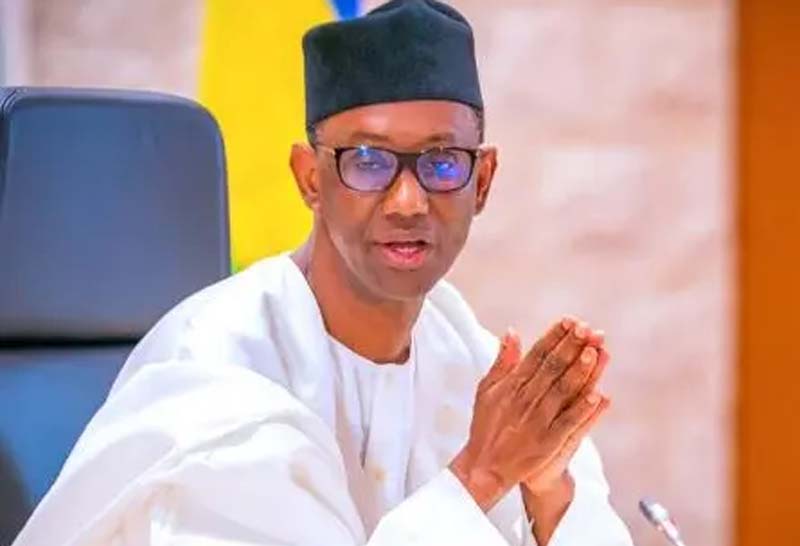
The Federal Government has released a list of 48 individuals and organisations alleged to be involved in terrorism financing in Nigeria, marking a significant step in ongoing efforts to disrupt funding networks linked to insecurity across the country.
The list was published on Saturday by the Nigeria Sanctions Committee (NIGSAC), the inter-agency body responsible for enforcing financial sanctions in line with Nigeria’s counter-terrorism financing (CTF) and anti-money laundering (AML) frameworks.
According to the committee, the designated individuals and entities are suspected of providing financial, logistical, or operational support to terrorist organisations operating in parts of the country, particularly in the North-East and other security-affected regions.
The list reportedly includes individuals connected to proscribed organisations such as the Indigenous People of Biafra (IPOB), the Ansaru, and the Islamic State West Africa Province. Among those named are Tukur Mamu, Simon Ekpa, Abdulsamad Ohida, Usman Abubakar, Kubara Salawu, Rabiu Suleman, Simon Njoku, Godstime Itare, Francis Nmaduabuchi, Chukwuka Eze, Edwin Chukwuedo, and others listed in the official document.
READ ALSO:
- 2027: Oyo APC Governorship Aspirant Saheed Oladele Resigns From Party
- 42-Year-Old Married Woman Declared Missing Found in Hotel with Man
- ADC Threatens Civil Disobedience To Force INEC Chairman To Resign
Security and financial intelligence sources said the designation is part of strengthened efforts to enforce targeted financial sanctions against terrorism sponsors, in line with Nigeria’s obligations under international security and financial monitoring standards. The sanctions framework allows authorities to impose measures such as asset freezes, restrictions on financial transactions, and travel limitations on individuals and organisations identified as being involved in terrorism financing activities.
Officials said the move is aimed at cutting off funding channels that support insurgent groups and separatist-linked violence in affected parts of the country. The Nigeria Sanctions Committee explained that the publication of the list is part of broader efforts to strengthen national security by targeting the financial infrastructure behind terrorism.
It added that identifying and sanctioning individuals linked to terrorist financing is crucial to weakening the operational capacity of groups responsible for attacks on civilians and security forces. Authorities also stressed that the listings are part of ongoing investigations and do not replace judicial proceedings, noting that further legal and enforcement actions may follow where evidence is established.
The development comes amid intensified military operations against insurgent groups across the country, as well as increased coordination between security agencies and financial regulators to monitor suspicious transactions and disrupt illicit funding flows.
Officials reiterated that combating terrorism requires both military action and sustained efforts to dismantle the financial networks supporting terrorism in Nigeria.
As of the time of filing this report, the Federal Government has not issued additional details beyond the published list, while reactions are expected from some of the individuals and organisations named.
JUST IN: FG Publishes List of 48 Individuals, Groups Linked to Terrorism Financing in Nigeria
metro
42-Year-Old Married Woman Declared Missing Found in Hotel with Man
42-Year-Old Married Woman Declared Missing Found in Hotel with Man
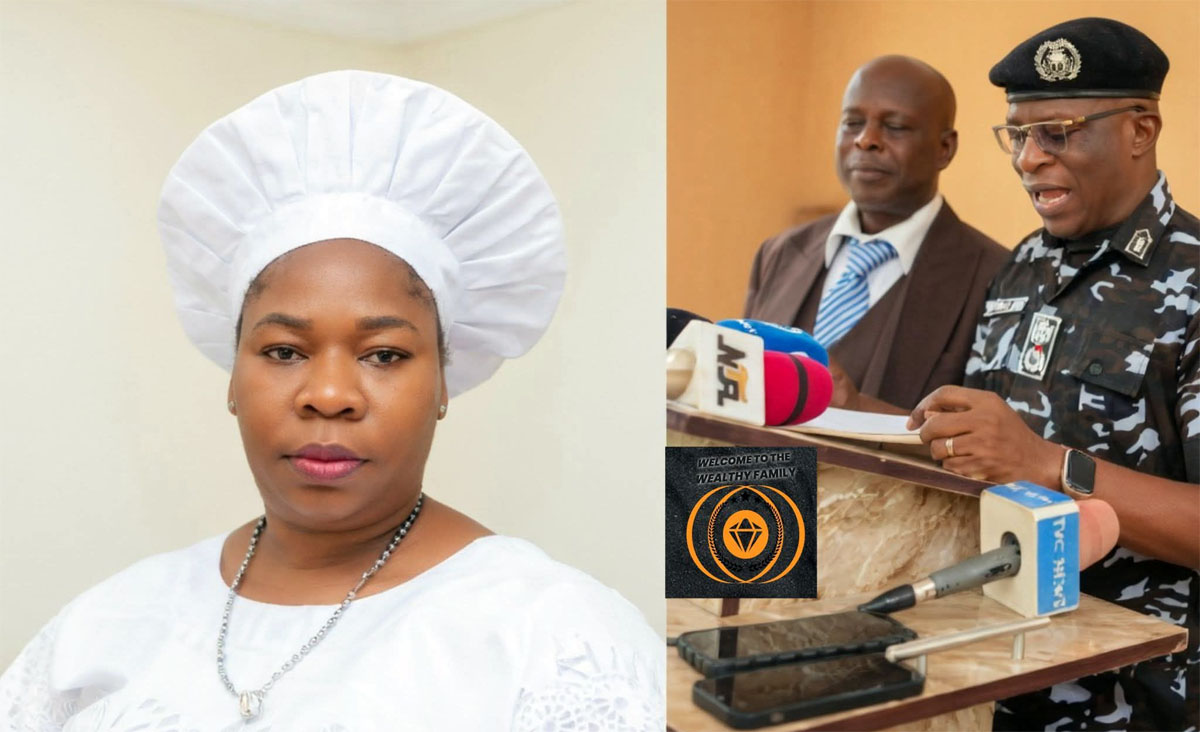
A 42-year-old woman declared missing in Ilara-Mokin, Ondo State, has been found in a hotel room in Ugbe-Akoko, sparking widespread reactions and renewed concerns over the circumstances surrounding her disappearance.
The woman reportedly left her matrimonial home in Ilara-Mokin in Ifedore Local Government Area without informing her husband or family members, prompting fears that she had been abducted or harmed.
Her husband was said to have raised the alarm after repeated attempts to reach her failed, leading to concern among relatives and residents of the community. The development triggered a search effort as anxiety grew over her whereabouts.
According to sources familiar with the case, the woman was later traced to Ugbe-Akoko in Akoko North-East Local Government Area, located about 124 kilometres from Ilara-Mokin. The journey between both locations typically takes over two hours by road.
READ ALSO:
- ADC Threatens Civil Disobedience To Force INEC Chairman To Resign
- World Bank Deletes Nigeria Development Update Report Days After Release
- US Revokes Green Cards of Iranian Family
She was reportedly discovered in a hotel in the area in the company of a 55-year-old man. Both individuals were taken in for questioning by relevant authorities to determine the circumstances surrounding their presence at the location.
Preliminary findings suggest that the woman may not have been abducted as initially feared but might have left home voluntarily without informing her family. However, officials are still working to establish the full details surrounding her movement and activities before she was found.
The incident has generated mixed reactions among residents of both communities, with many expressing shock, confusion, and concern over the circumstances that led to her disappearance and eventual discovery in a hotel.
Security agencies are continuing investigations to determine whether any offence was committed and to clarify the nature of the relationship between the woman and the man found with her.
As of the time of filing this report, there has been no official statement from law enforcement authorities, while the case continues to attract attention across Ondo State.
42-Year-Old Married Woman Declared Missing Found in Hotel with Man
metro
ADC Threatens Civil Disobedience To Force INEC Chairman To Resign
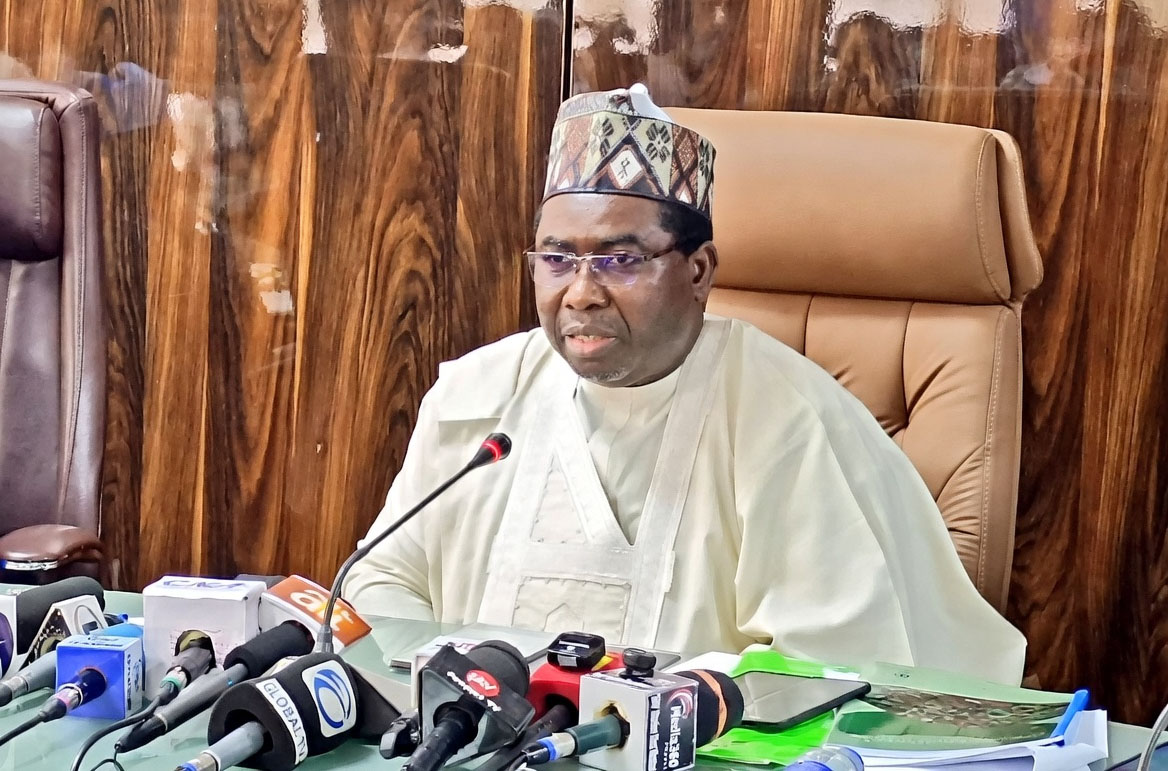
ADC Threatens Civil Disobedience To Force INEC Chairman To Resign
The African Democratic Congress (ADC) has demanded the immediate resignation of the Chairman of the Independent National Electoral Commission (INEC), Prof. Joash Amupitan, over allegations of political bias linked to controversial old social media posts, while also threatening civil disobedience if he remains in office.
The opposition party said its position follows growing concerns about the neutrality of the electoral body ahead of future elections, insisting that the credibility of the electoral process in Nigeria must not be compromised.
The controversy centres on alleged archived posts on X (formerly Twitter) attributed to an account bearing Amupitan’s name, which critics claim contained expressions perceived as supportive of the ruling All Progressives Congress (All Progressives Congress) and President Bola Ahmed Tinubu. The allegations gained wider attention after US-based Nigerian scholar Farooq Kperogi referenced the purported posts in a public commentary, arguing that they raise questions about the independence of INEC leadership. The claims have since sparked heated debate across social media, with supporters of the electoral commission questioning their authenticity while critics insist they undermine public trust in the institution.
READ ALSO:
- World Bank Deletes Nigeria Development Update Report Days After Release
- US Revokes Green Cards of Iranian Family
- 16-Year-Old Alleges Repeated Rape by Pastor During ‘Deliverance’ in Anambra
In response, the Chief Press Secretary and Media Adviser to the INEC Chairman, Adedayo Oketola, cautioned against misinformation and impersonation, warning that cybercriminals may be using fake accounts to circulate false narratives. He reaffirmed that INEC remains committed to delivering free, fair and credible elections in Nigeria, urging the public to rely only on verified communication channels from the commission.
Reacting to the controversy, ADC spokesperson Bolaji Abdullahi described the allegations as a serious breach of public trust and a threat to Nigeria’s democratic integrity, arguing that an electoral umpire must not only be neutral but must also be seen to be unquestionably impartial. According to him, the allegations—if proven true—undermine confidence in the leadership of the electoral body. Abdullahi further alleged attempts to manipulate or alter digital records linked to the controversy, describing the situation as a “calculated assault on truth and accountability.”
He said: “The referee cannot be running around in the shirt of one of the teams he is supposed to officiate.” The ADC insisted that Prof. Amupitan must resign immediately, warning that failure to do so would trigger escalated action, including civil disobedience protests across Nigeria. The party also said it would update petitions to relevant professional and international bodies, including the Nigeria Bar Association (Nigeria Bar Association), as part of efforts to intensify pressure on the electoral commission.
The controversy adds to rising political tension surrounding the leadership of INEC, as opposition parties increasingly scrutinise the commission’s neutrality ahead of upcoming electoral cycles. Analysts say the situation highlights ongoing concerns about trust in Nigeria’s electoral institutions, especially in the digital age where social media content can significantly influence public perception.
As of the time of filing this report, INEC has not issued a fresh statement addressing the ADC’s latest demand for the chairman’s resignation or its threat of civil disobedience.
ADC Threatens Civil Disobedience To Force INEC Chairman To Resign

-
 Africa3 days ago
ECOWAS Recruitment 2026: Over 30 Job Vacancies Open for Nigerians (How to Apply)
-
 metro12 hours ago
JUST IN: FG Publishes List of 48 Individuals, Groups Linked to Terrorism Financing in Nigeria
-

 Health3 days ago
Sleeping Positions: How They Affect Your Health and Which Ones to Avoid
-

 Politics3 days ago
Court Stops ADC Congress, Orders Status Quo in Leadership Row
-
 metro3 days ago
Boko Haram Attack in Borno: Brigadier-General, Soldiers Killed as ISWAP Overruns Military Base
-
 Politics23 hours ago
Did Faleke Just Reveal Lagos’ Next Governor? Party Moves Begin
-

 Education2 days ago
Germany Opens Fully Funded Scholarships for Nigerians, Africans
-

 metro14 hours ago
42-Year-Old Married Woman Declared Missing Found in Hotel with Man