
Again, ASUU tackles FG over ₦50bn student loan, says grants better option
Education
Again, ASUU tackles FG over ₦50bn student loan, says grants better option

Having signed the student loan bill into law on June 12, 2023, President Bola Tinubu announced in October that the scheme will come on stream in January 2024, with the Federal Government voting ₦50bn for the programme in next year’s budget.
The law was aimed at providing easy access to higher education for indigent Nigerian students through interest-free loans from the Nigerian Education Loan Trust.
However, the academic union has severally stood against the policy, suggesting other initiatives that could have far-reaching positive effects on the targeted students.
Doubling down on the body’s position, ASUU president Prof Emmanuel Osodeke suggested that allocating the 50 billion naira as grants would have had more impact and be a humane investment in the education of Nigerian students.
READ ALSO:
He made the argument while appearing on Channels Television‘s Hard Copy programme on Friday, December 15, 2023.
“If the issue is just ₦50 billion, why can’t we convert that ₦50 billion as a country like Nigeria to grants for the children of the very poor?
“Let’s give to those who cannot afford it, not give them as a loan that becomes a liability for them before they even graduate and not sure of getting a job.
“We are thinking of the Nigerian people, those who cannot afford it, those children who are in the villages whose parents earn less than N30,000 a month,” Osodeke said.
“If it is just about 50 billion, the Nigerian government should give that 50 billion as grants to the students rather than giving it as a loan that will encumbrance them in the future and could make them start going to crime, in order to pay for this loan,” he said.
Recalling previous attempts at introducing a student loan scheme in Nigeria, the union leader questioned its success, pointing out that such initiatives had failed on two occasions in the past.
“In such a country where you easily have access to Job after graduation cannot pay it back and they are suffering, or people committing suicide. Is it in Nigeria where the children are sure that even in 10 years, you might not get the employment that they can pay back the loan?” he asked.
Again, ASUU tackles FG over ₦50bn student loan, says grants better option









Education
JAMB Releases First Batch of 2026 UTME Results for 632,788 Candidates
JAMB Releases First Batch of 2026 UTME Results for 632,788 Candidates
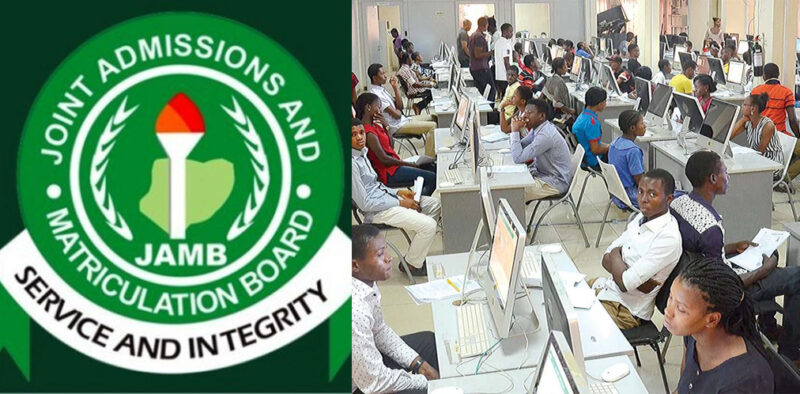
The Joint Admissions and Matriculation Board (JAMB) has released the first batch of 2026 UTME results, with a total of 632,788 candidates who sat for the examination on Thursday, April 16, now able to access their scores.
In a statement issued by its Public Communication Advisor, Fabian Benjamin, the board confirmed that the results have been processed and are available for viewing, even as the nationwide Unified Tertiary Matriculation Examination (UTME) continues across accredited Computer-Based Test (CBT) centres.
JAMB directed candidates to check their results by sending “UTMERESULT” via SMS to 55019 or 66019, using the same phone number linked to their registration. It clarified that, for now, candidates can only view their results, while printing of result slips will be enabled at a later stage.
The board issued a strong warning against result falsification and manipulation, particularly the alteration of SMS result messages to deceive parents or the public. It described such actions as a serious criminal offence, stressing that it will not hesitate to prosecute offenders.
READ ALSO:
- Iran Declares Strait of Hormuz Fully Open
- Troops Arrest Bandit Kingpin’s Deputy, Wife in Gombe
- Power Supply Drops in Lagos as Transmission Faults Trigger Load Shedding
JAMB disclosed that two candidates and one parent are already in custody for allegedly falsifying UTME results using artificial intelligence and other electronic means, highlighting a growing trend of digital malpractice.
“The Board treats such misconduct with the utmost gravity… Any candidate found culpable will face the full consequences of the law,” the statement noted.
The examination body also revealed that the 2026 UTME is still ongoing, and results will be released in batches as marking and verification processes are completed. Some results, it added, may be withheld temporarily due to issues such as biometric verification, suspected malpractice, or technical concerns, pending further review.
JAMB reaffirmed its commitment to maintaining a credible, transparent, and technology-driven examination system, noting that enhanced monitoring mechanisms have been deployed to detect irregularities and uphold the integrity of the process.
The UTME remains a key requirement for admission into universities, polytechnics, and colleges of education in Nigeria, with hundreds of thousands of candidates participating annually.
JAMB Releases First Batch of 2026 UTME Results for 632,788 Candidates
Education
FG Ends Physical Certificate Verification as Process Goes Fully Digital

FG Ends Physical Certificate Verification as Process Goes Fully Digital
The Federal Government has announced the full automation of the authentication and evaluation of academic credentials, marking a major shift in Nigeria’s education verification system and officially ending physical verification processes.
The reform was disclosed by the Federal Ministry of Education in a statement issued on Friday by its Director of Press and Public Relations, Boriowo Folasade, describing the initiative as part of efforts to strengthen transparency, improve data management, and enhance service delivery in the education sector.
According to the ministry, the new system aligns with the Federal Government’s broader digital transformation agenda, aimed at leveraging technology to improve efficiency, reduce delays, and ensure the integrity of academic records.
With the new policy, all applications for academic credential authentication and evaluation will now be processed strictly online through the ministry’s official verification portal.
Applicants are required to register and upload supporting documents via the official platform: essverify.education.gov.ng, while also contacting their awarding institutions to forward academic transcripts directly from official institutional email addresses to ess1@education.gov.ng for verification and processing.
READ ALSO:
- Trump Says Iran Agrees to Hand Over Enriched Uranium in Nuclear Deal Talks
- OPM Founder Suspends Marriage Plan for Autistic Daughter After 1,000 Applications
- MTN Nigeria Suspends Airtime Loan Service
The ministry stressed that physical visits to its offices for certificate authentication are no longer required, as the entire process has been moved to a fully electronic system.
Officials explained that the digital transition is expected to significantly reduce processing time, streamline administrative procedures, and strengthen the credibility of academic verification across Nigeria.
The policy is also aimed at addressing long-standing challenges of certificate fraud and document falsification, which have affected both employment verification and academic mobility.
Education stakeholders say the reform could improve Nigeria’s global academic credibility by aligning its credential verification system with international digital standards increasingly used by universities and employers worldwide.
The ministry added that safeguards have been integrated into the system to ensure data security and prevent manipulation, while also improving coordination between educational institutions and government agencies.
The move forms part of wider education sector reforms focused on digitisation, transparency, and improved public service delivery across federal institutions.
FG Ends Physical Certificate Verification as Process Goes Fully Digital
Education
PTDF Screens 243 PhD Applicants in Port Harcourt
PTDF Screens 243 PhD Applicants in Port Harcourt
The Petroleum Technology Development Fund (PTDF) has commenced the screening of 243 PhD applicants from Nigeria’s South-South region in Port Harcourt, Rivers State, under its 2026/2027 Overseas Scholarship Scheme, as part of efforts to boost local capacity in Nigeria’s oil and gas sector and reduce capital flight.
The screening exercise, held at the PTDF Centre for Skills Development and Training, is part of a nationwide selection process designed to identify qualified candidates for advanced studies in critical areas of the petroleum industry.
Speaking during the exercise, PTDF’s Deputy Manager, Internal Audit, Mr. Daddy Ogiri Obonin, said the initiative reflects the Fund’s renewed commitment to developing indigenous technical manpower required to drive growth and innovation in the oil and gas sector.
He revealed that the scholarship scheme has been restructured with the introduction of a split-site model, which allows beneficiaries to undertake a significant portion of their studies within Nigeria, while maintaining academic collaboration with international institutions.
According to him, the new approach is aimed at reducing the high cost of overseas education, limiting capital flight, and addressing the long-standing issue of beneficiaries remaining abroad after completing their studies.
Obonin noted that PTDF has invested in upgrading its training facilities, including its centres in Kaduna and Port Harcourt, to meet global standards and support high-level research and innovation.
READ ALSO:
- US Lawmaker Accuses Nigerian Security of Complicity in Attacks on Christian Communities
- Hajia Sofuratu Seghosime Emerges ICAN President-Elect
- ADC Expels Nafiu Bala, Leke Abejide, Ratifies David Mark-Led Leadership
He explained that the reform has already begun to influence application patterns, with fewer candidates opting for fully funded overseas programmes as the Fund prioritises knowledge retention and local industry impact.
The screening process covers a wide range of disciplines including engineering, geosciences, environmental studies, energy economics, and management, reflecting the evolving needs of Nigeria’s energy sector, especially in areas such as sustainability, energy transition, and resource optimisation.
PTDF also reaffirmed that its selection process remains transparent, merit-based, and guided by the Federal Character principle, ensuring equitable representation of candidates across the country.
In recent years, the Fund has increasingly aligned its scholarship priorities with national energy goals, focusing on areas such as gas development, renewable energy, and digital innovation to enhance efficiency and competitiveness in the petroleum industry.
Also speaking, one of the panelists, Dr. Hafisat Lawal, commended the quality of research proposals presented by applicants, noting that many candidates demonstrated strong, interdisciplinary approaches to addressing real-world challenges in the oil and gas sector.
She highlighted that even candidates from non-traditional backgrounds, including law, health, and education, showed clear relevance to industry needs through innovative research topics.
One of the applicants, Alete Godwin, a chemical engineer researching the extraction of bioethanol from solid waste, described the screening process as thorough and professional, expressing confidence in the fairness of the exercise.
The PTDF Overseas Scholarship Scheme remains one of Nigeria’s flagship human capital development programmes, having sponsored thousands of Nigerians for postgraduate studies in leading institutions worldwide.
However, concerns over brain drain and capital flight have prompted reforms such as the split-site model, which aims to ensure that investments in education translate into local economic growth and industry development.
Experts believe the restructured programme could play a critical role in bridging skill gaps, strengthening research capacity, and boosting indigenous participation in Nigeria’s oil and gas industry.
PTDF Screens 243 PhD Applicants in Port Harcourt

-
 metro2 days ago
UNILAG Lecturer Sexual Assault Trial: Student Testifies in Lagos Court
-

 metro2 days ago
Grandfather in police net for impregnating granddaughter
-

 International2 days ago
US Senate Rejects Measure to Limit Trump’s Iran Military Powers
-

 Education1 day ago
FG Ends Physical Certificate Verification as Process Goes Fully Digital
-

 metro1 day ago
Power Supply Drops in Lagos as Transmission Faults Trigger Load Shedding
-

 News2 days ago
Atiku, Obi, Kwankwaso Camps Clash as ADC Grapples with Leadership Dispute
-

 International1 day ago
Trump Says Iran Agrees to Hand Over Enriched Uranium in Nuclear Deal Talks
-
 International24 hours ago
Iran Declares Strait of Hormuz Fully Open