

metro
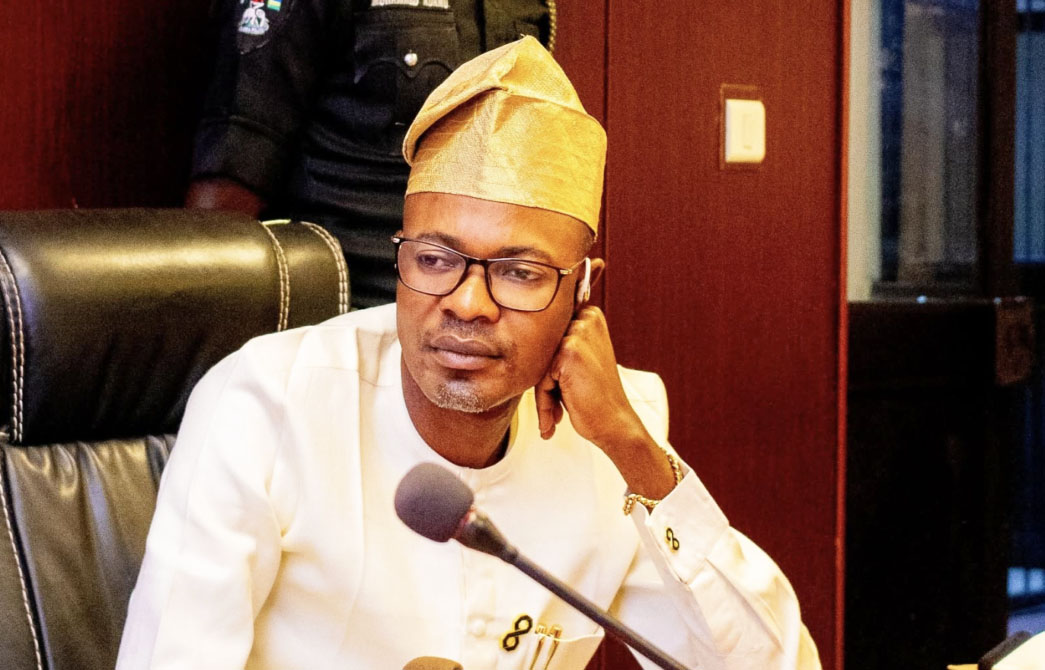
Alleged fake agency DG says he borrowed ₦400m to secure appointment
Alleged fake agency DG says he borrowed ₦400m to secure appointment
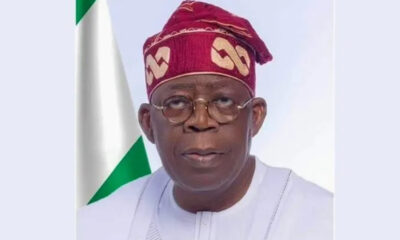
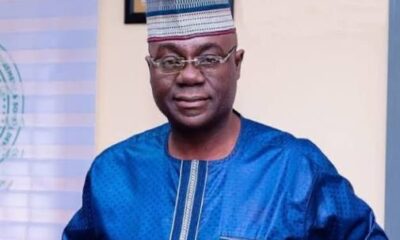
The controversy surrounding the disowned Presidential Foreign Investment Promotion Council (PFIPC) took a fresh twist on Monday as Prince Adeniyi Adeyemi Matthew, who claims to be the agency’s Director-General, alleged that he borrowed ₦400 million to secure his appointment and that his creditors have now petitioned the Economic and Financial Crimes Commission (EFCC) to recover the money.
Adeyemi made the claim during an interview on Channels Television’s Politics Today, insisting that the funds used to obtain the appointment were sourced through loans rather than from his personal finances.
According to him, those who provided the money have become impatient over the prolonged controversy surrounding the agency and have formally reported the matter to the EFCC in a bid to recover their funds.
“I borrowed this money. In fact, those that I borrowed this money from have reported to the EFCC. I borrowed this money to pay for this appointment. They have written to the EFCC, asking me to refund their money. So, I’m not even here to pay the money back. I borrowed this money,” he said.
The latest disclosure comes weeks after Adeyemi accused Chief of Staff to the President, Femi Gbajabiamila, of allegedly receiving ₦400 million through an intermediary to facilitate his appointment as Director-General of the PFIPC.
He had also alleged that an additional ₦200 million was later demanded from him and claimed that influential individuals sought a substantial share of the agency’s proposed take-off funds.
Gbajabiamila has strongly denied the allegations through his lawyers, describing them as false, malicious and defamatory.
His legal team has demanded an immediate retraction and public apology from Adeyemi, warning that failure to comply could result in a ₦10 billion defamation lawsuit.
During the interview, Adeyemi maintained that he was being unfairly portrayed as the architect of an elaborate fraud despite operating openly for several years.
“Imagine the government claiming I manoeuvred the whole system. It’s unfortunate,” he said.
READ ALSO:
- Trump unveils plan for US control of Strait of Hormuz, seeks payment for security
- Appeal Court upholds judgment barring INEC from recognising ADC state congresses
- Victor Osimhen reveals plans to earn university degree after football career
He also dismissed reports suggesting that he was seeking political asylum abroad or planning to flee Nigeria to evade investigation.
According to Adeyemi, he only became aware of reports linking him to a United States lobbying firm through media publications and insisted he has no intention of leaving the country.
“I read it the way you read it. Some people called me saying they were looking for me,” he said.
He further alleged that coordinated efforts had been made to shut down his social media accounts, limiting his ability to respond to allegations made against him.
“They pulled my social media handle down, and they still reported that I was about to run away out of Nigeria. I’m still in Nigeria. I’m not going anywhere,” he stated.
The PFIPC controversy began after the Presidency, in a statement issued on June 11, categorically disowned the council, declaring that no such agency exists under the administration of President Bola Ahmed Tinubu.
The Presidency subsequently described Adeyemi as an impostor and alleged that he forged presidential appointment documents purportedly signed by the Chief of Staff.
Investigators also alleged that he operated a fictitious government agency using forged official documents and insignia.
According to security agencies, preliminary investigations revealed that Adeyemi allegedly maintained 34 bank accounts, including nine reportedly opened in the names of non-existent government agencies, raising concerns over possible financial crimes, impersonation and forgery.
Despite the government’s position, Adeyemi has continued to insist that his appointment was legitimate.
He argued that he operated publicly for nearly three years without objection, held meetings with senior officials of several Ministries, Departments and Agencies (MDAs), engaged foreign investors and interacted with officials of institutions such as the Ministry of Foreign Affairs and the EFCC.
Adeyemi said these engagements reinforced his belief that the council was a legitimate government institution.
The controversy deepened after reports indicated that the PFIPC appeared in the 2026 Appropriation Act with a budgetary allocation despite the Presidency’s insistence that the agency had never been legally established.
The development prompted President Bola Ahmed Tinubu to direct the Independent Corrupt Practices and Other Related Offences Commission (ICPC) to investigate how the agency was included in the federal budget and identify those responsible for the alleged irregularities.
While the ICPC investigates the budgetary aspect of the matter, the Nigeria Police Force continues its probe into allegations of forgery, impersonation and related offences involving the purported agency.
The EFCC is also expected to examine Adeyemi’s latest claims after he disclosed that his lenders had formally petitioned the anti-graft agency over the alleged ₦400 million loan.
Legal analysts say the multiple investigations could determine whether criminal offences were committed and expose any weaknesses in government appointment verification and budgetary processes.
Meanwhile, the Presidency has reiterated that only agencies created through lawful procedures and officially recognised by the Federal Government are authorised to operate, urging Nigerians to verify the authenticity of government institutions before engaging with them.
Alleged fake agency DG says he borrowed ₦400m to secure appointment






metro
Oyo School Kidnappings: How ANSARU Allegedly Used Children to Pressure FG

A witness from the Department of State Services (DSS) has told the Federal High Court in Abuja that the proscribed terrorist group Jama’atu Ansarul Muslimina fi-Biladis Sudan (ANSARU) allegedly planned the Oriire school kidnappings in Oyo State with support from Al-Qaeda, seeking to pressure the Federal Government into releasing 30 detained members.
The DSS operative, identified by the code name BBB, gave the account on Monday, October 12, 2026, while testifying as the second prosecution witness in the trial of five men accused of involvement in the group’s activities.
According to the witness, the May 15 attacks in Oriire Local Government Area were part of a wider strategy to use high-profile kidnappings to compel the government to negotiate the release of ANSARU members, including its leaders.
He told the court that the attackers abducted pupils, students and teachers from schools in the area and moved them to a forest near the Old Oyo National Park.
The terrorists allegedly presented a list of 30 detained members they wanted released and threatened to kill the hostages if the government failed to meet their demands.
The witness said the group had adopted a strategy of carrying out attacks and kidnappings whenever its members were arrested, hoping to use the safety of abducted victims as leverage against the authorities.
BBB, who was involved in the investigation, identified Mahmud Muhammad, also known as Abu Bara’a and Abbas Mukhtar, as one of ANSARU’s founding members.
He alleged that Muhammad had previously served as head of security and intelligence within Boko Haram before leaving the group in 2012 to establish ANSARU alongside other members.
The witness further identified Abubakar Abbas, also known as Isah Adam and Mallam Mahmuda Al-Nigeri, as the group’s alleged head of operations.
According to his testimony, ANSARU members planned attacks on prominent targets as part of efforts to secure the release of detained commanders and other members.
He cited the November 4, 2025, attack on the convoy of Jafaru Mohammed Ali, a member of the House of Representatives representing Agwara/Borgu Federal Constituency, as an earlier operation allegedly linked to the strategy.
READ ALSO:
- Drama as Dutch Police Use Batons, Dogs to Shut Down Nigerian Wedding; Two Arrested
- LAWMA Deploying CCTV Cameras to Hunt Down Illegal Dumpers, says MD
- Obasanjo Backs Higher Oil Derivation, Says 13% Is Only the Beginning
The witness said four military personnel were killed and four DSS personnel injured during the attack. He alleged that the assailants intended to abduct the lawmaker and use the incident to intensify pressure on the government.
BBB also told the court that the group had planned to attack the Wawa military base in New Bussa, Niger State, because members believed some of their detained colleagues were being held there.
When that plan failed, the group allegedly shifted some of its operations towards the South-West, where it believed attacks and kidnappings would attract public attention and increase pressure on the authorities.
Regarding the Oriire abductions, the witness said security agencies launched an operation against the group’s hideout after efforts to secure the release of the hostages encountered resistance.
He alleged that two victims were killed during the crisis and that the attackers threatened to kill more hostages as security personnel advanced towards their location.
According to BBB, the terrorists opened fire on security operatives during the operation, escalating the confrontation.
He said security agencies eventually rescued the remaining captives, although the operation resulted in casualties among security personnel, including a senior police officer and an Army officer.
The witness also alleged that security operatives took the wife of the second defendant and other relatives of suspected commanders into custody in an effort to discourage further killings of hostages.
He told the court that the measure contributed to a halt in the killings before the rescue operation was completed.
During his testimony, BBB also discussed ANSARU’s history and ideology, including its alleged involvement in the kidnapping and killing of foreign nationals.
He said the group justified such operations by accusing foreign nationals of involvement in the killing of Muslims in other countries.
The witness recalled that the killing of seven foreign nationals in 2014 contributed to the United States designating ANSARU as a terrorist organisation and declaring Muhammad wanted internationally.
The five defendants standing trial are Mahmud Muhammad, also known as Abu Bara’a and Abbas Mukhtar; Abubakar Abbas, also known as Isah Adam and Mallam Mahmuda Al-Nigeri; Abdulrazak Umar, also known as Abu Khalifa and Abu Khalid; Yunusa Musa, also known as Abu Yunusa Bin Musa; and Shamsu Adamu Sani, also known as Abu Itisar.
They are accused of links to the proscribed group and involvement in its activities, including the attacks and kidnappings under investigation.
The prosecution’s allegations remain subject to judicial determination as the trial continues. The court will assess the evidence presented before reaching any decision on the defendants’ culpability.
Oyo School Kidnappings: How ANSARU Allegedly Used Children to Pressure FG
metro
Drama as Dutch Police Use Batons, Dogs to Shut Down Nigerian Wedding; Two Arrested

Drama as Dutch Police Use Batons, Dogs to Shut Down Nigerian Wedding; Two Arrested
A Nigerian wedding in the Netherlands ended in a police confrontation after complaints about loud music, with officers reportedly using batons and police dogs to disperse guests and arresting two men.
The incident occurred on Saturday evening, October 10, 2026, at Diamond Plaza on Dynamostraat in Rotterdam-Zuid, where an estimated 200 to 300 guests had gathered to celebrate the wedding.
The disruption attracted widespread attention after videos showing uniformed Dutch police officers confronting wedding guests circulated on social media.
The footage showed guests dressed in colourful Nigerian traditional outfits and formal attire leaving the venue as police officers stood outside the hall.
According to Dutch regional media reports, the incident began after residents complained about the volume of music coming from the celebration. The venue owner reportedly asked the organisers to reduce the noise, but the request was allegedly not followed.
READ ALSO:
- LAWMA Deploying CCTV Cameras to Hunt Down Illegal Dumpers, says MD
- Obasanjo Backs Higher Oil Derivation, Says 13% Is Only the Beginning
- How Bandits Demand ₦300m Ransom for Abducted Kaduna Couple, Baby in Viral Video
The owner subsequently decided to terminate the event, triggering anger among some attendees.
When police officers arrived, tensions reportedly escalated as some guests refused to leave the premises. Officers allegedly resorted to using batons and police dogs to disperse the gathering.
Two men were arrested during the incident. Local reports identified them as a 61-year-old Rotterdam resident and a 20-year-old man without a permanent place of residence. They were reportedly suspected of failing to obey police orders.
The confrontation has sparked allegations of racial discrimination, with some guests questioning whether the authorities would have responded similarly if another community had organised the celebration.
In one video circulating online, an attendee accused the officers of treating the guests unfairly, saying, “It is because we are blacks; you’re treating us like animals.”
A woman who identified herself as a wedding guest also challenged the circumstances surrounding the intervention. She claimed that a Moroccan celebration was taking place upstairs in the same building and questioned why the Nigerian wedding was stopped.
The woman further alleged that the guests were given approximately 10 minutes to leave the venue, describing the intervention as intimidating and distressing.
However, the discrimination allegations have not been independently substantiated, and the available reports do not establish whether race played any role in the police action.
The reported noise complaints, the venue owner’s decision to end the celebration and the refusal of some attendees to leave were cited as the circumstances leading to the confrontation.
The incident has divided opinion on social media. While some users have criticised the manner in which the wedding was disrupted, others have argued that organisers of social gatherings must comply with local noise regulations and lawful police instructions.
The episode has also renewed discussions about Nigerian weddings abroad, which often feature lively music, traditional attire, energetic dancing and extended celebrations.
For Nigerians living in the diaspora, the incident highlights the importance of understanding local rules when organising large social events. At the same time, the allegations have prompted calls for clarity about the circumstances surrounding the police intervention and whether the response was proportionate.
The incident has drawn attention to the challenges of balancing cultural celebrations with local regulations, as well as the need to ensure that public-order rules are enforced fairly and consistently.
Drama as Dutch Police Use Batons, Dogs to Shut Down Nigerian Wedding; Two Arrested
metro
LAWMA Deploying CCTV Cameras to Hunt Down Illegal Dumpers, says MD
LAWMA Deploying CCTV Cameras to Hunt Down Illegal Dumpers, says MD
The Lagos State Government is stepping up its crackdown on indiscriminate waste disposal, with the Lagos Waste Management Authority (LAWMA) planning to install surveillance cameras at strategic locations across the state to identify and prosecute environmental offenders.
The initiative, alongside a partnership with the Lagos State Command Centre, is designed to strengthen surveillance, deter illegal dumping and ensure stricter compliance with environmental regulations.
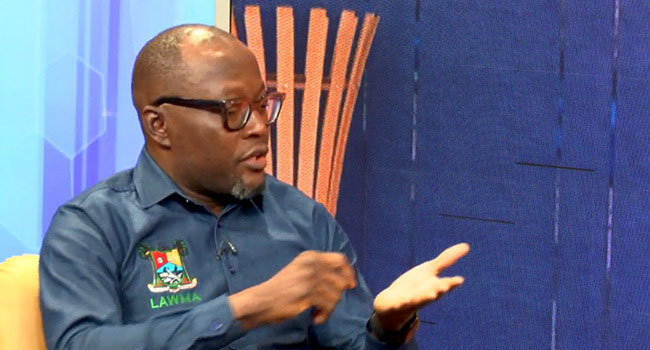
Managing Director/Chief Executive Officer of LAWMA, Dr Muyiwa Gbadegesin, disclosed this during an interview on Lagos Talks 91.3 FM on Monday, saying the measures would complement the authority’s ongoing enforcement and public awareness campaigns.
According to a statement by LAWMA’s Director of Public Affairs, Dr Mukaila Sanusi, Gbadegesin stressed that providing improved waste collection infrastructure alone would not guarantee a cleaner environment without a corresponding change in residents’ attitudes towards waste disposal.
He said sustained enforcement was essential to tackling entrenched practices that undermine environmental sanitation, adding that the planned deployment of LAWMA-owned cameras would enhance the authority’s ability to monitor public spaces and identify offenders for appropriate legal action.
Gbadegesin noted that improved service delivery, public enlightenment and consistent enforcement must go hand in hand to achieve a cleaner Lagos.
He cited feedback from a Mushin resident, Adegboyega, who acknowledged seeing LAWMA’s new compactors operating in the area, as evidence of the importance of visible waste management services in building public confidence.
The LAWMA chief also disclosed that the arrival of 150 new waste trucks would boost waste collection and evacuation across the state.
He said the authority had intensified house-to-house waste collection interventions to address accumulated refuse following the disengagement of underperforming Private Sector Participants (PSPs).
Gbadegesin urged residents to patronise approved waste collection operators, package their refuse properly and report incidents of illegal dumping.
He emphasised that while the government was investing in additional trucks and improved waste management infrastructure, residents also had a responsibility to support the drive for a cleaner environment through responsible disposal practices.
Beyond enforcement and waste collection, the LAWMA boss highlighted the potential of waste-to-energy technology to transform organic waste into useful resources, including electricity, as part of Lagos State’s broader push towards resource recovery and a circular economy.
He disclosed that a State Steering Committee had been established to advance plans for a proposed biogas plant, alongside other initiatives aimed at reducing reliance on conventional waste disposal methods and extracting economic value from refuse.
The authority is also pursuing improvements to waste transfer and resource recovery infrastructure, including Transfer Loading Stations and Material Recovery Facilities, to strengthen waste handling, sorting and recycling across the state.
Gbadegesin reaffirmed LAWMA’s commitment to combining technology-driven surveillance, stricter enforcement, public advocacy and improved service delivery to combat illegal dumping and sustain environmental sanitation.
He maintained that achieving a cleaner Lagos would require a collective effort by the government, waste management operators and residents.
-

 metro2 days ago
Tension in Kano as Phone Traders Confront Chinese Sellers Over Cheaper Phones
-
 metro3 days ago
Police Launch Manhunt After Fresh Attacks, Kidnappings Rock Four Nigerian States
-

 metro3 days ago
EFCC Wins ₦132m Money Laundering Case as Court Orders Forfeiture of Lagos Properties
-

 Business3 days ago
NNPC Petrol Discount: Motorists Must Download App to Save ₦66 Per Litre
-

 Entertainment2 days ago
‘My Wife Fed Actresses I Was Dating Despite Knowing About Our Affairs’ – Yinka Quadri
-
 Politics3 days ago
INEC Raises Alarm Over Fake APC Result Naming Okorocha, Seeks DSS, Police Probe
-

 metro3 days ago
Mary Ugwoma’s Death: Husband Denies Abuse, Cites Brain Haemorrhage Report
-

 Sports3 days ago
Ronaldo Hits 980th Career Goal as Al-Nassr Win After Portugal Fallout