

News
APC Youths Reject Tinubu’s Appointment of Ihedioha, Citing Labour Party Ties with Obi

APC Youths Reject Tinubu’s Appointment of Ihedioha, Citing Labour Party Ties with Obi
Youth members of the All Progressives Congress (APC) have publicly rejected President Bola Ahmed Tinubu’s appointment of former Imo State Governor Emeka Ihedioha to a federal government position. The youths cited his previous affiliation with the Labour Party and former Presidential candidate Peter Obi as a major reason why they believe he is unsuitable for the role.
According to Chinedu Okafor, a Lagos-based APC youth leader, Ihedioha’s past alignment with opposition politics raises serious questions about his loyalty to the ruling party. “He worked closely with Peter Obi and the Labour Party during past elections. This raises concerns that he may not fully support the policies of President Tinubu. We reject this appointment,” Okafor said.
READ ALSO:
- HDAN Urges FG to Declare Housing Emergency as Rising Rents Push Nigerians to Brink
- Boko Haram Kills Army Commander, Six Soldiers in Borno Ambush
- Northwest Tension Rises as Turji Faction Seizes Rival Bandit Commander
The APC youths argued that public appointments should reward party loyalty and service, not be seen as conciliatory gestures to former opposition figures. They warned that including someone with a history in the Labour Party could create internal friction and compromise the administration’s agenda.
Political analysts note that while some view Tinubu’s decision as an attempt to promote national unity and inclusivity, party loyalists have expressed unease, fearing it could undermine APC cohesion and cause discontent among grassroots members.
The controversy highlights the delicate balance between inclusive governance and party loyalty in Nigeria. Analysts suggest that appointments of former opposition figures could spark wider debate on political integration and loyalty, especially in politically sensitive states like Imo.
Reactions among citizens and commentators are mixed. Some see the move as a bridge-building effort to unify political factions, while others believe it could provoke dissatisfaction among APC youths and party loyalists who feel overlooked for federal appointments.
APC Youths Reject Tinubu’s Appointment of Ihedioha, Citing Labour Party Ties with Obi









News
Keep Politics Out of My Office — Ogbomoso Grand Chief Imam Warns Politicians, Bloggers
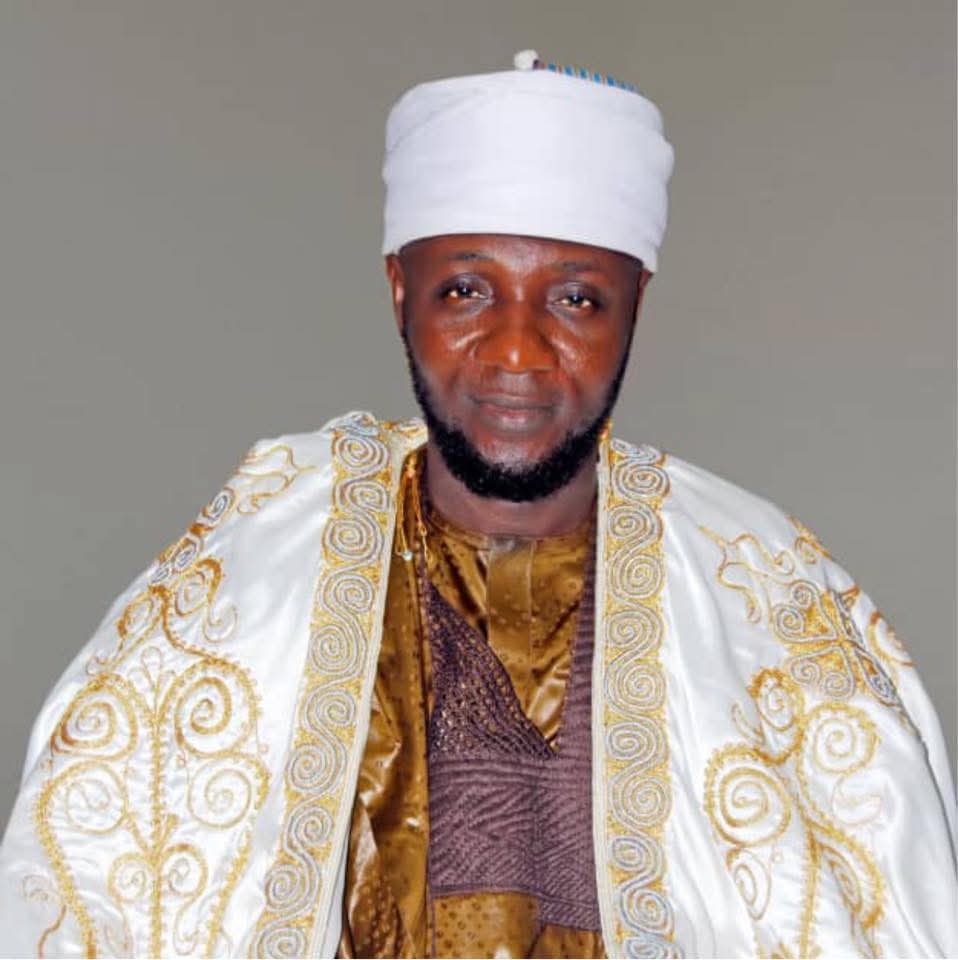
Keep Politics Out of My Office — Ogbomoso Grand Chief Imam Warns Politicians, Bloggers
The Office of the Grand Chief Imam of Ogbomosoland has drawn a battle line against the alleged politicisation of the revered Islamic institution, warning politicians, bloggers and social media commentators to stop using the Imam’s name, image or perceived position to promote partisan interests.
The office, in a strongly worded statement issued on Tuesday, September 15, 2026, declared that the Grand Chief Imam was neither a political actor nor available to any politician, political party or interest group seeking endorsement, mobilisation or political leverage.

Grand Chief Imam of Ogbomosoland Toliat Yunus Ayilara
The warning, signed by the Secretary of the Office of the Grand Chief Imam, Sulaimon Ogunleye, came amid what the office described as “recent attempts” by certain media organisations, internet bloggers, political actors and their associates to drag the revered office into partisan political activities.
The office said the Grand Chief Imam occupied a spiritual position above political affiliations and was a father to the entire community, irrespective of party, ideology or individual political preference.
It stressed that his primary responsibility was to provide spiritual guidance, counsel, prayers and moral leadership to the Ummah and society.
Consequently, the office declared that its position on partisan politics remained “uncompromisingly neutral.”
‘Nobody should drag Imam into politics’
In a stern message to politicians and their associates, the office warned against attributing political endorsements or directives to the Grand Chief Imam.
It maintained that while individual members of the community remained free to support whichever candidate they preferred, such personal choices must not be presented as the position of the Grand Chief Imam.
The office also urged citizens to approach the forthcoming elections as responsible voters by scrutinising candidates, interrogating their records and promises, demanding accountability and making their choices freely at the polls.
“Every citizen has the right to support and vote for the candidate of his or her choice; however, no individual or political interest has the right to attribute such political choices to the Grand Chief Imam or his Office,” it stated.
‘Stop using Imam’s image, statements for political purposes’
The office subsequently issued a direct cease-and-desist warning to media organisations, bloggers, political actors, social media commentators and other individuals.
They were warned against using the Grand Chief Imam’s name, image, statements or perceived position for political purposes.
The office also condemned the alleged publication and circulation of fabricated statements, photographs, videos and other materials capable of creating what it described as a false impression that the Imam or his office had endorsed a candidate or political party.
It further warned against exploiting the revered office for political influence, leverage or personal clout.
“For the avoidance of doubt, no political endorsement should be attributed to the Grand Chief Imam,” the statement declared.
Defamation: Imam’s office threatens fresh legal action
The office took the warning a step further, declaring that the latest statement should not be interpreted as a mere expression of displeasure.
According to the statement, the office had, a few weeks earlier, issued another warning over alleged defamatory publications by certain bloggers.
It claimed that following the earlier intervention, legal proceedings were instituted and several persons were currently facing prosecution before the courts.
Against that background, the office described Tuesday’s warning as a “final and unequivocal” notice.
It warned that anyone or any organisation that knowingly publishes, circulates or disseminates what the office considers false, defamatory or malicious material concerning the Grand Chief Imam or his office would face civil and criminal proceedings without further notice.
The office also vowed to identify and preserve evidence against alleged offenders, report them to relevant authorities and pursue prosecution, including individuals operating anonymously or through digital platforms.
‘Don’t turn Ogbomoso’s religious institutions into political battlegrounds’
The Grand Chief Imam also appealed for calm and unity among the people of Ogbomosoland as political activities intensify ahead of the forthcoming elections.
The office warned that political differences must not be allowed to tear the community apart or turn sacred institutions into instruments of partisan competition.
“The people are free to choose their leaders,” the statement declared.
However, it stressed that the Office of the Grand Chief Imam would remain above partisan politics.
The public was therefore urged to disregard any purported political endorsement, statement or directive attributed to the Grand Chief Imam unless officially issued by the appropriate office.
The office reaffirmed its commitment to peace, justice, responsible citizenship and the spiritual and social wellbeing of the people of Ogbomosoland, while praying for Allah’s continued guidance and ease in the affairs of the community.
Keep Politics Out of My Office — Ogbomoso Grand Chief Imam Warns Politicians, Bloggers
News
Vigilant Landlord Helps Free Teenager Locked in Toilet for Weeks in Rivers State

Vigilant Landlord Helps Free Teenager Locked in Toilet for Weeks in Rivers State
Police detain employer couple in Port Harcourt and contact the young worker’s family.
Police officers in Port Harcourt have rescued a 15-year-old domestic worker after she was locked inside a toilet for weeks by the couple employing her.
The incident occurred in a residential building in the Abuloma community of Rivers State, where a watchful landlord noticed that the young worker had not been seen outside for a long time. Suspecting something was wrong, the property owner contacted local officers, who visited the apartment and helped the teenager out of the locked room.
The young girl, who came from Ebonyi State to work in the home, was reportedly kept in the restricted space as punishment and given only minimal leftover food once a day.
Community members expressed relief after officers from the Abuloma Police Division stepped in to secure her safety and placed both employers under arrest.
State police spokesperson Assistant Superintendent Blessing Agabe confirmed that the employers remain in custody while detectives complete their inquiries.
Police officials also made clear that the teenager is in safe care and will not go back to that residence. Authorities are now working directly with her family members as the investigation proceeds toward potential court charges
Vigilant Landlord Helps Free Teenager Locked in Toilet for Weeks in Rivers State
News
NBS: Nigeria’s Inflation Slips to 15.39% in August

NBS: Nigeria’s Inflation Slips to 15.39% in August
Nigeria’s inflation rate eased to 15.39 per cent in August 2026 as the pace of price increases slowed across the economy, the National Bureau of Statistics has reported.
The latest Consumer Price Index report shows a modest fall from the 15.43 per cent recorded in July.
A sharper improvement was recorded in monthly inflation. The rate dropped from 1.57 per cent in July to 0.71 per cent in August, meaning prices continued to rise but at a much slower pace.
Food inflation also slowed significantly.
The NBS put year-on-year food inflation at 19.57 per cent in August. This was below the 25.30 per cent recorded a year earlier. Monthly food inflation also fell sharply, moving from 5.56 per cent in July to 1.02 per cent in August.
The statistics agency attributed the monthly decline to lower average prices for a range of food products, including palm oil, pepper, onions, cassava flour, beef, yam flour, egusi, ginger, fresh fish, Irish potatoes, chicken and turkey.
The improvement, however, was not shared equally across the country.
Adamawa had the highest annual food inflation rate at 38.85 per cent. Zamfara followed with 37.96 per cent, while Bayelsa recorded 36.20 per cent.
At the other end, Borno recorded negative annual food inflation of -4.04 per cent. Jigawa recorded -0.23 per cent, while Kebbi stood at 3.47 per cent.
For monthly food inflation, Katsina recorded the highest rate at 9.48 per cent, followed by Rivers at 8.86 per cent and Osun at 8.32 per cent.
The latest figures suggest a broad slowdown in price growth, although the wide differences between states show that many households are still facing very different food price pressures depending on where they live.
NBS: Nigeria’s Inflation Slips to 15.39% in August
-
 News3 days ago
SERAP Threatens Legal Action Over ₦126bn INEC Electoral Funds
-

 Politics2 days ago
2027: Northern Lecturers Back Tinubu, ASUU Disowns Endorsement
-

 metro3 days ago
Mother ‘sold daughter’s abuse videos for $300’: Nigeria child pornography case shocks nation
-

 News3 days ago
Petrol Subsidy: Presidency Rejects Atiku’s Plan, Says No Going Back
-

 News3 days ago
Adeleke Orders Arrests After Associate Ajagungbade Is Reportedly Killed in Ife
-

 metro2 days ago
Police Arrest Mother Over Alleged Brutal Abuse of 7-Year-Old Girl in Anambra
-

 Sports1 day ago
‘I Was Never the Chosen One’ — Dembele Responds to Mbappe
-

 Education3 days ago
JAMB Takes Over HND Admissions in Polytechnics, Health Institutions Nationwide