

Business
Appeal court joins Lagos in FIRS suit over VAT collection

The court of appeal, Abuja division, has granted the application of the Lagos state government as a co-respondent in the appeal filed by the Federal Inland Revenue Service (FIRS).
The FIRS is challenging the judgment of the federal high court, Port Harcourt, which restrained the agency from collecting VAT and personal income tax (PIT) in Rivers state.
At the lower court, the FIRS had appealed for a stay of execution, but the court dismissed it on the basis that it would “negate the principle of equity”.
Consequently, FIRS went to the court of appeal.
On September 10, the Attorney-general of Lagos, Moyosore Onigbanjo, applied to be joined as a party in the appeal. The state had also passed a VAT bill into law.
Onigbanjo had submitted that the outcome of the appeal would have a direct impact on the state.
“My lord, it is not in dispute that Lagos, one of the federating states in Nigeria, is entitled to collect VAT and that’s our interest,” he said.
“Even the appellant recognised that the Lagos state government has an interest in the matter in their affidavits in support of stay of execution where copious reference was made to the Lagos state government.”
Delivering ruling on Thursday, Haruna Tsammani, presiding judge, held that Lagos state has been able to prove that it has a direct interest in the subject matter of this appeal.
He agreed that all the reliefs sought by the Rivers state government which were granted at the high court made reference to “any other state of the federation.”
“It is not in doubt that Lagos state is a constituent state in Nigeria,” the judge held.
“It is, therefore, my finding that the applicant has been able to establish that he has a direct case in the subject matter of this appeal.
“The application for joinder is in the appeal as the third respondent is accordingly granted.”
The court also ordered that all the processes in the suit should be served on the state.
On Tuesday, Oyo state also filed a joiner application before the court of appeal.

Business
Petrol Depot Prices Fall as Dangote, Marketers Cut Rates, Pump Price Reduction Looms

Petrol Depot Prices Fall as Dangote, Marketers Cut Rates, Pump Price Reduction Looms
The price of Premium Motor Spirit (PMS), popularly known as petrol, has fallen across several major Nigerian depots, with the Dangote Petroleum Refinery cutting its wholesale price by N25 per litre, raising expectations that filling stations could begin reducing pump prices as they replenish their stocks.
The latest reductions were recorded in Lagos, Port Harcourt, Calabar and Warri, following a decline in international crude oil prices and renewed competition among petroleum suppliers.
Dangote Refinery reduced its petrol ex-gantry price from N1,350 to N1,325 per litre, just days after raising the price to N1,350.
The latest adjustment means the refinery has reversed part of the N85 increase introduced on September 12, when its petrol gantry price rose from N1,265 to N1,350 per litre.
Other major depot operators also reduced their prices, particularly in Lagos, where several companies cut their rates by between N20 and N24 per litre.
In Lagos, Ascon, Integrated, Pinnacle and Sahara reduced their petrol prices by N24 to between N1,326 and N1,327 per litre.
MRS reduced its price by N20 to N1,332, while Wosbab was listed at N1,330 per litre.
The reductions were also recorded outside Lagos.
In Calabar, Mainland reduced its petrol price by N7 to N1,320 per litre, while Alkanes cut its price by N2 to N1,325. Matrix retained N1,330, while Sobaz marginally increased its price by N1 to N1,328.
In Port Harcourt, Stockgap reduced its petrol price by N7 to N1,323 per litre, while Masters cut its rate by N2 to N1,328. Bulk Strategic and Sigmund were listed at N1,328, while Matrix retained N1,330.
In Warri, Keonamex reduced its price by N3 to N1,327, while Nepal and Prudent cut their rates to N1,329 and N1,328 respectively. Some operators, however, recorded marginal increases, underscoring the continuing volatility in the downstream market.
READ ALSO:
- 2027: Tompolo-Backed Group Deploys 44 Vehicles for Tinubu-Shettima Campaign in Borno
- MTN, Gates Foundation Launch $25m AI Maternal Health Initiative for 500,000 Nigerian Women
- Niger Mosque Attack: Bago Says 63 Abducted, 14 Freed, Three Killed
The latest wholesale adjustments followed a decline in global crude prices, with Brent crude trading below $100 per barrel while West Texas Intermediate (WTI) also declined.
The movement is important to Nigeria’s petrol price market because international crude and refined-product prices influence the cost of locally refined products as well as imported PMS.
Brent had climbed as high as about $109 per barrel the previous week before retreating below the $100 mark, although other crude benchmarks have moved differently.
The latest decline has provided some room for refiners and marketers to review wholesale petrol prices downward, but further reductions will depend on the direction of crude prices, foreign exchange conditions and the cost of refined petroleum products.
The reduction at the depots has not, however, immediately translated into equivalent reductions at filling stations.
Petrol was still selling at between about N1,370 and N1,450 per litre in different locations, according to the latest market checks.
In Abuja, motorists and commuters complained that several filling stations had not reduced their pump prices despite the Dangote price cut.
Some stations were still selling petrol at between N1,395 and N1,450 per litre, creating a significant gap between the new Dangote depot price and some retail prices.
The delay is partly linked to the way the deregulated downstream petroleum market operates.
Retailers that purchased their existing stocks at higher prices may continue selling those products at prevailing rates until the stocks are exhausted and replaced with cheaper supplies.
Transportation, storage, logistics, station operating costs and individual marketers’ margins also influence the final pump price.
Consequently, a reduction in the ex-depot price does not automatically translate into an immediate N25 reduction at every filling station.
The latest wholesale price movement nevertheless places additional competitive pressure on retailers, particularly as more marketers begin lifting cheaper products.
It also comes as domestic refining continues to take a larger share of Nigeria’s petrol supply.
Data attributed to the Nigerian Midstream and Downstream Petroleum Regulatory Authority (NMDPRA) showed that domestic refineries supplied about 76.7 per cent of Nigeria’s petrol requirement in the first quarter of 2026, while petrol imports fell by about 60 per cent year-on-year to approximately 965.5 million litres.
The figures reflect the growing importance of the Dangote Refinery and other domestic refining facilities in Nigeria’s downstream petroleum market.
However, imported petrol has not disappeared from the country’s supply chain.
READ ALSO:
- UNGA 81: Trump Threatens to ‘Annihilate’ Iran if No Deal Is Reached
- Mambilla: Malami Defends $200m Settlement, Rejects ICC Corruption Findings
- Obasanjo Family, Orji Kalu Among Nigerians Linked to $271m US Property Investigation
The Federal Government has approved the importation of 830,000 metric tonnes of petrol for the fourth quarter of 2026, ahead of the Christmas and New Year period when fuel demand traditionally rises.
The permits were reportedly issued to Matrix Energy, AA Rano, AYM Shafa, NIPCO, Pinnacle Oil and Bono Energy.
The latest allocation represents an increase from earlier import approvals this year and means imported PMS will remain part of Nigeria’s supply mix despite the expansion of domestic refining capacity.
The import programme has also become a point of contention between Dangote Refinery and the downstream regulator.
Dangote Refinery is challenging the continued issuance of petrol import licences by the NMDPRA, arguing that domestic refining capacity is sufficient to meet local demand.
The legal dispute is before the Federal High Court, with the matter scheduled for further hearing on October 7, 2026.
The continuing import programme, however, reflects concerns about supply security.
NMDPRA data cited in industry reports showed that domestic petrol supply declined from about 32.5 million litres per day in June to 25.8 million litres per day in July, while imports increased from approximately 18.1 million litres per day to 19.7 million litres per day during the same period.
Total daily petrol supply consequently fell from 50.6 million litres to 45.5 million litres.
The figures indicate that although domestic refineries now provide the larger share of Nigeria’s petrol, imports can still serve as a buffer when local production falls below market requirements.
Another factor affecting the competitiveness of local refining is import parity.
The Major Energies Marketers Association of Nigeria had estimated petrol import parity at between N1,364.02 and N1,365.02 per litre as of September 17.
Dangote’s new N1,325 per litre price is therefore below that earlier import-parity estimate, although actual import costs continue to change with international prices, exchange rates, freight and other charges.
The development could encourage more marketers to source products from domestic refineries if local products remain commercially competitive with imported alternatives.
It also illustrates the changing structure of Nigeria’s fuel market, where international crude prices remain important but domestic refining capacity, competition and supply availability are increasingly influencing prices.
The Federal Government has also been engaging operators in the downstream sector over petrol pricing and supply.
The Nigerian Midstream and Downstream Petroleum Regulatory Authority has convened consultations involving refiners, depot owners, marketers and retailers as the government seeks greater stability in the petroleum market.
For consumers, the immediate issue remains whether the reduction in wholesale prices will translate into cheaper petrol at the pump.
The latest reduction provides room for a downward movement, but the timing and size of any retail price cut will depend on the cost of existing stocks, new depot prices, transportation expenses, market competition and the direction of international crude prices.
The volatility of the market has also been reflected in the diesel segment.
Some depots reduced the price of automotive gas oil, with Lagos recording reductions of up to N15 per litre at some operators, while Port Harcourt and Warri also recorded significant cuts.
The movement in both petrol and diesel prices comes at a time when high energy costs continue to affect transportation, logistics, food distribution and operating expenses for Nigerian households and businesses.
If the lower crude prices persist and wholesale petrol prices remain at the new levels, motorists could see further reductions as cheaper stocks move through the distribution chain.
For now, the latest petrol depot price cuts have created a new opportunity for pump-price reductions, although the immediate impact will vary from one location and retailer to another.
The development also reinforces the increasingly competitive nature of Nigeria’s downstream petroleum sector, with Dangote Refinery, other domestic suppliers and importers competing to meet demand under a deregulated pricing regime.
Petrol Depot Prices Fall as Dangote, Marketers Cut Rates, Pump Price Reduction Looms
Auto
NADDC Pushes Affordable Auto Loans to Boost Vehicle Ownership, More Jobs
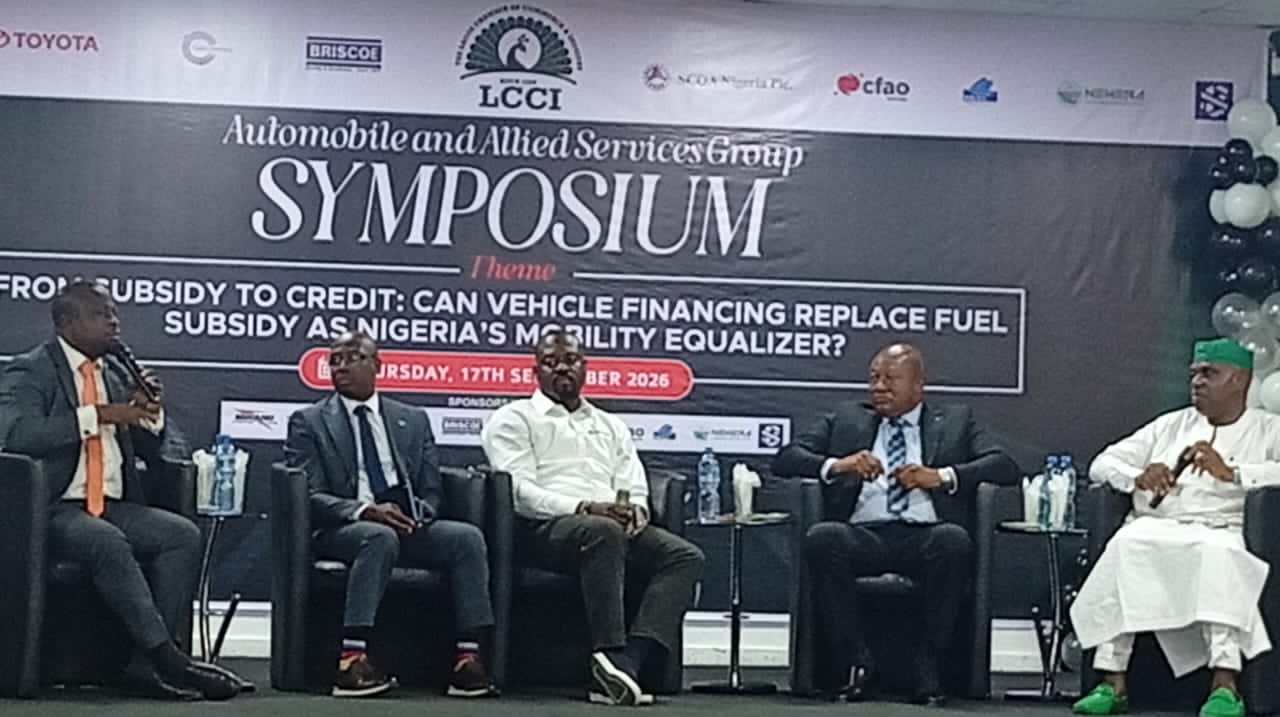
NADDC Pushes Affordable Auto Loans to Boost Vehicle Ownership, More Job
The National Automotive Design and Development Council has called for far-reaching reforms in vehicle financing to make car ownership more affordable while boosting local vehicle assembly, job creation and industrial development.
The Council said a properly structured financing system could turn vehicle credit from a mere consumer lending product into a major economic tool for expanding productive mobility and strengthening Nigeria’s automotive value chain.
Director-General of NADDC, Otunba Joseph Oluwemimo Osanipin, stated this in an address delivered on his behalf by the Council’s Principal Information Officer, Tanko Kyumnom, at the Lagos Chamber of Commerce and Industry (LCCI) Auto Sectoral Group Symposium in Lagos.
The symposium, held on Thursday, September 17, 2026, at the Henry Fajemirokun Hall of LCCI, was themed: “From Subsidy to Credit: Can Vehicle Financing Replace Fuel Subsidy as Nigeria’s Mobility Equaliser?”
Osanipin said the growing cost of mobility had made it necessary to explore financing models that would enable individuals, businesses and transport operators to acquire vehicles without bearing the full cost of ownership upfront.
According to him, spreading vehicle payments over an agreed period could provide a more sustainable pathway to vehicle acquisition, provided that the financing products are affordable, accessible and structured around the economic realities of Nigerian consumers.
He, however, cautioned that simply making credit available would not be enough.
“Vehicle financing offers a more sustainable approach by enabling individuals, businesses and transport operators to acquire vehicles and pay for them over time,” Osanipin stated.
The NADDC DG said the bigger opportunity lies in linking vehicle financing with the growth of locally assembled and Nigerian-made vehicles.
He explained that increased access to credit for locally produced vehicles could generate wider economic benefits by stimulating demand for domestic assembly, supporting component manufacturers, creating jobs and strengthening local supply chains.
Osanipin therefore urged stronger collaboration among government institutions, financial institutions, vehicle manufacturers and other stakeholders in designing financing schemes capable of supporting both mobility access and automotive industrialisation.
The NADDC boss identified affordable vehicle loans, leasing arrangements, fleet financing, credit guarantees and appropriate interest-rate support as mechanisms that could broaden access to vehicle ownership and productive mobility.
lt also stressed the need for repayment structures that take into account the earning patterns and business realities of Nigerians, particularly transport operators and small businesses whose vehicles are directly linked to their income-generating activities.
Osanipin maintained that the objective should extend beyond increasing the number of vehicles on Nigerian roads.
“The goal is not simply to put more vehicles on Nigerian roads. It is to ensure that Nigerians can access productive mobility without placing an unsustainable burden on government finances or household incomes,” he said.
According to him, a properly structured automotive financing system could create a stronger connection between mobility, economic inclusion and domestic vehicle production.
“With the right policies and partnerships, vehicle financing can become a powerful instrument for mobility, economic inclusion and automotive industrial development,” Osanipin added.
The NADDC’s position places vehicle financing within the broader effort to build a sustainable automotive ecosystem in Nigeria—one in which access to credit supports vehicle users while also creating stronger demand for local assembly, components and associated automotive services.
Auto
Jetour T1 Storms Abuja as Automaker Accelerates Nigeria Expansion

Jetour T1 Set to debut in Abuja as Expansion Gains Momentum
Following a successful debut in Lagos, Jetour Nigeria will host the Jetour Experience Abuja from September 22 to 24, 2026, positioning its all-new T1 model as a major competitor in the country’s growing adventure SUV market.
The three-day event in the Federal Capital Territory will give prospective buyers and motoring enthusiasts direct access to product demonstrations, expert-led technical sessions, and hands-on test drives.
“Strong participation, extensive test drives, and significant sales enquiries at the Lagos edition, coupled with growing demand from Abuja residents, influenced the decision to bring the experience to the nation’s capital,” the company said in a statement. The show holds at Maha Event Centre, Area 8, Garki.
To support its growing national footprint, Jetour Nigeria has established a network of seven accredited dealers: Elizade Nigeria Limited, New Era AutoVehicle Services Limited, Kojo Motors, Germaine Auto Centre, Tab Autos Limited, R.T. Briscoe Motors, and Mandilas Autos. The partnerships cover retail sales, genuine spare parts supply, and comprehensive after-sales maintenance.
READ ALSO:
- Kidnapped Female Police Officer Found Dead in Ebonyi as Suspect Leads Police to Remains
- CNN, MS NOW, Politico Sue Trump Over White House Access Ban
- JAMB Allows Candidates to Change Lost SIM, Email Addresses
The T1 enters the market with a focal point on balance—combining off-road capability with urban comfort.
The smart T1 has the following features-
Dimensions: 4,705mm (L) x 1,967mm (W) x 1,843mm (H) |; Wheelbase: 2,800mm; and
Powertrains: 1.5L Turbo / 2.0L Turbo (254 hp, 390 Nm torque).
The drivetrain is BorgWarner XWD Intelligent 4WD | 7-Speed DCT or 8-Speed Automatic. Terrain Capability: 199mm ground clearance, 600mm wading depth, and 28° approach/departure angles.
Other features include 15.6-inch HD touchscreen, Qualcomm Snapdragon 8155 platform, 8-speaker audio, 5-seater configuration with 574 litres of rear luggage space, 85 percent high-strength steel chassis alongside a Level 2 Advanced Driver Assistance System (ADAS), which includes Adaptive Cruise Control, Lane Keeping Assist, Forward Collision Warning, and Autonomous Emergency Braking.
Since its Nigerian market entry, Jetour has secured several local and international automotive honors, including Fastest Growing Auto Brand of the Year and Auto Brand of the Year.
Jetour T1 Set to debut in Abuja as Expansion Gains Momentum
-
 News2 days ago
NLC Backs ₦500 Petrol Demand, Workers Propose ₦500,000 Salary
-

 Auto3 days ago
Jetour T1 Storms Abuja as Automaker Accelerates Nigeria Expansion
-

 Education3 days ago
JAMB Allows Candidates to Change Lost SIM, Email Addresses
-

 Politics2 days ago
Obi vs Soludo: ₦86.67bn Handover Figure Meets ₦127.37bn Debt Claim
-

 metro3 days ago
Kidnapped Female Police Officer Found Dead in Ebonyi as Suspect Leads Police to Remains
-

 International3 days ago
CNN, MS NOW, Politico Sue Trump Over White House Access Ban
-

 News3 days ago
MURIC Warns FG: Any Move Against Atiku Now Lacks Tact
-

 metro2 days ago
Saudi Arabia Rejects Nigeria’s Request for More 2027 Hajj Slots