
metro
Army releases Chiwetalu Agu after 24 hours in detention

The Nigerian Army has released Chiwetalu Agu, the ace Nollywood actor, who has been in detention for about 24 hours.
National Secretary of the Actors Guild of Nigeria (AGN), Abubakar Yakubu, confirmed the news of his release on Friday.
The actor was arrested on Thursday in Onitsha, Anambra State, by soldiers for wearing an outfit which the soldiers considered that he identified with the proscribed Indigenous People of Biafra. Indeed he was accused of recruiting for IPOB before his arrest.
Many people especially fans of the actor and activist Deji Adeyanju condemned the arrest as illegal and demanded his immediate release of Agu.









metro
Troops Kill Five Kidnappers, Rescue Abducted Woman in Plateau
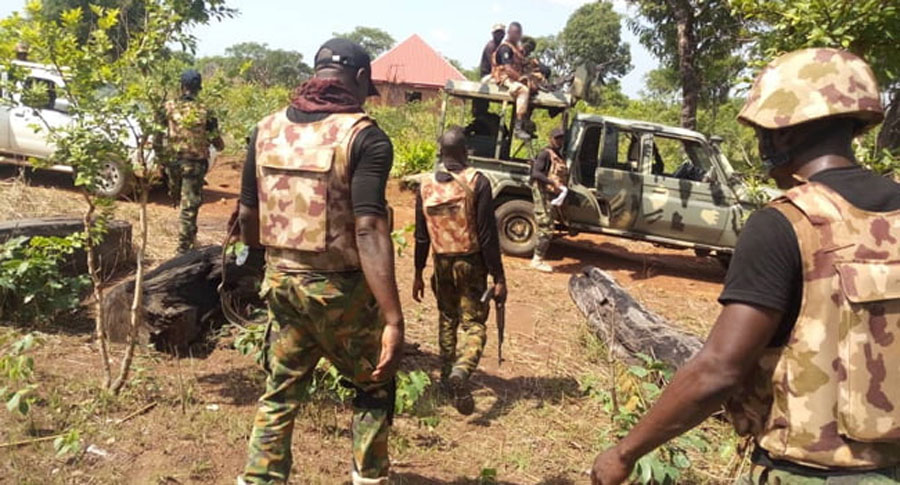
Troops Kill Five Kidnappers, Rescue Abducted Woman
Troops of Operation Enduring Peace (OPEP) have successfully neutralised five suspected kidnappers and rescued a woman who had been abducted in Plateau State, security officials confirmed on Wednesday. The operation, described as intelligence‑driven, took place at a criminal hideout in Angwan Boka, Sopp District, within the Riyom Local Government Area.
According to Captain Chinonso Polycarp Oteh, spokesman for the Joint Military Task Force, the raid was prompted by actionable intelligence provided by two individuals apprehended on February 16, who were later identified as members of a local kidnapping syndicate. Troops swiftly mobilised to the hideout, where they engaged the kidnappers in a firefight, resulting in the death of five suspects and the safe rescue of the victim, identified as Hauwa Suleiman. She was found unharmed and has since been reunited with her family.
READ ALSO:
- Sowore Condemns Electoral Act 2026 as Threat to Nigeria’s Democracy
- DSS Takes El-Rufai into Custody After Two Nights at EFCC Headquarters
- Tinubu Ends NNPCL Oil Revenue Deductions, Orders Full FAAC Remittance
During the operation, security forces also recovered evidence linking the suspects to criminal activities, including three mobile phones, ₦17,600 in cash, and substances suspected to be illegal drugs. Captain Oteh emphasised the importance of community cooperation in fighting crime, urging residents to provide credible information that would help security agencies locate and dismantle criminal networks. “Even though we will do our best, with credible and actionable information, we can know where criminal elements are and deal with them so that there will be peace,” he said.
Community members, including John Mairiga of Riyom, attested to the success of the raid and praised the troops for their swift intervention. Authorities described the operation as part of ongoing efforts to combat kidnapping, banditry, and violent crime across Plateau State and the broader Middle Belt region. The Nigerian Army reaffirmed its commitment to ensuring that citizens can return to their farms and businesses without fear of attacks.
The operation underscores the growing effectiveness of intelligence‑led military operations in tackling organised crime in Nigeria and highlights the critical role of community engagement in supporting security agencies. Residents are encouraged to continue providing information to security operatives to sustain the momentum of peace and stability across affected areas.
Troops Kill Five Kidnappers, Rescue Abducted Woman
metro
Sowore Condemns Electoral Act 2026 as Threat to Nigeria’s Democracy

Sowore Condemns Electoral Act 2026 as Threat to Nigeria’s Democracy
Former presidential candidate and activist Omoyele Sowore has condemned President Bola Ahmed Tinubu for signing the Electoral Act 2026 (Amendment) into law, describing the legislation as a direct threat to Nigeria’s democratic integrity and the credibility of upcoming elections.
Reacting shortly after the signing ceremony at the Presidential Villa in Abuja on Wednesday, Sowore said the law was “designed to undermine and ultimately forbid free, fair, and credible elections in Nigeria.” He urged citizens and civil society groups to actively oppose its provisions, warning that the legislation could erode hard-won democratic norms. “We must resist this assault on democracy,” he said. “They have dared the people. Now we must confront them, we must damn their impunity.”
President Tinubu signed the Electoral Act 2026 (Amendment) around 5:00 p.m., in a ceremony attended by principal officers of the National Assembly. The law is intended to govern the conduct of elections ahead of the 2027 general elections, with presidential and National Assembly polls scheduled for February 20, and governorship and State Houses of Assembly elections set for March 6.
READ ALSO:
- DSS Takes El-Rufai into Custody After Two Nights at EFCC Headquarters
- Tinubu Ends NNPCL Oil Revenue Deductions, Orders Full FAAC Remittance
- Lagos DSVA Confirms Mirabel Assault Happened in Ogun, Transfers Case
Sowore’s criticism reflects concerns from opposition politicians, civil society organisations, and legal analysts, who argue that some provisions of the amended law could weaken transparency and fairness in Nigeria’s elections. He pointed to clauses that may restrict political participation for smaller parties and independent candidates, limit judicial oversight in election disputes, and expand discretionary powers for the Independent National Electoral Commission (INEC) in ways that could centralise control and reduce accountability.
The activist’s remarks have reignited public debate, with supporters of the law arguing that the amendments are intended to streamline electoral processes, reduce frivolous litigation, and improve efficiency in Nigeria’s often protracted election system. Critics, however, warn that the law could be exploited to favour incumbents and entrenched political interests, potentially undermining the competitiveness of the 2027 elections. Civil society organisations have called for robust public education and, where necessary, judicial review to safeguard constitutional principles.
The Electoral Act 2026 (Amendment) arrives at a critical juncture for Nigeria’s democracy. With general elections just months away, political tensions, party realignments, and security concerns are intensifying nationwide. Observers note that the legal framework governing elections will play a pivotal role in shaping public confidence in the process. Sowore’s call for resistance adds to growing voices urging Nigerians to remain vigilant and assertive in defending transparency and accountability in governance.
Sowore Condemns Electoral Act 2026 as Threat to Nigeria’s Democracy
metro
DSS Takes El-Rufai into Custody After Two Nights at EFCC Headquarters
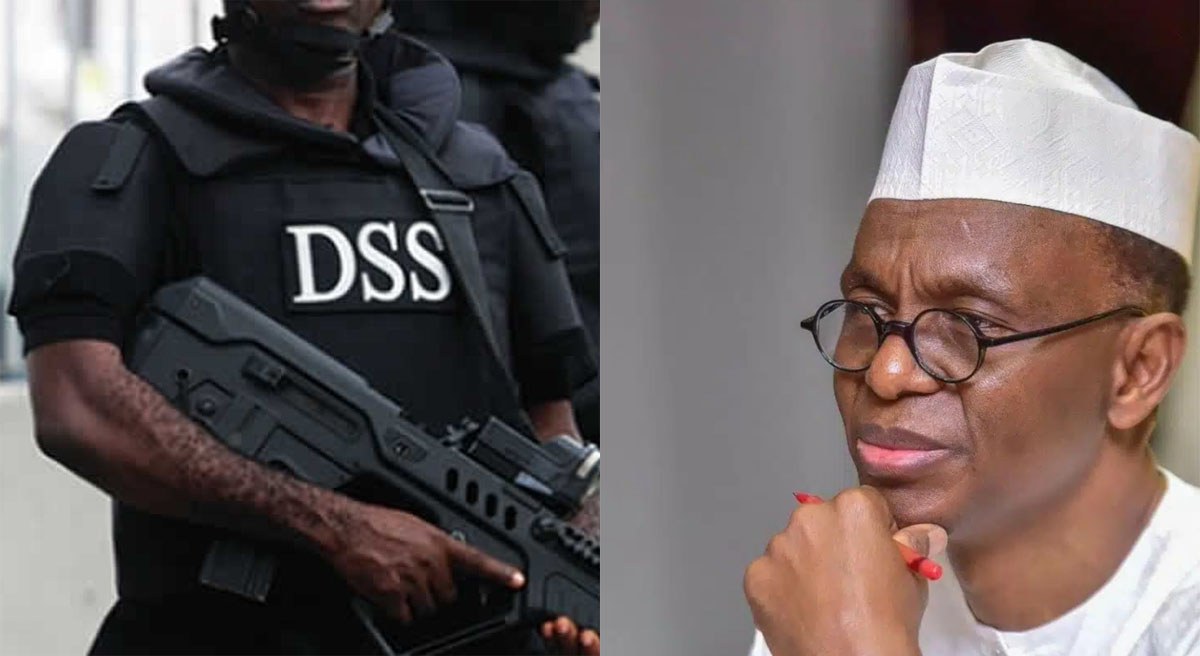
DSS Takes El-Rufai into Custody After Two Nights at EFCC Headquarters
Operatives of the Department of State Services (DSS) have taken former Kaduna State governor Nasir El-Rufai into custody following his extended stay at the headquarters of the Economic and Financial Crimes Commission (EFCC) in Abuja.
Multiple security and government sources confirmed that El-Rufai was picked up by DSS operatives late Wednesday night directly from the EFCC facility, where he had reportedly spent two nights undergoing interrogation.
Sources familiar with the EFCC investigation said the former governor was repeatedly requested to provide a written statement concerning allegations of financial impropriety during his tenure as governor of Kaduna State between 2015 and 2023. However, he was said to have declined to submit a written response, insisting instead on verbal engagement with investigators.
El-Rufai had honoured an EFCC invitation on Monday in connection with allegations bordering on the diversion of ₦423 billion and money laundering, claims initially raised by the Kaduna State House of Assembly in 2024. The lawmakers had, at the time, recommended a comprehensive probe by anti-corruption agencies following a report by a special investigative committee.
READ ALSO:
- Tinubu Ends NNPCL Oil Revenue Deductions, Orders Full FAAC Remittance
- Lagos DSVA Confirms Mirabel Assault Happened in Ogun, Transfers Case
- Arsenal Blow Two-Goal Lead as Bottom Club Wolves Hold Gunners to 2–2 Draw
In addition to the EFCC investigation, El-Rufai has also been invited by the Independent Corrupt Practices and Other Related Offences Commission (ICPC) over related allegations stemming from the same period.
Security sources further disclosed that last week, operatives attempted to arrest the former governor at the Nnamdi Azikiwe International Airport shortly after his return from Cairo, but the attempt was unsuccessful.
Following that incident, El-Rufai publicly alleged that the ICPC was acting on the instruction of Nuhu Ribadu, Nigeria’s National Security Adviser, to effect his arrest. He later expanded the claim during an appearance on Prime Time on Arise Television, alleging that Ribadu’s telephone had been wiretapped and that he overheard directives ordering his arrest.
On Monday, the DSS filed a three-count charge against El-Rufai relating to the alleged interception of the National Security Adviser’s telephone conversations, a development that further complicated his legal situation.
However, senior security officials have insisted that the DSS action is separate from the EFCC investigation, describing it as an “independent and escalating security matter” unrelated to the financial probe. They maintained that the DSS involvement stems from national security concerns rather than alleged financial crimes.
The unfolding developments have significantly deepened the legal and political challenges confronting the former governor, who is now facing investigations by multiple federal agencies, even as no formal conviction or court judgment has been recorded against him.
Further official statements are expected as investigations progress.
DSS Takes El-Rufai into Custody After Two Nights at EFCC Headquarters

-

 News2 days ago
Saudi Arabia Confirms Sighting of Ramadan Crescent, Fasting Begins Wednesday
-
 metro1 day ago
Lagos Woman Shares Ordeal After Alleged Rape, Sparks Nationwide Outcry
-

 metro3 days ago
US Freezes Assets of Eight Nigerians Over Boko Haram, ISIL, Cybercrime Links
-

 News1 day ago
Ramadan Begins in Nigeria as Sultan Confirms Crescent Sighting
-
 Entertainment3 days ago
Mystery in Lekki: Police Probe Death of Two Nollywood Crew Found Lifeless in Parked Car
-
 metro3 days ago
Terror in Lagos Traffic: Cutlass Gang Unleashes Mayhem on Mile 12–Ketu Road
-

 Auto3 days ago
Appeal Court Ruling on VIO Limited to Abuja, Not Lagos — LASG
-
 metro1 day ago
Seven Killed in Horrific Crash at Ota Toll Gate