
Business
As controversy over Maersk-FG port investment rages, Onanuga says no $600m deal signed
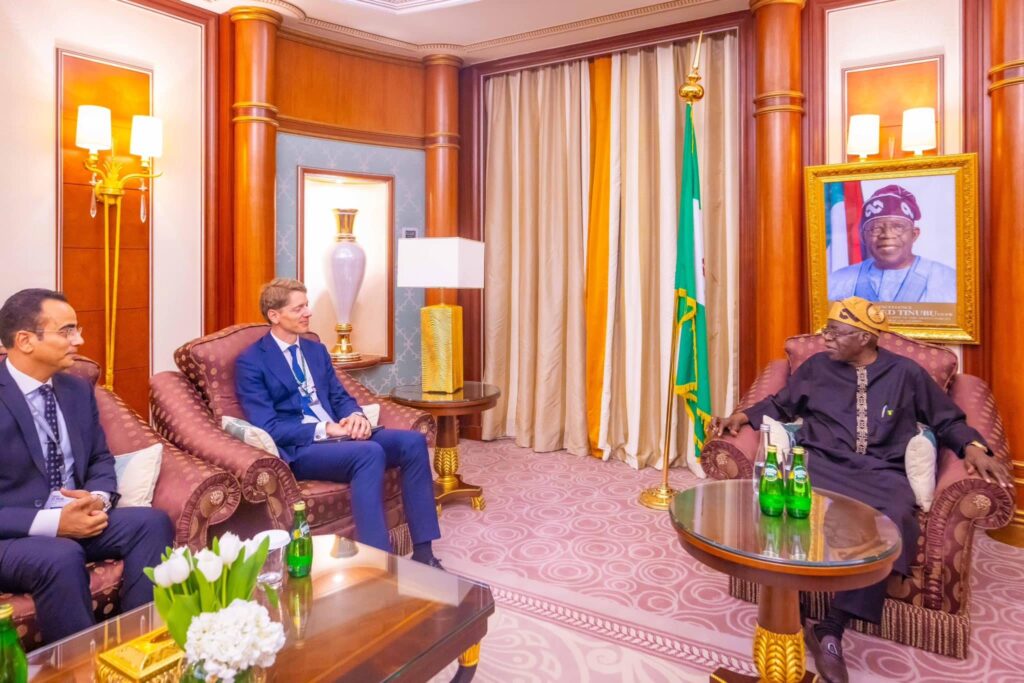
As controversy over Maersk-FG port investment rages, Onanuga says no $600m deal signed
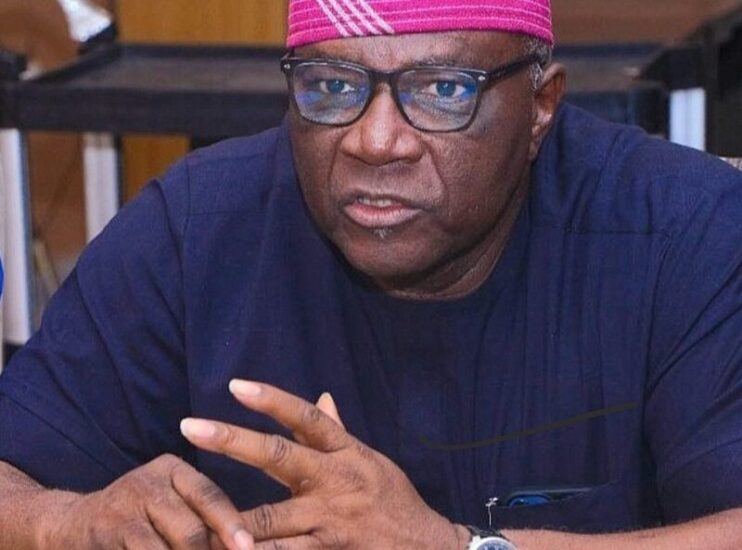
The Nigerian government and a shipping giant, Maersk, have not signed any investment agreement, Bayo Onanuga, special adviser on information and strategy to President Bola Tinubu, has said.
Onanuga was reacting to the controversy surrounding the reported sealing of a $600 million deal for the development of the nation’s seaports.
He said there was only talk “of possible investment in Nigeria” by Maersk.
Interestingly Onanuga had hinted about the deal in a tweet said to have been pulled down after the social media backlash.
After President Tinubu’s discussion with Maersk’s Chairman Robert Uggla on April 28, on the sidelines of the World Economic Forum Special Meeting in Riyadh, Saudi Arabia, the presidency had released a statement announcing that the shipping company had pledged to inject $600 million into the Nigerian seaport industry.
“Danish shipping company, A.P Moller-Maersk plans $600m investment in Nigeria. Danish shipping and logistics company A.P Moller-Maersk has disclosed a planned investment of $600 million in Nigeria to accommodate more container shipping services in Nigerian ports,” Onanuga wrote on X.
In a statement, Tinubu’s spokesperson, Ajuri Ngelale, also said “President Tinubu meets Chairman of Danish shipping giant Maersk, secures $600 million investment in Nigerian seaport infrastructure.” He quoted Uggla as saying, “We believe in Nigeria, and we will invest $600m in existing facilities and make the ports accommodating for bigger ships.”
In response to this. Maersk officials have denied any such agreement and stress no deals have been signed.
Onanuga in a new report by TheCable, an online news platform admitted no agreement on investment had been reached by the two parties.
“I think the statement issued by Maersk did not talk about a deal. There was no deal according to that statement that I read.
“However, there was talk of investment,” the special adviser said.
“No document or agreement was signed, so there was no deal. But there was talk of a possible investment in the country.
“So, go and read the statement again. They never said any deal was signed between the Nigerian government and the Dutch company. There was nothing like that.”
Onanuga however said the shipping company did not expressly deny that there was an investment talk.
He said people are “unnecessarily giddy over nothing.







Business
Fuel Relief: Dangote Reverses Petrol Price Hike, Drops PMS to ₦1,200

Fuel Relief: Dangote Reverses Petrol Price Hike, Drops PMS to ₦1,200
The Dangote Petroleum Refinery & Petrochemicals has reversed its recent petrol price increase, reducing the ex‑gantry price of Premium Motor Spirit (PMS) — commonly known as petrol — to ₦1,200 per litre amid a sharp decline in global crude oil prices triggered by easing geopolitical tensions.
The adjustment marks a ₦75 reduction from the previous price of ₦1,275 per litre, which had been introduced only days earlier due to rising crude oil benchmarks. A senior refinery official confirmed the rollback, noting that international oil market fluctuations directly influence domestic fuel pricing.
“The adjustment aligns with global market trends,” the official said, adding that geopolitical developments in the Middle East, including a temporary ceasefire agreement between the United States and Iran, contributed to the drop in crude oil prices. Brent crude fell by 13.28% to $94.76 per barrel, while US West Texas Intermediate dropped by 14.72% to $96.31 per barrel, easing pressure on domestic fuel costs.
READ ALSO:
- Trump Accuses CNN of ‘Fake News’ Over Iran Ceasefire Victory Report
- Police Debunk Viral Claim of 488 Boko Haram Arrests in Abia
- Trump Threatens 50% Tariffs on Countries Supplying Weapons to Iran
In a statement, the refinery clarified that no new petrol price increase has been implemented, confirming that the gantry price remains at ₦1,200 per litre and the coastal price at ₦1,153 per litre. The company assured the public of its commitment to steady fuel supply across domestic and regional markets.
The reduction comes amid ongoing volatility in Nigeria’s downstream petroleum sector, influenced by foreign exchange fluctuations, supply chain challenges, and global oil price swings. The Dangote refinery, which began operations in September 2024, has become a dominant player in Nigeria’s fuel market, significantly affecting pricing and supply patterns nationwide.
Analysts note that while the rollback is welcomed by consumers, retail petrol prices may still vary depending on how quickly marketers adjust pump prices, distribution logistics, and exchange rate considerations. The refinery’s responsiveness underscores the integration of Nigeria’s fuel pricing with international market realities following deregulation of the downstream sector.
Fuel Relief: Dangote Reverses Petrol Price Hike, Drops PMS to ₦1,200
Business
Oil prices tumble after US–Iran deal, Nigeria’s fuel cost remains high

Oil prices tumble after US–Iran deal, Nigeria’s fuel cost remains high
Global oil markets tumbled and equities surged on Wednesday after the United States and Iran struck a fragile, conditional ceasefire deal that includes reopening the critical Strait of Hormuz shipping route.
Brent crude plunged by 13 per cent to $94.80 a barrel, while US-traded crude dropped more than 15 per cent to $95.75—marking one of the sharpest declines since the conflict erupted on 28 February.
Despite the drop, prices remain significantly above pre-war levels of around $70 per barrel.
In Nigeria, this sigh of relief is yet to reflect in the pump price of fuel. Indeed, the last report as of Tuesday night was an increase of five per cent by Dangote Petroleum Refinery in its gantry price of petrol, pushing it to N1,275 per litre, from N1,200 per litre.
The ceasefire—set to last two weeks—offers temporary relief to global energy markets rattled by weeks of disruption. The Strait of Hormuz, a vital artery for global oil shipments, had been under threat after Iran warned it could target vessels in retaliation for US and Israeli airstrikes.
The easing of tensions sent stock markets rallying across Asia. Japan’s Nikkei 225 jumped 5 per cent, South Korea’s Kospi surged nearly 6 per cent, while Hong Kong’s Hang Seng rose 2.8 per cent. Australia’s ASX 200 also gained 2.7 per cent, with US futures pointing to a strong opening on Wall Street.
Announcing the deal on social media, former US President Donald Trump said Washington would suspend military action for two weeks—on the condition that Iran ensures the “complete, immediate, and safe” reopening of the Strait.
READ ALSO:
- Bill Gates to Testify Before US House Panel in High‑Profile Jeffrey Epstein Probe
- Trump Announces Two‑Week Ceasefire With Iran, Pauses Planned Bombing
- Arsenal Edge Sporting in Lisbon with Last-Minute Havertz Strike
Iran’s Foreign Minister, Abbas Araghchi, signalled Tehran’s willingness to comply, stating that a ceasefire would hold if attacks on Iran stop, adding that safe passage through the strait “will be possible.”
A report by BBC News quotes analysts as saying the move reflects growing pressure on both sides to avoid further economic fallout. Escalation risked driving energy prices even higher, potentially triggering what market watchers describe as a “self-inflicted economic wound.”
With the ceasefire in place, more oil tankers stranded near the strait are expected to resume transit, offering short-term relief. However, experts caution that a full recovery in energy supply remains distant.
Infrastructure damage across the Middle East could take months—if not years—to repair. Iran’s retaliatory strikes have hit key energy facilities, with estimates suggesting reconstruction could exceed $25 billion.
The conflict has already left deep scars on global energy supply chains. In mid-March, strikes on Qatar’s Ras Laffan industrial hub—responsible for roughly a fifth of global liquefied natural gas—cut export capacity by 17 per cent, with full repairs expected to take up to five years.
Asia has borne the brunt of the crisis, given its heavy reliance on Gulf energy supplies. Countries like India, Malaysia and the Philippines scrambled to secure safe shipping routes, while China confirmed that some of its vessels continued to pass through the strait despite the risks.
The economic strain has been severe. The Philippines, which depends on the Middle East for 98 per cent of its oil, declared a national energy emergency after fuel prices more than doubled.
Airlines across the region have also raised fares and cut routes as jet fuel costs soared.
While the ceasefire offers a breather, analysts warn it is far from a lasting solution. Energy production is unlikely to fully rebound until a durable peace agreement is secured—and even then, recovery will take time.
For now, markets are celebrating a pause in hostilities. But beneath the optimism lies a fragile reality: the global energy system remains on edge.
Oil prices tumble after US–Iran deal, Nigeria’s fuel cost remains high
Business
BREAKING: Dangote Refinery Raises Petrol Price across Nigeria

BREAKING: Dangote Refinery Raises Petrol Price across Nigeria
The Dangote Petroleum Refinery has again increased the price of petrol across Nigeria, pushing its gantry price of Premium Motor Spirit (PMS) to ₦1,275 per litre, up from ₦1,200 per litre.
The latest adjustment represents a ₦75 increase (about 5%), reversing a recent period of relative stability in fuel prices and reinforcing concerns about rising cost of living.
The price hike comes amid renewed volatility in the global oil market, with crude benchmarks climbing sharply. Brent crude hovered around $105 per barrel, while West Texas Intermediate (WTI) traded near $110 per barrel, driven by heightened geopolitical tensions.
A major trigger for the surge has been escalating uncertainty in the Middle East, following strong warnings from US President Donald Trump over a potential conflict involving Iran. The situation has raised fears of global supply disruptions, which typically push up crude prices and, by extension, refined fuel costs.

MRS Filling Station
Industry analysts say the Dangote refinery’s pricing remains closely tied to international crude benchmarks, meaning local pump prices are still heavily influenced by global market dynamics despite increased domestic refining capacity.
READ ALSO:
- Nigerians to Receive Airtime Credits as NCC Enforces Service Quality Standards
- NNPC Doubles Crude Supply to Dangote Refinery, But Petrol Prices May Stay High
- Decades of Prayer, No Results: Man’s Story Divides Public Opinion
The development comes just weeks after the refinery reduced petrol prices on March 27, 2026, when global crude prices softened. However, the recent rebound in oil prices has quickly erased those gains, underscoring the volatility of the energy market.
Despite the increase, President of the Dangote Group, Aliko Dangote, moved to reassure Nigerians and the wider African market about product availability.
“What I can do is assure Nigerians and most of West Africa, Central Africa, and East Africa that we have the capacity to supply them,” Dangote said during a recent tour of the facility.
His assurance comes as the refinery continues to ramp up production and expand its footprint across Africa. The plant, with a capacity of 650,000 barrels per day, is increasingly becoming a key supplier of refined petroleum products across the continent.
However, analysts caution that while supply may improve, price stability remains uncertain. They note that persistent global tensions, fluctuating crude prices, and foreign exchange pressures could continue to drive frequent price adjustments.
The latest increase is expected to have a ripple effect across the Nigerian economy, with likely impacts on transport fares, food prices, and inflation, as businesses adjust to higher energy costs.
Market watchers also warn that unless crude prices ease or government intervention—such as pricing support or subsidies—is introduced, Nigerians may continue to face elevated petrol and diesel prices in the near term.
BREAKING: Dangote Refinery Raises Petrol Price across Nigeria

-

 metro1 day ago
FG Deports US Missionary Alex Barbir Over Alleged Role in Nigeria Insecurity
-

 Entertainment1 day ago
Veteran Nollywood Actor Davis Ofor ‘Clarus’ of New Masquerade Dies at 85
-

 metro2 days ago
MURIC Backs Egba Imams’ Call for Inclusive Leadership in Ogun 2027 Governorship Race
-
 metro1 day ago
Lagos Announces Partial Road Closures for Project Commissioning
-
 Politics3 days ago
2027: Atiku Signs $1.2m US Lobbying Deal to Engage Trump
-
 News1 day ago
Iran Lists Tough Conditions for Peace Talks with US
-

 Business3 days ago
Tax Evasion: Lagos Government Sues Bi-Courtney, DAAR, 33 Others
-

 International2 days ago
Trump Claims US Sent Weapons to Iranian Protesters but Diverted