
Education
ASUU kicks as NASS pushes for establishment of 186 varsities

The Academic Staff Union of Universities has kicked against the initiation of new bills for the creation of new universities in Nigeria.
ASUU wondered why the government would push for the creation of new universities while ignoring the existing ones currently in dilapidated states.
Saturday PUNCH reports that the National Universities Commission, the regulatory body of universities in Nigeria, puts the total number of federal universities at 49; state-owned universities, 55, and private-owned universities, 99.
Though the NUC had earlier argued that the number of universities and lecturers in the country might not be enough to cater for the academic needs of Nigerians, ASUU told the government to focus on fixing the existing universities and the entire university system.
An analysis conducted by our correspondent, however, revealed that since the ninth National Assembly came into power in 2019, no fewer than 186 bills had been initiated for the establishment of new universities.
In 2019 for instance, a total of 48 bills were initiated for the creation of new universities; there was a drop in 2020 when only 43 bills for new universities were pushed. Further analysis of total bills passed in 2021, however, revealed that no fewer than 80 bills were pushed for the establishment of new universities.
READ ALSO:
- Protest as police open fire on Oyo corps member’s car, flee
- Protest as police open fire on Oyo corps member’s car, flee
- Ohanaeze Ndigbo president to Obiano: Stop your wife from going into politics
15 bills initiated in 2022
Notable among the bills are the bill for the establishment of Federal University of Tourism, Wamba 2021; Federal University of Entrepreneurship Onitsha, 2022; Federal University of Transport, Daura 2021; University of Broadcast and Film studies, Jos; Nigerian Police University of Information and Technology, Abeokuta among others.
In an interview with Saturday PUNCH, ASUU National President, Prof. Emmanuel Osodeke, wondered why the government would abandon existing universities and lecturers while focusing on new establishments.
“These are some of the things we are fighting for. When you go to Nigerian universities, you see dilapidated buildings; lecturers are not even being treated well. Why create new universities when you cannot even take care of the existing ones?
Reacting to the statistics of the NUC about the number of lecturers available in Nigerian universities, Osodeke said, “We do not have up to 100,000 lecturers in Nigerian universities, there is brain drain.
“Lecturers are leaving because of unfair treatment and they will continue to leave until the government does the right thing by making sure that adequate funds are released into the university system.”
PUNCH









Education
Tinubu Govt Unveils National Laureate Prize to Reward Best Theses

Tinubu Govt Unveils National Laureate Prize to Reward Best Theses
The Federal Government of Nigeria, under President Bola Ahmed Tinubu, has launched the Nigeria National Laureate Annual Prize Programme, a landmark initiative designed to reward outstanding student research across tertiary institutions nationwide. The programme aims to elevate academic excellence, research innovation, and intellectual achievement to the forefront of national recognition.
According to a statement from the Federal Ministry of Education, students whose dissertations and theses demonstrate exceptional scholarly quality and commercial viability will receive significant cash prizes and national recognition. Winners will be celebrated as National Laureates, reflecting the country’s commitment to fostering research-driven development.
The awards are structured as follows:
- Undergraduate dissertation winners: ₦5 million
- Master’s thesis winners: ₦10 million
- Doctoral (PhD) thesis winners: ₦20 million
Announcing the programme, Education Minister Tunji Alausa described it as a strategic national intervention aimed at reshaping Nigeria’s educational incentives. He stressed that the initiative underscores the importance of research as a driver of industrialisation and national development, ensuring that students’ academic efforts are matched with prestige and financial reward.
READ ALSO:
- Foreign Intelligence Operations Behind Recent Nigeria Killings – Gumi
- Arise News Anchor Ikokwu Quits Journalism, Joins Politics
- EFCC Pushes for Sule Lamido Retrial Before Former Judge
“By elevating our students to the status of celebrated National Laureates, we are ensuring that the rigour of research and academic excellence is matched with the highest level of national prestige and financial reward,” Alausa said, adding that theses should be viewed as potential blueprints for national progress, not merely graduation requirements.
The programme will be fully financed by the Nigeria Education Repository and Databank (NERD) and its strategic partners, ensuring sustainability without additional pressure on public funds. Oversight is provided by a 10-member National Laureate Prize Committee, chaired by Prof. Abubakar Sambo, with representatives from the Nigerian Academy of Sciences, Nigerian Academy of Letters, National Universities Commission (NUC), National Board for Technical Education (NBTE), TETFund, and other academic bodies.
The call for entries will commence in May 2026, with evaluations taking place between June and September, and winners to be honoured at the National Laureate Gala in Abuja in November 2026. The initiative also highlights sustainability and innovation, ensuring that research contributes meaningfully to Nigeria’s knowledge economy.
Officials say the programme encourages students to pursue groundbreaking research that can directly impact policy, technology, and industry, while boosting Nigeria’s global academic reputation.
Tinubu Govt Unveils National Laureate Prize to Reward Best Theses
Education
JAMB Releases 2026 UTME Mock Results, Delists Over 20 CBT Centres
JAMB Releases 2026 UTME Mock Results, Delists Over 20 CBT Centres
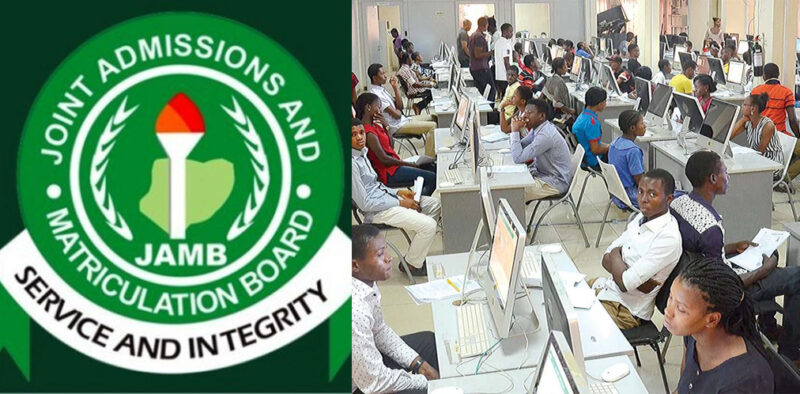
The Joint Admissions and Matriculation Board (JAMB) has released the 2026 UTME Mock results, following the nationwide mock examination conducted on Saturday, March 28, 2026. The announcement was made on Tuesday by JAMB spokesperson Fabian Benjamin, providing candidates with guidance on how to check their results. According to the board, a total of 224,597 candidates registered for the mock UTME, with 152,586 candidates successfully sitting for the test across 989 Computer-Based Test (CBT) centres nationwide. Candidates can check their scores by sending the keyword “MOCKRESULT” via SMS to 55019 or 66019 using the same SIM number used during UTME registration.
In a significant move to maintain exam integrity, JAMB also announced the delisting of over 20 CBT centres that faced operational challenges during the mock exam. The affected centres experienced server failures, power outages, and delayed test sessions, which disrupted the examination for many candidates. The board clarified that these centres will remain ineligible for future UTME exercises until they meet the required technical and infrastructure standards.
READ ALSO:
- Lagos LIRS Extends 2026 Individual Tax Return Deadline
- Israeli Fire Kills Three UN Peacekeepers in Southern Lebanon
- Iyabo Ojo Quits Mediation Between Funke Akindele, Toyin Abraham
JAMB further issued a stern warning against fraudsters claiming to manipulate mock or main UTME scores, particularly on messaging platforms like WhatsApp. The board emphasised that such claims are criminal, cautioning candidates that any involvement could result in cancellation of registration, withholding of results, or withdrawal of scores even after the main exam. Candidates were urged to rely solely on official communication channels for information regarding the UTME.
The main 2026 UTME is scheduled to begin on Thursday, April 16, 2026. JAMB encouraged candidates to use the mock results as an opportunity to assess their readiness, identify areas for improvement, and familiarise themselves with the Computer-Based Test (CBT) system. While mock scores do not contribute to final UTME results, they offer valuable insights for performance improvement and preparation ahead of the main examination.
JAMB continues to emphasise the importance of exam integrity, accurate registration details, and adherence to official guidelines to ensure a smooth, credible, and fair UTME process for all candidates.
JAMB Releases 2026 UTME Mock Results, Delists Over 20 CBT Centres
Education
WAEC Releases 2026 WASSCE Timetable for School Candidates

WAEC Releases 2026 WASSCE Timetable for School Candidates
The West African Examinations Council (WAEC) has officially released the 2026 West African Senior School Certificate Examination (WASSCE) timetable for school candidates across its member countries. The final international schedule, shared on WAEC’s official X (formerly Twitter) handle, provides students with a clear roadmap for exam preparation, ensuring they can plan their revision and practical work effectively.
According to the timetable, the 2026 WASSCE will commence on Tuesday, April 21, 2026, and conclude on Friday, June 19, 2026, spanning nearly nine weeks of examinations. The exams will kick off with Foods and Nutrition 3 (Practical) Planning Session and Home Management 3 (Practical) Planning Session, marking the start of both practical and theory assessments.
The timetable covers core subjects such as English Language and Mathematics, which are compulsory for all candidates, as well as a broad range of elective papers in sciences, arts, humanities, vocational, and technical subjects. Key science subjects include Biology, Chemistry, and Physics, while elective options span Economics, Government, Geography, Metalwork, and Applied Technology.
READ ALSO:
- UK, US, France Among 10 Nations Granting Agrément to Nigerian Ambassadors
- Aiyedatiwa Sacks All Political Aides, Plans 1,000 New Appointments
- Tinubu Appoints Senator Ibrahim Ida as CAC Chairman, Names Seven NPC Commissioners
WAEC advised all candidates to carefully check the timetable, confirm their exam dates with school authorities, and ensure they arrive at examination centres fully equipped with approved materials. The council also encouraged students to use the timetable to avoid subject clashes, prepare for both written and practical assessments, and manage study time efficiently.
The WASSCE is a crucial qualification for secondary school students in English-speaking West Africa, serving as the gateway for university and tertiary institution admissions. The exam is conducted annually in WAEC member countries, including Nigeria, Ghana, Liberia, Sierra Leone, and The Gambia, and is recognised as a key academic milestone in the region.
With the release of the 2026 timetable, students, parents, and school authorities now have a complete guide to plan study schedules, revision sessions, and exam strategies, helping ensure candidates are well-prepared to succeed.
WAEC Releases 2026 WASSCE Timetable for School Candidates

-

 Education3 days ago
WAEC Releases 2026 WASSCE Timetable for School Candidates
-

 Auto3 days ago
Lagos NURTW Chairman Sego Distributes Exotic Cars, Luxury Items to Cabinet Members (Video)
-

 metro3 days ago
Cars Torched as South Africans Protest Alleged Nigerian ‘Igbo King’ Coronation
-

 Railway2 days ago
Easter train: NRC increases Lagos-Ibadan trips, offers free Osun holiday transit
-

 Sports3 days ago
Osimhen Among Highest-Paid African Footballers in 2026 — See Full List
-

 Education2 days ago
JAMB Releases 2026 UTME Mock Results, Delists Over 20 CBT Centres
-

 Business3 days ago
Bottles of Death: SWAN rallies media to combat ₦472bn illicit alcohol crisis
-

 Politics2 days ago
Adebayo Adelabu Resigns as Power Minister to Run for Oyo State Governorship