

metro
ASUU v FG: Why I slightly disagree with our ruling — Justice, Court of Appeal

My lords, I participated in the conference leading to the leading ruling of the Court just delivered Hamman Akawa Barka, JCA, and I am completely satisfied with the reasoning, conclusions and others made therein, which I hereby adopt as mine.
However, due to the monumental issues thrown up by an otherwise seemingly innocuous application for leave to appeal against the order of interlocutory injunction of the lower Court made against the applicant, I intend to add my considered words and voice to the rich analysis in the leading ruling already delivered.
My lords, the facts and circumstances leading to this application by the Applicant for leave to appeal are as germane as they have been all over the public domain for the past eight months during which period the entire Public University System in Nigeria has been brought to a standstill with the gates of our universities being under lock and keys and the students at home for the past eight month.
At the lower Court, the National Industrial Court Abuja Division, the Respondent had approached the lower Court by way of a referral done pursuant to the powers of the Hon Minister of Labour and Employment as the impasse between the parties had become protracted without any near end in sight. The Respondent has sought an order of interlocutory injunction of the lower Court restraining the Applicant from continuing with their strike action.
It would appear that issues were duly joined by the parties and after hearing the parties, the lower Court had granted the order of interlocutory injunction sought by the Respondent and thereby directing the Applicant to resume work pending the hearing and determination of the substantive suit. It was the said order with which the Applicant was peeved that an application has now been made to this Court seeking leave to appeal as well as for an order of stay of execution of the interlocutory order of inunction pending the hearing and determination of their appeal against the said order of the lower Court.
READ ALSO:
- Tesla begins electric semi truck production, each to cost $180,000
- Nigeria intensifies war against terrorism, orders 24 fighter jets from Italy
- Ooni of Ife set to marry two more wives this October
- Nigerian Pastor Gifts Gets Knocks After Gifting Davido’s Chioma N70m Worth Handbag
The parties have duly filed and exchanged their processes and written addressee, which at the hearing of this application on 6/10/2022 were duly adopted and adumbrated upon by learned Senior Advocates for the parties, namely, Femi Falana SAN for the Applicant on the one hand, and I. J. Igwe SAN for the Respondent on the other hand. I have taken time to calmly read through the facts and circumstances as deposed to in the Affidavit and Counter-Affidavit of the parties. I have also taken time to scrutinize the several documents relied upon by them. I have also considered the enlightening and weighty submissions of learned Senior Advocates for the parties, carefully noting the several decided cases relied upon by them.
Now, at the hearing of this application, the Applicant had even before commencing arguments on the application applied to withdraw the second prayer on the Motion papers for stay of execution of the order of interlocutory injunction granted against it by the lower Court, and thereby leaving only the relief of leave to appeal. However, this application to withdraw the second relief was stoutly opposed but having considered the application to withdraw relief two and the objection thereto, I see no legal impediment why the Applicant cannot withdraw its own prayer before a decision one way or the other has been taken on it by this Court when even a substantive appeal can be withdrawn even after the parties had filed and exchanged their briefs, and same would be dismissed by the Court. See Order 11 Rule 5 of the Court of Appeal Rules 2021.
Consequently, I hold that the application to withdraw prayer two on the motion papers is in order and ought to be granted. Accordingly, prayer two for stay of execution of the interlocutory order of injunction of the lower Court made against the Applicant is hereby struck out having been withdrawn by the Applicant.
In law, the appellate system in this Country has taken firm root in our legal system principally due to the sacrosanct nature of the right of appeal, either as of right or with leave, of the citizen to approach a higher level of Court in the hierarchy of Courts in Nigeria to ventilate his grievance against decisions of a lower Court with which he is dissatisfied or peeved. However, it is of great importance to note that the right of appeal, though sacrosanct, does not exist in vacuo. It must exist either constitutionally or statutorily. In other words, the right to appeal can neither be inferred nor implied, and there is also no inherent right of appeal. Thus, for a right of appeal to exist and be available to a party it must be shown to exist either constitutionally and/or statutorily. Therefore, where no provision of a right to appeal exists, then no appeal will lie. See Iwok V. Inyang & Ors (2022) LPELR – 58413(CA) per Sir Biobele Abraham Georgewill JCA. See also Diwe V. Nwanosike (2017) LPELR – 41687 (CA). See also Iwuagwu V. Okoroafor & Ors (2012) LPELR-20829 (CA); Emecheta V. Sowemimo (2018) LPELR -50419 (CA); per Sir Biobele Abraham Georgewill JCA; Elephant Group Plc V. National Security Adviser & Anor (2018) LPELR – 45528 (CA) per Sir Biobele Abraham Georgewill JCA; Akinbisehin V. Olajide (2018) LPELR – 51172 (CA) per Sir Biobele Abraham Georgewill JCA.
READ ALSO:
- Ukraine War Drains U.S Ammunition Stockpiles
- Breaking: Obajana Cement Plant Closure: Kogi State raises alarm on alleged Dangote Group’s plan to cause chaos
- Davido officially confirms he’ll marry Chioma in 2023
It follows therefore, that in law the right of appeal is a constitutional one and thus sacrosanct, inviolable and must not be lightly fettered with or encumbered in its exercise by the citizen who feels aggrieved with the decision of a Court. However, by the combined effect of Sections 241, 242 and 243 of the Constitution of Nigeria 1999 (as amended), it is a right exercisable only by a person aggrieved within the purview or confines of the constitutional or statutory provision creating the right of appeal. Thus, the right of appeal from the decisions of the lower Court to the Court of Appeal is exercisable only upon the fulfillment of some well-defined constitutional preconditions, namely:
A. The right of appeal can only be exercised by a party to the proceedings or any other person having an interest in the subject matter;
B. For a party or person to exercise the right of appeal, he must show that he is aggrieved by the judgment or decision;
C. A person aggrieved by a decision is one against whom a decision has been pronounced which has wrongfully deprived him of something, who is adversely affected by the decision of the Court in that the decision wrongfully refused him something, or wrongfully affected his title to something.
See Elephant Group Plc V. National Security Adviser & Anor (2018) LPELR-45528(CA) per Sir Biobele Abraham Georgewill JCA. See also Ogunkunle & Ors V. Eternal Sacred Order of the Cherubim and Seraphim & Ors (2001) 12 NWLR (Pt. 727) 359 . See also Adeleke & Anor v. Oyo State House of Assembly (2006) 10 NWLR (Pt. 987) 50; Okoye V. Tobechukwu (2016) LPELR – 41508 (CA); Tochukwu Anyanwu V. Emezie Okoroafor & Ors. (2012) LPELR-20823 (CA).
An application of this nature seeking the indulgence of this Court to grant leave to appeal is one which involves an exercise of discretion and thus in law it is only where the Applicant has furnished the relevant materials showing Ground (s) which pima facie show good cause why the Appeal should be heard that it can be favourably considered and not otherwise. See Dana Airlines Limited V. Mr. Yahuza Yage Bamaiyi & Anor (2017) LPELR-43054(CA) per Sir Biobele Abraham Georgewill JCA. See also Ngere V. Okuruket XIV & Ors. (2014) 11 NWLR (pt. 1417) 147 @ pp. 155 – 156.; ANPP V. Albishir (2010) 9 NWLR (Pt. 1198) 118 @ p. 143; Ikenta Best (Nig) Ltd. V. AG. Rivers State (2008) 2 – 3 SC (pt. 1) 128; Braithwaite & ors. v. Dalhatu (2016) LPELR – 40301 (SC).
However, at this stage of only considering whether or not to grant leave to appeal there is no duty on the Applicant to show that the proposed grounds of appeal will succeed but all that is required of such an applicant is to show that from the proposed grounds of appeal the appeal is arguable. In Obikoya V. Wema Bank Ltd. (1989) 1 NWLR (pt. 196) 157 @ p. 178, the Supreme Court per Obaseki JSC, had considered this issue and opined succinctly inter alia thus:
“A ground of appeal showing good cause why an appeal should be heard is a ground which raises substantial issues of facts and law in the consideration of the Court. It is a ground which makes a serious debate as to the correctness of the decision of the Court below. It is a ground which tasks the intellect and reasoning faculties of the appeal judges. It is a ground which is not frivolous.”
See also Re Adewunmi (1988) 3 NWLR (Pt. 83) 483; Dana Airlines Limited V. Mr. Yahuza Yage Bamaiyi & Anor (2017) LPELR-43054(CA) per Sir Biobele Abraham Georgewill JCA.
READ ALSO:
- PDP crisis: Why Ayu has to resign —Ortom
- Super Eagles defender signs new deal at FC Porto
- UK Bars Popular Nigerian Doctor From Seeing Female Patients Alone
- 76 feared dead as boat capsizes in Anambra
This application calls for the exercise of our discretion based on the facts as placed before us by the parties and the applicable laws, rules and principles. I am aware that in law an exercise of discretion such as is required in the consideration of the present application, though not subject to so much hard and fast rules, must be founded on justice, fairness and law but certainly never on the whims and caprice of the Court with scant or no regards to the facts of the case. See Dana Airlines Limited V. Mr. Yahuza Yage Bamaiyi & Anor (2017) LPELR-43054(CA) per Sir Biobele Abraham Georegwill JCA. See also The Vessel MT. Sylla & Anor V. Ghana Commercial Bank Ltd & Ors (2021) LPELR – 54556 (CA) per Sir Biobele Abraham Georgewill JCA; University of Lagos V. Aigoro (1985) 1 NWLR (Pt. 1) 143; Aboseldehyde Lab. Plc. V. U. M. B. Ltd (2013) 13 NWLR (pt. 1370) 91 @ pp. 97 – 98; Aro V. PDP (2013) 13 NWLR (pt. 1371) 235: Thimnu V. UBN Plc. & Ors. (2013) LPELR 22127 (CA) @ pp. 20 – 21; “
In this application I have borne in mind, and as aptly submitted by the Applicant’s counsel, that the right of appeal is one of the most sacred and inalienable rights of the citizens to challenge decisions affecting or touching their rights and obligations under the laws of the land and with which they feel aggrieved and thus the right of appeal should most sparingly be allowed to be impeded with and nothing must be done lightly to stultify it. In E. F. P. C Ltd. V. NDIC (2007) All FWLR (pt. 367) 798 @ pp. 825 – 826, the Supreme Court had restated this succinct principle of law in very clear and precise words inter alia thus:
“The right of appeal is constitutional as it is provided in the Constitution. It stands on the very height of the Appeals system by virtue of the fact that the Constitution provides for it.”
It is perhaps for the above reason that the Courts have over the years been very liberal in its attitude when considering applications for leave to appeal against the judgment or ruling of one level of Court to the next level of Court in the hierarchy of Courts in the land. Thus, once an applicant discloses grounds of appeal which prima facie show good cause why the appeal should be heard, a Court is obliged to grant the leave sought to enable the Applicant ventilate his grievances against the decision of the Court he is dissatisfied with as guaranteed him by the Constitution under the right of appeal. See Sections 241, 242 and 243 of the Constitution of Nigeria 1999 (as amended).
Now, in law where an appeal is with leave, an intending Appellant does not have as of right has the right to file a Notice of Appeal without first seeking and obtaining the leave of Court. This is what the Applicant has sought to do in this application and it will be highly remiss to deny the application of the exercise of this right even if at least on conditions to be fulfilled before the right is invoked or exercised against the Ruling and Orders of the lower Court. I am aware that the law is that the Applicant need not show that by the grounds, the appeal is likely to succeed but still it carries the onus to show that prima facie the grounds of appeal disclose good arguable issue. See Dana Airlines Limited V. Mr. Yahuza Yage Bamaiyi & Anor (2017) LPELR-43054(CA) per Sir Biobele Abraham Georgewill JCA. See also Iwuagu V. Okoroafor & ors (2012) LPELR – 20829 (CA). See also FCMB Plc. V. NIMR (2009) 9 NWLR (Pt. 1147) 509; NNPC V. O.E. Nig. Ltd (2008) 8 NWLR (Pt. 1090) 583; Savanah Bank Nig. Plc V. CBN (2007) 8 NWLR (Pt. 1035) 26 @ p. 39; E.F.P Co Ltd V. NDIC (2007) 9 NWLR (Pt. 1039) 216.
In law, who then is “a person aggrieved” or “a person interested” within the context of the right of appeal as constitutionally guaranteed to the citizen? In Ikonne V. COP & Anor (1986) 4 NWLR (Pt. 36) 473 @ p. 479, the Supreme Court had expatiated on the meaning of ‘a having interest’ inter alia thus:
“The expression ‘person having interest’ has been defined as synonymous with person aggrieved. A person aggrieved must be a man against whom a decision has been pronounced which has wrongfully deprived him of something or wrongfully refused him something or wrongfully affected his title to something….A person aggrieved includes a person who has a genuine grievance because an order has been made which prejudicially affects his interest.”
See also Ziklagsis Networks Ltd. V. Adebiyi & Ors (2017) LPELR-42899 (CA) per Sir Biobele Abraham Georgewill JCA; Re: Sidebotham, Ex – Parte Sidebotham (1990) 14 CH. D. 465; In Re: Reed Bowen & Co. Ex- parte Official Receiver (1987) 19 Q. B. D. 178
So, in the light of the above well settled position of the law, is the Applicant a person aggrieved with the decision of the lower Court granting an order of interlocutory injunction against it pending the determination of the Respondents’ Suit filed against it before the lower Court within the purview of the provisions of Sections 241, 242 and, 243 of the Constitution of Nigeria 1999 (as amended) to be clothed with the right standing to appeal it and are there reasonable grounds disclosed for the leave sought to appeal and are there any likelihood or chances of success of these grounds? In other word are the ground relied upon by the Applicant such as disclose prima facie reasonable grounds why the appeal should be heard? I most certainly think so! I therefore, answer all these critical and crucial posers in the affirmative in favour of the Applicant.
My lords, in resolving to granting this leave to appeal to the Applicant, though a conditional one as I will show anon, I bear in mind that in law amidst the resultant clash of arms, as between the Federal Government on the one side and the Academic Staff Union of Universities on the other side, and regrettably the majority of students in the universities in this country are left on their own and in the lurch and without neither any say nor hope and any end in sight to their untold sufferings being out of school for 8 months now and still counting, it is said, and quite aptly too, that the Court will not and will never be silent. See Attorney General V. De Keyser’s Royal Hotel (1920) AC 508 per the House of Lords. See also Margaret Stitch V. AG. Federation & Ors (1996) 5 NWLR (Pt. 46) 1007 @ p. 1026 per Aniagolu JSC; Elephant Group Plc V. National Security Adviser & Anor (2018) LPELR-45528(CA) per Sir Biobele Abraham Georgewill JCA.
However, in acceding to the request of the Applicant in the exercise of its constitutional right of appeal, this is one case going by the admitted continued disobedience of the order of the lower Court now being sought to be appealed against and which disobedience had become more glaring and indefensible upon the withdrawal of the prayer for stay of execution of the orders of the lower Court, which relief having been withdrawn is hereby struck out by me. In the circumstances therefore, I am minded to and would therefore grant to the Applicant condition leave to appeal subject to the Applicant immediate compliance and obedience of the subsisting and valid order of interlocutory injunction granted against it by the lower Court as a condition precedent to the exercise of its’ right of appeal.
On the whole therefore, the application for leave to appeal against the interlocutory order of injunction against the lower Court by the Applicant has merit and it is hereby granted conditionally in order not to foist on the Applicant the toga of any finality in the decisions and orders of the lower Court, a Court of first instance, without any opportunity to challenge and ventilate its grievance against such decisions and orders in a country with well – established appellate system of administration of justice, even very widely acknowledged and accepted in the judicial systems of all of the West African Sub-Region.
In the result, I also grant the application and for the avoidance of doubts, I hereby Order as follows:
1. The Applicant shall immediately comply with and obey the Order of interlocutory of injunction of the lower Court made against it, the subject matter of the leave being sought to appeal in this application.
2. Upon the immediate compliance and return to work and their duty post as in Order one above, leave is hereby granted to the Applicant to appeal against the decision and Order of interlocutory injunction made against it by the lower Court.
3. The Application shall, upon the immediate compliance with Order one above and complying with the Order of interlocutory injunction made against it by the lower Court and immediately upon returning to work today, 7/10/2022, have 7 days from today, 7/10/2022 within which to file its Notice and Ground of Appeal at the Registry of the Lower Court.
4. However, should the Applicant fail to immediately comply with Order 1 above in this Ruling today, 7/10/2022, the leave to appeal granted to the Applicant is hereby automatically vacated without the need for any further Order or assurances of this Court or any other Court of law.
5. There shall be no order as to Costs
. Sir Biobele Abraham Georgewill, Justice, Court of Appeal
COUNSEL: Femi Falana SAN with Femi Adedeji Esq and Abubakar Marshall Esq. for Appellant.
J.U.K. Igwe SAN with Senator (Dr.) Ita Enang, Chukwulo Moedu Esq, Senator Osita Izunaso, Matthias Agboni Esq, C.M. Edozie Esq, Valentine Nonso Esq for the Respondents.
Eagle









metro
Fatal NURTW Leadership Clash in Osun Leaves Two Dead; State Orders Park Shut Down

Fatal NURTW Leadership Clash in Osun Leaves Two Dead; State Orders Park Shut Down
As Olalekan Oyeyemi is buried in Osogbo, authorities transfer murder probe to the State Criminal Investigation Department.
metro
Lagos Power Outage: Ikeja Electric Blames TCN as Businesses, Homes Groan

Lagos Power Outage: Ikeja Electric Blames TCN as Businesses, Homes Groan
Residents and businesses in several parts of Lagos are enduring prolonged power outages, with Ikeja Electric attributing the disruption to significant constraints on the Transmission Company of Nigeria (TCN) network.
The development has triggered frustration among electricity consumers who say the prolonged blackout is disrupting household activities and commercial operations, while increasing their dependence on generators and other alternative sources of power.
Ikeja Electric, one of Nigeria’s largest electricity distribution companies, said the situation was caused by a reduction in the amount of electricity available to it from the transmission network.
According to the company, the transmission constraints have affected the volume of power it can distribute to customers across parts of its franchise area, resulting in extended periods of load-shedding.
The company said it was engaging with TCN over the situation and was working to improve supply to affected communities as soon as additional transmission capacity becomes available.
The latest disruption has affected customers in several parts of Lagos, with residents in areas including Akoka, Egbeda, Ojodu Berger, Ogudu and Shomolu reporting prolonged interruptions.
Some residents said electricity supply had been unavailable for several consecutive days, while others reported intermittent restoration followed by further outages.
The disruption has also affected small businesses and households that rely heavily on electricity for daily activities.
Business operators such as barbers, hairdressers, food vendors, cold-room operators, charging-centre owners, internet-dependent businesses and other small enterprises have been particularly affected by the unreliable supply.
For many households, prolonged outages have also affected refrigeration, water pumping, phone charging, internet access and other basic activities that depend on electricity.
READ ALSO:
- US Court Blocks Trump Visa Rule Limiting Stay of Foreign Students, Journalists
- Sokoto Shuts Mosque After Cleric Stabbing, Names Ulamas Probe Panel
- Iran Rejects US Talks as Trump’s Mixed Signals Deepen Hormuz Standoff
The situation has forced some residents and businesses to increase their use of generators, adding to operating costs at a time when fuel and other energy expenses remain high.
Some consumers have also resorted to commercial charging centres and other paid alternatives to keep phones, rechargeable devices and business equipment operational.
The latest disruption comes amid continuing challenges across Nigeria’s electricity value chain, where problems involving generation, gas supply, transmission infrastructure and distribution networks can affect electricity availability to consumers.
TCN operates the country’s transmission network, while electricity distribution companies such as Ikeja Electric are responsible for delivering available power to customers through their distribution networks.
This distinction is significant in the latest Lagos outage because Ikeja Electric has attributed the immediate supply shortfall to constraints on the transmission network, rather than announcing a fault affecting its entire distribution system.
Power interruptions in Lagos, however, have previously resulted from different causes.
Parts of the state have experienced outages linked to distribution equipment faults, infrastructure damage, planned maintenance and other incidents affecting electricity infrastructure.
Earlier disruptions in Lagos have also been associated with incidents such as tanker fires damaging electricity infrastructure, while transmission maintenance and constraints have caused supply reductions in other instances.
The varying causes mean that the duration and geographical spread of an outage can differ significantly from one community or electricity feeder to another.
Ikeja Electric has apologised to affected customers over the latest disruption and said it understands the difficulties caused by the reduced supply.
READ ALSO:
- Saudi Arabia Vows ‘Firm’ Response as Houthi Attacks Wound 13
- Peter Obi Rejects Anambra Debt Claims, Challenges Soludo Govt to Produce Evidence
- Peter Obi: Release My UNN Academic Records, I Have Nothing to Hide
The company said it was monitoring developments and engaging relevant stakeholders in an effort to restore improved electricity supply.
The latest development has again highlighted concerns over the vulnerability of Lagos residents and businesses to fluctuations in electricity supply.
For many small businesses, prolonged blackouts mean additional spending on diesel or petrol-powered generators, while households face similar costs when alternative electricity sources are required.
The disruption also comes at a time when businesses are already dealing with high operating costs, making extended reliance on generators an additional financial burden.
Consumers have increasingly called for more reliable electricity supply and better coordination among the different operators in Nigeria’s power sector.
The TCN, generation companies and distribution companies form interconnected parts of the electricity supply chain, meaning a constraint at one stage can quickly affect consumers downstream.
For Ikeja Electric customers, the immediate expectation is that transmission constraints will ease and supply will gradually improve across the affected feeders.
Until then, residents and businesses in the affected areas may continue to experience irregular electricity supply depending on available transmission capacity and the operational condition of individual distribution feeders.
The latest outage has therefore renewed the debate over Nigeria’s long-standing electricity challenges and the need for sustained investment in power generation, transmission and distribution infrastructure to provide more stable electricity for homes and businesses.
For Lagos, where thousands of businesses depend on electricity for daily operations, prolonged outages carry consequences beyond inconvenience, affecting productivity, household welfare and the cost of doing business.
Ikeja Electric said it would continue to provide updates as the situation develops and work with TCN to improve supply to affected customers.
Lagos Power Outage: Ikeja Electric Blames TCN as Businesses, Homes Groan
metro
Sokoto Shuts Mosque After Cleric Stabbing, Names Ulamas Probe Panel
Sokoto Shuts Mosque After Cleric Stabbing, Names Ulamas Probe Panel
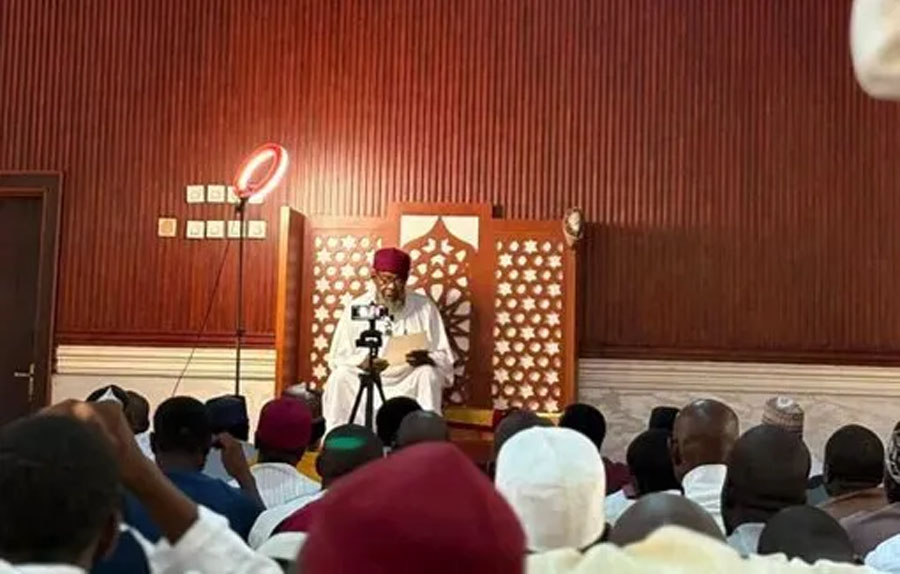
The Sokoto State Government has ordered the immediate closure of the Musa Lukuwa Jumu’at Mosque in Mabera, Sokoto metropolis, after a cleric was stabbed during Friday prayers and his attacker was killed by an angry mob.
The mosque, which the government describes as a crime scene, will remain shut until further notice. A committee of Islamic scholars (Ulamas) has also been constituted to investigate the remote and immediate causes of the incident and recommend measures to prevent a recurrence. The announcement was contained in a statement issued on Tuesday by the Director General, Media and Publicity, Government House, Abubakar Bawa.
The crisis began on Friday, September 11, 2026, shortly after Malam Musa Lukuwa led the Jumu’at prayer. A young man among the worshippers attacked the cleric, stabbing him twice in the neck and left hand. Worshippers overpowered the suspect and beat him to death before security operatives could arrive. Police spokesman DSP Ahmad Rufa’i confirmed that the cleric was rushed to the Specialist Hospital in Sokoto, where he was treated and later discharged. Lukuwa subsequently appeared in a video circulated on social media, with a plaster covering part of his neck, appealing for calm and assuring his followers that he was in stable condition. The Commissioner of Police, Hayatu Hassan Shaffa, condemned the mob action as jungle justice and urged residents to allow due process. “It is imperative that we allow the law to take its course to ensure justice is served appropriately,” Shaffa said. Security personnel have been deployed to Mabera and other flashpoints, while investigations into both the stabbing and the mob killing continue. No arrest has been made in connection with the lynching.
READ ALSO:
- Iran Rejects US Talks as Trump’s Mixed Signals Deepen Hormuz Standoff
- Saudi Arabia Vows ‘Firm’ Response as Houthi Attacks Wound 13
- Peter Obi Rejects Anambra Debt Claims, Challenges Soludo Govt to Produce Evidence
The attack was reportedly linked to a previous sermon in which the cleric cited a Hadith that some scholars, particularly those associated with the Tariqa order, considered offensive to the parents of Prophet Muhammad. Following the controversy, a young man identified as Mai Barewa allegedly threatened to kill Malam Musa Lukuwa and his senior student, Malam Murtala Assada. The cleric and his followers reported the threat to the police, leading to the suspect’s arrest and arraignment. A court later ordered that he be remanded in a correctional facility while the case remained pending. Four days before Friday’s incident, the clerics had also visited the Sokoto State Government House to submit a written complaint. The incident triggered protests and heightened tension around Sahara, Bello Way and Aliyu Jodi, with some businesses closing temporarily as security operatives moved into strategic locations. It came only days after protests erupted over the continued remand of another cleric, Dahiru Mai Barewa, who was accused of threatening Lukuwa and Malam Murtala Bello Assada. Police subsequently arrested about 20 people in connection with that protest.
The government said the committee would examine the circumstances surrounding the tension and make recommendations in the interest of peace and stability in the state. It also ordered a full investigation into the attack and the subsequent killing at the mosque. The state government further dissociated itself from any person, irrespective of status, who hides under the pretext of religion to undermine or disrespect Prophet Muhammad (PBUH), his parents, household and companions. It reaffirmed its “total obedience and respect” for the Prophet, his parents, household and companions, while urging residents to continue to show love and compassion to him. The government appealed to residents to desist from making inciting statements capable of jeopardising the peaceful coexistence for which Sokoto is known. It assured residents of its commitment to protecting the lives and property of every citizen in the state.
Malam Musa Lukuwa is an Islamic cleric from Lukuwa village in Gwadabawa Local Government Area of Sokoto State. He was among the early scholars associated with the Izala movement when it began gaining prominence in Sokoto State. He later became associated with the Salafiyya school of thought and established his own mosque, where he teaches Islamic studies and preaches to his followers. Lukuwa is known for his strict emphasis on adherence to the Qur’an and Hadith. His interpretation of religious practices, particularly issues surrounding the sighting of the crescent moon, has at times differed from the position announced by the Sultan of Sokoto. He maintains that decisions on the commencement and termination of fasting should be based on what he considers credible evidence of the sighting of the crescent, in line with the teachings of the Qur’an and Hadith.
Sokoto Shuts Mosque After Cleric Stabbing, Names Ulamas Probe Panel
-
 News2 days ago
SERAP Threatens Legal Action Over ₦126bn INEC Electoral Funds
-
 Politics3 days ago
Five Islamic Clerics Abducted After Tinubu Re-Election Prayer At Yari’s Zamfara Residence
-
 Opinion3 days ago
‘Tinubu Will Win Again in 2027’ — Charismatic Bishops’ Secretary
-

 Politics1 day ago
2027: Northern Lecturers Back Tinubu, ASUU Disowns Endorsement
-

 metro2 days ago
Mother ‘sold daughter’s abuse videos for $300’: Nigeria child pornography case shocks nation
-

 Sports3 days ago
‘Unacceptable’ — Arteta Furious Over Sunderland Penalty in Arsenal Win
-

 News2 days ago
Petrol Subsidy: Presidency Rejects Atiku’s Plan, Says No Going Back
-
 News2 days ago
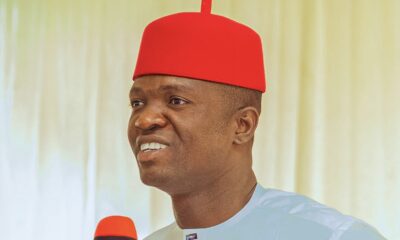
Nwifuru Dismisses Cubana Chief Priest as ‘Attention-Seeker’