
metro
Terrorists, herdsmen on the rampage in Kaduna, Ondo, Plateau; kill 9, abduct 12
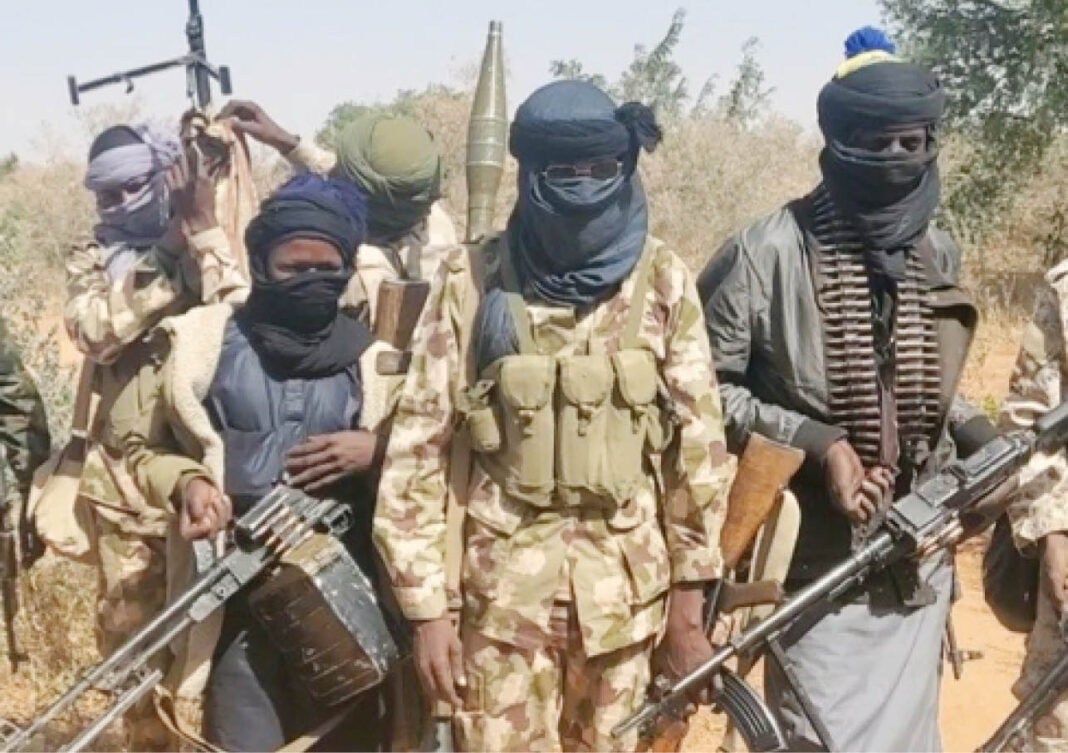
Terrorists and herdsmen have in the last 24 hours gone on the rampage in Kaduna, Ondo and Plateau states, killing at least six persons and kidnapping several persons.
In Kaduna, a man was killed when the bandits attacked Gbagyi village on Monday night, while his pregnant wife was abducted. 10 other persons were also taken away by the bandits.
The bandits were said to have attacked the community in several motor bikes, shooting sporadically to subdue the villagers.
Vanguard reported a resident of the community who preferred anonymity, as saying, ‘’Those on bikes were later joined by several other bandits who sneaked into the community from a river side and moved stealthily like monkeys.
“When they came into the community, people were running away but the man who looked like a vigilante stood and attempted to make a call with something like a walkie-talkie. The bandits shot him in the head, he fell and died.’’
He alleged that apart from the deceased‘s wife picked by the bandits, they also kidnapped over 10 residents of the community in an operation that lasted over an hour.
In Ondo State, five persons were killed by suspected herdsmen at Arimogija community in Ose Local Government Area of the state.
This was despite the riot act read by Governor Rotimi Akeredolu and other security agencies in the state that such killings would no longer be allowed in any area of the state.
READ ALSO:
- Jealous Lagos husband stabs pregnant wife’s admirer to death
- Over 50 children trapped as church building collapsed in Delta
- AFCON: Air Peace CEO, Onyema, gifts Super Eagles N10M for beating Egypt, promises N50m if they win trophy
Many others sustained various degrees of injurries during the Monday attack over the refusal of the villagers to allow the herdsmen feed on their farmland.
Attack in farm
Sources said the community youth leader, Augustine Lucky, was among those killed by the herdsmen.
Speaking on the attack, the community youth secretary, Nweke Izuchukwu Jude, confirmed the killing of the five persons in two separate attacks.
“They attacked the first set of people on the farm and killed two of them. It was those injured in the first attack that called other villagers for help.
‘’While those who went to rescue them were trying to take the injured back home for treatment, the armed herders appeared again and killed three more people.
“The herdsmen are in our bushes and farmlands, all we need is the support of security men to chase them away and arrest as many as possible.”
He lamented that “all the policemen, except one, who came to the community left with the governor on Sunday, and the only one left could not enter the bush.’’
Contacted, the state command spokesperson, Fumilayo Odunlami, confirmed the latest attack but said she was yet to get the details.
Amotekun
Similarly, the state commander of Amotekun , Chief Adetunji Adeyeye, said his men who were earlier deployed to Molege, rushed to the area.
Adeyeye pointed out that his men were still combing the forest in a bid to apprehend the killers but declined to give the number of casualties.
In Plateau
In Plateau State, gunmen suspected to be bandits, kidnapped Dorcas, wife of Silas Vem, the Deputy Chief of Staff to the Deputy Governor of Plateau State.
Mrs. Vem was abducted in front of her house, close to Government House in Rayfield, Jos while returning from an outing.
Another set of armed men also abducted a Director in the State Ministry of Health, Dr. Samuel Audu, in front of his house in Barkin Ladi Local Government Area of the state.
For Mrs. Vem, a source who did not want to be named, said: “For three days now, the whereabouts of the wife of the Deputy Chief of Staff, Government House, Dorcas Vem has remained unknown.
‘’She is a staff of the University of Jos. Their house is at the Little Rayfield in Jos, very close to Government House.
“The woman was just driving to their house when some gunmen accosted her in front of their gate.
“They forcibly dragged her out of her vehicle and took her away to an unknown destination. The incident happened on Sunday and since then, we have not seen her.”
The State Commissioner for Health, Dr. Nimkong Lar, confirmed Dr. Audu’s abduction, saying the abductors had demanded N50 million ransom.
The commissioner said: “Yesterday, (Monday) when we closed here, we went to the house of one of our staff, because we lost a deputy director in the ministry. We went for a condolence visit to the family. It was Dr. Audu that led us there, when we finished, we parted ways.
“This was about 5.30pm, and as he got home, he asked his wife to open the door for him, and lo, the kidnappers were waiting there for him. They took him away as the wife came out.
‘’By 12 midnight, they called that they have Dr. Audu, that we should bring N50 million. Where will we get such money?”
The state police command could not confirm the incidents as calls put across to the State Police Public Relations Officer, PPRO, ASP Gabriel Ubah, were not connected.
However, last night, Plateau State police command confirmed the release of Mrs. Dorcas Vem and Dr. Samuel Audu.
The State Police Public Relations Officer, ASP Gabriel Uba, said: “They have been released and reunited with their families by the joint operations of the Police and other security agencies.
READ ALSO:
- Dancer Kaffy announces divorce from her husband, offers reasons
- BREAKING: Ebonyi gov, Umahi, informs Buhari of his ambition for 2023 presidency
‘’They were rescued today by the joint operation, comprising the Police and other security agencies. Efforts are on top gear to apprehend the suspects.”
3 killed
In another Plateau attack on Monday night, three persons were killed, while two others were injured at Tyana community in Riyom Local Government Area of Plateau State.
The deceased were said to have been ambushed and killed while returning to the community from Riyom town.
In a statement issued by the Berom Youth Moulders’ Association, the umbrella body of Berom youths, and signed by Rwang Tengwong, its National Publicity Secretary, a visit had been paid to the survivors of the attack who are receiving treatment in a hospital.
The statement read in part: “The Berom Youth Moulders’ Association, BYM has condemned the killing of three persons from Tyana community of Riyom Local Government Area by gunmen suspected to be herdsmen.
“Five persons were ambushed on their way home on Monday, 10/01/2022 at around 9:30 pm. Three persons; Joel Yohanna, aged 27; Daniel Bitrus, 25, and Christopher Ezekiel Mwantiri, 22 were murdered while two others, Paul Luka Zam, aged 22, and Philibus Bulus Mwantep, 25 sustained severe injuries.
“According to Paul Luka Zam, they were returning from Riyom when the incident occurred. Zam said they were approaching the community when they sensed strange movement from the bush by the road.
“He said the strangers began to shoot at them and he was shot on his left leg. He added that despite the injury from the gunshot, he managed to escape but the other three who were right behind them were unlucky as the attackers came out from the bush in their numbers and shot at them directly.
“BYM President, Solomon Dalyop Mwantiri, Esq who was at the hospital to assess the state of health of the injured, condoled the families that lost their loved ones and described as unfortunate the situation where young persons continue to be targeted by the enemies of peace in Plateau State.
“Mwantiri said communities must activate the local security systems where earlier warning signs will be dictated and prompt measures are taken to avert the attack.
Kaduna
Meanwhile, a member of the 8th Senate from Kaduna Central, Senator Shehu Sani, said yesterday that bandits had become a state within a state in the north-western part of the country.
Senator Sani, who stated this in an interview on Channels Television’s Political Paradigm, said: “Virtually now, bandits in the North West have become a state within a state.
“They have been able to establish governance structure in the sense that they don’t just kidnap and extort money, it has reached a point where they even install traditional rulers and Imams.’’
While asking authorities to step up efforts against the criminals, Senator Sani said more should be done by the government to secure the lives and properties of the people.
“This is not just happening in Mars, Jupiter, or Venus; this is happening in the state of the President (Katsina).
‘’Bandits have become an authority – they kill those they want to kill, they preserve those whom they want to preserve.
“In the states of Katsina, Kaduna, Zamfara, Kebbi, Sokoto, and Niger, a large swathe of land is virtually under the control of these bandits,’’ he said.
Zamfara
According to him, the recent attacks on several villages in Zamfara were in response to the military campaign launched against the bandits.
He called on President Muhammadu Buhari to contact his old friends and neighbours to get the information on the ground.
“President Buhari should spare time, go through his old logbook, look at the numbers of those his old friends and people he has lost touch with in the last four to seven years, call them and ask what is going on,” Senator Sani said.
Vanguard








metro
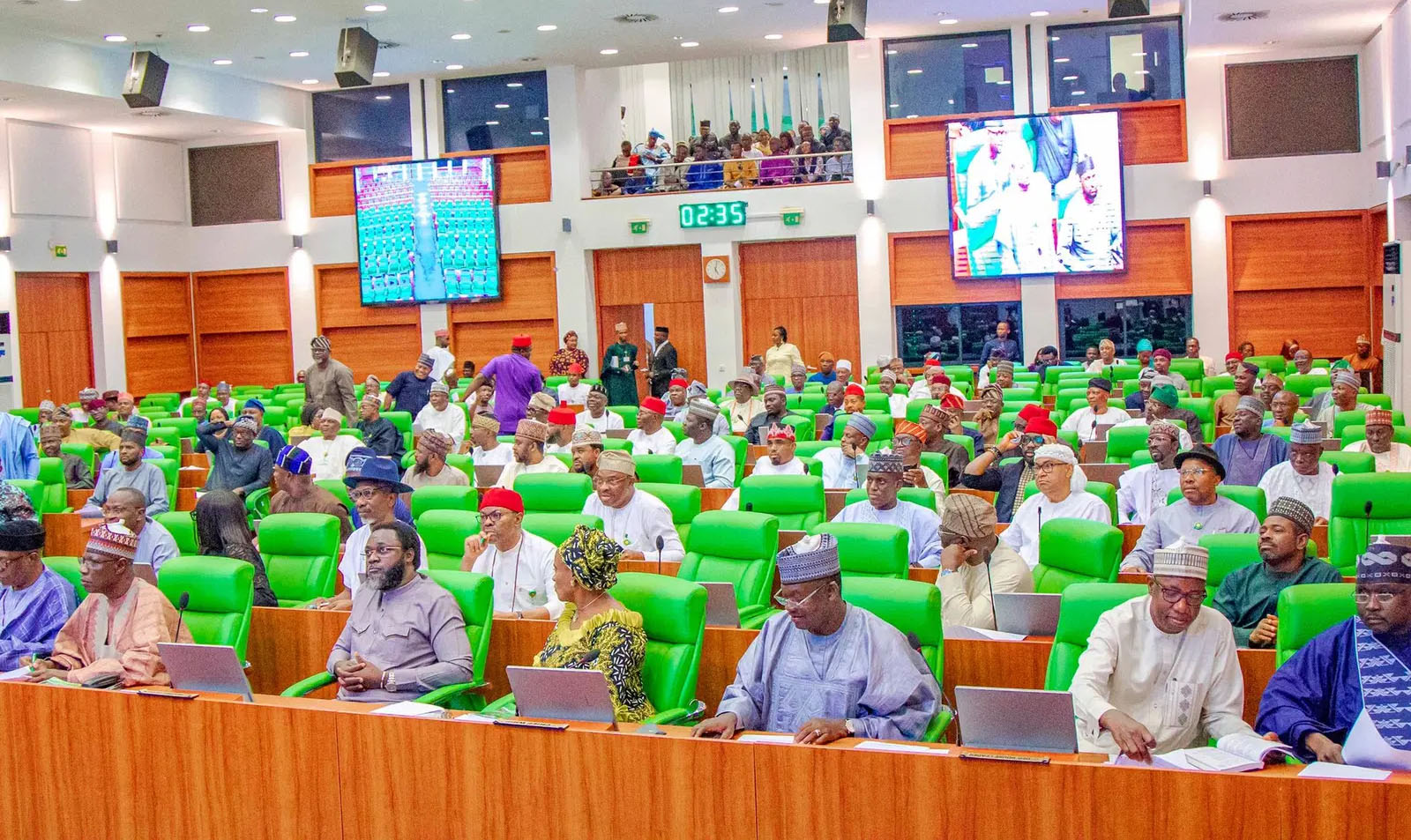
Deadlock at National Assembly as House Snubs Electoral Act Bill Meeting on E-Transmission Clause
Deadlock at National Assembly as House Snubs Electoral Act Bill Meeting on E-Transmission Clause
Tension escalated at the National Assembly on Monday after members of the House of Representatives failed to attend a joint conference committee meeting with the Senate aimed at harmonising the Electoral Act (Repeal and Re-enactment) Bill, 2026. The absence of House lawmakers stalled efforts to reconcile differences over Clause 60(3), which governs the electronic transmission of election results.
The session, initially scheduled for 11:00 a.m., did not proceed as senators waited in vain for their House counterparts. Later, senators reconvened at the office of Senator Simon Lalong, chairman of the Senate Committee on Electoral Matters, but the stalemate persisted. A second attempt in the afternoon also failed, with only a few lawmakers present, leaving the harmonisation process in limbo.
At the core of the dispute is the mandatory electronic transmission of results from polling units. The House version requires real-time uploading of results to INEC’s Result Viewing Portal (IREV), while the Senate adopted a more cautious approach, allowing electronic transmission but making the physical result sheet (Form EC8A) the primary document where network challenges occur. Senators cited concerns about uneven internet coverage and power supply gaps, stressing the need for a pragmatic approach nationwide.
The disagreement comes less than a year before the February 20, 2027 general elections, rekindling debates over electoral credibility. Memories of the 2023 presidential election, when delays in IREV uploads triggered widespread criticism, legal disputes, and political tension, remain fresh. Analysts warn that failure to harmonise the law could undermine public confidence in future elections.
READ ALSO:
- Maikori Accuses Ex‑Governor El‑Rufai of Persecution Over 2017 Tweet
- Shari’ah Council Defends Kwankwaso, Rejects US “Christian Genocide” Claims
- Hundreds of Millions in Goods Destroyed as Protests Against Northerners Erupt in Rivers
Telecom operators have insisted that infrastructure is sufficient to support electronic transmission. The Association of Licensed Telecom Operators of Nigeria (ALTON) highlighted that even basic 2G networks can reliably transmit results, while broadband penetration now exceeds 50 percent, with over 109 million active subscriptions nationwide. Experts say that transparency, system testing, and public trust will be crucial for the success of reforms ahead of 2027.
Civil society groups, including Situation Room Nigeria and Action Aid, have protested outside the National Assembly, urging lawmakers to adopt mandatory real-time electronic transmission to ensure transparency and minimise the risk of election manipulation. Youth and reform organisations also stress that allowing manual fallback options could reintroduce vulnerabilities that past reforms sought to eliminate.
The impasse highlights the importance of legal clarity and political will in safeguarding Nigeria’s electoral integrity. Observers note that beyond infrastructure, the cooperation of lawmakers, INEC, and security agencies will determine whether the next general election restores public trust or exacerbates existing doubts.
Deadlock at National Assembly as House Snubs Electoral Act Bill Meeting on E-Transmission Clause
metro
Maikori Accuses Ex‑Governor El‑Rufai of Persecution Over 2017 Tweet
Maikori Accuses Ex‑Governor El‑Rufai of Persecution Over 2017 Tweet
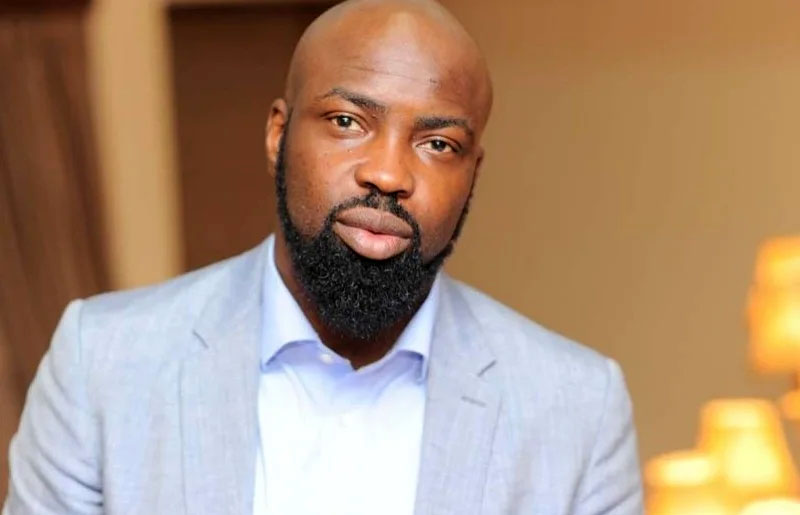
Audu Maikori, Founder and Chairman of Chocolate City Entertainment, has accused former Nasir El‑Rufai of persecuting him in connection with his 2017 social media post, saying that the handling of the matter — including his arrest and subsequent fallout — extended far beyond what was warranted and reflected a broader pattern of intimidation against critics. Maikori spoke on Arise Television’s Prime Time programme on Monday, using his right of reply after El‑Rufai addressed the controversy in a separate appearance the previous Friday. He acknowledged the post that triggered the crisis, explained how he retracted it when he realised it was false, and insisted that he was singled out and pursued long after the matter was legally closed. “It’s not personal. It is about setting the record straight and getting the facts right,” Maikori said. “Ex‑governor El‑Rufai has a penchant for recreating stories. Everything he said is untrue. And it’s important for posterity that the record reflects the truth.”
On February 18, 2017, Maikori was detained by operatives of the Department of State Services (DSS) following tweets in which he claimed that five students of the College of Education, Gidan Waya had been killed in violence in Southern Kaduna. The post generated widespread attention and controversy, leading to criticism from El‑Rufai, then governor of Kaduna State, who said the claims were unverified, potentially inflammatory, and could aggravate security tensions if left unchecked. El‑Rufai argued at the time that publishing unverified figures could heighten distrust among communities and jeopardise lives and property — a position consistent with broader government efforts to curb misinformation during periods of insecurity. The DSS subsequently detained Maikori and others perceived to be fuelling the narrative.
READ ALSO:
- Shari’ah Council Defends Kwankwaso, Rejects US “Christian Genocide” Claims
- Hundreds of Millions in Goods Destroyed as Protests Against Northerners Erupt in Rivers
- Naira Maintains Stability Against Dollar as CBN FX Measures Keep Markets Calm
Maikori said that as soon as he realised the information was inaccurate, he acted to correct the record. He and his driver went to the first police station available in Lekki, Lagos, where he filed a formal statement explaining that the original claim was based on inaccurate information from the driver, who later confessed to having made up the story for personal reasons. Maikori said he contacted the Attorney General of Kaduna State, Amina Sijuade, to notify her of his intention to retract the post. Maikori said a detailed retraction was published on 4 February 2017, including an apology not only to El‑Rufai but to all those affected.
Despite this, Maikori alleges that El‑Rufai did not let the matter rest. He said that after he was released — following the driver’s confession and the DSS investigation — El‑Rufai continued to publicly associate him with violence, alleging in other forums that Maikori’s tweet was linked to deaths in the region and hinting at prosecution. Maikori described this as unwarranted interference beyond the authority of a state governor, noting that the police discharged him after clarifying the facts.
Maikori argued that the courts subsequently confirmed that his arrest had been unlawful. Both the Federal High Court and the Court of Appeal reportedly awarded him damages, ruling against the legality of his detention. He said El‑Rufai then took the matter to the Supreme Court, where the case is still pending, with Maikori confident of prevailing. He said any damages awarded “will be used to support journalists and others who lack access to legal representation.”
Maikori challenged what he called a double standard in how El‑Rufai handled public information. He cited a 2019 incident in Kaduna’s Kajuru Local Government Area, where the ex‑governor publicly released casualty figures that were later challenged by security authorities as unverified. Maikori said that despite warnings from the state’s Police Commissioner, El‑Rufai repeated and amplified the figures without issuing a retraction or apology, even as others were detained. He also referred to the arrest of nine elders of the Adara community, whom he said were jailed for extended periods without prompt bail or clear evidence — illustrating, in his view, a pattern of targeting critics and communities without adequate due process.
He also cited additional cases under El‑Rufai’s administration, including the prolonged detention of Charles Steve Kefferson and alleged harassment of his own lawyer, Gloria Ballas, whom he said faced intimidation compelling her to seek court protection.
While defending his motivations, Maikori criticised what he called El‑Rufai’s leadership approach, contrasting it with the record of the current Kaduna State Governor, Uba Sani, whom he said had restored peace and improved security within a short period compared with the previous eight years. Maikori suggested that El‑Rufai’s refusal to acknowledge mistakes stemmed partly from political disappointment after failing to secure a ministerial appointment and losing political influence. He described this pattern of behaviour — defending positions even when disproven — as “sour grapes,” arguing that it reflected an unwillingness to separate personal ambition from public duty.
Maikori confirmed that he is now a member of the ruling All Progressives Congress (APC) but noted that the dispute dates back to when both he and El‑Rufai belonged to the same party, suggesting the issue transcends partisan labels and speaks to broader concerns about leadership, accountability, and free expression.
Maikori Accuses Ex‑Governor El‑Rufai of Persecution Over 2017 Tweet
metro
Shari’ah Council Defends Kwankwaso, Rejects US “Christian Genocide” Claims
Shari’ah Council Defends Kwankwaso, Rejects US “Christian Genocide” Claims
The Supreme Council for Shari’ah in Nigeria (SCSN) has defended Senator Rabiu Musa Kwankwaso while strongly rejecting recent claims from the United States alleging a “Christian genocide” in Nigeria. The council described such narratives as misleading, harmful, and capable of undermining national unity.
In a statement signed by Nafiu Baba Ahmad, Secretary‑General of the SCSN, the council said accusations that Christians are systematically targeted in Nigeria do not reflect the country’s legal framework or security realities. The council also defended Kwankwaso, a former governor of Kano State, against claims linking him to religious persecution, emphasizing that the allegations are politically and culturally distorted.
The SCSN highlighted that insecurity and violent incidents in Nigeria affect all citizens, regardless of religious affiliation. It warned that external narratives framing the country’s security challenges as a religious genocide could misrepresent facts, exacerbate tensions, and negatively impact interfaith coexistence.
READ ALSO:
- Hundreds of Millions in Goods Destroyed as Protests Against Northerners Erupt in Rivers
- Naira Maintains Stability Against Dollar as CBN FX Measures Keep Markets Calm
- 28 Wedding Guests Die in Separate Road, Boat Accidents in Enugu, Kebbi
This position aligns with previous statements from Nigerian government officials who have rejected similar claims, stressing that terrorism, banditry, and communal clashes impact Christians, Muslims, and other groups alike, and that the government remains committed to protecting religious freedom for all citizens under the constitution.
Analysts note that the US claims, including legislative proposals calling for sanctions against Nigerian officials, oversimplify Nigeria’s complex security situation. They argue such narratives risk fueling religious divisions and undermining efforts at peace and national cohesion.
The SCSN reaffirmed its commitment to justice, dialogue, and national harmony, urging Nigerians and the international community to rely on verified data rather than politically motivated claims. The council emphasized that maintaining religious tolerance and unity remains crucial for Nigeria’s stability and development.
Shari’ah Council Defends Kwankwaso, Rejects US “Christian Genocide” Claims

-

 Education2 days ago
Check Your Name: UNILORIN Releases Updated NELFUND Refund List for 2024/2025 Students
-

 News2 days ago
Osogbo Sons and Daughters Mark 5th Anniversary with Awards, Political Undertones
-

 metro24 hours ago
US Freezes Assets of Eight Nigerians Over Boko Haram, ISIL, Cybercrime Links
-

 metro3 days ago
Woman Arrested Over Murder of Nigerian E-Hailing Driver in South Africa
-

 metro3 days ago
Boko Haram Terrorists Release Video of 176 Abducted Kwara Residents
-

 News2 days ago
Afenifere Calls for Immediate Take-Off of State Police as Terror Threats Rise in Yorubaland
-

 metro1 day ago
Terror in Lagos Traffic: Cutlass Gang Unleashes Mayhem on Mile 12–Ketu Road
-
 metro2 days ago
US Military Boosts Support for Nigeria’s Fight Against Insurgency With Ammunition, Troop