
International
Biden calls Putin a ‘war criminal’

President Biden explicitly called Russian President Vladimir Putin a “war criminal” Wednesday, after weeks of avoiding the term and at a time when his administration is still determining whether that label officially applies.
Biden made the dramatic accusation seemingly off the cuff, in response to a reporter’s shouted question at an afternoon event on an entirely different topic. “I think he is a war criminal,” Biden said, after delivering comments on the reauthorization of the Violence Against Women Act.
The asseveration was emblematic of the day’s high emotions and dramatic agenda, which were driven by a forceful speech to Congress delivered by Ukrainian President Volodymyr Zelensky, rather than by Biden’s own carefully laid plans and message.
Biden watched Zelensky’s 9 a.m. address from the private library of his White House residence, absorbing an emotional plea that invoked both Pearl Harbor and Sept. 11 — two deadly attacks on the United States that came from the sky — and beseeched the president to close the skies above Ukraine.
“Our country experienced the same every day, right now, at this moment, every night for three weeks now,” Zelensky said, speaking to lawmakers via video with the help of an interpreter.
Almost exactly four hours later, Biden responded with own remarks praising Zelensky’s “passionate” and “significant” speech, outlining the help his administration is providing Ukraine and announcing significant new aid. But he also made clear that the crux of Zelensky’s appeal — a no-fly zone above Ukraine — remains a nonstarter for the United States.
READ ALSO:
- Gunmen kill 2 prison officers in Imo
- Bandits Bow To Superior Firepower Of Soldiers In Benue
- 2023: PDP Presidential Aspirants To Pay N40m For Forms
Biden’s comments, which began more than an hour after initially scheduled and ran half the length of Zelensky’s entreaty — eight minutes to Zelensky’s 16 — underscored the fluid dynamic between the two leaders, with Biden (wearing a suit, subdued, age 79) finding himself, for one of the first times since Russia invaded Ukraine, clearly in response mode to Zelensky (clad in military green, resolute, age 44).
“The American people are answering President Zelensky’s call for more help, more weapons for Ukraine to defend itself, more tools to fight Russian aggression,” Biden said.
His comments at times took on an almost defensive tone, as he noted that the United States had been equipping Ukraine since before the invasion, that American weapons have helped the Ukrainians inflict significant damage and that the $800 million in new aid he was announcing would include “cutting-edge systems” such as drones.
Starting with Russia’s initial buildup on the Ukrainian border last fall, Biden and his team took the lead in trying to avert Russian aggression against its neighbor. The administration worked with NATO and other Western allies to deter Putin through diplomatic channels and the threat of sanctions. And Biden himself signed off on a new strategy to declassify intelligence, sharing it with the world in an attempt to thwart Putin’s ability to use a false pretext to invade Ukraine.
The White House even launched a secretive “Tiger Team” to plan for how to handle a Russian invasion.
Indeed, if Russia’s bellicosity offered any silver lining, it was that Putin helped catapult Biden back into a position in which he is most comfortable, serving as a transatlantic leader and declaring — both literally and symbolically — that America is back after four years of chaos and alliance-busting under Donald Trump.
But since the actual war between Russia and Ukraine began three weeks ago, Biden and his European counterparts have articulated no clear end game, and Wednesday’s Biden-Zelensky juxtaposition offered something of a split screen, with the U.S. president and his team trying to explain why the administration was falling short on meeting Zelensky’s stirring request.
The Ukrainian leader ended his speech by switching to English and calling out Biden directly: “You are the leader of the nation, of your great nation,” Zelensky said. “I wish you to be the leader of the world. Being the leader of the world means to be the leader of peace.”
In response, Biden found himself explaining at great length what he has already done to support Ukraine and announcing that he is authorizing an additional $800 million in security assistance, noting that it brought the total to $1 billion “just this week” and to $2 billion since the start of his administration.
READ ALSO:
- We’ve restored collapsed power grid – Minister
- LASTMA cautions over truck stuck under Lagos bridge
- Police detain officer for masterminding Delta GO’s escape
- Zelenskyy seeks US Congress help to fight Russia invasion
“This new package on its own is going to provide unprecedented assistance to Ukraine,” Biden said. “It includes 800 antiaircraft systems to make sure the Ukrainian military can continue to stop the planes and helicopters that have been attacking their people and to defend the Ukrainian airspace. And at the request of President Zelensky, we have identified and are helping Ukraine acquire additional longer-range antiaircraft systems and the munitions for those systems.”
The White House reported that the $800 million in new assistance includes 800 Stinger antiaircraft systems; 2,000 Javelin, 1,000 light anti-armor weapons, and 6,000 AT-4 anti-armor systems; 100 Tactical Unmanned Aerial Systems; 100 grenade launchers, 5,000 rifles, 1,000 pistols, 400 machine guns and 400 shotguns; more than 20 million rounds of small-arms ammunition and grenade launcher and mortar rounds; 25,000 sets of body armor; and 25,000 helmets.
Speaking to reporters Wednesday, White House press secretary Jen Psaki was repeatedly pressed on why the administration has been willing to provide Ukraine lethal assistance, such as Javelin antitank missiles and Stinger surface-to-air missiles, while repeatedly refusing Zelensky’s requests for Polish MiG fighter jets.
The administration has sought to draw a careful line between defensive and offensive weapons, arguing that the latter risked setting off a direct confrontation with Russia that could turn into a larger war.
“I would note that the equipment that we’ve provided is defensive, as you know, not offensive,” Psaki said. “And we see that as being a difference.”
And again, several minutes later, Psaki offered: “Javelins and Stingers are defensive weapons. MiGs or planes are offensive weapons, which are a different type of military system.”
But Poland has offered to provide fighter planes to the United States for use in Ukraine, a notion that has some bipartisan support on Capitol Hill. Immediately after Zelensky’s speech, several Republican lawmakers weighed in with calls for the Biden administration to send Zelensky the MiGs he wants.
“Zelensky has the courage of his convictions. The question he asked the Congress and the United States government is will we have the courage of ours,” said Sen. Ben Sasse (R-Neb.). “We’re a superpower — we should act like it.”
Asked about a no-fly zone, Sasse added: “We should have gotten them planes long ago.”
And referring to a video Zelensky showed Congress that included footage of his country being decimated, Sen. Susan Collins (R-Maine) offered a similar assessment.
“I don’t know how anyone could listen to him and see the videos and not be in favor of sending the MiGs, sending drones, sending additional weaponry, ceasing doing business in Russia and implementing his call for broader sanctions,” Collins said.
As for Biden’s unexpected comment that Putin is a war criminal, Psaki depicted it as a heartfelt remark. “The president’s remarks speak for themselves,” she said. “He was speaking from his heart and speaking from what we’ve seen on television, which is barbaric actions by a brutal dictator through his invasion of a foreign country.”
She reiterated Wednesday that the State Department is conducting a legal review to determine whether the actions in Ukraine are war crimes. “If Russia is intentionally targeting civilians, that would be a war crime,” she said last week in disclosing the inquiry. “But we need to go through the legal assessment and review in order to make a formal conclusion.”
Vice President Harris endorsed a war crimes inquiry last week, speaking during a visit to Poland, saying, “Absolutely there should be an investigation, and we should all be watching.” And in The Hague, the prosecutor’s office at the International Criminal Court recently announced that it was looking into the Ukraine situation.
But neither the international court nor the U.S. government has formally concluded that Russia’s actions constitute war crimes, making Biden’s seemingly spontaneous assertion Wednesday all the more striking.
Psaki emphasized that the administration has been in regular contact with the Ukrainians, saying that while Biden is not prepared to accede to every demand by Zelensky, nothing the Ukrainian leader requested came as a surprise.
“If we were President Zelensky, we would be asking for everything possible as well, and continuing to ask for it,” Psaki said. “Because he is watching his country and his people be attacked and brutalized by President Putin and the Russian military,” Psaki said.
THE WASHINGTON POST





International
Russia Escalates Digital Control with Attempted WhatsApp Block

Russia Escalates Digital Control with Attempted WhatsApp Block
WhatsApp has accused the Russian government of trying to completely block its messaging service in the country, a move aimed at steering users toward the state-backed app MAX. The Meta-owned platform said the effort, reported on February 12, 2026, threatens over 100 million users and undermines private, encrypted communication in Russia.
In a statement, WhatsApp said: “Today the Russian government attempted to fully block WhatsApp in an effort to drive people to a state-owned surveillance app. Trying to isolate over 100 million users from private and secure communication … can only lead to less safety for people in Russia. We continue to do everything we can to keep users connected.”
READ ALSO:
- Tumbler Ridge Massacre: Canada Investigates Shooter’s Mental Health, Police History
- Ex-Acting AGF Nwabuoku Admits Diverting N868.4 Million to Private Firms
- Kwankwasiyya Urges US Congress to Drop Kwankwaso’s Name from Bill
The attempt is part of a broader crackdown on foreign tech platforms in Russia. Authorities have previously restricted access to Facebook, Instagram, and targeted other services like Telegram. Reports indicate that Roskomnadzor, Russia’s communications regulator, removed WhatsApp from its national internet directory, forcing users to rely on VPNs to access the platform. Critics warn that such measures are designed to expand state surveillance and control over digital communication.
The government is actively promoting MAX, a domestic “super-app” similar to China’s WeChat, which combines messaging with other services. Rights advocates caution that the push toward MAX could compromise privacy protections that platforms like WhatsApp provide. Meanwhile, Kremlin officials have indicated that WhatsApp and other restricted apps could be restored if Meta complies with local data storage and regulatory laws.
WhatsApp’s statement emphasizes that the company will continue to work to keep its service accessible where possible, but the attempted block highlights Russia’s ongoing effort to enforce digital sovereignty and shift users toward state-controlled technology platforms.
Russia Escalates Digital Control with Attempted WhatsApp Block
International
Tumbler Ridge Massacre: Canada Investigates Shooter’s Mental Health, Police History
Tumbler Ridge Massacre: Canada Investigates Shooter’s Mental Health, Police History
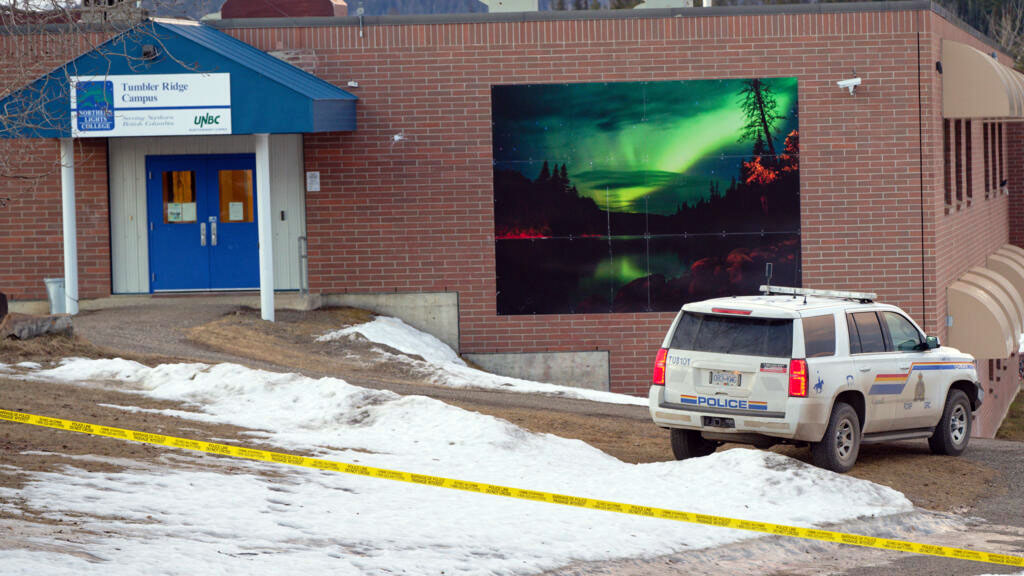
Canadian authorities are intensifying investigations into the mental health history and prior police interactions of Jesse Van Rootselaar, the 18-year-old who carried out a deadly mass shooting in the remote mining town of Tumbler Ridge, British Columbia, on February 10, 2026. The tragedy has left the small community in mourning and raised national questions about gun control, mental health support, and law enforcement interventions.
According to RCMP Deputy Commissioner Dwayne McDonald, authorities are still unclear on the motive behind the attack, which is one of the deadliest school shootings in Canadian history. Van Rootselaar, a transgender woman who had dropped out of Tumbler Ridge Secondary School four years ago, first killed her mother and stepbrother before opening fire at the school, where she shot six more victims. The shooter later took her own life at the scene.
Investigators have confirmed that Van Rootselaar was known to police and had previous interactions with the public health system due to mental health concerns. Authorities are reviewing prior incidents, including earlier firearms seizures and her lapsed gun licence, to understand how warning signs were addressed before the massacre. British Columbia Premier David Eby said officials are working with the health system to determine “what interactions may have taken place” in the past.
READ ALSO:
- Ex-Acting AGF Nwabuoku Admits Diverting N868.4 Million to Private Firms
- Kwankwasiyya Urges US Congress to Drop Kwankwaso’s Name from Bill
- Liverpool Edge Sunderland 1-0 to Halt Impressive Home Streak
The victims include a 39-year-old female teacher and five students aged 12 and 13, with one child, 12-year-old Maya Gebala, in critical condition after trying to lock herself and classmates in a library during the attack. First responders arrived within minutes, but the scale of the violence left the tight-knit community of about 2,700 residents reeling. Hundreds gathered for a candlelight vigil to honour those killed and injured.
Prime Minister Mark Carney addressed parliament, describing Tumbler Ridge as a resilient, compassionate community of miners, teachers, and construction workers, and emphasised the need to learn from the tragedy. Flags across Canada have been lowered to half-staff for seven days in remembrance of the victims. Britain’s King Charles and Queen Camilla also expressed shock and sorrow over the massacre.
Schools in the area will remain closed for the remainder of the week as authorities continue their investigation into Van Rootselaar’s mental health background, police interactions, and access to firearms, seeking to understand how similar tragedies can be prevented in the future.
Tumbler Ridge Massacre: Canada Investigates Shooter’s Mental Health, Police History
International
Canada Mass Shooting: Nine Dead in School, Residence Attack

Canada Mass Shooting: Nine Dead in School, Residence Attack
A mass shooting in Tumbler Ridge, British Columbia, Canada has left nine people dead and dozens injured after an attacker opened fire at a secondary school and a nearby residence on Tuesday, February 10, 2026.
According to the Royal Canadian Mounted Police (RCMP), seven victims were killed at Tumbler Ridge Secondary School, while two others died at a residence connected to the incident. At least 27 people were wounded, including two in critical condition, while the rest sustained non-life-threatening injuries.
The suspect was found deceased at the scene from an apparent self-inflicted injury. Authorities have not yet released the identity or motive behind the attack, which has shaken the small community of roughly 2,400 residents.
READ ALSO:
- Police Arrest Suspect as Youth Suffers Head Injury in Vigilante Custody
- Boko Haram Seizes Four Trailers, Rustles Over 100 Cows in Borno
- Wike Backs Tinubu’s Peace Efforts, Vows Stability in Rivers
Police responded rapidly, issuing an active shooter alert, placing schools on lockdown, and evacuating students safely. The RCMP and local officials continue to investigate the circumstances surrounding the attack and the suspect’s background.
Local leaders described the event as a devastating tragedy, expressing solidarity with victims’ families. The shooting has prompted national attention in Canada and renewed calls for enhanced school security and measures to prevent mass shootings.
Authorities have urged the public to remain vigilant and report any suspicious activity, emphasizing the importance of community cooperation in maintaining safety and preventing similar tragedies.
The attack is considered one of the deadliest school-related shootings in Canada in recent years, drawing widespread condemnation and grief across the country.
Canada Mass Shooting: Nine Dead in School, Residence Attack

-

 metro2 days ago
Leadership Crisis at NAHCON as Chairman Abdullahi Saleh Usman Resigns
-

 News2 days ago
Oyo Muslims Reaffirm Loyalty to Sultan on Islamic Matters — Grand Chief Imam
-

 News2 days ago
US Judge Orders FBI, DEA to Release Tinubu’s Criminal Records, Faults Delays
-

 International2 days ago
US to Deport 18 More Nigerians on ‘Worst-of-the-Worst’ Criminal List (Full Names)
-
metro2 days ago
Former NAHCON Chief Explains Why He Stepped Down, Denies Conflicts
-

 Business2 days ago
Naira Posts Strong Comeback, Breaking Two‑Year High Against Dollar
-

 Business3 days ago
CAC Deploys AI, Partners Google to Tackle Rising Business Registration Demand
-

 metro3 days ago
Court of Appeal Affirms Senate’s Power to Suspend Natasha Akpoti