
Business
BREAKING: Emirates restores ban on Nigerian flights
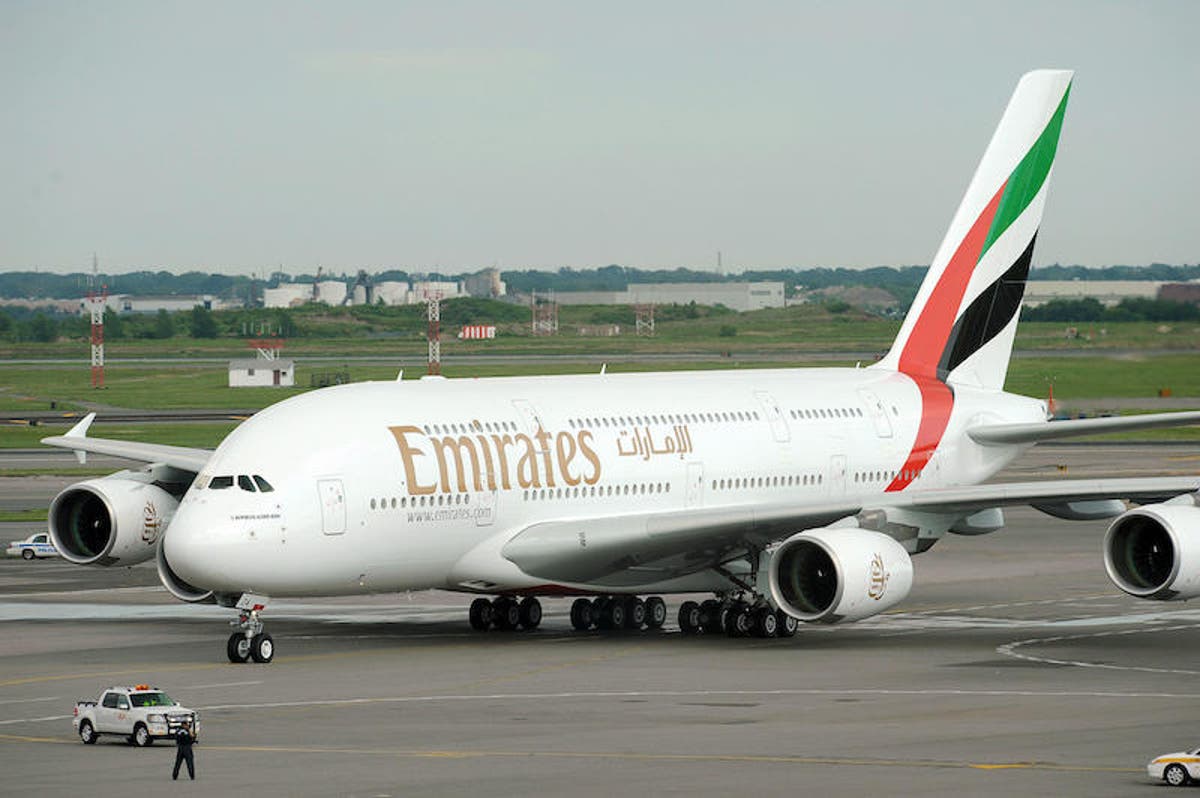
The United Arab Emirate’s carrier, Emirates, has again announced indefinite suspension of flights to Nigeria.
This is coming barely 48 hours after announcing resumption of flights to the country.
A statement on its website on Monday, the Emirates said, “In line with government directives, passenger flights to and from Nigeria (Lagos and Abuja) are suspended with effect from 21 June 2021 until further notice.”
The airline had on Saturday announced resumption of flights, which were suspended in March over diplomatic row on COVID-19 protocols.
The Dubai’s Supreme Committee of Crisis and Disaster Management had lifted the ban on Nigeria and removed the rapid antigen test and said passengers from Nigeria would only be required to possess negative PCR test.
It had stated, “We look forward to facilitating travel from these countries and supporting various travelers’ categories.
“We will resume carrying passengers from South Africa, Nigeria and India in accordance with these protocols from 23rd June.”
The airline however on Monday came up with a new travel update indicating that Lagos and Abuja flights would no longer resume on Wednesday as earlier announced.
“Customers travelling to and from Lagos and Abuja will not be accepted for travel. Customers who have been to or connected through Nigeria in the last 14 days are not permitted to board from any other point to the UAE.
“We regret the inconvenience caused, and affected customers should contact their booking agent or Emirates call centre for rebooking. Emirates remains committed to Nigeria, and we look forward to resuming passenger services when conditions allow,” the airline said.
The UAE had imposed antigens rapid test on travellers from 58 countries, including Nigeria, but the Minister of Aviation, Hadi Sirika, had said there was no basis for the test as it was devoid of any scientific backing.
The Nigerian government thereafter suspended flights between both countries.
On March 24, the UAE rescinded its position but stated it would only allow a maximum of 200 passengers with direct flights from Nigeria, who had negative PCR test certificates conducted 48 hours before boarding over a period of two weeks.
Expectations that the rift would be resolved were high after the UAE shifted grounds.









Business
Inflation Slows to 15.10% as Food Prices Eased in January

Inflation Slows to 15.10% as Food Prices Eased in January
Nigeria’s inflation rate recorded a marginal decline to 15.10 per cent in January 2026, signalling a slight moderation in consumer prices at the start of the year.
Latest data released on Monday by the National Bureau of Statistics (NBS) showed that headline inflation dipped from 15.15 per cent in December 2025, reflecting a 0.05 percentage point decrease.
The NBS, in its January Consumer Price Index (CPI) report, also revealed that food inflation — a key driver of household spending pressures — eased significantly to 8.89 per cent in January, down from 10.84 per cent recorded in December.
According to the bureau, the CPI dropped to 127.4 points in January from 131.2 points in the preceding month, representing a 3.8-point decline.
On a month-on-month basis, inflation fell sharply to -2.88 per cent in January, compared to 0.54 per cent in December — a 3.42 percentage point swing.
This indicates that the average price level not only slowed but contracted within the month under review.
“The Consumer Price Index (CPI) declined to 127.4 in January 2026, reflecting a 3.8-point decrease from the preceding month (131.2),” the NBS stated.
It added, “In January 2026, the headline inflation rate eased to 15.10%, down from 15.15% in December 2025.
“On a month-on-month basis, the headline inflation rate in January 2026 was -2.88%, which was 3.42% lower than the rate recorded in December 2025 (0.54%).”
The moderation in both headline and food inflation may offer cautious optimism for households and policymakers, particularly amid ongoing economic reforms and cost-of-living concerns.
However, analysts note that while the decline suggests easing price pressures, the overall inflation rate remains elevated, keeping purchasing power under strain.
Auto
Appeal Court Ruling on VIO Limited to Abuja, Not Lagos — LASG

Appeal Court Ruling on VIO Limited to Abuja, Not Lagos — LASG
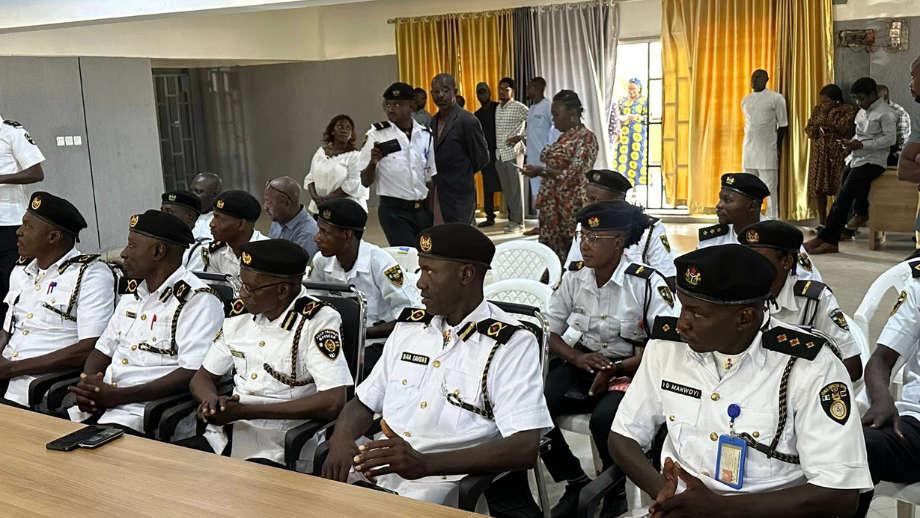
The Lagos State Government has dismissed widespread claims that a recent Court of Appeal judgment has stripped Vehicle Inspection Officers (VIOs) of their powers across Nigeria, insisting that the ruling applies strictly to the Federal Capital Territory (FCT).
The clarification follows public reactions to a decision of the Court of Appeal, Abuja Division, which upheld an earlier ruling of the Federal High Court restraining Vehicle Inspection Officers and the Directorate of Road Traffic Services in the FCT from stopping motorists, impounding vehicles, or imposing fines.
The judgment triggered viral interpretations suggesting that VIO operations had been outlawed nationwide.
However, Lagos State Attorney-General and Commissioner for Justice, Lawal Pedro, SAN, described such interpretations as legally inaccurate and misleading.
Basis of the Court Decision
According to Pedro, both the Federal High Court and the Court of Appeal premised their decisions on the absence of statutory authority empowering VIO officials in the FCT to stop, impound, confiscate vehicles, or impose fines on motorists.
READ ALSO:
- Terror in Lagos Traffic: Cutlass Gang Unleashes Mayhem on Mile 12–Ketu Road
- FG Drags El-Rufai to Court Over Alleged NSA Phone Interception
- Mystery in Lekki: Police Probe Death of Two Nollywood Crew Found Lifeless in Parked Car
“It is important to understand that the Honourable Judge of the Federal High Court and Justices of the Court of Appeal premised their decision on absence of statutory power conferred on the Respondents to stop, impound or confiscate vehicles and/or impose fines on motorists on roads in FCT Abuja,” he stated.
He noted that the courts did not declare vehicle inspection enforcement unconstitutional in Nigeria, but rather ruled specifically on the legal framework governing the FCT authorities involved in the suit.
Why Lagos Is Different
The Lagos government stressed that Nigeria’s federal structure allows states to legislate on residual matters such as road traffic management and vehicle inspection.
Pedro explained that Lagos operates under the Lagos State Transport Sector Reform Law, which expressly establishes and empowers the Vehicle Inspection Service (VIS).
Section 12(1) of the law authorises the VIS to:
Inspect and regulate the roadworthiness of vehicles
Conduct pre-registration inspections
Issue Road Worthiness Certificates
Collaborate with other relevant agencies to enforce traffic laws
In addition, Section 23(1) provides for penalties against offenders, subject to adjudication before mobile or magistrate courts, ensuring judicial oversight.
Not of Nationwide Effect
While acknowledging that the appellate decision is binding within the FCT, the Lagos government emphasised that it does not have automatic nationwide application.
“The judgment, though binding, is not of general application or of nationwide effect in Nigeria,” the ministry stated.
The state government stressed that VIS officers in Lagos remain legally empowered to carry out enforcement duties under extant state laws.
Wider Implications
The controversy underscores ongoing debates over traffic enforcement powers in Nigeria, particularly the constitutional boundaries between federal and state authorities.
Legal analysts note that unless the Supreme Court delivers a broader pronouncement on the issue, enforcement powers will continue to depend largely on the specific statutory framework establishing such agencies in each jurisdiction.
For now, Lagos authorities insist that vehicle inspection and traffic enforcement operations in the state remain valid and legally grounded.
Appeal Court Ruling on VIO Limited to Abuja, Not Lagos — LASG
Auto
Chanrai Storms Nigeria’s Gas Market, Unveils High-Capacity CNG, LNG Solutions to Power Energy Shift
Chanrai Storms Nigeria’s Gas Market, Unveils High-Capacity CNG, LNG Solutions to Power Energy Shift
By Rasheed Bisiriyu
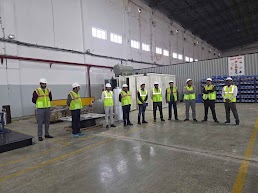
Nigeria’s drive towards cleaner and more affordable transport fuel gathered fresh momentum on Friday as Chanrai Nigeria Limited formally entered the country’s gas distribution space, unveiling high-capacity CNG and LNG compression technologies in Lagos.
The company, a member of the globally diversified Kewalram Chanrai Group, announced a strategic partnership with India’s Tulip Compression to roll out advanced compressor packages and integrated “single window” CNG solutions aimed at accelerating the Federal Government’s Presidential CNG Initiative.
Chief Operating Officer of Chanrai Nigeria Limited, Anil Sahgal, described the Tulip CNG Compressor Packages as a “game-changer” for Nigeria’s evolving energy landscape.
“With our commitment to safety, efficiency and OEM-grade partnership, we’re empowering the nation to achieve its CNG ambitions while driving economic growth and environmental sustainability,” Sahgal said.
The move marks Chanrai’s expansion beyond its traditional business interests — which span automobiles, agro-products, healthcare and fast-moving consumer goods — into the fast-growing gas infrastructure segment, as fleet operators and industrial users increasingly seek alternatives to petrol and diesel.
Under the partnership, Chanrai Nigeria and Tulip Compression will deliver Compression Station on Single Window (CssW) solutions — integrating compressors, dispensers, storage and stainless-steel tubing under one brand — to simplify deployment and reduce installation timelines.
The compressor packages come in a wide capacity range, from 250 to 4,500 standard cubic metres per hour, making them suitable for small refuelling stations as well as large gas hubs.
A 1,400 SCMH gas engine-driven booster compressor is designed to refuel heavy-duty CNG trucks in about 20 minutes by drawing gas from tube trailers.
The systems are available in both electric motor-driven and gas engine-driven configurations, eliminating the need for large gas generators while ensuring energy efficiency and lower life-cycle costs.
According to the company, the equipment features dual-chamber leak-proof safety systems, advanced sealing technology to eliminate gas loss and global certifications including ATEX, CE, BIS and SGS standards.
The unveiling underscores the growing private sector response to government reforms encouraging gas adoption as a cost-effective and environmentally friendly alternative fuel.
With the compressor packages now available for immediate orders, Chanrai Nigeria said it would provide 24/7 after-sales support, operations and maintenance services, as well as remote asset monitoring solutions.
The development signals intensifying investment in CNG infrastructure as Nigeria seeks to deepen local gas utilisation, reduce fuel import dependence and cushion consumers from volatile petrol prices.

-

 Education2 days ago
Check Your Name: UNILORIN Releases Updated NELFUND Refund List for 2024/2025 Students
-

 News1 day ago
Osogbo Sons and Daughters Mark 5th Anniversary with Awards, Political Undertones
-

 metro2 days ago
Woman Arrested Over Murder of Nigerian E-Hailing Driver in South Africa
-

 News2 days ago
Afenifere Calls for Immediate Take-Off of State Police as Terror Threats Rise in Yorubaland
-

 metro2 days ago
Boko Haram Terrorists Release Video of 176 Abducted Kwara Residents
-

 metro14 hours ago
US Freezes Assets of Eight Nigerians Over Boko Haram, ISIL, Cybercrime Links
-

 metro2 days ago
US Military Boosts Support for Nigeria’s Fight Against Insurgency With Ammunition, Troop
-
 metro15 hours ago
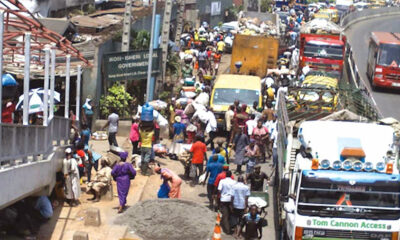
Terror in Lagos Traffic: Cutlass Gang Unleashes Mayhem on Mile 12–Ketu Road