BREAKING: Tinubu storms National Assembly for 2024 budget presentation - Newstrends
Connect with us

News

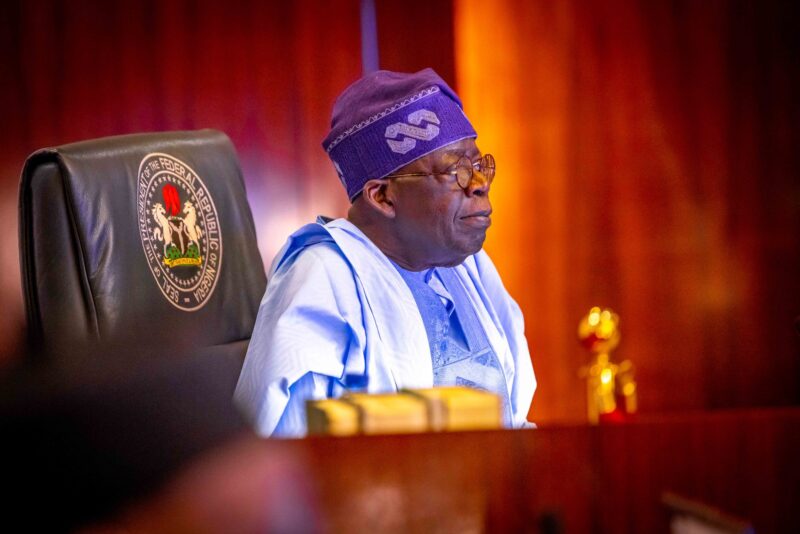
BREAKING: Tinubu storms National Assembly for 2024 budget presentation
Published

on

President Bola Ahmed Tinubu

BREAKING: Tinubu storms National Assembly for 2024 budget presentation

The National Assembly Complex is currently under increased security measures in anticipation of President Bola Tinubu’s presentation of the 2024 Appropriation Bill to a joint session of the Senate and House of Representatives at 11 am today.

READ ALSO:

Additional armed policemen have been deployed to the various entrances of the complex, including the Main (MOPOL) Gate, the Villa Gate, and the Annex Gates, with strict enforcement of accreditation requirements. Unauthorized individuals are being denied access to the premises.

The typically bustling atmosphere of the National Assembly is notably subdued, marked by restricted human and vehicular traffic, creating a more solemn ambiance than usual.

BREAKING: Tinubu storms National Assembly for 2024 budget presentation

Loading

News

Mutfwang Clarifies Apology to Igbo Community: “My Words Were Twisted”

Published

on

Mutfwang Clarifies Apology to Igbo Community: "My Words Were Twisted"
Governor of Plateau State, Caleb Mutfwang

Mutfwang Clarifies Apology to Igbo Community: “My Words Were Twisted”

  • Governor Caleb Mutfwang insists his remarks were taken out of context, emphasizing reconciliation and Plateau’s legacy of peaceful coexistence

Governor of Plateau State, Caleb Mutfwang, has finally broken his silence over the firestorm of reactions that followed his recent apology to the Igbo community (Ndigbo) over Nigeria’s civil war atrocities. In a detailed statement on Wednesday, the governor firmly declared that his intentions were deliberately taken out of context and misrepresented by critics. The controversy erupted after Mutfwang, during a courtesy visit by Igbo leaders at the Government House in Jos, was quoted as saying: “I apologise to the Igbos so that we can put the past behind us… because our people were deceived into going to war, and we regret it.” The remarks sparked a national debate, drawing both praise from Igbo groups and sharp criticism from some Plateau stakeholders who felt the governor unfairly blamed his own people. Now, through his Director of Press Affairs, Dr. Gyang Bere, the governor has set the record straight.

In a statement released Wednesday, Mutfwang explained that his remarks were never intended to assign blame or diminish the suffering of any ethnic group. Instead, they were rooted in three key pillars: appreciation for the immense contributions of the Igbo community to Plateau State’s growth in commerce, education, healthcare, and industry; reconciliation through encouraging all Nigerians to build bridges of mutual respect and peaceful coexistence; and national unity by reminding citizens of the enduring responsibility to strengthen bonds rather than reopen old wounds. The governor emphasized through his spokesperson that at no point did he seek to diminish the painful experiences of any ethnic group or the historical realities surrounding Nigeria’s Civil War. He noted that the scars of that period remain part of our national history and deserve to be remembered with empathy, honesty and sensitivity. The governor emphasized that his apology to Ndigbo was not an indictment of any tribe but a gesture of solidarity—a reminder that Nigerians must learn from history rather than remain imprisoned by it.

READ ALSO:

Mutfwang took the opportunity to highlight Plateau State’s historic role as a beacon of peaceful coexistence. He traced this tradition back to the post-civil war era, when leaders like JD Gomwalk and Chief Solomon Lar championed policies of inclusion. He specifically invoked General Yakubu Gowon’s “No Victor, No Vanquished” declaration and the 3Rs policy (Reconciliation, Rehabilitation, Reconstruction) , which he described as a globally recognized model for post-war healing. The governor noted that for decades, Plateau State has proudly stood as one of Nigeria’s foremost examples of peaceful coexistence among diverse peoples. He added that successive administrations have sustained this tradition by creating an environment where Nigerians from every region can live, work, worship, invest and flourish. The governor further noted that the Igbo community has leveraged this welcoming environment to make invaluable contributions to the state’s development, and his administration is committed to preserving and strengthening that legacy.

The meeting, however, was not without its political dimensions. During the visit, Igbo leaders from all 17 local government areas of Plateau State formally endorsed Governor Mutfwang for a second term ahead of the 2027 governorship election. Chief Chidi Onah, President-General of the Igbo Community in Plateau State, cited Mutfwang’s inclusive leadership and developmental strides as key reasons for their support. But the discussions also exposed underlying tensions. Community leaders raised unresolved compensation claims over land disputes—a reminder that even in states celebrated for harmony, the relationship between “indigenes” and “settlers” remains delicate.

The governor’s initial comments drew a polarized response. On the one hand, the Izu Umunna Cultural Association (IUCA) hailed Mutfwang’s apology as “courageous,” “healing,” and historic. They noted that the civil war remains “a scar in the psyche of every Igbo man” and that no national leader had previously shown the courage to accept such responsibility. On the other hand, former Sports Minister Solomon Dalung and former Commissioner for Information Dan Manjang criticized the governor, arguing he unfairly placed the burden of the civil war on the people of Plateau State.

Addressing his critics directly, Mutfwang urged Nigerians to resist attempts to inflame ethnic or regional divisions. He stated that at a time when our nation faces significant challenges, Nigerians must resist every attempt to inflame ethnic or regional divisions. Instead, he said, we should draw strength from our shared history, celebrate our diversity and recommit ourselves to building a nation founded on justice, mutual respect and peaceful coexistence. The governor reaffirmed that his administration believes Plateau’s greatest strength lies not in the differences among its people but in their ability to transform diversity into unity and shared prosperity. He concluded that Governor Caleb Mutfwang remains unwavering in his belief that every Nigerian, irrespective of ethnicity, religion or place of origin, deserves dignity, equal opportunity and a genuine sense of belonging. He urged the public to disregard any interpretations that assign unintended meanings to his remarks, describing such distortions as distractions from the broader message of unity and national cohesion.

Mutfwang Clarifies Apology to Igbo Community: “My Words Were Twisted”

Loading

Continue Reading

News

Tinubu orders security forces to hunt down killers after 30 murdered in Kaduna attack

Published

on

Tinubu orders security forces to hunt down killers after 30 murdered in Kaduna attack
President Bola Ahmed Tinubu

Tinubu orders security forces to hunt down killers after 30 murdered in Kaduna attack

President Bola Ahmed Tinubu has directed the Nigerian Armed Forces, the Nigeria Police Force and relevant intelligence agencies to launch an intensified manhunt for those responsible for the deadly attack that claimed the lives of about 30 people in Naridon Village, Kamaru Ward, Kauru Local Government Area of Kaduna State.

The attack, which occurred in the early hours of Monday, left men, women and children dead, while several others sustained injuries. Homes and other property were also set ablaze, forcing many residents to flee the community.

Describing the incident as a “barbaric and cowardly” assault on innocent citizens, President Tinubu vowed that the perpetrators would be apprehended and made to face the full weight of the law.

The President said criminal elements would not be allowed to reverse the security gains recorded in Kaduna State and other parts of the country.

“I have directed the Armed Forces, police, and relevant intelligence agencies to intensify operations across the affected areas to track down the perpetrators swiftly and restore normalcy to the region.”

Tinubu reiterated his administration’s commitment to strengthening the country’s security architecture through improved intelligence gathering, enhanced operational capacity and sustained efforts to dismantle criminal networks threatening lives and property.

“Our administration has an unwavering commitment to strengthening security infrastructure, equipping response personnel, and neutralising criminal networks attempting to disrupt the peace of the nation.”

The President also appealed to residents of affected communities to support ongoing security operations by providing timely and credible intelligence that could help security agencies prevent future attacks and apprehend those responsible.

While expressing condolences to the families of the victims, Tinubu sympathised with Kaduna State Governor Uba Sani, the Kaduna State Government and residents of the state over the tragic loss of lives.

READ ALSO:

He assured affected communities that the Federal Government would continue working closely with security agencies to restore peace and improve safety across Kaduna State and other troubled parts of the country.

The Kaduna State Government also condemned the attack, describing it as a senseless act of violence against innocent citizens. State authorities said security agencies had been directed to intensify operations in the affected area and ensure those behind the attack are arrested and prosecuted. The government reaffirmed its commitment to protecting lives and property while collaborating with federal security agencies to strengthen surveillance and prevent further attacks across vulnerable communities.

Meanwhile, the Southern Kaduna Peoples Union (SOKAPU) has urged the Kaduna State Police Command and other security agencies to adopt more proactive strategies to tackle the recurring killings, kidnappings and attacks in Southern Kaduna.

In an open letter addressed to Governor Uba Sani and the Commissioner of Police, SOKAPU National President, Engr. Tabara Kato, described the Naridon attack as another painful reminder of the persistent insecurity confronting communities in Kauru, Kajuru, Chikun and Zangon Kataf local government areas.

According to the union, repeated attacks have displaced families, destroyed homes and farmlands, disrupted farming activities and left thousands of residents living in fear.

SOKAPU called on security agencies to move beyond reactive responses by deploying tactical and counter-terrorism units to vulnerable communities and forest corridors believed to serve as hideouts for criminal groups.

The organisation also advocated increased intelligence-led operations, regular patrols of farming communities, improved surveillance and quicker responses to distress calls. It stressed that restoring public confidence would require consistent communication between security agencies and local communities, alongside decisive action against those responsible for violent attacks.

The latest killings have once again drawn attention to the security challenges facing parts of Kaduna State, particularly in Southern Kaduna, where communities have experienced repeated attacks, kidnappings and communal violence over the years.

The violence has resulted in significant loss of lives, mass displacement and destruction of livelihoods, while many farmers have been unable to cultivate their land due to persistent security threats.

Security analysts say sustained military operations, improved intelligence sharing and stronger collaboration among federal, state and local authorities will be critical to addressing the root causes of insecurity and preventing future attacks.

As investigations continue, residents of Naridon and neighbouring communities are hoping for swift justice and stronger security measures to enable them to return to their normal lives without fear.

Tinubu orders security forces to hunt down killers after 30 murdered in Kaduna attack

Loading

Continue Reading

News

Tinubu Agrees to Meet South African Envoy After Ramaphosa’s Intervention

Published

on

Tinubu Agrees to Meet South African Envoy After Ramaphosa's Intervention
President Bola Ahmed Tinubu and President Cyril Ramaphosa

Tinubu Agrees to Meet South African Envoy After Ramaphosa’s Intervention

President Bola Ahmed Tinubu has reversed his earlier decision and agreed to receive the South African special envoy, following a telephone conversation with President Cyril Ramaphosa over the weekend. The South African delegation, led by Minister of International Relations and Cooperation Ronald Lamola, arrived in Abuja on Friday, July 24, 2026, with what was described as a “very important message” for the Nigerian leader. The delegation had reportedly been left waiting at the Transcorp Hilton Hotel in Abuja after being unable to secure an audience with President Tinubu.

The initial refusal to receive the South African envoy came amid growing concerns over persistent xenophobic attacks against Nigerians in South Africa. The diplomatic standoff was further intensified by the alleged killing of a Nigerian national, Chika Ibe, who was reportedly taken from his residence at Parksig Villas Complex in Bellville, Cape Town, and tortured to death by personnel of the South African Police Service (SAPS). Nigeria’s Minister of Foreign Affairs, Bianca Odumegwu-Ojukwu, advised that it was not an appropriate time for President Tinubu to receive the South African envoy, citing the continued attacks on Nigerians, their businesses, and properties in South Africa. According to diplomatic sources, she stressed that the South African delegation could not secure a presidential audience without a prior appointment and concrete commitments from Pretoria.

A key condition set by Nigeria is the ratification of the Memorandum of Understanding on the Early Warning Mechanism (EWM) , which both countries signed in Abuja on October 22, 2025. The agreement was designed to strengthen cooperation between both countries in monitoring threats of violence, protecting citizens, and addressing consular matters. It also provides for rapid communication channels to de-escalate security risks involving foreign nationals and prevent xenophobic attacks. South Africa has reportedly failed to ratify the agreement, citing what Nigerian officials described as inadequate reasons. Officials at the Ministry of Foreign Affairs noted that the framework could have facilitated compensation claims for Nigerians whose businesses and properties were destroyed during previous xenophobic attacks in South Africa. However, South African authorities have so far declined to compensate victims.

READ ALSO:

Following back-channel moves by South African authorities, including a call initiated by President Ramaphosa over the weekend, President Tinubu agreed to meet with the delegation. The meeting is expected to hold later, with the Minister of State for Foreign Affairs, Ambassador Sola Enikanolaiye, playing a crucial role in the absence of the Minister of Foreign Affairs, who is currently in Addis Ababa. The diplomatic engagement comes as South Africa faces growing pressure over anti-immigrant protests and the treatment of foreign nationals. Lamola has been engaging leaders on the continent to explain Pretoria’s approach to migration management and efforts to prevent violence against foreign nationals.

Nigeria has maintained a firm stance against xenophobic attacks in South Africa. At the 69th Ordinary Session of the Authority of Heads of State and Government of ECOWAS, held recently in Lungi, Sierra Leone, Vice President Kashim Shettima, who represented President Tinubu, condemned the attacks and pledged that Nigeria would push for stronger measures against xenophobia at the African Union. Shettima called for a united continental response to protect the rights and dignity of Africans living across the continent and disclosed that the Federal Government had evacuated 1,490 Nigerians affected by previous xenophobic violence. He reaffirmed Nigeria’s commitment to working with regional and continental institutions to address the crisis. Observers believe South Africa’s diplomatic outreach may be driven by concerns over the potential impact of deteriorating relations on South African investments and businesses operating in Nigeria, as well as Nigeria’s growing campaign for tougher continental measures against xenophobia. South African companies with significant investments in Nigeria include major firms in telecommunications, banking, and retail sectors, which could face heightened scrutiny if tensions persist. The meeting between Tinubu and the South African envoy is expected to provide an opportunity for both countries to address the concerns and strengthen bilateral engagement on migration management, diplomatic cooperation, and the protection of nationals affected by recent tensions.


Tinubu Agrees to Meet South African Envoy After Ramaphosa’s Intervention

Loading

Continue Reading

Trending