

Opinion
Buhari At 80: 12 things Nigerians need to know, by Garba Shehu
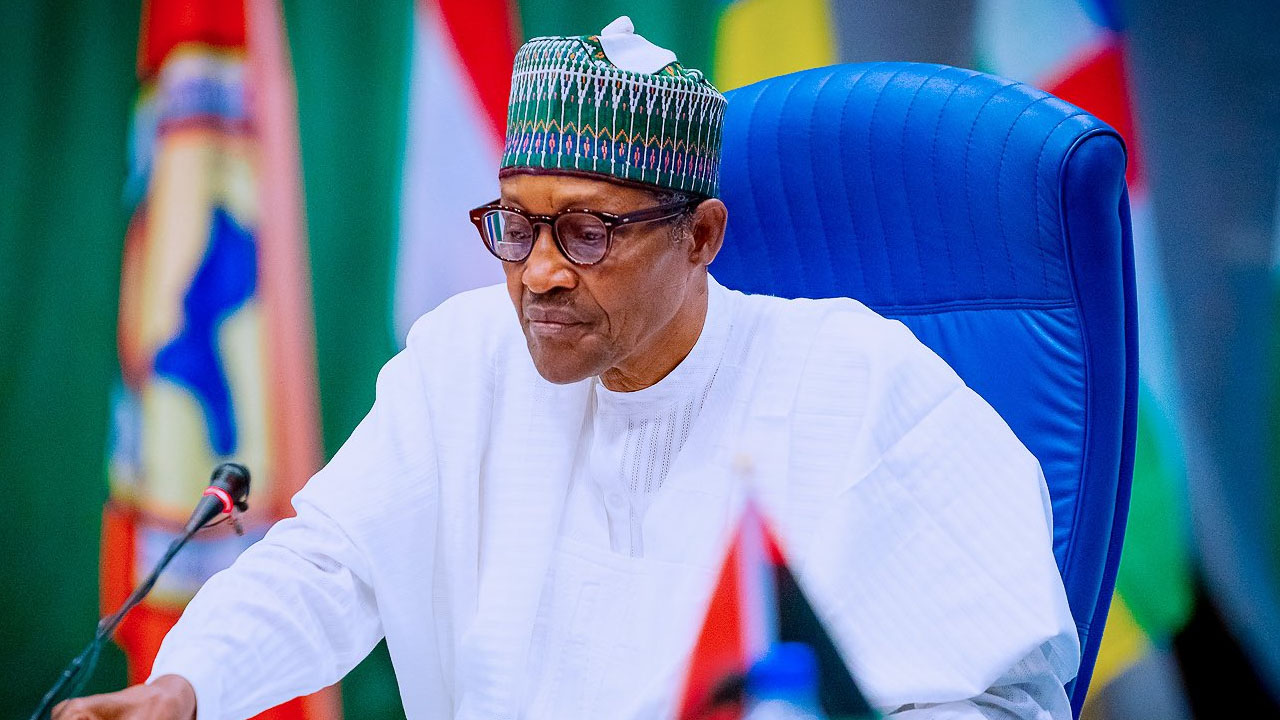
-First thing to know is that President Muhammadu –Buhari, retired General and former Military Head of State was born in Daura on December 17th, 1942. He lost his father at the early age of three years.
-He was enlisted in primary school by the District Head of Daura, Waziri Alasan and fell under the guardian-ship of his older brother, Alhaji Dauda Daura, Malam Mamman’s father, then a Head Master at Mai Aduwa, from where the young Buhari went to the middle and secondary schools.
-After his education at the now Government College Katsina, he went to the Nigerian Military Training College, Kaduna which is now known as the Nigerian Defence Academy. He trained at the Mons Officer Cadet School, a British Military training school in Aldershot and also attended the US Army War College (USAWC) Carlisle, Pennsylvania and the National Defence College, New Delhi, India.
Apparently, Muhammadu Buhari, as a young officer had already been gifted with “wisdom and strength for the future,” the motto of the USAWC even before he got there.
-The young Buhari was sent by his country to Congo (DRC) on a UN Peace Keeping mission assigned to command a battalion commander, but in carrying out his duty, he almost lost his life before earning his first salary.
Caught in a tricky and the dangerous situation of either protecting a prisoner to face the wrath of 5,000 armed natives and, possibly his losing his life and the relatively small number of 400 men under him, or finding another a solution to mollify the mob, he gathered the needed courage and wisdom to stop a major tragedy from happening.
-As a soldier, he fought in the 30 months Nigerian Civil War and did not take a single day off while the war lasted. He traversed the entire Eastern Region literally on foot and suffered a gun shot in the lower leg. He was the second in command in the battalion that fired the first shot in the war.
-Two. He was a military Governor of the Northeast, now broken into six states as a young Colonel and thereafter, Federal Commissioner (Minister) and Chairman, Nigerian National Oil Corporation, now renamed NNPCL.
As a General, he had the record of commanding all four army divisions they had in -their time. As Military Secretary, he did the meticulous work of the documenting the records of the entire officer corps.
That is why it baffled him to no end that some officers in Army Records Office, obviously playing politics with the issue in 2015, claimed that the army didn’t have his WAEC certificate which was no more than a ploy to stop him as a candidate in the election.
-Three. As a politician with more than 4 million followers on Twitter and an equally huge following on Facebook, Instagram and the others, President Buhari is one of the most popular politicians that this country has ever produced.
-Four. He holds the record of being the first opposition candidate to defeat an incumbent in an election to take office as President of Nigeria. He is the only non-PDP President to win two consecutive terms of four years. He is a charismatic leader with the capability to sway the masses. In all five elections he ran as president, three of which were recorded as losses, there was none in which he got less than 12 million votes.
-Five. The Covid-19 pandemic seized the world by its collar. Covid-19 lockdown shut all businesses and threw people out of their jobs all over the world. National economies slowed down and were in a recession in all countries but China.
Nigerian government under President Buhari pulled out the country out of the Covid-induced recession at a global record time. No Nigerian bodies were picked on the streets from Covid deaths as the pundits projected. In fact, West Africa suffered the least number of casualties in the subregional grouping on the continent, thanks to the ECOWAS COVID-19 Champion, working with regional leadership, the AU and the UN.
Six. In seven-and-a-half years, he is credited with the introduction of some of the country’s long delayed reforms, among these is a most ambitious infrastructure push since the 1970s – delivering roads, rail, ports, power plants, airports etc; and deploying innovative financing mechanisms like the Presidential Infrastructure Development Fund (PIDF), Executive Order 7, Sukuk Bonds, and Green Bonds.
-Seven.He is presiding over the largest program of legislative reforms in Nigeria’s history: the Company and Allied Matters Act, CAMA revised for the first time in 30 years, Prisons Act for the first time in almost 50 years, Police Act for the first time in 70 years. And a surfeit of all the new Acts too – the Nigerian Centre for Disease Control, NCDC, Climate Change, the Suppression of Piracy and Other Maritime Offenses, SPOMO, the Finance Acts, Electoral Amendment, the new Terrorism Act, among others.
-Eight. The President is building the largest social investment program in Africa, and one of the largest in the world, serving tens of millions of Nigerians. The school feeding component, giving a free meal a day to 10 million children has increased school enrollment and lowered the distressing number of out-of-school children in our country.
Nine. The President is successful in rebuilding the confidence of the Nigerian military, and degrading Boko Haram/ISWAP. He has commenced the rebuilding of the Northeast; making the biggest investments made in military platforms and assets in more than 40 years; Police Reforms (New Police Act, Police Trust Fund, Community Policing, Police Recruitment of 10,000 men in uniform every year, community policing, New Police Salary Structure); Nigeria’s Coastal Waters (in the Gulf of Guinea) are the safest they have ever been in almost 3 decades.
Ten. In the sphere of foreign affairs, the President has distinguished himself as a global leader respected by the world. He has enhanced Nigeria’s standing in the International Community.
At the African Union, AU he is the outgoing Anti-Corruption Champion; at the ECOWAS, he has performed wonderfully as Covid-19 Champion; His leadership of the Lake Chad Basin Commission has come to an end with a lot of benefits, not least the degradation of Boko Haram terrorism.
His recent inauguration as the Chairman of the committee of of Heads of State of the African Great Green Wall Agency is to fortify the continent against harmful effects of the climate change.
Under his leadership Nigeria presented Ambassador (Professor) Mohammed Bande, Nigeria’s Permanent Representative as the President of the UN General Assembly, and Mrs Amina Mohammed got appointed and reappointed as the Deputy Secretary General of the UN.
He spearheaded the campaign for the election of Dr. Ngozi Okwonjo-Iweala, NOI as the World Trade Organization, WTO DG- the first for an African and the female gender, and promoted the election and reelection of Akin Adesina for the Second Term in AfDB – in the face of concerted opposition.
He sealed the very helpful military deals with the US Government; made bold interventions to restore stability in Gambia and Guinea Bissau and Nigerians have been pushed into holding leadership positions in recent years at the International Criminal Court, African Civil Aviation Commission, and several others.
-Eleven. Muhammadu Buhari as a young army Colonel and Federal Commissioner for Petroleum Resources was convinced by science, not geopolitics or native instinct that oil and other hydrocarbons were plenty in existence in the Northern States as well as the Southwest and knew that the political stability of the nation will be helped by the sense psychological equality or balancing its discovery could help to bring.
He fought hard for this as Federal Commissioner Petroleum Resources and Chairman of the Nigerian National Petroleum Corporation until his very last day in office but it didn’t work.
When he found himself in office as elected President 30 years after leaving oil, he resumed his passions as oil finder at the Lake Chad Basin area, considered a low hanging fruit until kidnapping and killings by the Boko Haram terrorist group spoiled things up.
Explorations shifted to the Benue trough map and his vindication came by way of the unveiling of the Kolmani Oil Well straddling Bauchi and Gombe states, promising more than a billion barrels of crude oil an over 500 billion cubic feet of natural gas. The project has already attracted over USD 3 billion in investment. For doing the most work to discover the new oil fields, President Buhari deserves a gold medal, and the Asiwaju Bola,Tinubu, an easy ride ride to power for the promise he made to take the explorations further afield.
-Twelve. While the work of nation-building under his incomparable hard work, dedication and creativity continues to advance the country in many ways, the same cannot be said of some follow country who put all manner of obstacles in the way to accomplishing two major projects about which he very passionate:
Completing and commissioning of the Ajaokuta Steel Rolling Mill and construction of the 3, 500 megawatts Mambila Electricity Power Project. Thankfully, the long-drawn legal tussle on Ajaokuta just got ended and the Minister, Solid Minerals Develpment Arch. Olamilekan Adegbite has already hit the road running, hoping to achieve what is possible before the administration ends its term.
While the legal contestation for Ajaokuta was ongoing, the country under President Buhari has begun to record progress in the production of liquid steel through the private sector.
Same however cannot be said of Mambila Power Project where the problems have defied solutions. ChinaExim has withheld funding to Mambila as did the Qatari Sovereign Wealth Fund due to the challenges by one man claiming to have a contract that doesn’t exist anywhere. We are hearing that he wants to be paid on the basis of this improperly awarded contract to be paid money in hundreds of million of US dollars to cover the cost of his litigation. President Buhari is not one to give anyone free money from the treasury.
As he marks this milestone by attaining the age of 80, in extraordinarily state of high physical and mental fitness, Muhammadu Buhari’s life continues to symbolize service to the nation and humanity as well as dedication and commitment to the building of of a secure, stronger and prosperous Nigeria.
Shehu is Senior Special Assistant to the President (Media and Publicity).






Opinion
2027: Competence, Not Zoning, Should Decide Nigeria’s Next President — Imasuagbon
Nigerians should look beyond ethnicity, region and the longstanding debate over rotational presidency when choosing the country’s next leader, according to a chieftain of the African Democratic Congress (ADC), Kenneth Imasuagbon.
The former Edo State governorship aspirant said the priority ahead of the 2027 election should be finding a president with the ability to confront Nigeria’s economic, security and infrastructure challenges.
Speaking to journalists in Benin, Imasuagbon argued that presidential rotation is not a requirement of the Nigerian Constitution and should therefore not outweigh the question of competence.
He said voters should be more concerned about replacing poor schools with better ones, improving healthcare and addressing hardship than debating where the next president comes from.
Imasuagbon specifically appealed to voters in the South to support former Vice President Atiku Abubakar, who is contesting the 2027 presidency on the ADC platform.
According to him, Atiku has demonstrated the experience and determination needed to improve the country, describing the former vice president as someone capable of promoting national unity and fairness.
He also accused the Bola Tinubu administration of worsening economic pressure through policies including the removal of fuel subsidy, while expressing concern about the condition of roads, electricity and other infrastructure.
Imasuagbon argued that the next administration must focus on practical improvements in areas such as power, transportation, employment, security and public services.
The ADC chieftain also dismissed the idea that the ruling All Progressives Congress (APC) would automatically benefit from its incumbency advantage in 2027.
He maintained that the electorate ultimately determines the outcome of an election, arguing that voters could change the political direction of the country if they were determined to do so.
Imasuagbon further criticised what he described as regional and ethnic considerations in the distribution of political appointments and opportunities, insisting that the next president should give Nigerians across different parts of the country a sense of belonging.
His comments come as political parties and their candidates intensify preparations for the 2027 presidential election.
Opinion
Lesson from Dotun Oladipo’s Brave Daughters, by Bamidele Johnson
Lesson from Dotun Oladipo’s Brave Daughters, by Bamidele Johnson
I hope to grow old. I want to see my kids become real adults, find their own feet, make mistakes, recover from them, and perhaps one day complain that their own children are giving them grey hairs. I want that plainly stated before anything else, as everything that follows might read as a man agreeing to an early exit rather than a man simply being honest about the odds.
I want the decades. I want to become the grandfather who repeats the same stories until nobody bothers correcting him anymore. But wanting a thing and being granted are different things. The last year has made that difference harder to ignore than I would like. I have lost many friends recently to keep thinking that optimism is my natural resting state. Some of these men had better blood pressure than mine, better habits, better everything that is supposed to count. It did not save them.
There is no formula I know that reliably separates the men who make it to 70 from those who do not. Anyone who says he knows one is selling something. So, I do not assume that old age is an already booked destination. Even if I once did, which I doubt, the last three years have cured me of such an illusion. As such, I treat it as a hope rather than an expectation, and I have found that a more honest way to live.
It is exactly why I want something placed on record now, while I am still able to place things on record, rather than leave it for people to guess what my wishes were in the fog of a funeral week. If I do not make old bones, my children are not to be asked to read tributes at my funeral. Not one line, however short, however lovingly written.
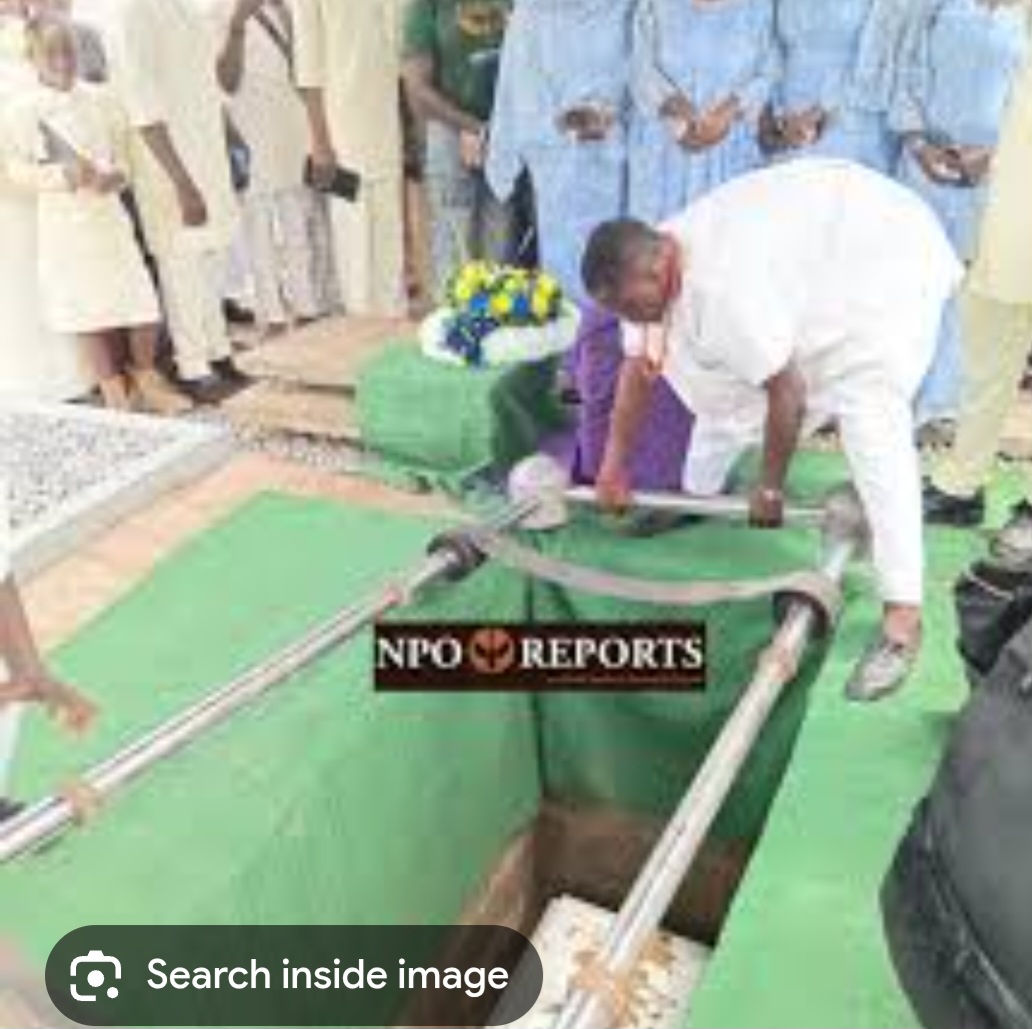
This, for me, was settled today rather than re-opened. At Dotun Oladipo’s funeral service, his three daughters took turns to read their tributes to their dad, and I found myself watching them with awe. There was a kind of strength in them that I do not possess. It is the strength needed to stand in front of a hall brimming with grieving adults and speak about a man they have just lost. Forever. Strength, however, is not the same as ease. I could see plainly what that strength was costing them as they read. Their voices caught. Their composure held and then did not hold and then held again through sheer will.
In front of them, in the pews, men and women considerably older than them came undone in ways the girls themselves were somehow managing to resist. I went mightily close. Some of the sobbing was quiet, the type people try to fold into a handkerchief. Some of it was not quiet at all, the kind that announces itself whether or not you want it.
Those young women honoured their father with a grace that is beyond me. What they did was astonishing. So, what I am attempting is an observation of a custom I have now watched wound people. This was not the first time I had watched this particular ritual extract more than it should from people already running on fumes. I saw an earlier and harder version of it at a friend’s wake back in 2015.
The first son was called forward to read his father’s tribute, and he could not do it. He tried, but the words would not come, and he stood there in front of a crowd of mourners, with his grief simply refusing to organise itself into sentences. The officiating minister, rather than releasing him from the task, urged him to continue. I sat fizzing with sorrow and ire. He could not go on and, eventually, the minister accepted, but not before insisting a while longer than it should have reasonably taken. His younger brother was called up next, presumably on the theory that if one grieving son could not manage it, maybe another one could. He flunked it in the same way. Grief does not distribute itself more conveniently among siblings just because a programme has been printed and needs to be followed.
I have turned that memory over many times since, trying to work out why this part of the rites is treated as mandatory in the first place. I have not found a satisfying answer. Maybe it comes from a belief that a child’s words carry more weight than anyone else’s, which may even be true, but weight is exactly the problem when those carrying it are struggling to hold themselves together with nothing but adrenaline and the fear of dissolving in public.
Maybe it is simply inertia, the reason we still do a hundred things at funerals that nobody can explain the original purpose of. Either way, I have stopped looking for the justification. I no longer think one exists that is good enough to weigh against what I watched happen to that boy in 2015.
So, let this stand as my instruction rather than my preference, the kind of thing I would rather state plainly now than leave for my children to infer later from how uncertain I sound when the subject comes up in passing. If I do not get the old age I am hoping for, my children will not be asked to read a single word over my body. Someone else can speak for me. A friend, a stranger with a steadier voice and a smaller stake in the loss, anyone whose grief will not be quite so total that standing upright becomes almost impossible.
My children, of course, will sit in front and fall apart if that is what the day requires of them, but without the microphone. That, at least, is one small mercy I intend to arrange for them while I am still here to arrange it.
Dotun deserved every bit of the send-off his daughters gave him today, and I suspect he would have been the first to tell them to sit down and let someone else carry the weight for a while. He did not get a say in that, as none of us ever do once we are the ones being spoken of rather than the ones speaking. Rest well, Dotun. You raised three young women whose strength I will not soon forget. That alone says everything worth saying about the man you were.
Opinion
‘Tinubu Will Win Again in 2027’ — Charismatic Bishops’ Secretary
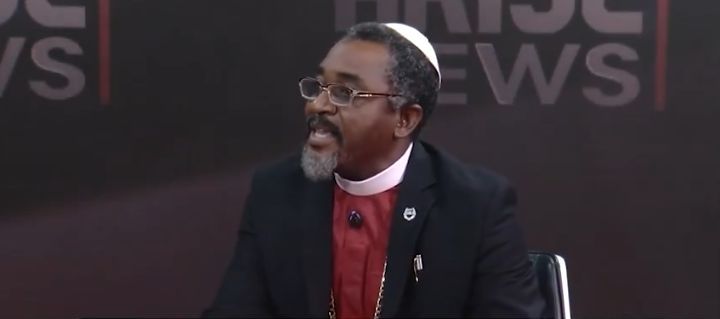
‘Tinubu Will Win Again in 2027’ — Charismatic Bishops’ Secretary
A senior Nigerian cleric, Archbishop Chivir Chianson, has declared that President Bola Tinubu will retain the presidency after the 2027 general election, attributing the prediction to a message he said came from God.
Chianson, who serves as Secretary General of the Charismatic Bishops’ Conference of Nigeria, made the statement while appearing on Arise Television on Saturday.
Rather than basing his prediction on political calculations, the archbishop said his confidence came from what he described as the prophetic role of bishops.
He maintained that the conference had previously spoken about Tinubu’s political future based on what he said was divine revelation and that the President would return for another term.
Chianson also predicted that Tinubu’s performance would improve if he wins the 2027 election.
READ ALSO:
- DSS warns Osun churches, mosques, markets over alleged terrorist attack plot ahead of 2027
- ‘Tinubu Will Win Again in 2027’ — Charismatic Bishops’ Secretary
- Fake miracles, bogus grants: How clerics allegedly fleece Nigerians of millions
Addressing the political opposition, the cleric said the bishops could not be blamed if rival parties failed to unite or organise themselves effectively ahead of the election.
He also sought to clarify the position of the bishops when dealing with government, saying their role in speaking truth to power did not mean they should approach political leaders with hostility or disrespect.
According to him, the Constitution, alongside their religious convictions, should guide how they engage the President and the country.
Chianson said he was sufficiently confident in his prediction to promise that he would return to the Arise TV studio after the 2027 election, when he expects the result to demonstrate that the bishops’ prophecy was correct.
His comments add a religious dimension to the increasingly active political conversation surrounding the 2027 presidential race.
‘Tinubu Will Win Again in 2027’ — Charismatic Bishops’ Secretary
-

 metro2 days ago
Woman disguises as Muslim woman in Niqab to steal in Ado-Ekiti market, video sparks outrage
-

 metro2 days ago
Ondo Herbal Drink Tragedy: Survivor Vows Never to Drink Again as Death Toll Tops 30
-

 metro2 days ago
Sokoto Cleric Stabbed Twice in Neck After Juma’at Prayer, Attacker Killed
-
 Business2 days ago
Dangote: ₦525 Refinery Shares Could Rise to ₦10,000
-

 Africa3 days ago
Murder of Nigerian Bishop in South Africa Sparks Outcry Over Unsolved Killings
-

 News2 days ago
AI on the Roads: LASTMA Turns to China to Fix Lagos Traffic
-

 Community3 days ago
Kaduna Traditional Rulers Set for 100% Pay Rise as Zazzau Emir Backs Proposal
-
 metro2 days ago
Abia Police Arrest Father, Three Others Over Alleged Attempt to Sell 16-Month-Old Daughter