Catholic bishops write Buhari, say alleged coup plot propaganda - Newstrends
Connect with us

News

Catholic bishops write Buhari, say alleged coup plot propaganda

Published

on

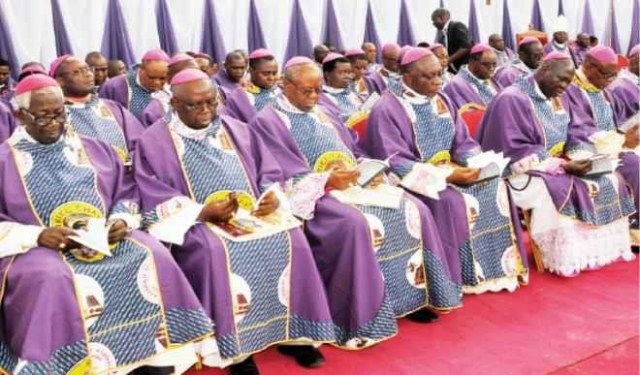
The Catholic Bishops Conference of Nigeria has written to President Muhammadu Buhari, on the state of insecurity in Nigeria.

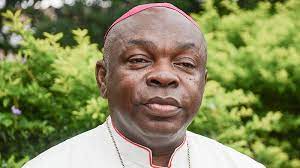
Titled, “Urgent call to the Federal Government to be open to criticism in addressing the pervading insecurity in Nigeria’, the letter was signed by Archbishop of Benin City, Augustine Akubeze, who doubles as the President, Catholic Bishops’ Conference of Nigeria.

In the letter, the bishops advised Buhari not to waste his time focusing on the allegation that some religious and political leaders are plotting a coup.

“While we reject any call for the destabilisation of Nigeria or military takeover, we nonetheless say to the Federal Government of Nigeria, led by President Muhammadu Buhari, there is no need to focus your energy, time and resources in any form of propaganda against religious leaders who disagree with your performance”, the bishops said.

They advised that government should rather focus on keeping the citizens safe and suggested the need for a security summit.

The letter read in full:

On behalf of Catholic Bishops of Nigeria ,I greet all Nigerians. at home and in the diaspora. Thank you all for your patience regarding the expectations of rapid development promised by various democratic governments.

Since we returned to democratic rule on 29 May 1999 after several failed military dictatorship, many Nigerians who experienced the brutality of the military are aware that a return to such days is not the prayer or desire of Nigerians.

The Catholic Church in Nigeria, through the leadership of the CBCN, has spoken several times about the need for us to ensure that our democracy works for every Nigerian and not for only a few privileged politicians or those connected to them.

We have, like other Nigerians, seen broken promises made by political leaders. The members of the CBCN, like other religious leaders, have spoken against what we -considered Government failure concerning the constitutional obligation to protect the lives and properties of Nigerians; to work for the welfare of everyone, to protect freedom of religious expression; to protect everyone against discrimination on ethnic or religious grounds or any other forms of discrimination. All these are entrenched in the Nigerian Constitution.

Every Nigerian is a stakeholder in the affairs of the country. Every Nigerian has the right to express themselves in a manner that does not incite people to violence or chaos whenever they perceive that the elected Government is failing. A Nigerian does not need to be a registered political party card-carrying member before speaking about the failing economy, the daily killings and kidnappings of students, older men and women; babies and infants; people being killed in IDP camps and even in their homes by insurgents.

Every reasonable Nigerian is sick to the stomach to read or hear of a Governor running from insurgents who want to kill him in the State where he is constitutionally the chief security officer. Nigerians are tired of hearing of bandits taking youths in the University and executing some of them, while others are kept to be used to bargain for ransom. The insecurity is leading to a daily loss of lives and properties in every part of the country. These facts are indisputable. A country where students are no longer safe in schools nor farmers safe in their farms does not have a future to look to.

In the midst of all these, the Presidency recently stated that some religious leaders and some Nigerian politicians are plotting to destabilise the country. The spokesperson for the Nigeria Army noted that there is no plan by the military to take over democratically elected persons. While we reject any call for the destabilisation of Nigeria or military takeover, we nonetheless say to the Federal Government of Nigeria, led by President Muhammadu Buhari, there is no need to focus your energy, time and resources in any form of propaganda against religious leaders who disagree with your performance.

There is no need to spend so much of your time trying to blackmail anyone who criticises your Government. We speak out because we do not want Nigeria to collapse. We are not speaking out for the APC Government to fail. We are speaking out so that Nigeria will not fail. APC is not the owner of Nigeria; Nigeria is owned by Nigerians irrespective of political affiliation. APC Government must learn to listen to every Nigerian, both political actors in other parties and non-political actors in Nigeria and the diaspora. It is not out of place to call for a security summit in whatever form it may take as long as it leads to the unity, peace, justice, progress and protection of Nigerians.

The Federal Government must be transparent with every Nigerian in the struggle to revive our economy, industrialise the nation, objectively deal with corruption and significantly reduce the high level of insecurity and unemployment.

In every democracy, the welfare of the citizens is of great concern to the President. From time to time, Presidents address the people and give an account of the state of affairs in the country. Presidents of countries grant interviews to the media who are the watchdogs of democracy. But in Nigeria, we hardly hear directly from our President. Most of the time, we hear from “the Presidency.” Nigerians did not elect presidential media spokespersons.

Nigerians do want to hear directly from their President and hear words that are matched with actions.

To every religious leader, let us not use inflammatory words that distort the real message we are sending to this Government. We must be united in the fight for our common destiny as a people. It must be clearly stated to the Federal Government that if they continue to ignore the constructive criticisms and recommendations of Nigerians from every sector, the country will collapse and become ungovernable. We are speedily getting there. Police stations are being burnt, our gallant military men and women are being killed, barracks are attacked, IDP camps are attacked, farmlands are invaded, youth unemployment is at its highest, private sectors are not giving enabling environment to thrive, and appointments to offices are not reflective of our diversities; the complaints are almost endless – could the sounds signalling a collapsing nation be louder than this?

In Nigeria, the Catholic Church wants the Federal Government to call for a meeting of all stakeholders to have a sincere discussion on the way forward. Such discussions must seek how to implement the much talked about restructuring and devolution of power down to the local government level.

Let us continue to pray to God to grant the Federal Government and other State actors the wisdom and courage to bring peace and justice to every Nigerian. No Government leader should watch the breakdown of law and order in Nigeria. It is our collective obligation to make Nigeria successful. As religious people, we entrust Nigeria to the hands of God and pray that we may respond to the voice of God calling us out of this crisis.

May God bless Nigeria and keep her safe. Amen.

Sincerely yours in Christ,
Augustine Akubeze,
Archbishop of Benin City
President, Catholic Bishops’ Conference of Nigeria
Loading

News

Group Urges Osogbo Residents to Ignore ‘Uncertain’ Governorship Promises

Published

on

Group Urges Osogbo Residents to Ignore ‘Uncertain’ Governorship Promises

Group Urges Osogbo Residents to Ignore ‘Uncertain’ Governorship Promises

OSOGBO – A socio-political group, the Osogbo Progressive Youth Movement, has cautioned indigenes of Osogbo against supporting political ambitions based on what it described as uncertain future promises, urging residents to prioritize performance, accountability, and strategic political interests in making electoral decisions.

In an open letter addressed to Osogbo indigenes at home and in the diaspora, the group’s leader, Comrade Jimoh Oyekola Ajayi, warned against what he termed “political deception” and attempts to persuade the people of Osogbo to support Governor Ademola Adeleke’s second-term ambition on the premise that Osogbo would subsequently have the opportunity to produce the next governor of Osun State.

Ajayi described such arguments as speculative and lacking any concrete guarantee, stressing that political realities could change significantly before the end of another four-year tenure.

According to him, those promoting the narrative have failed to answer a critical question regarding who can guarantee that political power would eventually rotate to Osogbo after the current administration.

He argued that politics is driven by changing circumstances and competing interests, noting that other zones and senatorial districts within the state are likely to pursue their own governorship ambitions when the time comes.

“Politics does not operate on assumptions. No one can predict with certainty what political realities will exist after another four years,” he stated, adding that asking Osogbo people to make political sacrifices today based on future arrangements that are not guaranteed would amount to a risky gamble.

READ ALSO:

The youth leader further noted that governorship rotation is not backed by any constitutional provision, explaining that while political balancing may influence power-sharing discussions, there is no law compelling any political zone to relinquish its ambitions in favour of another.

He therefore urged residents of the state capital to assess political parties and leaders based on their performance, track records, and ability to fulfill promises rather than relying on projected future benefits.

Ajayi pointed to previous political promises relating to representation at the National Assembly level, including senatorial and House of Representatives positions, which he said were fulfilled and therefore offered a more reliable basis for political confidence than speculative future calculations.

The open letter also highlighted what he described as the importance of political relevance and strategic alliances in securing development opportunities for Osogbo.

According to him, the influence of President Bola Ahmed Tinubu, former Osun State governor Bisi Akande, and former governor Gboyega Oyetola remains significant within Nigeria’s political structure.

He maintained that political influence often translates into access to federal opportunities, developmental projects, appointments, and other benefits capable of advancing the interests of a community.

Ajayi also argued that political strategy should not be condemned when employed to protect the interests of Osogbo people, noting that Governor Adeleke himself maintains cordial relations with President Tinubu despite belonging to a different political platform.

“Politics is not driven by sentiments alone; it is driven by interests and long-term planning,” he stated.

The youth activist accused some political actors of asking Osogbo residents to exchange certainty for uncertainty by promoting future governorship aspirations without any binding assurances.

He consequently called on sons and daughters of Osogbo worldwide to remain politically conscious, ask critical questions, demand accountability from political leaders, and resist attempts to influence their decisions through promises that cannot be guaranteed.

“Our loyalty should first and foremost be to the growth, development, and political advancement of Osogbo,” Ajayi said.

He emphasized that the future of Osogbo should be built on strategic thinking, unity of purpose, political awareness, and leadership capable of delivering on commitments.

The open letter concluded with a call for wisdom and foresight in protecting the political future of Osogbo, while praying for continued peace and progress in Osun State and Nigeria.

Group Urges Osogbo Residents to Ignore ‘Uncertain’ Governorship Promises

Loading

Continue Reading

News

CENTCOM: US Forces Intercept Iranian Ballistic Missiles Targeting American Troops in Kuwait

Published

on

CENTCOM: US Forces Intercept Iranian Ballistic Missiles Targeting American Troops in Kuwait

CENTCOM: US Forces Intercept Iranian Ballistic Missiles Targeting American Troops in Kuwait

WASHINGTON – U.S. Central Command (CENTCOM) announced that American air defense systems successfully intercepted two Iranian ballistic missiles aimed at U.S. military personnel stationed in Kuwait, marking a significant escalation in the ongoing shadow war between the two nations.

The Pentagon confirmed that the intercepted projectiles were “defeated immediately” by U.S. forces, resulting in zero American casualties or damage to equipment. The incident occurred as U.S. assets were conducting “self-defense strikes” against Iranian radar and drone sites located on Goruk and Qeshm Island.

According to CENTCOM officials, the missile launches from Iranian territory were detected in real-time. U.S. air defense batteries, including Patriot systems reportedly based at key Kuwaiti installations, engaged the incoming ballistic missiles before they could reach their intended targets—identified as American service members and assets on Kuwaiti soil.

READ ALSO:

“Our forces retain the inherent right to self-defense and will take decisive action to protect American lives,” a CENTCOM spokesperson said in a statement. “We will continue to monitor the situation closely.”

In a coordinated response, Kuwait’s own air defense network was also activated. Kuwaiti military sources confirmed that their forces successfully engaged several hostile drones and missiles in the vicinity, working in tandem with U.S. batteries to create a layered defensive shield over the country.

The interception comes at a particularly volatile moment, as the Biden administration has been engaged in months of backchannel ceasefire and nuclear negotiations with Tehran. Officials on both sides had recently signaled a willingness to de-escalate, but Thursday’s attack suggests hardliners within the Iranian regime may be seeking to undermine diplomatic efforts.

Regional analysts warn that the attack represents a deliberate provocation. “Targeting U.S. personnel directly with ballistic missiles is a significant tactical escalation,” said a former CENTCOM adviser. “The fact that it occurred during active ceasefire talks indicates how fragile the security situation remains.”

The Pentagon has declined to comment on potential retaliatory actions. However, U.S. Defense Secretary Lloyd Austin was briefed immediately following the incident, and the White House confirmed that President Biden is reviewing all options.

As of press time, the Islamic Revolutionary Guard Corps (IRGC) has not issued a formal statement regarding the failed missile launch. Tensions in the Persian Gulf remain at their highest level since the U.S. drone strike that killed General Qassem Soleimani in 2020.

For U.S. troops stationed across the Gulf region, the interception serves as a stark reminder of the constant threat environment. A senior U.S. defense official reiterated the American stance: “Make no mistake—any attack on our forces will be met with a response, on our terms, at a time and place of our choosing.”

CENTCOM: US Forces Intercept Iranian Ballistic Missiles Targeting American Troops in Kuwait

Loading

Continue Reading

News

US Offers $3.5m to Monitor Religious Violence in Nigeria

Published

on

US Offers $3.5m to Monitor Religious Violence in Nigeria
U.S President Donald Trump

US Offers $3.5m to Monitor Religious Violence in Nigeria

ABUJA – The United States Department of State has announced a $3.5 million (approximately ₦5 billion) funding opportunity aimed at improving the documentation and reporting of religious freedom abuses in Nigeria, while also criticising what it described as inadequate responses by Nigerian authorities to attacks on faith communities.

The initiative, unveiled by the Office of International Religious Freedom (IRF) under the Bureau of Democracy, Human Rights, and Labour, seeks applications from organisations capable of strengthening reporting efforts on attacks linked to religion and belief across the country.

According to the notice of funding opportunity released on May 22, 2026, the programme will run for between 24 and 48 months, with one award anticipated under either a grant or cooperative agreement. The State Department stated that the project aimed to enhance efforts to monitor and document abuses committed by both state and non-state actors in Nigeria.

“The Office of International Religious Freedom announces an open competition for organisations interested in submitting applications for projects that improve documentation and reporting efforts on religious freedom abuses in Nigeria, for accountability, advocacy, and memorialisation,” the notice stated.

The document referenced violence linked to Boko Haram, Fulani ethnic militias, ISIS-West Africa, and other armed groups, saying attacks have affected both Christians and Muslims. “Documenters, human rights and religious freedom advocates, religious leaders and community members, academics, journalists, and survivors have contributed to an evidence base that illustrates the extreme levels of violence perpetrated by Boko Haram, ISIS-West Africa, Fulani ethnic militias, and other armed actors against Christians and Muslims,” the notice said.

The US government also criticised what it described as inadequate responses by Nigerian authorities to attacks on faith communities. “Civil society reports indicate that authorities regularly fail to respond in a timely or effective manner to violent attacks against civilians and faith communities, and particularly attacks against Christians,” the document stated. It added, “This leads to widespread impunity for violence which encourages more violence, leading to further abuses and displacements.”

READ ALSO:

The notice further alleged that some security personnel had raided places of worship while searching for suspected criminals. “There are also credible reports of Nigerian security personnel raiding places of worship and injuring clergy and congregants in search of alleged criminals,” it said.

The State Department said the funding initiative followed President Donald Trump’s decision to designate Nigeria as a “Country of Particular Concern” (CPC) over religious freedom issues in November 2025. “President Trump’s decision to designate Nigeria as a Country of Particular Concern placed a spotlight on the severity of these longstanding and worsening problems,” the document stated.

The CPC designation followed a joint report by the House Appropriations Committee and House Foreign Affairs Committee, which described Nigeria as “the most dangerous place in the world to practice the Christian faith.” According to a 2023 Vatican report, over 18,000 churches have been destroyed in Nigeria since 2009 in attacks by Boko Haram militants, Fulani herdsmen, and others. The report recommended a bilateral agreement with Nigeria to protect vulnerable Christian communities, sanctions on perpetrators, and the repeal of sharia codes and criminal anti-blasphemy laws.

President Trump had announced the redesignation on October 31, 2025, via his Truth Social platform, stating: “Christianity is facing an existential threat in Nigeria. Thousands of Christians are being killed. Radical Islamists are responsible for this mass slaughter. I am hereby making Nigeria a ‘COUNTRY OF PARTICULAR CONCERN’.” This is the second time in five years that Nigeria has been placed on the CPC list. The first came in December 2020 during Trump’s earlier administration, citing systematic and ongoing violations of religious freedom. The Joe Biden administration removed Nigeria from the list in November 2021.

The $3.5 million monitoring initiative comes amid broader efforts by the US Congress to impose stricter conditions on aid to Nigeria. A House resolution introduced in November 2025 commending Trump’s CPC redesignation called for targeted sanctions under the Global Magnitsky framework against individuals and entities responsible for severe violations of religious freedom in Nigeria, including the Miyetti Allah Cattle Breeders Association of Nigeria (MACBAN).

The resolution also urged the State Department to condition US foreign assistance on the Nigerian government taking “immediate and effective steps to prevent religious persecution, prosecute perpetrators of violence, take action to care for the millions of internally displaced persons, and uphold constitutional protections for religious freedom.” Republican lawmaker Riley Moore, a member of the House Foreign Affairs Committee, had previously sent a letter to US Secretary of State Marco Rubio, urging “immediate action” to address what he called the “systematic persecution and slaughter of Christians in Nigeria.”

The IRF said proposals submitted under the programme should aim to improve accountability for violations through “monitoring, documenting, and reporting of such abuses committed by either state or non-state actors in Nigeria.” Applicants are expected to prioritise activities in the Middle Belt and identify at least four states where projects would be implemented. The Middle Belt region has experienced recurring security challenges and inter-communal tensions.

The funding opportunity is open to foreign and US-based non-profit organisations, public international organisations, higher education institutions, and for-profit entities, although the department said it prefers working with non-profit groups. Applications are due by 11:59 p.m. Eastern Time on Thursday, July 9, 2026.

The Federal Government has consistently rejected allegations of religious persecution, maintaining that insecurity affects all citizens regardless of faith, while also stating continued cooperation with the US on counterterrorism and security reforms. President Bola Tinubu rejected the CPC designation, describing it as a misrepresentation of Nigeria’s reality. “Nigeria is a democracy with constitutional guarantees of religious liberty,” he said, stressing that the country does not sanction religious persecution.

The Nigerian government has insisted that the country’s security challenges affect citizens of different faiths and ethnic backgrounds, and that violence is rooted in a complex mix of terrorism, criminality, resource conflicts, and communal disputes. However, critics point to the scale of violence documented over the years. According to a 2023 report by Open Doors, Nigeria accounts for 89 percent of Christians martyred worldwide. An August 2024 report from the Observatory of Religious Freedom in Africa found that approximately 56,000 people died in attacks and about 22,000 people were abducted by terror groups in Nigeria between October 2019 and September 2023.

US Offers $3.5m to Monitor Religious Violence in Nigeria

Loading

Continue Reading

Trending