

Entertainment
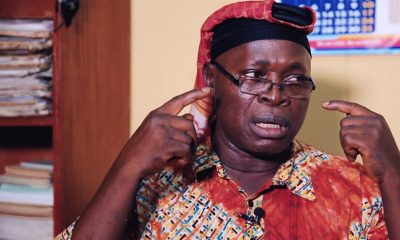
Charly Boy collected N70m to back 50 Cents against me — Edris Abdulkareem

Rapper, Eedris Abdulkareem, has accused Charles Oputa, aka Charly Boy, of receiving N70 million from Nigerian Breweries PLC to blackmail him over his face-off with American rapper, 50 cents, in 2004.
When 50 cents was invited to perform alongside other indigenous talents by Nigerian Breweries, he and his crew were challenged by Abdulkareem, who was asked to vacate the first class area reserved for him (50 cents).
Abdulkareem in October 2020 reacted to a viral interview of an American singer, Yung Buckhorn, who was in Nigeria with 50 cents when the fight ensued.
Buck narrated how Abdulkareem stood against the whole crew (50 cents) when he was asked to vacate the First Class seat for 50 Cent.
However, Abdulkareem reacted to the video by sharing his part of the story.
Eedris explained in a statement: “I always try as much as I can to refrain from talking about this issues many a time when reporters and inquisitive fans pose questions about it, but for clarity sake, based on Young Buck’s statements on the matter in a now viral radio interview in the US, I will just lay down a few facts
“In my contract with the organisers of the 4City concert tagged ‘Star Mega Jamz’, I requested for specific simple things which they agreed to vis; GIVE ME THE EXACT TREATMENT YOU ARE GOING TO GIVE TO 50CENT!
“If you’re giving him and his crew 50 bottles of any exotic wine or spirits, that’s what I and my crew gets.
READ ALSO:
- North Korea fires fresh missiles in response to US sanctions
- Benue Assembly amends Benue grazing law, provides stiffer penalties
- 2023: Trouble for Atiku, Tambuwal, Kwankwaso as Afenifere, Ohanaeze reject northern candidates
“If you’re giving him first class, that’s what I get and same goes for every other thing including lodgings, logistics and the likes.
“All these were readily agreed to by the organisers without any qualms, only for them to turn around and started acting funny and playing smart without been clever!
“They breached our mutual and contractual agreements and threw caution to the wind immediately the Americans showed up in their mad haste to idolise the Americans while debasing, abusing and toying with our own homegrown music talents who were on that tour.
“Indeed, that was the old order, that was how they usually treat our indigenous artistes before Guinness Breweries brought the Haitian-American Superstar Wyclef Jean, a few months before the Mega Jamz.
“Everybody in the industry is aware of the undeniable fact that the Guinness show added a lot of value and color to our industry and brought some new vistas of hope and opportunities our way.
“There’s no gainsaying the fact that I refused to be used and abused that way, and I simply and most humbly demanded for what I deserved by sitting in one of the first class seats on our way to Benin City.
“This event as narrated by Young Buck took place a day after the TBS Lagos show where 50’s explicit lyrics oozing sex and promoting violence caused a pandemonium, with people raping and wreck havocs everywhere.
“The matter was even made worst when he threw crispy N200 notes to the crowd, which some mistook for dollars and a mad rush started…well, this is different story for a different day.
“Back at the chartered aircraft, after waiting alongside every other participant for more than 2 hours for 50Cent and his crew to arrive the airport, they came in and asked me in a very condescending tone and attitude to vacant the seat and go and seat in the economy class with the rest of the Nigerian acts, that the entire area was reserved for 50!
“This was done rudely while they were uttering profanities that are alien to our world, and being a proud and unrepentant African and son of my mother, I refused to be used as a mere rag and toy to be tossed around…and the rest is history!
“And that was when all the things Young Buck recounted started happening! I stood up to be counted for myself as a creative artiste and for all other creative artistes who had been serially used and abused, severally.
“I stood up for all creative talents who had been dishonored and spat upon!
READ ALSO:
- Man kills neighbour who accused him of attempt to defile his daughter
- Boko Haram Returns To Chibok, Kills Three, Burn Down Houses
- Boko Haram Returns To Chibok, Kills Three, Burn Down Houses
- AFCON: Lagos State Govt establishes 10 viewing centres
“I knew it was a dangerous road to travel when I embarked on the journey, I knew it was going to affect me somewhat as some promoters and truth-haters would naturally gang up against me.
“Yes indeed, I knew the risks involved and so much more, but most importantly, I also knew that if I made that sacrifice, it will impact positively on the industry as a whole in the long run.
“So, I had to make the decision between self preservation, in this instance, protecting my career and making my money without any care in the world or be myself and stand up against those usurpers and help build up a new and more viable industry where people get paid handsomely and respectfully for their talents!
“I took the second option…I staked my career and fought that battle…and once again today, the rest is history…
“So, when some young cats come out here and start disrespecting their elders and peers just because they are getting paid handsomely for their talents, they better check themselves before they wreck themselves.”
Meanwhile, Abdulkareem disclosed on Friday in a post on his official Instagram page, recalling how CharlyBoy collected evidence of the attack on Abdulkareem by 50 Cent and Gunit from DJ Tee, who recorded it.
CharlyBoy commented about the incident, saying: “The people wey know dis story go tell you say, after I show 50cents people craze, I made them leave Nigeria that day back to the states, forgetting the rest of their Nigerian tour.
“For beating my ungrateful son, Edris I drove them back to America.
“Nigerian Breweries head scatter, them come arrange package the IG of police, I was locked up in police cell for almost 1 month.
“Sometimes in life, the people that you fight for fight you back out of their ignorance.”
Eedris replied him by calling him a fake activist who is only concerned about money and not leadership.
Edris said: “Shut up, you collected 70million from Nigerian breweries to blackmail me, you also collected the evidence of the attack by 50cent and Gunit from DJ Tee who recorded everything that happened in the plane on that faithful day.
“Dj T was arrested by the Nigerian police to shut him up and then he relocated to the US. Nigerian artist the likes of P Square, Kc Presh, Emoney were chased out of the backstage with koboko by the same organiserd that you conspired with so shut the fuck up you are a betrayal and a fake activist you are all about money not leadership.
“Anyways the full story is projected into a full album. I want to use this opportunity to thank @buckshotbdi for exposing the real truth of what happened inside that plane JAH BLESS.”
Eagle




Entertainment
Phyna, Nkechi Blessing Take Social Media Feud To Boxing Ring In Lagos
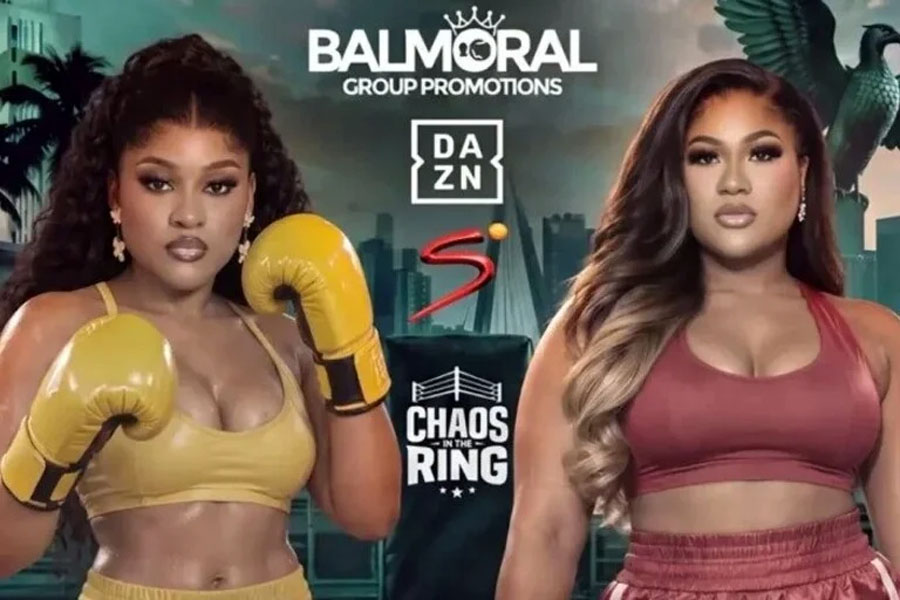
Phyna, Nkechi Blessing Take Social Media Feud To Boxing Ring In Lagos
Reality TV star Phyna and Nollywood actress Nkechi Blessing Sunday are set to face each other in a celebrity boxing match in Lagos after a recent public disagreement between the two entertainers.
The bout, billed as “Phyna vs Nkechi,” is scheduled for October 1, 2026, at the Federal Palace Hotel, Lagos, as part of the Chaos in the Ring series organised by Balmoral Group Promotions.
The organisers announced the celebrity contest on September 18, releasing promotional material featuring both entertainers in boxing gear and presenting the encounter as a move from their online exchanges to the boxing ring.
The proposed Phyna-Nkechi Blessing boxing match is expected to be one of the celebrity attractions on the October 1 card, which will also feature other entertainment personalities and professional boxing contests.
Phyna, whose real name is Josephina Otabor, and Nkechi Blessing have been involved in a recent social media exchange that generated reactions among their followers.
The disagreement reportedly followed comments by Nkechi Blessing about Phyna’s frequent involvement in online disputes.
Phyna subsequently responded by questioning the actress’s decision to publicly address her and referenced an earlier interaction between them involving a movie project.
The exchange continued online before the organisers announced the boxing encounter.
Following the announcement, both entertainers indicated that they were prepared for the contest.
Nkechi Blessing shared the promotional material on her social media platform and issued a message ahead of the bout, while Phyna also reacted to the announcement and signalled her readiness to participate.
It remains unclear whether the earlier disagreement will have any relevance to the formal competition itself, as the event organisers have not indicated that the celebrity contest will involve anything beyond the rules governing the scheduled boxing exhibition.
READ ALSO:
- Edo Police Arrest Cleric Over Alleged Abduction, Sexual Abuse Of Five Girls
- Abia Police Rescue Four-Day-Old Baby, Arrest Four Over Alleged Theft, Trafficking
- Rent Crisis Deepens as Tenants Struggle With Soaring Housing Costs in Calabar, Lagos, Abuja
Details including the exact number of rounds, weight categories, protective equipment and other specific rules for the celebrity bout had not been fully disclosed in the latest reports.
The Chaos in the Ring event will feature a combination of celebrity and professional boxing.
Another celebrity contest on the programme is expected to feature content creator Carter Efe against social media personality Speed Darlington.
The professional headline bout is scheduled to feature Nigerian cruiserweight Godday “Zodsolo” Appah against Ghanaian-born British boxer Seth “Freezy Macbones” Gyimah.
Other professional bouts announced for the programme include Eworitse Ezra Arenyeka versus Lekan Muibi, Basit “Joker Boy” Adebayo versus Fatiu Ijomoni, and Yusuf Adeniji versus David Tagoe.
The event is expected to be broadcast on DAZN and SuperSport, extending the reach of the programme beyond the venue in Lagos.
The Chaos in the Ring series has previously featured Nigerian entertainers in boxing contests, including Portable, Charles Okocha, Carter Efe and Speed Darlington.
The celebrity bouts have attracted considerable attention because they combine entertainment personalities, social media rivalries and organised boxing events.
The upcoming encounter between Phyna and Nkechi Blessing follows that format, with the organisers using the public interest generated by their recent online exchange as part of the promotion for the October 1 event.
For the two entertainers, however, the contest will require preparation beyond their social media exchanges as they get set to appear in a regulated boxing environment.
The organisers are expected to provide further information on the bout format, tickets and other event arrangements ahead of the programme.
The Phyna vs Nkechi Blessing boxing match is therefore set to become one of the major celebrity attractions at the October 1 Chaos in the Ring event in Lagos.
Phyna, Nkechi Blessing Take Social Media Feud To Boxing Ring In Lagos
Entertainment
“She Wanted to Stay Single”: Rema Opens Up About Rejection That Inspired Hit Song ‘Oh No’
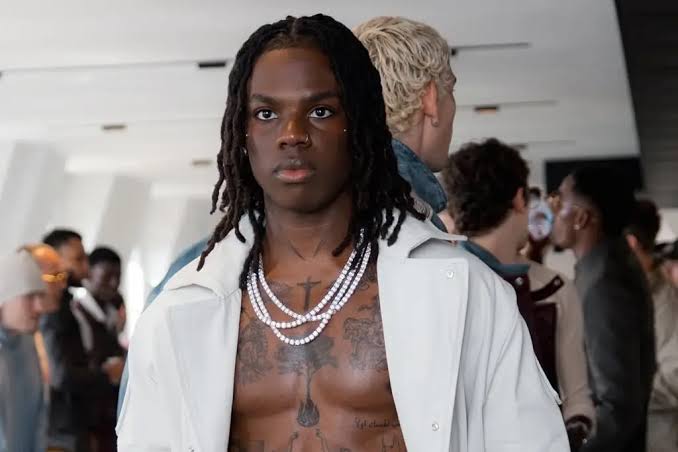
“She Wanted to Stay Single”: Rema Opens Up About Rejection That Inspired Hit Song ‘Oh No’
During a live stream with online creator Okiki, the 26-year-old Afrobeat star reflects on personal vulnerability and early stardom.
Nigerian music star Divine Ikubor, globally recognized as Rema, shared a candid look into his romantic life on Friday night, revealing that unreciprocated feelings directly inspired his hit track ‘Oh No.’
Speaking during an interactive live stream with content creator Okiki, the 26-year-old chart-topper recounted how an attempt to start an exclusive, serious relationship ended in sudden rejection when the woman declined to settle down.
According to Rema, the lady openly informed him that she preferred to enjoy single life and explore her personal autonomy rather than commit to a monogamous partnership. Consequently, the musician poured his emotional disappointment directly into the creative process, turning the painful heartbreak into the melodic foundation for ‘Oh No.’
Rather than masking the setback, he explained that sharing raw personal experiences allows him to connect genuinely with fans who navigate similar romantic dilemmas.
Furthermore, the Afrobeats phenomenon reflected on the broader emotional impact of global success, explaining that achieving runaway fame at age 17 forced his personal life to move at a breakneck speed.
To regain his footing, Rema noted that he is currently taking time out to step back, re-evaluate his priorities, and focus on grounded self-reflection. Ultimately, his candid remarks offer a rare, vulnerable perspective on the relatable personal trials that exist behind international superstar status.
“She Wanted to Stay Single”: Rema Opens Up About Rejection That Inspired Hit Song ‘Oh No’
Entertainment
Adunni Ade Reveals Christian Fans Unfollowed Her After Publicly Identifying as Muslim
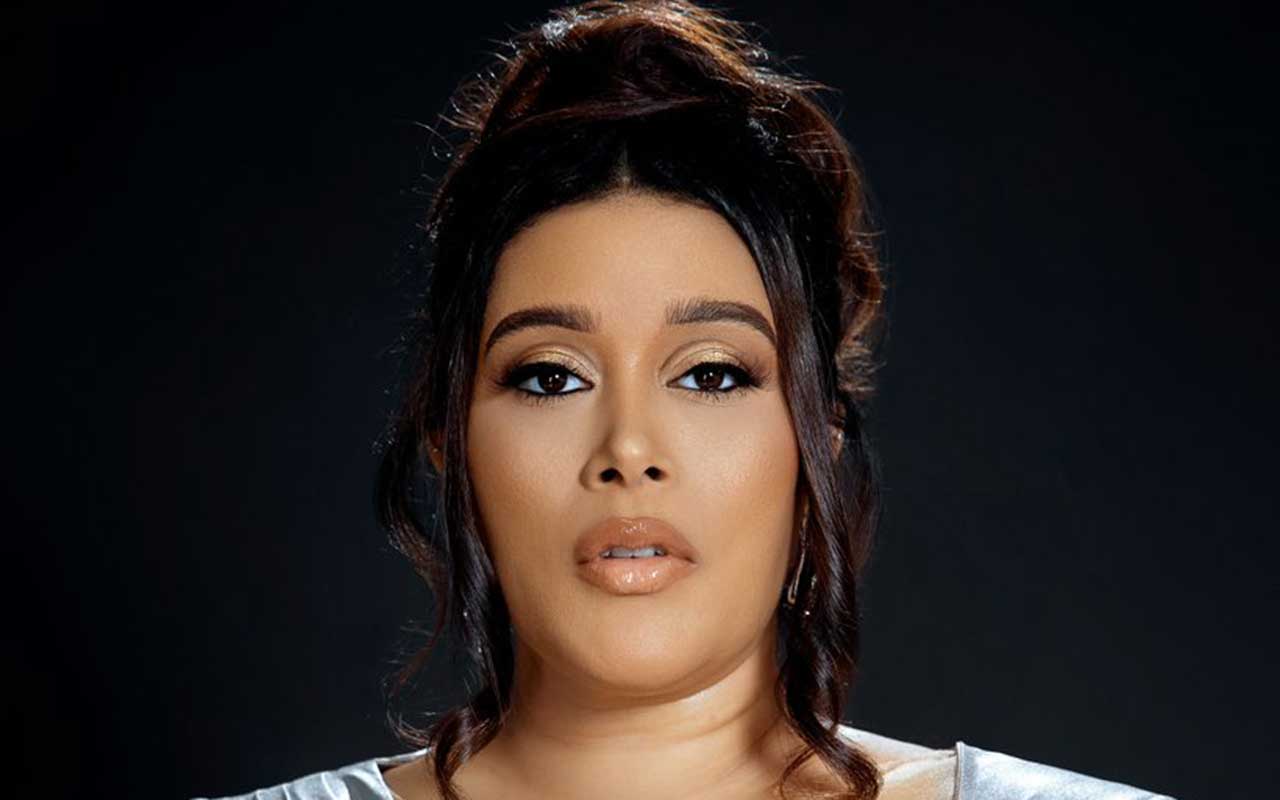
Adunni Ade Reveals Christian Fans Unfollowed Her After Publicly Identifying as Muslim
Nollywood actress Adunni Ade has opened up about the reaction she received after publicly identifying as a Muslim, revealing that some of her Christian fans unfollowed her because of her religious identity.
The actress said she initially found it difficult to openly discuss her faith because of what she described as the pressures associated with being a public figure in the Nollywood industry.
According to Ade, publicly identifying as a Muslim within the Nigerian film industry can be difficult, and she described the situation as “almost forbidden” based on her personal experience.
She explained that she eventually became tired of keeping her religious identity private and decided to be open about her faith.
Ade said the decision came with consequences, including losing some followers and receiving messages from people who questioned her choice.
“Some people unfollowed me. I got DMs from people trying to cast out spirits. Some people prayed for me,” she said while discussing her experience.
However, the actress added that she also received considerable support from Muslims, many of whom welcomed her more warmly after she publicly acknowledged her faith.
READ ALSO:
- Raphinha Runs Riot as Barcelona Thrash Racing Santander 7-2
- 2027: Sowore Rejects Utomi’s Coalition Talks, Says AAC Won’t Join Opposition Alliance
- Sani Abacha’s Son Emerges Kano PDP Governorship Candidate for 2027
Ade stressed that her decision to practise Islam should not be interpreted as an attack on Christianity or Christians.
She said she had experienced both Christian and Muslim religious environments and was not suggesting that Christianity was a bad religion. Rather, she explained that Islam was the faith that worked for her personally.
The actress’ comments have renewed attention on her long-standing and publicly discussed religious journey, which has included experiences with both Christianity and Islam.
Ade had previously spoken about her faith in 2020, explaining that she was born and raised Muslim but grew up in a family where different religious traditions were represented.
She said her father allowed his children to choose their preferred religion, while members of her extended family included both Christians and Muslims.
The actress also disclosed that she attended different Christian churches, including Mountain of Fire and Miracles Ministries (MFM), Redeemed Christian Church of God (RCCG), Christ Living Apostolic Ministry (CLAM) and Christ Apostolic Church (CAC).
Ade said she later returned to Islam on December 31, 2016, after reflecting on her religious identity and concerns about how people might react to her decision.
She said at the time that returning to Islam made her feel happier and more fulfilled.
Her religious identity also came under renewed public discussion in 2026 after she was seen attending an event at a Celestial Church of Christ in Lagos.
Following questions from social media users about whether she had returned to Christianity, Ade clarified that she remained a practising Muslim.
She explained that her presence at the church-related event was connected to her professional relationship with the celebrant and was not evidence of a change in her religion.
Ade’s latest comments therefore provide further context to a faith journey she has discussed publicly over several years.
While describing her experience as difficult at times, she maintained that her decision to openly identify as a Muslim was ultimately a personal one.
Her statement that being openly Muslim in Nollywood is “almost forbidden” reflects her personal experience and perception; it should not be taken as evidence of a formal industry-wide rule restricting actors from publicly identifying with a particular religion.
The actress’ disclosure has also highlighted the wider challenges public figures can face when personal beliefs become subjects of public discussion, particularly in an industry where celebrities often maintain diverse fan bases with different religious and cultural backgrounds.
Adunni Ade Reveals Christian Fans Unfollowed Her After Publicly Identifying as Muslim
-
 News2 days ago
NLC Backs ₦500 Petrol Demand, Workers Propose ₦500,000 Salary
-
 Politics2 days ago
Obi vs Soludo: ₦86.67bn Handover Figure Meets ₦127.37bn Debt Claim
-

 metro2 days ago
Saudi Arabia Rejects Nigeria’s Request for More 2027 Hajj Slots
-
 Education2 days ago
UK Student Visa: 63 Countries Exempt From Proof of Funds, Nigeria Excluded
-

 Health2 days ago
Lagos Intensifies Surveillance as Adulterated Palm Oil Raises Food Safety Concerns
-

 metro2 days ago
Nationwide Blackout Looms As Electricity Workers Give NAF Three-Day Ultimatum
-
 News3 days ago
MURIC Warns FG: Any Move Against Atiku Now Lacks Tact
-

 Politics10 hours ago
Osun APC Warns Adeleke Govt Over Alleged Victimisation of Local Govt Workers