

metro
Concern as FRSC data shows spike in fatal road crashes

Concern as FRSC data shows spike in fatal road crashes
The Federal Road Safety Corps is unarguably under fire as Nigeria has continued to witness a troubling rise in fatalities from road traffic crashes this year.
The first quarter of the year was marked by several tragic incidents.
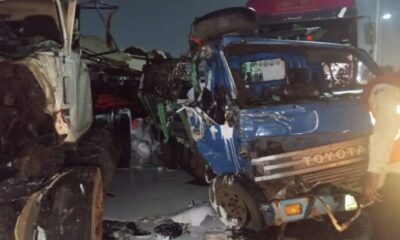
Nigerians wake up daily to disturbing reports of containers tragically dropping from trucks on passenger buses, cars and bystanders on the roadside; fuel tanker accidents crushing innocent people to death or igniting fire that claim scores of lives, consuming vehicles, buildings and other goods.
Between January and March 2025 (Q1), the FRSC recorded 2,650 crashes, resulting in 1,593 deaths and 9,298 injuries.
Compared to the same period in 2024, the number of fatalities rose by a staggering 8.3%, signalling an increase in the severity of these accidents. Injuries also jumped by 7.4% within the same period.
Among the most deadly corridors was the Jos–Lafia–Makurdi route, where 1,539 lives were lost in the first three months of the year—a chilling reflection of the high-risk nature of certain highways.
A recall of few examples shows on January 11 (Plateau State), a bus crash left 19 dead and 11 injured; January 22 (Ilorin, Kwara), a trailer-truck collision claimed 18 lives; February 1 (Ore–Lagos Road, Ondo), two buses collided and got burnt, killing 30; and on February 14 (Kano), a collision between a trailer and a goods vehicle killed 23, injuring 48.
While full data for April to June (Q2) has yet to be released by the FRSC, early signs suggest no improvement.
A few examples will suffice: On April 19, Ife–Ilesa Road, Osun State, a collision between a trailer and a Toyota Hilux killed five people, including a child.
On May 5, Abuja–Lokoja highway (Gada‑Biyu), a Peugeot bus tyre burst, plunging into a ditch and killing one person and six injured.
On June 1, Kano‑Zaria Expressway (Chiromawa Bridge), a bus veered off the bridge, 22 athletes were killed.
On June 7, Kyaramma, Jigawa State, a head-on collision between two Golf cars resulted in the death of nine, several others injured.
Five people died and several others were injured in an accident on Lagos-Ibadan Expressway (Soka area) involving trucks, cars and taxis.
In July, within just 48 hours between July 5 and 6, a total of 39 lives were lost in three separate crashes in Kano, Lagos and Ogun states.
On Zaria–Kano highway, 21 people were killed when a Toyota Hummer bus driving against traffic collided head-on with a trailer.
In Ogun State, 10 lives were lost on the Ijebu Ode–Obada Expressway due to wrong overtaking.
In Lagos, eight people died in a crash on the Mile 2–Badagry Expressway, caused by overspeeding.
All three crashes were linked to human error: wrong-way driving, reckless overtaking, and speeding.
These repeated patterns are some of the issues the FRSC was set up to address.
Before now, there were daily patrols on the highways by the FRSC officials (road marshals), motorists overspeeding or suspected to likely cause accidents would be flagged down, delayed or stopped outright especially if found to be drunk.
Poor road infrastructure and insecurity are other causes of accidents on the highways.
Mr Patrick Adenusi, technical director, Safety Beyond Borders, a road safety non governmental organisation, in a telephone chat on Wednesday, identified the major causes of accidents to include overloading by tanker drivers, use of alcohol and other dangerous drugs, and non-adherence to stipulated loading standard by oil marketing companies.
According to him, the poor condition of the highways, coupled with lack of road signages and fatigue suffered by drivers as a result of long driving time are also responsible for most of the accidents.
Many highways remain in a state of disrepair, forcing drivers into dangerous detours or risky maneuvers to make up for lost time caused by potholes or bandit-infested routes.
As Nigerians await the FRSC to release the second quarter statistics on road crashes by late July or early August, safety advocates are already warning of a potential surge in fatalities, especially during the rainy season when roads deteriorate further and visibility worsens.
Experts have thus called for stricter enforcement of traffic regulations; community-level awareness campaigns on safe driving; immediate repair of damaged roads; mandatory refresher training for commercial drivers, among other measures.
As deaths mount on Nigeria’s roads, the message is clear: this is no longer just a traffic issue—it’s a national emergency. With thousands already dead or injured in the first half of 2025, urgent, coordinated action is needed to reverse the tide before more lives are needlessly lost.






metro
Transporters Urge IGP Disu to Arrest Illegal Highway Tax Collectors
Transporters Urge IGP Disu to Arrest Illegal Highway Tax Collectors
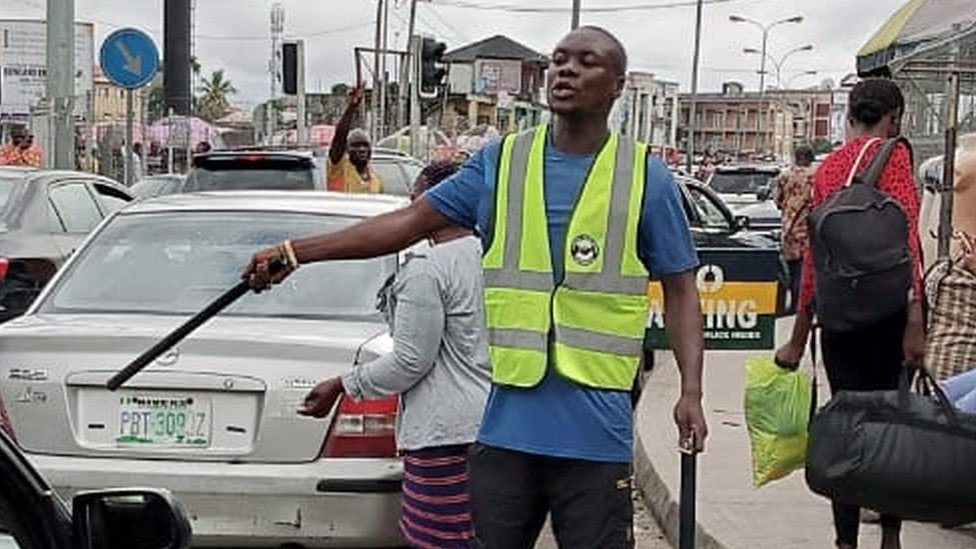
Transport operators have urged Inspector-General of Police Olatunji Disu to deploy personnel to enforce a Federal High Court order directing the removal of illegal roadblocks and revenue-collection points on federal highways across Nigeria.
The Heavy Duty Haulage and Transporters Welfare Association of Nigeria made the appeal in a letter to the IGP, requesting police action against individuals and groups allegedly operating unauthorised tax and levy collection points on major highways.
The association specifically requested the deployment of 20 police personnel to enforce the court order and arrest persons found collecting taxes, levies or other charges through illegal roadblocks.
The request followed a Federal High Court judgment delivered in Abakaliki, Ebonyi State, directing the police and relevant revenue authorities to remove roadblocks, checkpoints, barriers and other obstructions mounted on federal highways for the purpose of revenue collection.
Justice Hillary I. O. Oshomah, in the judgment delivered on July 13, 2026, ordered the authorities to supervise or ensure the immediate dismantling of unauthorised revenue-collection points on federal highways, expressways and roads.
READ ALSO:
- Army, DSS, Amotekun Kill ISWAP Commander Planning Attacks in Southern Nigeria
- 2027: Soludo Govt Accuses Peter Obi Of Plot To Destroy APGA
- MURIC Accuses OAU International School of Restricting Hijab-Wearing Students
The court also directed the police to arrest, detain, investigate and prosecute persons, groups or authorities found to have erected or operated such roadblocks in violation of relevant tax laws.
The transporters said enforcement of the order would help address what they described as illegal taxation, extortion and harassment of road users, particularly commercial transport operators.
National Chairman of the association, Oraka Nnaemeka, and Secretary-General, Ayobami Makinde, said unauthorised collections along highways had placed additional financial pressure on truckers and other transport operators.
According to the association, the proliferation of roadside levies increases the cost of transporting goods and could ultimately contribute to higher prices for consumers.
The group therefore called on the Nigeria Police Force to implement the court order and protect legitimate transport operators from unauthorised revenue collectors and other individuals obstructing the movement of goods.
The association also argued that removing illegal checkpoints would improve the efficiency of the nation’s road transportation system and reduce delays faced by trucks travelling between states.
The court case involved Ayobami Makinde, Musamad Nigeria Limited and the Incorporated Trustees of Heavy Duty Haulage and Transporters Welfare Association, Bwari, Abuja, against the Nigeria Police Force, the Nigerian Army and the Joint Revenue Board.
The demand comes amid longstanding complaints from transport operators about multiple taxation and illegal levies imposed on commercial vehicles travelling across Nigeria.
The transporters are now seeking immediate police enforcement of the court order, particularly on federal highways where unauthorised revenue collection remains a concern for operators moving goods across the country.
Transporters Urge IGP Disu to Arrest Illegal Highway Tax Collectors
metro
Army, DSS, Amotekun Kill ISWAP Commander Planning Attacks in Southern Nigeria
Army, DSS, Amotekun Kill ISWAP Commander Planning Attacks in Southern Nigeria
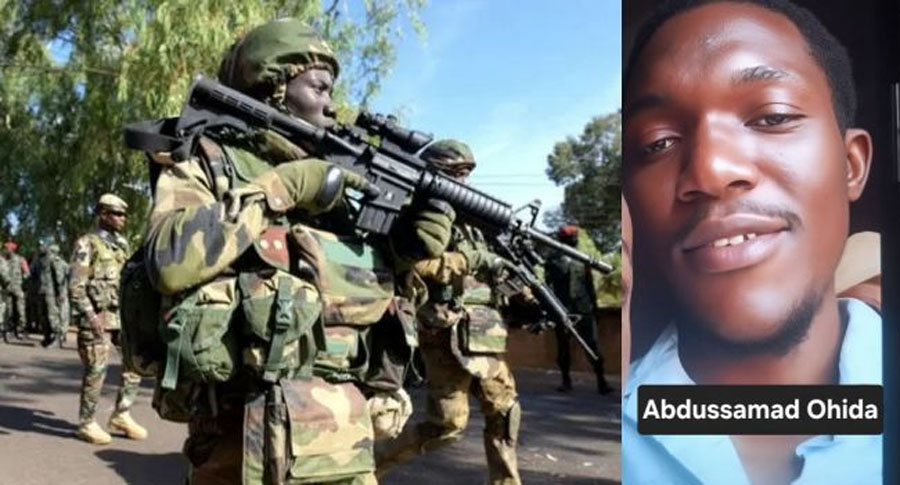
A joint operation involving the Nigerian Army, Department of State Services (DSS) and the Western Nigeria Security Network (Amotekun) has killed a senior Islamic State West Africa Province (ISWAP) commander, Abdussamad Ohida, also known as Anwar, in Owo, Ondo State.
Ohida was reportedly killed alongside other members of the terrorist group during an intelligence-led operation targeting an ISWAP hideout in Owo forest.
Security sources said the operation disrupted alleged plans by the group to launch terrorist attacks in southern Nigeria during the forthcoming Christmas and New Year period and cause disruption ahead of the 2027 general elections.
The intelligence that led security agencies to Ohida was reportedly developed by the DSS and strengthened by information obtained during the interrogation of Abu Ikrimah, also known as Abu Uwais, a former ISWAP leader in Central Nigeria who was arrested in 2023.
Ohida had reportedly served as Ikrimah’s deputy before taking on a more prominent leadership role following his arrest. Security sources said he subsequently coordinated ISWAP activities across parts of the North-Central and southern regions of Nigeria.
The intelligence was reportedly corroborated with assistance from security partners in the United Kingdom, leading to the operation in Owo.
Ohida had previously been linked by Nigerian authorities to several deadly attacks across the country.
Government sanctions records identify Abdulsamat Abdulkareem Ohida as a senior ISWAP commander, or Qaid, operating in Okene. He was also linked to the June 5, 2022 attack on St Francis Catholic Church in Owo, where worshippers were killed and others injured.
READ ALSO:
- 2027: Soludo Govt Accuses Peter Obi Of Plot To Destroy APGA
- MURIC Accuses OAU International School of Restricting Hijab-Wearing Students
- Israeli Forces Reportedly Destroy School, Burn Homes in Southern Lebanon
He was further linked to the July 11, 2022 attack on Kuje Correctional Centre in Abuja, as well as attacks on security formations in Kogi and Niger states.
Security sources also attributed to him the December 31, 2025 attack on the Ipele Divisional Police Station in Owo, during which several weapons were reportedly stolen before the facility was destroyed with explosives.
Other attacks attributed to the commander include the July 28, 2022 attack on a military checkpoint along the Suleja-Zuba Road in Niger State, the April 23, 2022 attack on Ogaminana Police Station in Adavi Local Government Area of Kogi State, and the February 7, 2022 attack on the Okene Area Command Police Station.
The December 24, 2020 attack on a naval checkpoint in Okene, which reportedly killed two naval personnel, was also linked to him by security sources.
The latest operation is significant because of concerns over the expansion of terrorist networks into southern Nigeria, away from areas traditionally associated with insurgent activity.
Security sources described Ohida’s reported death as a major setback for the ISWAP network in the region and said the operation had disrupted plans for further attacks.
However, authorities have yet to publicly release a comprehensive account of the operation, including the exact number of other ISWAP members reportedly killed or the full details of the intelligence and military engagement.
The operation comes amid intensified efforts by Nigerian security agencies to prevent terrorist groups from establishing footholds in the South-West and other parts of southern Nigeria, particularly as the country approaches the festive season and the 2027 elections.
Army, DSS, Amotekun Kill ISWAP Commander Planning Attacks in Southern Nigeria
metro
MURIC Accuses OAU International School of Restricting Hijab-Wearing Students
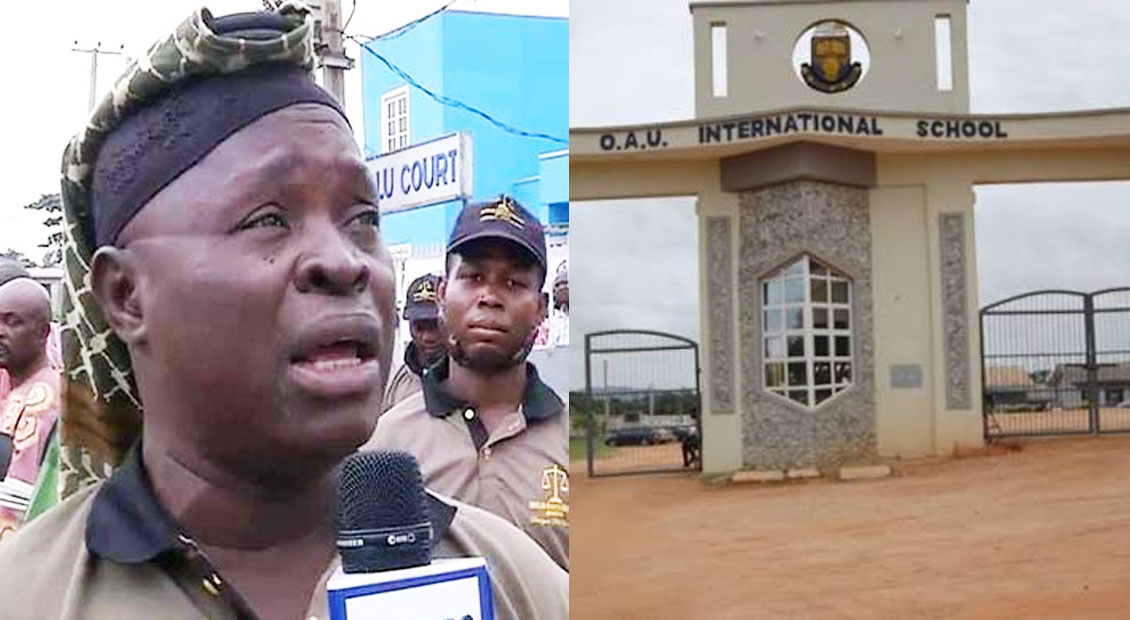
MURIC Accuses OAU International School of Restricting Hijab-Wearing Students
The Muslim Rights Concern (MURIC) has accused the management of the International School, Obafemi Awolowo University (OAU), Ile-Ife, Osun State, of restricting hijab-wearing Muslim students from accessing the school premises.
MURIC alleged that female Muslim students were locked out of the school for several days after authorities reportedly insisted that they remove their hijabs before being allowed into the compound.
The organisation condemned the alleged action and called for the immediate lifting of what it described as a restriction on the use of hijab by Muslim students.
In a statement issued on Monday, October 5, 2026, MURIC Executive Director, Professor Ishaq Akintola, said the affected students eventually returned to school without their hijabs after they were allegedly informed that the matter would not be considered until the next meeting of the university council in December.
Akintola described the development as discriminatory and argued that it raised concerns about religious freedom, girl-child education and the rights of Muslim students.
READ ALSO:
- Israeli Forces Reportedly Destroy School, Burn Homes in Southern Lebanon
- Nine Zamfara Lawmakers Dump APC for ADC Ahead of 2027
- Temi Nkem Wins N160m BBNaija Season 11 Grand Prize
He cited Section 38 of the Nigerian Constitution, which guarantees freedom of thought, conscience and religion, and argued that school regulations should not be applied in a manner that violates constitutionally protected religious rights.
“The argument that the use of hijab violates the school’s rules does not hold any water,” Akintola said, maintaining that Muslim students should be allowed to observe their faith while pursuing their education.
MURIC also questioned the reported circumstances surrounding the restriction and urged OAU and the International School authorities to clarify the policy governing religious attire at the institution.
The organisation further expressed concern about the effect of the dispute on the affected students, who it described as underage girls, and their parents.
According to MURIC, preventing students from attending school over their religious attire could undermine efforts to reduce the number of out-of-school children in Nigeria.
The group also rejected what it said could be the argument that the school’s internal rules supersede constitutional protections, insisting that institutional regulations must conform to the country’s laws.
MURIC called on the OAU authorities to address the dispute through dialogue and respect for religious diversity, warning that continued disagreement over the issue could create tension between the university community and residents of Ile-Ife.
The organisation alleged that the action could amount to discrimination against Muslim students, but those allegations have not been independently established.
MURIC therefore demanded that any restriction on hijab-wearing students at OAU International School be lifted immediately and that the affected students be allowed to attend classes without being required to abandon their religious attire.
The group said resolving the matter in a manner that protects the students’ rights would help preserve peaceful coexistence and OAU’s reputation as a major Nigerian educational institution.
MURIC Accuses OAU International School of Restricting Hijab-Wearing Students
-

 metro2 days ago
NYSC Kidnap: Abductors Demand N950m for 19 Prospective Corps Members in Imo
-

 Politics2 days ago
2027: Oshiomhole Dares Opposition Over ₦500 Petrol Promise, Says APC Will Take Argument to Nigerians
-

 Entertainment3 days ago
Olu Jacobs Laid to Rest in Lagos as Dignitaries, Nollywood Stars Honour Screen Icon
-

 metro2 days ago
N500 Petrol, Wage Award: Public Sector Workers Begin Warning Strike
-
 metro2 days ago
Amaechi: Tinubu’s Policies Made My Mother’s Drugs Unaffordable
-

 metro1 day ago
‘I Thought I Was Dead’ — Hairstylist’s Daring Escape From Kidnappers After Benin-Ore Ambush
-
 metro2 days ago
Tension as Kidnappers Threaten to Kill Abducted Oyo Corps Members
-

 Entertainment2 days ago
Less Than Four Months After Wedding, Jarvis Threatens Peller With Lawsuit Over Second-Wife Plan