

News
Crashed aircraft victims on mission to rescue kidnapped Kagara students — Reps

- Air Force releases names victims
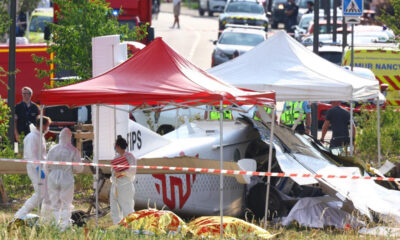
Seven personnel of the Nigerian Air Force that died in a plane crash that occurred in Abuja on Sunday were on a mission to rescue kidnapped students of Kagara College in Niger State.
Chairman, House of Representatives Committee on Air Force, Shehu Koko, disclosed this while commiserating with the Nigerian Air Force, families of the ill-fated NAF Beechcraft KingAir B350i aircraft that crash-landed six minutes after taking off from Abuja airport en route Minna, Niger State.
This came as the Nigerian Air Force released the names of seven personnel who died in the aircraft.
In a statement on Sunday, the Chairman of the Committee, Hon. Shehu Koko, said, “We also commiserate with President Muhammadu Buhari, the Commander-in-Chief of the Armed Forces of the Federal Republic of Nigeria. We highly regret the loss of our gallant officers who apparently were on a mission to rescue the kidnapped students of a secondary school in Kagara community in Niger State.”
The lawmaker representing Maiyama/Koko Besse Federal Constituency in Kebbi State noted that the committee under the leadership of Femi Gbajabiamila was deeply saddened by the development and would work with the Chief of Air Staff to unravel the remote cause.
He also said, “While mourning with families of the deceased, we urge Nigerians to remain calm and await the outcome of the investigation.”
Koko also prayed to God to comfort the bereaved family and grant the departed souls eternal rest.
Meanwhile, NAF spokesman, Ibikunle Daramola, has released the names of the dead personnel in a statement.
The NAF listed the deceased officers as:
Haruna Gadzama, flight lieutenant who was the captain
Henry Piyo, co-pilot and flight lieutenant
Micheal Okpara, a flying officer and airborne tactical observation system (ATOS) specialist
Bassey Etim, a warrant officer (ATOS Specialist)
Olasunkanmi Olawunmi, a flight sergeant (ATOS Specialist)
Ugochukwu Oluka, a sergeant (ATOS Specialist)
Adewale Johnson, an aircraftman (onboard technician).






News
INEC Chairman assures Nigerians every vote will count in 2027 general election
INEC Chairman assures Nigerians every vote will count in 2027 general election
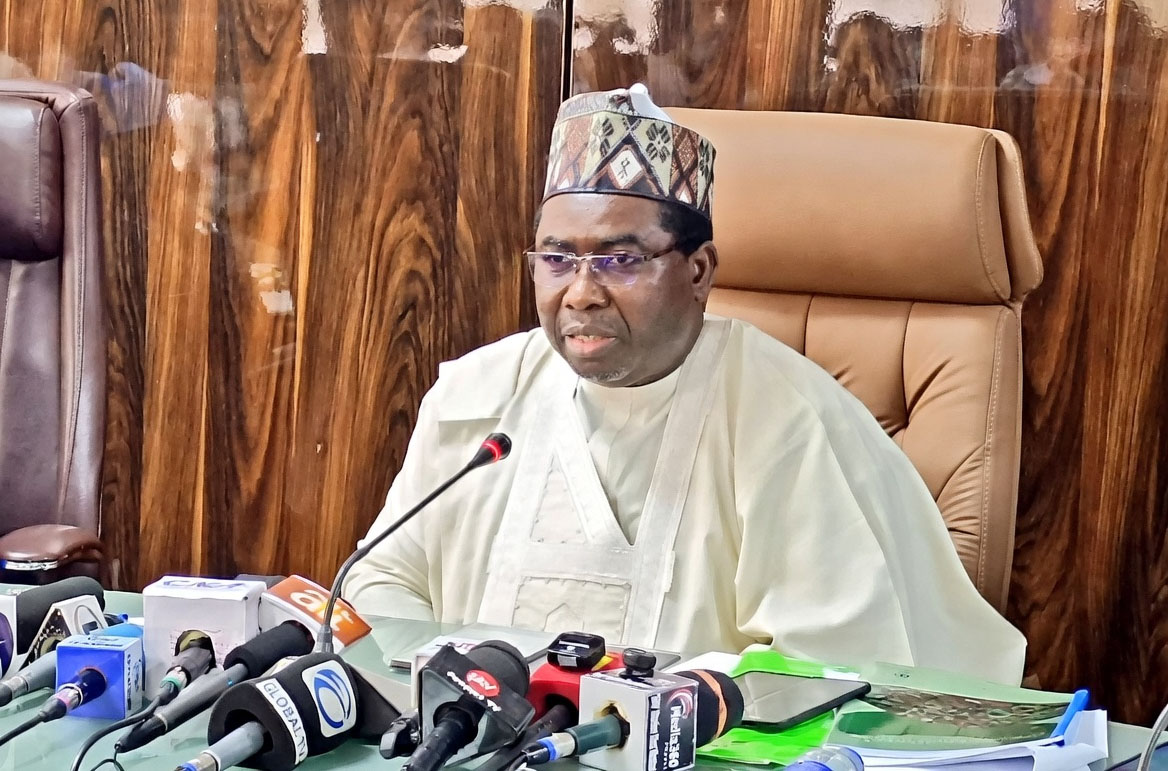
Chairman of the Independent National Electoral Commission (INEC), Prof. Joash Amupitan (SAN), has assured Nigerians that every valid vote cast in the 2027 general election will count, reaffirming the electoral body’s commitment to conducting free, fair, credible and transparent elections.
Amupitan gave the assurance during a courtesy visit to former Head of State and Chairman of the National Peace Committee, Gen. Abdulsalami Abubakar (retd.), at his residence in Minna, Niger State, where he sought the elder statesman’s continued support for INEC’s efforts to strengthen Nigeria’s democracy ahead of the next general election.
The INEC chairman described Abdulsalami as “the father of democracy in Nigeria,” saying his successful transition from military to civilian rule in 1999 laid the foundation for the country’s Fourth Republic and remains one of the most significant milestones in Nigeria’s democratic history.
According to Amupitan, Abdulsalami has continued to play a vital role in promoting peaceful elections through the National Peace Committee, whose Peace Accord initiative has encouraged political parties, candidates and supporters to embrace issue-based campaigns, reject violence and respect democratic principles.
He said INEC views the former military leader as a dependable pillar of support whose guidance and interventions have contributed to electoral stability and democratic consolidation.
Describing the visit as “a pilgrimage of appreciation,” Amupitan said it was meant to honour Abdulsalami’s decades of service to the nation and acknowledge his continued commitment to peace, national unity and democratic governance.
READ ALSO:
- 2027 election: Atiku accuses Obasanjo of reviving false allegations to favour preferred candidate
- Alleged Coup Plot: How Attack on Aso Rock, Airports Was Planned — Court Documents
- Gumi Questions FG’s Refusal To Dialogue With Bandits, Boko Haram, Cites Niger Delta Precedent
He also congratulated the former Head of State on his recent 84th birthday, describing him as a statesman whose leadership continues to inspire confidence across the country.
Addressing concerns over the credibility of future elections, the INEC chairman assured Nigerians that the commission remains focused on protecting the integrity of the electoral process despite the challenges associated with conducting nationwide elections.
“The commission’s determination under my leadership is to ensure that ordinary Nigerians go out to vote with confidence that their votes will be duly counted and reflected in the outcome of elections,” Amupitan said.
He stressed that guaranteeing the sanctity of every valid vote remains one of INEC’s core constitutional responsibilities and pledged that the commission would continue implementing measures aimed at improving transparency, professionalism and public confidence in the electoral system.
Amupitan also reaffirmed the commission’s timetable for the 2027 general election, announcing that the Presidential and National Assembly elections will be held on January 16, 2027, while the Governorship and State Houses of Assembly elections are scheduled for February 6, 2027.
He urged eligible Nigerians to actively participate in the electoral process, noting that democracy can only thrive when citizens exercise their voting rights and have confidence that their choices will be respected.
The INEC chairman further called on political parties, candidates, civil society organisations, security agencies, the media and other stakeholders to work together in ensuring peaceful, credible and inclusive elections across the country.
He said sustained collaboration among stakeholders would strengthen public trust in the electoral process and reduce tensions before, during and after the polls.
Responding, Abdulsalami commended the INEC chairman for the visit and acknowledged the enormous responsibility placed on the electoral commission in delivering credible elections.
The former Head of State urged Nigerians to support INEC in its preparations for the 2027 general election, stressing that credible elections remain the cornerstone of democracy and national stability.
He also appealed to political parties and their supporters to conduct themselves peacefully and place the nation’s interest above partisan considerations, noting that violence and electoral malpractice undermine democratic development.
The renewed assurance by the INEC chairman comes at a time when public interest in the credibility of the 2027 elections continues to grow, with many Nigerians calling for greater transparency, accountability and stronger safeguards to ensure election results accurately reflect the will of the people.
Political observers say INEC’s commitment to protecting the value of every vote will be closely monitored as preparations for the country’s next general election gather momentum.
INEC Chairman assures Nigerians every vote will count in 2027 general election
News
PFICP scandal: How ₦1.3bn ‘fake agency’ traced to Buhari’s government entered 2026 budget
PFICP scandal: How ₦1.3bn ‘fake agency’ traced to Buhari’s government entered 2026 budget
The Budget Office of the Federation has disclosed that the controversial Presidential Foreign Intervention Promotion Council (PFIPC) — now declared fake and under investigation — originated from institutional records linked to the administration of the late former President Muhammadu Buhari. Director-General of the Budget Office, Tanimu Yakubu, made this known while appearing before the House of Representatives Ad-hoc Committee investigating the matter. He explained that although ₦1.302 billion was appropriated for the council in the 2026 budget, not a single kobo was released because statutory spending controls prevented the funds from ever being accessed.
Providing a detailed account of how the PFIPC found its way into the 2026 budget, Yakubu traced the council’s institutional origin to the Presidential Economic Advisory Council (PEAC), which President Buhari inaugurated on October 9, 2019. By the time the 2026 budget preparations began, official government instruments had already been issued by key institutions. The Office of the Accountant-General of the Federation had assigned an administrative budget code to the PFIPC, while the Office of the Head of the Civil Service of the Federation had approved an authorised establishment and a recruitment waiver. Yakubu emphasised that the Budget Office did not create the council or approve its establishment — it merely acted on official documents received from other government institutions. In his words, “The Budget Office did not create the Council. It did not assign its code. It did not approve its establishment. It did not grant its recruitment waiver. It received official instruments and did what the law required of it: it measured their fiscal effect.”
Giving a breakdown of how the ₦1.302 billion allocation was calculated, Yakubu disclosed that the PFIPC initially requested ₦3.85 billion for personnel costs, but the Budget Office independently calculated a reduced figure of ₦802,978,783. This amount, which represented 61.63 per cent of the total ₦1.302 billion appropriation, was based strictly on the authorised establishment, the approved recruitment waiver, the applicable public-service salary structure, and the extant costing methodology. The overhead component stood at ₦200 million, while capital expenditure was set at ₦300 million. Despite the full appropriation of ₦1.302 billion, not a single kobo was disbursed to the council.
READ ALSO:
- INEC urges eligible Nigerians to complete Continuous Voter Registration as deadline ends Sunday
- Court grants Blessing CEO N20m bail in alleged N69.15m property fraud case
- UN calls for urgent evacuation of 6,000 sailors stranded in Strait of Hormuz
Explaining why the money was never released, Yakubu stated that despite the appropriation, the council could not access the funds because the Budget Office withheld Financial Clearance — the mandatory approval required before recruitment, payroll enrolment, or salary payments can commence. He clarified that two conditions remained incomplete: first, the 2026 Appropriation Bill only became law on March 31, 2026, meaning final clearance could not be issued before presidential assent; second, the National Salaries, Incomes and Wages Commission had not confirmed that the proposed staffing and remuneration arrangements complied with the approved public-service compensation framework. Yakubu stressed that “There was no Financial Clearance. There was no lawful recruitment. There was no payroll enrollment. There was no salary payment. Not one kobo of the personnel provision could lawfully have been drawn. Not one kobo was drawn.” The overhead allocation of ₦200 million could not be released because it required treasury warrants and cash backing from the Federal Ministry of Finance, while the capital allocation of ₦300 million never progressed beyond appropriation because no procurement plan was initiated, no tenders board approved any project, and no Certificate of No Objection was issued by the Bureau of Public Procurement.
The scandal surrounding how a ‘fake agency’ gained official recognition became public on June 11, 2026, when the Chief of Staff to the President, Femi Gbajabiamila, declared the council fake and petitioned law enforcement agencies. Subsequent investigations revealed that the PFIPC had secured office space within the Federal Secretariat in Abuja, that the Central Bank of Nigeria opened two foreign currency accounts — one in US dollars and another in British pounds — on the directive of the Office of the Accountant-General, and that the agency was listed in the 2026 Appropriation Act with a budget of ₦1.302 billion. It was also discovered that the self-declared Director-General, Prince Adeniyi Adeyemi Matthew, presented forged appointment letters and falsely claimed to be a presidential appointee. On July 7, 2026, President Bola Tinubu directed the Independent Corrupt Practices and Other Related Offences Commission (ICPC) to conduct a thorough investigation and submit a report within 30 days.
In the midst of counterclaims and the ongoing investigation, before his arrest, Adeniyi Adeyemi alleged that Gbajabiamila received ₦400 million through a proxy and demanded an additional ₦200 million to secure his appointment. The Chief of Staff has denied the allegations and filed a defamation suit seeking ₦15 billion in damages. The ICPC investigation is now examining forged appointment letters and official documents, the use of false presidential claims to obtain official recognition and diplomatic support, the opening of multiple bank accounts using allegedly forged documents, the role of public officers, private individuals, and financial institutions that may have facilitated the scheme, as well as broader weaknesses in government procedures that may have been exploited. The Budget Office has maintained that the episode demonstrates the strength of Nigeria’s public financial management system, as the controls held firm and prevented any actual loss of public funds.
PFICP scandal: How ₦1.3bn ‘fake agency’ traced to Buhari’s government entered 2026 budget
News
US Imposes 12.5% Tariff on Nigerian Imports Over Forced Labour Claims
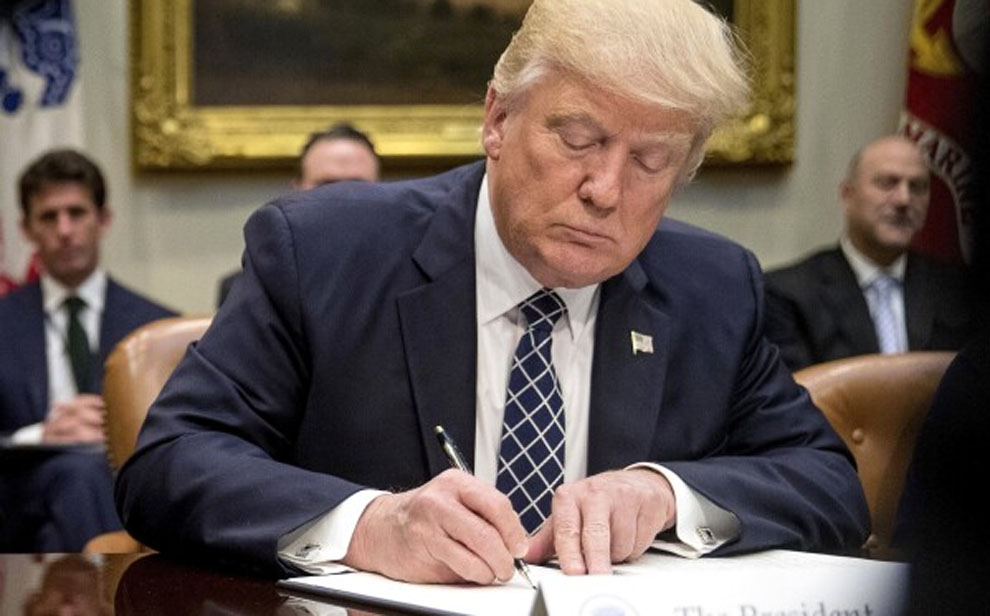
US Imposes 12.5% Tariff on Nigerian Imports Over Forced Labour Claims
The United States has imposed a 12.5 per cent tariff on imports from Nigeria as part of a new trade measure targeting 60 economies it says have failed to prohibit the importation of goods produced with forced labour.
The measure, announced on Thursday, July 23, 2026, by the Office of the United States Trade Representative (USTR), affects imports from 60 economies that Washington says have not “imposed and effectively enforced a prohibition on the importation of goods produced with forced labour”. Nigeria is among the countries subject to the higher 12.5 per cent tariff rate, while some nations that have adopted or committed to implement bans on imports linked to forced labour will face a lower 10 per cent rate. The move follows investigations launched by the USTR in May 2026 under Section 301 of the Trade Act of 1974 into 60 of the United States’ largest trading partners. According to the agency, it received more than 1,600 written submissions, held public hearings involving over 100 witnesses, and consulted more than 45 governments before announcing the tariffs.
US Trade Representative Jamieson Greer said the action was aimed at encouraging trading partners to strengthen measures against forced labour. “President Trump recognises that decades of moral suasion have not eradicated forced labour from global supply chains. The United States has had a forced labour import ban for nearly a century. It’s well past time for our trading partners to do the same,” Greer stated. Explaining the tariff structure, the USTR stated that 10 per cent is the appropriate rate for investigated economies that impose a forced labour import prohibition, have committed to impose such a prohibition through an Agreement on Reciprocal Trade, or have imposed a partial regime preventing the importation of certain forced labour goods. These economies include Argentina, Bangladesh, Cambodia, Canada, Ecuador, El Salvador, Guatemala, Honduras, India, Indonesia, Jordan, Malaysia, Mexico, Pakistan, Sri Lanka, Trinidad and Tobago, and the United Kingdom. The 12.5 per cent tariff applies to all other investigated economies, including Nigeria, Algeria, Angola, Australia, Brazil, China, Egypt, Japan, Morocco, South Africa, Saudi Arabia, Thailand, and Vietnam, among others. A full list published by Punch Newspapers shows that Nigeria is grouped with 46 other economies facing the higher tariff rate.
READ ALSO:
- Dollar to Naira Exchange Rate Today: Naira Holds Steady as Fuel Importer Demand Mounts
- Senate Bill Requiring Social Media Offices in Nigeria Gains Stakeholder Support at Public Hearing
- Army Declares Soldier Wanted Over Alleged Sale of Military Uniforms to Terrorists
A Federal Register notice issued by the USTR specifically confirmed that Nigeria would be subject to the 12.5 per cent tariff on its exports to the United States, except for products covered under listed exemptions. The notice stated: “Based on the findings in the investigation of Nigeria, considering the public comments, testimony, and the advice of the Section 301 Committee, as well as the advice of advisory committees, and in accordance with the specific direction of the President, the Trade Representative has determined to impose 12.5 percent tariffs on products of Nigeria, except as provided in Annex I and Annex II, Part A, of this Notice.” The notice added that the Trade Representative determined that the tariff rate and scope of exemptions are appropriate to obtain the elimination of the acts, policies, and practices determined to be actionable in the investigation.
The USTR clarified that certain categories of products would be exempted from the tariffs. These include raw materials whose restriction could trigger domestic supply shortages, goods capable of causing widespread economic disruption, products unavailable in sufficient quantities within the United States or from alternative suppliers, as well as selected imports from countries that have adopted or committed to enforcing bans on forced labour-related goods. Additional exemptions apply where the tariffs are not considered effective in addressing the trade practices identified during the investigations.
The new tariff regime comes after President Donald Trump invoked Section 122 of the Trade Act of 1974 to introduce a temporary universal tariff on imports following a US Supreme Court decision that blocked his administration’s broader tariff programme under the International Emergency Economic Powers Act. The Trump administration subsequently raised the rate to 15 per cent, with the temporary measure due to expire on Friday. For countries like Nigeria, the 12.5 per cent tariff comes on top of the existing 10 per cent baseline duty introduced under President Trump’s reciprocal trade framework, effectively raising total tariffs on Nigerian exports to the United States to 27.5 per cent.
The development comes as Nigeria continues efforts to expand non-oil exports and strengthen trade relations with major economies. If implemented, the additional tariff could make it more expensive for affected countries to sell products into one of the world’s largest consumer markets, raising concerns about trade competitiveness and export earnings. The USTR said the measure was aimed at levelling the playing field, arguing that countries that fail to prevent the import of goods produced with forced labour gain an unfair edge by allowing cheaper products to flood global supply chains. “The failure of our most important trading partners to address the importation of goods made with forced labour is unacceptable. This creates a dynamic where American workers are forced to compete globally on an unlevel playing field,” Greer said. Nigeria already has laws prohibiting forced and compulsory labour, including constitutional protections and anti-trafficking legislation, but enforcement remains a key issue in international assessments. Some US trading partners have already criticised the new tariffs. Japan’s chief government spokesman, Minoru Kihara, said Japan regrets that the measure imposes tariffs on Japan solely on the grounds that there is no ban on the import of products produced through forced labour. Brazil called the measure “completely arbitrary” and accused the USTR of manipulating an issue of great importance to human rights for protectionist purposes.
US Imposes 12.5% Tariff on Nigerian Imports Over Forced Labour Claims
-
 Politics2 days ago
Presidency, Obasanjo attack Atiku over US lobbying, reopen decades-old loyalty dispute
-

 Opinion2 days ago
Osun election: Àtàọ́ja should stop running joro-jara-joro
-
 Business2 days ago
Dollar to Naira Exchange Rate Today: Naira Holds Steady as Fuel Importer Demand Mounts
-
 Entertainment2 days ago
“Don’t Let Me Die”: Veteran Nollywood Actress Ngozi Nwosu Begs for ₦30m Surgery Fund
-
 Politics2 days ago
Atiku denies Obasanjo’s N5m bribery claim, links accusation to 2027 presidential race
-
 metro3 days ago
Trackers, Profiling as FG Unveils Special Guards to Secure Coastal Highway
-
 metro2 days ago
Igboho Launches Iru Ekun Security Network in Kwara, Vows to Reclaim Forests from Bandits
-
 Education2 days ago
Oluwo Urges Youths to Pair Degrees with Skills, Commends Westland University’s Excellence
You must be logged in to post a comment Login