
metro
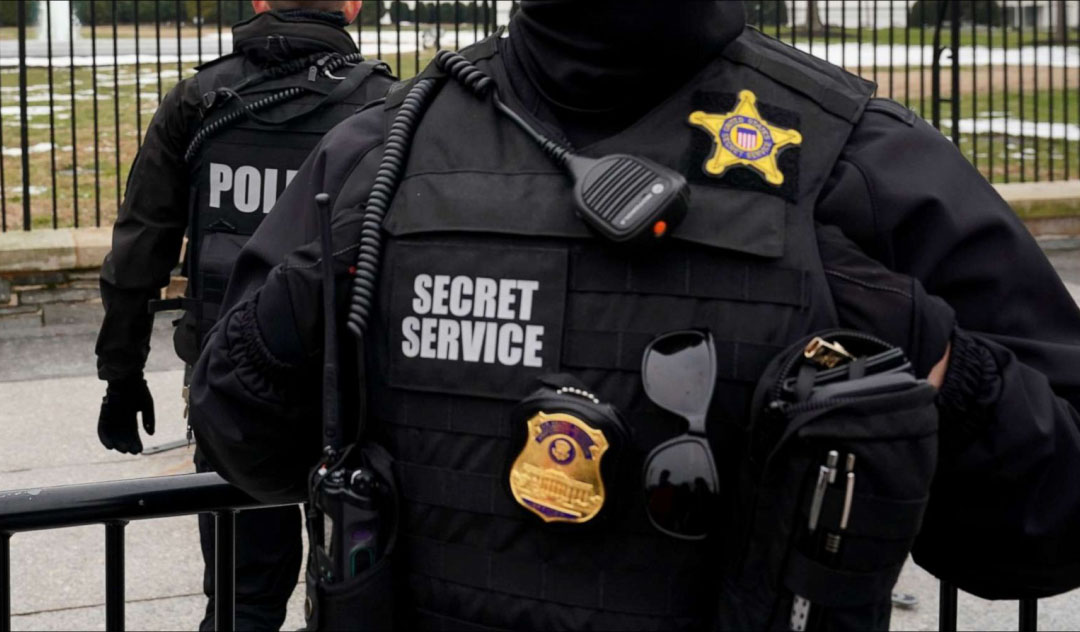
Cybercrime: U.S. Secret Service seizes $860,000 from Nigerian crypto account
Cybercrime: U.S. Secret Service seizes $860,000 from Nigerian crypto account
The U.S. Secret Service has seized $860,000 from a Nigerian cryptocurrency account after investigations on a money trail indicated the funds were proceeds of a coordinated business email scam, according to court filings obtained by Peoples Gazette.
In accordance with U.S. laws, the U.S. Secret Service has applied for forfeiture in rem of the hundreds of thousands of dollars after tracking and linking the confiscated funds to fraud.
Secret Service Special Agent Jayson Bradshaw filed the forfeiture complaint in rem in the U.S. District Court for the Eastern District of Virginia on October 2, 2024. An arrest warrant in rem was issued on October 10 by Judge Claude M. Hilton.
An arrest warrant in rem grants a government agency the authority to seize fraudulent assets including property without waiting for the defendants’ argument.
The Nigerian whose name was withheld for security reasons allegedly intercepted email correspondence between a couple who wanted to purchase a new house and the law firm managing the sale.
The victim referred to as Victim 1 in court filings residing in Reston, Virginia on April 17 transferred $966,500 as closing cost of the house to what he believed was the account number of the law firm conducting the sale.
He had previously been exchanging emails with the firm and did not suspect foul play when he sent the funds for the property in Denver, North Carolina on April 17.
READ ALSO:
- Accept broke men or put up with busy ones – Kanayo O. Kanayo tells ladies
- Ibadan stampede: School principal detained following death of 32 children
- Abbas, Akume, Okorocha affected as Wike revokes 762 land allocations
What the victim did not realise was that his email had been getting intercepted by the suspected Nigerian scammer since April 2, court filings showed. The suspect was communicating with both parties, sometimes acting as the law firm and other times pretending to be the buyers.
“Unbeknownst to VICTIM 1 at the time, the law firm began receiving emails around April 2, 2024 from spoofed email accounts which were similar to VICTIM 1 and his wife’s true email accounts,” stated the motion seeking forfeiture.
Both parties did not suspect anything amiss until April 19 when the couple and their realtor went to the law firm for a scheduled 10:00 a.m. appointment, only to discover the law firm had fixed the meeting for 2:00 p.m.
The attorney in charge of the sale asked the couple when they intended to finalise payment for the property.
Taken aback by the question, the victim responded that they already completed payment two days earlier and sent the funds to a Bank of America account ending in -0822, “per the wiring instructions he received via email on or about April 16, 2024.”
His statement set off alarm bells and he immediately reached out to his bank, Charles Schwab & Company, to report the fraudulent transfer, particularly that money was sent to an unintended account.
Investigations showed how the Nigerian suspect transferred the funds first to another account domiciled in Bank of America before moving them to his crypto account on April 18.
In total “$960,000.00 in fraud proceeds were sent to the CRYPTO ACCOUNT,” court filings stated.
On April 18, the suspect made a crypto transaction of “1.588106 Bitcoin (BTC), valued at $98,276.94 in proceeds to address: bc1qz3ms6tlc2d4lkrp6q6al28tkknyzvaflqt4y72, via transaction ID: b8c5516bd2373553b795c825247c54cbe6787afd16e97b69f5d0beb639ef4df8.”
The transaction incurred a charge of $1,723.
The 1.5 BTC transaction reduced the crypto balance to $860,000 which the Secret Service has already seized and is now seeking its forfeiture to the U.S. government.
A money trail of 1.5. BTC transfer led investigators to Binance address 1LdEvfQGAY4stVWpCo4ynMt1NUVDbY7JZG. Binance KYC (Know Your Customer) checks on the account showed that it belonged to a Nigerian citizen living in Turkey.
“Binance provided “know your customer” information for the above address, which identified a Nigerian national operating in Turkey as the owner of the account,” court filings stated. Records showed the equivalent of $89,999.97 had been withdrawn from the crypto account.
The U.S. Secret Service contends for the forfeiture of the funds in line with Title 18, United States Code that states money obtained from proceeds of unlawful activity be surrendered to the government.
Cybercrime: U.S. Secret Service seizes $860,000 from Nigerian crypto account
Peoples Gazette






metro
Court Orders Forfeiture of Pastor Ebonyi’s Hotel, School, Factory Over Alleged N1.39bn Fraud

Court Orders Forfeiture of Pastor Ebonyi’s Hotel, School, Factory Over Alleged N1.39bn Fraud
A Federal High Court sitting in Lafia has ordered the permanent forfeiture of multiple properties belonging to Pastor Theophilus Ebonyi, founder and General Overseer of Faith On The Rock Ministry International, after ruling that the assets were acquired through proceeds of a large-scale fraud scheme estimated at about N1.39 billion.
The judgment followed an application by the Economic and Financial Crimes Commission (EFCC), which told the court that the forfeited properties were linked to funds traced to a fraudulent investment and fake grant operation allegedly run through Theobarth Global Foundation.
The court, presided over by Justice M.O. Olajuwon, held that the EFCC successfully established that the assets were derived from unlawful activities under the provisions of the Advance Fee Fraud and Other Related Offences Act. The judge further ruled that the defendant failed to provide credible evidence to justify legitimate ownership of the properties.
READ ALSO:
- Lagos 2027: APC Succession War Intensifies as Tinubu Reportedly Backs Hamzat
- Machete-Wielding Man Shot Dead After Injuring Three in New York
- Gunmen Kill Imo Traditional Ruler, Security Operatives in Brutal Attack
The forfeited assets include a 23-room hotel and event centre in Nyanya Gwandara, a warehouse and sachet water factory in Karu, two office buildings, a primary school, and a bank account containing over N1 million. Authorities said these properties were either directly purchased or developed using proceeds from the alleged financial fraud scheme.
EFCC investigators told the court that Ebonyi was arrested in 2023 over allegations that he orchestrated a fraudulent scheme through Theobarth Global Foundation, where he promoted a fake $20 billion Ford Foundation grant. The commission said he falsely claimed affiliation with the internationally recognised Ford Foundation, a claim the organisation has publicly denied.
According to investigators, victims were made to pay about N1.8 million each as registration and processing fees, with promises of access to the non-existent grant. The EFCC stated that the scheme defrauded individuals and corporate bodies of approximately N1.39 billion before it was exposed.
With the court’s ruling, all listed assets have now been permanently forfeited to the Federal Government of Nigeria as part of ongoing efforts to recover proceeds of crime and dismantle fraudulent investment networks.
The EFCC said the judgment marks a major step in the prosecution process and reaffirmed its commitment to ensuring that proceeds of advance fee fraud are recovered and returned to public ownership.
Authorities also cautioned members of the public against falling for fake grant schemes or investment programmes that promise unrealistic returns or falsely claim affiliation with reputable international organisations such as the Ford Foundation.
Court Orders Forfeiture of Pastor Ebonyi’s Hotel, School, Factory Over Alleged N1.39bn Fraud
metro
Gunmen Kill Imo Traditional Ruler, Security Operatives in Brutal Attack

Gunmen Kill Imo Traditional Ruler, Security Operatives in Brutal Attack
Gunmen have killed the traditional ruler of Ochia Community, Eze Paulinus Ekwueme, alongside security operatives in a violent and coordinated attack in Ohaji/Egbema Local Government Area of Imo State, sparking widespread shock and renewed concern over insecurity in Nigeria’s South-East region.
The attack occurred on Friday along the Assa–Ochia boundary, shortly after the monarch reportedly returned from an overseas trip and was travelling back to his community from Owerri.
The monarch had only just arrived in Owerri earlier in the day after returning from abroad and was on his way home when armed men ambushed his convoy. Sources said the attackers blocked the road at the boundary axis before opening fire on the vehicle carrying the traditional ruler and his security escort, in what witnesses described as a swift and coordinated operation.
During the attack, several security personnel attached to the monarch were also shot dead, though authorities have not confirmed the exact number of casualties. A local source alleged that the attackers appeared to have prior knowledge of the monarch’s movement, suggesting the assault may have been planned in advance, although this remains unverified.
READ ALSO:
- “I’m the Boss” — Anthony Joshua Fires Back at Tyson Fury Amid Fight Tension
- Nigerians Blast Power Minister Adelabu as Two-Week Electricity Promise Fails
- Osimhen Returns to Galatasaray Training After Arm Injury Layoff
Residents further reported that after the shooting, the attackers allegedly set parts of the convoy on fire, leaving vehicles and victims engulfed in flames. The incident triggered panic across nearby communities, forcing many residents to flee the area as tension spread.
The killing has thrown Ochia and surrounding communities into mourning, with traditional and community leaders expressing deep shock over the loss and the violent nature of the attack.
The Imo State Police Command confirmed the incident through its spokesperson, Henry Okoye, stating that security operatives were immediately deployed to the area following reports of the attack. He said the Commissioner of Police ordered a tactical response team to be stationed in the Ohaji/Egbema axis to restore order and begin a full investigation into the killings.
Okoye added that while the number of casualties among the security operatives remains unconfirmed, efforts are ongoing to track down the attackers responsible. He also confirmed that security presence has been strengthened across the area as part of measures to prevent further attacks and restore calm.
The killing has heightened tension in Ohaji/Egbema, with residents calling for urgent intervention to address rising violence in the region. Security agencies say investigations are ongoing and that all leads are being pursued to uncover those behind the assassination of the traditional ruler, with assurances that the perpetrators will be arrested and brought to justice.
Gunmen Kill Imo Traditional Ruler, Security Operatives in Brutal Attack
metro
Nigerians Blast Power Minister Adelabu as Two-Week Electricity Promise Fails
Nigerians Blast Power Minister Adelabu as Two-Week Electricity Promise Fails
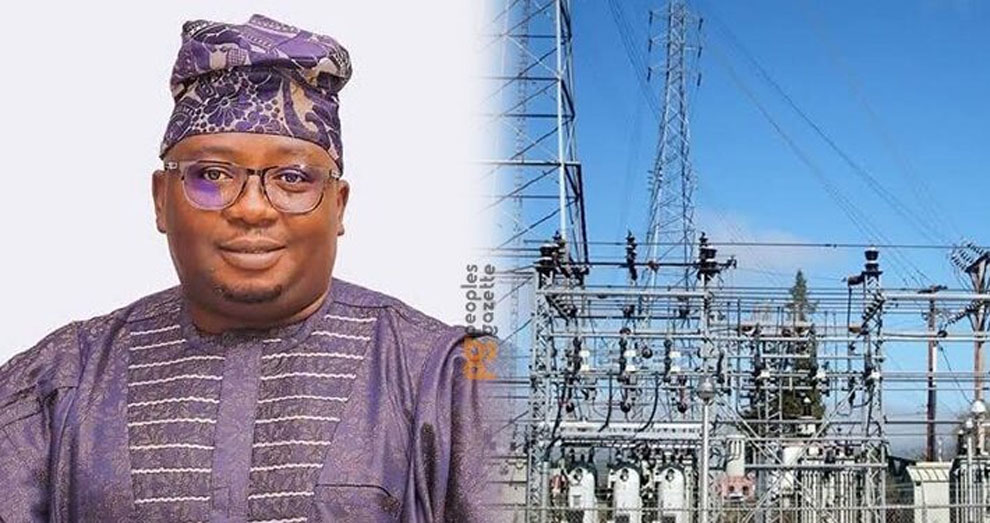
Anger is mounting across Nigeria as citizens continue to experience widespread electricity blackouts despite assurances by the Minister of Power, Adebayo Adelabu, that improvements in power supply would begin within two weeks.
The latest public frustration comes as a nationwide review shows little to no improvement in grid stability, with many households and businesses still battling erratic supply, prolonged outages, and inconsistent voltage across major cities including Abuja, Lagos, Port Harcourt, and several other states.
The situation has been further complicated by reports that President Bola Tinubu approved ₦3.3 trillion for the settlement of outstanding debts in Nigeria’s power sector, a policy move aimed at stabilising the industry. While some energy analysts believe the intervention could support long-term reforms, others argue that similar announcements in the past have not translated into immediate relief for consumers.
On March 24, Adelabu publicly apologised for the nationwide power disruptions, attributing the crisis to gas supply shortages, transmission constraints, and technical faults within the electricity value chain. At the time, he assured Nigerians that “within two weeks, improvements in supply should begin.”
However, with the deadline now expired, many citizens say the promise has not been fulfilled, and in some areas, conditions have worsened.
READ ALSO:
- Osimhen Returns to Galatasaray Training After Arm Injury Layoff
- Lassa Fever: Lagos Raises Alarm as Nigeria Records 660 Cases, 167 Deaths
- Netanyahu Says Israel’s Campaign Against Iran ‘Not Over’ Despite Ongoing Ceasefire
Residents across the country report that electricity supply remains highly unstable, with frequent blackouts lasting hours or even days, interrupted only by brief and unreliable restoration periods.
In Abuja’s Utako district, residents described persistent outages and unbearable heat conditions, with some accusing distribution companies of poor service delivery despite regular billing.
In Lagos, consumers questioned the fairness of the Band A electricity tariff system, which is supposed to guarantee up to 20–24 hours of supply but often fails to meet expectations in practice.
Across other states, similar complaints dominate public discourse. In Delta State, residents described electricity supply as unreliable and frustrating, while in Ondo State, some communities said stable power has become almost non-existent. In Imo State, parts of Owerri reportedly endured weeks of near-total blackout.
In Edo State, residents said outages sometimes stretch for days, particularly after rainfall, while in Ogun and Ekiti states, citizens reported prolonged power cuts despite continued billing from electricity distribution companies.
Many Nigerians say the recurring pattern of promises and poor delivery has left them frustrated and financially strained, especially as they rely heavily on alternative power sources such as generators, inverters, and solar systems, which significantly increase living and business costs.
The crisis has once again highlighted Nigeria’s long-standing electricity supply challenges, including weak transmission infrastructure, insufficient generation capacity, gas supply constraints, and commercial inefficiencies within the power sector.
Despite reforms and privatisation efforts, national electricity generation remains around 4,000 megawatts, far below the level required for a population of over 200 million people. Energy data from international organisations such as the International Energy Agency (IEA) also shows that Nigeria’s per capita electricity consumption remains among the lowest globally.
As frustration grows, citizens continue to demand accountability, transparency, and realistic timelines from government officials rather than short-term assurances that fail to reflect ground realities.
For many Nigerians, the question remains unchanged and increasingly urgent: where is the light?
Nigerians Blast Power Minister Adelabu as Two-Week Electricity Promise Fails

-
 Africa3 days ago
ECOWAS Recruitment 2026: Over 30 Job Vacancies Open for Nigerians (How to Apply)
-
 metro16 hours ago
JUST IN: FG Publishes List of 48 Individuals, Groups Linked to Terrorism Financing in Nigeria
-

 Health3 days ago
Sleeping Positions: How They Affect Your Health and Which Ones to Avoid
-
 Politics1 day ago
Did Faleke Just Reveal Lagos’ Next Governor? Party Moves Begin
-

 metro17 hours ago
42-Year-Old Married Woman Declared Missing Found in Hotel with Man
-
 metro3 days ago
Boko Haram Attack in Borno: Brigadier-General, Soldiers Killed as ISWAP Overruns Military Base
-

 Education2 days ago
Germany Opens Fully Funded Scholarships for Nigerians, Africans
-
 metro18 hours ago
ADC Threatens Civil Disobedience To Force INEC Chairman To Resign