

Business
Dangote, NUPENG agreement collapses as union orders fuel loading suspension

Dangote, NUPENG agreement collapses as union orders fuel loading suspension
Barely 48 hours after the Department of State Services (DSS) brokered peace between Dangote Group and the Nigeria Union of Petroleum and Natural Gas Workers (NUPENG), fresh dispute has erupted between the duo, Daily Trust can report.
Specifically, the leadership of the union halted loading of fuel at the loading bay of the refinery on Thursday following the company’s directive to its drivers to remove all the union stickers pasted on their trucks on Wednesday.
Daily Trust reports that the DSS had on Tuesday brokered peace between the duo after the first reconciliatory meeting that was held on Monday at Labour Ministry’s ended in a stalemate over dispute that borders on unionisation.
Following a closed-door meeting that was held at the headquarters of the secret police in Abuja, the leadership of NUPENG directed its members to suspend the nationwide industrial action.
Sources who were familiar with what transpired on Wednesday and Thursday confided in our correspondent that the removal order by the company angered the union leaders, and they summoned an emergency meeting over the matter.
“On Wednesday morning, based on the agreement reached on Tuesday at the DSS headquarters, our members working with Dangote Refinery were called, we didn’t force anybody and we handed over stickers to them.
“To our surprise, after a few hours, we heard that the company directed all of them to remove the stickers. Meanwhile, not all of them even collected the stickers ab initio. We thought it was a rumour.
“When we came here this morning (Thursday), we noticed that all the pasted stickers had been removed. This negates the agreement we had during Tuesday’s meeting,” one of the union leaders told Daily Trust.
Confirming the development, NUPENG President, Williams Akporeha, said it is not yet Uhuru for both the union and the company, saying the Managing Director of the company is not bigger than the government who intervened earlier.
READ ALSO:
- Delta bans bushy beards, artificial nails, others for civil servants
- Brazil ex-president jailed 27 years for coup attempt
- FG cancels airline VAT exemption, reintroduces charges on aircraft, parts
Akporeha said, “This is to alert the general public and the government of the Federal Republic of Nigeria that notwithstanding the resolution reached and signed at the office of the DSS with three Ministers of the Federal Republic of Nigeria and the Deputy Director-General of the DSS in attendance on the right of unionization of the workers, Alh Sayyu Aliu Dantata on Wednesday, 10th September, 2025 instructed all his Truck Drivers who are NUPENG-PTD members for several years to remove the union stickers from their trucks yesterday.
“Today, Thursday, 11th September, 2025, he instructed them to forcefully drive into Dangote Refinery to load and Union officials stopped them from entering the Refinery to load because their trucks violated union loading rules and regulations.
“Alh Sayyu Aliu Dantata flew over them several times with his helicopter and then called the Navy of the Federal Republic to come over ostensibly to crush the Union officials.
“Our members are waiting for him and his agents to run them over. We call on everyone to let Alh Sayyu Aliu Dantata know that he is not bigger than the Federal Republic of Nigeria and we strongly condemn his arrogant attitude towards official institutions of this great country and blatant lack of respect for the laws of this country.
“We call on the Federal Government not to allow the Navy and other security agents being paid with the resources of this country, to be used with impunity against the laws and people of this country.”
NUPENG president, however, placed all its members on red alert for the resumption of the suspended nationwide industrial action, while calling on the Nigeria Labour Congress, Trade Union Congress, and civil society organizations to rise in support and solidarity against the threat of the capitalist world.
Reacting in a statement last night, the management of Dangote Group said the refinery maintains a cordial and cooperative relationship with all recognised trade unions, including NUPENG.
READ ALSO:
- How I survived abduction, robbery in Bucharest – Wole Soyinka
- Dangote refinery to start free petrol delivery Sept 15
- Peter Obi holds closed-door meeting with former president Jonathan
“We have consistently supported their legitimate activities within our facility, including providing office space and enabling member engagement and dues collection without interference.
“Since the refinery became operational, our activities have contributed positively to union revenue and engagement. While we remain open to constructive dialogue, we will not tolerate economic sabotage, coercion, or blackmail under the guise of labour activism,” the group said in a statement.
While acknowledging the intervention of the federal government, Dangote refinery said it remains fully supportive of ongoing efforts to achieve a lasting resolution.
“We hold both the minister, Dr Mohammed Dingyadi (Katuka Sokoto) and Mrs. Nkiruka Onyejeocha, in the highest regard, and reject any suggestion that we have acted in a manner that would undermine their involvement. The minister granted Mallam Sayyu Dantata the permit to enable him to attend to his medication.
“It is therefore both unfounded and regrettable for NUPENG to allege that our representatives staged a walkout during the conciliation meeting. Moreover, NUPENG did not engage with Dangote Petroleum Refinery on any grievance prior to threatening industrial action and issuing public allegations, an approach that is disappointing given the positive working relationship we have consistently maintained.
“We urge NUPENG to act in good faith, respect the ongoing dialogue process, and refrain from making statements that could undermine national economic recovery efforts led by His Excellency, President Bola Ahmed Tinubu GCFR,” the group said.
On the right to unionise, Dangote Petroleum Refinery said it fully upholds the constitutional and international principle that trade union membership is a voluntary right.
“The current industrial matter is an internal dispute with NUPENG, specifically involving its Petrol Tanker Drivers (PTD) unit. It is therefore misplaced to attribute responsibility to Dangote Petroleum Refinery for the personal choices made by drivers regarding union affiliation,” it said.
On monopoly and market competition, the Dangote refinery said it operates within a deregulated market framework, under the oversight of the Nigerian Midstream and Downstream Petroleum Regulatory Authority (NMDPRA).
It declared that the “Assertion of monopolistic intent is both legally and factually incorrect.”
The group said “Dangote refinery has brought down Gasoline prices more than eight times in the last one and half year just to stabilize the domestic energy prices and supplies. No more demurrage payment by the NNPC.”
Dangote, NUPENG agreement collapses as union orders fuel loading suspension






Business
NNPCL Slashes Petrol Pump Price to N1,405 in Abuja, Dangote Refinery Cuts Gantry Rate
NNPCL Slashes Petrol Pump Price to N1,405 in Abuja, Dangote Refinery Cuts Gantry Rate
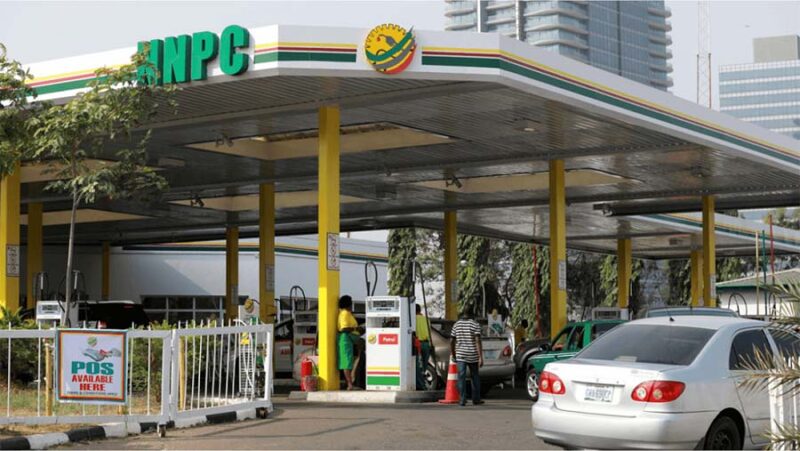
Abuja — The Nigerian National Petroleum Company Limited (NNPCL) has announced a reduction in the pump price of Premium Motor Spirit (PMS), commonly known as petrol, at its retail outlets in the Federal Capital Territory (FCT), Abuja.
A market survey conducted on Sunday revealed that NNPCL filling stations in key areas such as Gwarimpa and Kubwa have adjusted their prices downward to N1,405 per litre, a reduction from the previous rate of N1,430 per litre.
However, the survey indicated a slight variation in pricing across different NNPCL outlets within the capital city. While the Gwarimpa and Kubwa stations are selling at N1,405, other outlets located along the Kubwa Expressway, Air Junction, as well as those in Wuse Zones 4 and 5, are offering the product at a lower rate of N1,395 per litre.
The latest price adjustment by the national oil company follows a significant reduction in the gantry price of petrol by the Dangote Refinery. Reports indicate that the refinery recently slashed its gantry price by N25, bringing the rate down to N1,325 per litre.
The reduction in pump prices is expected to bring slight relief to motorists and commuters in Abuja, who have had to grapple with high transportation costs fueled by elevated fuel prices in recent months.
Industry observers note that the ongoing price adjustments reflect the dynamics of the deregulated downstream sector, where market forces and refinery gate prices influence retail costs. It remains to be seen if other major marketers and independent oil marketers will follow suit with similar price reductions in the coming days.
Motorists in Abuja have welcomed the development, expressing hope that the downward trend in fuel prices will be sustained across the country and ultimately lead to a reduction in the overall cost of living.
NNPCL Slashes Petrol Pump Price to N1,405 in Abuja, Dangote Refinery Cuts Gantry Rate
Railway
Rail-Port-Industry Link Critical to Cutting Logistics Costs – NRC
Rail-Port-Industry Link Critical to Cutting Logistics Costs – NRC
The Nigerian Railway Corporation has said Nigeria must urgently integrate its rail network with seaports, inland dry ports and industrial centres to cut logistics costs, ease pressure on the highways and make the movement of goods across the country more efficient.
The NRC said a seamless connection between rail lines, ports and major production centres would strengthen the movement of agricultural produce, containers, petroleum products and other bulk cargoes, while reducing the cost and time involved in transporting goods from ports to markets and industries.
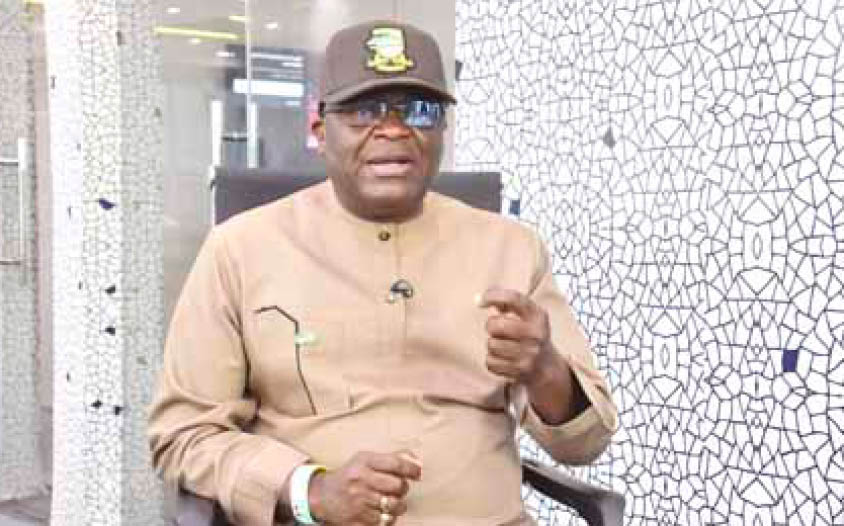
The Managing Director/Chief Executive Officer of the NRC, Dr Kayode Opeifa, stated this on Thursday in Lagos in a speech delivered on his behalf at the Transport Correspondents Association of Nigeria conference, stressing that rail, road, maritime, inland waterways and aviation must work as an integrated transportation system if Nigeria is to unlock the full economic benefits of its logistics sector.
The NRC boss also revealed that the corporation had opened the door wider for private investors to participate in the development of freight terminals, logistics hubs, rolling stock and other critical infrastructure as part of efforts to transform Nigeria’s rail system into a major engine of economic growth.
He said stronger private-sector participation was imperative because government alone could not provide the massive investment required to build an efficient and interconnected transportation system capable of lowering logistics costs and boosting economic activities.
Opeifa said Nigeria could no longer afford to develop its transportation modes in isolation, stressing the need to connect rail with seaports, inland dry ports, industrial centres and major economic corridors.
He said such integration would enable rail to play a greater role in moving bulk cargo across the country, while reducing the pressure currently placed on the highways.
According to him, rail has the capacity to move large volumes of passengers and freight over long distances and should therefore become a critical component of Nigeria’s logistics architecture.
He said, “At the Nigerian Railway Corporation, our focus is therefore not only on passenger transportation but also on strengthening freight operations and creating greater connectivity between rail lines, seaports, inland dry ports, industrial centres and major economic corridors.”
The NRC MD identified agricultural produce, petroleum products, containers and other commodities as some of the major categories of cargo that could benefit from a more efficient rail freight system.
He said an effective multimodal transportation network involving rail, road, maritime, inland waterways and aviation would reduce the cost of doing business, improve access to markets and strengthen Nigeria’s competitiveness.
Opeifa also called for a regulatory framework capable of attracting private capital into the transportation sector, particularly in rolling stock, freight terminals, logistics hubs and related infrastructure.
“The future of Nigeria’s transportation sector must also be driven by stronger partnerships. Government alone cannot provide all the infrastructure and investment required,” he said.
The NRC’s position comes amid growing concerns over the high cost of logistics and the burden placed on Nigerian businesses by inefficient movement of goods from ports to markets and production centres.
Opeifa said transportation infrastructure should be viewed not simply as public assets but as critical economic infrastructure capable of stimulating industrial production, trade and employment.
He, however, warned that vandalism and encroachment remained major threats to railway investments, stressing the need for stronger collaboration among government agencies, security organisations, host communities and passengers to protect railway tracks, bridges, signalling systems and other infrastructure.
He said the protection of rail infrastructure must become a collective responsibility if the country was to derive the full economic benefits of ongoing investments in the sector.
The NRC chief executive also stressed the need to make transportation affordable and accessible, noting that improved mobility would provide Nigerians with greater access to jobs, markets, education and economic opportunities.
Opeifa reaffirmed the NRC’s commitment to the Federal Government’s vision of developing a modern, integrated and efficient transportation system capable of supporting the country’s economic aspirations.
He commended TCAN for providing a platform for policymakers, operators, investors, professionals and the media to deliberate on the challenges and opportunities in Nigeria’s transportation sector.
He said sustained investment, innovation, collaboration and effective policy implementation remained essential to building a logistics system capable of unlocking Nigeria’s economic potential.
Business
FG Seeks Private Capital, States’ Support to Transform Nigeria’s Ports
FG Seeks Private Capital, States’ Support to Transform Nigeria’s Ports
The Federal Government has called for deeper participation by the private sector and subnational governments in financing port infrastructure, operating terminals and deploying technology as part of an ambitious plan to modernise Nigeria’s seaports and cut logistics costs.
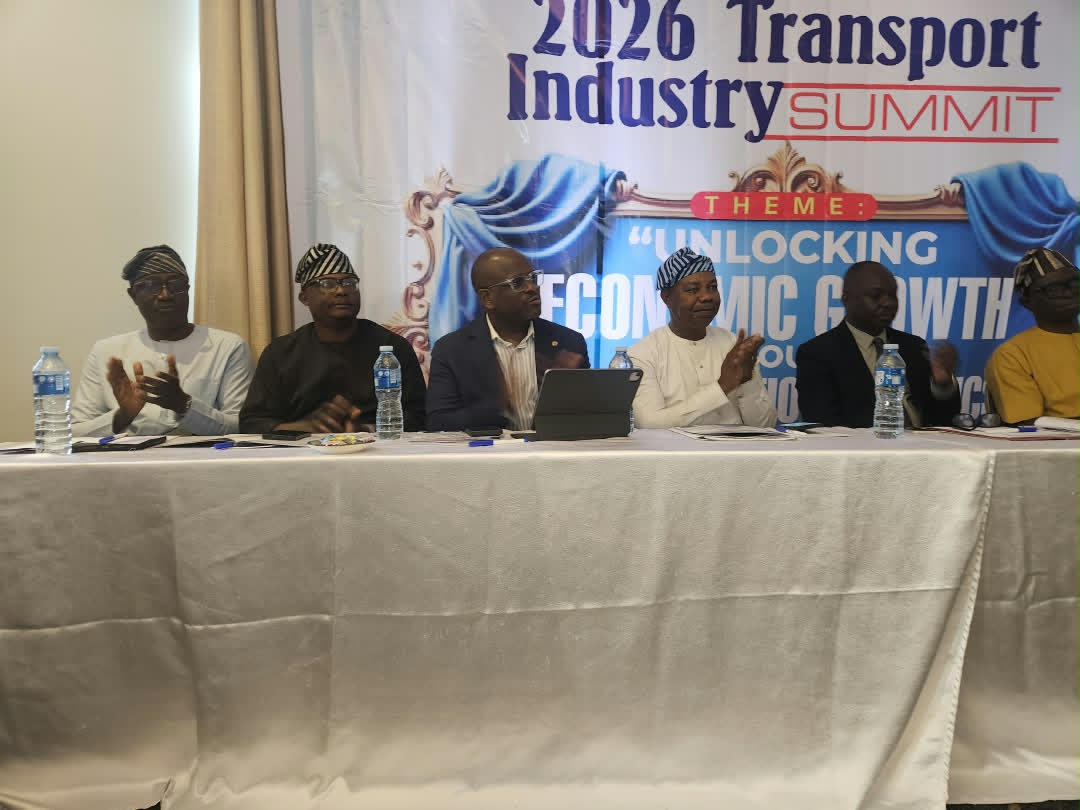
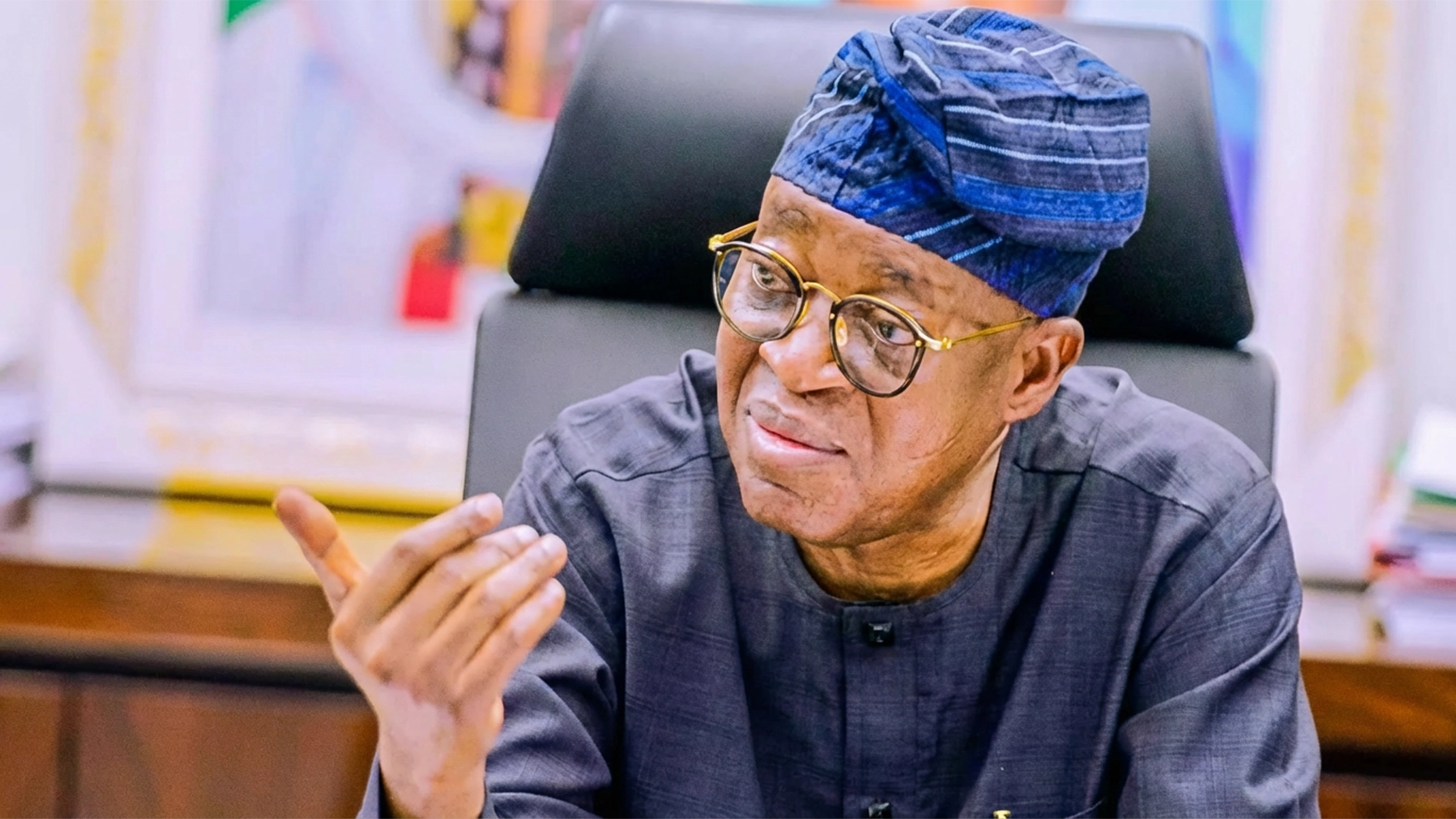
Minister of Marine and Blue Economy, Adegboyega Oyetola, made the call on Thursday at the 2026 Transport Industry Summit of the Transport Correspondents Association of Nigeria (TCAN), held at the Radisson Hotel, Ikeja, Lagos.
Oyetola represented by Mr. Paul Garnuwa, Director, Inland Transport Services, NPERA, said the Federal Government could not shoulder the entire financial and operational burden of developing the country’s maritime infrastructure, stressing that sustainable port development required stronger partnerships among the Federal Government, state governments, private investors and other stakeholders.
He said the government was therefore seeking greater private-sector participation in infrastructure financing, terminal operations, technology deployment and logistics services, while also encouraging state governments to participate in the development of new maritime gateways.
The minister disclosed that President Bola Ahmed Tinubu had approved a major modernisation programme covering Apapa and Tin Can Island ports in Lagos, Onne and Rivers ports in Rivers State, Calabar Port in Cross River and Warri Port in Delta State.
According to him, the programme will involve reconstruction of quay walls, deepening of channels to accommodate larger vessels, replacement of obsolete cargo-handling equipment and increased digitalisation of terminal and gate operations.
He said the scale of the planned intervention made private capital and institutional partnerships critical to delivering modern, efficient and commercially sustainable ports.
“Port efficiency affects the entire logistics chain. A delay at the port does not remain at the port. It affects manufacturers waiting for inputs, exporters waiting for vessels, transport operators, distributors and, ultimately, consumers,” Oyetola said.
The minister also disclosed that the Federal Government was working with state governments and private-sector investors on the development of deep seaports in Akwa Ibom, Bayelsa, Cross River, Ogun, Ondo and Rivers states.
He said the projects would expand national port capacity, create new maritime and logistics corridors, ease pressure on existing gateways and distribute economic activities along the coastline.
Oyetola said the government was particularly interested in ensuring that states and private investors became active participants in port development rather than relying solely on federal funding.
The minister further stressed the importance of technology in transforming port operations, noting that modern logistics required electronic documentation, accurate information, data-sharing and digital systems capable of reducing unnecessary physical processes.
He said digitalisation would improve cargo visibility, make port processes more predictable and ultimately reduce the time and cost of moving goods from seaports to their final destinations.
Oyetola said recent improvements had already attracted international recognition, citing the 2025 Container Port Performance Index by the World Bank and S&P Global Market Intelligence, which ranked Tin Can Island Port 10th and Lagos Port Complex, Apapa, 12th among the world’s 20 most improved container ports between 2020 and 2025.
He also announced that the United States Coast Guard had in August 2026 removed its Conditions of Entry on vessels arriving from Nigeria after 12 years of additional security-related requirements.
According to him, the development followed sustained efforts to improve compliance with the International Ship and Port Facility Security Code, strengthen access controls and address security gaps.
Oyetola said the newly established Nigeria Ports Economic Regulatory Agency would also help create a more predictable investment environment through regulation of tariffs and charges, service standards, competition and protection of port users. The agency commenced operations in August following presidential assent to its enabling law.
He said effective regulation, security and infrastructure must work together with private investment and technology to make Nigeria’s ports more competitive.
“Our immediate priority is to ensure that the investments and institutional changes now underway translate into practical improvements: faster cargo movement, improved vessel turnaround, greater capacity, stronger security, transparent regulation and lower logistics costs,” he said.
Oyetola urged development partners, financial institutions, state governments and industry associations to support the reform programme, stressing that greater collaboration was essential if transportation logistics was to make a stronger contribution to Nigeria’s economic growth.
-
 News3 days ago
Keyamo: ₦70,000 Minimum Wage No Longer Enough as Cost of Living Soars
-
 metro3 days ago
EFCC Chairman Raises Alarm Over Alleged Theft of Nigeria’s Public Funds
-

 Sports2 days ago
AFCON 2027 Qualifier: Nigeria Fight Back to Beat Madagascar 2-1 in Uyo
-
 Politics3 days ago
2027: Otti Explains Why He Supports Tinubu Despite Remaining in Labour Party
-

 Entertainment3 days ago
Jetour Takes Adventure Beyond the Road, Brings Solar-powered Borehole to Ibeju-Lekki community
-
 metro3 days ago
Umahi Announces First Niger Bridge Reopening Next Week, Orders Tinubu Pictures
-

 metro2 days ago
Viral Anti-Obi Video: Lagos Police Move Against Inspector Osumah Frank
-

 metro3 days ago
Anambra Police Arrest 25-Year-Old Suspect Linked to 2023 Kidnap, Murder