

Business
Days after slashing cement price, BUA ‘quietly’ increases sugar, flour, pasta prices
Days after slashing cement price, BUA ‘quietly’ increases sugar, flour, pasta prices
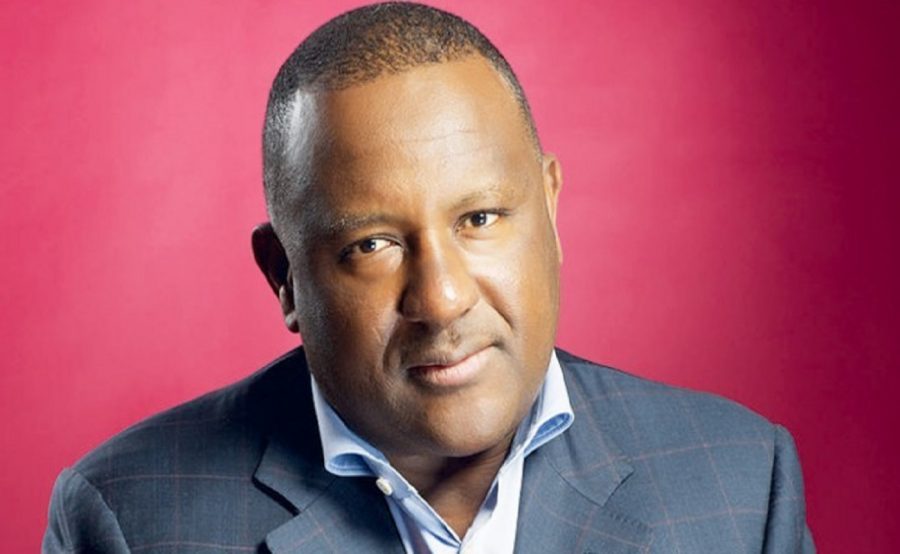
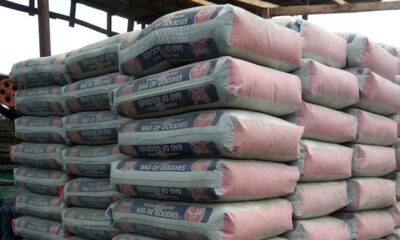
Days after announcing the reduction of ex-factory price of cement, BUA Group has silently increased prices of foods, particularly a bag of sugar, a bag of flour and a carton of spaghetti, investigation has revealed.
The management of one of the giant cement company in the country had on October 1 announced the reduction of ex-factory price of the product to N3,500 per bag.
But the announcement was greeted by public outrage as dealers were battling to enlighten the customers that the reduction in price affects only companies that supply the commodity directly from the factory.
However, investigation revealed that BUA Foods had silently increased prices of its sugar, flour and pasta products.
A visit to some shops at the popular Singer Market in Kano state, the biggest grocery market in Northern Nigeria, showed that price of a bag of sugar, flour and a carton of spaghetti had increased by N3,500, N2,000 and at least N1000 respectively.
Checks also shown that while the price of sugar was recently sold at N44,000 per bag, spaghetti N8,100 a carton, and a bag of flour at N32,500, the commodities are now being sold at N47,500, N9,000 and N34,500 respectively.
A dealer of BUA Foods in Kano told our reporter that the increase in prices of the commodities followed immediately after the company announced the reduction of its cement product.
READ ALSO:
-
Clashes erupt at Liberian president’s re-election parade
-
Teacher’s car crushes 10-year-old pupil to death in school premises
-
Gunmen kidnap pastor, wife, children in Delta community
According to the dealer, who preferred to remain anonymous as he was not authorized to speak, they observed the increase in the prices this week.
He confirmed that the price of a carton of IRS Spaghetti, a pasta product of the BUA Foods, is now N9,000 a carton at company price, while it was recently sold at N8,400 a carton, an indication that it could reach up to N10,000 at retail price.
He also said “We have observed the increase this week. Price of a bag of flour has now gone up to N34,500 as against the N31,000 to N32,000 sold last week. About N2,000 has been increased on a bag of flour and it is a company price.
” About sugar, there is no standard price but it is sold up to N48,000 now in the market. It was N44,500 to N45,000 per bag just last week. Somebody told me that he is selling it at N46,500 per bag.
“We have just received the increased from them this week. They normally communicate to use via phone. They will just send us messages if there is any development.
“I also want to tell you that all these prices are company prices,” he stressed.
Investigation also revealed that price of the commodities had already gone up at retail outlets in the Kano city.
A grocery shop operator, Mustapha at Karkasara are of Tarauni Local Government area, informed our reporter that he sells a bag of 50kg sugar at N49,000 after he supplied it at N47,500 from the dealers.
Another shop operator, Ibrahim Musa in Fagge Local Government said he had observed increment in price of sugar, flour and IRS spaghetti.
According to him, he purchased a 50kg bag of sigar at N48,000, adding that he supplied a bag of flour at N33,000, while IRS spaghetti was N9,100.
READ ALSO:
-
Ensure adherence to Islamic injunctions in conducting funeral rites, Lai Muhammed urges Muslims
-
National Assembly to introduce legislation to regulate fake news on Social Media
- Sunday Igboho regains freedom in Benin Republic, jets out
He lamented that despite the increment, he is recording low market as according to him, it had taken him about two weeks to finish a bag of flour.
“You know there is no money in the hand of people. Before i purchased this flour, the one supplied last time took almost two weeks before it finished.
“We are recording low market. People are in poverty and the patronage is low. We just thank God and pray for His intervention,” Ibrahim said.
Customers also expressed displeasure over the recent increment of the BUA food products.
Hajiya Iyami, one of the major customers that purchase bags of flour for baking Gurasa, a locally-made staple in Kano, lamented that the price of the product has kept rising anytime.
She said the price is rising day in day out from three years ago, recalling that the price had skyrocketed from just N5,500 per bag.
“Ironically, this price of BUA plower has skyrocketed just three years ago when a bag of flour was just N5,500. The price keep going higher
“I have now bought a bag of flour at N34,500. We therefore call on the BUA company to reduce the price of flour as we heard that he reduced the price of s bag of sugar,” Iyami appealed.
Efforts to reach BUA company proved abortive as a major dealer in the state, who was speaking on behalf of the company said he could no longer speak now.
Days after slashing cement price, BUA ‘quietly’ increases sugar, flour, pasta prices
Platinumpost









Business
Nigerians Pay N44 Extra Per Litre as Retailers Defy Falling Depot Prices – Full Report

Auto
Abuja Roars to Life as Jetour X50 Headlines Three-Day Motoring Experience

Abuja Roars to Life as Jetour X50 Headlines Three-Day Motoring Experience
Abuja is gearing up for a major motoring spectacle as Jetour Nigeria brings its fast-growing brand experience to the Federal Capital Territory, with the stylish Jetour X50 set to take centre stage in a three-day showcase of performance, technology and automotive innovation.
Scheduled for September 22 to 24, 2026, the Jetour Experience Abuja will move beyond the conventional vehicle exhibition, giving motorists and prospective buyers the opportunity to test-drive the X50, interact with automotive specialists and experience a range of entertainment and interactive activities.
The Abuja activation follows the strong reception recorded during Jetour Nigeria’s recent Lagos experience and forms part of the automaker’s strategy to deepen customer engagement while expanding its footprint across Nigeria.
Backed by an expanding authorised dealer network comprising Elizade Nigeria Limited, Mandilas Autos, Germaine Auto Centre, Kojo Motors, R.T. Briscoe, Tab Autos and New Era AutoVehicle Services, Jetour is also strengthening access to vehicle sales, after-sales support, genuine spare parts and certified technical services nationwide.
At the heart of the Abuja experience will be the Jetour X50, a compact SUV designed to combine contemporary styling, performance and a technology-rich driving environment.
Powered by a 1.5-litre turbocharged engine paired with a dual-clutch transmission, the X50 has positioned itself as a strong contender in Nigeria’s competitive compact SUV segment.
Jetour has equipped the model with a range of premium features, including a 360-degree camera, Blind Spot Detection, 10.5-inch infotainment system with Apple CarPlay and Android Auto, wireless charging and leather upholstery.
The combination of technology, comfort and performance is part of Jetour’s strategy of offering premium motoring features at competitive price points.
The Abuja event also highlights Jetour’s aggressive expansion strategy in Nigeria, following the brand’s recognition with industry accolades including Fastest Growing Auto Brand and Auto Brand of the Year.
With its expanding dealer network providing nationwide sales and after-sales support, Jetour is seeking to deepen customer engagement while making its vehicles and ownership services more accessible to motorists across the country.
As Abuja prepares to welcome the Jetour Experience, the three-day activation is expected to provide motorists with an opportunity to see, feel and drive the X50 while experiencing first-hand what is driving the brand’s growing appeal in Nigeria.
Business
Dangote Refinery Sets ₦525 Per Share for Landmark IPO

For ₦5,250, Nigerians could soon own a piece of the refinery that has reshaped the country’s fuel market.
-

 metro2 days ago
El-Rufai Demands ₦10bn from Defence Minister Over Southern Kaduna Killings Allegation
-

 Politics2 days ago
Why Did Peter Obi Attend Seyi Makinde’s Campaign Launch? Here’s What He Said
-

 News2 days ago
Lagos Moves to Slash Agency Fees, Curb Rent Hikes With New Tenancy Bill
-

 metro3 days ago
Oyoland Grand Chief Imam Celebrates Dr Sharafudeen Raji for Service to Islam
-

 metro2 days ago
Catholic priest leaves priesthood, weds Kenyan woman after 12 years in Kenya
-

 Politics2 days ago
JUST IN: Tension in Benue as Suspected Thugs Attack Peter Obi’s Convoy, Block Access
-

 Business3 days ago
After two decades, Tinubu approves Cabotage fund for Nigerian shipowners
-

 Entertainment3 days ago
My husband is a secure man – Mo Bimpe claps back at critics