

News
Don’t let violence, destruction tear our nation apart, Tinubu begs Nigerians [Broadcast Full Text]

Don’t let violence, destruction tear our nation apart, Tinubu begs Nigerians [Broadcast Full Text]
BROADCAST BY HIS EXCELLENCY BOLA AHMED TINUBU, PRESIDENT AND COMMANDER-IN-CHIEF OF THE ARMED FORCES OF THE FEDERAL REPUBLIC OF NIGERIA ON THE NATIONWIDE PROTEST
DATE: SUNDAY 4TH AUGUST 2024
My fellow Nigerians,
1. I speak to you today with a heavy heart and a sense of responsibility, aware of the turmoil and violent protests unleashed in some of our states.
2. Notably among the protesters were young Nigerians who desired a better and more progressive country where their dreams, hopes, and personal aspirations would be fulfilled.
3. I am especially pained by the loss of lives in Borno, Jigawa, Kano, Kaduna and other states, the destruction of public facilities in some states, and the wanton looting of supermarkets and shops, contrary to the promise of protest organisers that the protest would be peaceful across the country. The destruction of properties sets us back as a nation, as scarce resources will be again used to restore them.
4. I commiserate with the families and relations of those who have died in the protests. We must stop further bloodshed, violence and destruction.
5. As President of this country, I must ensure public order. In line with my constitutional oath to protect the lives and property of every citizen, our government will not stand idly by and allow a few with a clear political agenda to tear this nation apart.
6. Under the circumstances, I hereby enjoin protesters and the organisers to suspend any further protest and create room for dialogue, which I have always acceded to at the slightest opportunity. Nigeria requires all hands on deck and needs us all – regardless of age, party, tribe, religion or other divides, to work together in reshaping our destiny as a nation. To those who have taken undue advantage of this situation to threaten any section of this country, be warned: The law will catch up with you. There is no place for ethnic bigotry or such threats in the Nigeria we seek to build.
7. Our democracy progresses when the constitutional rights of every Nigerian are respected and protected. Our law enforcement agencies should continue to ensure the full protection of lives and properties of innocent citizens in a responsible manner.
8. My vision for our country is one of a just and prosperous nation where each person may enjoy the peace, freedom, and meaningful livelihood that only democratic good governance can provide – one that is open, transparent and accountable to the Nigerian people.
READ ALSO:
- NELFUND lists 6 institutions to receive students loan
- Rwanda shuts 4,000 churches over noise pollution, others
- Police hunt man who escaped to Nigeria after rape sentence in UK
9. For decades, our economy has remained anaemic and taken a dip because of many misalignments that have stunted our growth. Just over a year ago, our dear country, Nigeria, reached a point where we couldn’t afford to continue the use of temporary solutions to solve long-term problems for the sake of now and our unborn generations. I therefore took the painful yet necessary decision to remove fuel subsidies and abolish multiple foreign exchange systems which had constituted a noose around the economic jugular of our Nation and impeded our economic development and progress.
10. These actions blocked the greed and the profits that smugglers and rent-seekers made. They also blocked the undue subsidies we had extended to our neighbouring countries to the detriment of our people, rendering our economy prostrate. These decisions I made were necessary if we must reverse the decades of economic mismanagement that didn’t serve us well. Yes, I agree, the buck stops on my table. But I can assure you that I am focused fully on delivering the governance to the people – good governance for that matter.
11. In the past 14 months, our government has made significant strides in rebuilding the foundation of our economy to carry us into a future of plenty and abundance. On the fiscal side, aggregate government revenues have more than doubled, hitting over 9.1 trillion Naira in the first half of 2024 compared to the first half of 2023 due to our efforts at blocking leakages, introducing automation, and mobilising funding creatively without additional burden on the people. Productivity is gradually increasing in the non-oil sector, reaching new levels and taking advantage of the opportunities in the current economic ambience
12. My dear brothers and sisters, we have come this far. Coming from a place where our country spent 97% of all our revenue on debt service; we have been able to reduce that to 68% in the last 13 months. We have also cleared legitimate outstanding foreign exchange obligations of about $5billion without any adverse impact on our programmes.
13. This has given us more financial freedom and the room to spend more money on you, our citizens, to fund essential social services like education and healthcare. It has also led to our State, and Local Governments receiving the highest allocations ever in our country’s history from the Federation Account.
14. We have also embarked on major infrastructure projects across the country. We are working to complete inherited projects critical to our economic prosperity, including roads, bridges, railways, power, and oil and gas developments. Notably, the Lagos-Calabar Coastal Highway and Sokoto-Badagry Highway projects will open up 16 connecting states, creating thousands of jobs and boosting economic output through trade, tourism and cultural integration
15. Our once-declining oil and gas industry is experiencing a resurgence on the back of the reforms I announced in May 2024 to address the gaps in the Petroleum Industry Act. Last month, we increased our oil production to 1.61million barrels per day, and our gas assets are receiving the attention they deserve. Investors are coming back, and we have already seen two Foreign Direct Investments signed of over half a billion dollars since then.
16. Fellow Nigerians, we are a country blessed with both oil and gas resources, but we met a country that had been dependent solely on oil-based petrol, neglecting its gas resources to power the economy. We were also using our hard-earned foreign exchange to pay for, and subsidise its use. To address this, we immediately launched our Compressed Natural Gas Initiative (CNG) to power our transportation economy and bring costs down. This will save over two trillion Naira a month, being used to import PMS and AGO and free up our resources for more investment in healthcare and education.
READ ALSO:
- NLC to Police : Go after bandits, not peaceful protesters
- BREAKING: Protesters, security operatives clash in Kano, many killed
- Nigeria got $1.25bn W’Bank, AfDB loans for electricity under Tinubu – Report
17. To this end, we will be distributing a million kits of extremely low or no cost to commercial vehicles that transport people and goods and who currently consume 80% of the imported PMS and AGO.
18. We have started the distribution of conversion kits and setting up of conversion centres across the country in conjunction with the private sector. We believe that this CNG initiative will reduce transportation costs by approximately 60 per cent and help to curb inflation.
19. Our administration has shown its commitment to the youth by setting up the student loan scheme. To date, 45.6billion Naira has already been processed for payment to students and their respective institutions
20. I encourage more of our vibrant youth population to take advantage of this opportunity. We established the Consumer Credit Corporation with over N200billion to help Nigerians to acquire essential products without the need for immediate cash payments, making life easier for millions of households. This will consequently reduce corruption and eliminate cash and opaque transactions. This week, I ordered the release of an additional N50billion Naira each for NELFUND – the student loan, and Credit Corporation from the proceeds of crime recovered by the EFCC
21. Additionally, we have secured $620million under the Digital and Creative Enterprises (IDiCE) – a programme to empower our young people, creating millions of IT and technical jobs that will make them globally competitive. These programmes include the 3Million Technical Talents scheme. Unfortunately, one of the digital centres was vandalised during the protests in Kano. What a shame!
22. In addition, we have introduced the Skill-Up Artisans Programme (SUPA); the Nigerian Youth Academy (NIYA); and the National Youth Talent Export Programme (NATEP).
23. Also, more than N570 billion has been released to the 36 states to expand livelihood support to their citizens, while 600,000 nano-businesses have benefitted from our nano-grants. An additional 400,000 more nano-businesses are expected to benefit.
24. Furthermore, 75,000 beneficiaries have been processed to receive our N1million Micro and Small Business single-digit interest loans, starting this month. We have also built 10 MSME hubs within the past year, created 240,000 jobs through them and 5 more hubs are in progress which will be ready by October this year.
25. Payments of N1billion each are also being made to large manufacturers under our single-digit loans to boost manufacturing output and stimulate growth.
26. I signed the National Minimum Wage into law last week, and the lowest-earning workers will now earn at least N70,000 a month.
27. Six months ago in Karsana, Abuja, I inaugurated the first phase of our ambitious housing initiative, the Renewed Hope City and Estate. This project is the first of six we have planned across the nation’s geopolitical zones. Each of these cities will include a minimum of 1,000 housing units, with Karsana itself set to deliver 3,212 units
28. In addition to these city projects, we are also launching the Renewed Hope Estates in every state, each comprising 500 housing units. Our goal is to complete a total of 100,000 housing units over the next three years. This initiative is not only about providing homes but also about creating thousands of jobs across the nation as well as stimulating economic growth.
29. We are providing incentives to farmers to increase food production at affordable prices. I have directed that tariffs and other import duties should be removed on rice, wheat, maize, sorghum, drugs, and other pharmaceutical and medical supplies for the next 6 months, in the first instance, to help drive down the prices.
30. I have been meeting with our Governors and key Ministers to accelerate food production. We have distributed fertilisers. Our target is to cultivate more than 10 million hectares of land to grow what we eat. The Federal Government will provide all necessary incentives for this initiative, whilst the states provide the land, which will put millions of our people to work and further increase food production. In the past few months, we have also ordered mechanized farming equipment such as tractors and planters, worth billions of Naira from the United States, Belarus, and Brazil. I can confirm to you that the equipment is on the way.
31. My dear Nigerians, especially our youth, I have heard you loud and clear. I understand the pain and frustration that drive these protests, and I want to assure you that our government is committed to listening and addressing the concerns of our citizens.
32. But we must not let violence and destruction tear our nation apart. We must work together to build a brighter future, where every Nigerian can live with dignity and prosperity.
33. The task before us is a collective one, and I am leading the charge as your President. A lot of work has gone into stabilising our economy and I must stay focused on ensuring that the benefits reach every single Nigerian as promised.
34. My administration is working very hard to improve and expand our national infrastructure and create more opportunities for our young people.
35. Let nobody misinform and miseducate you about your country or tell you that your government does not care about you. Although there have been many dashed hopes in the past, we are in a new era of Renewed Hope. We are working hard for you, and the results will soon be visible and concrete for everyone to see, feel, and enjoy.
36. Let us work together to build a brighter future for ourselves and for generations to come. Let us choose hope over fear, unity over division, and progress over stagnation. The economy is recovering; Please, don’t shut out its oxygen. Now that we have been enjoying democratic governance for 25 years, do not let the enemies of democracy use you to promote an unconstitutional agenda that will set us back on our democratic journey. FORWARD EVER, BACKWARD NEVER!
37. In conclusion, security operatives should continue to maintain peace, law, and order in our country following the necessary conventions on human rights, to which Nigeria is a signatory. The safety and security of all Nigerians are paramount.
38. Thank God — and Thank you for your attention, and may God continue to bless our great Nation. Thank you very much.
Don’t let violence, destruction tear our nation apart, Tinubu begs Nigerians [Broadcast Full Text]






News
Yamal Fires Back at Mbappé: “I’m Not Going to Beg” for Ballon d’Or

Yamal Fires Back at Mbappé: “I’m Not Going to Beg” for Ballon d’Or
The 19-year-old Spain international insists his World Cup and La Liga triumphs speak for themselves, while also being named one of Barcelona’s vice-captains ahead of the October 26 ceremony.
Barcelona forward Lamine Yamal has made it clear that he will not campaign or “beg” for the 2026 Ballon d’Or, stating that his achievements on the pitch for club and country should speak for themselves. Speaking ahead of Barcelona’s Champions League opener against Feyenoord, the 19-year-old responded to comments from rival Kylian Mbappé, who had previously made his case for the award by highlighting his World Cup Golden Boot win, which also saw him become the competition’s all-time top goalscorer.
“I don’t think I need to campaign for the Ballon d’Or. I’m not thinking about what I deserve, everyone can think what they like,” Yamal told reporters. “I’m proud of everything I’ve done this year with my club and with the national team. We’ve become world champions, we’ve won the league again. I can’t ask for anything more. I think I’ve shown an incredible level, it’s your job and I will not beg for anything.”
The Spanish international, who finished second in last year’s voting behind PSG’s Ousmane Dembélé, is among the leading contenders for the prize alongside Mbappé, Harry Kane, Dembélé, and Khvicha Kvaratskhelia. The ceremony is scheduled for October 26 in London. Yamal was officially named among the 30 nominees for the 2026 men’s Ballon d’Or when France Football unveiled the list on Tuesday, marking his third nomination.
When asked about Dembélé’s recent comments naming Kvaratskhelia, Kane, and Mbappé as his top three, Yamal joked: “He’s a friend of Kylian, right? Honestly, I don’t care. I’m very happy with the year I had. Whenever I’ve faced both of them, I’ve won. They must have taken a dislike to me for some reason.” Spain knocked France out of the World Cup semi-finals with a convincing 2-0 victory.
READ ALSO:
- Osun Police Arrest Woman After Vigilante Member Dies During Sexual Encounter in Ile-Ife
- Igbo Group Rejects Tinubu Endorsement, Pledges Grassroots Support for Peter Obi in 2027
- Lagos arraigns over 100 suspects after 130 arrested in Lekki, Ajah raid
Yamal, who suffered a hamstring injury in April, has returned to form with two goals in his last two outings against Rayo Vallecano and Valencia, and appeared far more cheerful after a difficult start to the season. “In the end, I’m 19, coming off winning a World Cup, having had the best holidays of my life. I’ve never been happier at any point in my life than I am now,” he said.
Beyond individual honours, Yamal emphasised that Barcelona’s primary target this season is the Champions League trophy, a title that has eluded the Catalan giants since 2015. “There’s no greater motivation than the Champions League, which is the one I still have to win. We will give our all to win it,” Yamal said ahead of Wednesday’s opener against Feyenoord. “Good players have arrived, like Anthony Gordon, Karim Adeyemi, Rodri.”
Barcelona coach Hansi Flick praised the young star, saying: “Lamine is a player who can decide games on his own, fantastic quality. It’s great, you can see it every day how he is enjoying playing football. For me the best thing is that he enjoys this game and then he’s on a top level.”
Yamal is also the favourite to win a third consecutive best young player award at the Ballon d’Or ceremony, having been one of 10 players nominated on Tuesday, including Johan Manzambi, Yan Diomande, and Ayyoub Bouaddi, who all impressed at the World Cup and were then the subject of big-money summer transfers.
Interestingly, during the press conference, neither Yamal nor Flick mentioned Feyenoord by name, instead focusing entirely on Barcelona’s mission to win the Champions League. Yamal was recently elected one of three vice-captains by his teammates, alongside Eric Garcia and Frenkie de Jong, with coach Hansi Flick selecting Raphinha and Pedri as the other members of the five-man captaincy group. “It’s something to be proud of at 19 years old. I’m very grateful to my teammates. It’s a position that comes with responsibilities, even if I’m only 19, but I’m very happy,” he said.
Yamal Fires Back at Mbappé: “I’m Not Going to Beg” for Ballon d’Or
News
Lagos Moves to Slash Agency Fees, Curb Rent Hikes With New Tenancy Bill

Lagos Moves to Slash Agency Fees, Curb Rent Hikes With New Tenancy Bill
The Lagos State Government has unveiled a proposed tenancy law aimed at overhauling the relationship between landlords, tenants and estate agents, with measures designed to curb arbitrary rent increases, excessive agency charges, fraudulent property transactions and prolonged tenancy disputes.
The proposed Lagos State Tenancy and Recovery of Premises Bill, 2025, currently before the Lagos State House of Assembly, seeks to replace the existing tenancy framework with a more comprehensive regime covering rent payments, advance rent, agency fees, eviction, dispute resolution and the conduct of landlords and property agents.
The bill, however, has not yet become law and remains subject to legislative consideration and possible amendments.
One of the most significant provisions in the proposed legislation is the plan to reduce estate agency fees to five per cent of annual rent.
The proposal has attracted considerable attention because tenants in Lagos routinely complain about the financial burden of agency, agreement and other charges demanded when securing accommodation.
The Lagos State House of Assembly had previously stated during deliberations on the bill that the agency commission would be reduced from the existing 10 per cent benchmark to five per cent. An agent who charges above the prescribed rate under the proposed law could face sanctions, including refund of the excess, a fine of up to N1 million or imprisonment for up to two years, or both.
The bill also proposes compulsory registration of estate agents with the Lagos State Real Estate Regulatory Authority, LASRERA.
Under the proposal, operating as an estate agent without the required registration would become an offence. The government says the measure is intended to check the activities of fraudulent and unregistered operators accused of collecting money from unsuspecting members of the public, engaging in multiple transactions on the same property and imposing questionable charges on prospective tenants.
READ ALSO:
- Why Did Peter Obi Attend Seyi Makinde’s Campaign Launch? Here’s What He Said
- JUST IN: Tension in Benue as Suspected Thugs Attack Peter Obi’s Convoy, Block Access
- FIFA, CAF suspend NFF election as Nigeria football reforms face fresh review
The proposed legislation further requires agents handling rent or other funds on behalf of property owners to account for such money and remit it within a stipulated period. Legal reviews of the draft bill put the remittance period at seven working days and require agents to issue receipts for transactions.
One-year limit on advance rent
Another major proposal is the restriction on advance rent.
The draft legislation seeks to prevent landlords from demanding excessive periods of rent upfront. Under the proposed framework, a new tenant would generally not be required to pay more than one year’s rent in advance, while sitting tenants who ordinarily pay monthly would not be compelled to make excessive advance payments.
The measure is expected to address one of the biggest challenges facing accommodation seekers in Lagos, where prospective tenants often complain of demands for one, two or even more years’ rent before they are allowed to occupy a property.
Landlords may face scrutiny over rent increases
The proposed law also seeks to tackle what it describes as unreasonable increases in rent.
Under the bill, a tenant who considers a rent increase excessive could challenge it, with the court empowered to consider factors including rents charged for comparable properties and evidence presented by both the landlord and tenant.
The proposal is significant in a city where rapid increases in rental values have become a major concern for residents, particularly low- and middle-income earners.
The bill also provides protection for tenants who challenge an allegedly unreasonable increase, including restrictions on eviction while the matter is before the court.
Faster resolution of landlord-tenant disputes
Perhaps one of the most ambitious aspects of the proposed legislation is its attempt to speed up tenancy-related litigation.
The bill provides for tenancy proceedings through originating summons and proposes mechanisms designed to shorten the time between filing a case and hearing it.
It also empowers courts to sit on weekends and public holidays for tenancy matters and provides for virtual hearings.
The proposed framework further provides for mediation as an alternative to prolonged litigation, with the aim of resolving disputes more quickly and reducing the backlog of landlord-tenant cases.
The government has argued that faster dispute resolution would benefit both landlords and tenants by reducing the cost and uncertainty associated with lengthy court proceedings.
Tenants to provide evidence
The Lagos State Commissioner for Housing, Moruf Akinderu-Fatai, said tenants seeking legal action would be required to provide evidence including proof of rent payments and updated utility bills.
READ ALSO:
- NNPC Disowns Cannabis-Laden Tanker, Threatens Legal Action Over Brand Misuse
- Bauchi Man, 25, Allegedly Shoots Friend Dead With Dane Gun During Quarrel
- 87-Year-Old Man Arraigned for Severing Judge’s Hand in Adamawa Cutlass Attack
According to the government, the requirement is intended to ensure that tenancy disputes are supported by verifiable documentation rather than mere allegations.
Protection against self-help eviction
The proposed framework also strengthens legal protection against arbitrary eviction and other forms of self-help.
The draft bill provides for lawful procedures that landlords must follow when seeking possession of their properties. It seeks to discourage practices such as forcibly ejecting tenants, interfering with access to premises or taking other unilateral measures without following due process.
It also contains provisions relating to abandoned premises, recovery of possession and enforcement of court orders.
Service charges, deposits and professional fees
The bill goes beyond rent and agency commissions to address other financial issues associated with tenancy.
Among the proposed provisions are rules concerning service charges, facility and security deposits, as well as professional fees.
The draft framework seeks greater transparency in the handling of tenants’ money and provides for accountability concerning service charges and refundable deposits. Legal reviews of the bill indicate that security deposits would generally be refundable, subject to documented deductions for damage or other legitimate claims.
LASRERA intensifies enforcement
The proposed reforms come against the backdrop of increased enforcement by LASRERA against fraudulent operators in Lagos’ property market.
The Commissioner for Housing disclosed that the regulatory agency recovered more than N270 million from fraudulent estate agents between 2025 and 2026.
The government says the enforcement campaign, combined with the proposed legislation, is intended to restore confidence in the state’s real estate sector and protect residents from exploitation.
Stakeholders raise concerns
While the proposed reduction in agency fees has been welcomed by tenant advocates, housing stakeholders have also raised concerns about possible loopholes.
Spaces for Change, which participated in the 2025 public hearing on the bill, warned that agents could attempt to circumvent a five per cent cap by introducing additional charges under different descriptions.
The organisation recommended that the prescribed five per cent ceiling should cover other related charges in order to prevent agents from simply shifting costs from “agency fee” to documentation, inspection or other charges.
There have also been calls for the bill to provide clearer safeguards around the collection, storage and use of tenants’ personal information, given the large amount of sensitive data prospective tenants routinely submit to landlords and estate agents.
Bill still awaiting passage
Despite the publicity surrounding the proposed reforms, tenants and landlords have been urged not to assume that the new provisions are already enforceable.
The Lagos State Tenancy and Recovery of Premises Bill remains a proposal before the Lagos State House of Assembly. Until it is passed by the Assembly and receives the necessary assent, the existing tenancy law remains the applicable legal framework.
If eventually enacted, however, the proposed law could represent one of the most far-reaching changes to landlord-tenant relations in Lagos in years, particularly through its proposed five per cent agency-fee cap, restrictions on advance rent, compulsory registration of agents, stronger protections against arbitrary rent increases and faster mechanisms for resolving tenancy disputes.
For millions of Lagos residents struggling with rising accommodation costs, the central question will now be whether the proposed reforms can move from the pages of the bill to effective enforcement across the state’s notoriously expensive and complex rental market.
Lagos Moves to Slash Agency Fees, Curb Rent Hikes With New Tenancy Bill
Business
Dangote Refinery Sets ₦525 Per Share for Landmark IPO
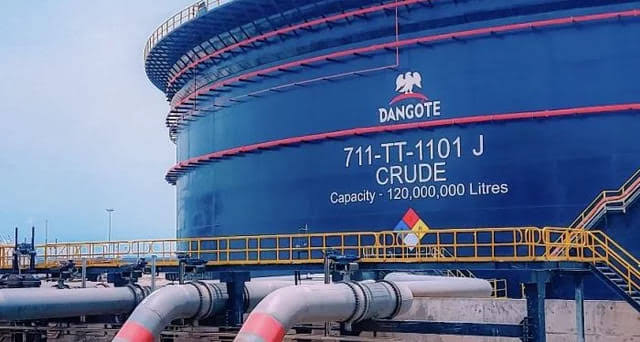
For ₦5,250, Nigerians could soon own a piece of the refinery that has reshaped the country’s fuel market.
-
 Politics3 days ago
Peter Obi, Others Challenging Tinubu Cannot Transform Nigeria — Datti Baba-Ahmed
-

 Auto2 days ago
Kaduna to Lead Govt Patronage of Local Vehicles as Sani Unveils Peugeot 5008
-
 metro1 day ago
El-Rufai Demands ₦10bn from Defence Minister Over Southern Kaduna Killings Allegation
-

 metro2 days ago
Socialite Igho ‘Tiny’ Ubiribo Dies After Penis Enlargement Surgery
-
 metro1 day ago
Catholic priest leaves priesthood, weds Kenyan woman after 12 years in Kenya
-

 metro2 days ago
Three Women Killed, 10 Injured in Multiple Crash on Lagos-Ibadan Expressway Bridge
-
 metro1 day ago
No US Case Against Tinubu, Family Enjoy Unimpeded Transit for UNGA — Ambassador Ibrahim
-
 Politics3 days ago
Demystifying the Political Monolith: Wike’s ‘See Finish’ Doctrine and Nigeria’s New Political Calculus