
Business
DPR revokes 32 refinery licences, says Dangote plant 80% complete
Thirty-two refinery project licences issued to private investors in the country have become invalid in the past three years, according to the Department of Petroleum Resources.
The DPR said on Monday that the number of valid refinery project licences stood at 23 as of March 2021, down from 44 in April 2018.
An analysis of the agency’s new list of valid refinery project licences and that of April 2018 showed that 32 licences had become invalid while 11 new licences were granted between May 2018 and March 2021.
As of April 2018, there were 38 proposed modular refineries with capacity ranging from 5,000 barrels per stream day to 30,000bpsd, and six conventional plants with a total capacity of 1.35 million bpsd.
The DPR had said then that 20 of the licences were active, adding that 24 of the licence holders were still sourcing funds, although most of the licences had expired as of April 2018.
The agency’s updated list showed that the construction of four modular refineries, with a total capacity of 23,000bpsd, had been completed.
The refineries are Waltersmith Refining & Petrochemical Company Limited in Imo State, OPAC Refineries in Delta, Niger Delta Petroleum Resources (Train 3) in Rivers, and Edo Refinery and Petrochemical Company Limited in Edo.
The biggest refinery project, which is being built by Dangote Oil Refinery Company in Lagos, is more than 80.3 percent completed, according to the DPR.
The refinery projects whose licences were declared invalid by the agency include BUA Refinery & Petrochemicals (Akwa Ibom); Dee Jones (Cross River); Energia Limited (Delta State); Southfield Petrochemical & Refinery Ltd (Edo); Starex Petroleum Refinery (Onne Oil & Gas Free Trade Zone); RG Shinjin Petrochemicals (Delta); Don Mac (Edo), and Platinum Hydrocarbon Resources (Delta).
Others are Mondonat Nigeria Ltd (Delta); Ikwe-Onna Refinery (Akwa Ibom); Shepha Petroleum & Petrochemicals Company (Delta); JIL-Amber (Port Harcourt Refinery); Gazingstock Petroleum Company (Delta); Petrolex Oil & Gas Limited (Ogun); Eghudu Refinery (Edo); Ibafon Refinery FZE (Calabar FTZ, Cross River); and Kainji Resources (Imo).
Among them are Eko Petrochem & Refining Company (Lagos); Hi Rev Oil (Akwa Ibom); Epic Refinery & Petrochemical Industries (Bayelsa); Masters Energy Oil & Gas (Rivers); Cross Country Oil & Gas (Imo); Grifon Energy (Ondo); Sifax Oil & Gas Company (Lagos); and Capital Oil & Gas Industries (Lagos);
Others are All Grace Energy (Rivers); Green Energy International (Rivers); Fresh Energy Limited (Bayelsa); Chyzob Oil & Gas (Abia); Aiteo Energy Resources Limited (Delta); Associated Worldwide Company (Akwa Ibom); and Amakpe International Refinery (Akwa Ibom).





Auto
Appeal Court Ruling on VIO Limited to Abuja, Not Lagos — LASG
Appeal Court Ruling on VIO Limited to Abuja, Not Lagos — LASG
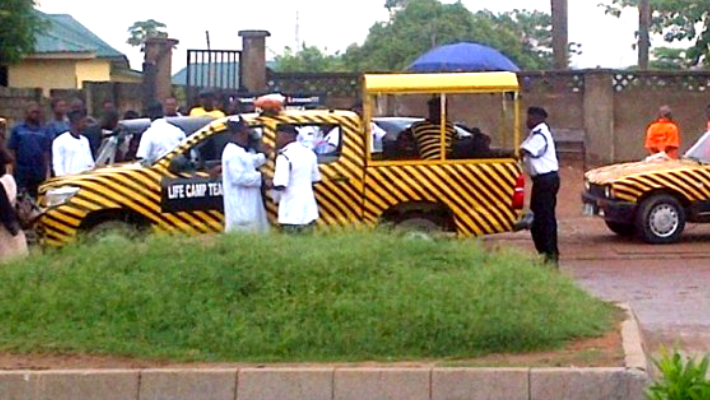
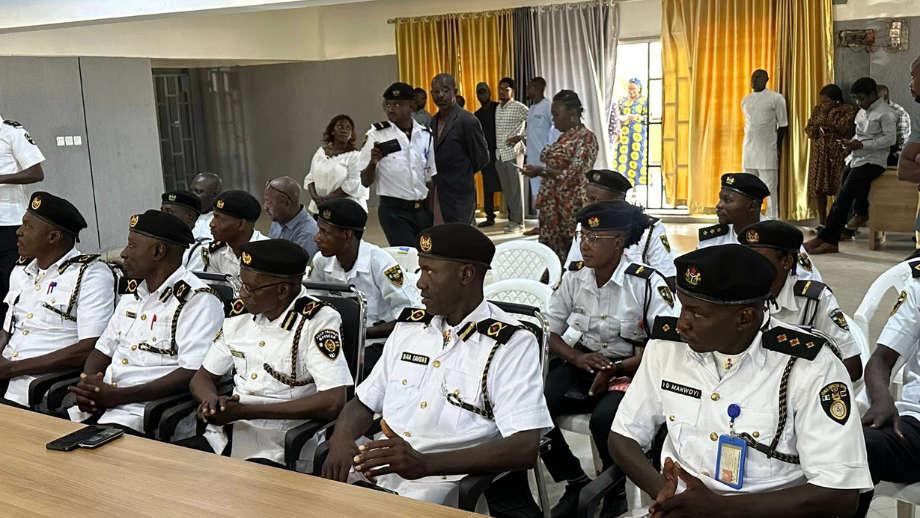
The Lagos State Government has dismissed widespread claims that a recent Court of Appeal judgment has stripped Vehicle Inspection Officers (VIOs) of their powers across Nigeria, insisting that the ruling applies strictly to the Federal Capital Territory (FCT).
The clarification follows public reactions to a decision of the Court of Appeal, Abuja Division, which upheld an earlier ruling of the Federal High Court restraining Vehicle Inspection Officers and the Directorate of Road Traffic Services in the FCT from stopping motorists, impounding vehicles, or imposing fines.
The judgment triggered viral interpretations suggesting that VIO operations had been outlawed nationwide.
However, Lagos State Attorney-General and Commissioner for Justice, Lawal Pedro, SAN, described such interpretations as legally inaccurate and misleading.
Basis of the Court Decision
According to Pedro, both the Federal High Court and the Court of Appeal premised their decisions on the absence of statutory authority empowering VIO officials in the FCT to stop, impound, confiscate vehicles, or impose fines on motorists.
READ ALSO:
- Terror in Lagos Traffic: Cutlass Gang Unleashes Mayhem on Mile 12–Ketu Road
- FG Drags El-Rufai to Court Over Alleged NSA Phone Interception
- Mystery in Lekki: Police Probe Death of Two Nollywood Crew Found Lifeless in Parked Car
“It is important to understand that the Honourable Judge of the Federal High Court and Justices of the Court of Appeal premised their decision on absence of statutory power conferred on the Respondents to stop, impound or confiscate vehicles and/or impose fines on motorists on roads in FCT Abuja,” he stated.
He noted that the courts did not declare vehicle inspection enforcement unconstitutional in Nigeria, but rather ruled specifically on the legal framework governing the FCT authorities involved in the suit.
Why Lagos Is Different
The Lagos government stressed that Nigeria’s federal structure allows states to legislate on residual matters such as road traffic management and vehicle inspection.
Pedro explained that Lagos operates under the Lagos State Transport Sector Reform Law, which expressly establishes and empowers the Vehicle Inspection Service (VIS).
Section 12(1) of the law authorises the VIS to:
Inspect and regulate the roadworthiness of vehicles
Conduct pre-registration inspections
Issue Road Worthiness Certificates
Collaborate with other relevant agencies to enforce traffic laws
In addition, Section 23(1) provides for penalties against offenders, subject to adjudication before mobile or magistrate courts, ensuring judicial oversight.
Not of Nationwide Effect
While acknowledging that the appellate decision is binding within the FCT, the Lagos government emphasised that it does not have automatic nationwide application.
“The judgment, though binding, is not of general application or of nationwide effect in Nigeria,” the ministry stated.
The state government stressed that VIS officers in Lagos remain legally empowered to carry out enforcement duties under extant state laws.
Wider Implications
The controversy underscores ongoing debates over traffic enforcement powers in Nigeria, particularly the constitutional boundaries between federal and state authorities.
Legal analysts note that unless the Supreme Court delivers a broader pronouncement on the issue, enforcement powers will continue to depend largely on the specific statutory framework establishing such agencies in each jurisdiction.
For now, Lagos authorities insist that vehicle inspection and traffic enforcement operations in the state remain valid and legally grounded.
Appeal Court Ruling on VIO Limited to Abuja, Not Lagos — LASG
Auto
Chanrai Storms Nigeria’s Gas Market, Unveils High-Capacity CNG, LNG Solutions to Power Energy Shift
Chanrai Storms Nigeria’s Gas Market, Unveils High-Capacity CNG, LNG Solutions to Power Energy Shift
By Rasheed Bisiriyu
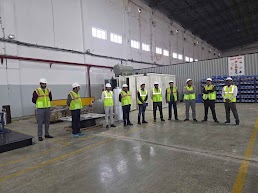
Nigeria’s drive towards cleaner and more affordable transport fuel gathered fresh momentum on Friday as Chanrai Nigeria Limited formally entered the country’s gas distribution space, unveiling high-capacity CNG and LNG compression technologies in Lagos.
The company, a member of the globally diversified Kewalram Chanrai Group, announced a strategic partnership with India’s Tulip Compression to roll out advanced compressor packages and integrated “single window” CNG solutions aimed at accelerating the Federal Government’s Presidential CNG Initiative.
Chief Operating Officer of Chanrai Nigeria Limited, Anil Sahgal, described the Tulip CNG Compressor Packages as a “game-changer” for Nigeria’s evolving energy landscape.
“With our commitment to safety, efficiency and OEM-grade partnership, we’re empowering the nation to achieve its CNG ambitions while driving economic growth and environmental sustainability,” Sahgal said.
The move marks Chanrai’s expansion beyond its traditional business interests — which span automobiles, agro-products, healthcare and fast-moving consumer goods — into the fast-growing gas infrastructure segment, as fleet operators and industrial users increasingly seek alternatives to petrol and diesel.
Under the partnership, Chanrai Nigeria and Tulip Compression will deliver Compression Station on Single Window (CssW) solutions — integrating compressors, dispensers, storage and stainless-steel tubing under one brand — to simplify deployment and reduce installation timelines.
The compressor packages come in a wide capacity range, from 250 to 4,500 standard cubic metres per hour, making them suitable for small refuelling stations as well as large gas hubs.
A 1,400 SCMH gas engine-driven booster compressor is designed to refuel heavy-duty CNG trucks in about 20 minutes by drawing gas from tube trailers.
The systems are available in both electric motor-driven and gas engine-driven configurations, eliminating the need for large gas generators while ensuring energy efficiency and lower life-cycle costs.
According to the company, the equipment features dual-chamber leak-proof safety systems, advanced sealing technology to eliminate gas loss and global certifications including ATEX, CE, BIS and SGS standards.
The unveiling underscores the growing private sector response to government reforms encouraging gas adoption as a cost-effective and environmentally friendly alternative fuel.
With the compressor packages now available for immediate orders, Chanrai Nigeria said it would provide 24/7 after-sales support, operations and maintenance services, as well as remote asset monitoring solutions.
The development signals intensifying investment in CNG infrastructure as Nigeria seeks to deepen local gas utilisation, reduce fuel import dependence and cushion consumers from volatile petrol prices.
Entertainment
NRC, Entertainers Finalise Plans for 2026 Valentine Train Ride

NRC, Entertainers Finalise Plans for 2026 Valentine Train Ride
A team of leading Nigerian artistes and entertainment executives has paid a courtesy visit to the Managing Director of the Nigerian Railway Corporation (NRC), Kayode Opeifa, ahead of the 2026 Valentine Love Train experience.
The delegation included celebrated musician Sunny Neji, Managing Director of Ojez Entertainment Limited, Joseph Odobeatu, and veteran vocalist Yinka Davies.
The high-profile visit formed part of final preparations for the Valentine-themed train ride scheduled for Saturday, February 14, 2026, at the Mobolaji Johnson Train Station.
Dr. Opeifa received the artistes and commended the creative industry for choosing the national rail system as the venue for the annual Valentine event. He noted that the partnership reflects growing public confidence in the corporation’s safety standards, operational improvements, and renewed focus on customer experience.
READ ALSO:
- 2027 General Elections: INEC Announces February 20 for Presidential Poll
- EFCC Nabs Three in Borno Over Viral ₦500 Naira Mutilation Video
- Omokri Accuses El-Rufai of Rights Abuses During Kaduna Governorship
“The 2026 edition aims to deliver an unforgettable experience while deepening public engagement with the rail service,” Opeifa said, reaffirming the NRC’s commitment to providing secure and efficient transport for passengers during special events.
Organisers disclosed that this year’s edition will feature an expanded entertainment lineup, including performances and appearances by Charles Inojie, Yinka Davies, Sunny Neji, and Segun Arinze. Guests are expected to enjoy live music, comedy, a couple’s game show, fashion showcases, and special performances throughout the Lagos–Ibadan–Lagos train ride, culminating in a Valentine banquet ball.
The Valentine Love Train has in recent years become a fixture on the NRC’s festive calendar, attracting couples, families, and leisure seekers with its blend of travel, romance, and entertainment. The initiative also aligns with ongoing efforts by the corporation to promote rail transportation as a viable and enjoyable alternative for intercity travel.
With final logistics being fine-tuned, organisers say the 2026 edition promises to combine safety, comfort, and premium entertainment for participants.
NRC, Entertainers Finalise Plans for 2026 Valentine Train Ride

-
 Education1 day ago
Check Your Name: UNILORIN Releases Updated NELFUND Refund List for 2024/2025 Students
-

 News19 hours ago
Osogbo Sons and Daughters Mark 5th Anniversary with Awards, Political Undertones
-

 metro2 days ago
Woman Arrested Over Murder of Nigerian E-Hailing Driver in South Africa
-

 metro2 days ago
Boko Haram Terrorists Release Video of 176 Abducted Kwara Residents
-

 News1 day ago
Afenifere Calls for Immediate Take-Off of State Police as Terror Threats Rise in Yorubaland
-
 metro1 day ago
US Military Boosts Support for Nigeria’s Fight Against Insurgency With Ammunition, Troop
-
 metro3 days ago
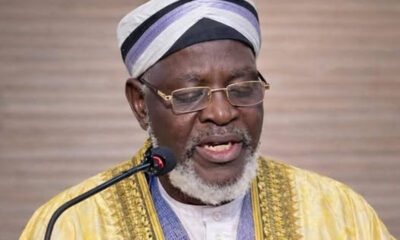
Court Orders DIA to Produce Cleric Accused of Coup Plot by February 18
-

 metro1 day ago
Argungu Festival 2026 Highlights Peace, Stability, Economic Growth — Tinubu