

metro
DSS Arrests Seven Boko Haram, ISWAP Commanders Returning from Hajj
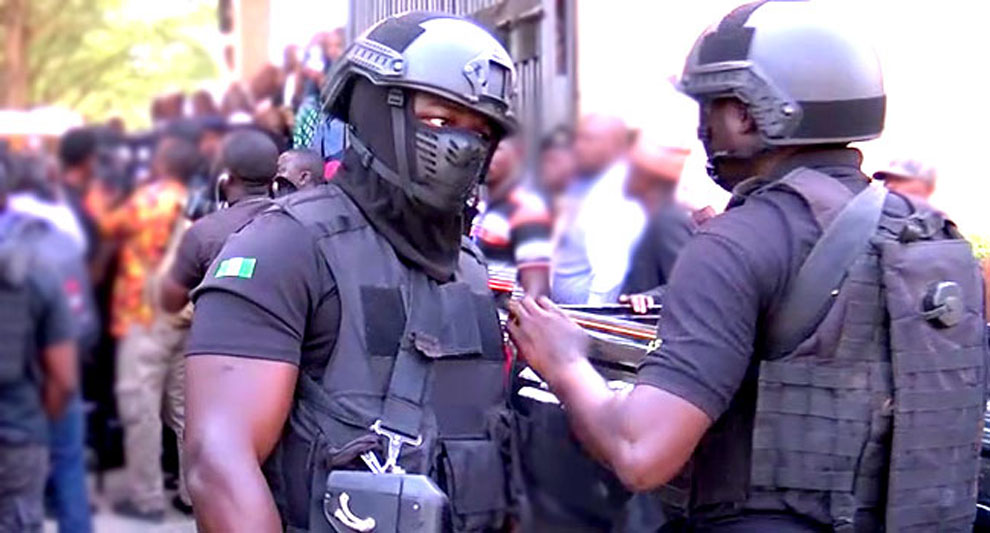
DSS Arrests Seven Boko Haram, ISWAP Commanders Returning from Hajj
Nigeria’s security operatives have arrested seven suspected senior commanders of Boko Haram and the Islamic State West Africa Province (ISWAP) after they returned from the 2026 Hajj pilgrimage in Saudi Arabia, in what officials have described as a major counter-terrorism breakthrough. The suspects were apprehended last Thursday at the Umaru Musa Yar’Adua International Airport in Katsina State shortly after landing from Mecca, and were immediately transferred to the Department of State Services (DSS) for interrogation and further investigation. The arrest operation, which unfolded at the airport’s arrival terminal, has been hailed as a significant victory in Nigeria’s ongoing battle against terrorism and a testament to the effectiveness of the government’s new digital identity integration system.
Minister of Interior, Olubunmi Tunji-Ojo, disclosed the development on Friday shortly after President Bola Tinubu signed the National Identity Management Commission (NIMC) Act, 2026, into law at the Presidential Villa in Abuja. According to the minister, the arrests highlight the impact of the Federal Government’s ongoing reforms in identity management and national security coordination. He emphasized that the success of the operation demonstrates how technology and inter-agency collaboration can be leveraged to enhance national security and protect citizens from terrorist threats. Tunji-Ojo explained that the country previously operated a weak and disconnected data system, making intelligence gathering and threat detection difficult across multiple agencies. “We inherited a fragmented identity management system where government databases operated independently. Today, our immigration database is fully integrated with NIMC and linked to Interpol’s 24-hour security network,” he stated. He recalled that the Senate President had previously raised alarm over how terrorists managed to go on pilgrimage, questioning how they crossed Nigeria’s borders without detection.
Giving more details on the operation, the minister said, “I’m happy to tell you that even last week, Thursday, seven of the known commanders of Boko Haram and ISWAP, at the point of coming back from Mecca, were arrested in Katsina at the airport and were handed over to the DSS.” He attributed the success to the integration of the NIMC database with the Nigeria Immigration Service and international security platforms, noting that “this is only possible because NIMC’s ID is already connected with the immigration database, and it’s already speaking to even the Interpol 24/7, and we have been able to automate this.” The minister’s comments underscore the transformative impact of digital identity reforms on Nigeria’s security architecture, suggesting that similar arrests could become more frequent as the system becomes more entrenched.
READ ALSO:
- Police kill four kidnappers, rescue five victims in Lagos-Ogun joint operation
- Trump Claims US Military Ended ‘Slaughter of Christians’ in Nigeria
- PCN Raises Novena University’s Doctor of Pharmacy (Pharm.D) Admission Quota to 120
The minister did not disclose the identities of the suspects, whether they had been on security watchlists before travelling to Saudi Arabia, how they obtained travel clearance, or whether they have been formally charged. He also did not indicate whether the suspects travelled independently or received sponsorship for the pilgrimage. The announcement has raised fresh questions about how suspected Boko Haram and ISWAP commanders were able to obtain travel documents and leave Nigeria undetected before eventually being intercepted on their return. These unanswered questions have sparked calls for greater transparency from security agencies and a thorough investigation into how the suspects managed to navigate Nigeria’s border controls in the first instance.
The revelation comes days after allegations circulated that the Katsina State Government sponsored Hajj pilgrimages for some bandit leaders. The Katsina State Government has denied the allegations, describing them as false, baseless, and politically motivated. In a statement, the Commissioner for Internal Security and Home Affairs, Nasir Mua’zu, said the allegation was “entirely baseless, unfounded and devoid of any factual basis,” adding that it was a deliberate attempt to mislead the public and undermine ongoing efforts to tackle insecurity in the state. The minister did not suggest that the seven suspects were among any government-sponsored pilgrims, nor did he link their arrests to the allegations against the Katsina State Government. However, the timing of the arrests has fueled public speculation and drawn attention to the broader challenges of monitoring pilgrimages and preventing terrorists from exploiting religious travel.
President Tinubu signed the NIMC Act, 2026, at the Presidential Villa in Abuja in the presence of Senate President Godswill Akpabio, Deputy Speaker of the House of Representatives Benjamin Kalu, Attorney-General of the Federation and Minister of Justice Lateef Fagbemi, NIMC Director-General Abisoye Coker-Odusote, House Leader Julius Ihonvbere, and other senior government officials. Tunji-Ojo described the new legislation as a significant reform aimed at strengthening the harmonisation of Nigeria’s identity management systems, improving the integrity of the National Identification Number (NIN) system, and enhancing collaboration among security and intelligence agencies. He noted that the Act provides a legal framework that will accelerate the integration of databases and ensure that no Nigerian citizen can obtain official documents without proper verification through the NIMC system.
The newly signed law is expected to play a major role in strengthening Nigeria’s security architecture by accelerating the harmonisation of identity databases and improving cooperation among security and government agencies. Government officials say the legislation is designed to eliminate long-standing gaps in Nigeria’s identity management system. The law is also expected to strengthen the integrity of the NIN, improve data sharing, and enhance the tracking of criminal activities including terrorism financing, identity fraud, cybercrime, and cross-border offences. Officials believe that the Act will serve as a deterrent to criminals and terrorists who have historically exploited weaknesses in the country’s identity verification processes.
The minister further explained that the integration has also improved the passport application process, noting that no Nigerian passport can now be issued without proper identity verification through the NIMC database. “When Mr President came on board, we had a disconnected system within our identity data management system. At that time, getting a passport and getting a driving permit were completely disconnected from our identity database. But today, you can’t get a Nigerian passport without pulling data from NIMC,” he stated. This reform has not only enhanced national security but has also reduced instances of identity fraud and document forgery, which were previously rampant under the disconnected system.
Speaking at the signing ceremony, Senate President Akpabio welcomed the presidential assent, describing the legislation as a reflection of the National Assembly’s commitment to enacting laws that address Nigeria’s changing security and development needs. He said the Act would strengthen public confidence in the country’s identity management framework and aligns with President Tinubu’s reform agenda. Similarly, Deputy Speaker Benjamin Kalu described the legislation as a transformative reform that would improve governance, promote accountability and support national development through a credible identity management system, noting that the previous NIMC Act of 2007 had become outdated and ill-suited to the demands of a digital age.
NIMC Director-General Abisoye Coker-Odusote said the Act represents a significant step towards building a trusted and inclusive digital identity ecosystem, reinforcing the National Identification Number as the cornerstone of identity verification in Nigeria while introducing reforms that will strengthen the country’s digital public infrastructure and improve access to government and private-sector services. The development comes as the Federal Government intensifies efforts to strengthen national security, improve border surveillance, and curb the movement of terror-linked individuals across the country. Security analysts have welcomed the arrests as a positive development, but many have also cautioned that technology alone cannot solve Nigeria’s security challenges without sustained investment in intelligence gathering, community policing, and addressing the root causes of extremism.
DSS Arrests Seven Boko Haram, ISWAP Commanders Returning from Hajj







metro
Lagos Task Force Denies Stopping Driver Over Toyota Tacoma Inscription

Lagos Task Force Denies Stopping Driver Over Toyota Tacoma Inscription
The Lagos State Environmental and Special Offences Enforcement Unit, popularly known as the Lagos State Task Force, has denied stopping a motorist or demanding a permit over an inscription displayed on his Toyota Tacoma.
The denial followed a viral social media video shared by Jay Scotch Automobile Ltd, in which the driver alleged that officials stopped him over the words “TRD 4×4 Sport Tacoma” displayed on his vehicle.
The motorist claimed the officials treated the inscription as an advertisement requiring a government permit. He further alleged that they threatened to damage the vehicle’s side mirror if he failed to produce the required permit.
He disputed the demand, explaining that the inscription was part of the vehicle when he purchased it in the United States and was not an advertisement subsequently placed on the vehicle in Lagos.
However, the Task Force distanced itself from the incident.
The agency’s Director of Press and Public Affairs, Raheem Gbadeyanka, said residents sometimes mistake personnel from different government agencies for Task Force operatives, particularly when officers are wearing similar uniforms.
READ ALSO:
- Abuja Police Arrest Woman, Two Hotel Workers Over Man’s Body Dumped Under Bridge
- Bauchi Police Arrest 26-Year-Old Man Over Rape Of 50-Year-Old Woman
- 2027: Lawal Challenges Wike To Clarify Allegiance Over Rainbow Coalition
Gbadeyanka said the Task Force was not involved in the encounter and maintained that demanding a permit for a vehicle inscription was outside the agency’s mandate.
The controversy has nevertheless drawn attention to Lagos regulations governing vehicle branding and mobile advertising.
The Lagos State Signage and Advertisement Agency (LASAA) is responsible for regulating signage and advertising in the state, including mobile advertising and branding on vehicles. Its regulatory framework covers various vehicle categories, including cars, pickups, SUVs, buses and trucks.
LASAA also operates systems for registering and verifying authorised vehicle branding, while its published fee structure contains different categories for mobile advertisements and vehicle branding.
The distinction means that the Task Force’s denial does not amount to a blanket exemption for vehicle advertising or commercial branding in Lagos. Rather, the agency is disputing responsibility for the particular encounter and says enforcement of such permits is not within its mandate.
The Task Force has continued to enforce other road, environmental and public-safety regulations across Lagos, including restrictions affecting commercial motorcycles, road obstructions, illegal roadside activities and unauthorised use of restricted traffic corridors.
The incident has therefore raised a separate question of agency jurisdiction, particularly over which government body is authorised to enforce regulations concerning inscriptions, branding or advertisements displayed on private vehicles.
For now, the motorist’s account and the Task Force’s denial remain the two publicly stated versions of the encounter. No independent evidence has been publicly presented to establish that Task Force officials stopped the driver specifically because of the inscription.
Lagos Task Force Denies Stopping Driver Over Toyota Tacoma Inscription
metro
Abuja Police Arrest Woman, Two Hotel Workers Over Man’s Body Dumped Under Bridge
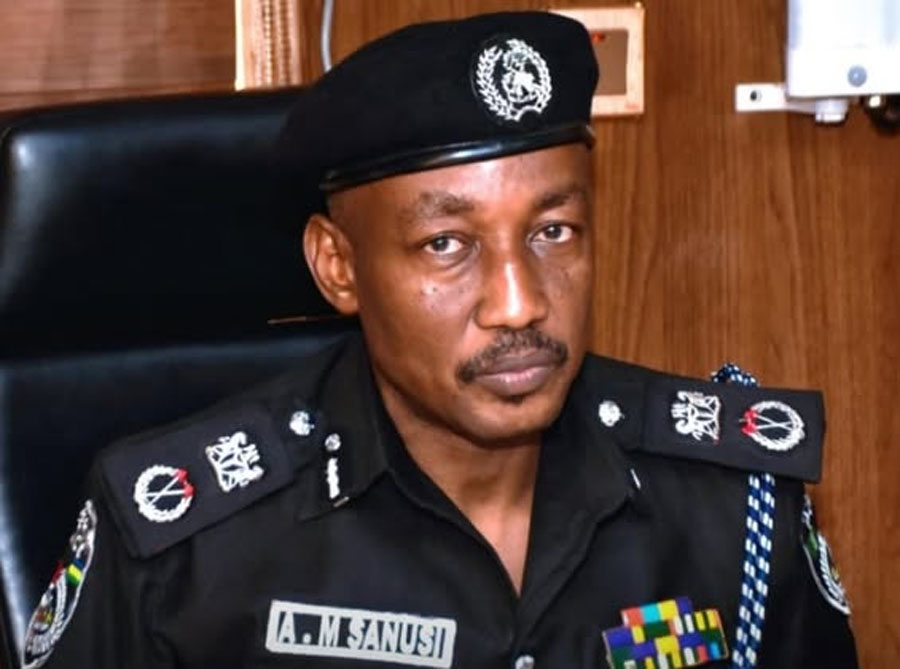
Abuja Police Arrest Woman, Two Hotel Workers Over Man’s Body Dumped Under Bridge
The Federal Capital Territory (FCT) Police Command has arrested a married woman and two workers of a guest house in Abuja over the death of a man whose body was found under Katampe Bridge along the Kubwa Expressway.
The FCT Commissioner of Police, CP Ahmed Sanusi, said the man was first reported missing by his family. His body was subsequently discovered by the roadside under the bridge on August 26, 2026.
The discovery initially prompted speculation about possible kidnapping or one-chance robbery, but investigators later uncovered a different line of inquiry after establishing that the deceased’s mobile phone was missing.
Police said efforts to trace the phone and identify the deceased’s last known contact led investigators to Rukayat Muhammed, a resident of Garki Area 2, Abuja, who was allegedly in a romantic relationship with the man.
Further investigation linked the pair to Good Samaritan Guest House on Second Avenue, Gwarinpa, where they had reportedly lodged before the man was found dead.
According to the police account, Muhammed told investigators that she discovered the man was no longer breathing while they were at the guest house. She allegedly took his phone and left without reporting the incident.
READ ALSO:
- Bauchi Police Arrest 26-Year-Old Man Over Rape Of 50-Year-Old Woman
- 2027: Lawal Challenges Wike To Clarify Allegiance Over Rainbow Coalition
- Unexplained Wealth: Obasanjo, Osinbajo, Others for Shittu’s Book Launch
Hours later, hotel management reportedly gained access to the room after staff were unable to reach the occupants and found the man’s body.
Two hotel workers, identified as Ibrahim Omeiza and Kefat Bitrus, allegedly removed the body from the room and transported it to the Kubwa Expressway near Katampe Bridge, where it was abandoned.
The police said their investigation has linked the woman and the two hotel workers to the events surrounding the man’s death and the subsequent disposal of his body.
However, the exact cause and circumstances of the man’s death remain undetermined. Police said further investigation will establish what happened at the guest house before the body was later found under the bridge.
The identities of the deceased and further details of the circumstances surrounding his death have not been publicly disclosed.
The arrested woman and the two hotel workers remain suspects and are presumed innocent unless proven guilty by a court of competent jurisdiction.
The police said anyone found culpable in the man’s death or the subsequent concealment and abandonment of his body would face prosecution.
Abuja Police Arrest Woman, Two Hotel Workers Over Man’s Body Dumped Under Bridge
metro
Bauchi Police Arrest 26-Year-Old Man Over Rape Of 50-Year-Old Woman
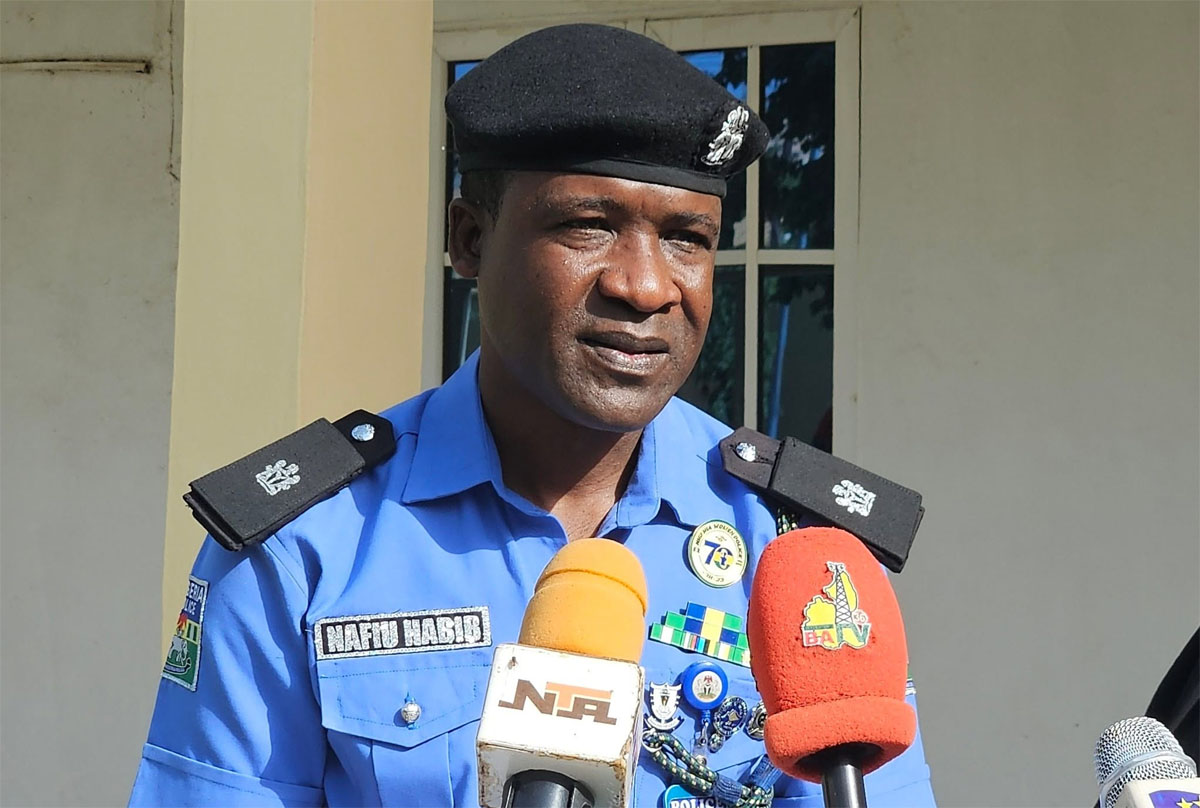
Bauchi Police Arrest 26-Year-Old Man Over Rape Of 50-Year-Old Woman
The Bauchi State Police Command has arrested a 26-year-old man, identified as Lukman Alhaji Nasiru, over the alleged rape of a 50-year-old woman described as living with mental health challenges.
The arrest followed a report received by the police concerning the alleged sexual assault of the woman, with detectives subsequently taking the suspect into custody for investigation.
According to the report, the police are investigating the circumstances surrounding the alleged incident and gathering evidence as part of the process that could determine the next legal steps in the case.
READ ALSO:
- 2027: Lawal Challenges Wike To Clarify Allegiance Over Rainbow Coalition
- Unexplained Wealth: Obasanjo, Osinbajo, Others for Shittu’s Book Launch
- MURIC Blasts Nigeria Over UNGA Stance on Palestine, Netanyahu
The victim’s vulnerability has heightened concerns about the protection of people living with mental health conditions from sexual abuse and other forms of exploitation. Cases involving vulnerable adults can present additional challenges in reporting, investigation and access to justice.
The arrest is not a determination of guilt, and the suspect remains presumed innocent unless proven guilty by a court of competent jurisdiction.
The police are expected to continue their investigation before deciding whether to charge the suspect to court.
The case also adds to the wider concern over gender-based violence and sexual abuse in Nigeria, where law-enforcement agencies and other institutions continue to face calls for prompt investigation and effective protection of survivors and other vulnerable people.
Authorities routinely urge members of the public to report suspected cases of rape and sexual violence to the police or other appropriate authorities so that investigations can be initiated and victims can receive necessary support.
Bauchi Police Arrest 26-Year-Old Man Over Rape Of 50-Year-Old Woman
-
 metro3 days ago
Police Probe Alleged Self-Kidnapping of Adeleke’s Aide in Osun
-

 metro3 days ago
Lagos Arrests Man Over Viral Video of Toddler Being Flogged
-
 metro3 days ago
Tinubu, Fani-Kayode Face Proposed $36m US Lawsuit Over Alleged Threats
-

 Sports3 days ago
Former Super Eagles Captain Troost-Ekong Embraces Islam, Recites Shahadah in Doha
-

 Politics3 days ago
Osun APC Warns Adeleke Govt Over Alleged Victimisation of Local Govt Workers
-

 metro3 days ago
Kwara Police Deny Shooting Motorcyclist at Oyun Bridge, Explain Viral Video
-

 News1 day ago
Anambra Releases ₦473m Salary Arrears Document as Obi’s Debt Claim Sparks Fresh Dispute
-
 metro1 day ago
EFCC Chairman Raises Alarm Over Alleged Theft of Nigeria’s Public Funds