

metro
Police kill four kidnappers, rescue five victims in Lagos-Ogun joint operation
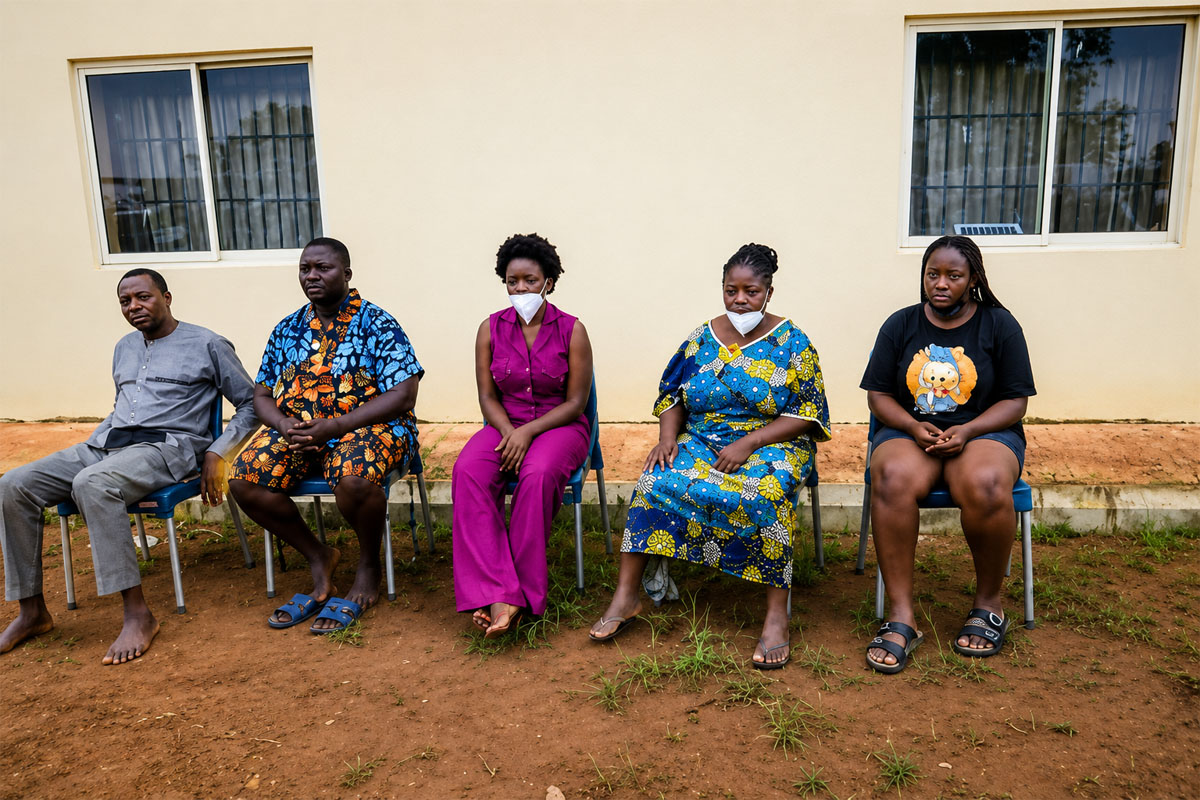
Police kill four kidnappers, rescue five victims in Lagos-Ogun joint operation
The Nigeria Police Force has recorded a major breakthrough in the fight against kidnapping after operatives of the Lagos State Police Command and Ogun State Police Command rescued five abducted victims and neutralised four suspected kidnappers during a coordinated operation in Ogun State.
The operation, conducted under the newly launched Operation KOSAYE, also led to the arrest of four other suspected members of the kidnapping gang, as police intensified efforts to dismantle criminal networks operating along the Lagos-Ogun border corridor.
The Commissioners of Police in Ogun and Lagos states, Bode Ojajuni and Fatai Tijani, announced the development while briefing journalists on Saturday at the Police Training School in Iperu, Ogun State.
According to Ojajuni, the victims were abducted by armed criminals around the Ogbere Forest along the J4 corridor of the Sagamu-Benin Expressway, one of Nigeria’s busiest highways linking the South-West to other parts of the country.
He said intelligence gathered by security operatives enabled officers to track the kidnappers to their hideout inside the forest, where a fierce gun battle ensued.
The police commissioner disclosed that four suspected kidnappers were killed during the exchange of gunfire, while four others were arrested. The five kidnapped victims were rescued unharmed.
READ ALSO:
- Trump Claims US Military Ended ‘Slaughter of Christians’ in Nigeria
- PCN Raises Novena University’s Doctor of Pharmacy (Pharm.D) Admission Quota to 120
- US-Iran ceasefire under threat as fresh strikes rock Middle East
“The victims were rescued successfully, and four of the kidnappers were neutralised while four others were taken into custody,” he said.
Ojajuni explained that the successful rescue followed the directive of the Inspector-General of Police (IGP), Olatunji Disu, to strengthen collaboration among police commands in tackling kidnapping, armed robbery and other violent crimes across state boundaries.
He said the Nigeria Police Force recently launched Operation KOSAYE, a joint security initiative covering Lagos and Ogun states with the support of both state governments.
According to him, the operation—whose name means “No Space”—is designed to deny criminals safe havens by targeting forests, border communities and other isolated locations used as hideouts by kidnappers, armed robbers and bandits.
Ojajuni revealed that security personnel had already carried out extensive clearance operations across Ogere, Ijebu-Ode, Ajebandele and the J4 corridor, among other vulnerable communities identified through intelligence.
Beyond the rescue mission, the commissioner disclosed that the operation resulted in the arrest of 84 additional criminal suspects across Lagos and Ogun states.
He added that operatives recovered AK-47 rifles, assault weapons, locally fabricated pistols, battle axes, live ammunition, mobile phones and other items linked to criminal activities.
Ojajuni reaffirmed the commitment of the Nigeria Police Force to sustaining the operation until kidnapping and violent crimes are significantly reduced across both states.
He added that the initiative could eventually be expanded to other parts of the country if it continues to produce positive security outcomes.
Speaking at the briefing, Lagos State Commissioner of Police Fatai Tijani dismissed reports suggesting that bandits had infiltrated and taken control of parts of Lagos and Ogun states.
He said ongoing security operations had proved such claims to be false, stressing that security agencies remained firmly in control of the affected communities.
According to Tijani, Operation KOSAYE involves coordinated security sweeps across forests, border communities and identified criminal hideouts stretching from Lagos into Ogun State.
“Our personnel thoroughly combed forests and other identified locations. This operation is not a one-off exercise. It will continue for as long as necessary to keep our communities safe,” he said.
The Lagos police commissioner further disclosed that the IGP had directed commissioners of police in neighbouring states to work closely together in securing interstate border corridors and dismantling criminal gangs operating across state boundaries.
He commended the governors of Lagos and Ogun states for providing the logistics and operational support that contributed to the success of the exercise.
“The results speak for themselves. You have seen the rescued victims, the suspects arrested and the recoveries made. This demonstrates our commitment to protecting lives and property,” Tijani added.
One of the rescued victims, Jimoh Badamosi, narrated how he and four others were kidnapped while travelling to Ibadan.
The 58-year-old said heavily armed men suddenly emerged around Ogbere Forest, opened fire on moving vehicles and forced passengers out at gunpoint before marching five victims from three different vehicles into the forest.
According to him, the kidnappers demanded ₦40 million from his family for his release, while another victim was asked to produce ₦30 million.
Badamosi said they had spent less than 24 hours in captivity when they suddenly heard heavy gunfire.
“We later heard the kidnappers shouting that the Nigeria Police had arrived. They ordered us to lie down, but when we heard police officers calling us, we crawled towards them and were rescued,” he recounted.
He commended the police for the swift rescue operation and urged the Federal Government to provide security agencies with more sophisticated weapons, establish additional security checkpoints and strengthen surveillance around forests frequently used as criminal hideouts.
Other rescued victims also expressed gratitude to the police, describing the operation as timely and life-saving.
Police authorities urged residents of both states to continue providing timely and credible intelligence, stressing that community support remains crucial in the ongoing fight against kidnapping, banditry and other violent crimes.
Police kill four kidnappers, rescue five victims in Lagos-Ogun joint operation








metro
Lagos Task Force Denies Stopping Driver Over Toyota Tacoma Inscription

Lagos Task Force Denies Stopping Driver Over Toyota Tacoma Inscription
The Lagos State Environmental and Special Offences Enforcement Unit, popularly known as the Lagos State Task Force, has denied stopping a motorist or demanding a permit over an inscription displayed on his Toyota Tacoma.
The denial followed a viral social media video shared by Jay Scotch Automobile Ltd, in which the driver alleged that officials stopped him over the words “TRD 4×4 Sport Tacoma” displayed on his vehicle.
The motorist claimed the officials treated the inscription as an advertisement requiring a government permit. He further alleged that they threatened to damage the vehicle’s side mirror if he failed to produce the required permit.
He disputed the demand, explaining that the inscription was part of the vehicle when he purchased it in the United States and was not an advertisement subsequently placed on the vehicle in Lagos.
However, the Task Force distanced itself from the incident.
The agency’s Director of Press and Public Affairs, Raheem Gbadeyanka, said residents sometimes mistake personnel from different government agencies for Task Force operatives, particularly when officers are wearing similar uniforms.
READ ALSO:
- Abuja Police Arrest Woman, Two Hotel Workers Over Man’s Body Dumped Under Bridge
- Bauchi Police Arrest 26-Year-Old Man Over Rape Of 50-Year-Old Woman
- 2027: Lawal Challenges Wike To Clarify Allegiance Over Rainbow Coalition
Gbadeyanka said the Task Force was not involved in the encounter and maintained that demanding a permit for a vehicle inscription was outside the agency’s mandate.
The controversy has nevertheless drawn attention to Lagos regulations governing vehicle branding and mobile advertising.
The Lagos State Signage and Advertisement Agency (LASAA) is responsible for regulating signage and advertising in the state, including mobile advertising and branding on vehicles. Its regulatory framework covers various vehicle categories, including cars, pickups, SUVs, buses and trucks.
LASAA also operates systems for registering and verifying authorised vehicle branding, while its published fee structure contains different categories for mobile advertisements and vehicle branding.
The distinction means that the Task Force’s denial does not amount to a blanket exemption for vehicle advertising or commercial branding in Lagos. Rather, the agency is disputing responsibility for the particular encounter and says enforcement of such permits is not within its mandate.
The Task Force has continued to enforce other road, environmental and public-safety regulations across Lagos, including restrictions affecting commercial motorcycles, road obstructions, illegal roadside activities and unauthorised use of restricted traffic corridors.
The incident has therefore raised a separate question of agency jurisdiction, particularly over which government body is authorised to enforce regulations concerning inscriptions, branding or advertisements displayed on private vehicles.
For now, the motorist’s account and the Task Force’s denial remain the two publicly stated versions of the encounter. No independent evidence has been publicly presented to establish that Task Force officials stopped the driver specifically because of the inscription.
Lagos Task Force Denies Stopping Driver Over Toyota Tacoma Inscription
metro
Abuja Police Arrest Woman, Two Hotel Workers Over Man’s Body Dumped Under Bridge
Abuja Police Arrest Woman, Two Hotel Workers Over Man’s Body Dumped Under Bridge
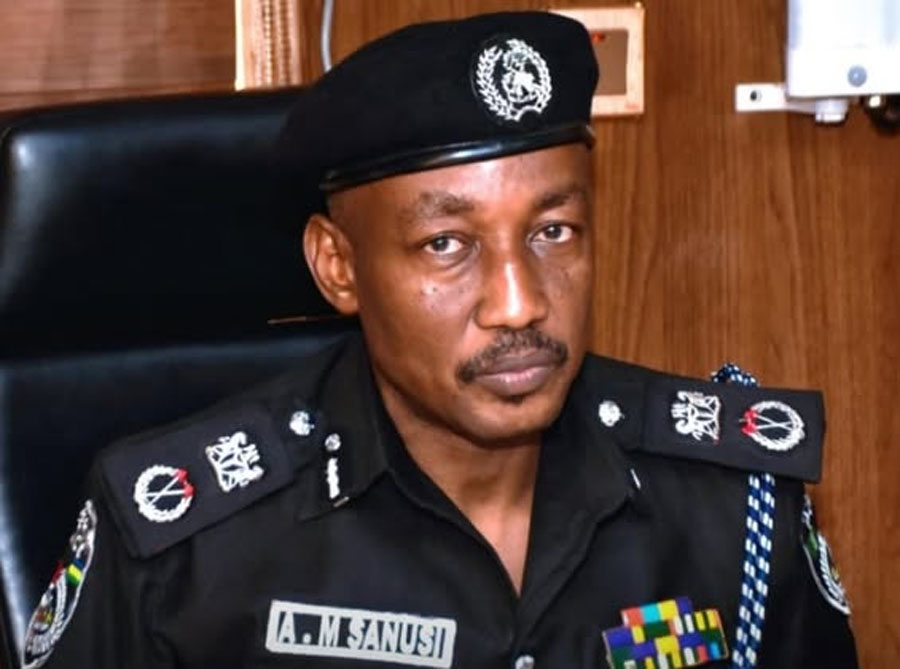
The Federal Capital Territory (FCT) Police Command has arrested a married woman and two workers of a guest house in Abuja over the death of a man whose body was found under Katampe Bridge along the Kubwa Expressway.
The FCT Commissioner of Police, CP Ahmed Sanusi, said the man was first reported missing by his family. His body was subsequently discovered by the roadside under the bridge on August 26, 2026.
The discovery initially prompted speculation about possible kidnapping or one-chance robbery, but investigators later uncovered a different line of inquiry after establishing that the deceased’s mobile phone was missing.
Police said efforts to trace the phone and identify the deceased’s last known contact led investigators to Rukayat Muhammed, a resident of Garki Area 2, Abuja, who was allegedly in a romantic relationship with the man.
Further investigation linked the pair to Good Samaritan Guest House on Second Avenue, Gwarinpa, where they had reportedly lodged before the man was found dead.
According to the police account, Muhammed told investigators that she discovered the man was no longer breathing while they were at the guest house. She allegedly took his phone and left without reporting the incident.
READ ALSO:
- Bauchi Police Arrest 26-Year-Old Man Over Rape Of 50-Year-Old Woman
- 2027: Lawal Challenges Wike To Clarify Allegiance Over Rainbow Coalition
- Unexplained Wealth: Obasanjo, Osinbajo, Others for Shittu’s Book Launch
Hours later, hotel management reportedly gained access to the room after staff were unable to reach the occupants and found the man’s body.
Two hotel workers, identified as Ibrahim Omeiza and Kefat Bitrus, allegedly removed the body from the room and transported it to the Kubwa Expressway near Katampe Bridge, where it was abandoned.
The police said their investigation has linked the woman and the two hotel workers to the events surrounding the man’s death and the subsequent disposal of his body.
However, the exact cause and circumstances of the man’s death remain undetermined. Police said further investigation will establish what happened at the guest house before the body was later found under the bridge.
The identities of the deceased and further details of the circumstances surrounding his death have not been publicly disclosed.
The arrested woman and the two hotel workers remain suspects and are presumed innocent unless proven guilty by a court of competent jurisdiction.
The police said anyone found culpable in the man’s death or the subsequent concealment and abandonment of his body would face prosecution.
Abuja Police Arrest Woman, Two Hotel Workers Over Man’s Body Dumped Under Bridge
metro
Bauchi Police Arrest 26-Year-Old Man Over Rape Of 50-Year-Old Woman
Bauchi Police Arrest 26-Year-Old Man Over Rape Of 50-Year-Old Woman
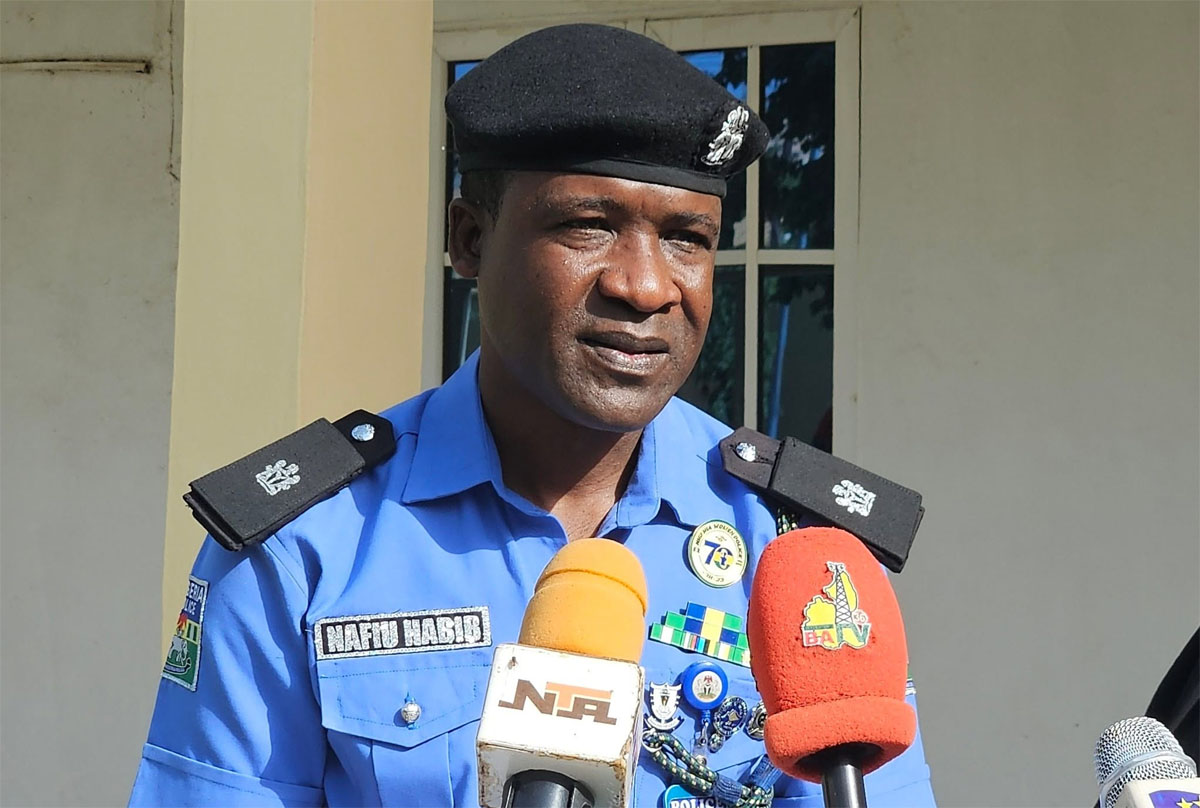
The Bauchi State Police Command has arrested a 26-year-old man, identified as Lukman Alhaji Nasiru, over the alleged rape of a 50-year-old woman described as living with mental health challenges.
The arrest followed a report received by the police concerning the alleged sexual assault of the woman, with detectives subsequently taking the suspect into custody for investigation.
According to the report, the police are investigating the circumstances surrounding the alleged incident and gathering evidence as part of the process that could determine the next legal steps in the case.
READ ALSO:
- 2027: Lawal Challenges Wike To Clarify Allegiance Over Rainbow Coalition
- Unexplained Wealth: Obasanjo, Osinbajo, Others for Shittu’s Book Launch
- MURIC Blasts Nigeria Over UNGA Stance on Palestine, Netanyahu
The victim’s vulnerability has heightened concerns about the protection of people living with mental health conditions from sexual abuse and other forms of exploitation. Cases involving vulnerable adults can present additional challenges in reporting, investigation and access to justice.
The arrest is not a determination of guilt, and the suspect remains presumed innocent unless proven guilty by a court of competent jurisdiction.
The police are expected to continue their investigation before deciding whether to charge the suspect to court.
The case also adds to the wider concern over gender-based violence and sexual abuse in Nigeria, where law-enforcement agencies and other institutions continue to face calls for prompt investigation and effective protection of survivors and other vulnerable people.
Authorities routinely urge members of the public to report suspected cases of rape and sexual violence to the police or other appropriate authorities so that investigations can be initiated and victims can receive necessary support.
Bauchi Police Arrest 26-Year-Old Man Over Rape Of 50-Year-Old Woman
-
 metro2 days ago
Police Probe Alleged Self-Kidnapping of Adeleke’s Aide in Osun
-

 metro2 days ago
Lagos Arrests Man Over Viral Video of Toddler Being Flogged
-

 Sports2 days ago
Former Super Eagles Captain Troost-Ekong Embraces Islam, Recites Shahadah in Doha
-

 Politics3 days ago
Osun APC Warns Adeleke Govt Over Alleged Victimisation of Local Govt Workers
-
 metro2 days ago
Tinubu, Fani-Kayode Face Proposed $36m US Lawsuit Over Alleged Threats
-
 metro2 days ago
Kwara Police Deny Shooting Motorcyclist at Oyun Bridge, Explain Viral Video
-

 News1 day ago
Anambra Releases ₦473m Salary Arrears Document as Obi’s Debt Claim Sparks Fresh Dispute
-
 metro1 day ago
EFCC Chairman Raises Alarm Over Alleged Theft of Nigeria’s Public Funds