

News
Trump Claims US Military Ended ‘Slaughter of Christians’ in Nigeria

Trump Claims US Military Ended ‘Slaughter of Christians’ in Nigeria
During a Friday event in Washington, D.C., President Donald Trump made a bold declaration about U.S. military operations in Nigeria. “As you know, we recently struck Nigeria and largely ended the slaughter of great Christian populations,” the President stated. “We hit them very hard. We knocked out their leader. We knocked out their second leader and their third leader.” The President described the situation before the intervention as catastrophic, claiming that “thousands and thousands” of Christians – including women, children, and the elderly – were being “butchered” and “slaughtered” in brutal attacks across the country. According to Trump, the U.S. military action has been so effective that terrorist groups now understand that “if they go further, the attack will be far greater” – effectively deterring future assaults on Christian communities.
The military operation Trump referenced took place on December 25, 2025 – a Christmas Day strike conducted by U.S. Africa Command (AFRICOM) in coordination with Nigerian security forces. The operation targeted ISIS-West Africa Province (ISWAP) camps in Sokoto State, northwestern Nigeria, with the objective of eliminating terrorist leadership and disrupting planned attacks. The Nigerian government confirmed the joint operation, describing it as a strategic strike based on shared intelligence between U.S. and Nigerian defense forces. While the exact number of casualties remains unclear, multiple terrorist leaders were reportedly eliminated in the operation, marking a significant escalation in U.S. military involvement in Nigeria’s counterterrorism efforts.
While Trump frames the U.S. intervention as a decisive victory against Christian persecution, available evidence paints a far more complex picture. The Islamist insurgency in northern Nigeria – driven by groups like Boko Haram and ISIS-affiliated factions – has devastated communities across religious lines. Data from the Armed Conflict Location & Event Data Project (ACLED) reveals that between 2020 and 2025, there were 389 attacks targeting Christians, resulting in at least 318 deaths, compared to 197 attacks targeting Muslims that caused at least 418 deaths. This data demonstrates that while Christians have indeed been targeted and killed, Muslims have also suffered significant casualties – often at a higher rate – from the same terrorist groups. The violence, therefore, cannot be accurately characterized as a one-sided religious persecution.
READ ALSO:
- PCN Raises Novena University’s Doctor of Pharmacy (Pharm.D) Admission Quota to 120
- US-Iran ceasefire under threat as fresh strikes rock Middle East
- “DPO Gave Kaduna Mob My Wife to Kill” – Husband Alleges Police Complicity in Lynching
President Bola Ahmed Tinubu has firmly rejected the genocide narrative promoted by some U.S. politicians and activists. “The characterization of Nigeria as religiously intolerant does not reflect our national reality,” the Nigerian leader stated, emphasizing that the country’s security challenges – including banditry, herder-farmer conflicts, and jihadist insurgency – affect citizens of all faiths. The administration maintains it is working to address these threats comprehensively, not along religious lines, and has expressed frustration at what it views as an oversimplification of Nigeria’s complex security situation by foreign commentators and policymakers.
Prominent Nigerian human rights lawyer Femi Falana called Trump’s claims “inaccurate” and a “lie.” “The killers – be they terrorists, bandits, or kidnappers – do not care about your religion. They attack communities based on opportunity and vulnerability, not faith,” Falana argued. The Senior Advocate of Nigeria warned that framing the complex Nigerian crisis through a purely religious lens risks worsening interfaith tensions and distracting from the root causes of insecurity, including poverty, state failure, and competition for resources. His comments reflect a broader concern among Nigerian civil society that external narratives are being imposed on a crisis that Nigerians themselves understand through a more nuanced lens.
Amnesty International has acknowledged the severity of violence in Nigeria but has cautioned against framing it as religious persecution. “While the violence constitutes egregious crimes, there is no evidence it constitutes religious persecution,” the human rights organization stated. “Jihadist groups like Boko Haram kill both Muslims and Christians indiscriminately.” The group has called for a more accurate understanding of the conflict, emphasizing that the perpetrators are driven by extremist ideology, criminal opportunism, and local grievances rather than a systematic campaign against any particular faith community.
READ ALSO:
- “I Gave Her 15 Strokes” – Pastor Confesses to Flogging 13-Year-Old to Death
- Release Sowore and Hausa activist Maisango, By Farooq Kperogi
- “I’ve Been a Thief” – Charly Boy Confesses to White-Collar Crime, Drug Abuse in Youth
The narrative of “Christian genocide” in Nigeria did not emerge organically from ground realities. Instead, it followed a concerted, years-long campaign by Christian advocacy groups in the United States, Republican lawmakers who championed the cause, and celebrity activists who amplified the message. This sustained lobbying effort successfully framed a multifaceted security crisis through the single lens of Christian persecution, ultimately influencing U.S. policy – including Nigeria’s designation as a “Country of Particular Concern” for religious freedom and the subsequent military intervention. However, a BBC investigation revealed that many of the figures cited by these groups – such as claims of over 100,000 Christians killed – originate from advocacy organizations with opaque methodologies and are likely inflated, raising questions about the accuracy of the narrative that shaped U.S. policy.
A critical detail often overlooked in the public discourse is that the U.S. Christmas Day strikes targeted Sokoto State – a predominantly Muslim region in northwestern Nigeria. This location is far from the Christian communities in Nigeria’s Middle Belt and southern regions, where activists have highlighted the most severe attacks on Christians. This geographic disconnect has caused tension within Nigeria, with some Christian leaders expressing concern that U.S. military resources were directed away from the areas in greatest need of protection. The targeting of a Muslim-majority area to protect Christians elsewhere has also raised questions about the strategic coherence of the operation and its alignment with the stated humanitarian objectives.
While some Christian groups in Nigeria have welcomed international attention, others have urged caution. Bishop Matthew Kukah of the Catholic Diocese of Sokoto has consistently called for a nuanced understanding of Nigeria’s crisis. He has warned that “framing Nigeria’s conflict purely as religious persecution risks further dividing our nation and alienating Muslim communities who are also victims.” Many Nigerian Christian leaders acknowledge that the Boko Haram insurgency has killed tens of thousands of Muslims and Christians alike, that the farmer-herder conflicts are driven more by land, water, and resource competition than religious ideology, and that economic desperation and state failure in northern Nigeria are the primary drivers of violence affecting all communities.
To understand the true picture, it is essential to recognize the multifaceted nature of insecurity in Nigeria. The jihadist insurgency led by Boko Haram and ISWAP operates primarily in northeastern Nigeria, targeting both Muslim and Christian communities with extremist ideology that does not discriminate between faiths. Meanwhile, banditry and kidnapping – carried out by armed gangs across northwestern states like Zamfara, Katsina, and Sokoto – are motivated by ransom and cattle rustling, not religion, with victims including people of all faiths. The herder-farmer conflicts – driven by climate change and desertification that have forced Fulani herders southward – pit communities against each other over competition for land and water, with both Muslim and Christian communities affected. Underlying all of these is the reality of state failure and impunity, where weak governance, corruption, and underfunded security forces leave communities of all religions vulnerable to attacks from multiple armed groups.
READ ALSO:
- JUST IN: Nigerian Army redeploys 18 generals in nationwide shake-up (Full list)
- Dembele scores stunning hat-trick as France thrash Norway 4-1
- Tinubu Signs NIMC Bill Into Law: “One Person, One Identity” Framework Takes Effect
Security analysts and academics specializing in Nigeria have largely dismissed the “Christian genocide” framing. “The claim of a ‘mass slaughter of Christians’ oversimplifies a complex crisis and risks deepening religious divisions. This is fundamentally a counterinsurgency challenge, not a religious war,” a Nigerian security analyst noted. Dr. Nathaniel Danjibo, a political scientist at the University of Ibadan, adds that “the violence in Nigeria is tragic, but it is not a genocide. Genocide requires specific intent to destroy a particular group. The evidence does not support that conclusion.” These expert assessments underscore the gap between political rhetoric and academic analysis of Nigeria’s security situation.
The Trump administration’s focus on Nigeria’s Christian population follows a broader pattern of policy engagement driven by domestic political considerations. Nigeria was designated a “Country of Particular Concern“ under the International Religious Freedom Act, a designation that allows for targeted U.S. sanctions and policy interventions. The Christmas Day strikes represent a significant escalation in U.S. military involvement in Nigeria, moving from advisory and intelligence-sharing roles to direct kinetic action. However, critics argue that this policy is driven more by domestic U.S. politics – appealing to a conservative Christian voter base – than by accurate on-the-ground assessment of Nigeria’s security needs, and that the long-term consequences of this approach remain unclear.
Despite Trump’s confident statements, several critical questions remain unanswered. Can a single military strike truly “end” a decades-long insurgency that has proven remarkably resilient? What independent verification exists for the claimed elimination of terrorist leaders? What is the actual casualty count from the Christmas Day strikes, including potential civilian harm? How many non-combatants were affected by the U.S. operation? And what is the long-term strategy for stabilizing northern Nigeria beyond targeted killings of terrorist leaders? These unanswered questions highlight the limitations of a military-first approach to a crisis rooted in governance failures and socio-economic deprivation.
President Trump’s claim that the U.S. military has “ended the slaughter of Christians” in Nigeria is a significant overstatement that does not align with available facts. While the December 2025 U.S. airstrikes in Sokoto State were a real military operation conducted with Nigerian cooperation, their framing as the successful end of a targeted Christian genocide is not supported by casualty data, contradicted by Nigerian government and human rights experts, and oversimplifying a devastating yet complex crisis. The true tragedy of Nigeria’s violence is that communities of all faiths – Christians, Muslims, and others – continue to suffer from insecurity driven by extremism, banditry, resource competition, and state failure. Addressing this crisis requires comprehensive solutions that address governance, economic development, and security sector reform – not military shortcuts or politically convenient narratives that risk exacerbating the very divisions they claim to address.
Trump Claims US Military Ended ‘Slaughter of Christians’ in Nigeria








News
MURIC Blasts Nigeria Over UNGA Stance on Palestine, Netanyahu
MURIC Blasts Nigeria Over UNGA Stance on Palestine, Netanyahu
The Muslim Rights Concern (MURIC) has launched a scathing criticism of Nigeria’s conduct at the 2026 United Nations General Assembly, accusing the Federal Government of failing to give the Palestinian crisis the attention it deserves.
MURIC said Nigeria’s failure to include the Palestinian question in its position paper, coupled with its decision not to join countries that walked out during Israeli Prime Minister Benjamin Netanyahu’s address, was deeply regrettable.
The group’s Executive Director, Professor Ishaq Akintola, made the allegations in a statement issued on Saturday, September 26, 2026.
MURIC described Nigeria’s performance at the international gathering as “shocking, woeful, deplorable and despicable,” arguing that the country should have taken a stronger position on the humanitarian situation in Gaza.
According to the organisation, Nigeria failed to include the Palestinian question in its position paper presented during the UN General Assembly on Thursday, September 24.
The group further alleged that Nigerian delegates declined to join 77 other countries whose representatives walked out of the General Assembly chamber during Netanyahu’s speech.
MURIC: Gaza crisis cannot be ignored
MURIC said Nigeria’s position was particularly disturbing against the backdrop of the humanitarian crisis in Gaza and the international legal controversy surrounding Netanyahu.
“Bearing in mind the universal notoriety of the Israeli Prime Minister, the fact that he is now an international criminal who has been declared wanted by the International Criminal Court (ICC) and the horrendous crimes against humanity committed by Israel against the people of Gaza, we consider Nigeria’s performance at the international event as shocking, woeful, deplorable and despicable,” Akintola said.
The organisation also cited casualty figures which it said showed the scale of the devastation in Gaza.
READ ALSO:
- Why I Accept My Daughters’ Same-Sex Relationships — Charly Boy
- Katsina: Troops Rescue 14 Kidnap Victims, Arrest Three Terrorist Couriers With N2.7m
- 2027: Fayemi Denies Galadima’s Claim He Is Coordinating Opposition Group Against Tinubu
MURIC stated that more than 73,922 Palestinians had been killed, while about 174,995 others had been wounded.
The group said Gaza’s medical facilities had been stretched beyond their limits, while large parts of the territory had suffered extensive destruction.
According to MURIC, women and children constitute a substantial proportion of those affected by the conflict.
Food, water, electricity crisis
The Islamic rights organisation also raised concerns about what it described as prolonged shortages of essential supplies in Gaza.
MURIC alleged that Palestinians had endured shortages of food, water, fuel and electricity, with children and pregnant women among those affected.
The group further claimed that homes were still being demolished and that children in Gaza had been deprived of normal access to education.
“The people of Gaza had no food, no water, no fuel and no electricity for months. Children and pregnant women are among the Palestinian victims deprived of essential facilities. As we speak, hundreds of Gaza homes are being demolished. Gaza children cannot go to school,” the statement said.
‘Hold Nigerian government accountable’
MURIC called on Nigerians who are concerned about justice and human rights to scrutinise the Federal Government’s position on the Palestinian issue.
The organisation urged Nigerians to demand explanations for Nigeria’s diplomatic decisions at the United Nations, particularly its decision not to participate in the walkout during Netanyahu’s address.
“We charge Nigerians who believe in justice, fairness and the interconnectivity of humanity to hold the current government of Nigeria accountable for smearing the image of our great country, for mortgaging its future and for hobnobbing with capitalist imperialists who are bent on oppressing poor nations of the world,” Akintola said.
The group also called on Nigeria’s human rights community to publicly speak out over the country’s position on Palestine.
MURIC urges human rights groups to speak up
“We urge the Nigerian human rights community to speak up on Nigeria’s regrettable stance on the Palestinian question,” the statement added.
MURIC’s criticism comes amid continuing international debate over the war in Gaza, the humanitarian situation in the territory and the diplomatic positions adopted by governments at the United Nations.
The organisation maintained that Nigeria, as one of Africa’s major diplomatic powers, should pay greater attention to issues of civilian protection, human rights and the Palestinian question when taking positions at international forums.
MURIC Blasts Nigeria Over UNGA Stance on Palestine, Netanyahu
News
Keyamo: ₦70,000 Minimum Wage No Longer Enough as Cost of Living Soars
Keyamo: ₦70,000 Minimum Wage No Longer Enough as Cost of Living Soars
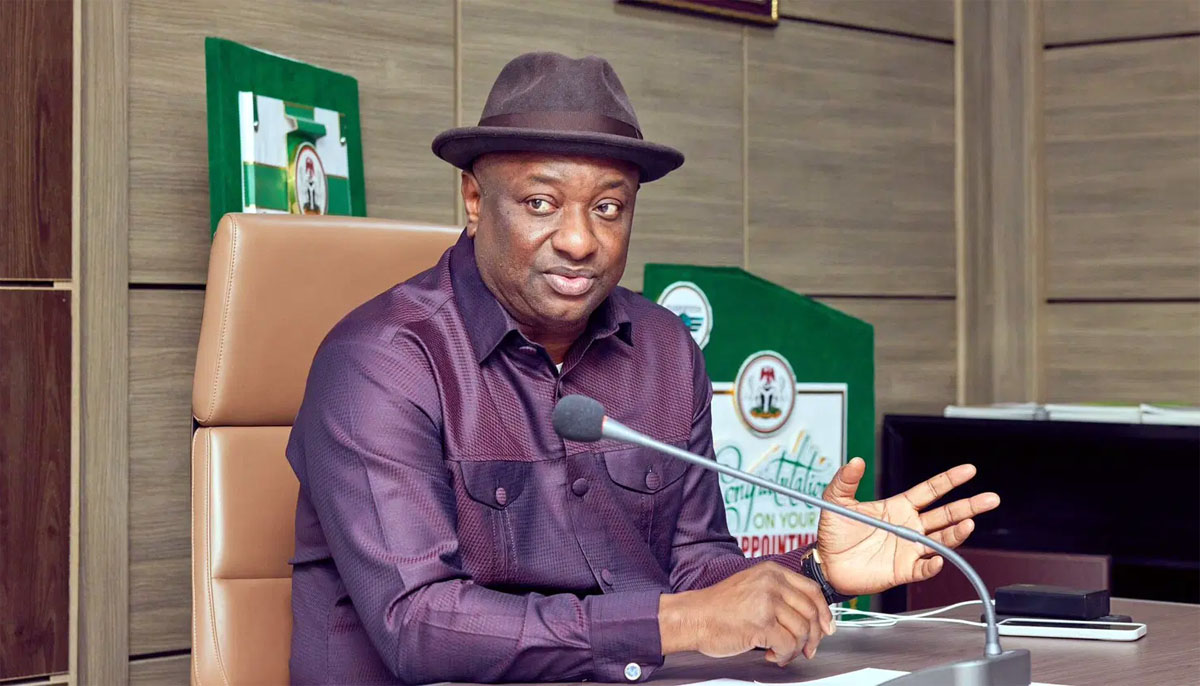
Minister of Aviation and Aerospace Development, Festus Keyamo, has acknowledged that Nigeria’s ₦70,000 national minimum wage is no longer sufficient for workers to cope with the rising cost of living.
Keyamo made the statement at the 2026 National Pre-Retirement Summit, organised by XEM Consultants Limited in Abuja, where discussions focused on workers’ welfare, remuneration and the economic challenges confronting Nigerians.
The minister said economic pressures had substantially weakened workers’ purchasing power, making it necessary to consider an upward review of wages.
He urged the Federal Government and organised labour to find common ground in their ongoing discussions over workers’ pay, saying the government should meet labour “midway” rather than allow disagreements over the size of a proposed increase to stall negotiations.
Keyamo, who previously served as Minister of State for Labour and Employment, recalled the negotiations that led to the increase in Nigeria’s minimum wage from ₦30,000 to ₦70,000 in 2024.
According to reports of his remarks, he argued that the present wage was no longer sufficient to absorb the economic pressures facing workers.
READ ALSO:
- Keyamo: ₦70,000 Minimum Wage No Longer Enough as Cost of Living Soars
- AFCON 2027 Qualifier: Nigeria Fight Back to Beat Madagascar 2-1 in Uyo
- Anambra Police Arrest 25-Year-Old Suspect Linked to 2023 Kidnap, Murder
The minister’s comments came amid renewed pressure from organised labour for improved wages and measures to reduce the impact of rising living costs.
Reports indicate that labour representatives have cited figures as high as ₦500,000 in current discussions on a new minimum wage. The figure has been reported as a labour demand or opening position rather than an agreed new wage.
The debate is also taking place ahead of the expected review of the current wage framework. Reports from the summit said the current minimum-wage cycle, following reforms reducing the review period from five years to three, is due for review around 2027.
Keyamo also raised concerns about government spending priorities, particularly situations in which workers allegedly struggle to receive basic allowances while substantial resources are approved for official international trips.
He stressed the importance of workers to national productivity, arguing that the economy and government cannot function effectively without them.
Also speaking at the summit, Nigeria Labour Congress President Joe Ajaero reportedly argued that the real value of workers’ earnings should be measured by their purchasing power rather than the nominal amount printed on their pay slips.
Ajaero called for salaries and pensions to be linked to inflation or a cost-of-living index, arguing that such a mechanism would allow workers’ incomes to respond more directly to changes in the prices of essential goods and services.
The labour leader also called for government intervention to cushion workers against the impact of higher food and transportation costs.
The latest statements from Keyamo and labour leaders have renewed attention to the gap between Nigeria’s ₦70,000 statutory minimum wage and the cost of meeting basic household needs, as preparations for another wage review gather momentum.
For many Nigerian workers, the emerging wage debate is increasingly centred not simply on the amount stated on their monthly pay slip, but on what that income can actually buy amid rising prices.
Keyamo: ₦70,000 Minimum Wage No Longer Enough as Cost of Living Soars
Entertainment
Jetour Takes Adventure Beyond the Road, Brings Solar-powered Borehole to Ibeju-Lekki community

Jetour Takes Adventure Beyond the Road, Brings Solar-powered Borehole to Ibeju-Lekki community
Jetour Nigeria has taken its SUV adventure beyond the asphalt, combining a high-octane convoy through some of Lagos toughest coastal trails with a humanitarian intervention that delivered clean, reliable water to the people of Iwerekun Orile, Ibeju Lekki.
The automaker’s 2026 Africa Expedition last Saturday turned into more than a showcase of automotive power and off-road capability as the convoy of eight Jetour models arrived at the Roman Catholic Mission Primary School, Iwerekun Orile, to commission a new solar-powered borehole for the community.
The convoy, comprising the Jetour Dashing, X50, X70 Plus, X90 Plus, T2, T2 PHEV, X70 PHEV and flagship G700, departed Falomo Square, Ikoyi, after a road safety briefing by the Federal Road Safety Corps.
Escorted by personnel of the Nigeria Police Force and the Lagos State Traffic Management Authority, the convoy moved through Victoria Island and beyond the city’s urban landscape before tackling difficult stretches of the Coastal Highway.
The demanding terrain, characterised by swampy sections, rocks and uneven trails, provided an opportunity for the vehicles to demonstrate their off-road capability and endurance.
But beyond the adventure and display of automotive technology, the expedition took on a more significant purpose when the convoy arrived at the Roman Catholic Mission Primary School, Iwerekun Orile.
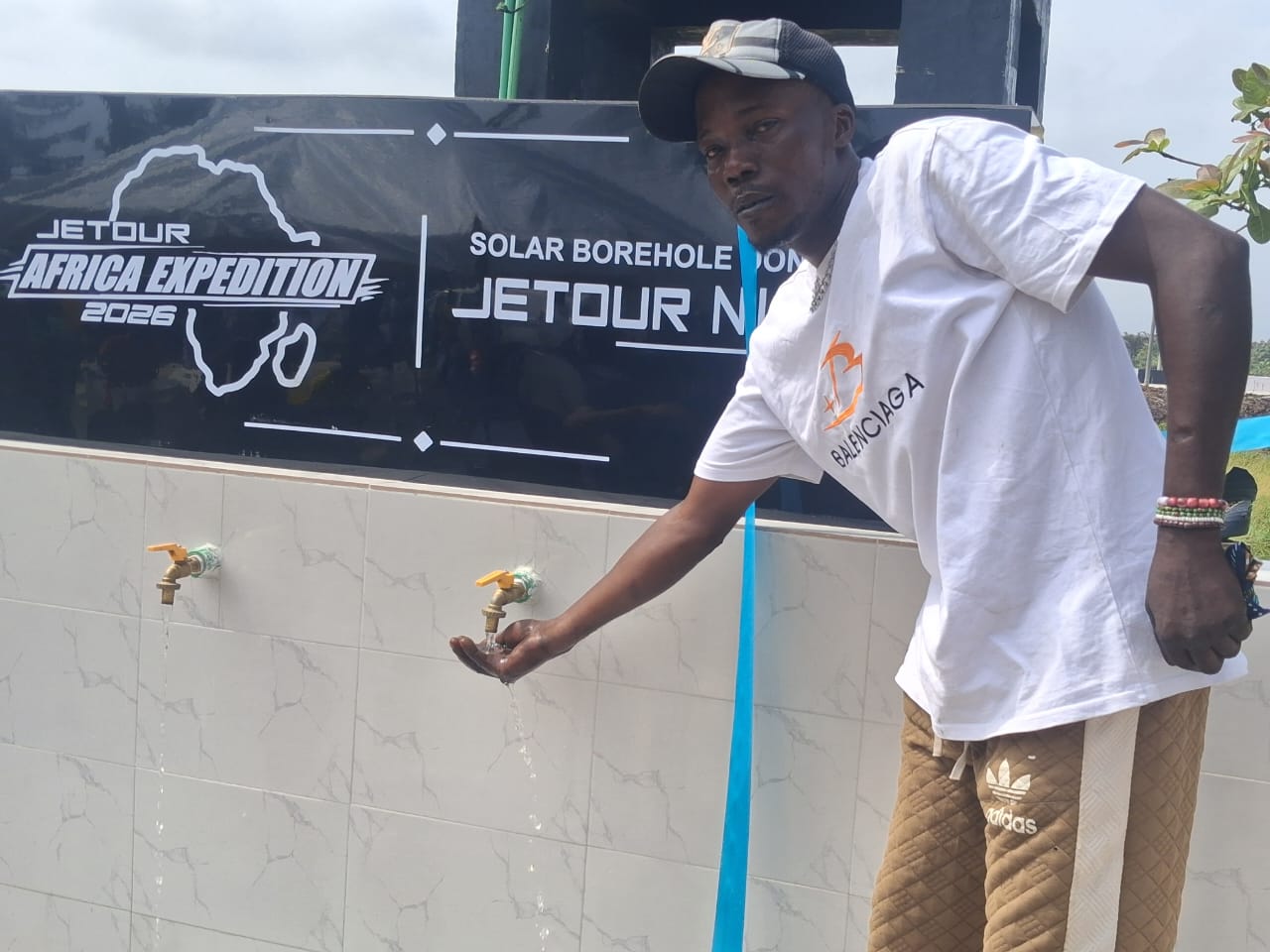
There, Jetour Nigeria commissioned a new solar-powered borehole, providing the school and surrounding community with access to clean and reliable water.
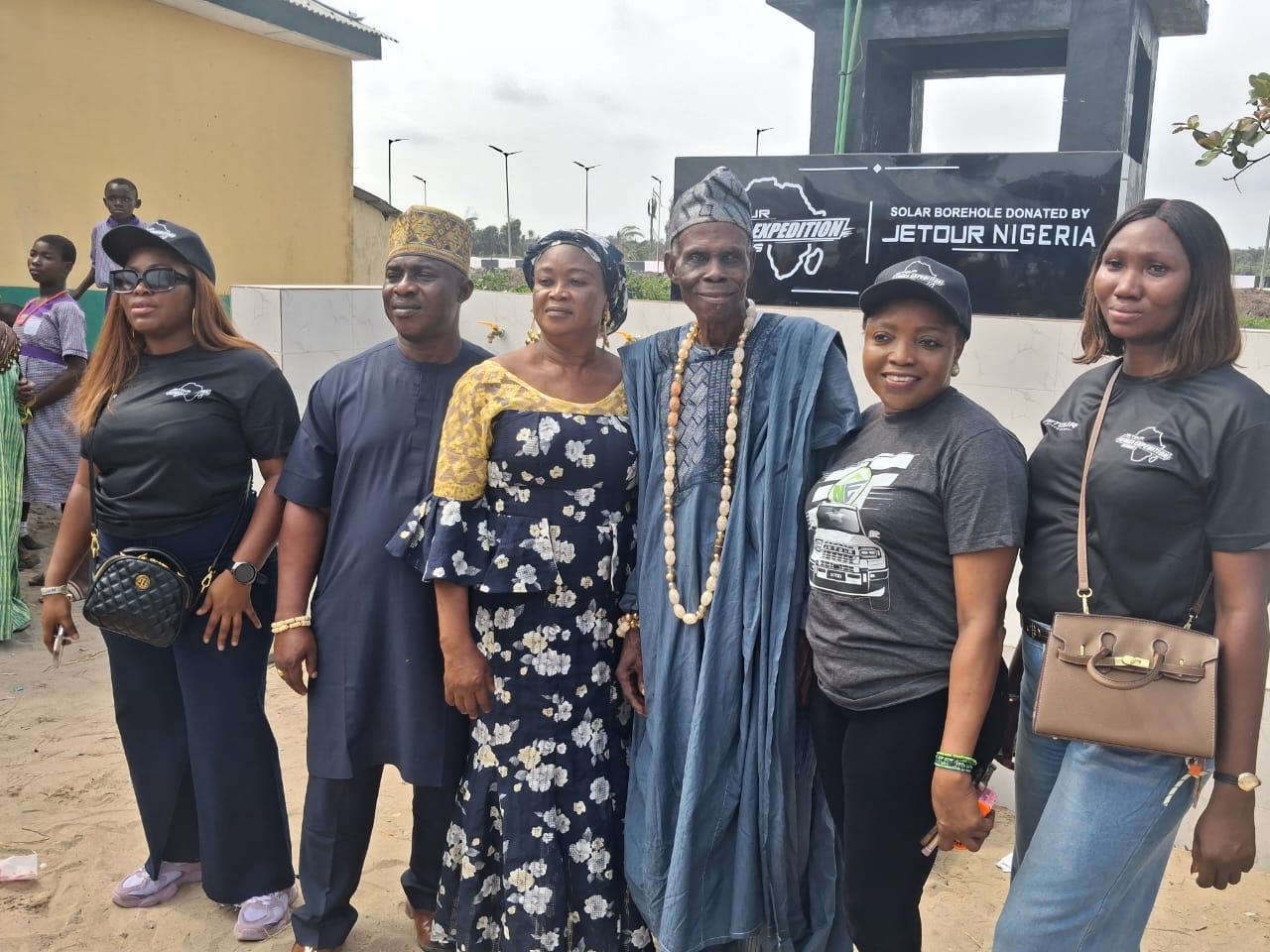
The intervention was greeted with excitement as schoolchildren, traditional leaders, farmers and market women turned out to welcome the visitors with cultural performances.
Jetour also distributed food items to households in the community, while pupils received books and refreshments.
A representative of Jetour Nigeria, Kemi Adeola, said the initiative reflected the company’s belief that its activities should extend beyond automobiles to making a positive difference in the communities it reaches.
“This is where adventure meets purpose,” Adeola said. “Our mission doesn’t stop at building capable vehicles; it lives in our pledge to drive tangible progress and touch the hearts of the communities we reach.”
The community’s traditional leader, High Chief Michael Oluwa, described the water project as an unprecedented development in the history of Iwerekun Orile and pledged that residents would protect and maintain the facility.
The head teacher of the school, Mrs Ariyike Bakre, also expressed gratitude to Jetour, describing the intervention as a lifetime gift to the school and community.
“This is my first time seeing a solar-powered borehole,” Bakre said, adding that the facility would make a significant difference to the children and residents.
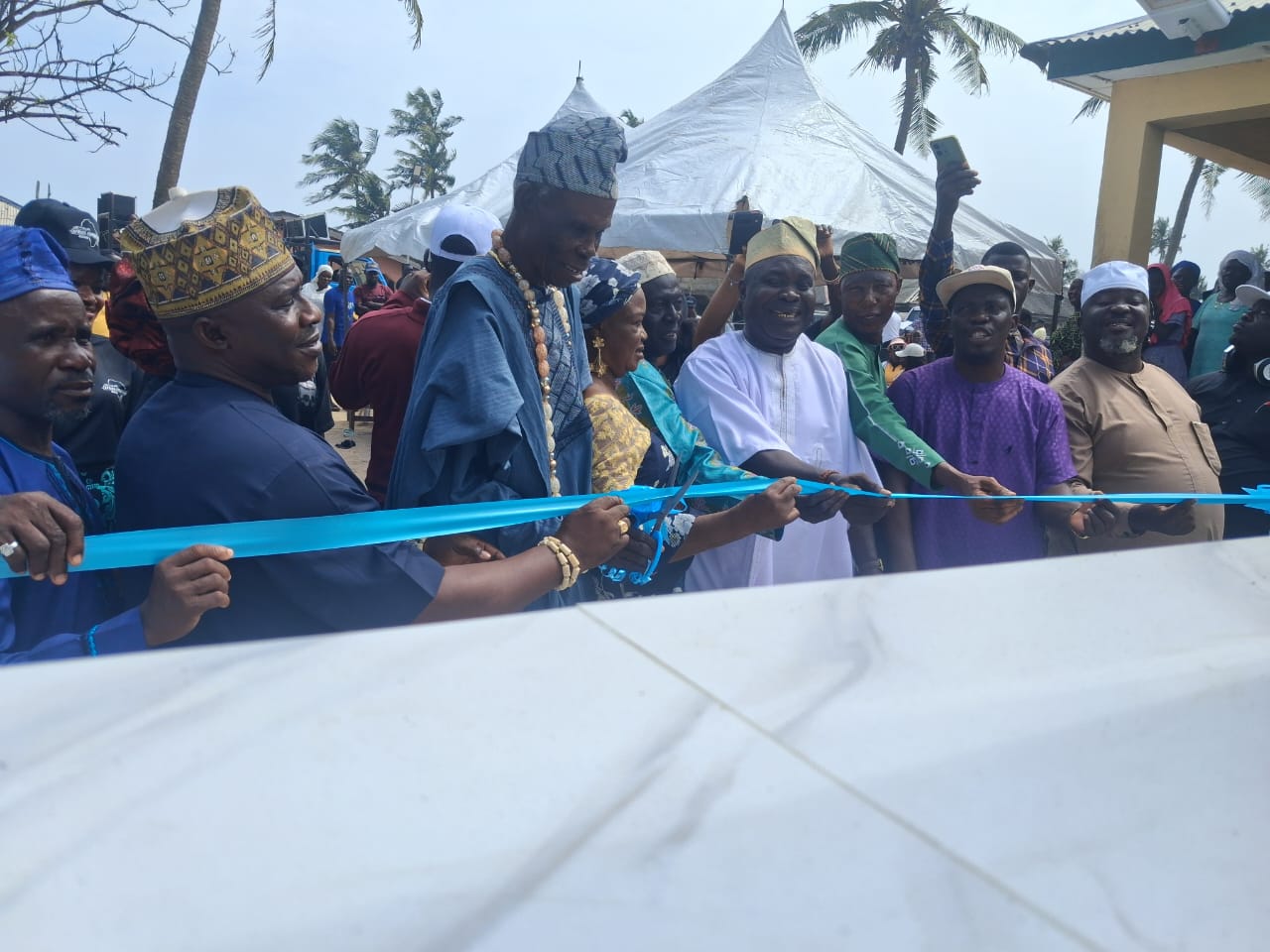
She thanked Jetour for making it possible for the community to witness the commissioning of the project.
The expedition later ended at a beach lounge, where the drivers, organisers and participants relaxed over food, music and entertainment.
For Jetour Nigeria, however, the significance of the expedition extended beyond conquering difficult terrain. It demonstrated how an automotive adventure could be linked to community development, leaving behind not only memories of a demanding road trip but also a lasting source of clean water for Iwerekun Orile.

-
 metro2 days ago
Police Probe Alleged Self-Kidnapping of Adeleke’s Aide in Osun
-
 metro2 days ago
Lagos Arrests Man Over Viral Video of Toddler Being Flogged
-
 metro2 days ago
Tinubu, Fani-Kayode Face Proposed $36m US Lawsuit Over Alleged Threats
-

 Sports2 days ago
Former Super Eagles Captain Troost-Ekong Embraces Islam, Recites Shahadah in Doha
-

 Politics2 days ago
Osun APC Warns Adeleke Govt Over Alleged Victimisation of Local Govt Workers
-
 News1 day ago
Anambra Releases ₦473m Salary Arrears Document as Obi’s Debt Claim Sparks Fresh Dispute
-
 metro2 days ago
Kwara Police Deny Shooting Motorcyclist at Oyun Bridge, Explain Viral Video
-
 metro1 day ago
EFCC Chairman Raises Alarm Over Alleged Theft of Nigeria’s Public Funds