

Politics
Even your son supports Tinubu’s second term – Reno Omokri mocks El-rufai

Even your son supports Tinubu’s second term – Reno Omokri mocks El-rufai
Former presidential media aide, Reno Omokri, has taken a swipe at Nasir el-Rufai, former governor of Kaduna, over his recent comments suggesting that President Bola Tinubu would be retired politically by 2027.
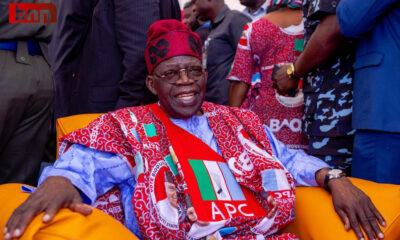
In a post on X, Omokri mocked el-Rufai’s political influence, saying even the former governor’s son was present at the venue where President Tinubu was endorsed for a second term.
“Even your son supports Tinubu’s second term,” Omokri wrote.
He said el-Rufai, despite being a sitting governor in 2023, failed to deliver for his party in Kaduna during the general election.
READ ALSO:
- Herdsmen and crabs swimming in Benue’s river of blood
- Tinubu chides El-Rufai, says Kaduna no longer toxic, uncontrollable
- Benue killings: Residents harboured killers, fed them, says Defence chief
His words: “Even as an incumbent governor, Nasir el-Rufai struggled to draw crowds.
“That is why he lost the presidential, Senate, and House of Representatives elections in Kaduna during the #NigerianElections2023 and only won the gubernatorial election by a mere 10,806 votes out of almost two million votes.”
Omokri said the huge turnout that welcomed Tinubu to Kaduna stands in contrast to el-Rufai’s earlier threat to retire the president to Bourdillon by 2027.
“I looked at the crowd that lined up the streets to welcome President Tinubu to Kaduna today, and they made me almost smirk at Nasir el-Rufai’s threat,” he said.
He described the former governor as a “deluded fellow,” adding that “when you rearrange the letters that spell el-Rufai, you get failure.”
Omokri questioned el-Rufai’s political standing and loyalty to the party, saying he lacks the influence to challenge Tinubu in 2027.
Even your son supports Tinubu’s second term – Reno Omokri mocks El-rufai






Politics
Ogun 2027: APC Highlights Adeola’s Projects, Challenges Adebutu
Ogun 2027: APC Highlights Adeola’s Projects, Challenges Adebutu
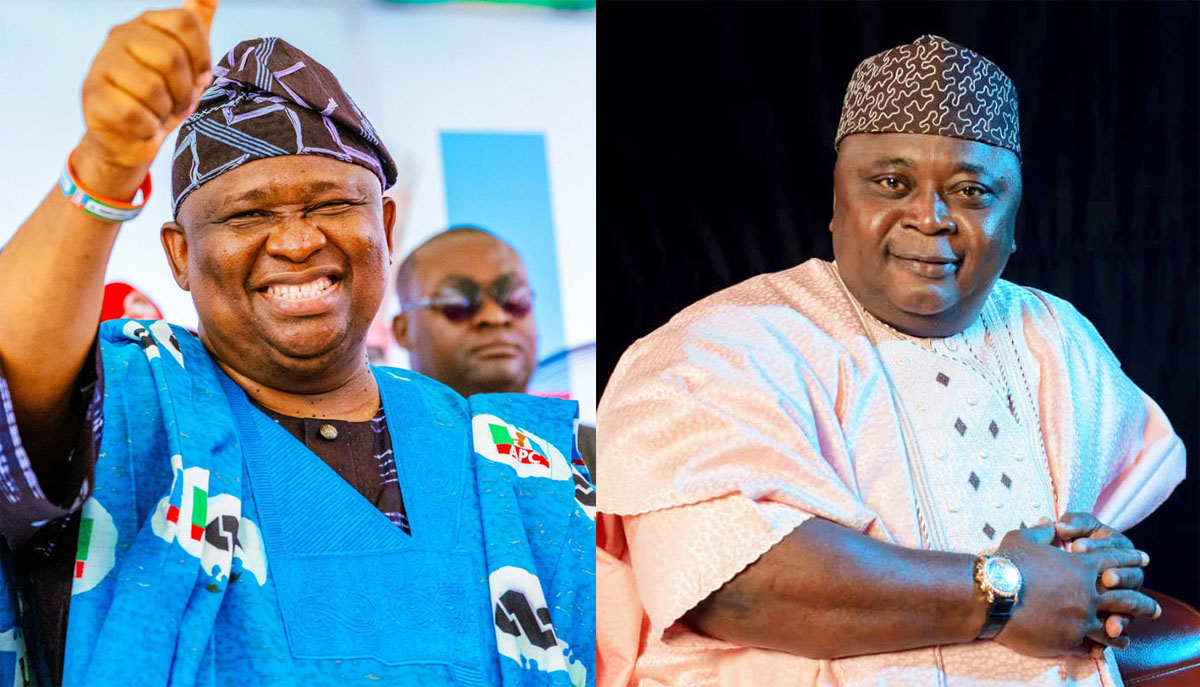
The All Progressives Congress (APC) Student Affairs Committee of the Ogun State 2027 Campaign Council has challenged the Peoples Democratic Party (PDP) governorship candidate, Ladi Adebutu, to present his personal record of public service and verifiable achievements ahead of the 2027 Ogun State governorship election.
The committee said the forthcoming Ogun 2027 governorship election should be centred on ideas, policies, measurable achievements and the capacity of the candidates to address the needs of residents rather than political rhetoric, personal attacks or distractions.
The challenge was contained in a statement issued on Saturday by the committee’s chairman, Comrade Samson Ajasa Adeyemi.
Adeyemi urged Adebutu to bring his record to the table and allow voters to assess what he has personally contributed to the development of Ogun State, particularly in areas affecting students, teachers, young people, artisans, traders and other residents.
According to the APC committee, the election should provide an opportunity for the candidates to explain their previous public service records, policy proposals and plans for the state.
The committee specifically highlighted the activities and interventions of the APC governorship candidate, Senator Solomon Olamilekan Adeola, popularly known as Yayi, as examples of what it described as measurable constituency and community interventions.
It claimed that 5,513 Ogun students benefited from the third edition of Adeola’s scholarship and bursary programme in July 2026.
READ ALSO:
- Akpabio Links Okowa’s APC Defection to EFCC Investigation
- Barau Sacks Aide Over ‘Abba Must Go’ Social Media Posts
- Niger Miners’ Deaths: FG Suspends 21 NSCDC Officers, Releases Names
The committee also cited what it said were 53 constituency projects covering areas including roads, education, healthcare, security and commerce during the third anniversary of Adeola’s tenure.
It further claimed that the Oloja Yayi Market Support Fund provided ₦750 million in direct grants to 10,000 traders across Ogun State’s three senatorial districts.
The APC group said such interventions should be subjected to public scrutiny and compared with the records and programmes of other candidates in the 2027 Ogun governorship race.
Adeyemi challenged Adebutu to similarly identify projects, programmes or other measurable interventions he had personally undertaken or facilitated for the people of Ogun State.
He said the committee was not interested in achievements associated with family background or inherited business interests, but wanted the PDP candidate to present his own record of public service and contributions.
The chairman said the challenge was particularly important because students and other young people needed to understand what each candidate had done previously and what they intended to do if elected governor.
The APC committee also called for a campaign focused on issues affecting education, human capital development, infrastructure, economic empowerment and employment opportunities.
The latest exchange is part of the emerging political contest ahead of the 2027 Ogun State governorship election, with Adeola representing the APC and Adebutu representing the PDP.
Questions surrounding political experience, development records, policy proposals and campaign messaging are expected to feature prominently as the election approaches.
The debate has also included arguments over the relevance of ancestry and political identity in the governorship contest. In a separate intervention, APC chieftain Kayode Oladele had urged political parties to focus their campaigns on candidates’ records, policies and programmes rather than ancestry.
Oladele argued that the constitutional qualifications for a governorship candidate do not include belonging to a particular ancestral group or part of a state, while urging political parties to present alternative policies and programmes for voters to assess.
The APC Student Affairs Committee similarly said Ogun residents should be presented with sufficient information to compare the candidates’ records, programmes and development proposals.
The committee’s position, however, represents the campaign council’s political assessment and claims, which remain subject to verification and comparison with the records and policy positions presented by other candidates and political parties.
With the Ogun 2027 election still ahead, the emerging campaign rhetoric is increasingly shifting towards questions of experience, previous performance, development interventions and the policy direction each candidate intends to pursue if elected.
Ogun 2027: APC Highlights Adeola’s Projects, Challenges Adebutu
Politics
Barau Sacks Aide Over ‘Abba Must Go’ Social Media Posts

Barau Sacks Aide Over ‘Abba Must Go’ Social Media Posts
Deputy President of the Senate, Senator Barau I. Jibrin, has terminated the appointment of his Special Legislative Aide, Umar Alhassan, popularly known as King Indara, following social media posts calling for the removal of Kano State Governor Abba Kabir Yusuf.
Alhassan, a popular Kano-based TikToker, was removed from his position with effect from September 18, 2026, according to a statement issued by Barau’s Special Assistant on Media and Publicity, Shitu Madaki Kunchi.
The statement said the decision followed social media posts by Alhassan containing the phrase “Abba Must Go”, which Barau’s office described as an act of indiscipline and disrespect towards the Kano governor.
According to the statement, the posts were considered contrary to the values of respect and decorum expected from the office of the Deputy Senate President.
Barau’s office also said the action was inconsistent with the principles of the All Progressives Congress (APC), the party to which both Barau and Governor Yusuf belong.
“Accordingly, we announce his removal from the position of Special Legislative Assistant (SLA) in the office of the Deputy President of the Senate as of September 18, 2026,” the statement said.
Alhassan had reportedly published the “Abba Must Go” message on Facebook on Friday, alongside other political comments concerning the political situation in Kano.
In another post following the termination of his appointment, Alhassan reportedly stated that Kano belongs to Rabiu Musa Kwankwaso, the former Kano governor and political figure associated with the Kwankwasiyya movement.
He also indicated that he remained a member of the APC, despite expressing support for Kwankwaso.
Barau, who represents Kano North Senatorial District, subsequently reaffirmed his commitment to the APC and called for support for the party across all levels.
The Deputy Senate President has been involved in efforts to strengthen the APC structure in Kano following Governor Yusuf’s move from the New Nigeria Peoples Party (NNPP) to the ruling party.
READ ALSO:
- Niger Miners’ Deaths: FG Suspends 21 NSCDC Officers, Releases Names
- Adeyanju Rejects Payment for Niger Miners’ Probe, Vows to Expose Any Cover-Up
- Kano TikToker Remanded Over Alleged Defamation of Politician
Yusuf joined the APC in January 2026 after resigning from the NNPP, the platform on which he won the 2023 Kano State governorship election.
The governor’s movement into the APC brought him into the same political party as Barau and other prominent Kano politicians, while also changing the political alignments surrounding the state ahead of the 2027 general elections.
Barau had previously been associated with political discussions surrounding the Kano governorship, but his office has more recently maintained support for the APC structure and Governor Yusuf’s position within the party.
The termination of Alhassan’s appointment, however, was specifically linked by Barau’s office to the aide’s social media activity and the language used in the posts.
There was no announcement of criminal proceedings against Alhassan in connection with the posts.
The development has attracted attention because Alhassan is a well-known social media personality in Kano and had served in a legislative support role in the office of one of the National Assembly’s senior presiding officers.
His removal also illustrates the political sensitivities surrounding public statements by political appointees and legislative aides, particularly when such statements appear to conflict with the positions of the officials or institutions they serve.
The controversy comes at a time when political activity is increasing in Kano ahead of the 2027 elections, with different political actors positioning themselves within the APC and other political platforms.
Governor Yusuf’s defection to the APC has also altered the relationship between him and his former political allies in the NNPP and the Kwankwasiyya movement.
Kwankwaso, who backed Yusuf’s 2023 governorship campaign, is now associated with the African Democratic Congress (ADC) as part of the opposition political realignment ahead of the 2027 elections.
Alhassan’s reported reference to Kwankwaso after losing his appointment has therefore added another dimension to the political discussion surrounding Kano, although his stated APC membership remains his own position.
For now, the immediate consequence of the controversy is the termination of Alhassan’s appointment as a Special Legislative Aide to the Deputy President of the Senate.
Barau’s office has reiterated its commitment to the APC, while Alhassan has continued to express his political views on social media.
The development is expected to generate further discussion within Kano’s political circles as parties, elected officials and their supporters prepare for the next electoral cycle.
Barau Sacks Aide Over ‘Abba Must Go’ Social Media Posts
Politics
Keyamo Knocks Atiku for Addressing President Tinubu as ‘Bola’
Keyamo Knocks Atiku for Addressing President Tinubu as ‘Bola’
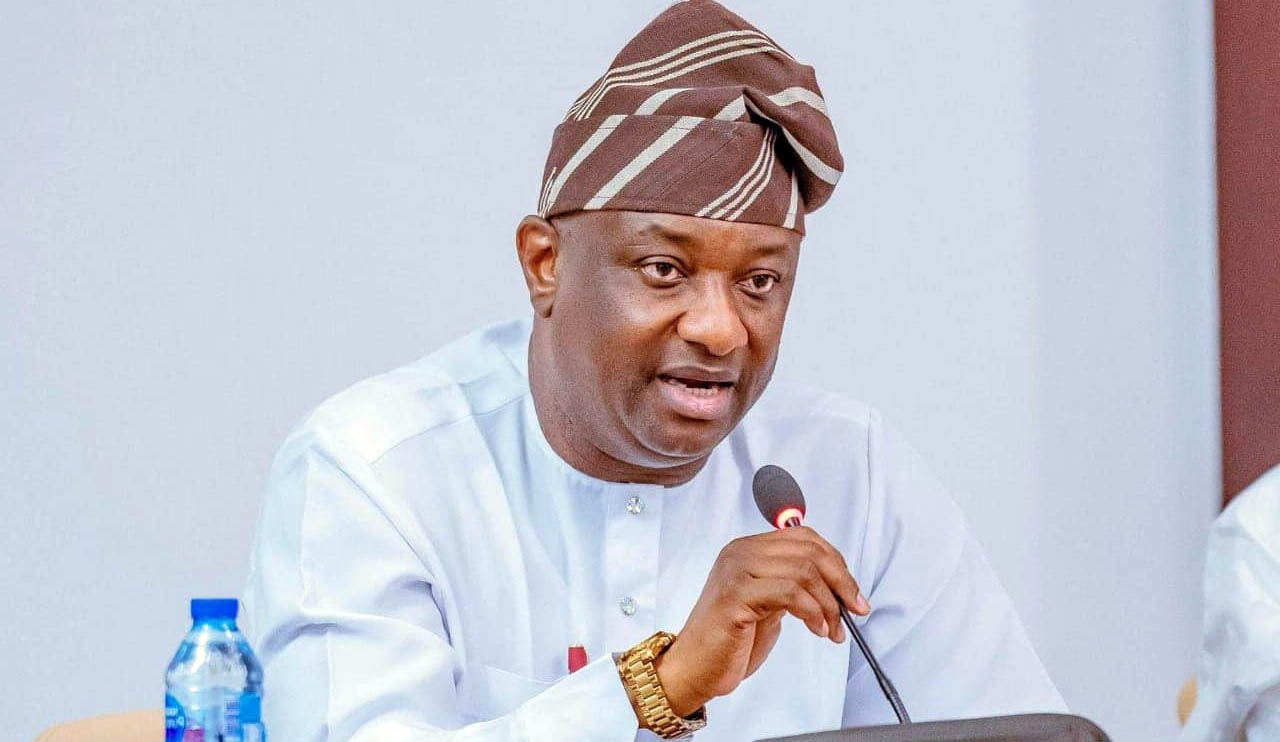
Minister of Aviation and Aerospace Development, Festus Keyamo, has criticised former Vice-President and African Democratic Congress (ADC) presidential candidate Atiku Abubakar for repeatedly referring to President Bola Ahmed Tinubu simply as “Bola” during a press conference on Nigeria’s rising petrol prices and cost of living.
Keyamo described the reference as “very disrespectful and discourteous”, arguing that political disagreements should not diminish the dignity attached to the office of the President.
The minister made the comments in a post on his X account on Friday, September 18, 2026, shortly after Atiku addressed journalists in Abuja on fuel prices, palliatives, electricity costs and economic hardship.
Keyamo said Atiku should recognise that, regardless of political differences, the office of the President deserved to be accorded the appropriate respect.
“The continuous reference to President Bola Ahmed Tinubu … as ‘Bola’ is very disrespectful and discourteous,” Keyamo said.
He added that Atiku should understand that “no matter your differences with Mr President,” the presidential office should be accorded the dignity it deserves.
Keyamo also accused the former Vice-President of speaking from a position of personal grievance, saying the tone of his remarks “reeks of pain and bitterness in his heart”.
The minister further referred to Atiku’s recent comments about the ages of the two politicians, arguing that it was inconsistent for Atiku to describe Tinubu as older than himself while also addressing him by his first name.
The criticism came after Atiku used his press conference to call on Tinubu to take immediate measures to reduce the price of petrol and diesel and ease the economic pressure on Nigerians.
Atiku argued that the removal of the petrol subsidy in May 2023 had contributed to higher transportation, logistics, food and energy costs, with households, workers, farmers and businesses bearing the consequences.
He said rising fuel costs had effects far beyond filling stations because higher transportation and logistics expenses eventually feed into the prices of food and other goods.
READ ALSO:
- Rivers Fire: Mother, Four Children Die in Okochiri House Inferno
- Niger Miners’ Deaths: Survivor Alleges Substance Was Sprayed in Cell as Probe Intensifies
- Lagos APC Orders 2027 Candidates to Stay in Nigeria Until After Election
Atiku urged Tinubu to reconsider the government’s approach and said the President should be willing to adopt a policy proposal capable of reducing petrol prices even if the idea originated from a political opponent.
“Bola Tinubu should not be ashamed to do what is necessary to lower the price of petrol simply because Atiku Abubakar proposed a government intervention,” he said.
He added that the President could rename the proposal or take credit for it if necessary, stressing that what mattered to him was for Nigerians to pay less for petrol.
Atiku also criticised the continued reliance on government palliatives to cushion the effects of economic hardship.
According to him, emergency assistance cannot substitute for policies that address the underlying causes of rising costs.
He argued that measures such as food distribution and cash support could provide temporary relief but would not restore Nigerians’ purchasing power if the costs of fuel, electricity, transportation and production continued to rise.
Atiku said the government’s economic performance should ultimately be assessed by whether ordinary Nigerians could afford essential goods and services, rather than by increases in government revenue or headline economic figures.
The ADC candidate also raised concerns over the planned phase-out of electricity subsidies from 2027, warning that another increase in energy costs could place additional pressure on households, small businesses and manufacturers.
He said businesses were already spending heavily on electricity, diesel and alternative power sources to remain operational.
Atiku argued that the experience following petrol subsidy removal should inform the government’s approach to electricity pricing and called for measures that would prevent additional pressure on consumers and productive businesses.
The former Vice-President’s intervention has drawn a response from the ruling All Progressives Congress (APC).
APC National Publicity Secretary Felix Morka said Atiku had not presented what he considered a credible alternative to the economic policies of the Tinubu administration.
Morka said Atiku, as a presidential candidate, should explain to Nigerians what he intended to do differently rather than simply ask the President to adopt his proposals.
Morka also criticised Atiku over his position on fuel subsidy removal, accusing him of supporting the policy during the 2023 presidential campaign before subsequently criticising the Tinubu administration over its implementation.
On electricity, Morka questioned Atiku’s criticism of the planned subsidy phase-out, arguing that the former Vice-President had previously served in government and had an opportunity to address challenges in Nigeria’s power sector.
Atiku’s position, however, is that his current proposal for government intervention is intended to reduce the cost of domestically refined petroleum products and protect consumers from the effects of high energy prices.
He has also argued that the government should focus on policies that increase purchasing power and reduce production costs rather than relying primarily on palliatives.
The competing positions have added to the growing political debate over petrol pricing, fuel subsidy policy, electricity costs and the wider cost of living as political parties prepare for the 2027 general election.
Keyamo’s intervention, however, was specifically focused on Atiku’s manner of addressing Tinubu and the dignity of the presidential office, rather than providing a detailed response to Atiku’s fuel-pricing proposal.
The dispute therefore combines a political disagreement over the appropriate way to address the President with a broader policy debate over how Nigeria should respond to high energy and living costs.
As the 2027 election approaches, fuel prices, electricity tariffs, subsidy policy, domestic refining and purchasing power are expected to remain prominent issues in exchanges between the Federal Government, the APC and opposition parties.
Keyamo Knocks Atiku for Addressing President Tinubu as ‘Bola’
-
 metro3 days ago
Niger Mosque Abductions: Terrorists Execute 30 of 500 Captive Muslim Worshippers
-

 Business2 days ago
Fuel Prices Climb to ₦1,500 per Litre Across Nigeria, Sparking Calls for Urgent Action
-
 News3 days ago
OAU Investigates Death of Final-Year Student as Police Begin Probe
-
 News1 day ago
ECOWAS Biometric Card Expands as Seven Countries Begin Rollout
-
 metro3 days ago
US-Based Nigerian Lawyers Disbarred: Full List of Fraud, Theft and Misconduct Cases
-

 Politics2 days ago
Aisha Buhari Visits Atiku Amid Opposition Coalition Activities
-

 Business2 days ago
NCAA Moves Against Airlines Over Rising Flight Delays
-
 Interview2 days ago
He Does Not Lose Elections”: Abdulmumin Jibrin Predicts 65% Landslide for Tinubu in 2027