

metro
Benue killings: Residents harboured killers, fed them, says Defence chief
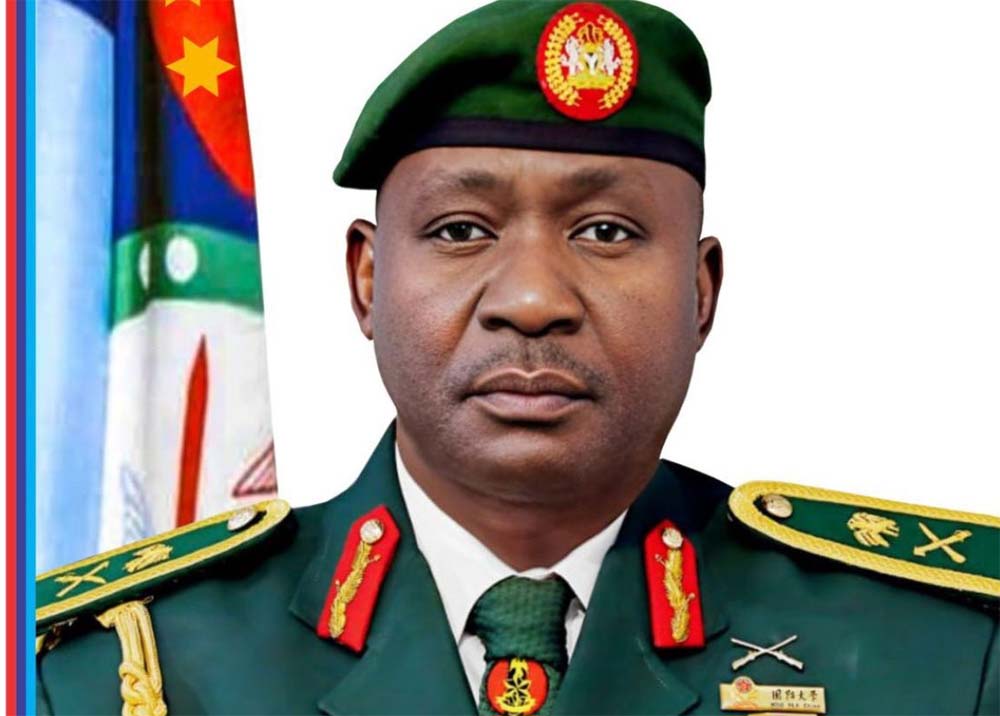
Benue killings: Residents harboured killers, fed them, says Defence chief
The Chief of Defence Staff, Gen. Christopher Musa, has disclosed that residents of Yelwata in Benue State harboured the perpetrators of the recent massacre in the community and gave them food and women.
The Defence Chief revealed this at the Defence Headquarters in Abuja yesterday during an expanded interaction with journalists.
President Bola Ahmed Tinubu had, during his condolence visit to the state on Wednesday, directed the security forces to fish out the perpetrators of the attack that left over 100 dead and property destroyed.
The Defence Chief told journalists that before the incident, troops had received intelligence about potential attacks in various communities across Benue State and were mobilised accordingly.
He said upon arrival at the mentioned locations, it turned out that the information was misleading as the real attack had been executed in Yelwata using “a hit-and-run approach.”
The CDS said local informants also helped the attackers identify the location of the Internally Displaced Persons (IDPs) camp at Yelwata, resulting in the high casualty figure recorded.
He stated: “These criminals were harboured by people in the community. They were given food. They were even given women. They were guided on where the IDP camp was located. Yet, security forces received no information.
“This is why we consistently urge communities to be vigilant and report suspicious activities. Security is everyone’s responsibility.”
General Musa said President Tinubu had directed full activation of all national security forces, assuring that the perpetrators of Yelwata killings would be brought to justice.
READ ALSO:
- FG shuts France, Belgium, Italy visa centres in Abuja
- Chief Imam, 5 others abducted in fresh bandit attack along Gusau–Sokoto highway
- Real reason Tinubu can’t win 2027 election – El-Rufai
He described the porosity of the nation’s borders as a growing threat amid the rising instability in the Sahel region.
He said the flow of arms and fighters from crisis-hit countries like Sudan, Libya and the Central African Republic is worrisome, warning that these elements are exploiting Nigeria’s vast and unmonitored frontiers.
He said Nigeria should learn from a country like Pakistan which successfully built a fortified double-layer border wall to separate itself from Afghanistan.
According to him, Nigeria’s security challenges require a “whole-of-society approach involving collaboration between the military, civilian institutions and the public.
6,260 terrorists killed in 2 years – DHQ
Deputy Director, Defence Media Operations, Brigadier-General Ibrahim Abu-Mawashi, who also spoke during the interactive session, said 6,260 terrorists and criminals were neutralised in joint operations nationwide in the last two years.
He added that 14,138 suspects were arrested; while 5,365 civilians were rescued within the period.
He said weapons and ammunition recovered across the country included thousands of rounds and hundreds of assault rifles and other arms.
READ ALSO:
- Not the Iran we thought it was: What has changed in the Persian Gulf, by Azu Ishiekwene
- Two Islamic clerics arraigned for scamming doctor N280m
- NAF destroys IED factory, terrorists gun trucks in Borno
He broke down the feats recorded thus: “Niger Delta: N83 billion worth of stolen crude was recovered, 103 criminals killed and 2,760 suspects arrested.
“North East: 1,246 Boko Haram/ISWAP terrorists neutralized, 2,467 arrested and 1,920 civilians rescued.
“North West: 1,374 bandits killed, 2,160 arrested and 3,288 hostages rescued.
“North Central: 730 terrorists killed, 7,153 arrested and 1,510 civilians rescued.
“South East (Operation Udoka): 440 terrorists killed and 1,677 arrested.
“South West: 80 criminals killed, 1,763 arrested and 89 kidnap victims rescued.”
Director, Defence Information, Brigadier-General Tukur Gusau, reiterated the military’s commitment to keeping Nigerians informed and involved in national security efforts.
Abu-Mawashi said the engagement aligned with General Musa’s leadership vision of fostering a “people-centric Armed Forces.”
Earlier yesterday during the maiden Defence Headquarters Civil-Military Relation Conference, the CDS said the suspicion, fear and mistrust in the relationship between the military and the civilian population had often “hampered our ability to effectively work together, particularly in times of crisis or national emergency.”
“The military has been seen not as a partner in progress, but as an occupying force, alien to the people it is meant to serve and protect,” he stated.
Benue killings: Residents harboured killers, fed them, says Defence chief












metro
Edo Police Arrest 37-Year-Old Man Over Alleged Rape of 70-Year-Old Woman

Edo Police Arrest 37-Year-Old Man Over Alleged Rape of 70-Year-Old Woman
The Edo State Police Command has arrested a 37-year-old man over the alleged rape of a 70-year-old woman in Igueben Local Government Area of the state.
The suspect was taken into custody following the allegation and is being investigated as police work to establish the circumstances surrounding the reported sexual assault.
The command’s Police Public Relations Officer, ASP Eno Ikoedem, disclosed the arrest during a briefing on the command’s recent operations and security activities across the state.
Ikoedem said the case was being handled as a serious allegation and that investigators would gather the necessary evidence to determine the next legal steps.
The police have not released the identities of the suspect or the alleged victim. Details of the alleged incident, including when it occurred and the circumstances leading to the suspect’s arrest, have also not been fully disclosed.
The suspect remains presumed innocent unless and until proven guilty by a court.
The case was among several security developments disclosed by the Edo Police Command.
READ ALSO:
- Why Ronaldo Left Portugal Camp Ahead of Denmark Clash
- 2027: Amaechi Vows to Resign If Nigeria Fails to Change Within One Year
- Dangote Sets 40-Month Deadline for $16bn East Africa Refinery in Kenya
The command also reported the recovery of a six-month-old baby allegedly stolen and taken to Imo State, with the child subsequently reunited with the family. Police said suspects connected with the incident were arrested.
Seven suspected cult members were also arrested by operatives of the Otuo Division during an intelligence-led operation targeting cult-related activities.
Police further said a joint clearance operation was conducted in parts of Edo North, particularly areas identified as potential hideouts for criminal elements. According to the command, no kidnapping incident was recorded in the affected areas during the period under review.
The command also disclosed arrests linked to an allegation involving the stripping of a young girl and the circulation of material relating to the incident on social media.
The police urged residents to provide useful information that could assist security agencies in preventing crime and protecting vulnerable people.
The investigation into the alleged rape of the 70-year-old woman in Edo is ongoing, with further action expected to depend on the outcome of the police investigation.
Edo Police Arrest 37-Year-Old Man Over Alleged Rape of 70-Year-Old Woman
metro
FG Declares Thursday Public Holiday for Nigeria’s 66th Independence Anniversary

FG Declares Thursday Public Holiday for Nigeria’s 66th Independence Anniversary
The Federal Government has declared Thursday, October 1, 2026, a public holiday to mark Nigeria’s 66th Independence Anniversary.
The Minister of Interior, Olubunmi Tunji-Ojo, announced the declaration on behalf of the Federal Government on Wednesday, congratulating Nigerians at home and abroad on the national celebration.
The minister urged Nigerians to use the occasion to promote national unity, patriotism, peaceful coexistence and mutual respect, while reflecting on the sacrifices of the country’s founding fathers and heroines.
Tunji-Ojo said peace and stability remained important to national development and called on citizens to remain committed to building a stronger and more prosperous Nigeria.
The minister also assured Nigerians that the Federal Government remained committed to strengthening national security, improving public safety and creating an environment where citizens could live and work with confidence.
The 2026 celebration marks 66 years of Nigeria’s independence, following the country’s attainment of independence from British colonial rule on October 1, 1960.
READ ALSO:
- Flood Cuts Off Part of Agbarho-Ughelli Road, Strands Commuters in Delta
- Dangote Draws Battle Lines as Fuel Import Fight Heads Back to Court
- Tinubu Returns After 30 Days in Europe, Says ‘I’m Healthy and Ready to Work’
The Federal Government is marking the anniversary under the theme, “From Reforms to Stability: Consolidating Nigeria’s Renewed Hope for Shared Prosperity.” The anniversary programme was earlier announced as a low-key celebration.
As part of the programme, an Independence Day Public Lecture is scheduled for Wednesday, September 30, while President Bola Ahmed Tinubu is expected to deliver a nationwide broadcast on Thursday, October 1.
The President is also expected to participate in other anniversary activities in Lagos, including the premiere of a documentary on the late businessman and politician MKO Abiola at the National Theatre.
The Federal Government has urged Nigerians to use the Independence Day celebration to reflect on the country’s journey since 1960 and renew their commitment to a united and peaceful Nigeria.
The October 1 public holiday applies nationwide, giving workers and other citizens an official day off to commemorate Nigeria’s Independence Day.
FG Declares Thursday Public Holiday for Nigeria’s 66th Independence Anniversary
metro
Five Remanded Over ‘Tinubu Must Go’ T-Shirts in Borno

Five Remanded Over ‘Tinubu Must Go’ T-Shirts in Borno
Five men have been remanded in custody in Maiduguri, Borno State, after they were arraigned over the alleged printing and wearing of “Tinubu Must Go” T-shirts.
The defendants — Baba Aji Gremami, 44; Mustapha Abba Yemen, 28; Abbacha Mohammed Ali, 32; Adam Umar Gubio, 21; and Abdulhamid Mohammed, 21 — were arrested on September 25 around the West End Roundabout area of Maiduguri, according to a First Information Report issued by the State Criminal Investigation Department.
Police alleged that the five men conspired to print and wear the T-shirts bearing the inscription “Tinubu Must Go”, with the intention of causing a breach of public peace in the area.
They were subsequently charged with criminal conspiracy, inciting disturbance, disturbance of public peace and thuggery under Sections 60, 78, 79 and 392 of the Borno State Penal Code.
The defendants appeared before the Chief Magistrate Court I in Maiduguri and pleaded not guilty to the allegations. Their lawyers subsequently applied for bail.
The court remanded the five men in custody and adjourned the matter to October 6, 2026, for a ruling on the bail application. The substantive case was also listed for October 26, 2026.
The police case centres on the alleged intention behind the production and wearing of the shirts, with the authorities maintaining that the conduct was capable of causing a breach of public peace. The charges, rather than the political slogan alone, form the basis of the criminal proceedings.
READ ALSO:
- Flood Cuts Off Part of Agbarho-Ughelli Road, Strands Commuters in Delta
- Dangote Draws Battle Lines as Fuel Import Fight Heads Back to Court
- Tinubu Returns After 30 Days in Europe, Says ‘I’m Healthy and Ready to Work’
The arrests have generated controversy, particularly over the balance between freedom of expression and public-order laws.
Amnesty International condemned the detention, arguing that wearing a shirt expressing political dissent should not, by itself, constitute a criminal offence. The organisation called for the men’s release and urged the authorities to protect the rights to freedom of expression and association.
The African Democratic Congress (ADC) in Borno State also condemned the arrests. The party said the men were being detained for expressing a political opinion and called for their immediate release. The party’s position is separate from the police allegations before the court.
There have also been claims that the arrests were politically directed, including an allegation that a senior political figure in Borno ordered the action. However, such claims have not been independently established, and the police report cited in the case does not establish that a political figure ordered the arrests.
The development comes as political activity increases ahead of the 2027 general elections, with opposition parties and supporters using different platforms to express criticism of the Federal Government and promote alternative political positions.
The case has consequently drawn attention to the application of freedom of expression, political dissent and public-order laws in Nigeria.
For now, the five men remain defendants in an ongoing criminal case. They have pleaded not guilty, and the allegations against them have yet to be determined by the court.
Five Remanded Over ‘Tinubu Must Go’ T-Shirts in Borno
-

 metro2 days ago
Osogbo Food Bonanza Turns Nightmare as Discount Vendor Vanishes With Customers’ Millions
-

 metro3 days ago
24 Hours in Darkness: Iju Ishaga Residents, Businesses Count Losses as Ikeja Electric Fails to Restore Power
-

 Education2 days ago
FG Releases 2026–2028 Approved Textbooks, Introduces QR Codes for Tracking
-

 News2 days ago
Breaking: Tinubu Ends Extended European Vacation, Departs Paris for Nigeria
-

 metro2 days ago
Hamzat Clarifies Lagos Traffic ‘Lifestyle’ Remark After Backlash
-

 Sports2 days ago
Nigeria XI vs Guinea-Bissau: Awoniyi, Lookman, Adams Lead Super Eagles Attack
-

 metro1 day ago
$2.1m Land Suit: Court Orders Wike’s Son to Produce American Passport
-

 Auto3 days ago
Carloha Opens Wider Access to Chery Q as Smart EV Enters Nigeria’s Mainstream