

metro
Ex-IG Okiro: FG’s Decision to Scrap Anti-Terror Squad Birthed Boko Haram Insurgency
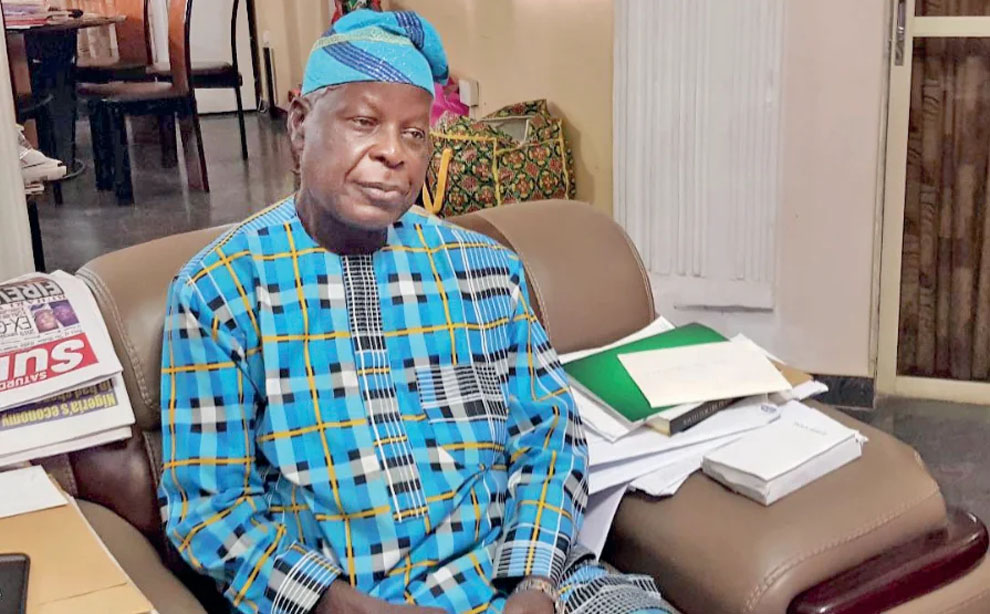
Ex-IG Okiro: FG’s Decision to Scrap Anti-Terror Squad Birthed Boko Haram Insurgency
- The former police chief, who turned 77 last week, says he had monitored Mohammed Yusuf and arrested him multiple times before the sect struck in 2009
Former Inspector-General of Police, Sir Mike Mbama Okiro, has blamed the Federal Government’s decision to dismantle the Police Anti-Terrorist Squad shortly after his retirement in 2009 for the emergence and spread of the Boko Haram insurgency, describing the move as a costly policy error that denied Nigeria the opportunity to stop terrorism before it escalated into a national crisis.
Okiro, who served as IGP between June 1, 2007, and July 24, 2009, and recently marked his 77th birthday, made this revelation in an interview. He said the anti-terrorism unit he established in November 2007 was abandoned following criticism from some quarters, leaving the country vulnerable to the insurgency that erupted weeks after his retirement.
The former police chief, who also served as Chairman of the Police Service Commission from May 2013 to April 2018, said the Anti-Terrorist Squad was created to detect and neutralise emerging terrorist threats. He disclosed that officers of the squad were trained in Israel, Egypt, Sudan and South Africa, countries with known histories of combating terrorism.
Okiro recalled that he had trained the squad operationally to reduce costs and also established a Police Anti-Terrorist Squad Training School in Rivers State, where experts from outside were brought in to teach operatives. He expressed regret that the school no longer exists.
The former IGP said opposition to the initiative came from individuals who falsely alleged that the squad was designed to target members of a particular religion. He recalled that some newspapers wrote editorials against the initiative, arguing at the time that terrorism was not a threat in Nigeria.
“Some people came up and alleged that Okiro has created the anti-terrorist squad to gather members of a particular religion and shoot them as terrorists. Two newspapers wrote editorials on that, claiming there is no terrorism in Nigeria, that I created ATS to give Nigeria a bad name to the outside world,” Okiro said.
READ ALSO:
- Is Nigeria’s Electricity Tariff Going Up? FG Finally Breaks Silence
- ISWAP finance chief surrenders to Nigerian troops with two children in Borno
- Al-Mustapha Fires Back: Ex-DSS Officer’s Account of Abacha’s Death Is a Lie, I Have CCTV Evidence
He explained that despite publicly defending the initiative, the Federal Government declined to approve funds required to equip the squad with operational vehicles, communication gadgets and other logistics. However, he still deployed units to Lagos, Port Harcourt, Kano and Maiduguri, but some state governors requested the withdrawal of the operatives from their states.
“I retired July 24, 2009. By August to September, Boko Haram had struck in Maiduguri. Since then Nigeria has known no peace. If government had insisted on the ATS and equipped it, the story would have been different today,” Okiro said.
The former police boss disclosed that security agencies had been monitoring Boko Haram founder Mohammed Yusuf before the insurgency erupted, adding that he personally arrested him multiple times.
“I monitored Mohammed Yusuf from Yobe to Maiduguri. I arrested him a couple of times. If government had taken action then, the story would have been different. It is late now. They have spread all over Nigeria,” he stated.
Okiro lamented that Nigeria has not made significant progress in addressing insecurity, stressing that the problem has been with the nation for decades. He cited his experience as Commissioner of Police in Lagos when the Oodua People’s Congress had taken over security because the police had failed.
“We are not making progress. The situation had been bad right from time. We are all Nigerians, let us face facts. The situation has been like this, likewise the economic situation,” Okiro said.
He attributed persistent security challenges to inadequate funding, poor manpower, and obsolete equipment across security agencies. According to him, the police, as the lead agency for internal security, cannot effectively combat crime without modern surveillance technology, reliable communication systems, drones, and other advanced security infrastructure.
“The agencies should be well funded, have manpower, have equipment. The world is so advanced now that you can send drones to fight crime and insecurity, it’s no longer physical security like we have in those days. Nigerians are very intelligent. If they are given what they require they will excel,” he said.
On the 2027 general elections, Okiro urged security agencies to remain neutral and avoid partisanship, warning that interference in the electoral process beyond maintaining law and order could undermine the credibility of the polls.
Reflecting on his policing career, the 77-year-old former Inspector-General recounted how he prevented a violent attack on a son of the late Head of State General Sani Abacha during a high-profile court appearance in Lagos by secretly relocating the trial venue from Igbosere to Ikeja. He described the strategy as one of the defining moments of his career. At the time, the OPC had gathered at Igbosere with cutlasses, sticks, broken bottles and jerry cans of petrol, vowing to kill Abacha’s son.
Okiro, who holds a law degree, also narrated how he reluctantly joined the police after hating the profession as a student union leader at the University of Ibadan. He said he picked the police from six job offers after praying to God for guidance. His father, who wanted him to join the Rivers State Civil Service, initially opposed his decision but later prayed for him.
Ex-IG Okiro: FG’s Decision to Scrap Anti-Terror Squad Birthed Boko Haram Insurgency
The Sun







metro
Woman dies after husband allegedly assaults her over cooking, dance class

Woman dies after husband allegedly assaults her over cooking, dance class
A 38-year-old woman, Yamini Krishna Lal Yadav, has died in Nagpur, India, after her husband allegedly assaulted her during an argument over cooking and her decision to attend a dance class.
The woman’s husband, Krishna Lal Yadav, 41, has been arrested and booked in connection with her death after a post-mortem examination reportedly revealed serious internal injuries.
The incident occurred in the Mankapur area of Nagpur, Maharashtra, where the couple lived with their two young children.
According to reports, Krishna returned home from work and asked his wife to prepare food for him and the children. Yamini, however, was reportedly preparing to attend a dance class within their housing society and declined to cook at the time.
The disagreement allegedly escalated into a physical confrontation. Police said the husband was reportedly under the influence of alcohol when he allegedly assaulted Yamini around her neck and abdomen. The incident reportedly occurred in the presence of their children.
After the alleged assault, Yamini complained of severe pain in her neck and abdomen and reportedly asked her husband to get painkillers. He allegedly went to a nearby medical shop but returned after finding it closed.
Her condition later deteriorated, with her abdomen reportedly becoming swollen. She was subsequently taken to a private hospital in the area for treatment but died while receiving medical attention.
READ ALSO:
- NSCIA warns FG against weaponising state institutions in El-Rufai case
- Lagos Records 33,009 Domestic Violence Cases Amid Economic Hardship
- Nigerians Pay N44 Extra Per Litre as Retailers Defy Falling Depot Prices – Full Report
The case initially appeared to be an accidental death, prompting police to send her body for a post-mortem examination.
However, the examination reportedly revealed a fractured neck bone and severe internal injuries, including serious damage to the intestines. Reports also indicated injuries consistent with strangulation and abdominal trauma, prompting investigators to reconsider the circumstances surrounding her death.
Following the post-mortem findings, police questioned Krishna and subsequently arrested him. A murder case was registered against him as investigations continued.
Yamini’s brother reportedly said the family was aware that the couple had experienced disagreements in the past. He said Yamini had occasionally spoken about problems in the marriage but had asked relatives not to intervene because she feared their involvement could worsen the situation.
The family initially believed Yamini had died following a medical emergency and was reportedly shocked when the post-mortem examination revealed evidence of significant physical injuries.
Police are continuing their investigation into the circumstances surrounding the death of the Nagpur woman, while the accused remains in custody over the allegations.
The case has renewed concerns about domestic violence, particularly the need for victims experiencing abuse to have access to timely support and protection.
Woman dies after husband allegedly assaults her over cooking, dance class
metro
NSCIA warns FG against weaponising state institutions in El-Rufai case

NSCIA warns FG against weaponising state institutions in El-Rufai case
The Nigerian Supreme Council for Islamic Affairs breaks its silence on the former governor’s legal ordeal, citing “serious concerns” over possible sectarian agenda in the multiple prosecutions keeping El-Rufai in the spotlight.
ABUJA – The Nigerian Supreme Council for Islamic Affairs (NSCIA) has raised the alarm over what it described as “an extraneous involvement of an underlying religious bias” in the ongoing prosecutions of former Kaduna State Governor, Nasir El-Rufai. The Islamic body, which had deliberately stayed out of the controversy until now, said recent developments had forced it to break its silence on the matter. In a statement signed by its Secretary-General and immediate-past Registrar of JAMB, Prof. Is-haq Oloyede, the NSCIA explained that its earlier restraint was based on its belief that El-Rufai’s prosecution, like those involving other political figures, was a standard judicial process and that the judiciary had the inherent capacity to uphold justice. However, the council said recent developments in the public domain had raised serious concerns that strongly suggested religious considerations might be creeping into a process that should be determined solely by law and evidence.
The NSCIA called on the Federal Government and the Judiciary to ensure that individuals with vested religious interests were strictly prevented from weaponising public institutions or the legal system to pursue what it described as a sectarian agenda against El-Rufai. “Consequently, the Council calls upon the Federal Government of Nigeria and the Judiciary to ensure that individuals with vested religious interests are strictly prevented from weaponizing public institutions or the legal system to execute a sectarian agenda against him,” the statement read. The council stressed that its position was anchored on the Islamic principle of justice and fairness, regardless of political, religious or personal considerations, and clarified that its intervention was not intended to interfere with the judicial process but to emphasise the need for justice to be administered without religious or sectarian considerations. The Islamic body also appealed to the general public to refrain from incendiary comments that could prejudice the fair trial of El-Rufai or exacerbate the security situation in the nation. “Furthermore, the Council appeals to the general public to refrain from incendiary comments that could prejudice the fair trial of Mallam El-Rufai or exacerbate the security situation in our nation,” the statement read.
READ ALSO:
- Lagos Records 33,009 Domestic Violence Cases Amid Economic Hardship
- Nigerians Pay N44 Extra Per Litre as Retailers Defy Falling Depot Prices – Full Report
- NOUN appoints Ramatu Ibrahim acting Bursar after Marafa’s death
The NSCIA‘s intervention comes against the backdrop of a protracted legal battle that has kept El-Rufai in the spotlight since February 2026. The former governor is facing multiple prosecutions by different agencies on charges bordering on alleged abuse of office, money laundering, breach of national security, and wiretapping. The council’s decision to speak out followed comments by the Minister of Defence, General Christopher Musa (retd.), who accused El-Rufai of planning killings in Southern Kaduna while he was governor between 2015 and 2023. Musa had described the situation in Kaduna during El-Rufai’s administration as “toxic”, adding that many residents of Southern Kaduna remained unhappy with the former governor over killings recorded in the area.
El-Rufai, through his family, rejected the allegation and demanded that the minister withdraw the claim, with his eldest son, Mohammed Bello El-Rufai, giving Musa seven days to provide evidence supporting the allegation or publicly retract it. The controversy generated by Musa’s remarks has further widened the debate surrounding El-Rufai’s legal battles, with the NSCIA‘s intervention effectively placing the prosecution within a wider debate over the alleged politicisation and religious manipulation of state institutions. The Middle Belt Forum (MBF) has taken a sharply divergent position, backing the Defence Minister’s allegations and demanding an independent investigation into alleged killings and human rights abuses during El-Rufai’s administration, with possible prosecution before the International Criminal Court (ICC). The NSCIA’s intervention, which did not identify any individual or group it accused of pursuing a religious agenda, serves as a significant development in a case that has become a flashpoint for broader debates about judicial independence, political persecution, and religious neutrality in Nigeria’s legal system.
The council concluded its statement by praying for peace, stability and security in Nigeria. “May Almighty Allah grant peace, stability, and security to Nigeria,” it said.
NSCIA warns FG against weaponising state institutions in El-Rufai case
metro
Bandits abduct Kaduna lawmaker’s brother, kill three KADVS operatives
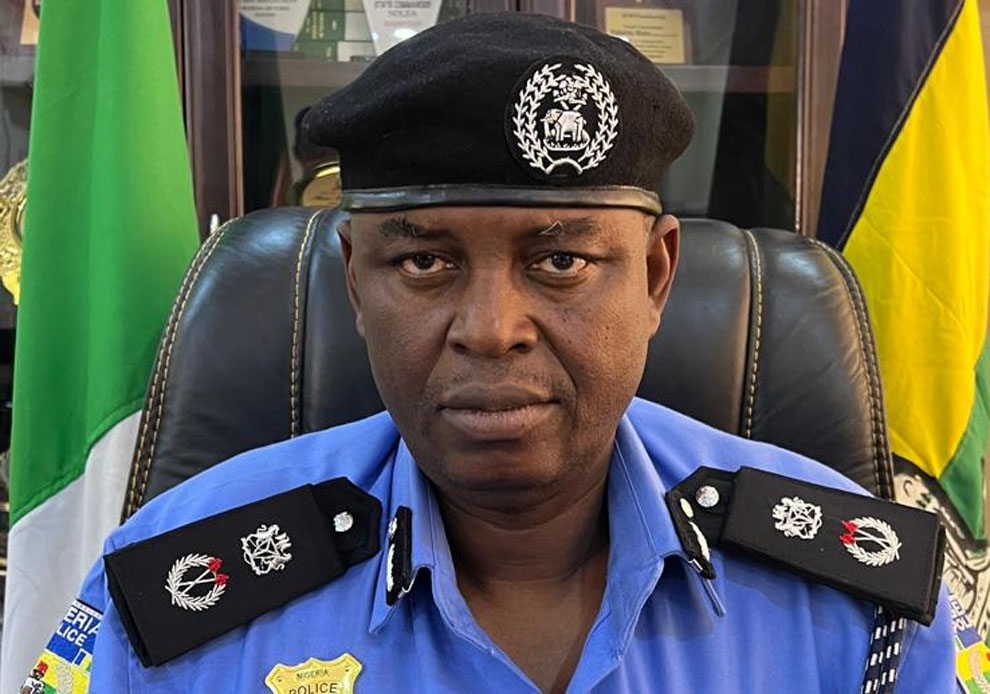
Bandits abduct Kaduna lawmaker’s brother, kill three KADVS operatives
Suspected bandits have abducted the younger brother of a Kaduna State lawmaker and killed three personnel of the Kaduna State Vigilance Service (KADVS) in separate attacks in Kubau Local Government Area of the state.
The incidents, which occurred within hours of each other, have heightened security concerns in Pambegua and surrounding communities, with the attacks taking place along the Zaria-Pambegua axis before the lawmaker’s brother was abducted from his residence.
The KADVS Public Relations Officer, Yunusa Ibrahim, confirmed the incidents in a statement issued on Tuesday.
Ibrahim identified the abducted victim as Sanusi, the younger brother of Shehu Pambegua, who represents Kubau Constituency in the Kaduna State House of Assembly.
According to the KADVS spokesman, the suspected attackers arrived at Sanusi’s residence in a Sharon vehicle at about 10pm on Monday and forcibly took him away.
The abduction came after three KADVS personnel were killed earlier in the day while carrying out a routine security operation in the area.
The deceased personnel were identified as Dallami Dantani, the Second-in-Command of KADVS in Kubau, Abdullahi Hamisu and Zakariyya Musa.
Ibrahim said the incident began when the vigilantes attempted to stop a red Volkswagen Golf Salon during a routine check, but the driver allegedly refused to comply.
READ ALSO:
- Oyoland Grand Chief Imam Celebrates Amubieya’s Decades of Islamic Scholarship
- FG opens six-month teacher certification for BSc, HND, ND holders – How to Apply
- How I Sold My Twins for N300,000, Stole 13 Other Children — Suspect
The KADVS personnel reportedly pursued the vehicle in their patrol van in an effort to identify the occupants and establish why they were travelling through the area.
The occupants allegedly opened fire during the pursuit, killing Dantani.
The attackers reportedly turned back towards the KADVS office after the initial shooting and opened fire on the personnel there, killing Hamisu and Musa before escaping towards Zaria.
The killings occurred hours before Sanusi was reportedly abducted from his residence, creating renewed anxiety among residents and security personnel in the area.
Reacting to the deaths, the Kaduna State Commander of KADVS, CP Ali Audu (rtd.), condoled with the families of the three personnel and described their deaths as a major loss to the service.
Audu praised the deceased personnel for their courage and commitment to duty, assuring their families that their sacrifices would be remembered.
He also pledged the continued support of the service to the bereaved families.
The KADVS commander disclosed that security surveillance had been intensified in Pambegua and neighbouring communities as efforts continued to locate the abducted victim and identify those responsible for the attacks.
He urged KADVS personnel to remain vigilant while carrying out their duties and strengthen collaboration with other security agencies, particularly in communities regarded as vulnerable to bandit attacks and kidnapping.
Audu reaffirmed the service’s commitment to protecting residents and property across Kaduna State.
As of the latest reports, authorities have not announced the arrest of any suspect or the rescue of Sanusi. The circumstances surrounding his abduction remain under investigation as security agencies intensify efforts to locate him and bring those responsible for the attacks to justice.
The latest incidents have further underscored the security challenges facing parts of Kaduna State, where residents have continued to contend with threats linked to banditry, kidnapping and armed attacks.
Bandits abduct Kaduna lawmaker’s brother, kill three KADVS operatives
-

 Education3 days ago
FG Opens N2.5bn Grant Window For 50 Student Innovators Under “Next Moonshot Initiative”
-
 Politics3 days ago
Peter Obi, Others Challenging Tinubu Cannot Transform Nigeria — Datti Baba-Ahmed
-

 Auto2 days ago
Kaduna to Lead Govt Patronage of Local Vehicles as Sani Unveils Peugeot 5008
-

 metro1 day ago
El-Rufai Demands ₦10bn from Defence Minister Over Southern Kaduna Killings Allegation
-

 metro2 days ago
Socialite Igho ‘Tiny’ Ubiribo Dies After Penis Enlargement Surgery
-
 metro1 day ago
Catholic priest leaves priesthood, weds Kenyan woman after 12 years in Kenya
-

 metro2 days ago
Three Women Killed, 10 Injured in Multiple Crash on Lagos-Ibadan Expressway Bridge
-

 metro1 day ago
No US Case Against Tinubu, Family Enjoy Unimpeded Transit for UNGA — Ambassador Ibrahim