

Politics
Face-off between Niger Gov, Senator disrupts pro-Tinubu rally in Borgu
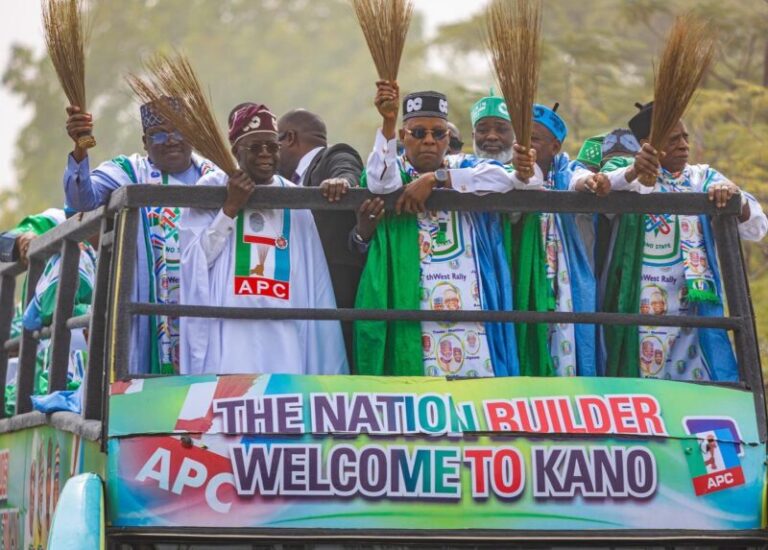
Dozens of security operatives on Tuesday disrupted a campaign rally organised for the All Progressives Congress (APC) presidential candidate, Asiwaju Bola Tinubu in Borgu Local Government Area of Niger State.
The “Grand Lockdown Rally” billed to hold at the New Bussa Township stadium in Borgu, is organised by Project 774, a political group under the leadership of Senator Aliyu Sabi Abdullahi (APC, Niger North).
Senator Abdullahi, who is the Deputy Whip of the Senate, had invited the Niger state Working Committee of the APC to the campaign rally.
The invitation letter signed by his Special Assistant (operations), Hon. Mohammed Garba Danladi, was addressed to the state Party Chairman, Hon. Haliru Zakari Jikantoro.
“I am directed to invite you and your exco to the Grand Lockdown Rally in honour of Jagaban Borgu and Kashim Shettima, our party Presidential and Vice Presidential Candidates, Hon. Mohammed Bago, with Comrade Yakubu Garba as Gubernatorial and Deputy Governorship Candidates for Niger state in the 2023 General Elections.
READ ALSO:
- Emefiele wants to cause uprising to have Interim Govt – Fani-Kayode
- Muslim leaders protest alleged rape of woman in Niqob (purdah) inside mosque in Ibadan
- Consumers challenge Ikeja Electric over threat to withdraw prepaid meters
“In view of the need to galvanize support and positively enhance the chances of our party in the forthcoming elections, we wish to solicit and count on your unflinching support towards the success of the rally,” the letter read.
But the party’s state executive disassociated itself from the rally, asking all party faithful not to attend.
A statement by the state publicity secretary, Mallam Musa Dan Sarkindaji, said the planned rally contravene the unified campaign structure as designed by the party.
The party instead urged its executives, stakeholders, and supporters to attend the grand zonal rally which is scheduled for Wednesday in Bida, the headquarters of the Bida local government.
When our correspondent visited the New Bussa township stadium, dozens of personnel from the police, Nigeria Security and Civil Defence Corps, and Federal Road Safety Corps blocked the entrance, preventing APC supporters from accessing the campaign venue.
When approached, some security agents, who preferred not to be named because they were not authorised to speak, said they were mobilized to the venue to prevent access on “directive from the above.”
The Police spokesman in Niger, DSP Wasiu Abiodun, said security operatives were mobilised to the campaign venue to prevent a breakdown of law and order having got intel of a likely breach of security.
READ ALSO:
- No Justification for current petrol scarcity – PENGASSAN
- Stop rejecting old naira notes, NURTW tells members
- Italy-based Nigerian sentenced to life imprisonment for murder of Italian lady
In a terse statement, Abiodun said, “The Police had to take over the venue of the planned rally as a proactive measure due to intelligence received of likely breach of security at the venue.
“Hence, we have to do the needful to avert any possible attack or hijack by suspected miscreants to cause mayhem and breach of peace in the community.
“The Command will not fold its alms and allow an act of political violence, avoidable loss of life, destruction of properties, and lawlessness.”
The dissociation of the APC state working Committee from the rally laid bare the cold war between Governor Bello, who is in control of the party’s structure in the state Senator Sabi Abdullahi, the organiser of the rally.
The senator, who currently occupies the Niger North senatorial seat, contested the APC ticket to retain the seat despite pressure to step down for the governor, a development that pitched him against the state executive.
The governor won the primary and since then, both of them have not been in good terms.
The poster of the governor, who is the APC senatorial candidate, is conspicuously missing at the venue of the planned campaign organized by the senator.
Daily Trust





Politics
Obi vs Soludo: ₦86.67bn Handover Figure Meets ₦127.37bn Debt Claim
Obi vs Soludo: ₦86.67bn Handover Figure Meets ₦127.37bn Debt Claim
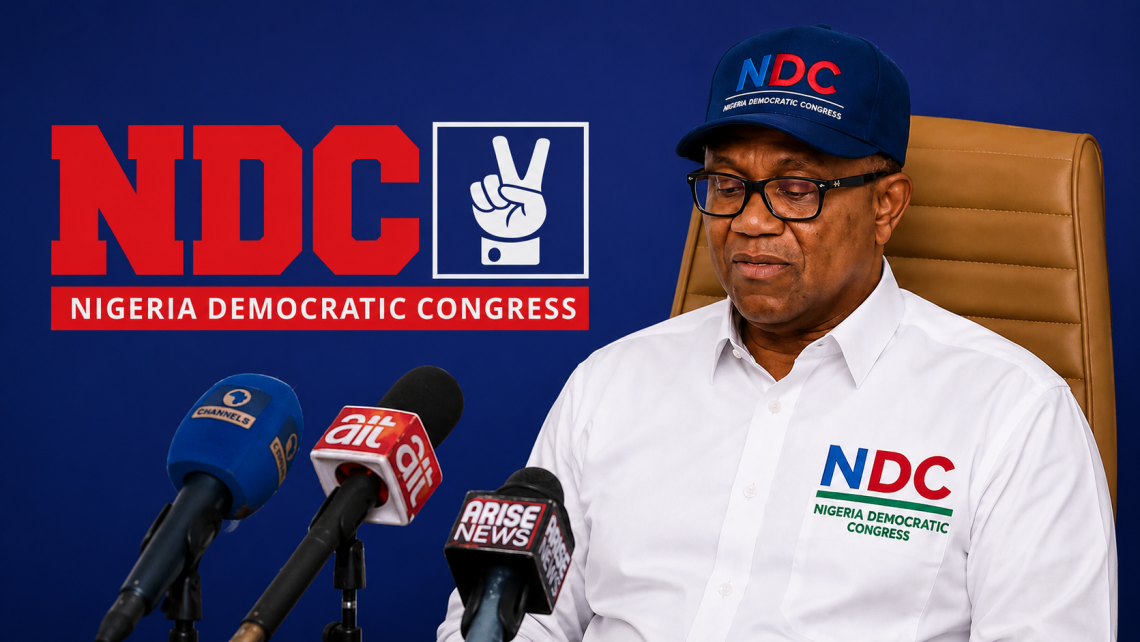
The renewed Anambra debt dispute has intensified after former Governor Peter Obi released his 2014 handover document to counter claims by the state government that his administration left behind substantial outstanding loans and other financial liabilities.
The controversy centres on competing accounts of Anambra State’s finances when Obi handed over power to Willie Obiano on March 17, 2014.
Obi’s handover document shows a positive financial position of about ₦86.67 billion after provisions for certain liabilities, while the current Anambra State Government says eight external financing facilities associated with projects undertaken during Obi’s tenure had an outstanding balance of $92.35 million, equivalent to about ₦127.37 billion, as of June 30, 2026.
However, the two figures describe different things and should not be treated as if they were direct measurements of the same debt position.
The ₦86.67 billion figure comes from the financial position presented in the 2014 handover report. The ₦127.37 billion figure is the value the state government assigns in 2026 to the outstanding balance on eight external financing facilities whose original amounts totalled about $123.77 million.
The central unresolved question is therefore how much of those facilities was actually outstanding when Obi left office in March 2014, how much had been disbursed by then, what was subsequently disbursed, how much was repaid by succeeding administrations and what remains outstanding today.
The dispute was reignited after Anambra State officials said the administration of Governor Chukwuma Soludo was still servicing loans and other obligations incurred by previous administrations, including that of Obi.
Obi rejected the claim, insisting that he did not leave Anambra owing salaries, pensions, gratuities or contractors who had completed certified work.
He subsequently challenged the state government to substantiate its claims and released the 2014 Anambra State Handover Report as part of his response.
The document, dated March 17, 2014, was addressed to Obiano and contained a summary of the state’s financial position as of the close of business on March 14, 2014, described as the final working day of Obi’s administration.
According to the document, Anambra had about ₦27 billion committed to local investments.
It also listed approximately $156 million in foreign-currency investments, which was valued at about ₦25.6 billion at the exchange rate used at the time.
The report further listed approximately ₦28.27 billion in balances relating to certified state ministries, departments and agencies, alongside ₦10 billion refunded to the state by the Federal Government.
Those figures produced a combined financial position of about ₦91.67 billion.
The outgoing administration, however, made provision for about ₦5 billion in liabilities, including March 2014 salaries, pensions, gratuities and certified payments relating to projects that had already been executed.
After that provision, the report placed the net financial position at approximately ₦86.67 billion.
Former Secretary to the Anambra State Government Oseloka Obaze, who served under Obi, has defended the document and said he was involved in the handover process.
Obaze has maintained that the financial records were presented to Obiano during the transition and that the incoming governor acknowledged receipt of the documents.
READ ALSO:
- UK Student Visa: 63 Countries Exempt From Proof of Funds, Nigeria Excluded
- Lagos Intensifies Surveillance as Adulterated Palm Oil Raises Food Safety Concerns
- Saudi Arabia Rejects Nigeria’s Request for More 2027 Hajj Slots
However, acknowledgement of a handover document does not necessarily mean that every figure in it was independently audited or certified by the incoming administration.
There is also historical evidence that some elements of Obi’s financial account were subsequently acknowledged by Obiano.
During a television appearance ahead of the 2017 Anambra governorship election, Obiano reportedly confirmed that he inherited about ₦9 billion in cash and approximately ₦25.6 billion in investment-related assets.
That does not, however, resolve the wider question of the state’s liabilities and outstanding borrowing at the time of the transition.
The Anambra State Government has released a separate set of records to support its claim that loans connected with the period of Obi’s administration remain obligations of the state.
According to the government, eight external financing facilities associated with projects approved or implemented between 2007 and 2013 had a combined original value of about $123.77 million.
The state said the outstanding balance on those facilities stood at approximately $92.35 million as of June 30, 2026, which it valued at ₦127.37 billion using the exchange rate applied in its calculation.
The facilities identified by the state government relate to development programmes covering areas such as healthcare, agriculture, education, malaria control and erosion management.
Among the projects listed are the Malaria Control Booster Project, Third FADAMA Development Project, Health System Development Project II, State Education Programme Investment Project and the Nigeria Erosion and Watershed Management Project.
The government has said successive administrations have continued to service the facilities.
It has also maintained that its criticism is not directed at borrowing as a financing tool, arguing that loans can be justified when used for viable development projects and human-capital investment.
Obi, however, has rejected the description of his administration as having left Anambra with the debt burden now being cited.
He has maintained that his administration paid what was due before leaving office and did not owe workers, pensioners or contractors whose claims had been properly processed.
He has also said his administration saved substantial funds for the incoming government.
The most important issue arising from the competing accounts is that a loan contracted during an administration is not necessarily the same as the debt outstanding at the moment that administration leaves office.
A financing agreement can have an approved or contracted value, but the amount actually drawn down at a particular point in time may be lower.
Similarly, repayments may reduce the principal balance, while subsequent disbursements can increase the amount outstanding.
READ ALSO:
- MURIC Warns FG: Any Move Against Atiku Now Lacks Tact
- Jetour T1 Storms Abuja as Automaker Accelerates Nigeria Expansion
- Kidnapped Female Police Officer Found Dead in Ebonyi as Suspect Leads Police to Remains
The timing of those transactions therefore matters in determining what a government actually inherited.
This is particularly significant in the current Anambra controversy because the $123.77 million cited by the state represents the original amounts associated with the eight facilities, while the $92.35 million figure represents the balance the state says remains outstanding in June 2026.
Neither figure, by itself, establishes the exact debt stock on March 17, 2014.
Official debt records have also been cited in the debate, showing Anambra’s external debt stock at about $30.32 million as of December 31, 2013, alongside domestic debt of approximately ₦3.03 billion at the same period.
Those figures are much closer to the date of Obi’s departure, although they do not by themselves establish the precise financial position on March 17, 2014.
They nevertheless add another layer to the debate because they show why the original value of all financing facilities cannot automatically be equated with the state’s debt stock at the time of handover.
The question of how much had actually been disbursed by March 2014 is therefore central.
So is the question of how much remained unpaid at that date.
The subsequent repayment history is equally important.
If part of a facility was repaid after Obi left office, that repayment would reduce the outstanding balance. Conversely, if additional funds under an existing financing agreement were drawn after the change of administration, those later transactions would need to be reflected in any assessment of the debt inherited by the incoming government.
The current state government’s publication gives a picture of the 2026 outstanding balance, but a complete reconstruction of the financial position at the 2014 handover would require the loan-by-loan balances at that date, disbursement records, repayment schedules and subsequent transactions.
This distinction has become central to the public debate.
The Anambra Government argues that loans associated with projects undertaken during Obi’s administration remain outstanding and are still being serviced.
Obi’s position is that the state had substantial funds and investments when he left office and that he did not leave behind the unpaid obligations being alleged.
Both positions can be examined without treating the ₦86.67 billion handover figure and the ₦127.37 billion current outstanding-loan figure as contradictory measurements of the same financial item.
The handover report primarily addresses the assets, balances and estimated liabilities presented by the outgoing administration.
The state’s latest debt statement addresses the current balance of specific external financing facilities.
The broader financial picture therefore requires the two sets of records to be reconciled rather than simply placed against each other.
The dispute also extends beyond external loans.
The Anambra Government has alleged that some salary, pension and gratuity obligations remained outstanding after Obi left office.
The state has cited arrears involving workers and retirees and said the Soludo administration has continued to settle inherited liabilities.
Obi and his supporters have disputed the characterisation of those obligations and maintained that the outgoing administration had settled the liabilities it was responsible for at the time of handover.
Another contested issue is an alleged ₦2.1 billion ecological fund.
The state government has disputed Obi’s account of the fund and said its examination of the relevant bank records did not support the claim that the amount existed in the account in the manner described.
Obi’s camp has maintained its position regarding the funds.
The dispute over the ecological fund is separate from the question of the eight external loans and should not be conflated with the figures contained in the 2014 handover report.
There is also a broader political dimension to the controversy because Obi is now the NDC presidential candidate for the 2027 election, making his record as Anambra governor a subject of renewed public scrutiny.
However, the financial questions themselves concern historical state records and can be examined independently of the political arguments surrounding the former governor.
At the centre of the matter is a relatively straightforward accounting question: what exactly was Anambra State’s financial position when Obi handed over power in March 2014?
Answering that question requires more than the total amount originally attached to loans contracted between 2007 and 2013.
It requires a loan-by-loan reconciliation showing the original facility, the amount disbursed before March 17, 2014, the amount repaid before and after the handover, subsequent drawdowns and the outstanding principal at each stage.
It also requires reconciliation of the cash balances, investments and liabilities listed in the 2014 handover document with the state’s audited accounts and official debt records.
The current controversy has therefore moved beyond a simple argument over whether Obi left money in Anambra’s coffers.
The available records show that the 2014 handover report recorded substantial assets and financial balances, while the current state government has produced records showing that external financing facilities associated with the period of Obi’s administration still have outstanding balances.
What remains contested is the precise amount of debt Anambra inherited on the day Obi left office and how that figure relates to the loans now being serviced.
Until those figures are reconciled, the Anambra debt dispute remains a matter of competing interpretations of financial records spanning more than 12 years.
For taxpayers and residents, the most useful resolution would be a transparent reconciliation of the state’s finances from the March 2014 handover to the present, showing the assets inherited, liabilities outstanding, loans drawn, repayments made and balances remaining.
Such a record would provide a clearer basis for understanding how Anambra’s current debt position developed and which obligations were inherited, serviced or incurred by successive administrations.
Obi vs Soludo: ₦86.67bn Handover Figure Meets ₦127.37bn Debt Claim
Politics
‘Join the Hunt’ — Soludo Urges Igbos to Strategically Align Ahead of 2027

‘Join the Hunt’ — Soludo Urges Igbos to Strategically Align Ahead of 2027
Anambra State Governor Chukwuma Soludo has urged the Igbo people to adopt a more strategic approach to politics, arguing that stronger engagement with the political centre is necessary for the South-East to secure a greater share of national opportunities.
Soludo made the call while speaking to residents of Ekwusigo Local Government Area of Anambra State, where he commissioned the three-kilometre Ozu-Inyaba-Ozubulu-Ihembosi Road and other projects executed in the area.
Speaking largely in Igbo, the governor used a hunting analogy to explain his argument, saying those who want a share of the national “inheritance” must participate in the process through which decisions and resources are determined.
He said the 2027 elections should not be approached solely through emotions or political sentiments, urging voters to consider what their political choices would deliver for the region.
Soludo also questioned the records of politicians who, according to him, return to the South-East during election periods to seek votes but have not adequately addressed longstanding problems affecting the people.
He cited the persistent erosion crisis in Ekwusigo as an example and questioned what politicians who had been involved in public affairs for years had done to resolve it.
Although he did not name anyone in the reported remarks, the comments were seen as a reference to former Anambra State governor Peter Obi, who has remained a prominent figure in the political debate over the South-East’s future.
The governor said the Igbo people should no longer waste their votes without considering the practical benefits that could accrue to the region from their political choices.
He argued that the South-East needed to participate more directly in national political structures rather than remaining isolated and subsequently complaining about marginalisation.
Using his hunting analogy, Soludo said that if others joined a hunt and returned with an elephant, those who stayed away could not reasonably expect to determine how the proceeds were shared.
He linked the argument to the political strategy of the All Progressives Grand Alliance (APGA), saying the party was positioning itself to secure what he described as the rightful inheritance of the Igbo people and Anambra State.
READ ALSO:
- 18 Suspects Transferred to US Over 2021 Killing of Haitian President Moïse
- My Heart Has Always Been Home With You — Tinubu’s Powerful Message to Oluremi at 66
- Tinubu’s UNGA Absence Fuels Questions Over Planned Trump Meeting
“This is where APGA is; Igboland will be better. Anambra will get its right,” he said.
Soludo has consistently promoted closer cooperation between APGA and the Federal Government led by President Bola Ahmed Tinubu.
APGA has declared support for Tinubu’s bid for a second term in the 2027 presidential election, with the party arguing that strategic partnerships could give the South-East greater influence at the national level.
Soludo had earlier said APGA adopted Tinubu as its preferred presidential candidate for 2027, citing what he described as strategic and ideological considerations.
The governor has subsequently presented the relationship between APGA and the Federal Government as a practical political partnership aimed at securing development opportunities for Anambra and greater influence for the South-East.
However, the political alignment has generated disagreement, including within the opposition space and among some APC members in Anambra.
The Anambra APC has previously disputed claims of a broad political partnership between APGA and APC, maintaining that the two parties remain separate political organisations.
Soludo’s latest comments also included a defence of APGA’s relevance in Igbo politics.
He described APGA as a platform through which several Igbo politicians rose to prominence and criticised politicians who benefited from the party before moving to other political organisations.
The governor said APGA intended to retain its political strength in Anambra while supporting Tinubu at the presidential level in 2027.
His position effectively places APGA’s 2027 strategy around retaining political control in Anambra while backing Tinubu’s presidential bid.
Meanwhile, Soludo’s comments about political participation and the region’s development have attracted criticism from some commentators, who have questioned whether the governor’s strategy has produced sufficient benefits for Anambra.
Critics have also raised questions about the state’s continuing erosion crisis, infrastructure and the extent of federal support received by the state under the current political arrangement.
The latest remarks come as political parties and prominent politicians intensify preparations for the 2027 general elections, with the political strategy of the South-East increasingly featuring in debates over regional representation, federal influence and access to national resources.
Soludo’s argument is that the region can improve its bargaining position by engaging strategically with the political centre rather than remaining outside national power structures.
‘Join the Hunt’ — Soludo Urges Igbos to Strategically Align Ahead of 2027
Politics
APC Wins Four of Five By-Elections as APM Takes Bauchi Seat
APC Wins Four of Five By-Elections as APM Takes Bauchi Seat
The All Progressives Congress (APC) won four of the five legislative by-elections conducted across Gombe, Kano, Bauchi and Delta states, while the Allied Peoples Movement (APM) secured the remaining seat in Bauchi.
The elections, conducted by the Independent National Electoral Commission (INEC) on Saturday, September 19, 2026, were held to fill one vacant federal constituency seat and four vacant state assembly seats.
The APC victories came in the Gombe/Kwami/Funakaye Federal Constituency of Gombe State, Dawakin Kudu State Constituency in Kano, Udu State Constituency in Delta and Disina State Constituency in Bauchi.
The APM won the Sakwa State Constituency in Zaki Local Government Area of Bauchi State.
In Gombe, APC candidate Kallamu Usman MaiJama’a won the Gombe/Kwami/Funakaye Federal Constituency election with 41,121 votes. The Labour Party candidate polled 3,553 votes, while the APM candidate received 872 votes.
In Kano, APC candidate Husseini Datti emerged winner of the Dawakin Kudu State Constituency election with 22,890 votes. The Peoples Redemption Party scored 270 votes, while the Peoples Democratic Party recorded 108 votes. Other parties recorded lower figures.
In Delta State, APC candidate Okolosi Ator won the Udu State Constituency seat with 8,724 votes, while the PDP candidate polled 214 votes.
The APC also secured the Disina State Constituency seat in Bauchi, where its candidate, Yakubu Ali, obtained 5,846 votes. The APM candidate scored 5,225 votes, while the PRP candidate received 3,701 votes.
The second Bauchi contest produced a different result, with Adamu Yakubu of the APM winning the Sakwa State Constituency seat with 8,515 votes. The APC polled 3,771 votes, the PDP 2,076, and the PRP 727.
The results followed INEC’s conduct of the five polls across the four states after the seats became vacant through different circumstances, including death, resignation and defection.
READ ALSO:
- Atiku Offers Scholarship to Viral Niger Teen Miner After 37 Miners’ Deaths
- NDLEA Seizes N3.4bn Drugs, Arrests Fake Police Officer in Nationwide Crackdown
- Oyo: Police Arrest Serving Air Force Personnel Over Alleged Robbery, Abduction
The Gombe/Kwami/Funakaye federal seat became vacant following the death of the former lawmaker, Yaya Bauchi Tongo, in June 2026. In Bauchi, the Sakwa seat became vacant following the death of its former occupant, while the Disina seat became vacant after the lawmaker resigned to pursue another political position.
The Udu seat in Delta became vacant following the defection of its former occupant, Collins Egbetamah, from the APC to the Nigeria Democratic Congress. The Dawakin Kudu seat in Kano became vacant after its former occupant, Rabiu Shuaibu, left the state assembly to contest the Dawakin Kudu/Warawa Federal Constituency election.
Ahead of the polls, INEC deployed sensitive materials and electoral personnel to the affected constituencies, while security agencies announced deployments aimed at maintaining order before, during and after voting.
INEC Chairman, Professor Joash Amupitan, monitored the elections from the commission’s National Situation Room in Abuja and described the exercise as an important operational test ahead of the 2027 general elections.
Amupitan said the five by-elections would provide the commission with lessons on logistics, technological deployment and the readiness of field personnel.
He stressed that bye-elections should not be treated as routine exercises because each poll provides an opportunity for INEC to assess and improve its electoral processes ahead of larger elections.
Reports from the four states indicated that voting was generally peaceful, although some operational challenges were recorded.
In parts of Gombe and Kano, reports indicated relatively low voter turnout, while some Bimodal Voter Accreditation System (BVAS) challenges were reported during the Delta election.
The Bauchi election also recorded a security incident, with the state police command reporting the arrest of 47 suspects in parts of Shira Local Government Area.
According to the police, the suspects allegedly posed as members of a state-owned security outfit and were found in possession of items including guns, cutlasses and sticks. The arrests were made in connection with the election security operation.
The results have also drawn attention because of their timing ahead of the 2027 general elections, although the outcome of five constituency-level by-elections does not by itself determine the outcome of the wider 2027 elections.
APC National Chairman, Professor Nentawe Yilwatda, congratulated the party’s candidates who won the four seats and commended APC members, campaign teams and party leaders involved in the contests.
Yilwatda also acknowledged voters, INEC, security agencies and other stakeholders who participated in the elections, while urging the successful candidates to remain committed to their constituents.
President Bola Ahmed Tinubu also congratulated the successful candidates. He urged the newly elected lawmakers to justify the confidence placed in them by their constituents and called on unsuccessful candidates to accept the results in good faith.
The INEC election results portal continued to receive result sheets from the five constituencies after the polls, providing an electronic record of results uploaded from polling units.
The commission is scheduled to conduct the next nationwide presidential and National Assembly elections on January 16, 2027, followed by governorship and state House of Assembly elections in participating states on February 6, 2027.
The September 19 by-elections therefore provide INEC and participating political parties with an opportunity to review electoral logistics, voter participation, technology deployment and election security before the larger 2027 electoral cycle.
APC Wins Four of Five By-Elections as APM Takes Bauchi Seat
-
 International2 days ago
18 Suspects Transferred to US Over 2021 Killing of Haitian President Moïse
-

 Auto3 days ago
Abuja Demand Rises as Jetour Brings X70 Plus Experience to FCT
-

 metro3 days ago
Irreconcilable Developments: Wedding Cancelled 24 Hours Before Ceremony
-
 Sports3 days ago
Enough Is Enough: Muslim Supporters Demand Change of New Man United Owners
-
 Politics3 days ago
2027: NDC Predicts Wider Obi Victory Over Tinubu in Lagos
-

 Politics2 days ago
‘Join the Hunt’ — Soludo Urges Igbos to Strategically Align Ahead of 2027
-

 Sports2 days ago
Messi Fires Stunning 75th Career Free-Kick to Reach 930 Goals in Inter Miami Draw
-

 metro2 days ago
My Heart Has Always Been Home With You — Tinubu’s Powerful Message to Oluremi at 66