Farooq Kperogi : Seeing Nigeria from my American daughter’s eyes - Newstrends
Connect with us

Opinion

Farooq Kperogi : Seeing Nigeria from my American daughter’s eyes

Published

on

Farooq  Kperogi : Seeing Nigeria from my American daughter’s eyes

Sometimes, it takes the unburdened and free-spirited perceptions of outsiders, particularly children, to appreciate taken-for-granted cultural peculiarities. This fact came to the fore for me after taking my 8-year-old daughter, Ramat, to Nigeria for the first time, between May 29 and June 16.

Ramat, whom I named after my maternal grandmother, was born in the United States and, unlike her older siblings, had never visited Nigeria even though she has always possessed the most intense Nigerian patriotic fervor among my children.

For example, she proudly identifies as “Nigerian” even to her American friends and classmates (which is not very usual for children born here), loves Nigerian food (“swallow” is her favorite food), knows almost every Afrobeats hit, and is an aspiring hafiza (i.e., a Qur’an memorizer), inspired by her grandfather, who passed away two months before her birth.

However, her classmates called her a “fake Nigerian” because she had never actually visited the country whose identity she flaunted at every opportunity and defended with all her might. That really got to her. Plus, she is the only person in the house who had never visited Nigeria.

So, she mounted immense pressure on me since 2022 to take her to Nigeria. I promised to do so but serially failed to keep my words for a whole host of reasons. On January 1 this year, the first thing she said to me was: “Daddy, I won’t forgive you if you don’t keep your promise to take me to Nigeria this year. Happy New Year!”

I didn’t anticipate that forceful earnestness and directness from her. I had wanted for the whole family to visit, but our first daughter, a final-year engineering student, would be in Japan for a study-abroad program throughout the summer.

So, I told my wife that we had to take Ramat alone and wait for another opportunity for the whole family to visit. I didn’t want to risk incurring Ramat’s youthful wrath.

Given how much she idolizes and idealizes everything Nigerian, I was slightly apprehensive that she would confront a disjunction between the Nigeria she had fantasized and the Nigeria she would encounter, although I had given her a realistic portrait of our country, at least from my perspective.

READ ALSO:

My apprehension was heightened when she asked me to pinch her as soon as our plane landed in Abuja. She wanted to be sure that she wasn’t dreaming. The pang of the pinch was the assurance she needed to convince herself that this wasn’t one of the many dreams she had had about visiting Nigeria only to awaken in America.

But the very first observation she made after we got out of the airport was that everyone seemed to be happy even though she didn’t see as much conspicuous material prosperity in Abuja as she does in the United States.

The ever-present joy in people’s faces, the genuineness of the smiles of total strangers, the over-solicitous courtesies of a vast variety of people, and the unfeigned conversational warmth of people from an array of backgrounds registered powerfully in her and contrasted sharply with the customs of the United States.

Everyday experiences in Nigeria further reinforced her initial observation. At a point, she remarked that it was impossible to be sad for too long in Nigeria. Because I was born and raised in Nigeria, I honestly hadn’t consciously thought about the bright, sunny, gregarious aspects of Nigerian culture as natural therapy for depression.

I was particularly struck by the contrast she drew between Nigerian and the United States. After several days in Nigeria, she told me, “People aren’t enjoying life in America. People are not happy in America.”

She seemed particularly moved by the contagious communal gaiety of Nigeria. There is inestimable delight in the easy familiarity and sociability of friends and family. Countless cousins, uncles, aunts embraced her as if they had always known her. As someone who seems to have inherited my passion for genealogical connections, she was pleased to see relatives and eagerly took mental notes of how they were related to her.

She also met numerous important figures, the American equivalents of whom she could scarcely imagine meeting. This not only deepened her self-awareness and self-esteem but also reinforced her sense of belonging to Nigeria.

Even sources of existential irritation to Nigerians, such as power outages, are reservoirs of excitement for her. She spent some time with her cousins in Abuja, attended their school for a day, and quickly learned to cheer up, “Up NEPA!” whenever power is restored. The cycle of power outages and restoration became thrilling events for her.

READ ALSO:

Even our notoriously poor roads were stimulatingly enjoyable “bumpy rides” to her. Of course, she couldn’t help but notice that the roads in Benin Republic (which we visited) had the same quality as American roads. She has a precocious knowledge of world geography and knows that Benin Republic is poorer than Nigeria.

When she asked me why the Nigerian side of Borgu (which includes my local government of Baruten in Kwara State) had chronic “bumpy” roads while the Benin Republic side had American-quality roads even though Nigeria is way richer than Benin Republic, I had no answer that would make sense to her 8-year-old mind that has been caught up in uncritical Nigerian patriotism.

Despite this, she adored rural Nigeria as much as urban areas. She felt the village gave her a sense of identity unavailable elsewhere. Everyone greeted her—and each other—with warmth and familiarity, making her feel part of one big family.

She noticed that she resembled many people and that many resembled her older siblings. Her grandaunts told her she looked just like the woman after whom she was named, enhancing her emotional connection to an identity beyond her immediate experience.

Visiting the place where I grew up, meeting my mother, siblings, cousins, uncles, and aunts, profoundly connected her to a larger community, which enriched her sense of self-worth. She also met relatives from her mother’s paternal side that helped build a sense of rootedness in Nigeria that she cherishes deeply.

It often takes an outsider’s perspective to remind us that what we routinely overlook can profoundly impact others. The ordinary, everyday aspects of our lives can hold extraordinary meaning for those who see them with fresh eyes.

Ramat’s reactions made me reflect deeply on how much of our culture and communal life we undervalue simply because we encounter them daily.

Life’s meaning often emerges most clearly from contrasts. Experiencing Nigeria through Ramat’s enthusiastic perspective showed me the powerful significance of contrasts–between plenty and scarcity, between convenience and challenge, between familiarity and novelty. These contraries lend life its richness and complexity.

For Ramat, the pervasive warmth and vibrancy of Nigerian culture filled an emotional void she didn’t fully realize she had. Born in America yet deeply rooted in Nigerian heritage, she found her true self within the social fabric and lively traditions of our homeland. This profound connection underscores the importance of cherishing and preserving what we have.

I was deeply touched by how ordinary things I took for granted made her feel uniquely special and deeply loved to the point that she cried really hard when we had to leave Nigeria. She didn’t want to return to the United States! None of my older children ever said they didn’t want to return to the United States after visiting Nigeria. They were all born in Nigeria.

Farooq Kperogi is a renowned Nigerian columnist and United States-based Professor of Journalism 

Farooq  Kperogi : Seeing Nigeria from my American daughter’s eyes

Loading

Opinion

Osun election: Àtàọ́ja should stop running joro-jara-joro

Published

on

Osun election: Àtàọ́ja should stop running joro-jara-joro
The Àtàọ́ja of Osogboland, Oba Jimoh Olanipekun

Osun election: Àtàọ́ja should stop running joro-jara-joro

Tunde Odesola

(Published in the PUNCH, on Friday, July 24, 2026)

It’s midmorning in Àtàọ́ja’s palace. The sun beamed a friendly smile, quite different from the furious furnace it was preparing for the afternoon. As gently as the breeze caressed the trees in the palace, two pigeons landed on silent feet in the courtyard. They were on a joint mission. To scavenge. Looking right and left, up and down, beaks at work, wings at the ready, the bouncy birds pecked food in the palace soil. For the male and female pigeons, danger lies not in flying; it lies in walking. Sycophancy walks naked on the palace grounds.

Even the king’s kààakí was caught unawares. It couldn’t herald what was about to happen because everything occurred at a dizzying speed. The Àtàọ́ja, Oba Jimoh Olanipekun, ran out from the inner recess of the palace, his agbada òfì billowing in the Osogbo wind; kira-kita, kira-kita, the king bolted like Usain Bolt. Where is the king running to?

In his breakneck flight, Àtàọ́ja Osogbo forgot to wear his neck beads! I-m-a-g-i-n-e! But he luckily remembered to wear his cap. I suspect it was ancestral forefathers known as ‘àwọn alálẹ̀’ who reminded him to wear his shoes. Otherwise, the king might have appeared out of sorts at the state government event he was fleeing to.

Thankfully, when Àtàọ́ja Olanipekun reached his destination, he still had some breath in his lungs. He sat down, resplendent in white and blue agbada, clenched the microphone and confessed in Yoruba, “Ẹ̀ ri pé ń ò kólẹ̀kẹ̀ ọ́rùn? Mo sáré dé hin ni. Tí a bà á wá, wọ́n á ní, ‘Háà, kò mọ̀ le bọ́ta mọ́!’ Gbogbo ohun tí wọ́n ń sọ là ń gbọ́.”

I’ll translate the king’s speech in English: “Can’t you see that I am not wearing my royal beads? (It is because) I ran to this event. Because if I did not come, they would say, ‘Ha! He cannot come out again!’ We hear everything that they (opposition) are saying. I will not stop eulogising Adeleke Jackson Nurudeen for his excellent performance in Osun State.”

Unfortunately, Olanipekun thinks that by singing himself hoarse on the praise of ebullient Governor Ademola Adeleke, he is giving the re-election bid of the Asiwaju of Ede a boost. No, he is not. If he was, the apex socio-cultural association of Osogbo sons and daughters, the Osogbo Progressive Union, would not openly criticise him for publicly canvassing support for Adeleke and attacking the opposition on many occasions.

The penis of the bird does not dangle outside; it is tucked inside the bird, says a Yoruba proverb. This proverb preaches decorum. If the king had been decorous like other Osun kings, who, though, have their favourites among the governorship candidates, but who have kept their support within the ambit of decency, the OPU wouldn’t have embarrassed him with a public disclaimer.

The Timi of Ede, Oba Muniru Adesola Lawal, had been an exemplar in his support for Adeleke, who hails from his domain. The Timi had been regal: zero aggression, zero hate words, zero campaign against other parties. Oba Timi has shown emotional intelligence while fully supporting Adeleke, his son. That is how to be a father to all subjects. Of course, if Timi was blindfolded at the polling booth on election day, his royal thumb would still locate Accord Party on the ballot, whereas some carricachop from another land is claiming to know Ọ̀ṣọ́ more than Ọ̀ṣọ́’s mother.

READ ALSO:

It’s undignifying for the elderly to run helter-skelter, says a Yoruba proverb distilled in these words, “Gbàmí, gbàmí ò ye àgbà.” Another proverb that cautions against kùrùkẹrẹ movement says, “Ẹní wọ bàtà ẹsẹ̀ òsì méjì, ó níbití ó ń lọ.”

The importance of royal objects such as crown, beads and staff is interrogated in the seminal work, “Yoruba: Nine Centuries of African Art and Thought,” written by Henry J. Drewal et al, and published by The Centre for African Art, New York, in 1989. Similarly, the royal totems – crown, beads and staff – are also a subject of scholarship in Rowland Abiodun’s “Yoruba Art and Language: Seeking the African in African Art,” published by Cambridge University Press in 2014.

Drewal and Abiodun aver that in Yoruba thought, the crown, beads and staff are sacred totems that signify divine authority, spiritual protection, leadership, ancestral continuity, and the king’s covenant with the people and the gods.

In both books, the crown is regarded as a sacred emblem containing the spiritual essence that connects the present with the past. Royal beads signify dignity and prestige, abundance and prosperity, and spiritual energy. The staff is an instrument of authority, justice, fairness, and protection.

Joro-jara-joro is an onomatopoeic word that means helter-skelter. Onomatopoeic words are words that sound like their meanings. Examples: buzz, hiss, slap, sleep, twinkle, jab, splash, tear, bang, etc. Joro-jara-joro was amplified by Afrobeat creator Fela Anikulapo-Kuti in his 1976 song, “Zombie”, which mocks Nigerian soldiers’ blind allegiance to dictatorship.

In “Zombie”, Fela caricatures Nigerian soldiers as unthinking brutes whose sole skill is to chaotically rove joro-jara-joro against the masses, like zombies on the mission to “go and kill, go and quench, go and die”. Fela sings, “Zombie way na one way; joro-jara-joro/No break no jam, no sense; Na joro-jara-joro….”

There would have been no reason to write this article because I had made my intention clear enough in an earlier article entitled, “Governor Adeleke and a tale of three Àtàọ́jas,” published in The PUNCH on Friday, July 17, 2026. My preoccupation in the article was to call the attention of the monarch to some of his unkingly utterances. My intention wasn’t political. But an insinuation, especially from some irritating ‘e-rats’ and ‘data boys’, who attempted to paint my intervention in political colours, made this sequel inevitable.

In line with their zombie mentality, a particular ‘e-rat’ along with his fellow ‘data boys’ accused me of meddlesomeness and maintained that it lies within the rights of the Àtàọ́ja to express support for any candidate of his choice.

Clearly, the accusation of meddlesomeness was borne out of dripping ignorance. If not, an enlightened mind would see that the actions of the Àtàọ́ja diminish his traditional stool that represents the Yoruba worldview of unity, morality, justice, fairness and equity. The allegation that the Àtàọ́ja had the right to support any candidate of his choice is valid to the extent that such a right must not violate the principles of fair play, rule of law and decency.

By openly calling the opposition names in a viral video, did the Àtàọ́ja adhere to the principles of fairness and tolerance? By his vitriolic speeches, was he not stoking the embers of strife? If I could be provided with the evidence of one Osun traditional ruler who had been as politically intolerant as the Àtàọ́ja, against the ruling party, I shall tender an apology in my next article.

In one of the bad-taste videos, the Àtàọ́ja arrogantly disclosed how he rejected wise counsel by a concerned citizen, who told him the danger in his public support for Adeleke over other candidates. His words, “One of my people asked me why I am so audacious to the extent of overly supporting one candidate (Adeleke) over others; what if he doesn’t win?”

The king answered the worried citizen. Àtàọ́ja opened his mouth and played god, declaring with finality: “He will win.” Olanipekun’s divisive posture is most unbecoming of an ọba, whose palace should be an abode to seek conflict resolution by his subjects, including politicians. Àtàọ́ja should not be the epicentre of conflict.

In the recent past, I have ventilated my views on the actions of the Ooni of Ife, Oba of Lagos, Apetu of Ipetumodu, Alapomu of Apomu, Oluwo of Iwo, and Emir of Ilorin, among other traditional rulers. I strongly believe that it behoves the citizen to hold traditional rulers to the highest standards because the traditional institution embodies the ethos and pathos of a race.

For ‘e-rats’ and ‘data boys’, whose stock-in-trade is abuse, there is a lesson in the conduct of a member of the House of Representatives, Bamidele Salam. Salam is my friend of over 20 years. Though we have had moments of sharp disagreement, emotions never boiled over to name-calling.

One day, BS, that’s Salam’s nickname, saw my Facebook post on Governor Adeleke. In the post, I advised the governor against excessive dancing and to shear off some personalities who were following him about like houseflies following the wound on a dog’s ears. In the Facebook post about three years ago, I cautioned that the image of the governor dancing to the faintest of drumbeats amid a retinue of hangers-on was not good.

As soon as BS saw the post, he reached out to me on the phone and said, “Ọ̀rẹ́, ọ̀rọ̀ ò rí bẹ́yẹn o. Your post does not reflect the great work Adeleke is doing in Osun…” I smiled from the other end of the phone because Bamidele was pushing Adeleke’s narrative while ignoring the kernel of my Facebook post. When I insisted on the need for the governor to do better in regard to dancing, Bamidele said every man was a work in progress, including me. Bamidele’s example is how to engage intelligently; a lesson government and opposition ‘e-rats’ and ‘data boys’ should learn.

The demarcation between a ruling party and an opposition party is nebulous. Practically speaking, ideological philosophies among Nigeria’s political parties are nonexistent. This is why Àtàọ́ja should be careful in his untraditional support for Adeleke. The Adeleke he sees in the Accord Party today could be in the All Progressives Congress tomorrow. Olanipekun should not burn the bridge of friendship today because he might need to use the bridge tomorrow.

This is the lesson Àtàọ́ja Olanipekun should see in his recent visit to President Bola Tinubu in Abuja. When politicians do their thing, a respectable ọba should maintain a dignified distance. He should not be in the fray.

Are you shocked that Kabiyesi Olanipekun was in Aso Rock a few days ago? Yes, he was. As a guest of President Bola Tinubu. This is the story of how the monarch used one stone to kill two birds. Àtàọ́ja’s daughter was graduating from the Law School in Abuja. An influential Osun State indigene, worried by the king’s intolerant posture against the Osun All Progressives Congress, had arranged for the king to meet with the President. It took some time for the king to meet the President.

During their meeting, the President expressed worry over Àtàọ́ja’s political remarks against the APC in Osun, urging him to allow for a level playing field. I gathered that Àtàọ́ja told the President that he was sold on the Adeleke ticket. Personally, I do not fault Àtàọ́ja’s position – supporting a candidate of his choice; it’s his brickbat approach that is reproachable.

If Tinubu could open his doors to Olanipekun and sit down to dialogue with him, who says there cannot be a dialogue between Tinubu and Adeleke? And if a dialogue occurs between the two and an agreement is struck, would the king not feel uneasy relating with his ‘enemies’ in the APC? The king should always spare a thought for the flip side of things. That is what the wise do.

“Àgbàlagbà kìí ṣe lángbá, lángbá,” is a cautionary proverb for reckless elders. The pit of animosity must not be dug too deep because the digger might fall into it. A word is enough for the wise.

Kabiyesi Àtàọ́ja, kara o le o.

///

Email: tundeodes2003@yahoo.com

Facebook: @Tunde Odesola

X: @Tunde_Odesola

Osun election: Àtàọ́ja should stop running joro-jara-joro

Loading

Continue Reading

Opinion

UI, UCH and the Question of Inclusive Leadership

Published

on

UI, UCH and the Question of Inclusive Leadership
Saudi-based Nigerian Islamic scholar, Mallam Ibrahim Agunbiade

UI, UCH and the Question of Inclusive Leadership

By Mallam Ibrahim Agunbiade
agunbiadeib@gmail.com

July 23, 2026

The appointment of Professor Peter Olamakinde Olapegba as the 14th substantive Vice-Chancellor of the University of Ibadan (UI), effective November 1, 2026, is deserving of congratulations. I wish him a successful tenure as he takes on the responsibility of leading Nigeria’s premier university.

The reported competitive process through which he emerged—following the assessment of eight candidates and the shortlisting of five for the final stage—is commendable, provided it was conducted transparently and strictly on merit.

However, this development also raises an important question that deserves honest and constructive discussion: When will a qualified Muslim have the opportunity to emerge as Vice-Chancellor of the University of Ibadan?

This question is not directed at Professor Olapegba or his Christian faith. If he emerged as the best candidate through a fair and transparent process, then he deserves the support of all Nigerians. My concern is whether qualified Nigerians of different faiths enjoy equal opportunities to compete for the highest leadership positions in our national institutions.

The same question applies to the University College Hospital (UCH), Ibadan, where a change in leadership is expected in the coming months. It is therefore time for stakeholders to begin constructive conversations about the appointment of the next Chief Medical Director (CMD).

READ ALSO:

I believe that qualified and competent Muslim professionals should be encouraged and given a fair opportunity to compete for the position. If the best candidate happens to be a Muslim, there should be no hesitation in appointing that individual. Equally, if the best candidate is a Christian or belongs to another faith, the same principle of merit should apply.

This is not a call for religious quotas or preferential treatment. Rather, it is a call for a level playing field.

A Muslim should not be appointed simply because he is a Muslim, just as a Christian should not be appointed simply because he is a Christian. Leadership must be based on competence, integrity, experience, and the capacity to deliver.

However, merit can only be meaningful when every qualified candidate has a genuine opportunity to compete without bias or discrimination.

The University of Ibadan and UCH are national institutions that belong to all Nigerians. Their leadership should therefore reflect the principles of fairness, inclusiveness, equal opportunity, and merit.

As Professor Olapegba prepares to assume office, I congratulate him once again and wish him a successful tenure. At the same time, I believe this is the right moment to ask whether our leadership selection processes truly provide equal opportunities for all qualified Nigerians.

As the succession process at UCH approaches, I urge stakeholders to ensure that no qualified candidate is excluded—consciously or unconsciously—because of religious identity. Let the process be transparent, competitive, and firmly anchored on merit.

I am not asking for a Muslim to be appointed simply because he is a Muslim. I am asking that no qualified Muslim should be denied the opportunity to lead simply because of his religious identity.

The same principle should apply to every Nigerian, regardless of faith or background.

Let merit prevail. Let competence prevail. Let fairness prevail.


UI, UCH and the Question of Inclusive Leadership

Loading

Continue Reading

Opinion

Case for replicating the Oyo kidnap-rescue template nationwide, By Farooq Kperogi

Published

on

Case for replicating the Oyo kidnap-rescue template nationwide, By Farooq Kperogi
Farooq Kperogi

Case for replicating the Oyo kidnap-rescue template nationwide, By Farooq Kperogi

Because human beings are prone to perceive nonexistent patterns, connections and intentional design even in random or unrelated events, a cognitive tendency called apophenia, and because Nigerians have an enduring and justified mistrust of government, I have seen many people question whether the abduction and rescue of pupils and teachers from three schools in the Yawota and Ahoro-Esinele communities of Oriire Local Government Area in Oyo State really happened.

The mistrust is legitimate, but I find the apophenic leap from mistrust to the conclusion that the entire episode was staged a little unsettling.

I am convinced by the available evidence that pupils and teachers were indeed abducted by despicably homicidal terrorists. I have seen no credible evidence that any government paid criminals to stage the spectacle of an abduction and rescue.

Contemporary reporting documented the May 15 attacks, identified abducted children and teachers, interviewed their relatives and recorded the killing of two teachers before the surviving captives regained their freedom.

Terrorist groups have been abducting and killing innocent students for more than a decade and have never needed prompting from politicians to do so. Attributing their heinous crimes to sponsorship by rival factions within the Nigerian political class unintentionally exculpates these scoundrels and converts murderers into mere instruments of political intrigue.

That said, there is no complete clarity about how the pupils and teachers regained their freedom. Government critics have alleged, without evidence, that a huge ransom was paid as a precondition for their release. As I will show later, I doubt this.

But the government’s version of how the pupils and teachers were rescued is not entirely coherent, either.

READ ALSO:

The Presidency initially described the rescue as the outcome of a successful joint military, police and intelligence operation. It said eight suspected kidnappers were arrested, other members of the group were killed and neither ransom nor a prisoner exchange was involved. The abductors had allegedly demanded the release of a detained terrorist leader, but the government said he remained in custody and was being prosecuted.

The Army’s subsequent account was less dramatic than the Presidency’s early language suggested. It did not say troops stormed the camp and physically extracted the hostages during a firefight. Instead, it said a month-long intelligence operation identified the group’s leaders, informants, logistical networks and hideouts. According to the Army, arrests disrupted the group and exerted pressure that “ultimately led the terrorist group to unconditionally release the pupils and teachers.”

In a July 10 interview with Tinubu-owned TVC News, former DSS operative Seyi Adetayo offered a more specific but as yet uncorroborated explanation of the operational modalities of the rescue. He claimed that government security operatives identified and detained some kidnappers’ mothers, wives, children and other associates, sent recordings of those arrests to the abductors and combined coercive pressure with intelligence operations. He also claimed that the terrorists were warned that harm to their captives would bring harm to their relatives.

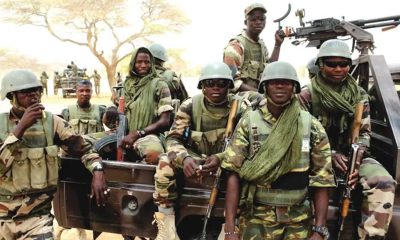
Based on the available evidence, the most defensible interpretation of what happened is that this was an unusually collaborative, intelligence-driven and coercively negotiated release. It was probably not a conventional battlefield rescue. Nor does it appear to have been a ransom-propelled release.

This actually fills me with hope. It means the government may have found a potentially effective template for disrupting terrorist networks and rescuing their victims without exposing abductees to the indiscriminate violence of a frontal military assault.

But the part of the template worth replicating is its lawful core: interagency cooperation, careful intelligence gathering, the identification of terrorist networks, the disruption of their supply routes and the arrest of culpable collaborators.

There would be no greater evidence for the truth of the government’s account of the Oriire rescue than the successful replication of its methods in unresolved mass-abduction cases nationwide.

READ ALSO:

The February 3-4 terrorist assault on Woro and neighboring Nuku communities in Kaiama Local Government Area of Kwara State not only killed scores of people but also led to a mass abduction. UNICEF reported that around 176 women, including pregnant women, and children were kidnapped from Woro.

More than five months later, the victims have not been released, according to the latest public reports. The terrorists have released videos showing women and small children appealing desperately for intervention. They, too, need the collaborative intelligence-gathering energies that security agencies deployed in Oyo.

On May 15, suspected militants abducted 42 children from Mussa Primary and Junior Secondary School and surrounding homes in Askira-Uba Local Government Area of Borno State. Some of the abductees were extremely young. According to the latest available reporting, all 42 remain missing.

There was a separate school attack in Lassa town in the same local government area in Borno on June 29. Gunmen attacked Government Day Secondary School while students were taking examinations. Eight people were rescued, but 36 students and one staff member remain captive. The students comprised 25 girls and 11 boys.

On June 7, in Magamin Diddi village in Maradun Local Government Area of Zamfara State, bandits reportedly invited villagers to what was presented as a peace meeting and then abducted them. The police confirmed that 39 people were taken, although community estimates were as high as 50. The kidnappers reportedly demanded ₦125 million and released some captives to communicate the demand. There has been no authoritative public account of the remaining captives’ release.

Nor should the passage of time cause older victims to disappear from the national conscience. Eighty-nine of the Chibok schoolgirls abducted in 2014 remain officially unaccounted for. Their families have endured more than a decade of promises, occasional discoveries and prolonged uncertainty.

There are many more cases than I have the space to chronicle in this column. Security forces presumably have records of mass abductions, including many that never made the national news. Yet Nigeria has developed a disturbing ritual in which outrage follows an abduction, officials promise decisive action and public attention eventually moves elsewhere while families remain imprisoned in terrifyingly crippling uncertainty.

The true test of the Oyo operation is not the applause it generated after one dramatic success but the number of forgotten captives its methods can bring home. If its intelligence model worked as the government says it did, it should become a national operational doctrine rather than a self-contained public-relations trophy.

Replicating it in Woro, Mussa, Lassa, Magamin Diddi and other communities would simultaneously rescue imperiled citizens, restore public faith in the capacity of the government to perform its primary duty and begin to extirpate a kidnapping economy that has destroyed communal peace and individual peace of mind across Nigeria. Until that happens, Oyo remains an encouraging breakthrough, but not yet a proven national template.


Case for replicating the Oyo kidnap-rescue template nationwide, By Farooq Kperogi

Kperogi is a renowned columnist and United States-based professor of journalism 

Loading

Continue Reading

Trending