
Business
FCCPC inaugurates monitoring group for stable market prices
FCCPC inaugurates monitoring group for stable market prices
The Federal Competition and Consumer Protection Commission (FCCPC) has inaugurated the Joint Market Monitoring Taskforce (JMMT) as part of its commitment to sanitizing Nigerian markets, beginning with key markets in the Federal Capital Territory.
Speaking at the flag-off ceremony for the first phase of the Taskforce in Abuja, the Executive Vice Chairman of FCCPC, Mr. Tunji Bello, called on market leaders and executives to support the initiative.
Bello, represented by the Director of Surveillance and Investigations, Mrs. Boladale Adeyinka, reaffirmed the Commission’s commitment to consumer protection.
“This event, again, underscores FCCPC’s commitment and resolve to protect Nigerian consumers from harmful and unsafe products and also to promote business competitiveness in the Nigerian market.”
“It’s no news that our markets are flooded with fake, counterfeit, and substandard consumer products that are not fit for intended purposes or clearly unsafe or injurious to consumer welfare”.
“At a time when both consumers and businesses are experiencing economic challenges, getting value for money expended on products has become very imperative,” he stated.
He cited Section 17 of the Federal Competition and Consumer Protection Act (FCCPA), which empowers the Commission to eliminate hazardous products and unethical marketing practices, stating that the FCCPC “prioritizes cooperation and collaboration with key stakeholders for greater success.”
READ ALSO:
- Manchester City sign Tijjani Reijnders for £46.5m
- Trump to send 9,000 migrants to notorious terrorist detention centre
- JUST IN: FG cancels military parade for 2025 Democracy Day
“The Commission in delivering her mandate, prioritizes cooperation and collaboration with key stakeholders for greater success. There are many players and stakeholders in our marketplaces.”
“Effective market monitoring operations require all hands to be on deck that is, the regulators as well as the market executives or market union leaders need to come together as a team to make our market work for all.
“And today, the Commission will be inaugurating the first set of JMMT covering 4 markets within the FCT as we flag off Phase 1 of the joint market monitoring operations which will be established in all our markets across the nation,” Bello explained.
“Present with us today to flag off the Phase 1 are representatives of 4 Markets within the FCT namely Wuse Market, Utako Market, Garki International Market, and Garki Modern Market while the terms of reference to guide the operations of JMMT have been discussed and communicated to members of the JMMT, who have also made commitments to support the Commission’s effort,” the FCCPC boss added.
Bello urged the public to support the Commission by providing credible information or alerts on violations of consumer protection laws through its official email, hotlines, complaint portal, or social media platforms.
In a remark, the Head of Monitoring and Enforcement at Abuja Market Management Limited, Mr. Musa Shelleng, applauded the FCCPC for establishing the Taskforce.
He called for continued trader sensitization and pledged the support of the Market Management toward achieving the Taskforce’s goals.
Also speaking, the Chairman of Garki Market, Mr. Paul Nnamani, praised the initiative and vowed to educate his members on adhering to the Taskforce’s terms of reference. He also urged traders to avoid unethical practices and ensure consumers get value for their purchases.
Other market leaders and executives in attendance emphasized the importance of inclusive stakeholder engagement to ensure the success of the Joint Market Monitoring Taskforce.
FCCPC inaugurates monitoring group for stable market prices









Business
NCC Orders MTN, Other Telcos to Compensate Subscribers for Poor Network Service

NCC Orders MTN, Other Telcos to Compensate Subscribers for Poor Network Service
The Nigerian Communications Commission (NCC) has directed major mobile network operators (MNOs), including MTN, Airtel, Glo, and 9mobile, to compensate subscribers affected by poor network quality in areas where performance falls below regulatory standards. The move is part of a broader shift toward a consumer-focused approach aimed at protecting users and strengthening accountability in Nigeria’s telecommunications sector.
In a statement on Sunday, Nnenna Ukoha, Head of Public Affairs at the NCC, emphasized that subscribers should not bear the full burden of service disruptions caused by operators’ failure to meet prescribed benchmarks. She explained that compensation will be provided in the form of airtime credits, calculated based on subscribers’ average spending patterns and the duration of service outages in affected areas.
READ ALSO:
- Abuja Convention: Wike PDP Faction Confirms Mohammed as Chairman, Anyanwu as Secretary
- Debate as OPM Pastor Marries Autistic Man to Older Woman
- Jos Attack: Plateau Govt Declares 48-Hour Curfew After Deadly Assault
“Erring operators will compensate affected users directly for breaches of quality of service key performance indicators within specified time frames,” Ukoha said. She added that while regulatory fines have traditionally served as a deterrent against poor service delivery, the commission is now adopting a more consumer-centric approach that ensures users directly benefit from enforcement actions.
Under the directive, tower companies and network providers are also required to reinvest fines and penalties into infrastructure upgrades, aimed at addressing coverage gaps and improving overall network quality. Subscribers are encouraged to report service interruptions to their operators and the NCC to ensure timely compensation.
Industry observers have welcomed the move, describing it as a significant step toward empowering telecom users, improving quality of service (QoS), and holding operators accountable for network performance failures. The NCC will monitor compliance closely and take further action against any operators that fail to meet the compensation and service standards.
NCC Orders MTN, Other Telcos to Compensate Subscribers for Poor Network Service
Auto
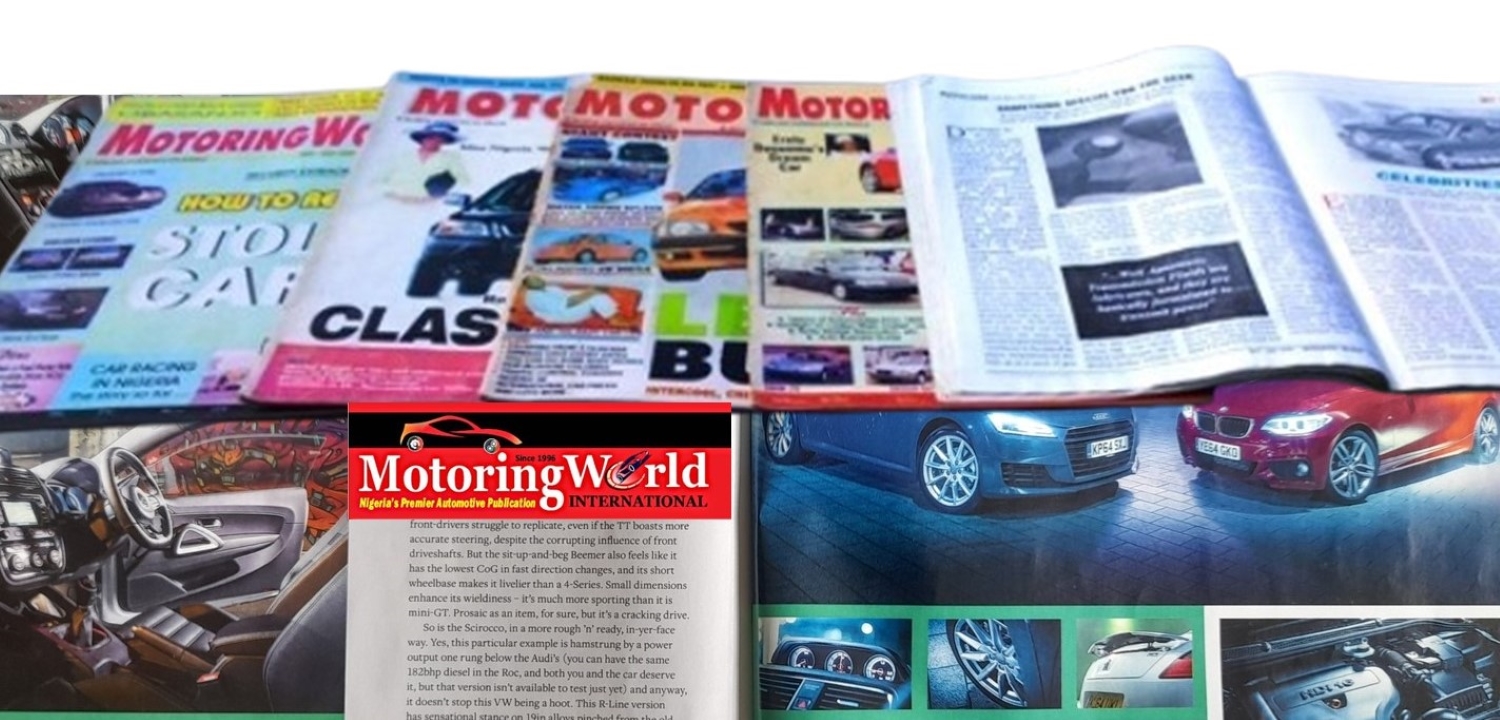
Motoring World marks 30 years, set to rally industry leaders in Lagos
Motoring World marks 30 years, set to rally industry leaders in Lagos
Motoring World, one of Nigeria’s foremost automotive publications, will celebrate its 30th anniversary on June 4, 2026, with a high-profile event at the MUSON Centre.
The milestone gathering is expected to draw policymakers, industry leaders, diplomats and innovators to commemorate three decades of impactful journalism, advocacy and contribution to the growth of Nigeria’s automotive sector.
Founded on June 12, 1996, as a syndicated radio magazine programme, Motoring World pioneered automotive broadcasting in Nigeria before expanding into print in 1998. It has since evolved into a multi-platform brand at the forefront of promoting industry development, modernization and policy reform.
Over the years, the publication has gone beyond news reporting to play an active role in shaping regulatory frameworks, encouraging local content development and promoting industry standards.
Publisher and Chief Executive Officer, Femi Owoeye, said the organisation was driven by a clear vision from inception.
READ ALSO:
- Nigeria Police Reform: 222,000 Officers May Move to State Commands
- Iran Threatens US-Linked Universities in Middle East Amid Escalating Tensions
- Iranian Strike on Saudi Base Damages US Spy Plane, Injures 12 Troops
“Motoring World started with a simple vision: to give voice and structure to Nigeria’s automotive industry. Over the years, we have gone beyond reporting to actively advocate policies that support industry growth, local production and a more structured ecosystem,” he said.
Activities lined up for the anniversary include the unveiling of a special 30th anniversary edition of Motoring World magazine, chronicling the evolution, milestones and future of the industry. Distinguished stakeholders with three decades of contributions to the sector will also be honoured.
A keynote lecture titled, “Reporting the Road Ahead: Automotive Journalism as a Catalyst for Nigeria’s Auto Industry Development,” will underscore the critical role of the media in shaping the nation’s automotive landscape.
Dignitaries expected at the event include the Minister of Industry, Trade and Investment, Jumoke Oduwole; the Director-General of the National Automotive Design and Development Council, Oluwemimo Joseph Osanipin; state governors, transport commissioners and members of the diplomatic corps.
Owoeye noted that the anniversary represents more than a celebration.
“This is a tribute to resilience, strong partnerships and the collective drive that has sustained the industry. As we honour key players and reflect on our journey, we are also setting the tone for the next phase of mobility in Nigeria,” he added.
The event promises a blend of reflection, recognition and renewed commitment to advancing Nigeria’s automotive industry.
Motoring World marks 30 years, set to rally industry leaders in Lagos
Auto
Hyundai unveils flagship SUV Palisade, rolls out strong line-up in Lagos showcase

Hyundai unveils flagship SUV Palisade, rolls out strong line-up in Lagos showcase
Hyundai Nigeria has unveiled the all-new Hyundai Palisade in Lagos, headlining a media showcase that also featured the Hyundai Accent, Hyundai Creta, Hyundai Tucson and Hyundai Santa Fe, as the automaker intensifies its push across key segments of the Nigerian market.
The event, held at the company’s Victoria Island showroom, offered journalists a first-hand view of Hyundai’s expanding portfolio, ranging from entry-level sedans to premium three-row SUVs.
Taking centre stage was the debut of the Palisade, Hyundai’s flagship SUV, positioned to strengthen the brand’s foothold in the premium segment.
With its bold exterior styling, spacious three-row layout, upscale interior and advanced safety and convenience features, the model is targeted at families and executive buyers seeking comfort, space and strong road presence.
Across the line-up, Hyundai showcased a broad spectrum of offerings. The Santa Fe reinforces its appeal as a refined, family-oriented SUV with generous cabin space and premium detailing, while the Tucson stands out for its blend of modern design, practicality and everyday versatility.
In the compact SUV category, the Creta was highlighted for its mix of style, efficiency and urban functionality, while the Accent sedan retains its positioning as a practical and cost-effective option for young professionals, fleet operators and first-time buyers.
Speaking at the event, Brand Head, Hyundai Nigeria, Gaurav Vashisht, said the launch underscores the company’s commitment to deepening its footprint in Nigeria with globally competitive products adapted to local needs.
“This introduction of the all-new Palisade strengthens our premium SUV offering while complementing a well-rounded line-up that delivers on design, safety, innovation and everyday usability,” he said.
The showcase also provided an avenue for media interaction with Hyundai executives and product specialists, alongside detailed vehicle walkarounds covering design, technology and safety features.
Hyundai Nigeria reaffirmed its focus on delivering globally benchmarked vehicles with strong local relevance, even as competition intensifies in Nigeria’s evolving passenger vehicle market.
The event also marked the launch of Hyundai’s Easter campaign, offering customers value-added benefits such as complimentary delivery, accessories, registration and service packages.

-

 metro2 days ago
Tragedy in Aramoko: Trailer Rams Residential Building, Kills 300‑Level Student
-

 News2 days ago
Final Notice: FG Orders Civil Servants to Complete PASGA Verification by March 31
-
 metro14 hours ago
Jos Attack: Plateau Govt Declares 48-Hour Curfew After Deadly Assault
-

 Entertainment2 days ago
Nollywood Actress Declares Love for Ibrahim Chatta, Offers to Pay Her Own Dowry
-

 Entertainment4 hours ago
Funke Akindele, Toyin Abraham Spark Reactions Over Alleged Snub at Iyabo Ojo’s Premiere
-

 Entertainment2 days ago
Streamer Peller Escorted Out of Alake of Egbaland’s Palace in Abeokuta
-
 International3 days ago
Iranian Missiles, Drones Strike US Air Base in Saudi Arabia
-

 metro2 days ago
ADC Chairman’s Daughter Joins Pro-Tinubu Campaign Organisation