

Aviation
FCCPC Finds Evidence of Airfare Manipulation by Domestic Airlines
FCCPC Finds Evidence of Airfare Manipulation by Domestic Airlines
The Federal Competition and Consumer Protection Commission (FCCPC) says it has uncovered credible evidence of airfare manipulation by domestic airlines in Nigeria, revealing that some carriers may have artificially inflated ticket prices during the December 2025 festive travel season beyond what market forces would justify. In an interim report released on Thursday, the FCCPC said its extensive forensic review of airfare data collected directly from airlines across key domestic routes shows striking irregularities in pricing patterns that appear inconsistent with normal seasonal demand, fuel costs, foreign exchange movements, or other operational variables.
The review by the Commission’s Surveillance and Investigations Department, led by Director of Corporate Affairs Ondaje Ijagwu, compared peak-season fares in December 2025 against ticket prices in the post-holiday period of January 2026. In many cases — notably on high-traffic corridors such as Abuja–Port Harcourt, Lagos–Calabar, and Lagos–Enugu — the difference in fares reached as high as ₦405,000 for a single ticket, even though essential cost drivers remained relatively stable. “These fare differences appear to reflect airlines’ arbitrary pricing decisions, yield management strategies, and capacity allocation practices rather than any variation in regulated fees or significant changes in operating conditions,” Ijagwu said, suggesting that multiple domestic carriers might have engaged in tacit coordination rather than true competition.
The report also showed that during the peak period, reduced seat availability paired with clustered price ranges across multiple operators raised further competition concerns, lending weight to potential violations of Nigeria’s Federal Competition and Consumer Protection Act (FCCPA) 2018. The interim findings flagged possible breaches of provisions governing restraint of competition, abuse of dominant positions, price-fixing, conspiracy, unfair contract terms, and consumers’ right to fair dealings — signalling that airlines may have breached multiple competition and consumer protection rules.
READ ALSO:
- US Lawmaker Says Christians in Nigeria Bear Brunt of Violence, Calls on Trump to Act
- Eric Chelle Explains $130,000 Salary Proposal, Reaffirms Loyalty to Super Eagles
- Suspected Arsonists Set St. Mary’s Catholic Church Ablaze in Cross River
The Airline Operators of Nigeria (AON) swiftly pushed back against the FCCPC’s report. AON spokesman Prof. Obiora Okonkwo said the Commission lacks the specialised expertise to analyse aviation pricing, warning that the probe could harm Nigeria’s fragile airline sector. “They don’t understand the economics of airlines or how ticket prices are set based on yield, load factors, aircraft utilisation and revenue management systems,” Okonkwo said. “This action is very detrimental to the survival of domestic operators.”
Independent aviation analysts in Nigeria say pricing behaviour in the sector has long lacked transparency. Dr. Uche Okoro, a transport economist, told news editors that while peak-season travel normally pushes fares up, the consistency of spikes across multiple airlines on the same dates and routes — even where there was no significant change in fuel or exchange rates — suggests coordinated pricing behaviour. “Market competition should push airlines to differentiate prices based on service levels and actual costs,” Okoro said. “When several carriers raise prices almost in unison, especially on predictable peak travel dates, it warrants scrutiny.”
The Nigerian Civil Aviation Authority (NCAA) acknowledged the FCCPC’s interim report and pledged to support the broader probe, noting that the aviation sector must balance airline financial sustainability with fair market practices. An NCAA spokesperson said: “We are engaging with the FCCPC and industry stakeholders to promote a transparent pricing environment. While airlines need to remain viable, consumers must also be protected from exploitative fare regimes.” The NCAA emphasised that factors such as fleet size limits, airport slot restrictions, seasonal demand patterns, and infrastructure capacity do affect pricing, but agreed that unusually steep price spikes merit investigation.
According to the FCCPC, the route-by-route analysis showed that on Abuja–Port Harcourt, average peak-period fares were far higher than post-peak levels, with many tickets in December priced well above the typical seasonal range. On Lagos–Calabar and Lagos–Enugu, similar patterns of clustered fare bands across airlines suggested pricing behaviour broadly aligned among competitors rather than differentiated by market forces. Across sampled routes, median fares during the festive period were significantly elevated compared with post-peak benchmarks, despite stable fuel price trends, unchanged airport taxes, and no major exchange rate shocks. The FCCPC noted that while predictable seasonal demand surges can justify higher fares, the magnitude and pattern of the increases observed in December 2025 are not fully explained by ordinary market conditions.
FCCPC Executive Vice Chairman and CEO Tunji Bello stressed that the interim report is not an enforcement action, but a step toward deeper investigation. “The Commission’s role is to ensure that market outcomes reflect competition and consumer protection principles,” he said, adding that full findings and possible enforcement measures will follow after the ongoing review. Bello also signalled that foreign airlines operating international routes involving Nigeria will soon be probed, following complaints that Nigerian passengers are often charged significantly higher fares on similar international distances. “No operator — domestic or foreign — will be shielded if evidence confirms fare-fixing or consumer exploitation,” Bello said. The FCCPC has asked both airlines and consumers to assist in the investigation by providing additional data, while warning airlines that violations of the FCCPA could result in regulatory sanctions, fines, or mandatory corrective orders once the full review is concluded.
FCCPC Finds Evidence of Airfare Manipulation by Domestic Airlines








Aviation
Fani-Kayode Counters Keyamo, Defends Atiku Over Nigeria Airways Collapse
Fani-Kayode Counters Keyamo, Defends Atiku Over Nigeria Airways Collapse
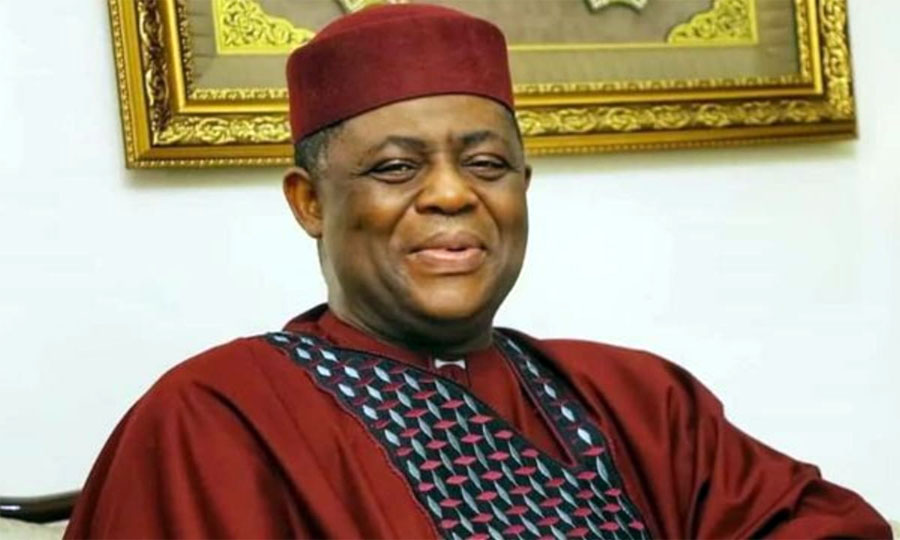
Former Minister of Aviation, Femi Fani-Kayode, has challenged the criticism of former Vice-President Atiku Abubakar by the Minister of Aviation and Aerospace Development, Festus Keyamo, over the liquidation of Nigeria Airways and the non-payment of pension arrears owed to its former workers.
Fani-Kayode, who served as Minister of Aviation in 2006, argued that the defunct national carrier’s collapse resulted from years of mismanagement, corruption, mounting debts and operational failures that predated the return of former President Olusegun Obasanjo to democratic rule in 1999.
He made the remarks in a response to Keyamo’s statement on October 14, 2026, in which the aviation minister accused Atiku of hypocrisy over the airline’s liquidation in 2004 and the subsequent failure to pay its former employees their pensions and gratuities.
Keyamo had said President Bola Tinubu approved and released ₦36 billion to settle outstanding pension liabilities owed to former Nigeria Airways workers, adding that beneficiaries had begun receiving payment alerts.
In his response, Fani-Kayode acknowledged the Tinubu administration’s efforts to settle the outstanding liabilities but maintained that the history of the airline’s collapse required a broader examination of events preceding its liquidation.
According to him, Nigeria Airways was already in a critical state before Obasanjo returned to office in 1999.
Fani-Kayode recalled that when Obasanjo left office as military head of state in 1979, Nigeria Airways had 32 functional aircraft, experienced pilots and crew members, a competent management team and an accountable board of directors.
He said the airline was then regarded as a source of national pride but had deteriorated considerably over the following two decades.
By the time Obasanjo returned as elected president in 1999, Fani-Kayode claimed, only one aircraft remained, and it was not operational. He attributed the airline’s deterioration to years of alleged corruption, poor management and the disappearance of company assets.
He maintained that the liquidation process, which was completed in 2004, followed years of financial insolvency, operational collapse and unsuccessful attempts to rescue the airline.
Fani-Kayode also cited the withdrawal of the International Finance Corporation from privatisation-related efforts as part of the difficulties encountered in attempts to revive the company.
He said Obasanjo’s administration had little choice but to liquidate the airline rather than continue committing public funds to an organisation he described as having become practically irredeemable.
The former minister, however, acknowledged that the liquidation left thousands of former employees and their families facing prolonged financial hardship because their pension entitlements remained unpaid.
Recounting his own involvement in the matter, Fani-Kayode said a committee chaired by the then Head of the Civil Service of the Federation, Yayale Ahmed, recommended the release of funds to pay the pensioners.
He said that, as aviation minister in 2006, he presented a memorandum to the Federal Executive Council seeking approval for the payment of the outstanding entitlements and argued that settling the liabilities was the right thing to do.
However, according to him, the proposal was rejected after some members of the cabinet opposed it on the grounds that former management teams and boards of Nigeria Airways had contributed to the airline’s destruction.
Fani-Kayode said he disagreed with that position but acknowledged that those who supported payment were outnumbered during the deliberations.
He added that the issue was revisited under the late President Umaru Musa Yar’Adua, whose administration paid a substantial number of the pensioners. The administration of former President Muhammadu Buhari also made further payments, he said.
Commending Keyamo for the latest intervention, Fani-Kayode said he was pleased that the remaining pension liabilities had finally been addressed, while expressing regret that the payments had taken so many years.
He described the suffering endured by the former workers as immense and reiterated that paying their entitlements had always been the appropriate course of action.
On Atiku’s role in the Federal Executive Council deliberations, Fani-Kayode said he knew the position the former vice-president had taken during the debate but declined to disclose it publicly.
He argued that the eventual decision was a collective responsibility of the administration, adding that members of the government had to share the consequences of the outcome.
Fani-Kayode’s intervention has added another dimension to the political disagreement surrounding Nigeria Airways’ collapse, the handling of its former workers’ pension entitlements and the responsibilities of successive administrations.
While Keyamo credited the Tinubu administration with clearing the outstanding pension arrears, Fani-Kayode’s account focused on the airline’s long decline, the difficulties surrounding earlier efforts to pay its former employees and the involvement of successive governments in addressing the liabilities.
The dispute has also renewed attention on the fate of former Nigeria Airways workers, many of whom endured years of uncertainty while awaiting their retirement benefits.
Fani-Kayode Counters Keyamo, Defends Atiku Over Nigeria Airways Collapse
Aviation
FAAN reinstates Bolt at airports, denies fixing taxi fares

FAAN reinstates Bolt at airports, denies fixing taxi fares
The Federal Airports Authority of Nigeria (FAAN) has cleared Bolt to resume operations at all airports under its management after reaching an operational agreement with the ride-hailing company.
The development follows growing complaints from travellers over the temporary disruption of e-hailing services at Nigerian airports, with passengers raising concerns about higher transportation costs and reduced options for getting to and from airports.
FAAN also apologised to passengers affected by the disruption, acknowledging that the temporary interruption caused inconvenience and increased transportation difficulties for some travellers.
In a statement by its Director of Public Affairs and Consumer Protection, Henry Agbebire, FAAN said it had listened to the concerns raised by passengers and made the necessary adjustments following constructive engagements with Bolt.
The authority said the agreement with Bolt provides an operational framework that allows the company to resume services while complying with requirements relating to airport security, passenger safety, accountability and orderly transportation.
FAAN’s latest announcement marks a significant development after the authority had faced mounting public criticism over restrictions affecting e-hailing operations at some of the country’s airports. FAAN had earlier maintained that it had not imposed a blanket ban on Bolt, Uber or other e-hailing platforms, but said operators needed to work within an appropriate framework for airport operations. (FAAN)
According to FAAN, airports are highly regulated environments, making it necessary for commercial transportation providers to operate under arrangements that give the authority adequate visibility over vehicles, drivers and passenger pick-ups.
READ ALSO:
- Probe Me Over $16bn Power Spending If You Have Evidence – Atiku Dares FG
- 20-Year-Old Arrested for Allegedly Macheting Father to Death in Anambra
- How Filling Station Sold Me Water Instead Of Petrol – Lagos Resident Recounts Ordeal
The authority said it had been dealing with challenges including passenger solicitation, touting, random pick-ups, unregulated commercial transportation and concerns about safety, security and accountability.
FAAN said these challenges had become more complicated in situations where drivers operate across multiple ride-hailing platforms, prompting the authority to strengthen its oversight of commercial transportation within airport premises.
At the centre of the controversy is the Airport Car Hire Rank Management System (ACHRAMS), which FAAN introduced to bring greater structure and visibility to airport car-hire operations.
FAAN stressed that ACHRAMS is not an e-hailing application and was not created to compete with Bolt, Uber or any other mobility platform. Rather, the authority describes it as an airport-specific system for managing car-hire ranks, dispatch, identification and operational oversight within FAAN-managed airports. (FAAN)
The authority has also rejected suggestions that ACHRAMS was introduced to create a monopoly in airport transportation.
FAAN said it supports competition and does not intend to prevent passengers from choosing between different transportation providers.
The controversy intensified after passengers began complaining about the cost of airport taxi fares, particularly during the period when access to conventional e-hailing services was disrupted.
Reports from Lagos indicated that some passengers were being quoted fares as high as N30,000 for trips from Murtala Muhammed International Airport to parts of Ikeja, while travellers reported substantially lower prices through alternative ride-hailing services. (Aboki Forex)
FAAN, however, has denied claims that it fixed or introduced the airport taxi fares being discussed.
The authority said the fares existed independently of ACHRAMS and were not newly created by the system. According to FAAN, ACHRAMS merely brought greater visibility and transparency to existing airport taxi rates, making the applicable charges more apparent to passengers.
FAAN acknowledged that the comparison with the lower prices many travellers had become accustomed to through e-hailing platforms understandably fuelled public concern over the cost of airport transportation.
The authority said its actions were motivated by regulatory, safety and security considerations, rather than economic interests.
It nevertheless acknowledged that the immediate effect of the temporary disruption was significant for passengers.
FAAN therefore apologised to travellers and said it appreciated their patience and understanding while discussions with e-hailing operators continued.
The authority said the resolution with Bolt demonstrates that it is possible to maintain the integrity and security of the airport environment while preserving the convenience and freedom of choice associated with e-hailing services.
The latest development is also consistent with FAAN’s earlier position that it wanted to establish a workable framework rather than permanently exclude e-hailing companies from airports. On August 20, the authority said discussions with operators were aimed at resolving issues involving passenger safety, security, operational visibility, accountability and the management of pick-up activities. (FAAN)
Bolt’s own airport guidance already requires its drivers operating at Murtala Muhammed International Airport to comply with FAAN rules, including using designated parking areas for pick-ups and drop-offs. Bolt also warns drivers that violations of airport rules can result in penalties or vehicle impoundment. (Bolt)
Bolt’s official Nigeria platform also lists several Nigerian airports where airport transfers are available, including Murtala Muhammed International Airport, Nnamdi Azikiwe International Airport, Mallam Aminu Kano International Airport, Port Harcourt International Airport and Sam Mbakwe International Airport. (Bolt)
FAAN said it remains in discussions with other e-hailing operators and expects outstanding engagements to be concluded in the coming days.
The authority reiterated that passengers remain free to choose from available authorised transportation options that best meet their needs.
FAAN said its responsibility is to ensure that whichever authorised service passengers choose operates within a safe, secure, orderly and accountable airport environment.
The reinstatement of Bolt is expected to give air travellers greater choice and restore access to app-based transportation at FAAN-managed airports, while the authority continues efforts to regulate commercial transportation without compromising passenger safety and convenience.
FAAN assured travellers that their safety, security, convenience and overall airport experience would remain at the centre of its decisions.
FAAN reinstates Bolt at airports, denies fixing taxi fares
Aviation
Keyamo Issues One-Week Ultimatum to Airlines Over Debt Repayment Plans

Keyamo Issues One-Week Ultimatum to Airlines Over Debt Repayment Plans
The Minister of Aviation and Aerospace Development, Festus Keyamo, has given airlines operating in Nigeria one week to agree on realistic repayment plans with aviation agencies over their outstanding financial obligations. This directive was part of resolutions reached at an emergency stakeholders’ meeting convened by Keyamo on Thursday, August 13, 2026, to address the recent industrial dispute between aviation sector unions and some airlines. The meeting followed the temporary suspension of industrial action by aviation unions on Tuesday, August 11, 2026, which disrupted operations at some airports across the country, causing widespread concern among passengers and stakeholders. The emergency meeting was attended by representatives of airlines, aviation sector unions, and heads of aviation agencies, including the Nigeria Civil Aviation Authority (NCAA), the Federal Airports Authority of Nigeria (FAAN), and the Nigerian Airspace Management Agency (NAMA). The Minister emphasized that the era of impunity in the aviation sector is over and that airlines must take responsibility for their financial obligations while working with the government to resolve outstanding debts amicably.
According to a statement signed by the Permanent Secretary, Ministry of Aviation and Aerospace Development, Mahmud Adam Kambari, the NCAA and other aviation agencies were directed to obtain payment schedules from airlines, taking into consideration their operating costs and prevailing economic realities. The statement emphasized that the Directors of Finance and Accounts of all aviation agencies were to meet individually with the affected airlines and agree on realistic repayment plans within one week. The resolution is aimed at addressing financial obligations owed by airlines to aviation agencies while preventing the disputes from escalating into further industrial action and disruption of air travel. The Minister stressed that the repayment plans must be realistic and achievable, as the government is not interested in empty promises but in concrete actions that will restore financial sanity to the sector. Airlines that fail to comply within the stipulated timeframe would face drastic actions, including the possible grounding of aircraft and suspension of operating licenses.
READ ALSO:
- [ICYMI] How Nigerian Medical Doctor Was Promoted to Captain in US Army
- JAMB Aggregate Score 2026/2027: How Nigerian Universities Calculate Your Admission Chances
- Davido Halts London Concert, Threatens to Walk Off Stage Over Fan’s Disrespect to Staff
The emergency meeting was convened in response to a growing industrial dispute between aviation sector unions and some airlines. The unions had threatened industrial action over issues including the unionisation of airline workers and the alleged refusal of some airlines to allow their employees to join trade unions. The dispute escalated to the point where aviation unions temporarily suspended industrial action on Tuesday, August 11, 2026, which had disrupted flight operations at some Nigerian airports, causing significant inconvenience to passengers and raising concerns about the stability of the aviation sector. The disruption had heightened fears over possible widespread cancellations and delays, prompting the Minister to intervene swiftly to prevent a full-blown crisis that could have paralyzed air travel across the country.
The stakeholders also reached an agreement on the contentious issue of unionisation among airline workers. The Minister affirmed the right of workers to decide whether or not to belong to trade unions, stressing that such decisions should be made directly by the workers rather than through airline management. Consequently, the NCAA was directed to ensure that aviation unions have direct access to workers of all airlines solely for the purpose of distributing union forms to enable employees to indicate whether they wish to unionise. The ministry warned that any airline that prevents the unions from having such direct access would face sanctions from the NCAA, including possible fines or suspension of operating licenses. This resolution represents a significant victory for workers’ rights in the aviation sector and ensures that employees can exercise their freedom of association without interference from employers.
The stakeholders further resolved that another meeting would be convened in one month to review progress made in implementing the resolutions and assess the state of the aviation sector. The statement described the resolutions as collective decisions of all parties at the meeting, emphasizing the collaborative approach taken to resolve the disputes. The Minister, while assuring stakeholders of the Federal Government’s commitment to a safe and viable aviation sector, reiterated President Bola Tinubu’s commitment to maintaining a safe, efficient, peaceful, and sustainable aviation industry. This commitment aligns with the broader agenda of the current administration to reform critical sectors of the economy and ensure the welfare of workers and the public. The Minister also noted that the government would continue to engage with stakeholders to address other challenges facing the industry, including infrastructure decay, multiple taxation, and the high cost of aviation fuel.
The latest intervention comes after the aviation unions temporarily suspended their industrial action following the disruption of flight operations at some airports on Tuesday. The dispute had heightened concerns over possible disruptions to air travel and the financial pressures facing airlines operating in the country. Airlines now have until August 20, 2026, to agree on repayment plans with aviation agencies. The Ministry has set up a task force to review the submissions and ensure compliance. Airlines that fail to meet the deadline or fail to reach acceptable repayment agreements will face sanctions, which could include suspension of operating licenses, grounding of aircraft, prohibition from accessing government facilities, and legal action to recover outstanding debts. The Ministry has also directed the NCAA to ensure that aviation unions have direct access to airline workers to distribute unionisation forms, and any airline found obstructing this process will face sanctions. This development marks a significant step in the Minister’s broader efforts to reform the aviation sector, improve financial accountability, and ensure that airlines operate within the framework of the law.
Keyamo Issues One-Week Ultimatum to Airlines Over Debt Repayment Plans
-

 metro3 days ago
Suspended Archbishop Ibezim Drags Anglican Primate to Court, Challenges Six-Month Leave
-

 metro3 days ago
Imodi-Ijebu Muslim Community Bets on 20 Chiefs to Drive Education, Economic Growth
-

 metro3 days ago
NAPTIP Raises Alarm as Parents Allegedly Trade Children for Sex, Arrests Woman in Abuja
-

 News3 days ago
FG Draws Red Line on Fuel Subsidy, Warns of Naira Crisis if Reforms Are Reversed
-

 News3 days ago
Tinubu Reappoints INEC Commissioner, Nominates Six Others Ahead of 2027 Elections
-

 Auto3 days ago
Tesla’s Flying Roadster Rekindles Race to Put Cars in the Sky
-

 metro3 days ago
DSS Arrests Maina’s Fugitive Son in Abuja After Six Years on the Run
-

 Entertainment3 days ago
Toyin Abraham Breaks Silence as Leaked Audio Sparks Fresh Nollywood Feud