

Business
FG must end fuel subsidy now, says Dangote
FG must end fuel subsidy now, says Dangote
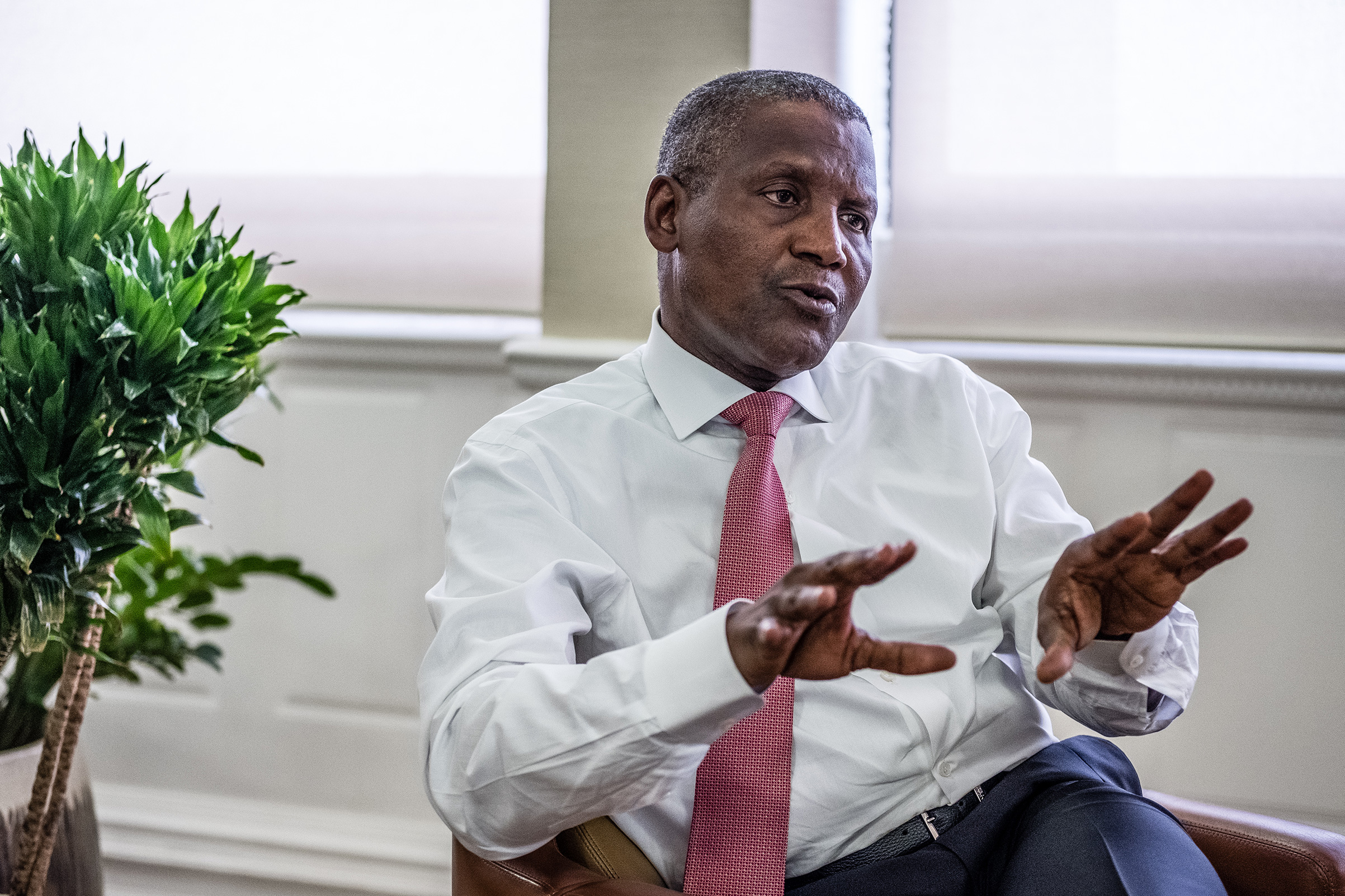
Alhaji Aliko Dangote, President and Chief Executive of Dangote Group, has called for the complete removal of fuel subsidies in Nigeria.
He believes that ending these subsidies will provide a clearer picture of the country’s actual petrol consumption.
During a recent 26-minute interview with Bloomberg Television in New York, Dangote confirmed his ownership of two oil blocks in the upstream sector, with production expected to commence next month.
He emphasized that fuel production from his $20 billion mega refinery in Lagos, which has the capacity to refine 650,000 barrels of crude oil daily, will significantly alleviate pressure on the naira.
Dangote argued that now is the ideal time to eliminate fuel subsidies, stating that doing so would greatly benefit the economy by reducing reliance on petrol imports and easing currency pressures.
He said, “Subsidy is a very sensitive issue. Once you are subsidising something then people will bloat the price and then the government will end up paying what they are not supposed to be paying. It is the right time to get rid of subsidies.”
“But this refinery will resolve a lot of issues out there, you know, it will show the real consumption of Nigeria, because, you know, nobody can tell you. Some people say 60 million litres of gasoline per day.
“Some say, it’s less. But right now, if you look at it by us producing, everything can be counted. So everything can be accounted for, particularly for most of the trucks or ships that will come to load from us. We are going to put a tracker on them to be sure they are going to take the oil within Nigeria, and that, I think, can help the government save quite a lot of money. I think it is the right time, you know, to remove the subsidy.”
Dangote who recalled the challenges faced after the project’s launch in 2013, experiencing a five-year delay due to issues with state government and host communities and a running loan of $2.4bn, said he is personally proud to achieve the feat.
On whether the subsidy will make the refinery viable, Dangote said, “Well, you see, we have a choice of either one. We produce, we export, and when we produce, we sell locally. But we are a big private company. And yes, it’s true, we have to make a profit. We build something worth $20bn so definitely we have to make money.
READ ALSO:
- Suspect who lured woman to hotel for alleged ritual in FCT police custody
- APC will replicate Edo template in Ondo, Anambra elections – Ganduje
- Be patient to enjoy economic reform benefits, Tinubu tells Nigerians
“The removal of subsidies is totally dependent on the government, not on us. We cannot change the price, but I think the government will have to give up something for something. So I think at the end of the day, this subsidy will have to go.”
President Bola Tinubu removed the subsidy when he took office in May 2023, exacerbating a cost-of-living crisis that sparked protests, but quickly reinstated it as inflation spiked.
Another step to ending it was taken in early September when the gasoline cap was eased — though the price remains below the market level.
Nigeria, until Dangote’s refinery came on stream was fully dependent on imported petroleum products, and has been taking tentative moves to finally end the nation’s pricey fuel subsidies, which in 2022 cost $10bn.
Dangote, who has the option of either exporting his fuel or selling it domestically, said the decision on subsidies was the government’s, but added that ending gasoline imports will have a huge upside in easing currency pressures.
The naira has lost around 70 per cent of its value against the dollar since rules that pegged the currency at an artificially high level were relaxed last year.
But the scarcity of the greenback in the Nigerian foreign exchange market continues to weigh on the naira and is made worse by the need to pay for imported gasoline in dollars.
“Petroleum products consume about 40 per cent of our foreign exchange,” Dangote said, adding that fuel from his refinery, which started supplying gasoline on Sept. 15 to the state-owned oil company for domestic sale, “can actually stabilize the naira.”
Continuing in the interview, the businessman revealed the details of the pricing disagreement that occurred with the Nigerian National Petroleum Company Limited.
He said the national oil company bought its current stock from the refinery at a cheaper price than its imported fuel but gave a uniform price for all products.
“There wasn’t really a disagreement, per se. NNPC bought from us on the 15th of September at the international price, which they also bought, about 800,000 metric tons of gasoline imported. So the one that they bought from us actually is cheaper than the one they are importing.
“And so when they announced our price, the guy, I don’t know whether he was authorized. It wasn’t really the real price. What they have announced is most likely that is what it cost them, including profit and other expenses.
“And then the other one is one that they imported. But the people don’t know how much they spend in terms of imports, but their importation is almost, maybe about 15 per cent more expensive than ours, you know.
READ ALSO:
- 29,000 Yoruba people were killed by herdsmen — Akintoye
- How ex-power minister received N5.2m bribe under Mambilla project – Witness
- UN officials say ‘atrocities must end’ in Gaza
“So what they are supposed to do is to sell at a basket price, or if they want to remove subsidy, they can announce that they will remove subsidy, which is okay, everybody you know will adjust it.”
On the planned crude oil sales anticipated to begin in October, Dangote said that discussions are still ongoing and a detailed agreement will be finalised this week.
Revealing details of the deal, he explained, “We will sell the crude in naira after we have bought in naira. So now we are currently working out with the committee that the exchange rate is going to be priced. It is going to be normal pricing, you know, if crude is at $80, we will pay that price at an agreed exchange rate.
“And then we will also sell in the domestic market. What that will do is that it’s going to remove 40 per cent pressure on the naira. So because, see, the petroleum products consume about 40 per cent of foreign exchange, so you know, and then, you know, it’s like you have 40 per cent of demand been taken out so that can actually stabilize the naira and even if they subsidise, they would know what they are paying for.
“The deal is to give the government something that they want. It’s also a win-win situation for all and it would benefit the country.
“Currently, discussions are still ongoing to determine the details of the agreement. They are working out something that I think would be a win-win between us and the NNPCL.
“The agreement is very robust. Well, first of all, we would have energy security where they will give us crude. For example, in October, they’re going to give us 12 million barrels, which is on average, about 390,000 barrels a day, which will sell both gasoline, diesel, and aviation fuel.”
He also confirmed ownership of two oil blocks in the upstream sector with an expected production date of next month.
Dangote tankers’ park
Meanwhile, the Federal Government has said that it is providing land for interested entities to build an expansive park for tankers lifting petrol and other products from the Dangote refinery.
This followed a routine inspection on Sunday by the Minister of Works, Dave Umahi, who raised concerns about over 3,000 fuel tankers queueing up on the new concrete pavement road.
READ ALSO:
- Israeli air strikes kill 492 people in Lebanon
- Yahaya Bello: Kogi assembly demands removal of EFCC chairman, says he’s incompetent
- Troops eliminate terrorists, rescue hostages in major operations
Umahi noted that though the pavement is made of concrete the current road was not designed to handle static load and may soon deteriorate like the ever-busy Apapa road.
This minister revealed this to State House Correspondents after Monday’s Federal Executive Council meeting at the Aso Rock Villa, Abuja.
He said, “From my inspection yesterday, we discovered that we had over 3,000 fuel trucks queuing for the Dangote fuel lifting, and they were all parked on the newly constructed road.
“Technically and by design, the roads were never built for static loads. And so it has a lot of effects. So, we will have the same thing we had in Apapa that damaged the entire road until it was constructed on concrete.”
“So what FEC approved today is that the land that we have, the Federal Government land, we should put it for concession so that concessionaires would bid and whoever wins will be able to build a park. The park will be tolled so all those trucks can safely park there. And the pavement of such a park is quite different from the pavement of the road.”
Umahi also announced that the council approved various road projects. He said, “The council approved several road projects. One is a new contract for rehabilitating Maraban-Kankara-Funtua Road in Katsina state. The second is the award of a contract for the construction of a 258km three-lane carriageway, a component of the 1,000 Sokoto-Badagry superhighway section two, phase 2A in the Kebbi Section. It is to be done with continuous reinforced concrete pavement. It excludes all bridges and flyovers.
“The third one is the contract for the construction and dualisation of Afikpo-Uturu-Okiwe in Ebony, Abia, and Imo State, Section Two. The next one is the Bodo-Bonny road in Rivers State under Julius Berger. The Federal Executive Council approved an additional N80bn to complete that project, bringing the total cost to N280bn.
“The next is the third mainland bridge. The third mainland Bridge was executed under emergency work. When you have emergency work, you have to get going, measure the work, and send all your measurements and quotations to the BPP. And that’s what we did. So that has been done, and it’s also extended to Falamo and Queens Drive. It also came with solar-powered light. The essence is that all through the length and breadth of the road, the security agencies will be able to check everything happening within the length and breadth of this bridge. And we give response time to respond to any eventuality for 10 minutes. So the contract covers about four security vans and one-speed boat.”
Other contracts include the N158bn contract approved for the Lekki Port service lanes by Dangote Industries, linking Epe to Shagamu-Benin Expressway. The council also approved the N740.79bn Abuja-Kaduna-Zaria-Kano Road re-scoped with solar lighting under a 14-month completion by Julius Berger.
Umahi also named about 14 road projects and bridges affected by floods, including Ado-Ekiti-Afe Babalola in Ekiti State and Lafia-Shendam Road in Plateau State.
FG must end fuel subsidy now, says Dangote









Business
Nigerians Pay N44 Extra Per Litre as Retailers Defy Falling Depot Prices – Full Report

Auto
Abuja Roars to Life as Jetour X50 Headlines Three-Day Motoring Experience
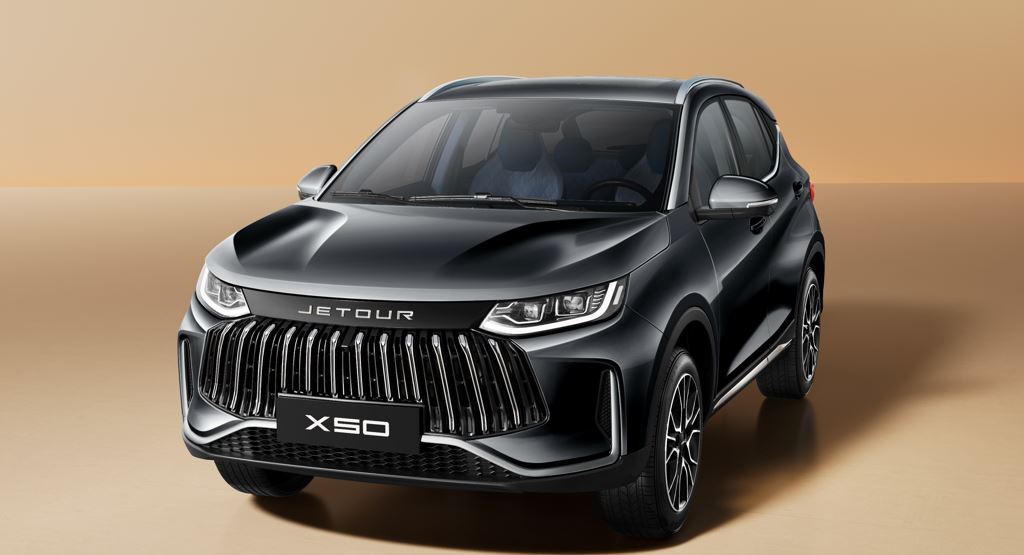
Abuja Roars to Life as Jetour X50 Headlines Three-Day Motoring Experience
Abuja is gearing up for a major motoring spectacle as Jetour Nigeria brings its fast-growing brand experience to the Federal Capital Territory, with the stylish Jetour X50 set to take centre stage in a three-day showcase of performance, technology and automotive innovation.
Scheduled for September 22 to 24, 2026, the Jetour Experience Abuja will move beyond the conventional vehicle exhibition, giving motorists and prospective buyers the opportunity to test-drive the X50, interact with automotive specialists and experience a range of entertainment and interactive activities.
The Abuja activation follows the strong reception recorded during Jetour Nigeria’s recent Lagos experience and forms part of the automaker’s strategy to deepen customer engagement while expanding its footprint across Nigeria.
Backed by an expanding authorised dealer network comprising Elizade Nigeria Limited, Mandilas Autos, Germaine Auto Centre, Kojo Motors, R.T. Briscoe, Tab Autos and New Era AutoVehicle Services, Jetour is also strengthening access to vehicle sales, after-sales support, genuine spare parts and certified technical services nationwide.
At the heart of the Abuja experience will be the Jetour X50, a compact SUV designed to combine contemporary styling, performance and a technology-rich driving environment.
Powered by a 1.5-litre turbocharged engine paired with a dual-clutch transmission, the X50 has positioned itself as a strong contender in Nigeria’s competitive compact SUV segment.
Jetour has equipped the model with a range of premium features, including a 360-degree camera, Blind Spot Detection, 10.5-inch infotainment system with Apple CarPlay and Android Auto, wireless charging and leather upholstery.
The combination of technology, comfort and performance is part of Jetour’s strategy of offering premium motoring features at competitive price points.
The Abuja event also highlights Jetour’s aggressive expansion strategy in Nigeria, following the brand’s recognition with industry accolades including Fastest Growing Auto Brand and Auto Brand of the Year.
With its expanding dealer network providing nationwide sales and after-sales support, Jetour is seeking to deepen customer engagement while making its vehicles and ownership services more accessible to motorists across the country.
As Abuja prepares to welcome the Jetour Experience, the three-day activation is expected to provide motorists with an opportunity to see, feel and drive the X50 while experiencing first-hand what is driving the brand’s growing appeal in Nigeria.
Business
Dangote Refinery Sets ₦525 Per Share for Landmark IPO
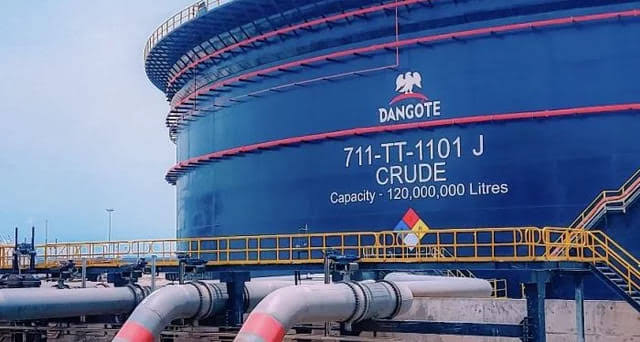
For ₦5,250, Nigerians could soon own a piece of the refinery that has reshaped the country’s fuel market.
-
 metro2 days ago
El-Rufai Demands ₦10bn from Defence Minister Over Southern Kaduna Killings Allegation
-
 metro3 days ago
Oyoland Grand Chief Imam Celebrates Dr Sharafudeen Raji for Service to Islam
-
 Politics2 days ago
Why Did Peter Obi Attend Seyi Makinde’s Campaign Launch? Here’s What He Said
-

 News2 days ago
Lagos Moves to Slash Agency Fees, Curb Rent Hikes With New Tenancy Bill
-

 metro2 days ago
Catholic priest leaves priesthood, weds Kenyan woman after 12 years in Kenya
-

 metro2 days ago
Osun Police Arrest Woman After Vigilante Member Dies During Sexual Encounter in Ile-Ife
-
 Politics2 days ago
JUST IN: Tension in Benue as Suspected Thugs Attack Peter Obi’s Convoy, Block Access
-

 Education2 days ago
FG opens six-month teacher certification for BSc, HND, ND holders – How to Apply