
Business
FG, states, LGs share N954.085bn federal allocation for July

The Federation Account Allocation Committee has shared N954.085 billion to the three tiers of government as federation allocation for July.
A statement issued in Abuja and signed by the Director (Information/Press), Federal Ministry of Finance, Budget and National Planning, Mr Phil Abiamuwe-Mowete, revealed the figure on Wednesday.
From the amount, the Federal Government received N406.610 billion; the states received N281.342 billion; the Local governments got N210.617 billion.
This was inclusive of gross statutory revenue and Value Added Tax (VAT),
It said that the oil producing states received N55.515 billion as derivation (13 per cent of mineral revenue).
The statement indicated that the gross revenue available from the VAT for July was N177.167 billion which was a decrease distributed in the preceding month.
“The distribution is as follows; Federal Government got N26.575 billion, the states received N88.584 billion, local government councils got N62.008 billion.
“Accordingly, the gross statutory revenue of N776.918 billion distributed was higher than the sum received in the previous month.
“From which the Federal Government was allocated the sum of N380.035 billion, States got N192.759 billion, LGCs got N148.609 billion, and oil derivation (13 per cent mineral revenue) got N55.515 billion.”
The statement also said that Companies Income Tax (CIT) and Petroleum Profit Tax (PPT), Excise Duties and Oil and Gas Royalties recorded significant increases.
According to the statement, Import Duty and VAT, however, decreased considerably.
It said that total revenue distributable for the current month of July was drawn from Statutory Revenue of N776.918 billion.
The VAT was also N177.167 billion bringing the total distributable amount for the month to N954.085 billion.
However, the balance in the Excess Crude Account (ECA), as at Aug. 24 stands at 470,599.54 million dollars.


Railway
NRC Expands Abuja–Kaduna Train Service with Additional Trips

NRC Expands Abuja–Kaduna Train Service with Additional Trips
The Nigerian Railway Corporation (NRC) has announced an expansion of services on the Abuja–Kaduna Train Service (AKTS), adding extra daily trips to meet the rising demand of commuters along one of Nigeria’s busiest rail corridors. The revised schedule takes effect Friday, March 6, 2026.
According to NRC’s Chief Public Relations Officer, Callistus Unyimadu, the expansion is intended to provide more travel options, enhance operational flexibility, and improve service delivery for passengers on the route. He urged commuters to review the updated timetable and plan their journeys accordingly.
The Abuja–Kaduna corridor had previously experienced operational disruptions due to a bomb blast on March 28, 2022, and a derailment on August 26, 2025, which reduced the number of trains in service from three to one. Temporary Speed Restrictions (TSRs) were introduced for safety, and daily trips were adjusted to match the limited rolling stock. With stability now restored, NRC has reinstated and expanded services in response to sustained passenger demand.
READ ALSO:
- Dangote Expands into Steel, Power, Ports to Drive Africa’s Industrial Growth
- Pentagon Distances America from Iran Supreme Leader’s Death
- How Ikwechegh’s ₦1.15tr Interrogation Led to Tinubu’s Cabinet Shake-Up
Under the new schedule, passengers travelling between Idu and Rigasa stations will have three trips on Fridays, Sundays, Saturdays, and Mondays, and two trips on Tuesdays and Thursdays. On Tuesdays and Thursdays, trains depart Idu at 8:45 a.m. and return from Rigasa at 2:30 p.m. On Fridays and Sundays, departures from Idu are at 7:45 a.m. and 3:15 p.m., with return trips from Rigasa at 11:30 a.m. On Saturdays and Mondays, services leave Rigasa at 7:15 a.m. and 3:00 p.m., and depart Idu at 11:00 a.m., with all trains making scheduled stops at Kubwa.
NRC said the expanded trips are part of its ongoing commitment to improving rail capacity, reliability, safety, and overall passenger experience across the network. The corporation noted that the adjustments will ensure smoother travel, reduce overcrowding, and strengthen connectivity between Abuja and Kaduna for both commuters and business travellers.
With the additional services, NRC aims to restore confidence in rail travel and position the Abuja–Kaduna corridor as a reliable and safe alternative to road transport, particularly for daily commuters and long-distance travellers.
NRC Expands Abuja–Kaduna Train Service with Additional Trips
Business
Dangote Expands into Steel, Power, Ports to Drive Africa’s Industrial Growth
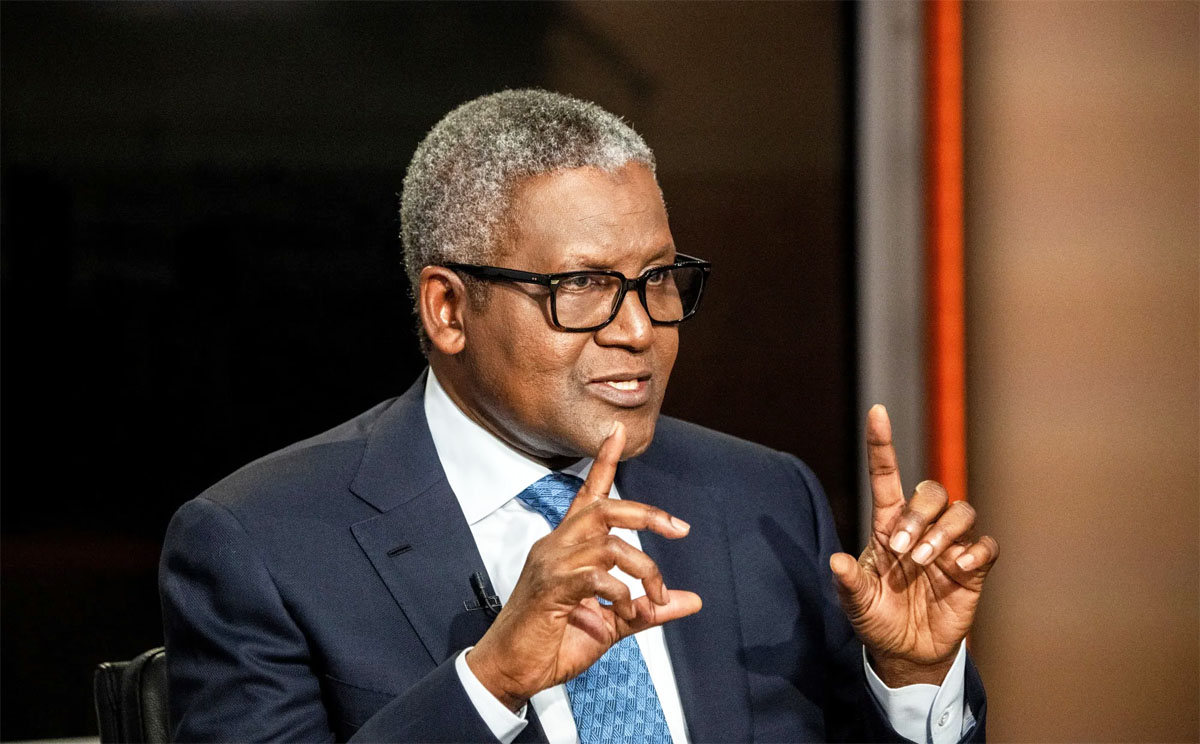
Dangote Expands into Steel, Power, Ports to Drive Africa’s Industrial Growth
Africa’s richest businessman, Aliko Dangote, has unveiled an ambitious expansion plan to grow the Dangote Group into steel production, electricity generation and port development, marking a decisive new phase in his long-term strategy to deepen Africa’s industrialisation and reduce dependence on imports.
Dangote said the move is aimed at building a stronger manufacturing base in Africa, shifting the continent away from commodity exports toward value-added production. He described steel, power and ports as the next pillars of growth after the success of his refinery project. At the centre of his industrial transformation agenda is the Dangote Petroleum Refinery, which is currently producing about 650,000 barrels of refined products per day. According to Dangote, output is projected to double within three years as expansion plans advance, strengthening Nigeria’s energy security and reducing fuel imports. However, he stressed that refining is only one component of a broader vision to industrialise Africa at scale.
Dangote emphasised that steel manufacturing in Africa is critical to infrastructure, housing, automotive production, rail networks and heavy industry. By investing in domestic steel capacity, the continent can significantly cut import bills, conserve foreign exchange and stimulate downstream industries. Industry analysts say entry into steel would place the Dangote Group at the heart of major infrastructure development across West and Central Africa, positioning it as a key supplier for large-scale public and private sector projects.
READ ALSO:
- Pentagon Distances America from Iran Supreme Leader’s Death
- How Ikwechegh’s ₦1.15tr Interrogation Led to Tinubu’s Cabinet Shake-Up
- The world dislikes the weak, by Hakeem Baba-Ahmed
Reliable electricity remains one of the biggest constraints to industrial growth in Nigeria and across Africa. Dangote’s plan to expand into power generation aims to address chronic electricity shortages that force manufacturers to rely on costly alternatives. He also identified port infrastructure development as essential to reducing logistics bottlenecks and improving trade competitiveness. Efficient ports would lower shipping costs, improve export turnaround times and strengthen regional trade under continental agreements. Together, investments in steel, electricity and ports are designed to create a vertically integrated industrial ecosystem capable of supporting mass production and global exports.
Job creation is central to Dangote’s expansion blueprint. With Nigeria projected to require between 40 million and 50 million new jobs by 2030, he said large-scale industrial projects are vital to absorbing the country’s fast-growing youth population. The Dangote refinery currently employs around 30,000 workers, about 80 percent of them Nigerians. Expansion into steel, power and ports is expected to increase total group employment to roughly 65,000 jobs, providing a significant boost to local skills development. Dangote also disclosed plans to list the refinery on the Nigerian stock market, opening the door for broader local participation in one of Africa’s largest industrial assets.
Despite the bold expansion plans, Dangote acknowledged ongoing challenges, including crude supply constraints, infrastructure gaps and logistics inefficiencies affecting feedstock delivery to the refinery. Nevertheless, he insisted that bold private investment is essential to reshaping Nigeria’s industrial landscape. “Nobody dared to do it, so we did it,” he said, reinforcing his belief that large-scale manufacturing is the key to sustainable economic transformation.
With cement plants operating across several African countries and a refinery already reshaping Nigeria’s downstream oil sector, Dangote’s expansion into steel production, electricity generation and port development signals a major step toward continent-wide industrial transformation.
Dangote Expands into Steel, Power, Ports to Drive Africa’s Industrial Growth
Business
Shell workers shut Lagos office, allege pay discrimination
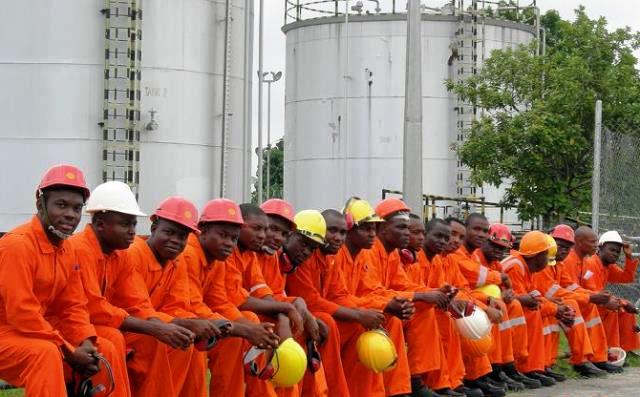
Shell workers shut Lagos office, allege pay discrimination
Workers of Shell Nigeria Exploration and Production Company Limited (SNEPCo) on Tuesday staged a protest at the company’s Broad Street office in Lagos, locking the main gate and temporarily restricting access to the premises.
The action, coordinated by the Petroleum and Natural Gas Senior Staff Association of Nigeria (PENGASSAN), caused traffic congestion in the area as protesting workers blocked vehicular entry into the building.
Eyewitnesses said although some staff members were initially allowed into the premises with their vehicles, protesters later reversed the decision and barred all cars — including those of top company officials — from gaining access.
In a flyer circulated during the protest, the workers accused SNEPCo’s leadership of practising “modern-day slavery,” alleging pay discrimination against Nigerian employees and bias in salary benchmarking.
They faulted the application of the company’s global pay structure in Nigeria without reflecting local economic realities, describing it as a “Best-in-Basin” cost-cutting model that has adversely affected staff welfare and operational engagement.
According to the workers, the cost-control policy has limited the company’s participation in key industry events.
They cited the 2026 Nigeria International Energy Summit in Abuja, where SNEPCo reportedly attended with a five-man delegation instead of participating as a sponsor — a role that typically accommodates about 40 delegates. Organisers were said to have been informed of the change barely a week to the event.
Other industry players, including Nigeria LNG Limited, TotalEnergies Nigeria and Chevron Nigeria Limited, were said to have participated fully.
The protesting staff also decried what they described as non-market-reflective allowances, citing car grants as an example. One worker claimed the N1 million car allowance offered by the company was grossly inadequate given current market prices.
The employees further alleged deteriorating working conditions, heavy workloads and what they described as a growing reliance on expatriates for roles traditionally handled by Nigerians.
They warned that mounting stress, debt burdens and frequent restructuring had negatively impacted staff morale.
A staff member said the decision to barricade the office followed what they described as management’s failure to address longstanding grievances.
They called on the Federal Government to intervene, alleging that the company’s leadership felt insulated from accountability.
The workers also claimed that hybrid work arrangements and internal controls had made it difficult to mobilise staff effectively or draw public attention to their concerns.
SNEPCo, a subsidiary of Shell with operations now largely concentrated in Lagos following its recent divestment activities, remains active in the energy financing space through affiliates such as All On and Daystar Power.
The company has yet to react to the development.

-

 metro3 days ago
Hajj, Umrah Are for Muslims Only – Scholar Urges NAHCON to Tighten Screening
-
 International2 days ago
Iran Retaliates: Gulf States Allied With US Hit by Missiles, Drones
-
 International2 days ago
Saudi Arabia Denies Lobbying US to Strike Iran as Gulf States Respond to Escalation
-
 International2 days ago
Several U.S. Warplanes Crash in Kuwait Amid Ongoing Iranian Strikes
-

 metro2 days ago
Daddy Freeze Warns Couples Over 40: ‘Avoid Moving Abroad, Especially US, UK’
-
 metro3 days ago
Four Die in Katsina Stampede During Ramadan Alms Distribution
-
 metro3 days ago
Gunmen Abduct Father of Former Ebonyi Deputy Governor on Way to Church
-
 Politics2 days ago
Wike Blasts Kingibe Over FCT Council Election Remarks