

News
Folorunso Alakija At 70: What Has Kept Me This Far

In the global business circuit, Mrs. Folorunso Alakija, who clocks 70 today, needs no introduction. As a dynamic businesswoman and philanthropist, she is deeply involved in diverse sectors of Nigeria’s economy, including fashion, oil, real estate and printing, among others. Recently, she was ranked by Forbes as the richest woman in Nigeria. Her worth is estimated to be $1 billion. Before her successful foray into the world of business, Mrs. Alakija worked in the banking industry, rising to head of corporate affairs department of the International Merchant Bank of Nigeria (formerly First National Bank of Chicago). She left her plum job and took a plunge into fashion business, which turned out to be far more rewarding and successful than her banking job. Not one that is easily contented with little success, the grandmother went ahead to establish more businesses, leaving indelible marks that stand her out as a businesswoman with a midas touch. In this interview, the multi-talented billionaire shares the trajectory of her business and personal life, including success nuggets for upcoming entrepreneurs. She spoke with The Nation’s Adekunle Yusuf, Associate Editor; Taofik Salako, Deputy Group Business Editor and Lawrence Oladotun, Special Project Manager. Excerpts:-
How it feels to be 70 years old
I don’t feel like I am 70 years old – except that everybody is reminding me that I am going to be 70. That is what makes me to know that that thing, clocking 70 years, has arrived. I don’t feel like that in my body. There is nothing different really. I feel quite fine. I am glad I am 70. So many people have died, especially between March 2020 and now. I am just filled with gratitude to God for keeping me this far. I know it is not because of anything that I have done that has given me the grace to be 70. For those of us that are alive now, we are enjoying grace. It is not because I know how to exercise; I don’t. I hate to exercise; I loathe it actually.
But if I look back at the milestones – 10, 20, 30, 40, 50, 60 and 70– I just give glory to God because He has been kind and faithful. He has been reliable and dependable. We all receive attacks from the devil but He is the one that keeps us and delivers us from the powers of darkness. So, I am eternally grateful that I am still here.
How she stays healthy over the years
I eat everything that those who don’t care about what they eat, eat. I eat dodo, amala, vegetable, okro, ogbono – name it, I eat everything; there is nothing I don’t eat. I will say because I wanted to lose weight recently, I have been making conscious efforts in the last five to six weeks because I noticed that I had put on weight. COVID-19 pandemic has not helped because we have all not been as active as we used to be. Then, the older you get, you tend to put on more weight because you are not burning fat as quickly as you used to. You are also not as energetic as you used to. These could be the biological reasons. But I still feel energetic.
Her childhood moments, growing up years
I grew up in a polygamous home. I am sure you all know my dad had 52 children and eight wives. My mum was his first wife and they both died about 12 years ago – one month after each other. They lived till 92 and 95. I thank God we have longevity in our family.
Regarding my growing up years, I went to England at a tender age of seven with one of my siblings who was six. I was there for four years – no holidays in Nigeria.
Those four years actually shaped a big chunk of my life later on – different set of people, different, culture, different language, different foods, and different lifestyles. I learnt all of that in those four years. It was bitter-sweet; bitter because I didn’t like the weather; sweet because we were learning new things. We were living and growing with people of a totally different culture from the one we were used to, so we found that it was interesting. By the time we came back, we had begun to lose the Yoruba language. I got out of that stage and I began to speak proper Yoruba and I am glad that we were all brought back to Nigeria.
I believed everything anybody told me, but as I was growing up, I learnt not to trust everyone as I used to trust everyone. I now know that it is only God that you can trust; man will deceive you and fail you. As I continued to grow up, my siblings and I about the same age bonded more. Most of us were in boarding schools and when we came back on holidays, we stuck together a lot. We didn’t listen to what our mothers were trying to tell us; not to go to the other woman’s house. Those are some of the things people live with in a polygamous home.
Then we all started getting married and we weren’t seeing each other as we used to. But the love that bound us was still there. Some of us travelled abroad again and I was also part of that before I came back home to get married and start having children. Then the time I felt I needed to quit my banking work to go and pursue another thing came – another season of my life.
Career as a banker, businesswoman
I left banking because I was not seeing a future in the international banking job any more. This is because I started noticing over the years that the rate at which people were being promoted started slowing down because the management decided to create more posts in-between existing posts. I said to myself that I need to get out of here while I am still energetic and can do something for myself. I had always known that I would be a business woman. It had always been at the back of my mind to be a business woman. In fact, that was my ultimate goal. I was not just coming from the background of business men and women, but because it had been prophesised into my life that I would make more money than my parents ever did if I go into business and stop being a salary earner. That got tucked away at the back of my mind that, at some point in my life, I would branch into business. While I was with the bank, and I was there for 12 years, there was no time I was not selling one thing or the other to my friends. Weekends, I would travel to Italy and buy jewelries. See the irony of life, I no longer wear jewelries because I used to keep some for myself. For example, a ring people would buy for N100,000 now, we were selling for N1,800 then. Don’t forget that around those times, we were also buying brand new cars like Datsun and Toyota at N1,500. New cars, not ‘second new’ that people are buying now. Life was totally different then – you could sleep outside for hours catching fresh air on Lagos Island. How many people used air conditioners then? Not really. There were not fences to any houses then because everybody knew each other in the neighbourhood. I remember we used to know anyone who had a car by the registration number. I remember a guy called L04 in the family opposite Ogbara family in Ido Oluwo Street.
As I said, I left the bank and decided to go into fashion business. I realised at the time that people had started looking inwards and fashion was one of the businesses on the list of which one could do – a business that paid off then. When I said paid off, I meant paid off well. Imagine we were charging N3,000 and it was a big deal then.
People used to say I was expensive with that N3,000. I used to tell them that they got what they paid for – that I was not expensive. My clientele list continued to grow because I just won the designer of the year award then. People were just flocking to me and I was satisfying them.
What I was making was different from what they had been used to. They would all say this designer had just come back from abroad and what she is making is just totally different. But when people were complimented about what they were wearing, they would not say it was Supreme Stitches. They would just be happy and say thank you. Nobody would say it was by Supreme Stitches. Very few would say it, but that is how women are. But then, people would come in suitcases to place orders and would go and sell the clothes I made for them in America and England. And the ones living in America too would fly in to place their orders and wait for a few weeks to collect and go and sell to boutiques at high prices abroad.
Advice to young entrepreneurs, especially women
Please, do your homework before you set out. You have to decide the line of business you want to go into – not because your friend is doing it, but because you have the talent and ability to do it. You must have the wherewithal to be able to hold your own. What are you gifted in? Are you as gifted as your friend in that line of business? Dont be a copycat? Why can’t you take it to the Lord in prayers and ask Him what should I do? I do that and I get answers. When I believe I have conquered a mountain and I need to do another thing, I take it to the Lord in prayers for guidance.
Life in God’s ministry
I knew the Lord at the age of 40, when I was looking for an oil exploration licence and I have been struggling with that for some years before it came through. It was in-between that I sought the face of the Lord; that was when I came to Christ and I drew that covenant with Him, and God honoured His part and I’m still honouring mine.
I was ordained an apostle three years ago, but I didn’t use the title until last year. I wasn’t planning to do anything on my birthday, I was just going to have a quiet day in the presence of God and He said I was going to be ordained as an apostle. So I reached out to various pastors and our own ministers and everyone came back with the same feedback. So that’s how I went ahead with it. I was ordained on my birthday last year.
My dress sense changed not because of my apostleship. This November would make it two years that God told me not to wear wigs anymore. When I woke up, I said Lord if this is you speaking, then you have to confirm it through others before I will take any step. Nine or 10 days later, I got a call from two people, a husband and a wife. They said ‘’mummy, God said no more wigs’’ and I screamed. Right there I undid my braids and I wore an afro to work; that was the last time I wore a wig.
Experience in the oil industry
The oil industry is a very challenging sector all over the world, but do you really enjoy being in the oil industry in this country? If you compare it with other African countries, how they operate, you will find out that there is lot of encouragement in other countries; there are a lot of incentives to encourage you. Here, people will rather draw you back or stigmatise you or to abuse you because you’re a woman in a male-dominated sector. Because you are a woman, do they really like the idea? The sky is big enough for everybody to fly, why must we reach a point of dispute?
There are those who say after all I got the oil exploration licence because I was making blouses for the late Mrs. (Maryam) Babangida. A time came about three years ago when I got really fed up with all that was going on on social media about how I got the oil exploration licence. It was most unfair; a lot of people were already saying things they had no idea about all because they have not had the opportunity to be blessed by me one way or the other or for me to take care of their expenses. They mostly say things out of jealousy or ignorance. I got upset when they started another wave of it online, and I said to myself I have had enough, I was going to reply the bloggers. I sat at my desk and I had written one and a half pages when my phone rang. I picked up and it was a pastor that called. He said God said I should tell you that if you believe that he can help you, then don’t fight for yourself. At that point, I dropped my pen and I said of course I will allow God to help me. I was in the middle of writing; I wanted to say everything andget it published in all newspapers because I was sick and tired of this.
Rose of Sharon Foundation
You will see a huge transformation in the lives of the beneficiaries, whether it’s the women or their children or the orphans, you’ll see a huge difference. We had an alumni, children that graduated with the scholarships we gave them. There are doctors, lawyers and engineers amongst them. We were going to stop at sending them to university for first degree but then we are taking it a little step further, at the end of every year. We look for the best of students amongst these scholars and we give those ones an opportunity to go for masters degrees. For the women, when we had our 10th anniversary, we picked some of them and said we were putting them in our brochure, come and see how they dressed up, it was unbelievable. When we have our Christmas parties and we do all sorts of games, you’ll need to see what they look like, you will be shocked, they should remarry but they don’t want to because they know once they do we move out of their lives.
Secret of peaceful marital life
The native intelligence is communication; sitting down to talk about your issues and not piling them up until you become embittered. For every action, there is a reaction, and for every reaction, there is a counter reaction. Even the Bible tells us that we must not go to bed without sorting out issues. God knows what the devil can do; so discuss it and let it go. Ideally, when you’re starting as a young couple, sit down and decide what you want to do for your family, set some family values, decide on how you want to raise your children, decide on what you are going to do for them. I know one of the things that we decide as a parent is to treat our children equally. Draw your own ground rules. Decide on how you want to bring up your children and stick to it. As it is written in the bible, it is expected that the husband should be the provider of the home, and the wife should be his helper. But times are changing; there is nothing wrong if the wife also works rather than stays at home. It is still helping her husband and there is nothing wrong in it. Have a common understanding and common goal for peace to rule and reign in your home. God will not support any woman who does not submit to her husband; you can’t say you are submitting to God if you are not submitting to your husband. God won’t accept that. Both the husband and wife have different roles and God instituted these roles because He has looked ahead; He knows what works and what doesn’t. Most things are failing because people are doing their way, instead of God’s own way.
Why her businesses have not gone public
We would rather keep the businesses within the family. This is the way we know how to do it. I do not know how our future generation would run it, but this is how we plan to keep it for now. Amongst the businesses maybe I’m partial towards the property development company because my dad, for the better part of his life, was buying landed properties and building them. And by the time he died, he had enough houses to go round for each one of his children. The real estate business, I really love it.
What drives her motivation
What drives my motivation is work; I enjoy working. If you ask me how I relax, the first thing I would tell you is work. I’m always working and I’m happy that the man I married allows me to work because if that wasn’t the case I don’t think we ‘ll still be where we are. Work drives me and I drive those who work with me. I also have a lot of work to do for God and as long as He gives me the energy, I’ll carry on.

News
Missing Billions: Lawmakers Summon NNPCL and 146 Marketers Over ₦432bn Downstream Debt
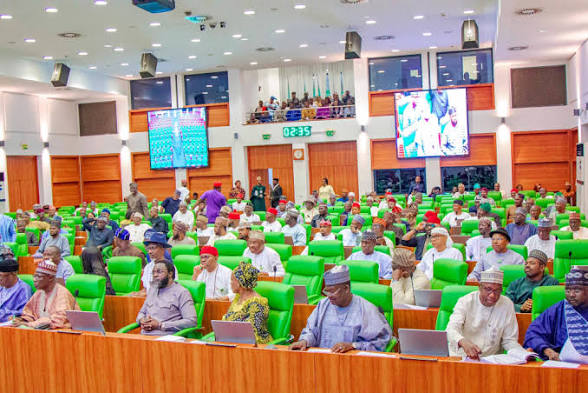
Nigeria’s federal lawmakers are putting the downstream energy sector under the microscope after audit records revealed that state oil firm NNPCL and private fuel marketers have piled up at least ₦432 billion in unpaid regulatory obligations.
The House of Representatives Public Accounts Committee (PAC) confirmed the formal probe this week, following persistent warnings raised in the Auditor-General’s 2023 and 2024 annual reports.
Regulatory Levies Left Unpaid
The mountain of debt has accumulated over a six-year period from 2017 to 2023, remaining largely uncollected despite the country’s tight fiscal squeeze.
READ ALSO:
Cheap Alcohol Fuels Banditry NAFDAC Chief Stands Firm on Sachet Ban
Fresh Blackout Hits Abuja as Apo Substation Transformer Trips
More Than 1,000 Migrants Rescued Off West Africa in One Week
The liabilities consist of statutory fees meant to fund national energy infrastructure, including the 1% Midstream and Downstream Gas Infrastructure Fund, National Transport Average fees, Balancing Allowances, and lingering credit balances from import and coastal operations.
Audit records track a steep rise in default:
- The 2023 audit initially captured ₦392 billion in total arrears, with NNPCL carrying over ₦162 billion and commercial marketers responsible for ₦230 billion.
- The 2024 report revealed that private marketer debt alone had swelled to ₦432 billion, separate from state-owned NNPCL liabilities.
- Regulatory data from the NMDPRA confirms that 146 companies affiliated with DAPPMAN and MEMAN owed ₦327 billion by 2025.
No Hiding Place for Defaulters
PAC Chairman, Rep. Bamidele Salam, made it clear that parliament expects compliance from corporate leaders, issuing a firm directive against corporate stonewalling.
Salam emphasized that the committee will scrutinize why statutory revenues were permitted to sit idle without vigorous enforcement from the NMDPRA. Defaulters will be forced to present audit trails detailing every transaction, outstanding balances, and proof of any remittances made to date.
For lawmakers, the objective is unambiguous: plug commercial leakages, enforce fiscal discipline, and recover every outstanding naira owed to the federation.
News
Fresh Blackout Hits Abuja as Apo Substation Transformer Trips
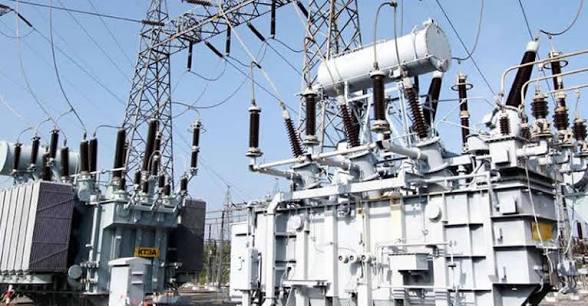
Parts of the nation’s capital have once again been plunged into darkness following an early-morning equipment failure at the Apo Transmission Substation on Wednesday.
The Transmission Company of Nigeria (TCN) confirmed the outage, attributing the disruption to the tripping of a 100MVA TR4 power transformer at its 132kV/33kV facility. Preliminary findings trace the failure to an oil spillage on the transformer’s red-phase High Voltage (HV) bushing, which forced four critical 33kV feeders, H31, H33, H35, and H37 offline.
READ ALSO:
Cheap Alcohol Fuels Banditry NAFDAC Chief Stands Firm on Sachet Ban
Missing Billions: Lawmakers Summon NNPCL and 146 Marketers Over ₦432bn Downstream Debt
More Than 1,000 Migrants Rescued Off West Africa in One Week
In an official public notice, the transmission utility stated that technical teams are already mobilized on-site:
“The Transmission Company of Nigeria, TCN, hereby informs the public that the 100MVA TR4 transformer at the 132/33kV Apo Transmission Substation tripped in the early hours of today. Our maintenance crew are already carrying out a detailed investigation on the transformer to ascertain the exact cause of the tripping, to enable us effect repairs and restore the transformer.”
Following the grid disruption, the Abuja Electricity Distribution Company (AEDC) confirmed power losses across several major districts, including the Apo Legislative Quarters, Lokogoma, and Apo Resettlement.
The latest breakdown adds to a pattern of recurring supply interruptions across Abuja, coming just days after scheduled maintenance works left residents grappling with low generation and prolonged blackouts.
News
Yamal Fires Back at Mbappé: “I’m Not Going to Beg” for Ballon d’Or

Yamal Fires Back at Mbappé: “I’m Not Going to Beg” for Ballon d’Or
The 19-year-old Spain international insists his World Cup and La Liga triumphs speak for themselves, while also being named one of Barcelona’s vice-captains ahead of the October 26 ceremony.
Barcelona forward Lamine Yamal has made it clear that he will not campaign or “beg” for the 2026 Ballon d’Or, stating that his achievements on the pitch for club and country should speak for themselves. Speaking ahead of Barcelona’s Champions League opener against Feyenoord, the 19-year-old responded to comments from rival Kylian Mbappé, who had previously made his case for the award by highlighting his World Cup Golden Boot win, which also saw him become the competition’s all-time top goalscorer.
“I don’t think I need to campaign for the Ballon d’Or. I’m not thinking about what I deserve, everyone can think what they like,” Yamal told reporters. “I’m proud of everything I’ve done this year with my club and with the national team. We’ve become world champions, we’ve won the league again. I can’t ask for anything more. I think I’ve shown an incredible level, it’s your job and I will not beg for anything.”
The Spanish international, who finished second in last year’s voting behind PSG’s Ousmane Dembélé, is among the leading contenders for the prize alongside Mbappé, Harry Kane, Dembélé, and Khvicha Kvaratskhelia. The ceremony is scheduled for October 26 in London. Yamal was officially named among the 30 nominees for the 2026 men’s Ballon d’Or when France Football unveiled the list on Tuesday, marking his third nomination.
When asked about Dembélé’s recent comments naming Kvaratskhelia, Kane, and Mbappé as his top three, Yamal joked: “He’s a friend of Kylian, right? Honestly, I don’t care. I’m very happy with the year I had. Whenever I’ve faced both of them, I’ve won. They must have taken a dislike to me for some reason.” Spain knocked France out of the World Cup semi-finals with a convincing 2-0 victory.
READ ALSO:
- Osun Police Arrest Woman After Vigilante Member Dies During Sexual Encounter in Ile-Ife
- Igbo Group Rejects Tinubu Endorsement, Pledges Grassroots Support for Peter Obi in 2027
- Lagos arraigns over 100 suspects after 130 arrested in Lekki, Ajah raid
Yamal, who suffered a hamstring injury in April, has returned to form with two goals in his last two outings against Rayo Vallecano and Valencia, and appeared far more cheerful after a difficult start to the season. “In the end, I’m 19, coming off winning a World Cup, having had the best holidays of my life. I’ve never been happier at any point in my life than I am now,” he said.
Beyond individual honours, Yamal emphasised that Barcelona’s primary target this season is the Champions League trophy, a title that has eluded the Catalan giants since 2015. “There’s no greater motivation than the Champions League, which is the one I still have to win. We will give our all to win it,” Yamal said ahead of Wednesday’s opener against Feyenoord. “Good players have arrived, like Anthony Gordon, Karim Adeyemi, Rodri.”
Barcelona coach Hansi Flick praised the young star, saying: “Lamine is a player who can decide games on his own, fantastic quality. It’s great, you can see it every day how he is enjoying playing football. For me the best thing is that he enjoys this game and then he’s on a top level.”
Yamal is also the favourite to win a third consecutive best young player award at the Ballon d’Or ceremony, having been one of 10 players nominated on Tuesday, including Johan Manzambi, Yan Diomande, and Ayyoub Bouaddi, who all impressed at the World Cup and were then the subject of big-money summer transfers.
Interestingly, during the press conference, neither Yamal nor Flick mentioned Feyenoord by name, instead focusing entirely on Barcelona’s mission to win the Champions League. Yamal was recently elected one of three vice-captains by his teammates, alongside Eric Garcia and Frenkie de Jong, with coach Hansi Flick selecting Raphinha and Pedri as the other members of the five-man captaincy group. “It’s something to be proud of at 19 years old. I’m very grateful to my teammates. It’s a position that comes with responsibilities, even if I’m only 19, but I’m very happy,” he said.
Yamal Fires Back at Mbappé: “I’m Not Going to Beg” for Ballon d’Or
-
 Politics3 days ago
Peter Obi, Others Challenging Tinubu Cannot Transform Nigeria — Datti Baba-Ahmed
-

 Auto2 days ago
Kaduna to Lead Govt Patronage of Local Vehicles as Sani Unveils Peugeot 5008
-

 metro1 day ago
El-Rufai Demands ₦10bn from Defence Minister Over Southern Kaduna Killings Allegation
-

 metro2 days ago
Socialite Igho ‘Tiny’ Ubiribo Dies After Penis Enlargement Surgery
-

 metro1 day ago
Catholic priest leaves priesthood, weds Kenyan woman after 12 years in Kenya
-

 Politics3 days ago
Demystifying the Political Monolith: Wike’s ‘See Finish’ Doctrine and Nigeria’s New Political Calculus
-
 metro1 day ago
No US Case Against Tinubu, Family Enjoy Unimpeded Transit for UNGA — Ambassador Ibrahim
-
 metro2 days ago
Three Women Killed, 10 Injured in Multiple Crash on Lagos-Ibadan Expressway Bridge