metro
For killing Islamic cleric, Ex-soldier bags death sentence
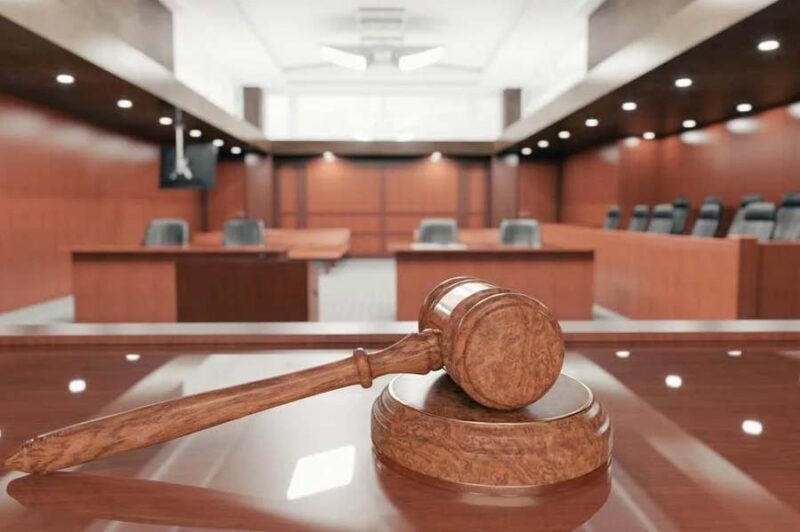
Yobe State High Court sitting in Potiskum on Tuesday sentenced a dismissed soldier, Lance Corporal John Gabriel, to death by hanging and Lance Corporal Adamu Gideon to 10 years imprisonment at the Nigerian Correctional Service.
Justice Usman Zanna Mohammed convicted Gabriel, with Nigerian Army number N/A13/69/6522 attached to 241 Recce Battalion, Nguru, and Gideon, after he found them guilty of the offences of murder and conspiracy, respectively.
READ ALSO:
- Reps committee orders arrest of CBN Gov, AGF, 17 others
- Senate gives NPA 48hrs ultimatum to produce unaccounted $1.8bn
- Super Falcons beat Cape Verde, qualify for WAFCON
Delivering the judgement, Justice Mohammed held that after careful consideration of the facts before the court and the failure of the defendants to provide essential witnesses to corroborate their claim, he sentenced the two convicts in line with the provisions of the law.
Rcall that a prominent Islamic scholar based in Gashua, Sheikh Goni Aisami, was murdered in Karasuwa Local Government Area of Yobe State by a soldier whom he gave a lift to while on his way to Gashua from Kano on August 22, 2022.
Angered by the action of the ex-soldiers, the Yobe State Government, through the Ministry of Justice, took the matter to court, which led to the judgement.
For killing Islamic cleric, Ex-soldier bags death sentence
(DailyPost)
![]()
metro
Troops Neutralize 102 Terrorists, Rescue 393 Kidnap Victims in July – DHQ
- Military operations across Nigeria’s six geopolitical zones record major successes against Boko Haram, ISWAP, bandits, and kidnappers.
The Defence Headquarters (DHQ) has announced that troops of the Armed Forces of Nigeria killed 102 terrorists and criminals, arrested 345 suspects, and rescued 393 kidnapped victims during joint military operations conducted nationwide throughout July 2026.
The Director of Defence Media Operations, Maj.-Gen. Michael Onoja, disclosed these figures on Friday in Abuja during the monthly briefing on ongoing military operations. He stated that the operations, executed in collaboration with other security agencies and local vigilante groups, also resulted in the surrender of 57 insurgents and their family members, while troops recovered 59 weapons and 1,811 rounds of ammunition.
General Onoja emphasized that sustained offensives across the North-East, North-West, North-Central, South-South, and South-East significantly degraded the operational capabilities of terrorists, kidnappers, armed militias, secessionist groups, and other criminals threatening national security. He noted that the collaborative efforts of the armed forces, other security agencies, and local vigilantes have continued to yield tangible results in protecting lives and property across the country.
In the North-East, troops of Operation Hadin Kai recorded major successes against Boko Haram and ISWAP terrorists, including the neutralisation of a senior terrorist commander and propaganda chief, Abu Salim al-Barnawi, during a counterattack in Kukawa Local Government Area of Borno State on July 12. Al-Barnawi, who previously led cross-border raids into Cameroon, died alongside members of his mobile media team during a failed attack on a military base in Cross Kauwa. Overall, troops in the theatre neutralized 54 fighters, arrested 102 terrorists, and rescued 102 kidnapped victims. They also dismantled terrorist logistics networks, arrested suspected collaborators, and recorded fresh surrenders among insurgents under sustained military pressure.
READ ALSO:
- Where did Nigeria’s fuel subsidy savings go? FG reveals how funds were spent
- CJN orders lawyers to stop using ‘Barrister’ before their names
- Osun Guber: IGP Deploys New Election CP as INEC Identifies 11 Flashpoint LGAs
In the North-West, Operation Fansan Yamma focused on rescuing kidnap victims and neutralizing bandit enclaves across Kaduna, Katsina, Kebbi, and Zamfara states. Troops rescued 191 kidnapped victims, neutralized 33 terrorists, and arrested 66 suspects. They also foiled several kidnapping attempts, recovered arms and improvised explosive device components, and secured dozens of abductees from terrorist camps and attack scenes.
Across the North-Central region, troops under Operations Savannah Shield, Enduring Peace, and Whirl Stroke sustained pressure on kidnappers, arms traffickers, and militia groups. These operations resulted in the neutralization of 15 terrorists, the arrest of 148 suspects, and the rescue of 53 kidnapped victims, with weapons and ammunition recovered from criminal elements.
In the South-South, Operation Delta Safe focused on dismantling illegal refining operations and combating economic sabotage in the Niger Delta. Troops dismantled 18 illegal refining sites, recovered more than 250,500 litres of stolen petroleum products, and arrested suspected kidnappers and economic saboteurs, with illegal refining activities disrupted in Rivers State.
In the South-East, Operation Udo Ka sustained operations against criminals and secessionist agitators, leading to the arrest of 26 suspects, the rescue of 10 civilians, and the recovery of assorted weapons and ammunition.
The Air Component of the armed forces provided critical support to ground operations through precision air interdictions. Successful airstrikes against terrorist targets in Niger State disrupted planned attacks and facilitated rescue operations. Additionally, troops intercepted a suspected terrorist logistics network in Borno, arresting six suspects and recovering materials with potential dual-use applications, including NPK fertilizer and suspected acid. In a separate operation in Yobe State, troops foiled a Boko Haram extortion mission, neutralizing a terrorist driver.
The Chief of Defence Staff, Gen. Olufemi Oluyede, commended the synergy among the armed forces, other security agencies, and local vigilante groups, particularly in the successful rescue of 44 pupils and teachers abducted from schools in Oriire Local Government Area of Oyo State. President Bola Tinubu expressed profound relief over the rescue, noting that the victims had spent 56 days in captivity. He commended the intelligence-driven operation that secured their release without collateral damage and led to the arrest of eight abductors. The Christian Association of Nigeria (CAN) also celebrated the rescue, calling for continued efforts to free all remaining captives across the country.
General Onoja noted that troops also expanded civil-military cooperation initiatives through peace-building engagements, public health interventions, and community development projects across various operational theatres. He said the Chief of Defence Staff praised the troops for their professionalism and the successes recorded during the month, reaffirming the military’s commitment to protecting lives and property.
The Defence Headquarters urged Nigerians to continue providing credible information to security agencies through the toll-free emergency line 193, with Onoja encouraging citizens to report suspicious activities promptly, emphasizing that public cooperation is vital to collective security.
Troops Neutralize 102 Terrorists, Rescue 393 Kidnap Victims in July – DHQ
![]()
metro
Where did Nigeria’s fuel subsidy savings go? FG reveals how funds were spent
The Federal Government has said savings generated from the removal of the fuel subsidy and reforms in the foreign exchange market have largely been used to meet rising debt-servicing obligations, fund higher workers’ wages, support the student loan scheme and cover other critical public expenditures.
The Minister of Finance and Coordinating Minister of the Economy, Taiwo Oyedele, disclosed this at the 7th African Emerging Markets Forum in Abuja, where he also promised that the government would soon publish a detailed breakdown of how the savings from the reforms have been utilised.
Oyedele acknowledged growing public concern over the fate of the funds, describing questions about the use of the subsidy savings as legitimate.
He said the government had a responsibility to provide Nigerians with a clear explanation of how the resources generated by the reforms had been deployed.
According to the minister, the combined cost of the former petrol subsidy and what he described as an implicit subsidy in the foreign exchange system was equivalent to about five per cent of Nigeria’s Gross Domestic Product (GDP) before the reforms were introduced.
However, he explained that the money freed by the reforms was not left unused because the government faced higher financial obligations, including increased debt-servicing costs and rising public expenditure.
Oyedele said part of the savings was used to address the government’s Ways and Means obligations and finance spending that had previously been supported through monetary financing.
READ ALSO:
- CJN orders lawyers to stop using ‘Barrister’ before their names
- Osun Guber: IGP Deploys New Election CP as INEC Identifies 11 Flashpoint LGAs
- Catholic Priest Found Dead in Kogi After Machete Attack as Police, Govt Launch Investigations
He explained that before the reforms, the government relied partly on money creation to fund expenditure, but ending the practice meant that the government had to secure alternative financing to meet existing obligations.
According to him, the reforms contributed to higher inflation and interest rates, increasing the cost of government borrowing and debt servicing.
He said borrowing costs that were previously around eight per cent had risen to as much as 24 per cent, placing additional pressure on public finances.
“When you need to service debts, you do not debate whether you need to pay. You pay, and you pay on time,” Oyedele said.
The minister also said the increase in the national minimum wage from ₦30,000 to ₦70,000 had significantly raised the Federal Government’s wage bill.
He explained that the higher wage structure had nearly doubled the government’s personnel costs, making it one of the major areas where public spending had increased following the reforms.
Oyedele added that the government had expanded funding for the Nigerian Education Loan Fund (NELFUND), which provides tuition support and monthly upkeep allowances to eligible students.
According to him, the student loan programme has grown to cover more than 1.5 million students, increasing government expenditure on education and youth support.
He stressed that the primary objective of removing fuel and foreign exchange subsidies was not only to generate savings but also to eliminate economic distortions, reduce inefficiencies and address opportunities for abuse within the previous systems.
The Federal Government has maintained that the reforms were necessary to improve fiscal sustainability, reduce pressure on public finances and create a more transparent economic framework.
However, the reforms have also contributed to higher fuel, transportation and living costs, with many households and businesses continuing to experience pressure from inflation and reduced purchasing power.
The government’s planned publication of a detailed account is expected to provide greater clarity on the amount generated from the reforms, how the funds were allocated and the extent to which the resources were used for debt payments, wages, education and other public obligations.
The disclosure is also expected to address public concerns over whether the fiscal gains from the removal of the fuel subsidy have translated into improved public services, infrastructure, social protection and better living conditions.
An earlier assessment by the International Monetary Fund (IMF) noted that Nigeria’s economic reforms had helped improve macroeconomic stability, strengthen investor confidence and reduce some fiscal and monetary pressures. The IMF, however, also said poverty and food insecurity remained significant concerns, highlighting the need for stronger social protection and inclusive economic growth. (IMF)
Oyedele said the government would not measure the success of its economic reforms solely through headline GDP growth.
Instead, he said the government would focus on reducing multidimensional poverty, increasing real income per capita and narrowing income inequality.
He maintained that the long-term goal of the reforms was to build a more stable and sustainable economy while ensuring that economic growth leads to improved living standards for a broader section of the population.
The minister assured Nigerians that the detailed report on the use of the subsidy savings would be released in the coming days as part of the government’s commitment to transparency and public accountability. (reuters.com)
Where did Nigeria’s fuel subsidy savings go? FG reveals how funds were spent
![]()
metro
Soyinka to Tinubu: Reopen Unresolved Killings, Assassination Cases Nationwide
- Nobel laureate dedicates 2026 lecture to victims of state violence, warns that collective silence fuels impunity, as he demands justice for Deborah Samuel, Mene Ogidi, and others.
Nobel laureate Prof. Wole Soyinka has called on President Bola Ahmed Tinubu to fulfil his 2023 campaign promise by revisiting unresolved cases of assassinations and extra-judicial killings across Nigeria. Soyinka made the appeal on Friday at the 28th Wole Soyinka Lecture Series organised by the National Association of Seadogs (Pyrates Confraternity) in Port Harcourt, Rivers State. The lecture, themed “Reclaiming the Nigerian State through Accountability, Justice and Civic Courage,” was chaired by former Managing Director of the Niger Delta Development Commission, Chief Timi Alaibe.
Soyinka dedicated the 2026 edition of the annual lecture to victims of extra-judicial killings and state excesses, declaring that Nigeria’s greatest failure is not only the murders but the collective silence that allows perpetrators to escape justice. “Through these remarks, I pay honour to those who have lost their lives because of the deficiencies of the state which have led to the devaluation of human life,” Soyinka said. He specifically honoured victims of some of Nigeria’s most disturbing cases of violence, including 18 Ughelli residents allegedly killed by state agencies, a young man reportedly shot dead by a policeman in broad daylight, Deborah Samuel, who was lynched and burnt alive by a mob in Sokoto State in 2022, and Mene Ogidi, a 28-year-old man allegedly shot dead by a police officer in Delta State. “Today is dedicated to the 18 Ughelli residents butchered by state agencies for no reason at all, simply for minding their own business; to the young man shot dead in broad daylight by a policeman while under suspicion; and to Deborah, the youth hunted through the city by her own classmates, necklaced and set ablaze,” he said. Soyinka also honoured the six police officers killed in Apo, Abuja, describing the lecture as a reminder of the many unresolved injustices in the country.
READ ALSO:
- CJN orders lawyers to stop using ‘Barrister’ before their names
- Osun Guber: IGP Deploys New Election CP as INEC Identifies 11 Flashpoint LGAs
- Catholic Priest Found Dead in Kogi After Machete Attack as Police, Govt Launch Investigations
Soyinka expressed concern that one of Deborah Samuel’s alleged killers reportedly displayed the matchstick used to set her ablaze publicly without facing justice years after the incident. He contrasted that with the swift arrest of the police officer accused of killing Mene Ogidi, saying the differing responses reflected selective justice. “It’s dedicated to individuals, the youths, like Deborah, who was killed, who was butchered by her own classmates, hunted through the city, necklaced and set on fire. But that is not the crime. That really is not the crime,” Soyinka said. “The crime is the silence of the rest of us, that such a thing is possible, and that the killers of that girl can actually go on television, hold up a match, and say this is the match with which I set her on fire. And there the system of justice fails us completely,” he added. He urged Nigerians to demand justice and ensure that alleged perpetrators of extra-judicial killings do not escape punishment.
Soyinka reminded Nigerians that President Tinubu, upon assuming office, requested files relating to unsolved assassinations and extra-judicial killings. “Watch with me so that we can force the government to bring up all the files. When there was a government retreat, you remember? The incoming president said, ‘I want all the files of all the unsolved assassinations, killings, extra-judicial killings.'” “What has happened to those files? I want you to join me in asking President Tinubu to say, ‘We want you to dig up those files. We want to know what happened, why it happened,'” Soyinka said. Soyinka warned that successive failures to prosecute those responsible for unlawful killings had emboldened criminals and weakened public confidence in the justice system. He described the persistent failure to secure justice for victims as one of the country’s gravest moral crises, insisting that silence in the face of brutality was itself a form of complicity.
Soyinka called on President Tinubu to end all forms of killings by state actors and ensure that those responsible for abuses are held accountable. He declared that human life has been dangerously devalued in Nigeria, adding that the inaction of citizens in the face of repeated human rights violations has emboldened those who abuse state power. The Nobel laureate dismissed critics who accuse him of provoking religious tensions whenever he speaks against injustice, insisting that defending human life transcends religious, ethnic, or political divides. “Sessions like that in Port Harcourt are vital, precisely, to remind Nigerians that the human unit is the least common denominator and the most important element of the community,” he said.
Delivering the keynote address, former Minister of Aviation Osita Chidoka argued that justice begins long before a matter reaches the courtroom. According to him, justice starts from the moment police officers determine whether complaints are investigated fairly or ignored because of influence, power, or social status. Highlighting the challenges confronting Nigeria’s justice and correctional systems, Chidoka disclosed that about 64 per cent of inmates in custodial centres—more than 50,000 Nigerians—are awaiting trial despite not being convicted of any offence. “Each of these 50,000 is a life in suspension, a job lost, a family destabilised, someone’s health failing. When the state causes that delay, and citizens pay for it in lost liberty, the delay is not inefficiency; it is a form of violence carried out by the state itself,” he said. He insisted that justice must apply equally to every Nigerian, regardless of political affiliation, ethnicity, religion, or social standing.
The case of Mene Ogidi, a 28-year-old man shot dead by a police officer in Delta State on April 26, 2026, has drawn widespread condemnation and renewed concerns over police brutality. According to police reports, Ogidi was handed over to ASP Nuhu Usman and his team after citizens arrested him for attempting to waybill a parcel containing a fabricated Beretta pistol and ammunition. Rather than following standard operational procedures, ASP Nuhu shot and killed the unarmed, already-apprehended suspect. The Nigeria Police Force has since recommended the immediate dismissal of ASP Nuhu Usman and other officers found culpable, with the Inspector-General approving the recommendation and forwarding it to the Police Service Commission for ratification. Upon completion of administrative procedures, the affected officers will be handed over to judicial authorities for prosecution. Investigators have also uncovered a gun-running syndicate linked to the firearm, with four suspected members of the Black Axe confraternity arrested in connection with the case.
Soyinka to Tinubu: Reopen Unresolved Killings, Assassination Cases Nationwide
![]()
-
Aviation24 hours agoObi Must Apologise, Pay ₦25,000 or Face FAAN Action — Keyamo Issues Ultimatum
-
Politics3 days agoTinubu tells 2027 rivals: We’ll wrestle ourselves to the finishing line
-
News2 days agoPolice detain Osun SSG, five others as ₦4.8m, voter cards are recovered
-
Education3 days agoBUK, Northwest University students demand prompt payment of NELFUND upkeep allowances
-
metro3 days agoArmy Colonel Killed, Wife, Aides Injured as Gunmen Storm Home in Coordinated Attack
-
Business3 days agoReps move to end dollar charges on locally refined petrol
-
Politics24 hours agoWhere Will Peter Obi’s Votes Come From? I Can’t See It – Keyamo Predicts Tinubu’s Landslide Victory
-
Entertainment3 days agoAbia Gov Steps In With Medical Support for Ailing Nollywood Veteran Ngozi Nwosu