

News
Gov Abiodun replies council Chairman over allegations of LG funds diversion
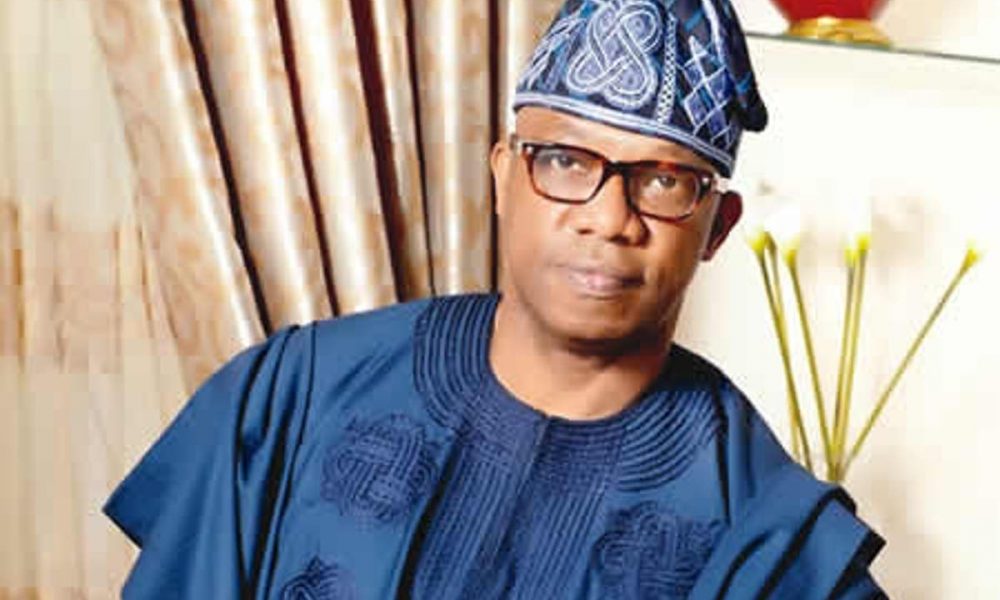
Gov Abiodun replies council Chairman over allegations of LG funds diversion
Ogun State Governor, Dapo Abiodun on Tuesday, opened up on allegations that he had diverted funds meant for the development of council areas in the state.
In the Governor’s first response to allegations made by the Chairman Ijebu East Council area Mr. Wale Adedayo, the Governor said his administration augments federal allocations to Ogun councils to meet obligations for first-charges.
Adedayo had alleged that zero revenue allocation to local governments in the state since 2021
But the Governor said he had never tampered with local government funds.
The Governor’s statement made available to the NPO Reports wondered how adding to the funds allocated to the local councils to enable them to meet their obligations amounted to hijacking their funds.
It said that funds meant for local governments in the state are being handled by the constitutionally recognised Joint Account and Allocation Committee (JAAC).
The statement signed by the Chief Press Secretary (CPS) to the state governor, Mr Lekan Adeniran, the government said that JAAC members ensure that the third tier of government gets the required allocations for optimal performance.
READ ALSO:
- Fresh crisis in NNPP as party’s Board of Trustees suspends Kwankwaso
-
Tinubu’s academic records: Chicago University blocks X account over backlashes
-
Oil Theft: JTF arrest vessel, 10 crew members in Rivers
It noted that the latest meeting by the JAAC was held last week, and was widely reported in the media.
At the meeting, which was held at the Conference Hall, Oba’s Complex, Oke-Mosan, Abeokuta, over N5bn was shared among the 20 local government areas, out of which over N2 billion went into paying teachers.
“Between May 2023 when the Governor was sworn in for the second term and July 2023, the JAAC shared among 20 local governments N4.531b, N4.444b and N4.497b respectively on first line charges and just last week N5.2b was shared among the local governments for the month of August “the statement said.
The JAAC, according to the statement, comprises major stakeholders in local government administration, including the Chief Economic Adviser to the governor, Commissioner for Local Government and Chieftaincy Affairs, Accountant General of the State, Permanent Secretary, Local Government and Chieftaincy Affairs, all 20 local government chairmen, one representative from each of the four Traditional Councils in the state, representative of SUBEB, NULGE, local govt pensioners, retired primary school teachers, Local Government Service Commission, Local Government Pension Commission and NUT.
It has the mandate to meet every month to ensure that allocations to local governments are discussed and properly presented for fund allocation.
READ ALSO:
-
Kwara Police declare man who threatened Ilorin Isese adherent wanted
-
How Kwankwaso lobbied to become FCT minister – Ganduje
-
BREAKING: Over 100 gay suspects arrested holding gay wedding in Nigeria – Police
At such meetings, the state government makes full disclosure of the receipt from the federation account.
First-line charges, including local government staff salaries and pensions; primary school teachers’ salaries and pensions; healthcare workers’ salaries and pensions and emoluments for traditional rulers are tabled for discussion and fund allocation at the JAAC meetings, the statement said.
The statement added that this same pattern has been followed since Prince Dapo Abiodun took over the leadership of the state in 2019.
Governor Abiodun, the statement said, recently directed the local governments to identify critical roads that required government attention in their domains, with some already commissioned.
In the same vein, many schools have been rehabilitated, while others are undergoing renovation.
“In addition to these, the state government also disburse funds to all local governments for developmental projects periodically,” the statement added.
Gov Abiodun replies council Chairman over allegations of LG funds diversion









News
‘What Happens on Day 31?’ Atiku Slams Tinubu’s 30-Day Fuel Discount as Election-Laced Package

‘What Happens on Day 31?’ Atiku Slams Tinubu’s 30-Day Fuel Discount as Election-Laced Package
Former Vice-President Atiku Abubakar has criticised President Bola Tinubu’s proposed 30-day petrol discount, describing it as an “election-laced subsidy package” and questioning whether Nigerians will receive lasting relief from rising fuel prices and living costs.
Atiku argued that the Federal Government’s intervention was too limited to address the economic pressures facing households and businesses, warning that motorists could return to paying higher prices once the 30-day arrangement expires.
The criticism came after the government announced a temporary fuel-price intervention at Nigerian National Petroleum Company Limited (NNPC) filling stations as part of efforts to cushion the impact of rising petrol prices, transportation costs and international crude oil market pressures.
In a statement issued on Thursday, October 8, through Phrank Shaibu, Director of Strategic Communication of the African Democratic Congress (ADC) Presidential Campaign Council, Atiku questioned the timing, scope and sustainability of the initiative.
The former vice-president described the measure as a “panic-driven publicity stunt”, arguing that a temporary discount could not compensate Nigerians for the prolonged increase in the cost of fuel, transportation, food and other essential goods.
“What happens on Day 31?” Atiku asked, warning that consumers could face the same economic difficulties when the intervention ends.
He maintained that Nigerians needed a sustainable strategy to reduce the cost of living rather than a short-term measure that offered relief for only one month.
The Federal Government’s plan provides for NNPC Limited to temporarily forgo its retail profit margin and sell petrol at cost at its filling stations during the 30-day period. Finance Minister and Coordinating Minister of the Economy Taiwo Oyedele said public transport operators would receive priority under the arrangement.
The government has maintained that the initiative is not a return to the former petrol subsidy regime, which the Tinubu administration removed on May 29, 2023.
READ ALSO:
- Ronaldo Breaks Silence on Portugal Row as Pelé, Maradona Comparison Sparks Meme Frenzy
- [UPDATED] Lagos Train Crash: 55-Year-Old Motorist Survives as Honda Car Is Wrecked at PWD Crossing
- How Parents Raised Millions to Free 20 Abducted NYSC Members
However, Atiku questioned whether the proposed discount would deliver meaningful savings to ordinary Nigerians, particularly those who depend on commercial buses, taxis and other forms of public transportation.
He also raised concerns about the initiative’s limited coverage, noting that the arrangement was tied to NNPC filling stations. He called for greater clarity on the expected reduction in petrol prices and how any savings would translate into lower transport fares and reduced costs for consumers.
According to Atiku, without clear implementation details and measures to ensure that the benefits reach the public, the intervention could offer only limited relief while leaving the wider economic challenges unresolved.
The ADC presidential candidate also advocated a more sustainable approach linked to locally refined petroleum products, proposing capped and budgeted support for domestic refining with safeguards to ensure that consumers benefit.
He argued that a structured framework could help ease pressure on households while supporting Nigeria’s domestic refining capacity.
The government, however, has defended the removal of petrol subsidies on the grounds that the previous arrangement placed a heavy burden on public finances. The administration has argued that the savings can be redirected towards infrastructure, healthcare, education and other public services.
Despite that position, petrol prices and their knock-on effects on transportation, food distribution and business operating costs remain major concerns for many Nigerians.
Atiku’s criticism has also brought the economic intervention into the political debate ahead of the 2027 general elections. He questioned the timing of the announcement and suggested that the short duration of the discount raised concerns about its political implications.
The government’s stated objective is to cushion consumers against rising fuel costs, while Atiku insists that the initiative falls short of the lasting relief Nigerians need.
Ultimately, the impact of the 30-day NNPC petrol discount will depend on how the arrangement is implemented, the actual savings delivered to motorists and whether public transport operators pass on any reductions to passengers.
For Nigerians facing higher fuel and transportation expenses, the central question remains whether the temporary intervention will provide meaningful relief or merely postpone the return of higher costs.
‘What Happens on Day 31?’ Atiku Slams Tinubu’s 30-Day Fuel Discount as Election-Laced Package
News
BREAKING: FG Announces 30-Day Petrol Discount, Gives NNPCL Fresh Directive
BREAKING: FG Announces 30-Day Petrol Discount, Gives NNPCL Fresh Directive
Public transporters to get priority as government moves to cushion impact of high fuel prices
The Federal Government has announced a 30-day discount on petrol sold through the Nigerian National Petroleum Company Limited (NNPCL), with public transport operators to receive priority under the arrangement.
The Minister of Finance and Coordinating Minister of the Economy, Taiwo Oyedele, announced the measure on Thursday, October 8, 2026, during a press briefing in Abuja on petrol prices and subsidy-related issues.
Oyedele said the intervention should not be interpreted as a return to petrol subsidy, explaining that the government would instead allow petrol to be sold at cost during the period.
“We are offering a discount on petrol dispensed by NNPC Limited for the next 30 days in the first instance with priority for public transporters nationwide.”
The minister added: “It’s not a subsidy; government is just saying we sell to you at cost.”
FG targets N1,350 petrol landing-cost ceiling
The announcement forms part of a broader package of measures being introduced by the Federal Government to moderate the impact of rising petrol and transportation costs.
Oyedele also disclosed that the government was negotiating a ₦1,350-per-litre ceiling on the ex-gantry or landing cost of petrol.
According to him, the proposed price-modulation arrangement is intended to prevent pump prices from immediately following every fluctuation in international crude oil prices and foreign exchange rates.
READ ALSO:
- Man Allegedly Caught Using Old Tyres to Scam POS Operator
- BREAKING: FG Unveils 10 Measures to Cushion Fuel Price, Inflation Pressures
- 2027: ADC Vows to Collate, Share Polling-Unit Results Despite INEC Warning
He said the ceiling would be reviewed monthly, with adjustments made when necessary.
Public transporters given priority
Under the 30-day arrangement, public transport operators nationwide are expected to receive priority in accessing the discounted petrol.
The measure is significant because fuel costs have a direct impact on transport fares and, consequently, the prices of food and other essential commodities.
The government is therefore seeking to provide immediate relief while working on longer-term measures aimed at reducing volatility in petrol prices.
No exact discount amount announced yet
However, the Federal Government has not, as of the announcement, disclosed the exact amount of the 30-day discount or stated a new uniform pump price that all NNPCL stations will charge.
Vanguard reported that NNPCL had separately announced a ₦66-per-litre discount for customers using the NNPC Fuel App at its stations nationwide.
The latest announcement appears to be a broader government intervention, but details of its implementation, including how eligible public transporters will access the discount, are still expected.
FG unveils wider relief measures
Oyedele also disclosed other measures aimed at easing the pressure of high fuel and transportation costs.
These include efforts to moderate taxes and levies that increase logistics costs, forward crude sales to domestic refiners, increased funding for cash transfers to vulnerable households and subsidised credit for small businesses and consumers.
The government is also working with state governments to accelerate the rollout of compressed natural gas (CNG) as an alternative fuel for transportation.
What Nigerians should know
The latest announcement does not amount to a formal restoration of the petrol subsidy, according to the Finance Minister.
Rather, the government says it intends to temporarily sell petrol through NNPCL at cost, with public transporters prioritised, while pursuing mechanisms to make fuel prices less vulnerable to sudden international market and exchange-rate movements.
The 30-day period is expected to provide some relief to transport operators and commuters, although the impact on pump prices and transport fares will depend on the details of the implementation.
Newstrends.ng will continue to monitor the Federal Government and NNPCL for the exact discount amount, effective pump prices and implementation guidelines.
BREAKING: FG Announces 30-Day Petrol Discount, Gives NNPCL Fresh Directive
News
World Bank Raises Nigeria Growth Forecast, Demands More Jobs, Poverty Reduction
World Bank Raises Nigeria Growth Forecast, Demands More Jobs, Poverty Reduction
The World Bank has upgraded its economic growth forecast for Nigeria, citing improving macroeconomic stability, stronger investor confidence and a gradual recovery in private investment under President Bola Ahmed Tinubu’s reforms.
In its latest Africa Economic Update, the bank raised Nigeria’s 2026 growth forecast to 4.3 per cent, up from an estimated 4.0 per cent growth in 2025.
It also projected that the Nigerian economy would expand by 4.4 per cent annually in 2027 and 2028, reflecting expectations of continued improvement in economic activity.
The World Bank said Nigeria was among nearly three-quarters of sub-Saharan African countries whose growth outlooks were upgraded, attributing the broader improvement to years of economic reforms and better macroeconomic management.
For Nigeria, the bank pointed to progress in restoring macroeconomic stability, stronger external balances, improved fiscal revenues, increased investor confidence and a gradual recovery in private investment.
Nigeria’s economy expanded by 4.43 per cent year-on-year in the second quarter of 2026, according to official data, with agriculture and services recording stronger performances.
However, the World Bank cautioned that faster economic growth alone would not be enough to significantly improve living standards.
READ ALSO:
- Flood Submerges Enugu Road, Strands School Children, Passengers
- US Proposes $70,000 OPT Fee for Nigerians, Other Foreign Students
- EFCC Re-Arraigns Two Over Alleged £110,000 Money Laundering, ₦500m Fraud
It said the country’s next major challenge was to translate economic growth into productive jobs, higher household incomes and lower poverty.
The bank estimates that about 3.5 million people enter Nigeria’s labour force every year, putting enormous pressure on the economy to generate sufficient and sustainable employment opportunities.
It warned that the significance of Nigeria’s improving growth outlook would increasingly depend on whether economic expansion results in increased investment, business growth, higher productivity and better-paying jobs.
The World Bank’s latest assessment also showed that poverty remains a major concern. It estimated that 69.6 per cent of Nigerians lived below the lower-middle-income poverty line of $4.20 a day in 2025, while about 123 million people, or 50.8 per cent of the population, lived in extreme poverty under the bank’s cited measure.
The lender said improving macroeconomic conditions had created an opportunity for Nigeria to move from economic stabilisation towards expanding productive capacity and improving living standards.
It, however, warned that rising government spending ahead of the 2027 elections could undermine the momentum of recent reforms if fiscal discipline weakens.
The bank also stressed the importance of greater private-sector investment, improved electricity supply, transport and logistics, digital infrastructure, access to finance, agricultural productivity and a better business environment.
It said investments in education, skills, healthcare and early-childhood development would also be critical to improving the productivity of Nigeria’s future workforce.
Beyond Nigeria, the World Bank raised its forecast for sub-Saharan Africa to 4.3 per cent growth in 2026, up from 4.1 per cent in 2025 and 0.3 percentage points above its April projection.
The bank said the region still faced significant risks from geopolitical tensions, climate shocks, tighter financial conditions, insecurity and declining development assistance.
It also urged African governments to invest in artificial intelligence and digital technologies, saying affordable AI applications in areas such as education, agriculture, healthcare, finance and small businesses could help boost productivity and create more jobs.
For Nigeria, the message is increasingly clear: maintaining macroeconomic stability is only the first stage of the recovery, while the bigger test will be whether the reforms deliver jobs, income growth and meaningful poverty reduction for households.
World Bank Raises Nigeria Growth Forecast, Demands More Jobs, Poverty Reduction
-

 metro1 day ago
[UPDATED] 20 NYSC Prospective Corps Members Freed After Seven Days in Captivity
-
 Politics2 days ago
‘No Decent Wages, No Credible Elections’ — Sowore Threatens 2027 Boycott
-

 metro2 days ago
Seven Years With Parkinson’s: Man Seeks N65m for Brain Surgery in Türkiye
-

 Politics2 days ago
2027: Obi Makes U-Turn, Vows to Restore Fuel Subsidy If Elected
-
 Politics2 days ago
2027: Galadima Alleges APC Offering N50m, N200m to Lawmakers to Step Aside
-

 metro2 days ago
Yayi, Adebule, Muslim Leaders, Others for Imodi-Ijebu Turbaning, ₦1bn Fundraiser
-
 metro1 day ago
EFCC Re-Arraigns Two Over Alleged £110,000 Money Laundering, ₦500m Fraud
-

 metro1 day ago
NAF Crash: NYSC-Bound Graduate, Only Son, Among 25 Victims