

News
Govs to Buhari: Sack workers aged 50yrs, levy anyone earning over N30,000
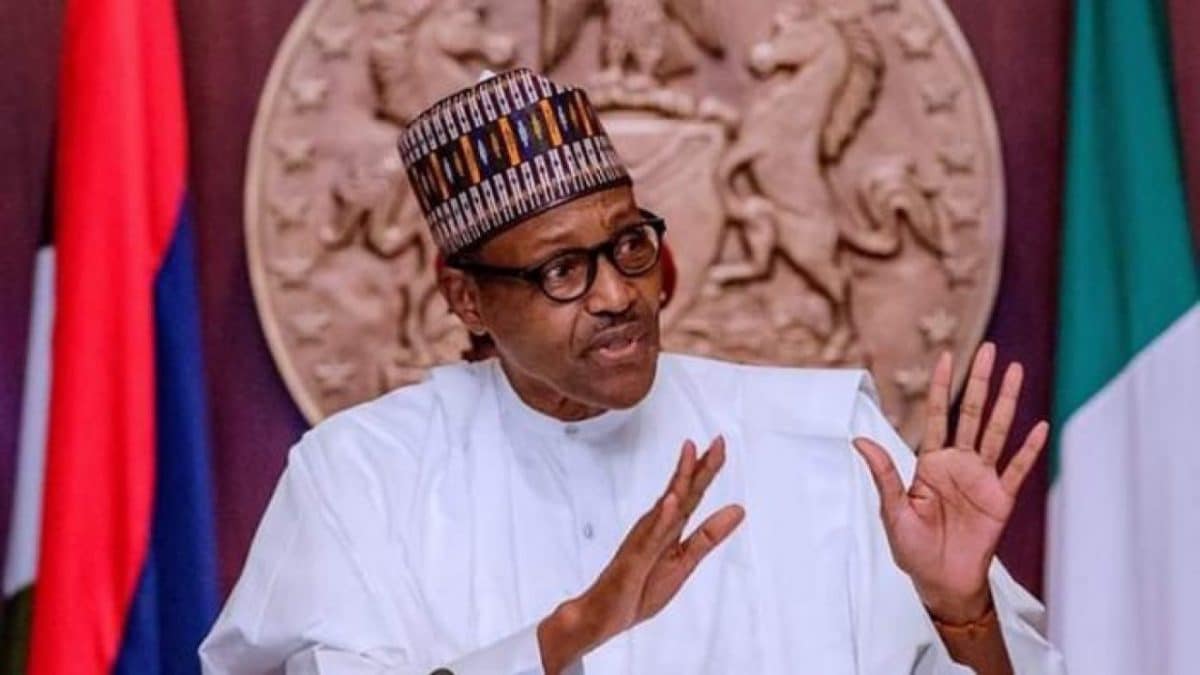
In a bid to prevent the nation from imminent economic collapse, the Nigerian governors have advised the federal government to retire all federal civil servants who are older than 50 years.
The governors also want the government to raise taxes across boars as well as levy anyone earning N30,000 and above monthly.
The governors made the proposal at a meeting with President Muhammadu Buhari in July, an online publication, PREMIUM TIMES exclusively gathered from sources privy to details of the meeting.
The proposal also urged the government to begin implementation of the updated Stephen Oronsaye Report, which suggested merger and shutdown of agencies and parastatals with duplicated or contested functions as a way to address bureaucratic inefficiency and reduce the cost of governance.
Officials familiar with details of the meeting, who spoke to PREMIUM TIMES, explained that the governors were concerned about the deteriorating state of the economy and a proposal to restore fiscal discipline was presented to the federal government.
The federal civil service employs just about 89,000 people but will spend about N4.1 trillion on personnel costs this year, from its N17 trillion budget for the entire country. It is not clear how many workers are above 50 years of age, or how much goes to them.
The suggestion comes as indications emerge that the nation may be teetering towards the cliff of economic collapse.
The online publication had reported that Nigeria’s external reserves amount to only $15 billion, well below the $36 billion balance on the gross external reserves claimed by the bank. With the nation spending N5.9 trillion on imports in the first quarter of the year, reserves of $15 billion would barely cover four months of import.
Last week, details emerged that the balance in Nigeria’s Excess Crude Account had depleted significantly from $35.37m to $376,655, leaving the nation with no buffers to stabilize the economy and its currency. Yet another indication emerged recently that the nation was broke as debt service surpassed revenue.
READ ALSO:
- FG can’t borrow N1.1trn to end ASUU strike – Keyamo
- Gunmen Abduct 3 Children in Kogi, Demand N100m Ransom
- N26bn Debt: Court Grants Access Bank’s Request to Take over Sunny Odogwu Properties
According to details of the 2022 fiscal performance report for January through April, Nigeria’s total revenue stood at N1.63 trillion while debt servicing stood at N1.94 trillion, showing a variance of over N300 billion.
As part of measures to restore fiscal discipline, the governors advised the federal government to reduce expenditure immediately by eliminating petrol subsidy and NNPC-funded projects, cap the Social Investment Programme (SIP) and National Poverty Reduction with Growth Strategy (NPRGS) budgets to N200 billion, eliminate extra-constitutional deductions from FAAC, and reduce SWV items for SDG and NASS Constituency projects.
The governors, according to the sources, also asked the government to reduce duplications (e.g. empowerment programmes) and waste, reduce 1% granted to NASENI to 0.2%, amend the Act in 2022 Finance Bill, reduce personnel costs of federal government MDAs, and expedite privatization of non-performing assets like the NDPHC power plants.
Similarly, the governors urged that the 2023 – 2025 MTEF should reflect the suggestions and government’s commitment to restore fiscal discipline while the planned 22% increase in salaries in 2023 be reconsidered. They added that the fiscal deficit should be reduced to no more than 2% of GDP in 2023 – 2025.
Foreign Exchange and Reserves
To conserve foreign exchange and grow the reserves, the governors suggested that foreign trips by MDAs, including budgetary-independent agencies such as FIRS, NPA, NIMASA and NCC, be put on hold for at least one year.
They also urged the Ministry of Foreign Affairs not to issue requests for Visas to foreign embassies for federal government officials and their families, unless express approval is granted by the presidency.
The governors further suggested the movement from State Income Taxation to Consumption Taxation, adding that with the introduction of 3% Federal Income Tax, state-level PIT should be abolished.
Similarly, they suggested that state Sales Taxes (flat rate of 10%) should be enacted for the 36 States and FCT, VAT levels increased to 10% with a timeline to raise it to between 15% and 20%, as well as re-introduction and passage of VAT into the Exclusive List. It was not clear whether all governors agreed with the position on VAT being moved to the exclusive list.
To improve tax revenues, they suggested that the federal government should introduce a flat 3% Federal Personal Income Tax on all Nigerians earning more than N30,000 per month, adding that persons earning less than N30,000 per month whether employed or not, including farmers and traders, should pay a monthly FPIT of N100.
Similarly, telecoms firms and NIMC should collaborate to ensure deduction of this from phone credit of individuals and linking to NIN and BVN.
The governors also suggested centralization of the collection of all federal oil and non-oil taxes in one agency, the FIRS, while Customs, NPA, and others assess and issue demands.
They suggested that the Federal Government improve crude oil and gas production, resolve lingering issues of ownership of gas in PSCs (eg Nnwa-Doro, OML 129) to help position Nigeria to take advantage of the gas needs in Europe, and provide incentives to expedite development of vandalism-resistant deep offshore fields like Bonga SW (Shell), Preweoi (Total), Zabazaba (ENI) and Owowo (Exxon).
The governors equally advised the government to encourage (and pre-finance, if necessary) Dangote Refinery to early completion to reduce massive future outflows of foreign exchange.
VANGUARD






News
Tinubu, Macron Hold Private Dinner in Paris, Reaffirm Nigeria-France Ties

Tinubu, Macron Hold Private Dinner in Paris, Reaffirm Nigeria-France Ties
President Bola Ahmed Tinubu has held a private dinner with French President Emmanuel Macron at the Élysée Palace in Paris, with both leaders reaffirming the longstanding relationship between Nigeria and France and their commitment to strengthening bilateral cooperation.
The meeting took place on Thursday, September 17, 2026, during Tinubu’s ongoing three-week annual leave in Europe.
The Presidency disclosed the engagement on Friday, saying Macron received Tinubu at the Élysée Palace for the private dinner as the two countries continued efforts to deepen their diplomatic and economic relationship.
Special Adviser to the President on Information and Strategy, Bayo Onanuga, said the engagement reflected the enduring ties between Nigeria and France and the shared commitment of both countries to expanding cooperation.
Tinubu also confirmed the meeting in a message shared on his official social media platform, describing the dinner with Macron as a pleasure.
The Nigerian President said his conversation with the French leader reaffirmed the strong friendship between Nigeria and France, as well as their determination to deepen cooperation and build a mutually beneficial partnership.
Photographs released from the meeting showed Tinubu and Macron at the French presidential palace, while another image featured Tinubu alongside Macron and France’s First Lady, Brigitte Macron.
The Presidency did not disclose the specific issues discussed during the private dinner or announce any new agreement arising directly from the meeting.
READ ALSO:
- Federal Workers Urge Finance Ministry to Pay Delayed Allowances, Promotion Arrears
- Nigeria Wins $3.38bn Mambilla Arbitration Battle As ICC Rejects Sunrise Claims
- 2027: Tinubu May Mediate Wike-APC Governors Rift In France
The engagement nevertheless comes against the backdrop of expanding Nigeria-France relations, with both countries maintaining cooperation in areas including trade, investment, energy, security, education, infrastructure, innovation, culture and the creative economy.
The latest meeting also adds to a series of high-level engagements between Tinubu and Macron since the Nigerian President assumed office in 2023.
In September 2025, Tinubu met Macron at the Élysée Palace for a private working lunch. Following that engagement, Tinubu said the discussions had covered key areas of cooperation and reflected the desire of both countries to deepen their partnership.
The relationship received another major boost during Tinubu’s state visit to France in November 2024, when the two countries expanded discussions around economic cooperation, investment, energy transition, defence, education, culture and innovation.
The 2024 visit was particularly significant because it was described by the French Presidency as the first state visit by a Nigerian president to France since 2000.
During the visit, Tinubu and Macron also witnessed efforts to strengthen private-sector links between the two countries, including engagements involving the Franco-Nigerian Business Council and representatives of businesses and economic institutions.
The two governments have continued to pursue stronger economic relations, particularly around French investment in Nigeria and opportunities for Nigerian businesses to access the French and wider European markets.
Security cooperation has also remained part of the broader Nigeria-France relationship, with France maintaining engagement with Nigeria on regional security and counter-terrorism issues.
The latest meeting, however, was not accompanied by a detailed communiqué setting out specific decisions or agreements.
Tinubu’s meeting with Macron came shortly after the Nigerian President arrived in France for the second phase of his European vacation.
He had earlier spent part of his annual leave in London before travelling to Paris. The Presidency had described the three-week absence as an annual leave and working vacation, with Tinubu expected to return to Nigeria after completing the trip.
The private dinner therefore provided another opportunity for the Nigerian and French leaders to maintain direct contact at the highest level, while publicly reaffirming the importance of the Nigeria-France partnership.
The meeting also underscores the continuing diplomatic engagement between Abuja and Paris as both countries seek to expand cooperation across economic, political, security and cultural areas.
For now, details of any specific outcomes from the private dinner remain undisclosed, with the Presidency’s public account centred on the friendship between the two countries and their shared commitment to stronger bilateral relations.
Tinubu, Macron Hold Private Dinner in Paris, Reaffirm Nigeria-France Ties
News
FG Plans 2027 Electricity Subsidy Phase-Out, Targets Power Sector Debt
FG Plans 2027 Electricity Subsidy Phase-Out, Targets Power Sector Debt
The Federal Government plans to begin phasing out electricity subsidies from 2027 as part of a wider effort to restore financial stability to Nigeria’s power sector, improve electricity supply and prevent the accumulation of fresh liabilities.
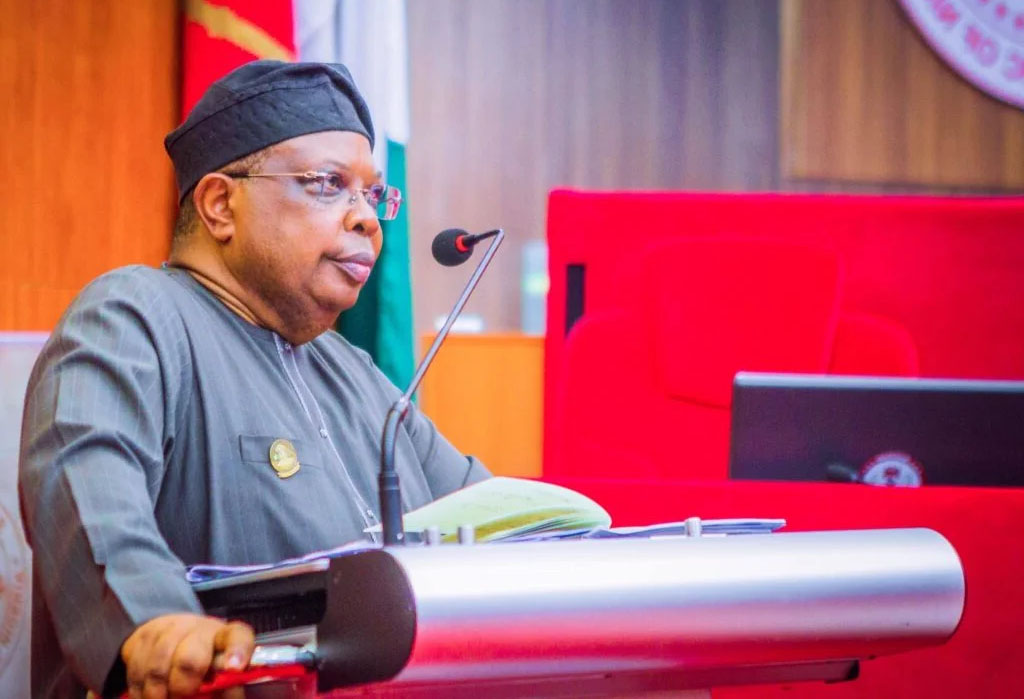
Minister of Power Joseph Tegbe disclosed the plan while outlining the government’s reform agenda, saying the administration of President Bola Ahmed Tinubu was working to clear legacy obligations in the electricity market and establish a more sustainable funding structure.
Tegbe said the planned withdrawal of the subsidy should not be interpreted as an immediate increase in electricity tariffs.
The minister has repeatedly stated that there is currently no government policy to increase electricity tariffs beyond their existing levels, stressing that the immediate priority is to improve service, expand access and ensure consumers pay for electricity actually supplied to them.
He also said the government was developing measures to protect vulnerable electricity consumers as the reform progresses.
The planned subsidy phase-out comes against the background of a major financial crisis in the Nigerian Electricity Supply Industry (NESI). The government has had to cover part of the difference between the cost of supplying electricity and the amount recovered through tariffs, while unpaid obligations have accumulated across the electricity value chain.
Recent figures cited by industry reports indicate that the Federal Government covered about ₦358.32 billion of electricity generation costs in the first quarter of 2026 alone.
Between April 2025 and April 2026, distribution companies reportedly issued electricity invoices worth about ₦3.16 trillion, with the government expected to cover about ₦1.86 trillion as subsidy for customers whose tariffs remained below cost-reflective levels.
The burden has added to the financial pressures facing generation companies, gas suppliers and other participants in the electricity market, limiting their ability to maintain equipment, settle obligations and invest in additional capacity.
The government has therefore made power-sector debt reduction a central part of its reform programme.
President Tinubu approved a plan to settle about ₦3.3 trillion in verified legacy electricity-sector debts accumulated between February 2015 and March 2025.
READ ALSO:
- Nigeria Wins $3.38bn Mambilla Arbitration Battle As ICC Rejects Sunrise Claims
- 2027: Tinubu May Mediate Wike-APC Governors Rift In France
- 2027: Sowore Says He’d Rather Die Than Travel Abroad For Medical Treatment
To support the programme, the Federal Government established a ₦4 trillion Power Sector Multi-Instrument Issuance Programme.
The government has so far raised hundreds of billions of naira through the initiative. The second series, valued at approximately ₦728.9 billion, was completed in September, bringing total funds raised under the programme to more than ₦1.1 trillion, according to government officials.
The second issuance comprised about ₦402 billion in cash bonds and ₦326.98 billion in non-cash bonds allocated to participating generation companies. Eleven GenCos took part in the second series, compared with eight in the first.
The debt settlement is intended to restore liquidity to the electricity market and improve the financial position of generation companies, which in turn should help them meet obligations to gas suppliers and invest in maintaining and expanding their plants.
The Federal Government has said resolving the historical debt problem is necessary if the electricity market is to become commercially sustainable and attract new private investment.
The subsidy reform is being pursued alongside measures aimed at improving the physical infrastructure needed to deliver electricity.
The Federal Ministry of Power has identified weaknesses in the national transmission network as one of the major constraints to reliable electricity supply and has established a Technical Working Committee on Grid Stabilisation.
The committee is expected to work with the Transmission Company of Nigeria and the Nigerian Independent System Operator to address transmission bottlenecks, ageing infrastructure and recurring system collapses.
The government’s plans include strengthening critical transmission corridors, expanding grid redundancy and modernising control and monitoring systems.
Tegbe has also outlined plans to improve metering, tackle electricity theft and reduce technical and commercial losses across the power value chain.
The government has linked the reforms to its wider objective of ensuring that consumers are billed more accurately and that electricity companies can recover the revenue required to maintain their operations.
The minister has also reported improvements in generation and electricity availability in some areas, but stressed that generation alone cannot resolve Nigeria’s power problems.
For electricity to reach consumers consistently, power must be generated, transmitted, distributed and properly paid for. Weaknesses in any part of that chain can undermine improvements elsewhere.
The government is therefore pursuing reforms across generation, transmission, distribution and metering, rather than relying solely on additional generation capacity.
The planned 2027 electricity subsidy phase-out will be a major test of those reforms. Government support has helped keep tariffs below the cost of supplying electricity for some categories of consumers, but the resulting financial burden has contributed to recurring liabilities in the sector.
The challenge for the government will be to reduce that burden without worsening the difficulties faced by households and businesses, particularly low-income consumers.
Tegbe has said vulnerable Nigerians will be protected and that the subsidy transition will be accompanied by efforts to improve electricity services.
For now, the Federal Government is combining the planned subsidy reform with debt settlement, grid investment, metering and measures to improve the commercial operation of the electricity market.
The success of the policy will ultimately depend on whether the government can translate those measures into more reliable electricity, improved service delivery and a financially sustainable power sector while limiting the impact of the transition on vulnerable consumers.
FG Plans 2027 Electricity Subsidy Phase-Out, Targets Power Sector Debt
News
Former Abia Road Workers Ask Governor Alex Otti for Fair Wages and Job Promotions
Former Abia Road Workers Ask Governor Alex Otti for Fair Wages and Job Promotions
Staff members integrated into the state civil service appeal for standard living wages after 12 years on entry-level pay.
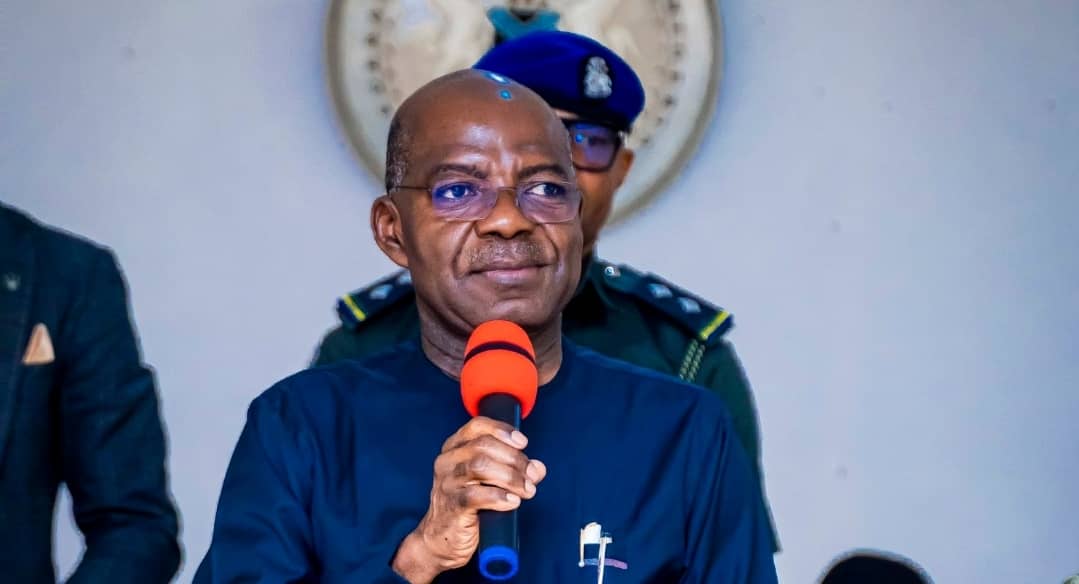
A group of 16 road maintenance workers in Abia State is appealing to Governor Alex Otti to review their monthly pay and grant them long-awaited job promotions.
Speaking through their representative, Ikedichi Orisa, in Umuahia on Friday, the workers explained that they still earn between ₦21,000 and ₦23,000 each month, the same entry-level amount they received when they were hired in 2014.
After the state government closed the road maintenance agency known as ABROMA, authorities transferred the staff members into the Abia State Ministry of Works. The employees expressed deep gratitude to Governor Otti for ending years of missed paychecks left behind by the previous administration.
However, administrative delays have kept them tied to an old payment system, preventing them from receiving regular promotions or standard public sector wages.
To resolve the issue, the Commissioner for Works recently contacted the State Civil Service Commission and civil service administrators to review the employees’ files. In addition, the workers explained that rising prices make it difficult to purchase groceries, pay for healthcare, and cover daily travel expenses.
By sharing their story, the staff members hope state leaders will step in to modernize their work records and provide fair, dignified wages that reflect their years of dedicated public service.
Former Abia Road Workers Ask Governor Alex Otti for Fair Wages and Job Promotions
-

 International2 days ago
Islamic Council Condemns Attempted Attack on Holy City of Mecca
-
 News2 days ago
Keep Politics Out of My Office — Ogbomoso Grand Chief Imam Warns Politicians, Bloggers
-

 metro2 days ago
Niger Mosque Abductions: Terrorists Execute 30 of 500 Captive Muslim Worshippers
-

 Entertainment2 days ago
BREAKING: Olu Jacobs Dies at 84, Atiku Mourns Cultural Icon
-
 metro3 days ago
Fatal NURTW Leadership Clash in Osun Leaves Two Dead; State Orders Park Shut Down
-
 Business1 day ago
Fuel Prices Climb to ₦1,500 per Litre Across Nigeria, Sparking Calls for Urgent Action
-

 News2 days ago
Blue Line Rail, Hospitals Get Boost as Lagos Approves ₦200bn Bond and Budget Reordering
-
 News1 day ago
OAU Investigates Death of Final-Year Student as Police Begin Probe