

metro
Group alleges plot to sabotage reforms at NNPC
Group alleges plot to sabotage reforms at NNPC
A Civil Society Organisation, Coalition for Good Governance and Change Initiatives (CGGCI), in conjunction with Human Rights Writers Association (HURIWA), has raised alarm over an alleged plot to sabotage what it described as ongoing reforms in the Nigerian National Petroleum Company Limited (NNPC) under its Group Chief Executive Officer, Bayo Ojulari.
The duo of Comrades Okpokwu Ogenyi and Emmanuel Onwubiko, National Coordinator of CGGCI, and the President of HURIWA, respectively, declared that they would resist every attempt to blackmail the leadership of the NNPC.
Saturday Tribune checks revealed that a coalition of OilWatch Nigeria, Workers’ Rights Alliance, and Concerned Citizens Watch had on Thursday staged a huge rally outside the Economic and Financial Crimes Commission (EFCC) headquarters in Abuja, demanding the prosecution of the GCEO of the NNPC over an alleged financial scandal to the tune of $21 21million.
The CSO forum, however, claimed that forces behind the protests were being used to oust Bayo Ojulari from the NNPC and reverse the gains of the ongoing reforms in the national oil corporation.
READ ALSO:
- NDLEA commends Grand Mufti of Yorubaland’s anti-drug campaign with award (photos)
- BUK Alumni, Ilorin Emirate chapter welcomes the judgement on Hafsoh Lawal’s killer
- MURIC to FG: Treat Shariah courts as federal courts
“We respectfully urge His Excellency, President Bola Ahmed Tinubu, to remain vigilant and discerning regarding the motives of those peddling unfounded allegations and character assassinations against the GMD. These blackmailers seek to reverse the progress made and reinstall individuals who will continue the cycles of corruption that Mr. Ojulari is dismantling.
“The President’s choice of Mr. Bayo Ojulari was based on proven competence, credibility, and industry expertise. We must not allow deceptive lobbying to taint the integrity of that decision or disrupt the much-needed reforms currently taking root, as Mr Bayo Ojulari is clearly committed to Mr President Renewed Hope Agenda.”
The Forum further claimed that aside from the NNPC, those behind the smear campaign against the GCEO, NNPC, have also targeted other revenue-generating agencies of the Federal Government for smear media blackmail.
“There has been a deliberate gang-up against Mr. President and his people-oriented programmes for the country. The enemies of the country have infiltrated all segments of the economy, with a deliberate act of sabotaging Mr. President by blackmailing key agencies of the administration.
“Mr. Ojulari initiated a sweeping audit of long-standing, opaque contracts, particularly those involving crude lifting and infrastructure projects. This has exposed inflated costs and revenue leakages, many of which are now under internal review.
“Under his directive, the NNPC now operates a real-time reporting dashboard for critical operations—ensuring better monitoring of crude production, refining activities, and fuel distribution nationwide.
“Mr. Ojulari has ended several shady deals with unqualified intermediaries and shell entities used to siphon national resources. This alone has saved billions in prospective losses to the nation.
READ ALSO:
- Soldier on leave nabbed in bus park with 350 rounds of ammunition
- Trump imposes new 15 percent tariff on Nigeria, others
- Tinubu moves to end poverty nationwide, approves new programme
“For the first time in years, whistleblowing and internal accountability are being actively encouraged at NNPC. Dozens of staff have been reassigned, and internal oversight units strengthened.
“The GMD has opened up collaboration with transparency-focused global institutions, signaling Nigeria’s renewed seriousness in cleaning up its oil sector image.
Despite all these and other pro-Nigerian policies, some corrupt individuals within the system are not comfortable with the ongoing reforms.
“We observe that some of them are in hand with major opposition leaders at night to sabotage this government through institutions like NNPC, but they appear as friends of the government during the day.”
It further applauded what it called the restoration of sanity in the downstream sector through the stable availability of petroleum products.
“The era of long queue at the filling stations is gone. The era of fuel scarcity is gone. The era of Nigerian sleeping at filling stations or buying adulterated black market fuel is far gone but these enemies of Nigeria are not comfortable and they are coming out as saints to cause crisis and majorly discredit President Bola Ahmed Tinubu, their major target, by sponsoring protest and media attacks on the leadership of the NNPC. Nigerians must reject these individuals.”
Comrade Ogenyi said the smear campaign must be seen as a last-ditch effort by compromised forces desperate to hold on to influence and illicit benefits, saying Nigerians will stand with reformers—” and Mr. Bayo Ojulari is clearly one of them.
“We therefore call on all patriotic Nigerians, civil society actors, and media professionals to defend the truth, expose malicious intent, and support the genuine transformation of the NNPC.
“Under this leadership, Nigerians continue to have a reduction in the prices of petroleum products as pump prices of premium motor spirits have been slashed down.
“We wish to encourage Mr. President to continue with his reforms and not be intimidated by anyone trying to discredit his administration or appointees because Mr President has blocked leakages where corruption resides in the NNPC through Mr Ojulari’s credible leadership. We urged Mr President to continue to believe in the performing team across agencies of government.”
Group alleges plot to sabotage reforms at NNPC








metro
Fatal NURTW Leadership Clash in Osun Leaves Two Dead; State Orders Park Shut Down
Fatal NURTW Leadership Clash in Osun Leaves Two Dead; State Orders Park Shut Down
As Olalekan Oyeyemi is buried in Osogbo, authorities transfer murder probe to the State Criminal Investigation Department.
metro
Lagos Power Outage: Ikeja Electric Blames TCN as Businesses, Homes Groan

Lagos Power Outage: Ikeja Electric Blames TCN as Businesses, Homes Groan
Residents and businesses in several parts of Lagos are enduring prolonged power outages, with Ikeja Electric attributing the disruption to significant constraints on the Transmission Company of Nigeria (TCN) network.
The development has triggered frustration among electricity consumers who say the prolonged blackout is disrupting household activities and commercial operations, while increasing their dependence on generators and other alternative sources of power.
Ikeja Electric, one of Nigeria’s largest electricity distribution companies, said the situation was caused by a reduction in the amount of electricity available to it from the transmission network.
According to the company, the transmission constraints have affected the volume of power it can distribute to customers across parts of its franchise area, resulting in extended periods of load-shedding.
The company said it was engaging with TCN over the situation and was working to improve supply to affected communities as soon as additional transmission capacity becomes available.
The latest disruption has affected customers in several parts of Lagos, with residents in areas including Akoka, Egbeda, Ojodu Berger, Ogudu and Shomolu reporting prolonged interruptions.
Some residents said electricity supply had been unavailable for several consecutive days, while others reported intermittent restoration followed by further outages.
The disruption has also affected small businesses and households that rely heavily on electricity for daily activities.
Business operators such as barbers, hairdressers, food vendors, cold-room operators, charging-centre owners, internet-dependent businesses and other small enterprises have been particularly affected by the unreliable supply.
For many households, prolonged outages have also affected refrigeration, water pumping, phone charging, internet access and other basic activities that depend on electricity.
READ ALSO:
- US Court Blocks Trump Visa Rule Limiting Stay of Foreign Students, Journalists
- Sokoto Shuts Mosque After Cleric Stabbing, Names Ulamas Probe Panel
- Iran Rejects US Talks as Trump’s Mixed Signals Deepen Hormuz Standoff
The situation has forced some residents and businesses to increase their use of generators, adding to operating costs at a time when fuel and other energy expenses remain high.
Some consumers have also resorted to commercial charging centres and other paid alternatives to keep phones, rechargeable devices and business equipment operational.
The latest disruption comes amid continuing challenges across Nigeria’s electricity value chain, where problems involving generation, gas supply, transmission infrastructure and distribution networks can affect electricity availability to consumers.
TCN operates the country’s transmission network, while electricity distribution companies such as Ikeja Electric are responsible for delivering available power to customers through their distribution networks.
This distinction is significant in the latest Lagos outage because Ikeja Electric has attributed the immediate supply shortfall to constraints on the transmission network, rather than announcing a fault affecting its entire distribution system.
Power interruptions in Lagos, however, have previously resulted from different causes.
Parts of the state have experienced outages linked to distribution equipment faults, infrastructure damage, planned maintenance and other incidents affecting electricity infrastructure.
Earlier disruptions in Lagos have also been associated with incidents such as tanker fires damaging electricity infrastructure, while transmission maintenance and constraints have caused supply reductions in other instances.
The varying causes mean that the duration and geographical spread of an outage can differ significantly from one community or electricity feeder to another.
Ikeja Electric has apologised to affected customers over the latest disruption and said it understands the difficulties caused by the reduced supply.
READ ALSO:
- Saudi Arabia Vows ‘Firm’ Response as Houthi Attacks Wound 13
- Peter Obi Rejects Anambra Debt Claims, Challenges Soludo Govt to Produce Evidence
- Peter Obi: Release My UNN Academic Records, I Have Nothing to Hide
The company said it was monitoring developments and engaging relevant stakeholders in an effort to restore improved electricity supply.
The latest development has again highlighted concerns over the vulnerability of Lagos residents and businesses to fluctuations in electricity supply.
For many small businesses, prolonged blackouts mean additional spending on diesel or petrol-powered generators, while households face similar costs when alternative electricity sources are required.
The disruption also comes at a time when businesses are already dealing with high operating costs, making extended reliance on generators an additional financial burden.
Consumers have increasingly called for more reliable electricity supply and better coordination among the different operators in Nigeria’s power sector.
The TCN, generation companies and distribution companies form interconnected parts of the electricity supply chain, meaning a constraint at one stage can quickly affect consumers downstream.
For Ikeja Electric customers, the immediate expectation is that transmission constraints will ease and supply will gradually improve across the affected feeders.
Until then, residents and businesses in the affected areas may continue to experience irregular electricity supply depending on available transmission capacity and the operational condition of individual distribution feeders.
The latest outage has therefore renewed the debate over Nigeria’s long-standing electricity challenges and the need for sustained investment in power generation, transmission and distribution infrastructure to provide more stable electricity for homes and businesses.
For Lagos, where thousands of businesses depend on electricity for daily operations, prolonged outages carry consequences beyond inconvenience, affecting productivity, household welfare and the cost of doing business.
Ikeja Electric said it would continue to provide updates as the situation develops and work with TCN to improve supply to affected customers.
Lagos Power Outage: Ikeja Electric Blames TCN as Businesses, Homes Groan
metro
Sokoto Shuts Mosque After Cleric Stabbing, Names Ulamas Probe Panel
Sokoto Shuts Mosque After Cleric Stabbing, Names Ulamas Probe Panel
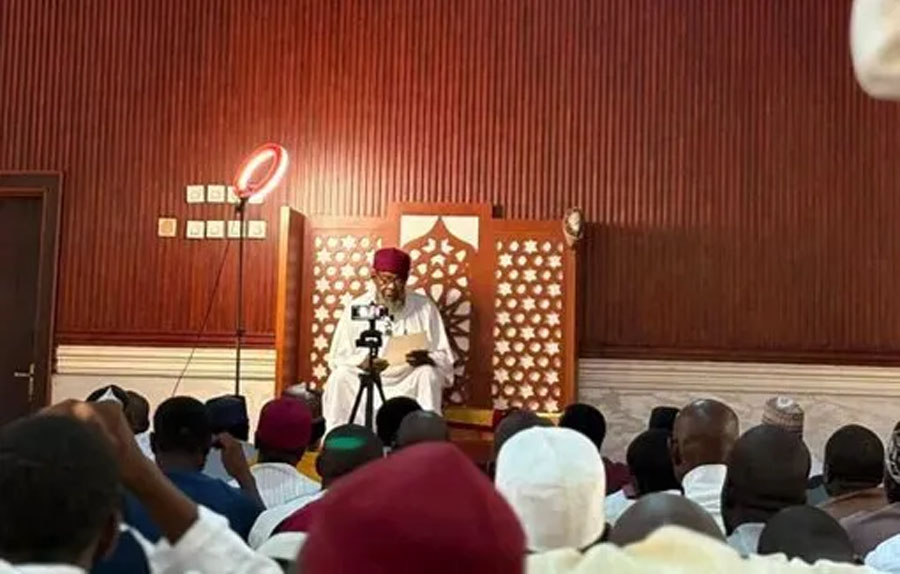
The Sokoto State Government has ordered the immediate closure of the Musa Lukuwa Jumu’at Mosque in Mabera, Sokoto metropolis, after a cleric was stabbed during Friday prayers and his attacker was killed by an angry mob.
The mosque, which the government describes as a crime scene, will remain shut until further notice. A committee of Islamic scholars (Ulamas) has also been constituted to investigate the remote and immediate causes of the incident and recommend measures to prevent a recurrence. The announcement was contained in a statement issued on Tuesday by the Director General, Media and Publicity, Government House, Abubakar Bawa.
The crisis began on Friday, September 11, 2026, shortly after Malam Musa Lukuwa led the Jumu’at prayer. A young man among the worshippers attacked the cleric, stabbing him twice in the neck and left hand. Worshippers overpowered the suspect and beat him to death before security operatives could arrive. Police spokesman DSP Ahmad Rufa’i confirmed that the cleric was rushed to the Specialist Hospital in Sokoto, where he was treated and later discharged. Lukuwa subsequently appeared in a video circulated on social media, with a plaster covering part of his neck, appealing for calm and assuring his followers that he was in stable condition. The Commissioner of Police, Hayatu Hassan Shaffa, condemned the mob action as jungle justice and urged residents to allow due process. “It is imperative that we allow the law to take its course to ensure justice is served appropriately,” Shaffa said. Security personnel have been deployed to Mabera and other flashpoints, while investigations into both the stabbing and the mob killing continue. No arrest has been made in connection with the lynching.
READ ALSO:
- Iran Rejects US Talks as Trump’s Mixed Signals Deepen Hormuz Standoff
- Saudi Arabia Vows ‘Firm’ Response as Houthi Attacks Wound 13
- Peter Obi Rejects Anambra Debt Claims, Challenges Soludo Govt to Produce Evidence
The attack was reportedly linked to a previous sermon in which the cleric cited a Hadith that some scholars, particularly those associated with the Tariqa order, considered offensive to the parents of Prophet Muhammad. Following the controversy, a young man identified as Mai Barewa allegedly threatened to kill Malam Musa Lukuwa and his senior student, Malam Murtala Assada. The cleric and his followers reported the threat to the police, leading to the suspect’s arrest and arraignment. A court later ordered that he be remanded in a correctional facility while the case remained pending. Four days before Friday’s incident, the clerics had also visited the Sokoto State Government House to submit a written complaint. The incident triggered protests and heightened tension around Sahara, Bello Way and Aliyu Jodi, with some businesses closing temporarily as security operatives moved into strategic locations. It came only days after protests erupted over the continued remand of another cleric, Dahiru Mai Barewa, who was accused of threatening Lukuwa and Malam Murtala Bello Assada. Police subsequently arrested about 20 people in connection with that protest.
The government said the committee would examine the circumstances surrounding the tension and make recommendations in the interest of peace and stability in the state. It also ordered a full investigation into the attack and the subsequent killing at the mosque. The state government further dissociated itself from any person, irrespective of status, who hides under the pretext of religion to undermine or disrespect Prophet Muhammad (PBUH), his parents, household and companions. It reaffirmed its “total obedience and respect” for the Prophet, his parents, household and companions, while urging residents to continue to show love and compassion to him. The government appealed to residents to desist from making inciting statements capable of jeopardising the peaceful coexistence for which Sokoto is known. It assured residents of its commitment to protecting the lives and property of every citizen in the state.
Malam Musa Lukuwa is an Islamic cleric from Lukuwa village in Gwadabawa Local Government Area of Sokoto State. He was among the early scholars associated with the Izala movement when it began gaining prominence in Sokoto State. He later became associated with the Salafiyya school of thought and established his own mosque, where he teaches Islamic studies and preaches to his followers. Lukuwa is known for his strict emphasis on adherence to the Qur’an and Hadith. His interpretation of religious practices, particularly issues surrounding the sighting of the crescent moon, has at times differed from the position announced by the Sultan of Sokoto. He maintains that decisions on the commencement and termination of fasting should be based on what he considers credible evidence of the sighting of the crescent, in line with the teachings of the Qur’an and Hadith.
Sokoto Shuts Mosque After Cleric Stabbing, Names Ulamas Probe Panel
-
 News3 days ago
SERAP Threatens Legal Action Over ₦126bn INEC Electoral Funds
-
 Politics3 days ago
Five Islamic Clerics Abducted After Tinubu Re-Election Prayer At Yari’s Zamfara Residence
-
 Opinion3 days ago
‘Tinubu Will Win Again in 2027’ — Charismatic Bishops’ Secretary
-
 Politics1 day ago
2027: Northern Lecturers Back Tinubu, ASUU Disowns Endorsement
-

 metro2 days ago
Mother ‘sold daughter’s abuse videos for $300’: Nigeria child pornography case shocks nation
-

 Sports3 days ago
‘Unacceptable’ — Arteta Furious Over Sunderland Penalty in Arsenal Win
-

 News3 days ago
Petrol Subsidy: Presidency Rejects Atiku’s Plan, Says No Going Back
-

 International3 days ago
US Blockade Tightens As CENTCOM Redirects 100 Commercial Ships From Iranian Ports